

Imagine finding out that all the feelings you secretly hope are “just in your head” are actually sharp, accurate readings of reality. Not symptoms to fix, but signals that the universe might really be as cold, indifferent, and absurd as your worst 3 a.m. thoughts suggest. That is a chilling idea, but also a strangely liberating one: what if depression, anxiety, and existential dread are not glitches in consciousness, but the honest consequences of seeing clearly in a universe that does not come pre-loaded with meaning?
At the same time, we are here, undeniably conscious, capable of love, art, science, humor, and tenderness. Life clearly goes on, people build families, write songs, heal each other, and scroll endlessly through memes. So we are faced with a wild paradox: maybe the universe is inherently meaningless, yet consciousness still evolved, and still cares, and still hurts. This article lives inside that tension: scientific where we can be, human where we must be, and unafraid to ask whether our darkest feelings might be accurate readings rather than broken wiring.
Are We Glitching, Or Just Seeing Too Clearly?

Many people are taught to treat depression, anxiety, and existential dread as mental bugs, like some internal software error that needs patching. In clinical psychology, they are usually classified as disorders, deviations from a baseline of healthy functioning. That framing can be very useful for treatment and support, but it also quietly assumes there is a “normal” way to be conscious that does not involve staring into the void and panicking about death, time, or meaning. It suggests that if you feel those things intensely, something is wrong with you, not with the world.
But step back for a moment and look at the raw data of existence: every living thing dies, you did not choose to be born, the universe will likely continue just fine without you, and most of what happens on Earth does not care about your personal narrative at all. In that light, the real mystery is not why some people feel despair and anxiety, but why anyone manages to feel okay for more than ten minutes at a time. Maybe what we often call “mental illness” is, at least partly, consciousness refusing to politely ignore how strange, fragile, and unguaranteed it all is.
The Universe Really Doesn’t Promise You Meaning

From a scientific standpoint, the universe does not come with built‑in instructions, moral categories, or life goals. Physics describes particles, fields, forces, and probabilities, not purposes or destinies. Biology describes how organisms survive and reproduce, not what they “should” do in an ethical sense. The cosmos looks more like a massive unfolding of cause and effect than a carefully scripted story designed just for you. That can feel brutal when your mind naturally craves narrative, significance, and emotional closure.
Humans are extremely good at creating stories, religions, philosophies, and ideologies that claim to reveal some deeper purpose behind it all. Sometimes those stories are beautiful and genuinely help people live and care for each other. But if you peel away the inherited narratives and ask whether the universe itself guarantees you meaning, comfort, or fairness, the honest answer seems to be no. In that environment, existential dread is not a malfunction; it is a rational reaction to the mismatch between what we crave and what reality is obligated to provide, which is basically nothing.
Why Consciousness Evolved in a Universe That Doesn’t Care
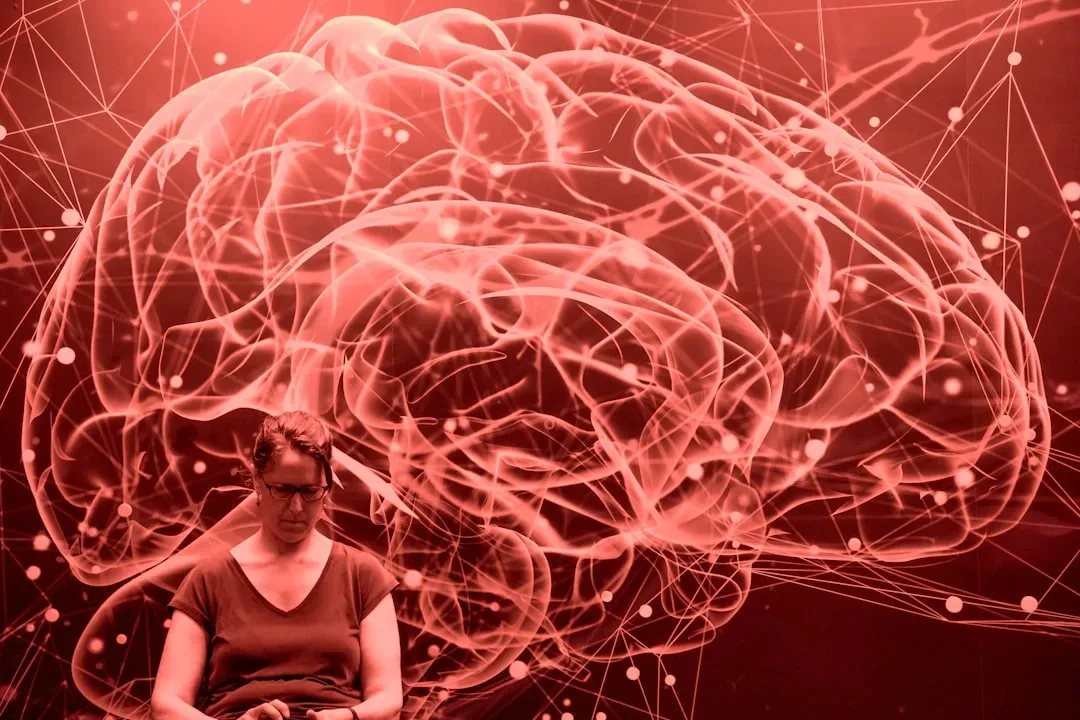
So why did consciousness evolve at all in a universe that is, at best, indifferent? Evolutionary biology offers a simple but unsettlingly cold answer: because being conscious helped certain organisms survive and reproduce. Conscious awareness lets creatures predict threats, coordinate with others, remember useful information, plan for the future, and simulate possible outcomes. Nowhere in that process is there a requirement that life must feel meaningful, fair, or emotionally comfortable. Evolution optimizes for survival and reproduction, not existential satisfaction.
This means our conscious minds are more like survival tools than spiritual gifts tailored for our emotional needs. You can think of consciousness as a very advanced alarm and planning system, one that notices patterns, tracks danger, forms attachments, and anticipates loss. Seen from that angle, it becomes plausible that anxiety, hyper‑vigilance, or deep reflection about mortality are not errors. They are side effects or extensions of a system that evolved to keep you alive in a harsh, uncaring environment. Evolution does not mind if you suffer, as long as your genes make it to the next generation.
Depression as a Brutally Honest Status Report

Depression is often described as a distortion: you see yourself as worthless, the future as hopeless, and other people as uncaring. Cognitive therapy is built partly on the idea of challenging those negative thoughts. But there is another angle to consider: what if depression sometimes functions as a brutally honest status report about a life or environment that is genuinely depleted of what makes existence bearable? Loneliness, financial insecurity, chronic pain, trauma, and social injustice are not imaginary problems, they are real conditions that any sane being might respond to with despair.
There is also research suggesting that depressive moods can make people more realistic or less biased in certain judgments, a phenomenon sometimes called depressive realism. That does not mean depression is good or desirable, but it hints that at least some depressive perceptions might be more accurate than the overly optimistic stories many people use to keep going. In that sense, depression could be like an emergency indicator light on the dashboard of consciousness, signaling that the gap between your needs and your reality has become too wide to ignore.
Anxiety as a Hyper‑Sensitive Threat Detector

Anxiety, especially in its relentless, chronic form, can feel like your brain is on fire with imaginary dangers. Clinical anxiety disorders can be debilitating, and they absolutely deserve treatment and compassion. Still, at a basic level, anxiety is built from mechanisms that evolved to detect threats, anticipate loss, and push you to act before it is too late. In a world where anything you love can vanish unexpectedly, where your body is fragile and systems are unstable, anxiety is less a random malfunction and more a hyper‑sensitive smoke alarm.
The trouble is that evolution did not design that alarm for modern life where we are constantly bombarded with bad news and comparisons yet rarely able to respond physically. So the same system that kept your ancestors alive on a dangerous savannah now reacts to emails, social media feeds, and global crises you cannot personally fix. Viewed this way, anxiety is not lying about the fact that bad things can happen at any time; it is telling the truth too loudly and too often. The universe really is risky and unstable. Your threat detector just is not calibrated for peace.
Existential Dread: The Price of Self‑Awareness

Existential dread is not just ordinary fear; it is what happens when a self‑aware mind realizes it is temporary, contingent, and ultimately powerless over the largest forces shaping its existence. No other animal, as far as we know, writes philosophical essays about the heat death of the universe or spirals about whether its career truly matters. That uniquely human ability to imagine the far future and zoom out to a cosmic scale comes with a heavy tax: the possibility of feeling utterly insignificant and absurd.
If the universe offers you no guaranteed meaning, then existential dread is the raw, unfiltered emotional result of grasping that. It is consciousness looking in the mirror and seeing, not a chosen protagonist in a grand plot, but a fragile organism riding a rock around a star among billions of others. You could say existential dread is the emotional shadow cast by our greatest cognitive strengths: abstraction, time‑travel in thought, and the capacity for self‑reflection. It is not a bug; it is the cost of knowing too much and wanting more than the universe promises.
Meaning as Something We Build, Not Something We Find

If the universe does not hand us meaning, the next question is obvious: are we doomed to despair, or can we build meaning ourselves? Many philosophers, especially in existentialist traditions, have argued that meaning is not discovered like a buried treasure but created through choices, commitments, and relationships. In this view, the fact that the universe is indifferent does not automatically make your love for someone, your care for a cause, or your dedication to a craft any less real. Those things are meaningful because you live them, not because the cosmos officially approves.
From a psychological perspective, people tend to feel more alive and grounded when they engage in activities that align with their values, help others, or express something deeply personal, even if they do not believe in any cosmic plan. Purpose can be local rather than universal, hand‑made rather than pre‑installed. That does not magically cure depression or anxiety, but it reframes them: instead of waiting for the universe to reveal its script, you recognize that there is no script, only the story you help write with others in the time you have.
Living Sanely While Seeing the Darkness Clearly
This raises a tough but important question: how do you live sanely if you accept that the universe might be meaningless and indifferent, and your worst feelings are in some ways accurate? One answer is emotional double vision. You allow yourself to see the emptiness, randomness, and unfairness of existence without denying it. At the same time, you deliberately cultivate small, concrete sources of meaning: friendships, creative work, care for your body, acts of kindness, music, curiosity, and play. You do not need to lie to yourself about the big picture to care fiercely about your small corner of it.
In my own life, the only times this has felt remotely sustainable have been when I stop chasing a grand answer and start tending to something specific and real: cooking a meal with someone I love, finishing a piece of writing, helping a friend through a rough day. Those things do not change the cosmic picture at all. The universe remains indifferent. But the experience from the inside is different. It feels like standing in the dark holding a small light, fully aware that the darkness is endless, but choosing to make a tiny circle of visibility and warmth anyway.
Conclusion: Maybe the Void Is Real – But So Is What We Do Next
If depression, anxiety, and existential dread are in some sense accurate readings of a universe with no built‑in meaning, then calling them mere malfunctions is too simple. They may be painful but honest responses to real features of existence: its fragility, its indifference, its lack of guarantees. Consciousness evolved for survival, not for comfort, and the emotional cost of that upgrade is that we can see more than we know how to bear. Pretending otherwise feels, to me, more delusional than accepting the void and then deciding how to live anyway.
My opinion is this: the universe does not owe us meaning, but we owe it to ourselves and each other to make meaning where we can. That does not erase suffering or negate the reality of mental illness, which still deserves treatment, support, and serious care. It does, however, shift the story. You are not broken for feeling the weight of existence; you are responding like a sensitive instrument in a rough cosmos. The question is not whether the void is real. The question is what kind of human you choose to be while staring into it. What kind of meaning will you dare to build, knowing full well that nothing is guaranteed?