

There is a slightly unsettling possibility hiding in plain sight: your everyday sense of “this is how the world is” might be less like a live broadcast and more like a heavily edited highlight reel. Your brain could be cutting out most of reality, touching up the lighting, and stitching together a story that is good enough to keep you alive, even if it is nowhere near the full truth. Once you start to see it this way, a lot of familiar experiences – optical illusions, memories that change, even your own identity – start to look very different.
I still remember the first time an illusion really rattled me: I stared at two identically sized lines that my brain swore were different lengths, and something in me realized, with a jolt, that my senses weren’t designed to be honest, just useful. Since then, scientific research in perception, cognitive biases and evolutionary psychology has only made that suspicion stronger. Let’s walk through what it really means to treat consciousness not as a window onto reality, but as a survival-driven story engine – and what that implies about almost everything you feel, see and believe.
From Mirror to Storyteller: Rethinking What Consciousness Is For
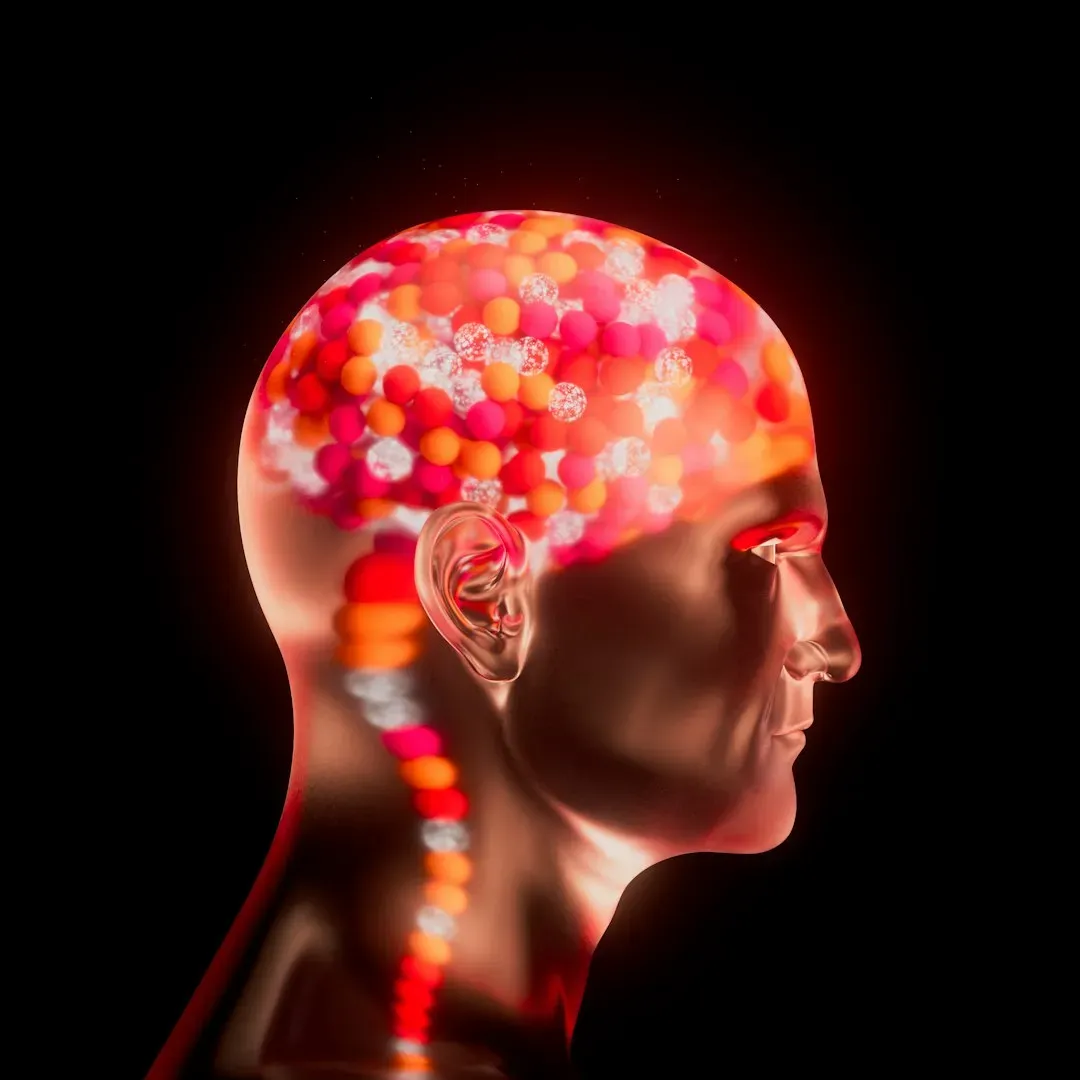
We often grow up with the casual assumption that consciousness is like a mirror: the world is out there, our senses pick it up, and our conscious mind reflects it back in a faithful way. It feels almost obvious that the point of being conscious is to know what is true. But evolution does not care about truth in any philosophical sense; it cares about what helps an organism survive long enough to reproduce. From that angle, an accurate picture of reality is only valuable if it actually improves survival and does not cost too much energy.
Imagine trying to operate a spacecraft with a control panel that shows you every single atom, field and fluctuation in real time. You would be overwhelmed before you could move a thruster. In the same way, if your conscious experience tried to represent reality as it really is – with all its microscopic detail, probabilities, quantum weirdness and hidden variables – you would freeze. It makes much more sense that consciousness evolved as a streamlined interface, a compressed dashboard that shows a few key dials you can act on quickly, even if the underlying machinery remains completely hidden.
Your Brain as a Reality Compression Machine
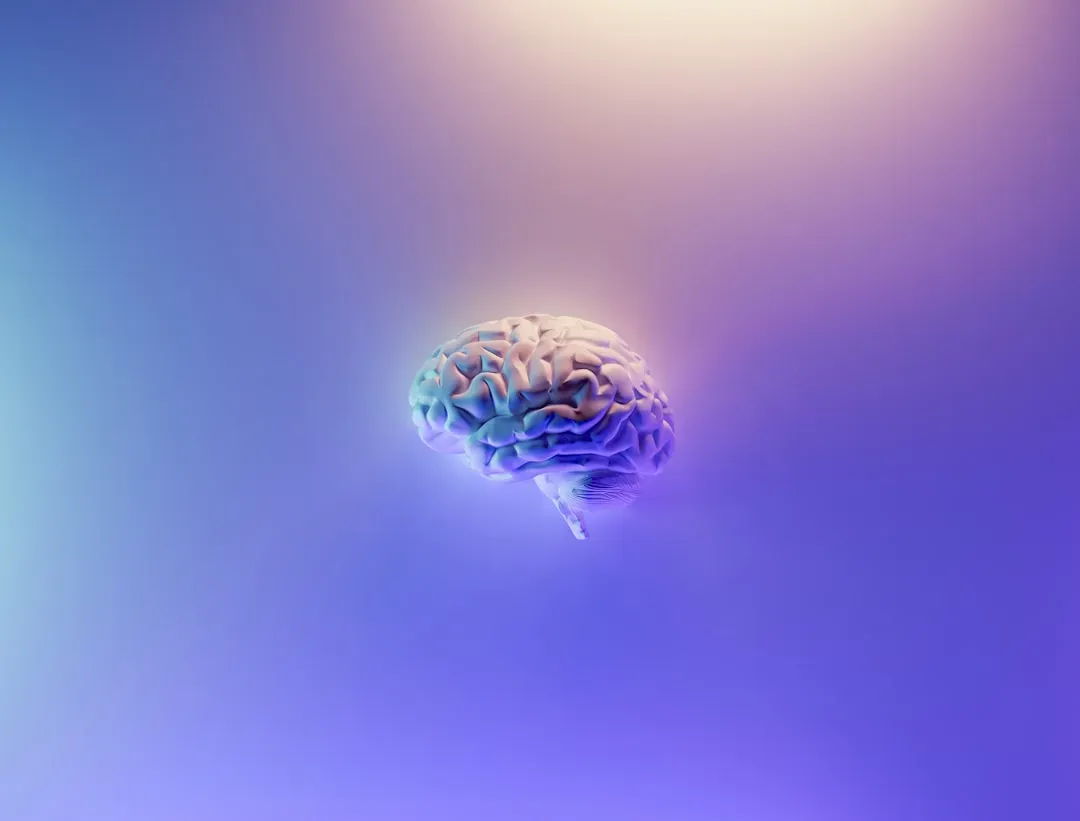
One of the most striking things about perception science is how much gets thrown away before anything ever reaches awareness. Your eyes, ears and skin are bombarded with a firehose of data, far more than your brain could ever process fully in real time. Instead of passing all of it up to consciousness, multiple layers of neural circuitry pre-filter, compress and summarize the information into patterns, edges, objects and meanings that are easier to work with quickly.
You can think of this like a phone displaying a colorful icon for an app instead of its entire internal codebase. Tapping the icon lets you do what you need to do – send a message, order food, check directions – without knowing anything about what transistors and circuits are doing underneath. In the same way, your conscious experience of “a red apple on a table” is a compact symbol set, not an accurate, detailed rendering of electromagnetic spectra, molecular distributions and underlying physics. The world you live in subjectively is more like a compressed user interface than a literal printout of reality.
Evolution Favors Usefulness, Not Truth
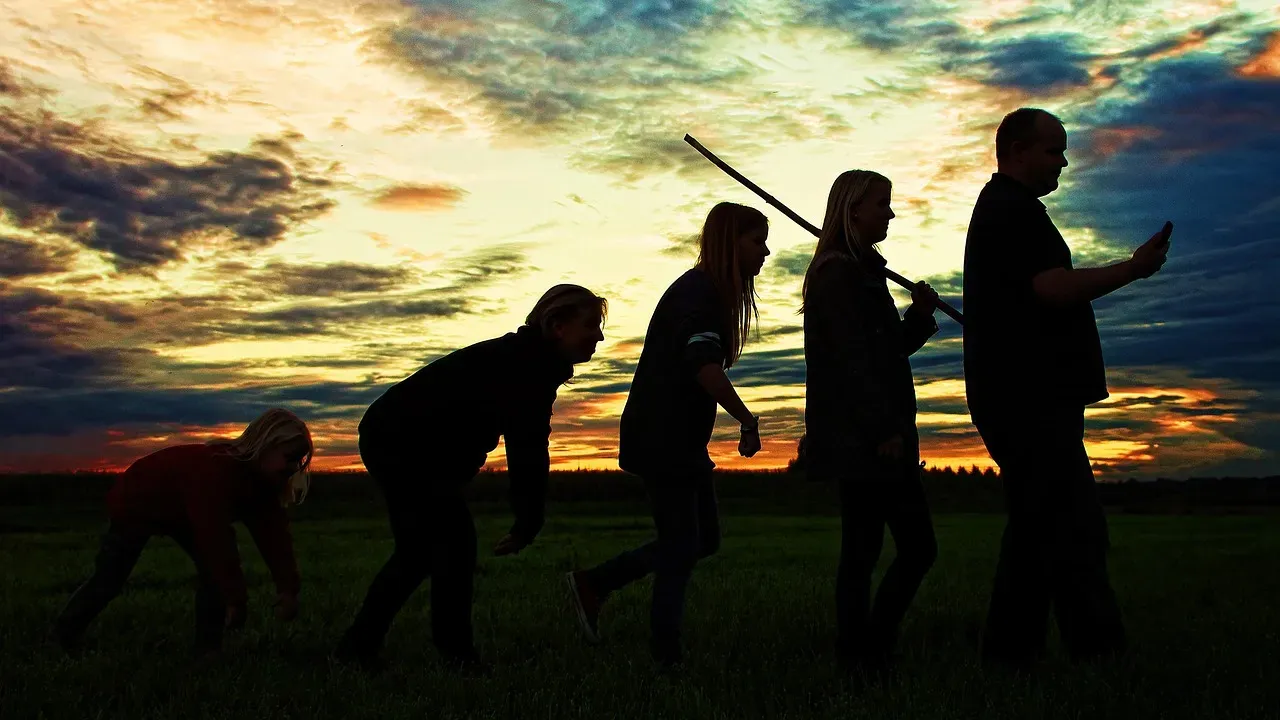
Evolutionary theorists have argued that, in a competition between an organism that sees the world accurately and one that sees only the features relevant to survival, the second one can easily win. Detailed accuracy is expensive: it takes brain tissue, energy and time. An animal that uses approximate shortcuts but can move, feed and reproduce faster will often outcompete a rival that is slower because it is busy calculating. This is a harsh but simple rule: better to be fast and “wrong but good enough” than perfectly right but dead.
We see versions of this principle across species. Many animals do not perceive the full spectrum of light, but only what matters for their niche. Some insects are exquisitely tuned to a narrow band of smells or colors that track food or mates and ignore everything else. Humans like to imagine we have transcended this selective tuning, but our own sensory and cognitive systems have the same basic logic. If consciousness is a product of this process, it is far more likely to be a survival-optimized simplification than a dispassionate searchlight for objective truth.
Perception as a Hallucination You Happen to Agree With
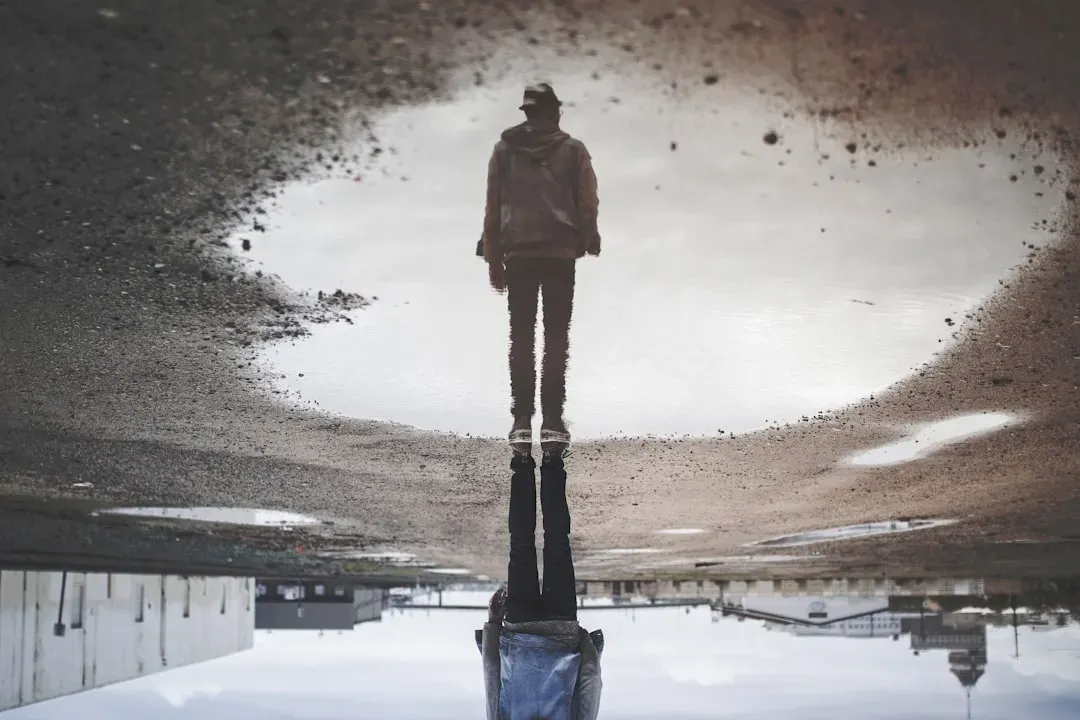
Modern neuroscience increasingly treats perception not as raw input flowing upward, but as a prediction process flowing downward. Your brain is constantly guessing what is out there and only using incoming signals to correct or refine its predictions. In this framework, what you see, hear and feel is a controlled hallucination: a best-guess model that happens to line up with reality just enough to keep you oriented and alive most of the time.
Optical illusions make this painfully obvious. When you see motion where none exists, color that is not on the page, or objects that shift size depending on context, you are catching your prediction machinery in the act. The brain is not showing you a photograph; it is delivering a hypothesis. For day-to-day survival, it is better for that hypothesis to be fast, stable and practical than meticulously accurate. As long as your hallucination consistently helps you find food, avoid threats and navigate social life, evolution is satisfied.
The Story of “You” Is a Convenient Fiction Too

If consciousness is editing reality into a simpler narrative, it is not just the outside world that gets streamlined; your sense of self does too. The stable, continuous “I” you feel from moment to moment is more like a character your brain keeps writing than a fixed, indivisible thing sitting inside your head. Different brain systems handle memory, planning, emotion, movement and language, yet your experience smooths all that into a single, coherent protagonist.
Psychology experiments have shown how easily this narrative of self can be bent or split. People can feel ownership over fake hands, misattribute their own actions to external forces, or confabulate reasons for choices they did not really make. Rather than admit confusion, the brain stitches a story that explains what “you” supposedly wanted and did. This self-story is not pure fantasy – it roughly tracks your biology and history – but it is still a curated version, stripped of messy contradictions so you can function without constantly doubting who you are.
Memory: Your Internal Editor in Overdrive
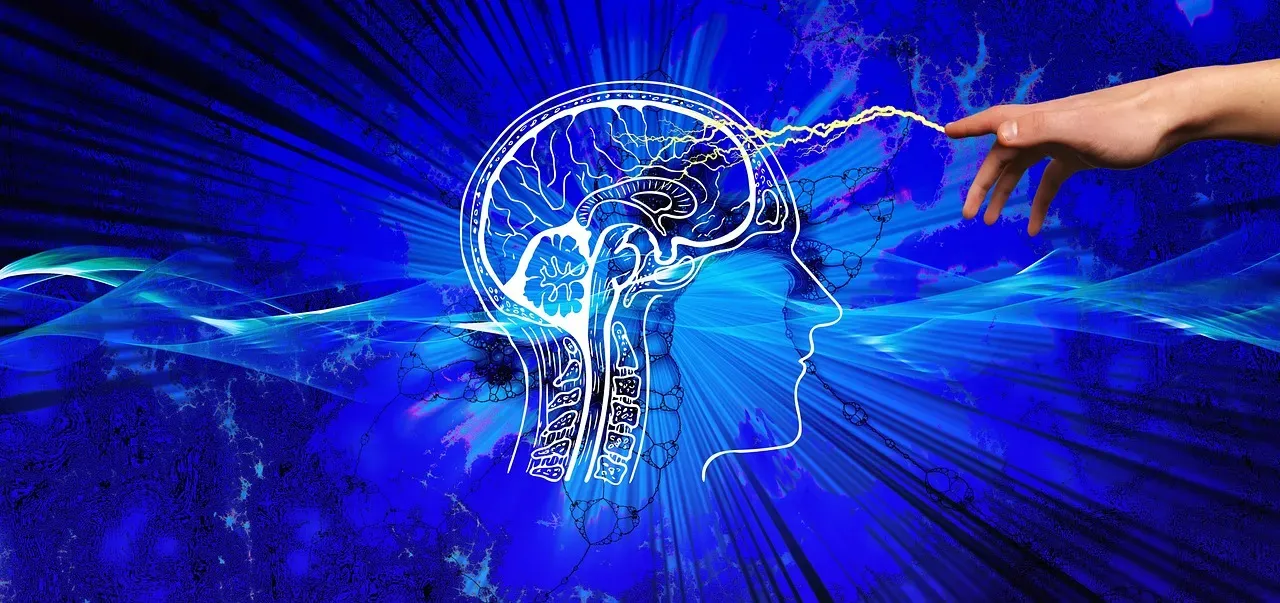
Nowhere is the idea of consciousness as editor more obvious than in memory. We like to think of memory as an archive that stores faithful copies of our experiences and then plays them back when we remember. In reality, remembering is more like rewriting a file: each time you recall an event, your brain reconstructs it, often blending bits of truth with expectations, current emotions and social pressures. Over time, details shift, disappear or get added, and the story feels more solid even as it drifts further from what actually happened.
This reconstructive nature of memory explains why eyewitness testimony can be so unreliable, why siblings remember the same childhood event in wildly different ways, and why a story you have told many times gets smoother but not necessarily more accurate. Your brain is not trying to be a perfect historian; it is trying to maintain a coherent sense of self and world. If slightly editing the past helps you feel consistent, safe or justified, your inner editor will happily trade strict truth for a stronger narrative.
Cognitive Biases: Shortcuts in the Fiction Engine

On top of sensory simplification and memory editing, our thinking is riddled with cognitive biases that tilt us toward easy, comforting or fast conclusions. Confirmation bias pushes us to notice and remember information that already fits our beliefs, while discarding what does not. The availability effect makes rare but vivid events seem common simply because they are easier to imagine. These biases are not bugs in a truth-seeking machine; they are features of a survival-oriented storytelling system that prioritizes clarity and decisiveness over nuance.
In everyday life, these shortcuts can be extremely useful. When you quickly sense that someone is dangerous, or that a situation feels off, your brain is leaning on rough narratives built from past experience to protect you. The downside is that the same mechanisms can make you stubborn, prejudiced or overconfident. The fiction engine that once helped your ancestors make split-second choices on the savannah now makes you absolutely sure you are right in an online argument, even when you are not. The goal, from evolution’s standpoint, was never intellectual humility – it was action.
Does “Carefully Edited Fiction” Mean Nothing Is Real?

It is tempting, at this point, to slide into a dramatic conclusion that nothing is real and everything is illusion. That goes too far. The fact that consciousness presents a simplified, biased narrative does not mean there is no underlying reality. It means we access that reality through a thick layer of interpretation. Just as a map is not the territory but still quite useful, your conscious world is not the universe itself but a workable sketch that tracks it well enough to matter.
The unsettling part is not that reality disappears, but that our grip on it is always partial and provisional. You and I might walk through the same city street and inhabit slightly different worlds shaped by our histories, moods and expectations. The “carefully edited fiction” you live in is anchored to the real, yet tailored just for you, often without your consent. Recognizing this does not dissolve the world; it just introduces a healthy suspicion about how final and objective your private version of it really is.
Living Wisely Inside the Fiction

Once you accept that consciousness is more editor than mirror, the question becomes how to live with that knowledge without falling into despair or cynicism. One practical move is to treat your perceptions, memories and judgments as drafts rather than final cuts. When something feels obviously true or outrageously offensive, you can pause and ask whether your inner storyteller has maybe tightened the plot a little too much. That small space of doubt is not weakness; it is your chance to revise.
At the same time, there is something oddly freeing about realizing your experience is a construction. If the story can be edited, it can also be edited in kinder, more curious ways. Practices like mindfulness, therapy, journaling or even deep conversations with friends are, in a sense, tools for conscious re-authoring: you look at the script your brain has been running and decide which parts to keep, which to question and which to rewrite. You are still working with incomplete data, but you can at least become a more intentional collaborator in the fiction you inhabit.
Conclusion: A Beautiful Lie, or a Useful One?
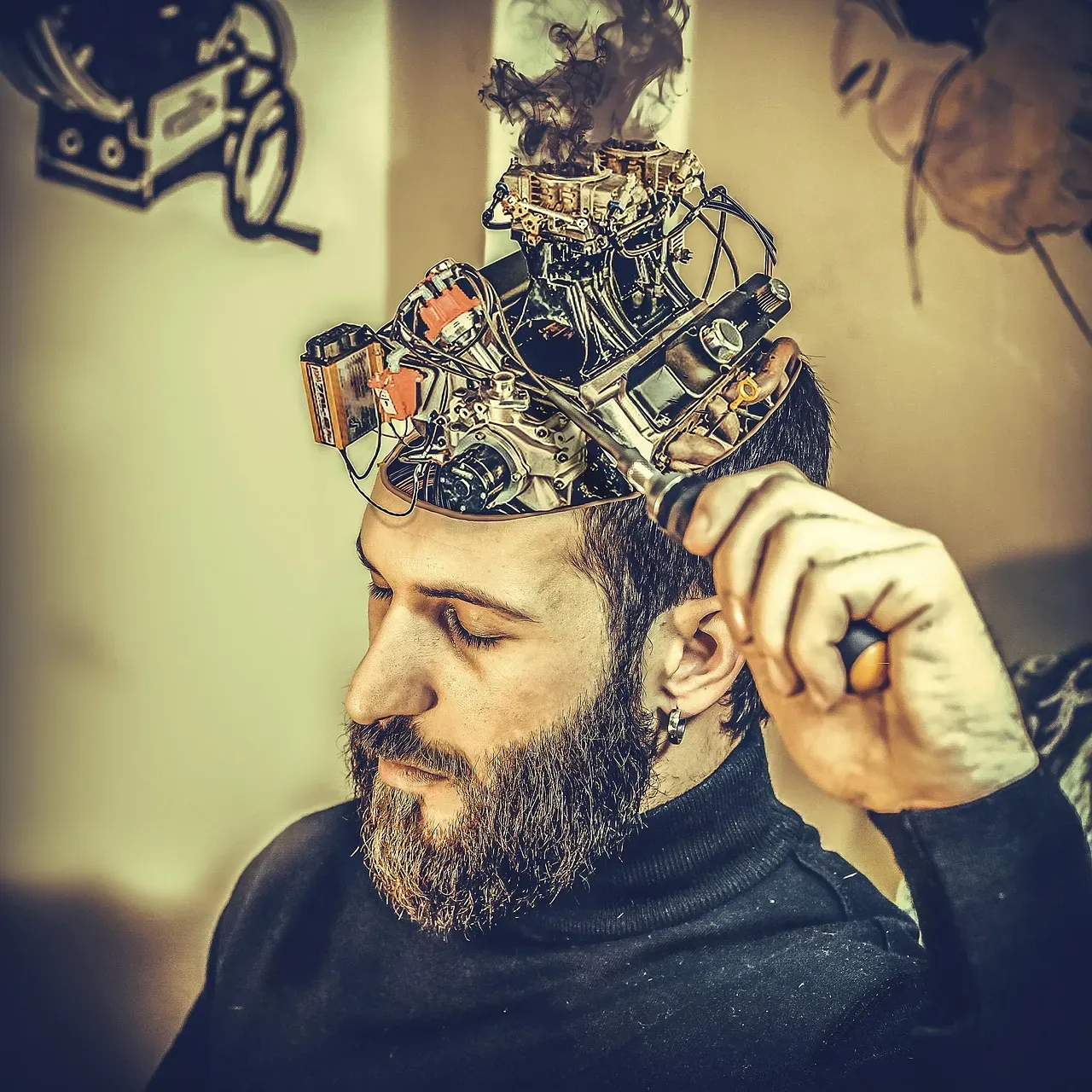
I find it both humbling and strangely comforting to think that my conscious life is not an unfiltered feed of reality, but a streamlined, biased and sometimes wildly creative narrative built for survival. On one hand, it means I am never as right as I feel; my certainty is often just the confidence of a storyteller who has forgotten they are making things up at the edges. On the other hand, it means my confusion, my misperceptions, even my shifting sense of self are not personal failures – they are signatures of the biological hack that got my ancestors through a dangerous world.
If almost everything you experience is a carefully edited fiction, the goal is not to tear the set down and walk offstage; it is to learn the tricks of the production well enough to spot when the plot is lying to you in harmful ways. That might mean questioning old stories about what you are capable of, loosening your grip on cherished but rigid beliefs, or simply remembering that your first impression is just one draft among many. In the end, maybe the real mark of wisdom is not seeing the world as it truly is – that might be impossible – but knowing that you never quite are. Now that you know your mind is an editor, not a camera, which part of your story are you most tempted to rewrite first?