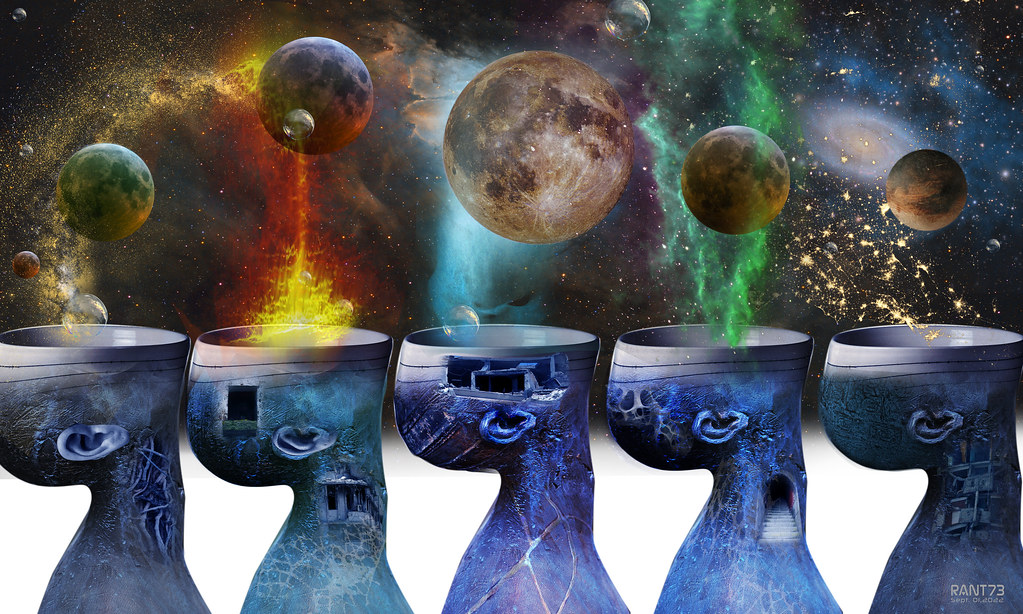

Every so often, a question sneaks up behind science, taps it on the shoulder, and asks something so wild it sounds almost impolite: what if the entire universe is, in some sense, conscious? Not just sprinkled with conscious beings here and there, not just brains lighting up in MRI machines, but a cosmos where mind is woven into the fabric of reality itself.
Astrophysicists and philosophers are not suddenly throwing out physics and hugging crystals. But as they dig into the mysteries of dark matter, quantum weirdness, and the baffling fact that the universe produces minds at all, some are starting to admit that the old story – a dead, dumb universe that somehow spits out consciousness as a side-effect – might be a little too simple. Is that a brave new frontier, or a clever way of smuggling mysticism into science?
The Strange Problem of Consciousness in a Cold Universe
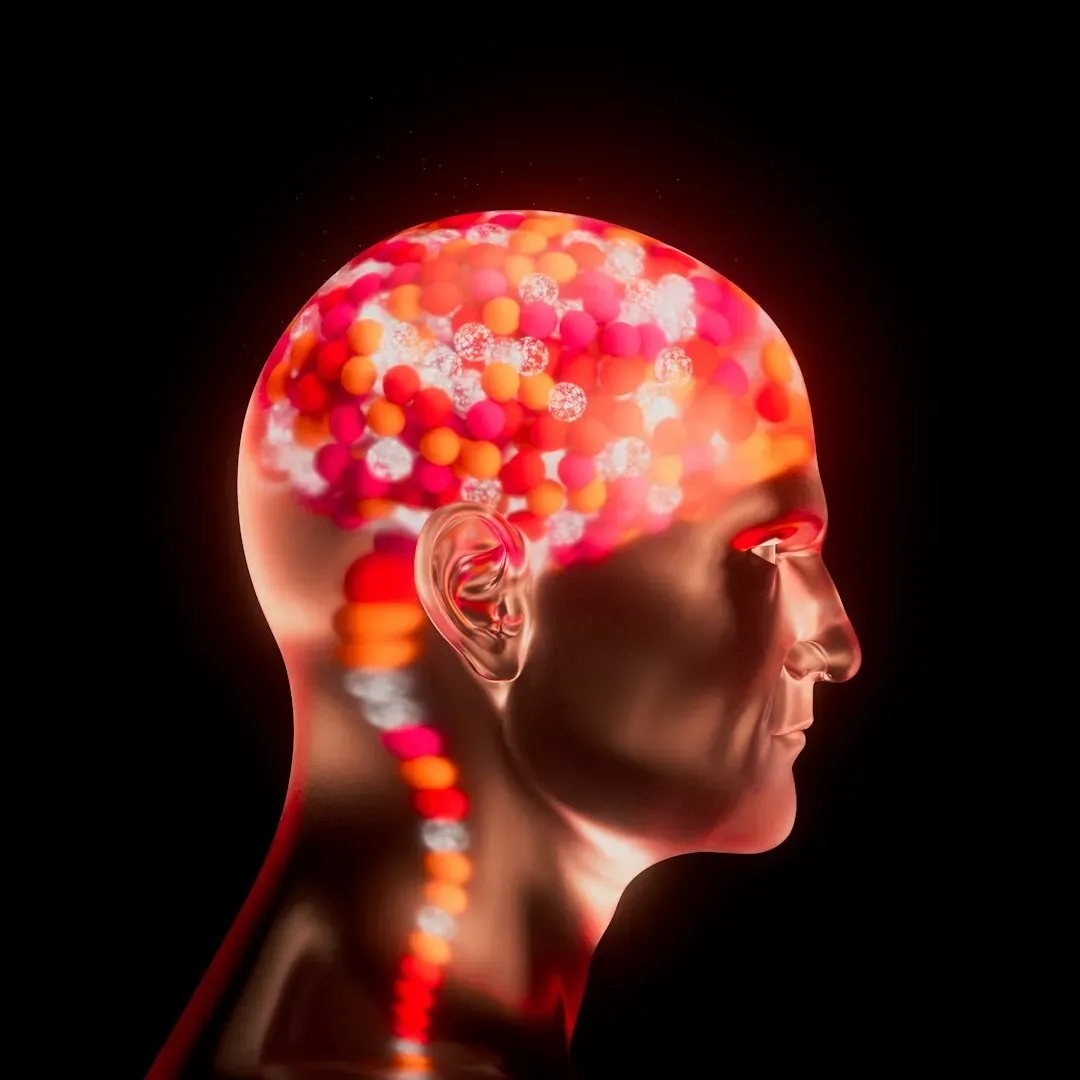
Here’s the unsettling part: we understand stars better than we understand our own awareness. We can model how galaxies form, how black holes grow, even how the first atoms fused in the early universe, but the raw feeling of being you – the inner glow of experience – stubbornly refuses to fit into an equation. Physicists are used to dealing with things they can measure, and consciousness keeps acting like that one guest at the party who won’t answer any direct questions.
In neuroscience, we can trace electrical signals, map brain networks, and correlate regions of the cortex with specific thoughts or emotions. Yet the simple question of why any of that activity is accompanied by subjective experience – why there’s a movie playing inside your head instead of just dark, silent computation – remains unsolved. This gap, often called the “hard problem of consciousness,” is exactly where some researchers peek over the wall and ask whether mind might be a more fundamental ingredient of reality than we once believed.
From Star Stuff to Mind Stuff: Why Cosmology Cares
At first glance, cosmology and consciousness sound like they belong in different universes. One points giant telescopes at nebulae and black holes; the other worries about dreams, pain, memory, and meaning. Yet modern astrophysics is, at its core, a story about how simple ingredients – hydrogen, helium, gravity – gave rise to unimaginable complexity: stars, planets, chemistry, life, and eventually beings that can look back and ask what it all means.
When you zoom out, the sequence is staggering: a hot, nearly uniform early universe cools, small fluctuations grow into galaxies, stars cook heavier elements, planets form, chemistry gets weird, biology appears, and over billions of years, nervous systems become sophisticated enough to host inner lives. For some astrophysicists, it’s hard not to notice that the universe does not just expand and cool; it also self-organizes, layering structure upon structure until it gives rise to minds contemplating the very laws that shaped them. That feedback loop – the universe becoming self-aware through us – is where cosmic evolution and consciousness collide.
Panpsychism: The Controversial Idea That Everything Has a Tiny Mind

One of the boldest ideas now floating around the edges of mainstream discussion is panpsychism, the view that consciousness (or at least some primitive form of experience) might be a basic feature of reality, like mass or charge. In this picture, electrons, photons, and fields are not just mindless building blocks, but carry vanishingly simple “proto-experiences” that combine in unimaginably complex ways as matter organizes into brains. This does not mean rocks are secretly plotting or your coffee mug has opinions; it means that the raw ingredient of experience might be spread thinly across all of nature.
Some philosophers argue that panpsychism dodges a key mystery: how you get rich, vivid consciousness from purely non-conscious parts. Instead of conjuring mind from absolute zero, it claims mind was there in some extremely basic sense all along, gradually integrated into the complex awareness we know in ourselves. A few physicists have cautiously toyed with these ideas, not because telescopes show emotions in quasars, but because standard materialism has struggled to explain how a universe of nothing but matter and energy suddenly wakes up. Of course, critics fire back that this simply pushes the problem down a level and risks turning physics into poetry.
Is Information the New “Mind” of the Universe?
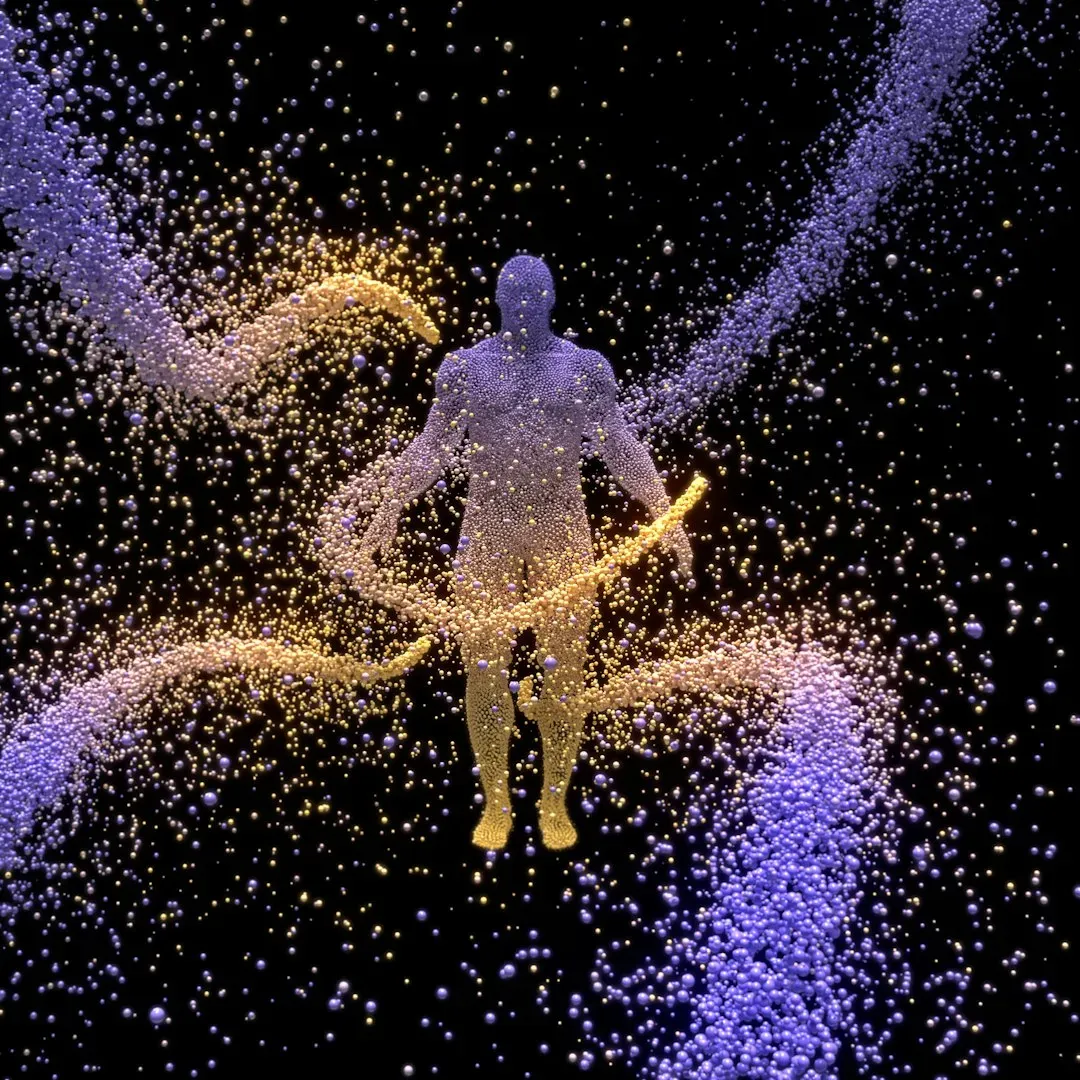
If there’s one word that keeps popping up in both physics and neuroscience, it’s “information.” Black holes seem to encode information on their horizons, quantum systems process information in strange, non-classical ways, and many theories of the brain treat it as an information-processing organ riding on waves of electrochemical activity. Some researchers have started wondering whether information itself is the bridge between inert matter and conscious experience.
From this angle, the universe looks less like a giant machine made of stuff and more like a vast network of information flows. Galaxies, stars, planets, ecosystems, and brains are all layers in a cosmic computation, each step rearranging and concentrating information into new patterns. Certain theories of consciousness claim that what matters is not just raw processing power, but how integrated and complex that information structure is. That opens a provocative door: if consciousness is tightly linked to specific forms of information processing, and the universe is an information engine from top to bottom, then perhaps we are seeing only one intense local flare of a much deeper cosmic pattern.
Quantum Weirdness and the Temptation to Say “It’s All Mind”
Whenever consciousness comes up, quantum physics is never far behind – often for better, sometimes for worse. Quantum mechanics famously tells us that particles behave like smeared-out waves of possibility until a measurement forces them into a definite state. For nearly a century, people have argued about what actually counts as a “measurement,” and whether awareness plays any role in “collapsing” those possibilities. It is very tempting to say that the universe waits for a conscious observer to make up its mind.
Most working physicists would say that bringing human consciousness into the machinery of quantum theory is unnecessary and unsupported, and they are right to be cautious. There are interpretations of quantum mechanics that do not mention mind at all, and the experimental evidence so far does not require invoking awareness. Still, the boundary between observer and observed, between the equations and what we actually experience, is undeniably fuzzy. That fuzziness keeps the door cracked open for speculative ideas where mind and matter are more entangled than our textbooks suggest – but it remains, at best, a suggestive hint, not proof that the cosmos is thinking.
Astrobiology and the Cosmic Rarity (or Abundance) of Minds

Another way astrophysicists bump into the question of a conscious universe is through astrobiology and the search for life beyond Earth. If the cosmos is teeming with planets, and many of them host life and intelligence, then consciousness might be a fairly common outcome of cosmic evolution, more like a natural phase of matter than a bizarre fluke. In that case, the universe would be laced with pockets of mind, scattered across billions of light-years, each experiencing its own small corner of reality.
On the other hand, if complex life and self-aware intelligence are incredibly rare, maybe even unique to Earth within our observable patch of space, then consciousness looks like a fragile anomaly in an overwhelmingly indifferent universe. That scenario makes the traditional view stronger: mind is an emergent property of very special conditions, not a universal feature of reality. Right now, we simply do not know which story is true; telescopes and probes are only just beginning to sniff the atmospheres of distant exoplanets. Until we know how common minds really are, any claim that the entire universe is conscious is more of a philosophical guess than a scientific conclusion.
Where Evidence Ends and Philosophy Takes Over
This is the tough love part: there is currently no solid astrophysical evidence that the universe, taken as a whole, is conscious in any way remotely similar to a human or animal mind. We do not see goal-directed behavior in galaxies, there are no cosmic brainwaves superimposed on the microwave background, and no instrument has picked up anything that clearly looks like a universe-scale nervous system. When scientists talk seriously about a conscious universe, they are usually speaking in carefully hedged philosophical terms, not reporting lab results.
That does not make the question meaningless; it just means we have to be honest about the line between data and speculation. Physics can tell us that the universe produces complexity and minds under certain conditions. Philosophy then steps in to ask what that says about reality at its deepest level: is consciousness a late, local glitch, or is it baked into the foundations? The danger is in quietly sliding from poetic metaphors into scientific claims without evidence. The opportunity is in letting hard science and rigorous philosophy sharpen each other, instead of pretending that one can do the other’s job.
So, Is the Universe Conscious? A Cautious, Opinionated Answer
If we are being ruthlessly honest, the safest scientific answer right now is no: there is no compelling evidence that the universe as a whole is conscious in any robust, testable sense. What we do know is that the universe can generate localized islands of consciousness – like you, reading these words – given enough time, matter, and energy arranged in the right way. Those islands may be more common than we think, or heartbreakingly rare, but they are still islands, not proof that the entire ocean is alive.
My own view is that the idea of a conscious universe is best treated as a powerful metaphor and a provocative philosophical stance, not a conclusion we have earned yet. It reminds us that mind and matter are more intertwined than old-school materialism liked to admit, and it forces us to question whether our picture of “dead” physics is complete. But until we can turn these ideas into clear predictions and measurements, they remain beautifully speculative. Maybe the universe is not conscious in itself, but it is clearly capable of producing consciousness that can reshape worlds – which might be even more unsettling. In the end, the more gripping question might be this: not “Is the universe conscious?” but “What kind of universe creates beings that can even ask that?”