
Imagine closing your eyes at night, drifting into a dream, and somewhere in a lab a computer quietly prints out what you are seeing in your mind – a house, a dog, a stranger’s face, even whether the scene feels pleasant or terrifying. That might sound like a piece of sci‑fi horror, but versions of this are already happening in sleep labs, and the accuracy is getting uncomfortably good. We are not at the stage of replaying your dreams like a perfect movie, but scientists have reached the point where they can often guess the broad content of your dreams far better than chance, using real brain data, not magic.
What is even more striking is the direction of travel: more data, more powerful models, and better imaging are steadily tightening the gap between your private inner world and what machines can infer from it. As brain‑scanning technology, AI, and sleep science collide, we’re entering an era where reading dreams is no longer a metaphor. Whether that amazes you, scares you, or both at the same time, it raises a huge question: how exactly are scientists doing this – and what happens when the guesses become almost always right?
From “Dream Diaries” to Brain Decoders: How We Got Here
For most of human history, dreams were decoded the old‑fashioned way: you woke up, tried to remember something half‑broken and slippery, and then told someone about it. Psychologists, spiritual leaders, and curious partners all had one thing in common – they relied completely on your memory and your honesty. That meant the science of dreams was stuck with fuzzy, incomplete data because the only access point to your night life was your morning story.
That started to change when brain imaging and sleep research matured together. Once researchers could track your brain waves during different sleep stages and combine that with modern tools like functional MRI and high‑density EEG, they could do more than just ask you what you dreamed. They could record your brain patterns while you were in the middle of dreaming, wake you at just the right moment, and ask what you saw. Over thousands of these pairings, they began to build maps linking specific patterns of neural activity to broad dream themes – like seeing a face, being outdoors, or moving through a building.
The Science Behind “Reading” a Dream: Brains, Images, and Machine Learning

At the heart of modern dream decoding is a surprisingly straightforward idea: the brain uses many of the same regions to imagine something as it does to actually see it. When you dream of a cat, your visual cortex is not sitting idle; it lights up in structured ways that overlap with how it would respond if a real cat were in front of you. Scientists exploit this overlap by first training algorithms on waking brain activity while people watch known images or categories, like animals, buildings, or tools.
Once the computer has learned how patterns of brain activity map onto visual categories, it can be unleashed on sleep data. During REM sleep, when vivid dreams are most common, researchers collect brain scans and run them through these trained models. Without ever asking you a question, the algorithm looks for familiar patterns and generates predictions: this dream likely contains a person, or is happening indoors, or involves words and reading. Early work only beat random guessing, but as data sets got bigger and models more sophisticated, accuracy for broad categories climbed dramatically, approaching levels where scientists can say with high confidence what type of scene you are dreaming about.
What “90 Percent Accuracy” Really Means (And What It Doesn’t)
Claims that scientists can predict your dreams with around nine‑tenths accuracy sound almost supernatural, but in context they are more modest and more nuanced. That level of performance typically refers to specific, limited tasks: for instance, predicting whether your dream includes a certain kind of visual element, like a human figure versus a building, or guessing among a small set of categories based on patterns the model has already seen many times in training. Within those narrow setups, performance can reach surprisingly high levels, especially when the signal is clean and the subject has spent many hours in the scanner.
What it does not mean is that a computer can yet reconstruct the full storyline of your dream – the argument with your boss, the exact words spoken, the strange mash‑up of your childhood home and a random airport. Think of current systems as very smart but very near‑sighted: they can tell that you are dreaming of a face, maybe even that it is large and central, but they do not know whether that face belongs to your partner or a celebrity. So when you see a headline throwing around numbers like ninety percent accuracy, it is more honest to translate that as “in a controlled lab experiment, for a simple question about dream content, the system is right almost all the time,” not “scientists can perfectly read your mind while you sleep.”
Inside the Lab: How Researchers Actually Decode a Dream
The real process of dream decoding is painstaking, repetitive, and honestly a bit exhausting for the volunteers. A typical participant might spend multiple nights in a sleep lab, connected to electrodes or lying inside a noisy MRI scanner while researchers monitor their brain waves. When the data suggest the person has entered REM sleep, the team waits a short time, then wakes them and immediately asks what they were just experiencing, sometimes repeating this cycle again and again through the night.
Each of those awakenings produces a paired data point: a snapshot of brain activity and a short dream report. Over many trials, and often over multiple nights, these pairs build up into a training set. Researchers then use machine‑learning methods to find patterns that reliably distinguish, say, dreams with moving objects from dreams with stationary scenes. Next time the same volunteer falls asleep, the scientist can watch the live brain data and let the computer silently “guess” the dream content, checking later how often those guesses matched what the sleeper reported when woken. It is not glamorous, but it is exactly this slow accumulation of carefully labeled brain activity that powers the jaw‑dropping demos you see in headlines.
Dreams, Memories, and Emotions: Beyond Simple Visuals

So far, most of the splashy stories focus on visual content, but dreams are not just silent movies; they are packed with emotions, memories, and half‑formed thoughts. Interestingly, some of the same technology that lets researchers decode visuals is beginning to peek into that richer layer. When people dream about emotionally intense scenes, areas of the brain linked to fear, reward, and social connection can spike in recognizable ways, giving algorithms a clue about whether a dream is more like a nightmare, a wish‑fulfillment fantasy, or something fairly neutral.
Memory is another frontier. During certain sleep stages, the brain appears to replay fragments of waking experiences, a process thought to help lock in long‑term memories. By comparing sleep activity with recordings taken while someone learned a task or explored a virtual environment, scientists can sometimes infer that the brain is running a kind of compressed replay while the person is asleep. That does not mean a researcher can read the exact memory like a diary entry, but it suggests that future systems might be able to say not only “you are dreaming about a place,” but “you are reprocessing something from earlier today,” bringing dream decoding closer to reading the emotional and autobiographical meaning of what you experience at night.
The Technology Getting Sharper: AI, Better Scanners, and More Data
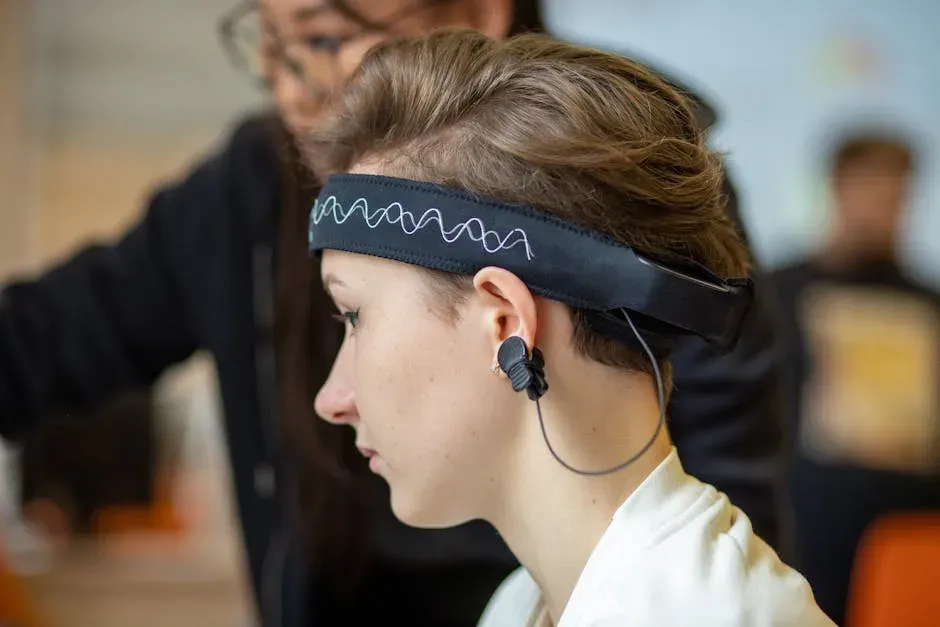
The reason this field is moving so fast is simple: the same forces turbocharging everything from image generation to language models are now being applied to brain data. More powerful AI models can detect faint, complex patterns in noisy scans that older methods would have missed. When you combine that with improved imaging hardware – higher‑resolution MRI, more precise EEG caps, and hybrid systems that can track both deep structures and surface activity – the signal scientists have to work with is becoming richer and cleaner.
I have to admit, part of me is excited by how quickly this is accelerating, and part of me is uneasy. As labs collect larger brain‑imaging data sets and share them across institutions, models can be trained not just on a handful of volunteers but on hundreds or thousands of brains. That opens the door to decoders that generalize better and need less individual calibration, making the idea of “off‑the‑shelf” dream analysis more plausible. It is still early days, but if you look at how quickly AI image recognition went from clumsy to nearly flawless in everyday apps, it is hard not to see a similar curve beginning here.
Why This Matters: Medicine, Mental Health, and the Ethics of Private Dreams
As tempting as it is to focus on creepy sci‑fi scenarios, there are genuinely hopeful applications. Being able to infer the content and emotional tone of dreams could help diagnose and treat conditions like PTSD, depression, or certain sleep disorders where nightmares or disrupted dreaming play a central role. Instead of relying only on what patients remember in the morning, clinicians might someday have objective, real‑time indicators of how often someone relives a traumatic event in sleep, or whether a therapy is changing their dream patterns over time.
But let’s be brutally honest: once technology exists to peer into a private space, it rarely stays confined to purely benevolent uses. Even if current dream decoders are limited and clunky, the trajectory raises real ethical questions. Who owns the data from your sleeping brain – you, the lab, or a company providing the hardware? Could employers or insurers be tempted, at some point, to ask for “sleep profiles” under the banner of wellness or risk assessment? It might sound far‑fetched now, but so did always‑on location tracking and social‑media data mining a couple of decades ago. Waiting until dream‑reading is perfect before we talk about boundaries would be a serious mistake.
Conclusion: Your Dreams Are Not an Open Book – Yet

Here is my blunt take: anyone claiming that scientists can fully read your dreams like a movie is overselling the story, but anyone shrugging this off as hype is not paying attention. We are in a strange in‑between zone where machines can already pick up surprisingly accurate hints about what you are dreaming, especially in narrow, controlled settings, and the underlying technology is improving on pretty much every front that matters. The headline promise of roughly nine‑tenths accuracy is currently tied to specific types of questions and specific lab conditions, yet the gap between that and something more general is not as vast as it once was.
For now, your dreams are still mostly your own – messy, personal, and safely muffled behind a wall of biological noise. But the cracks in that wall are real, and they are widening with each new study that pushes decoding from vague guesses to reliable predictions. The crucial choice ahead is whether we treat this emerging power as a toy, a tool, or a potential weapon, and start building norms and protections before it quietly seeps into everyday life. When you close your eyes tonight, it is worth asking yourself: if someone could really see what you dream about, would you be comfortable with who might be watching?