
Every once in a while, a question sneaks into your mind that feels almost dangerous: what if everything around you is not really as solid as it seems? Your job, your phone, the coffee in your hand, even your own body – what if they are not the fundamental “stuff” of reality at all, and the only thing that truly exists is consciousness itself? That thought can be a little unsettling, but also oddly thrilling, like peeking backstage during a live show and realizing the set is mostly painted cardboard.
Scientists and philosophers have been wrestling with this puzzle for centuries, and in recent years the debate has actually become sharper, not softer. Neuroscience keeps mapping the brain in more detail, physics keeps stripping matter down to almost nothing, and yet your inner world – your private, first-person experience of being you – remains stubbornly central. I still remember lying awake as a teenager, staring at the ceiling, thinking: if I stopped existing, would the universe really go on, or would the whole movie just end right there? Let’s walk through what science, philosophy, and a bit of honest personal reflection actually say about the bold idea that consciousness might be the only thing that truly exists.
The Strange Hardness of the “Hard Problem”
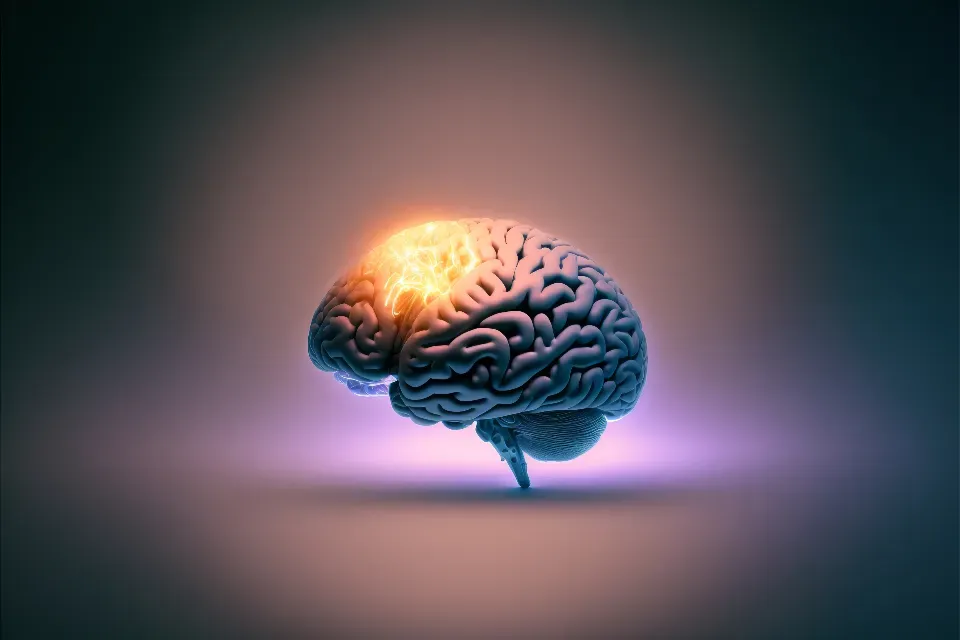
Here’s the first shocking twist: science still has no widely accepted explanation for why anything feels like something from the inside. We can track neural activity, measure brain waves, and even predict decisions milliseconds before you become aware of making them, but that does not tell us why colors are vivid, music feels moving, or pain hurts instead of just being a data signal. This gap between physical processes and subjective experience is what philosophers call the hard problem of consciousness, and the name is not an exaggeration.
In everyday life, we usually assume that if we get enough detail about the brain, the mystery will just sort of evaporate. But as many neuroscientists and philosophers have pointed out, we might just be stacking up more and more facts without touching the core puzzle. Turning up the resolution on a television screen does not tell you why there is a show playing at all. This is one reason some thinkers are willing to entertain the wild-sounding idea that consciousness is not just a byproduct of matter, but maybe the basic ingredient of reality that everything else depends on.
Materialism Under Pressure: Is Matter Really Fundamental?
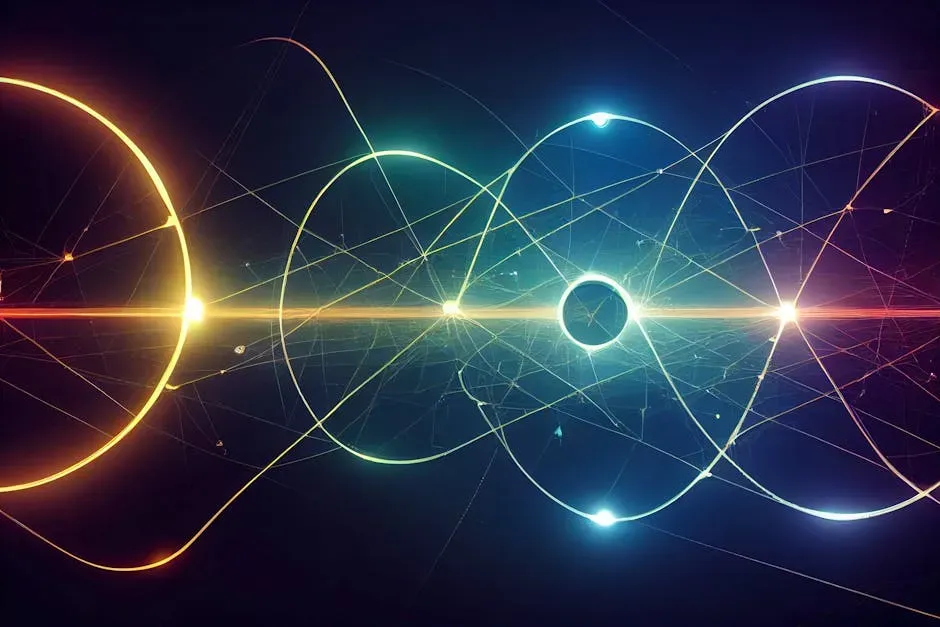
For most of modern science, the default view has been pretty clear: matter comes first, consciousness comes later. According to this materialist picture, atoms give rise to molecules, molecules to cells, cells to brains, and brains somehow to minds. The story is elegant and powerful, and it has fueled huge technological progress. But cracks have started to show whenever we zoom in too far, especially with quantum physics raising questions about what matter even is when no one is looking.
At the quantum level, particles behave less like little billiard balls and more like probability waves, patterns of potential that “collapse” into definite states when measured. Some interpretations of this collapse involve the role of observation or information, and that has kept the door open for speculation that mind or consciousness could be more than just a late-arriving side effect. While mainstream physics does not claim that consciousness creates reality, the fact that matter looks less solid and more abstract than we once thought makes it easier to imagine models where experience, not stuff, is the starting point.
Idealism and Panpsychism: Consciousness-First Philosophies
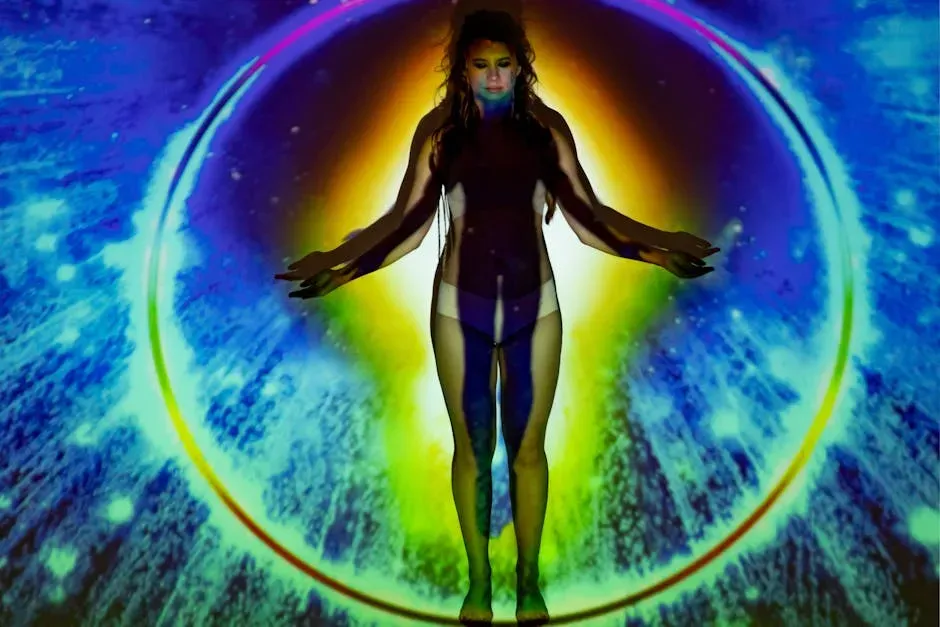
When people say consciousness might be the only thing that truly exists, they are usually flirting with some form of philosophical idealism. In this view, reality is fundamentally mental or experiential, and what we call “physical objects” are patterns or structures within consciousness rather than things outside it. On this picture, your experience of a tree and the tree itself are not two separate kinds of thing but two aspects of the same underlying conscious reality. It is a radical flip: instead of the brain producing the mind, the mind is the medium in which brains show up.
A more scientifically palatable cousin of idealism is panpsychism, the idea that consciousness or proto-consciousness is a basic feature of the universe, present in some extremely simple form even in elementary particles. Panpsychism does not claim that rocks have opinions or that electrons dream, but it suggests that the building blocks of brains must already carry some primitive spark of experience. This avoids the abrupt magic trick where consciousness appears from absolutely nowhere once matter gets complicated enough. Still, it raises hard questions: if tiny pieces have tiny experiences, how do those add up to the rich inner life you feel when you fall in love or listen to your favorite song?
What Neuroscience Actually Shows (And What It Doesn’t)
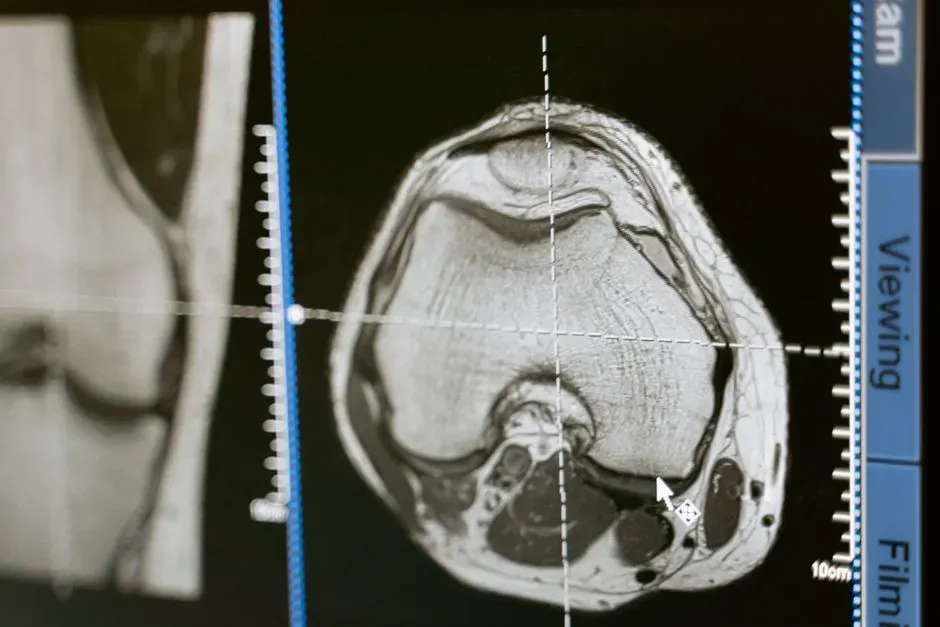
Brain science, to its credit, has been incredibly successful at linking mental states to neural patterns. We can now watch specific networks light up when you recognize a face, feel scared, or recall a memory. Damage certain regions and your personality shifts; chemically tweak certain receptors and your mood and sense of self can change dramatically. From a distance, this looks like strong evidence that consciousness is just brain activity and nothing more, and many researchers talk that way in practice.
But correlation is not the same as identity, and that is where the philosophical fight heats up. Just because every conscious state we know of in humans has a neural footprint does not automatically mean the footprint is the whole story. A radio and a broadcast are tightly correlated too – break the radio and the music stops – but that does not prove the music only exists inside the device. Personally, when I walk out of a brain scan and see my own neural patterns on a screen, it feels eerily intimate and yet oddly hollow; the scan shows the structure of the process, but it does not touch the raw texture of what I was feeling inside.
Interestingly, even some hardcore neuroscientists admit that we do not yet have a fully satisfying theory that moves from brain circuits to lived experience. Various models, like global workspace theory or integrated information theory, try to map specific features of consciousness to measurable properties of brain activity. They can often predict when someone is conscious versus unconscious, or why some information becomes part of awareness and other information does not. Still, the “why anything feels like anything” question lingers just out of reach, as if the last step from mechanism to meaning refuses to be bridged.
Are We Living in a Simulation, a Dream, or a Mental Universe?

The idea that consciousness is the only thing that truly exists often overlaps with popular questions about simulations and virtual realities. If advanced civilizations could someday create extremely detailed virtual worlds with conscious beings inside, then in theory it might be statistically more likely that we are in one of those simulations than in a base physical reality. In a sense, that would mean what you take as “physical” is already a layer of generated experience, with consciousness as the central undeniable fact at the user level.
Even without full-blown simulation theories, many spiritual and philosophical traditions have compared ordinary life to a dream: convincing, emotionally powerful, and yet somehow not the final word on what is real. When you wake up from a vivid dream, the dream world vanishes, but the fact that you were experiencing remains solid. Similarly, no matter how much doubt you throw at matter, mathematics, or scientific models, you cannot seriously doubt that there is some kind of experience happening. That makes consciousness feel like the bedrock – the last thing you can deny – which is why some modern thinkers are comfortable saying that, at minimum, experience is more certain than any theory about external objects.
What Do Scientists Actually Say When Pushed?
Despite dramatic headlines, most working scientists do not claim that consciousness is literally the only thing that exists in a strict, philosophical sense. The dominant stance in labs and journals is still that there is an objective world out there, described by physics, in which brains evolve and eventually produce minds. Where things get interesting is when you listen to what they admit once you press them on definitions, limits, and unresolved problems. Many quietly acknowledge that we do not yet know how to fit first-person experience neatly into the third-person language of equations and measurements.
There are researchers exploring serious alternatives, from integrated information theories that treat consciousness as a fundamental quantity, to models that assign a primitive experiential aspect to physical systems. A few are willing to argue that a kind of modern idealism might be the best way to reconcile physics and experience, though that remains a minority view in mainstream science. When I talk to scientifically minded friends about this, the pattern is often the same: publicly, they lean on safe materialist language; privately, they admit that the mystery of being a subject, rather than just an object, still keeps them up at night.
So, Is Consciousness the Only Thing That Truly Exists?
Here is the honest, unsatisfying, and yet strangely liberating answer: we do not know, and anyone who claims we do is overreaching. What we can say with confidence is that consciousness is the most immediate and undeniable aspect of reality for each of us; everything else, from particles to planets, comes to us filtered through it. At the same time, the success of physics, chemistry, and biology in predicting the behavior of the world suggests that there is some stable structure out there that does not depend on any one person’s mind. Walking into traffic under the banner of “only consciousness exists” is still a very bad idea.
My own opinion, after years of wrestling with this, is that treating consciousness as a fundamental feature of reality is more honest than pretending it is just a side effect we have almost fully explained. That does not mean the universe is a personal dream or that matter is an illusion in the cartoonish sense. Instead, it hints that the divide between “mental” and “physical” might be a conceptual shortcut we made up, not an ultimate boundary in nature. If consciousness is not the only thing that exists, it at least looks like the only part of existence we ever directly touch.
Maybe the most responsible stance right now is to live as if the world is real and shared, while thinking as if experience is at the center of everything we can know. There is something humbling and oddly comforting in that tension. It means that when you notice your own awareness – the simple, quiet fact of being here, reading these words – you are not staring at a tiny glitch in an otherwise material universe. You might be brushing up against the very fabric of reality. And that raises a question you will have to answer for yourself: if your consciousness is the one thing you can never doubt, what do you want to do with it while you are here?