
The idea that you’re quietly plugged into the universe by something unseen sounds mystical, but it is also very literally true. Modern science has uncovered a web of forces, fields, and feedback loops that link your body and mind to everything around you, from the air you breathe to the stars that forged the atoms in your blood. You don’t notice most of it, the same way a fish doesn’t notice water, but it is shaping you every second. This invisible force is not just one thing. It is an overlapping mesh of gravity, electromagnetism, quantum fields, biological signaling, social contagion, and digital connections, all interacting at once. Some of it is rock‑solid physics, some of it is emerging neuroscience and psychology, and some of it shows up in the strange ways stress, moods, and ideas ripple through whole societies. Put together, it says something bold: you are not a separate, sealed-off individual. You are a node in a living, physical, emotional, and informational network that never turns off.
The Invisible Physics Holding You In Place
Think about this: right now, the Earth is pulling on every atom in your body, and you are pulling back on the Earth with the exact same force. Gravity is the archetypal invisible force, described precisely by physics, yet completely taken for granted in everyday life. You do not see it, you only see its effects: the way your coffee stays in the mug, the way you fall when you trip, the way the Moon choreographs the tides that affect coastal ecosystems and climate. What often gets missed is how this connects you to the rest of the universe. Gravity does not have an off switch; it extends infinitely, which means distant galaxies are, in principle, tugging on you right now, even if the effect is tiny. On a human scale, Earth’s gravity shapes how your heart pumps, how your bones grow, how your inner ear keeps balance, and even how your blood distributes through your body. Astronauts who live in microgravity literally lose bone and muscle because that constant invisible pull is part of what you’re built for.
The Electromagnetic Sea Your Body Swims In

If gravity is the quiet background hum, electromagnetism is the vivid, restless river you live in. Every message in your nervous system travels as an electrical impulse; your brain is a dense forest of firing neurons creating shifting electromagnetic patterns. At the same time, you’re bathed in radio waves, Wi‑Fi, visible light, infrared from warm objects, and the Earth’s own magnetic field. You can’t see most of these frequencies, but your body is interacting with them all the time. The most obvious visible slice of this force is light. Sunlight regulates your circadian rhythm, shifting hormone levels that decide when you feel awake, hungry, or sleepy. A dim, cloudy week can literally change your mood because the receptors in your eyes send different signals to deep brain regions that regulate emotion and energy. Even smartphones, which emit only a small amount of light and radio energy, can derail your sleep when the blue light hits your retina late at night, tricking your brain into thinking it is still daytime.
Quantum Fields And The Stranger Side Of “Connection”
Underneath both gravity and electromagnetism lies something even more abstract: quantum fields. According to modern physics, every particle in your body is an excitation of underlying fields that fill all of space, including the space between galaxies. In that sense, you are not made of little billiard balls floating in emptiness, but of ripples in continuous fields that never go away. The same space in front of you right now is teeming with these fields, whether it looks empty or not. This does not mean you have some magical telepathic bond with everyone on the planet, but it does mean separateness is more of an illusion than it feels. Quantum mechanics includes phenomena like entanglement, where particles that once interacted show correlated behavior even when far apart. While those effects do not scale directly to everyday emotional life, they do challenge our intuitive picture of a clean, solid boundary between “you” and “everything else.” At a fundamental level, the universe behaves like a single, deeply interconnected system, not a pile of isolated objects.
Your Nervous System: The Hidden Social Antenna
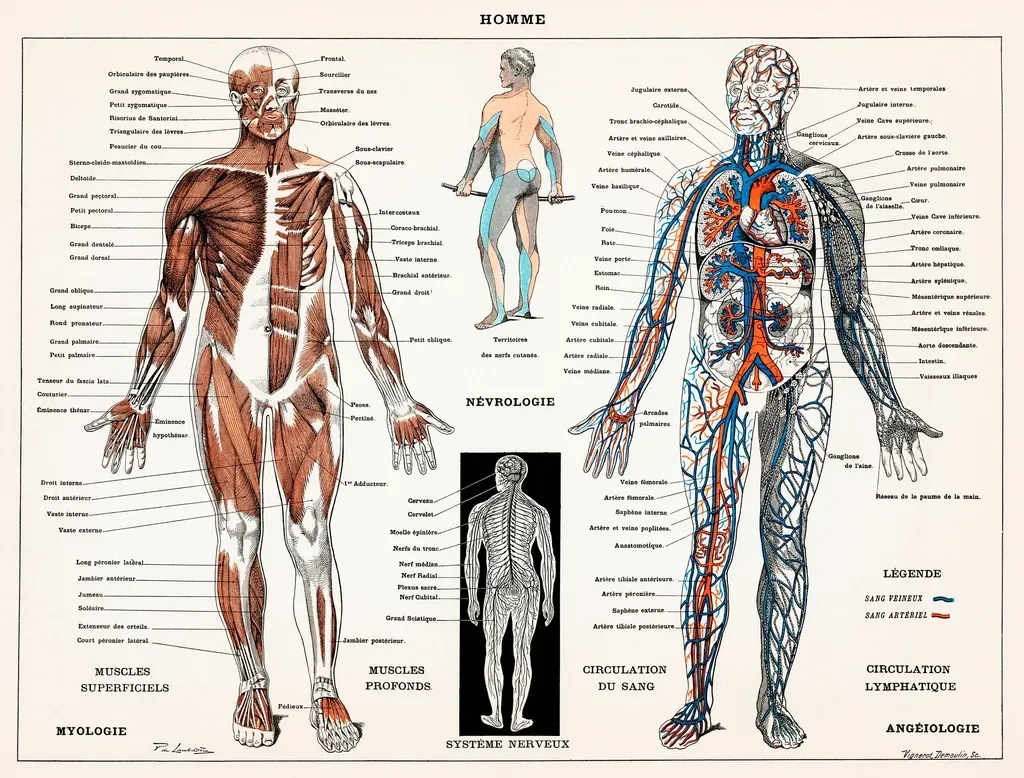
On the biological side, your nervous system is constantly scanning, syncing, and mirroring other people. Humans have brain circuits that light up both when we act and when we see someone else act, helping us automatically imitate postures, yawns, and even accents. This is one reason spending time with stressed or calm people tends to pull you toward the same emotional state, even if no one talks about how they feel. In a group, your heart rate, breathing, and micro-expressions often drift into subtle synchrony. I remember sitting on a train once, completely fine, when someone got on who was clearly anxious. No words were exchanged, but my shoulders tensed and my breathing sped up within minutes. Only later did I realize I had unconsciously mirrored them. That is your invisible social force at work: a web of nervous systems, hormones, and body language forming a kind of shared emotional field. You can call it “vibes” if you want, but underneath the slang is a very real, measurable pattern of brain and body coupling.
The Emotional Climate You Can’t See But Feel

Just as there is a physical climate, there is an emotional climate that you move through each day. News cycles, social media feeds, workplace tension, and family dynamics create a background mood that can lift you up or drag you down. You might open your phone in a good mood, then feel drained and angry twenty minutes later without anything happening to you personally. That shift is your nervous system reacting to emotional signals, stories, and conflicts that are not “yours” but still enter your internal world. Psychologists and neuroscientists studying emotional contagion have found that moods spread through groups like weather fronts. One chronically negative person can tilt the atmosphere of an entire team or family. On the flip side, being around someone who is grounded and kind can constantly nudge your brain back toward safety and curiosity. None of this is mystical, but it is powerful. Your inner state is not floating freely; it is plugged into the invisible emotional currents of your environment, and you are also generating that climate for others, whether you like it or not.
The Digital Web: Invisible Wires, Real Consequences
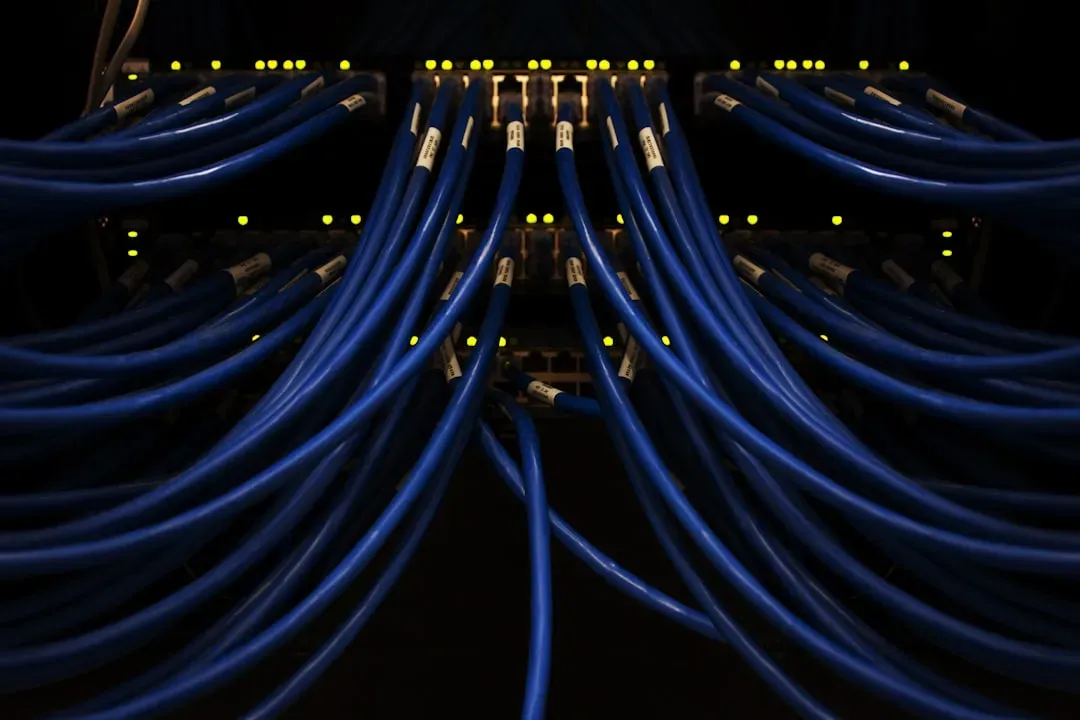
Then there is the most obvious modern invisible force: the internet and all the unseen infrastructure that makes it work. Every time you send a message or scroll a feed, information is jumping through fiber-optic cables, cell towers, and satellites at nearly the speed of light. You do not see the servers humming in distant data centers or the undersea cables stretched across entire oceans, but they are stitching your daily life to millions of strangers in real time. What makes this especially powerful is that digital systems now feed back into your psychology and behavior in quiet but relentless ways. Recommendation algorithms learn what you click and then shape what you see next, nudging your beliefs, desires, and sense of what is “normal.” One person’s post during a sleepless night can spark a global movement or a wave of panic by morning. In that sense, your mind is wired into a planetary nervous system that never sleeps. You are individually small inside it, but never completely separate from it.
Ecology, Breath, And The Material Loop Of Life

There is also a very literal way the world flows through you: every breath and every sip of water is you physically exchanging matter with the environment. The oxygen you breathe was made by plants and algae using sunlight; the carbon dioxide you exhale feeds them back. The water in your glass may have been ocean spray, glacier ice, or part of a dinosaur’s blood millions of years ago. Your body is not a closed container; it is a temporary pattern in a continuous cycle of atoms. Food ties you even more tightly to this web. The energy fueling your thoughts was captured by plants from the sun and then passed through soil microbes, insects, animals, and entire ecosystems before landing on your plate. When you throw away leftovers or choose what to eat, you are influencing agriculture, land use, and climate far beyond your immediate surroundings. The invisible force here is the interconnected metabolism of the planet: a vast, looping system in which you are both consumer and contributor, guest and impact-maker.
Meaning, Belief, And The Stories That Steer You

Beyond physics and biology, there is another invisible force that is just as real in its effects: shared meaning. Beliefs, values, and cultural stories are not physical objects, but they shape behavior, policy, relationships, and even the technologies we build. The idea of human rights, for example, is not something you can touch, yet it has changed laws, sparked revolutions, and protected lives. A story about what success looks like can quietly steer your career, your spending, and how you treat other people. On a personal level, the narratives you absorb about yourself can act like invisible gravity wells. If you carry a story that you are unlovable or destined to fail, you will likely move through the world with a certain posture, a certain hesitancy, and people will respond to that, reinforcing the story. The opposite is also true when you start to see yourself as capable and worthy. I have seen friends change nothing external in their lives except the way they interpreted their own past, and suddenly opportunities began to appear. The world did not suddenly become kinder; their story shifted their relationship to the world’s existing possibilities.
Conclusion: You Are Less Alone, And More Responsible, Than You Think
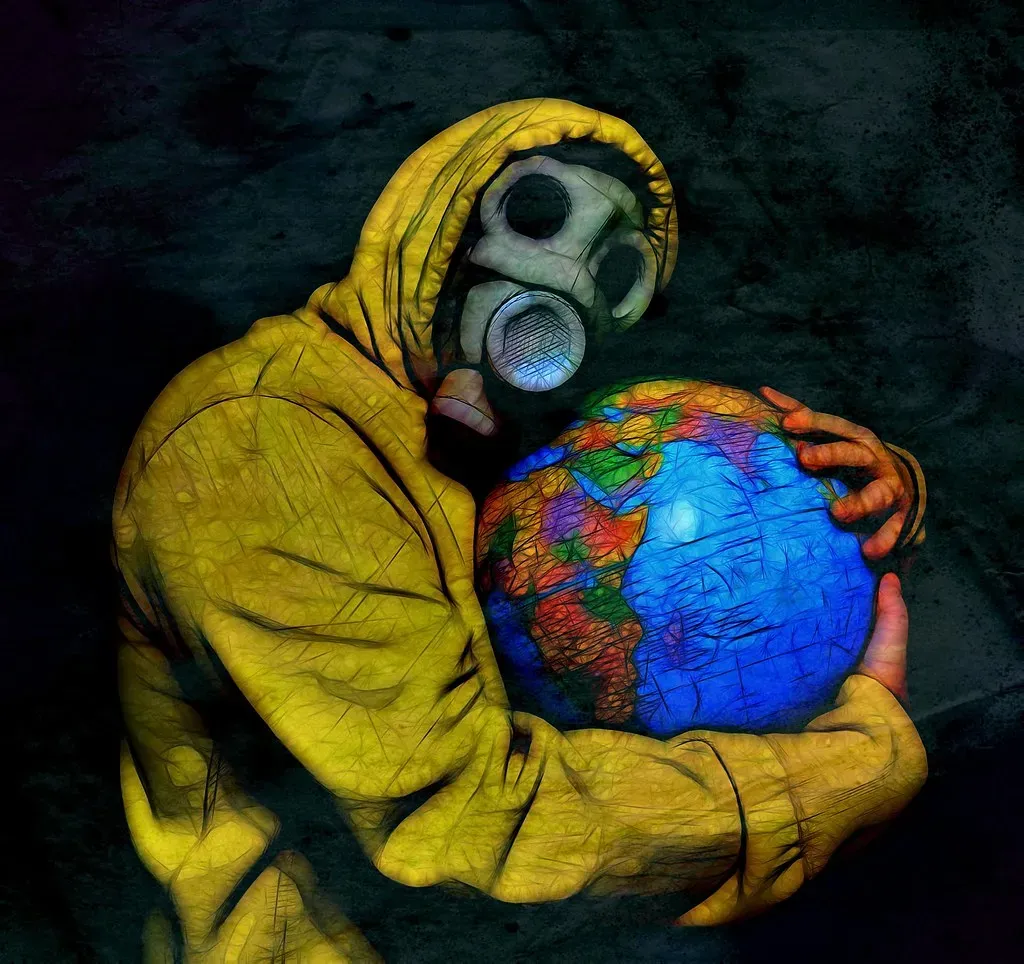
When you put all of this together, the picture is both humbling and empowering. You are not a sealed-off unit strolling through a dead, neutral background. You are woven into gravity and electromagnetism, into quantum fields and ecological cycles, into social emotions and digital networks, into shared stories and collective moods. Some of these forces you cannot escape, some you can shape, and all of them make the idea of being completely “independent” look more like a comforting myth than a scientific reality. My own opinion is that recognizing this web of invisible connections is not just a neat thought experiment; it is a moral upgrade we badly need. If your mood can tilt a room, if your attention can feed or starve toxic systems, if your choices literally change the climate, then pretending you are separate is not only inaccurate, it is irresponsible. The flip side is encouraging: small, wise shifts in how you move, consume, speak, and listen can ripple much farther than you will ever see. Knowing that, what kind of invisible force do you want to be?