
Picture the night sky as a calm, frozen backdrop and you standing under it, feeling tiny but safe. Now flip that image on its head: the entire Milky Way you live in is already locked in a slow-motion cosmic collision with a galaxy two and a half million light‑years away. You are not in a quiet universe; you are riding a ship that has been on a collision course since long before humans, dinosaurs, or even Earth’s current continents existed.
Astrophysicists now treat this merger as a done deal, not a distant “maybe” on the cosmic calendar. You can think of it as a story already well underway, just playing out in a timescale so long that your whole species only catches a single frame of the movie. Once you see it that way, the night sky stops being a static wallpaper and turns into a living, evolving drama you are right in the middle of.
You’re Already Inside a Cosmic Dance, Not Waiting for One
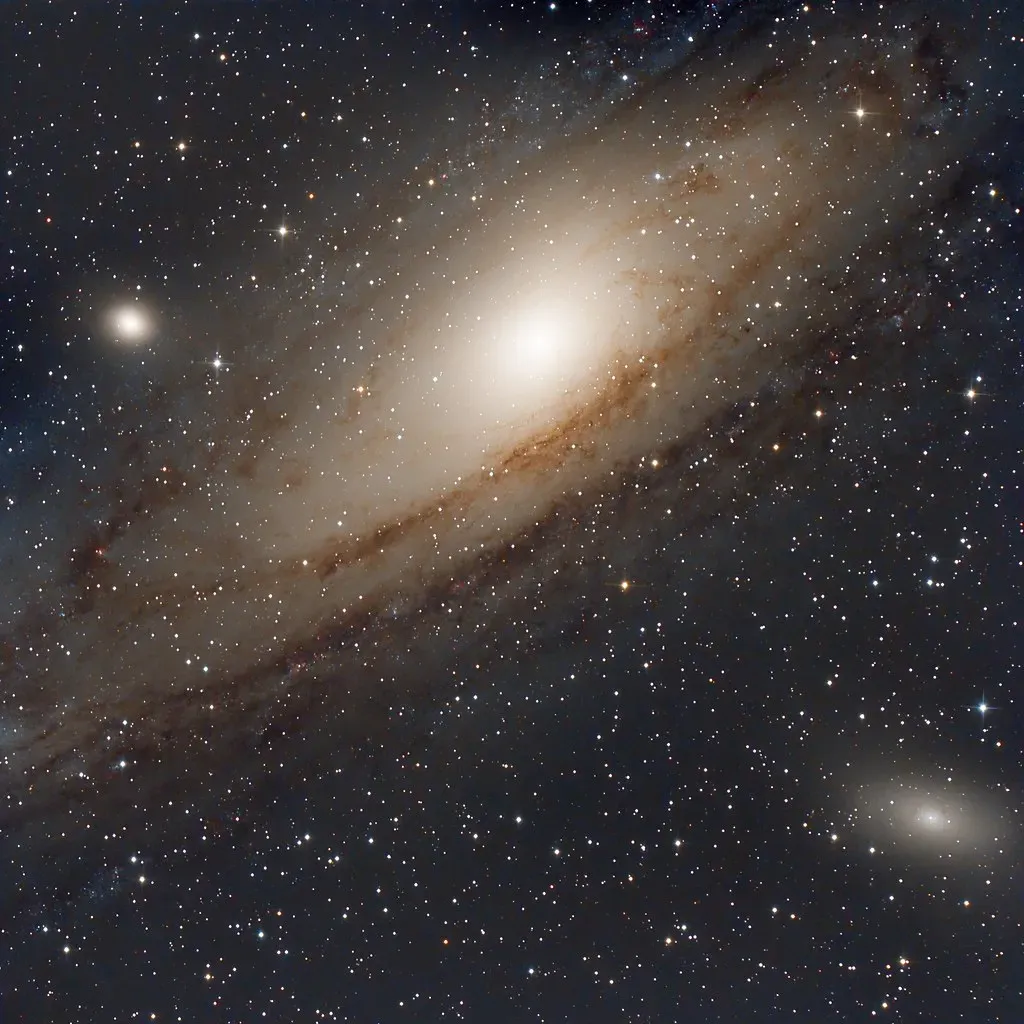
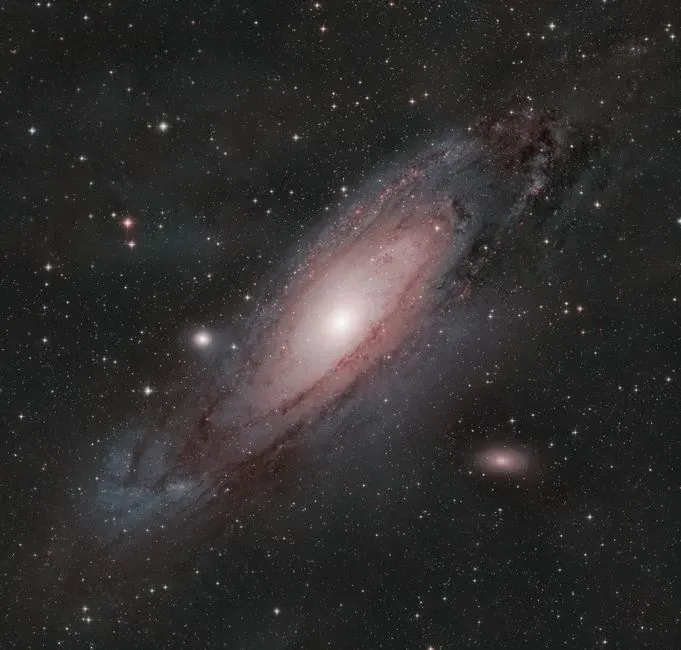
When you look toward the constellation Andromeda on a dark, clear night, you might see a faint, fuzzy patch of light. What you are actually seeing is an entire spiral galaxy that is not just hanging there, but falling toward you. Even though the visible stars in both galaxies are still incredibly far apart, their mutual gravity is already pulling them together and subtly changing the paths they take through space.
Astrophysicists figured this out by measuring the motion of Andromeda relative to the Milky Way in fine detail. Instead of drifting away like many distant galaxies do, Andromeda is moving toward you at hundreds of kilometers per second on average. That inward motion, combined with the way the galaxies tug on each other’s outer regions, tells you the merger is not some future switch that will flip on; it is a process that has been running quietly in the background for billions of years.
Gravity Between Two Giant Dark Matter Halos Is Calling the Shots
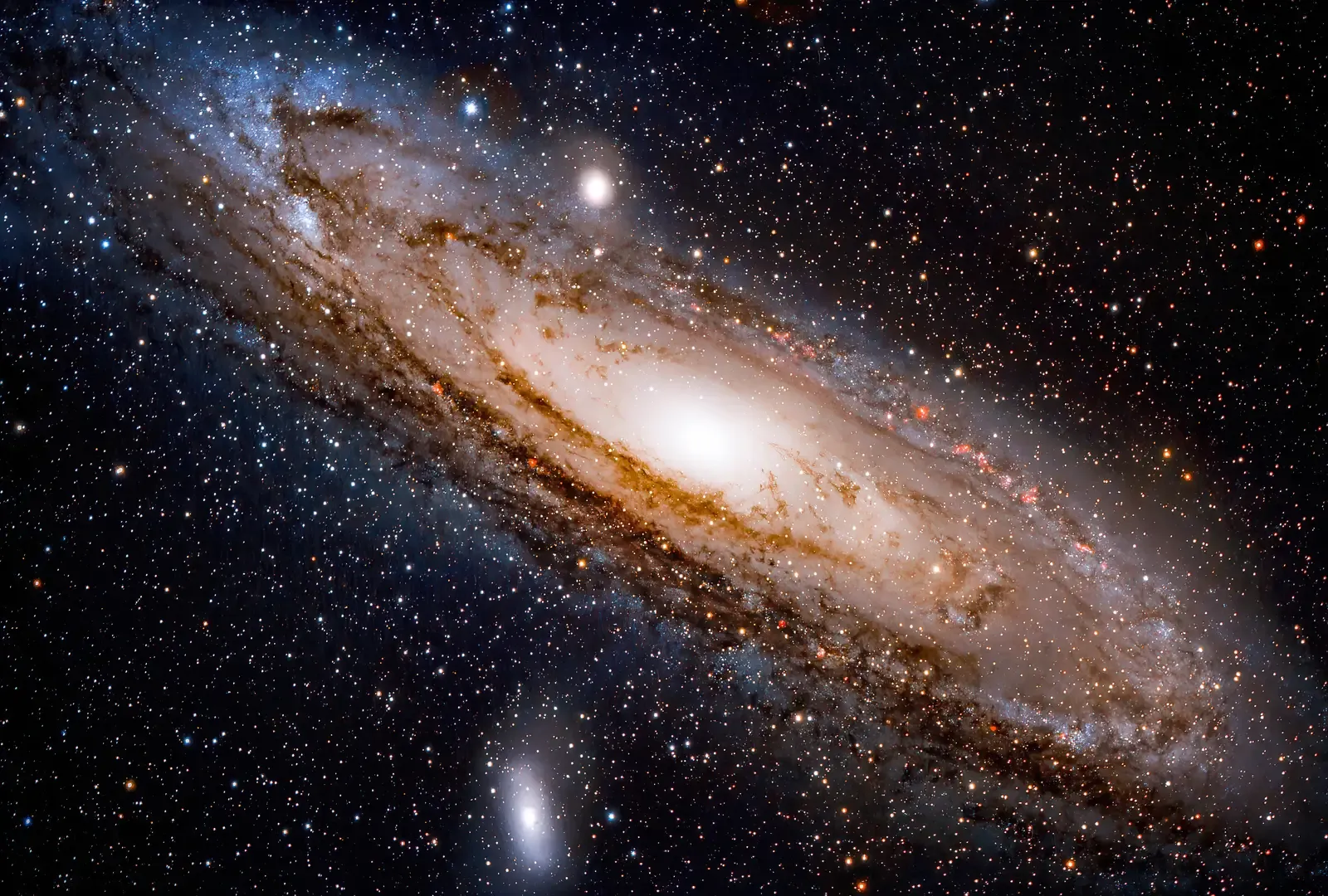
It is tempting to imagine two flat pinwheel disks of stars just drifting closer and closer, but that picture leaves out the main characters: the huge dark matter halos around each galaxy. You do not see these halos directly, but they contain most of the mass of both the Milky Way and Andromeda, stretching far beyond the bright, starry parts you notice in photos. When you talk about the galaxies interacting gravitationally, you are mostly talking about these invisible cocoons pulling on one another across intergalactic space.
As these halos interpenetrate and respond to each other’s gravity, they steal orbital energy from the visible parts of the galaxies. In practical terms, that means the galaxies slow down a bit in their mutual orbit and spiral gradually closer. You can think of it like two skaters on a vast, frictionless rink tied together with a bungee cord you cannot see; over time, small tugs and stretches add up, bringing them into a tighter and tighter dance without either skater needing to push.
The Merger Timeline Is Measured in Billions of Years, Not Human Eras
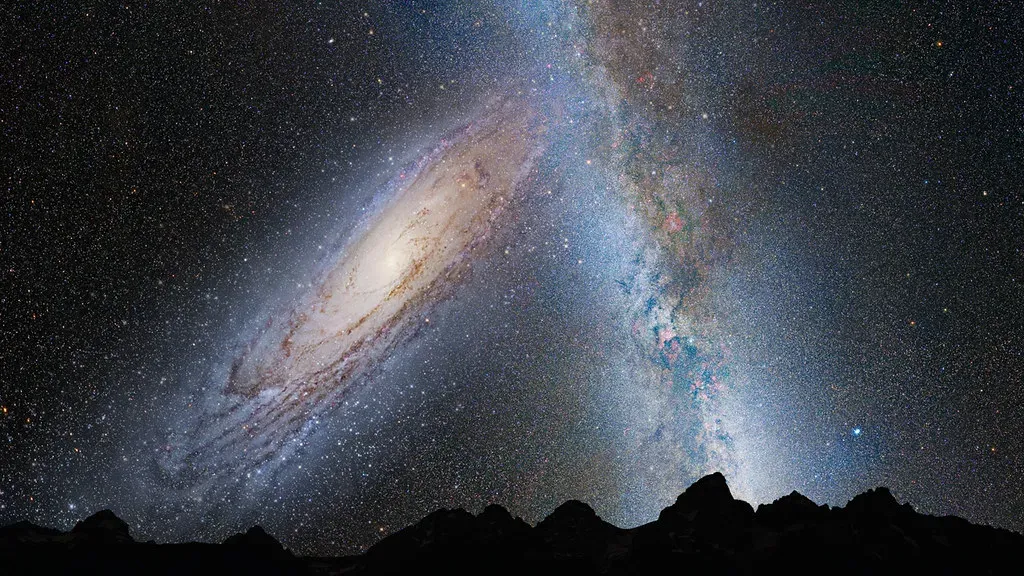
If someone tells you the Milky Way and Andromeda will collide in roughly four to five billion years, it is easy to hear that as a countdown to a single dramatic night sky event. The reality for you is much more spread out: the “merger” is a long sequence of phases, and the current phase started long before any human looked up in curiosity. The galaxies have likely been gravitationally bound to each other for most of their lifetimes, tracing slow orbits inside a small group of galaxies you know as the Local Group.
From your perspective, that means the big headline collision in a few billion years is just one moment in a much older relationship. Gravity has already been gently reshaping the outer reaches of both systems, nudging satellite galaxies, bending long orbits, and subtly warping the shapes of the outer halos. You live in the middle of a story whose timescale makes human history look like a single heartbeat in a marathon that has been running since long before complex life ever crawled onto land.
Simulations Show How Your Night Sky Will Slowly Become Unrecognizable
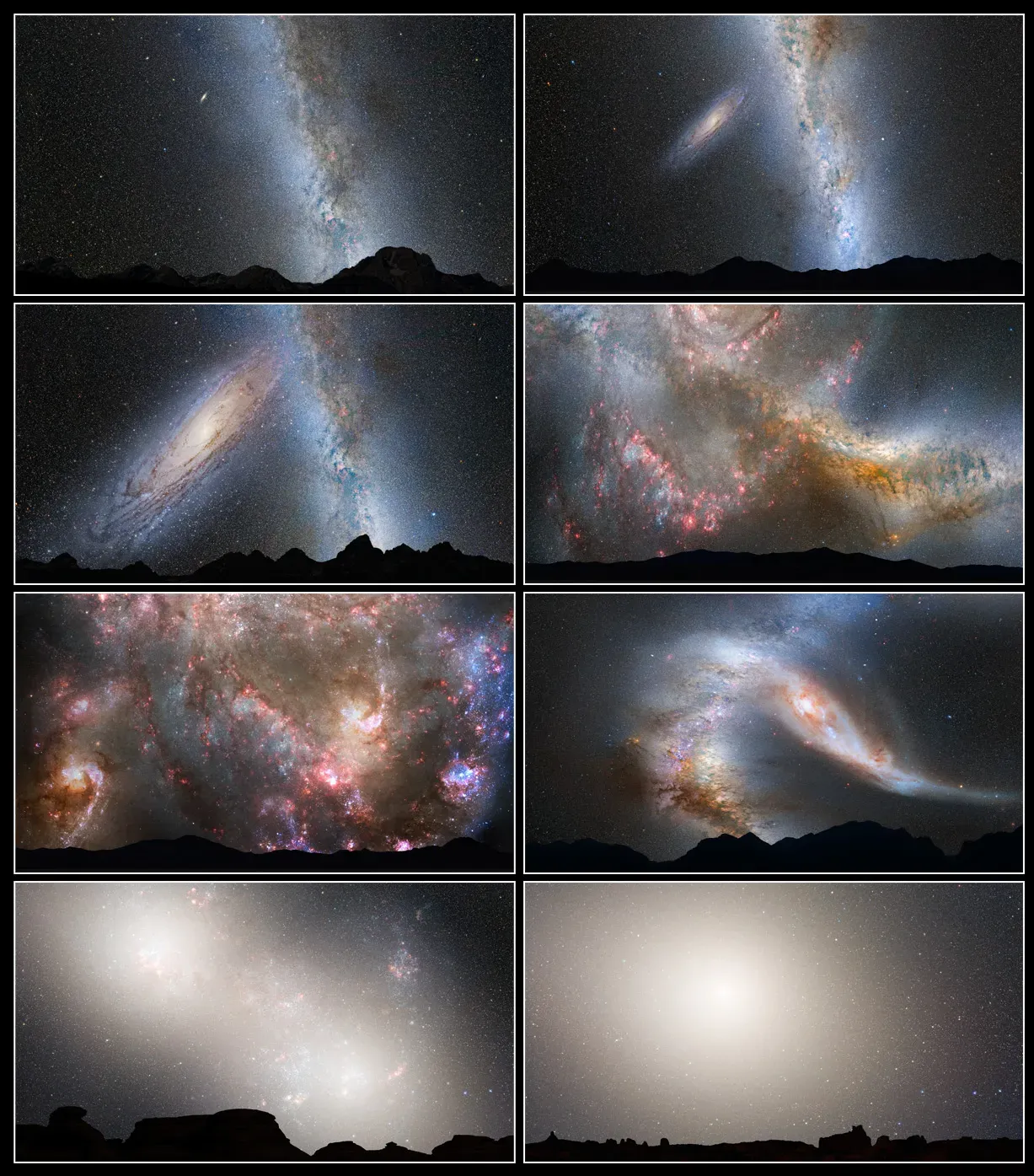
You do not have to imagine the future merger entirely in your head; computer simulations let you fast‑forward cosmic time and see how the two galaxies will blend. Astrophysicists feed in the best estimates of the galaxies’ masses, shapes, and motions, then let the laws of gravity and gas dynamics play out numerically. When you watch the resulting visualizations, you see the graceful spirals stretch, twist, and eventually smear into a more rounded, scrambled galaxy over billions of simulated years.
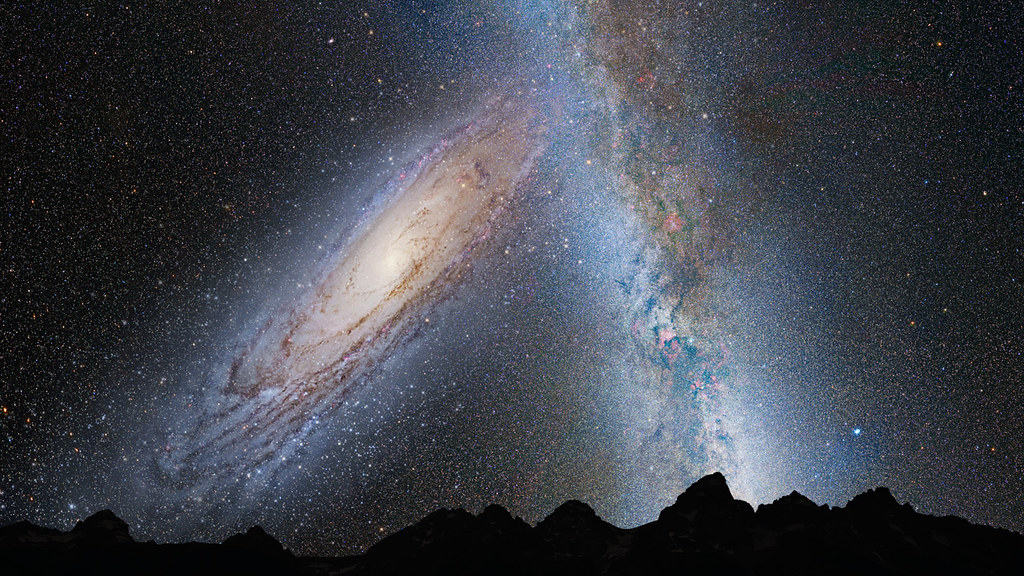
For you personally, the most dramatic change would be in the sky itself. Long before the cores merge, Andromeda would grow from a faint, fuzzy smudge into a dominating, structured object spread across the heavens. Over many generations, if humans or your descendants are still around, you would watch the constellations you recognize today be slowly drowned out and rearranged by this invading sea of stars. It is less like an explosion and more like watching a new continent gradually rise over the horizon of an endless ocean.
Despite the Drama, Your Solar System Probably Survives the Chaos
When you hear “galactic collision,” your mind may jump straight to images of stars smashing into each other and solar systems being shredded. In reality, stars are so far apart that even when two large galaxies merge, the chance that your Sun hits another star is extremely small. You should imagine two swarms of bees flying through each other with kilometers of space between each bee; they influence each other’s paths, but they almost never physically collide.
What does change for you is the overall orbit of the Sun around the galactic center. During the merger, the combined gravitational forces can toss your solar system into a new path, perhaps farther out or on a more elongated orbit. That shift could alter the stellar neighborhoods you pass through and the background glow of the Milky Way you see. Even so, your local space – planets, moons, and the quiet blackness between them – would still feel mostly familiar, a tiny stable island bobbing in a violently rearranging cosmic sea.
Clues in Your Galactic Neighborhood Reveal the Merger Already at Work
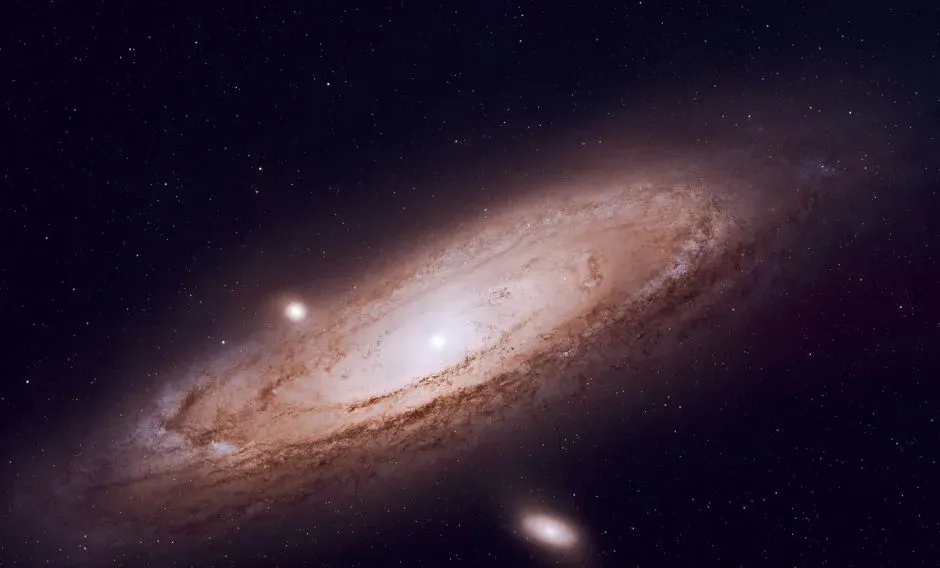
You do not need to wait for the future to see evidence that the Milky Way is already under the influence of Andromeda and other companions. When astronomers map the positions and motions of stars in your galaxy’s halo, they find streams and clumps that look like the remnants of smaller galaxies already pulled apart by past interactions. You can think of these stellar streams as fossil scars, showing where gravity has been at work shredding and redistributing matter over long stretches of time.
On a larger scale, when you look at how the Local Group of galaxies is arranged, you see that the Milky Way and Andromeda dominate the mass and are slowly moving together while smaller galaxies orbit around them. That pattern is exactly what you would expect if the two giants were already locked together gravitationally, their combined pull shepherding the rest. In a way, your cosmic neighborhood is already halfway organized around the galaxy that you will eventually share a single, merged identity with.
Seeing Yourself as a Temporary Resident of a Changing Galaxy
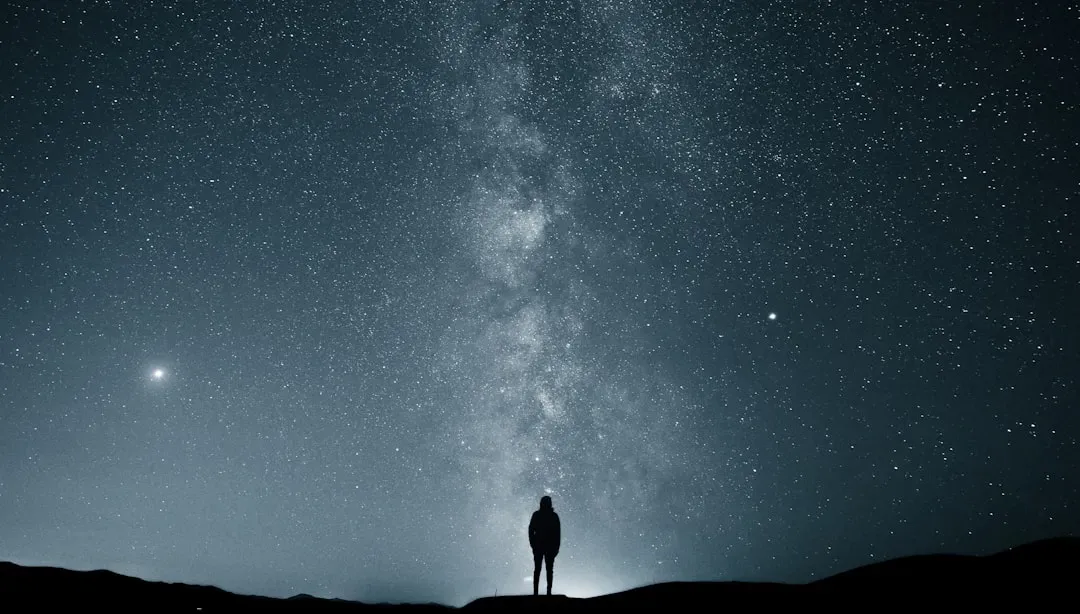
Once you understand that the Milky Way–Andromeda merger has been in motion since long before you existed, it changes how you place yourself in the universe. You are not simply living in “the Milky Way” as a fixed address; you are inhabiting one phase of a galaxy that is on its way to becoming something new. Just like continents drift, climates shift, and species evolve on Earth, galaxies grow, merge, and reshape themselves on scales so large that you usually do not feel them.
If you let that sink in, the story becomes oddly comforting rather than frightening. You get to be aware of a transformation that will continue long after you are gone, a reminder that change is the default state of the cosmos, not an exception. The next time you step outside and look up, you are not just seeing stars – you are catching one frame of an epic, multi‑billion‑year interaction that has been unfolding silently above every human who ever lived. What does it feel like to know that, without sensing it, you have always been moving through a galaxy in the middle of becoming something else?
Conclusion: Living in the Middle of an Ancient Collision
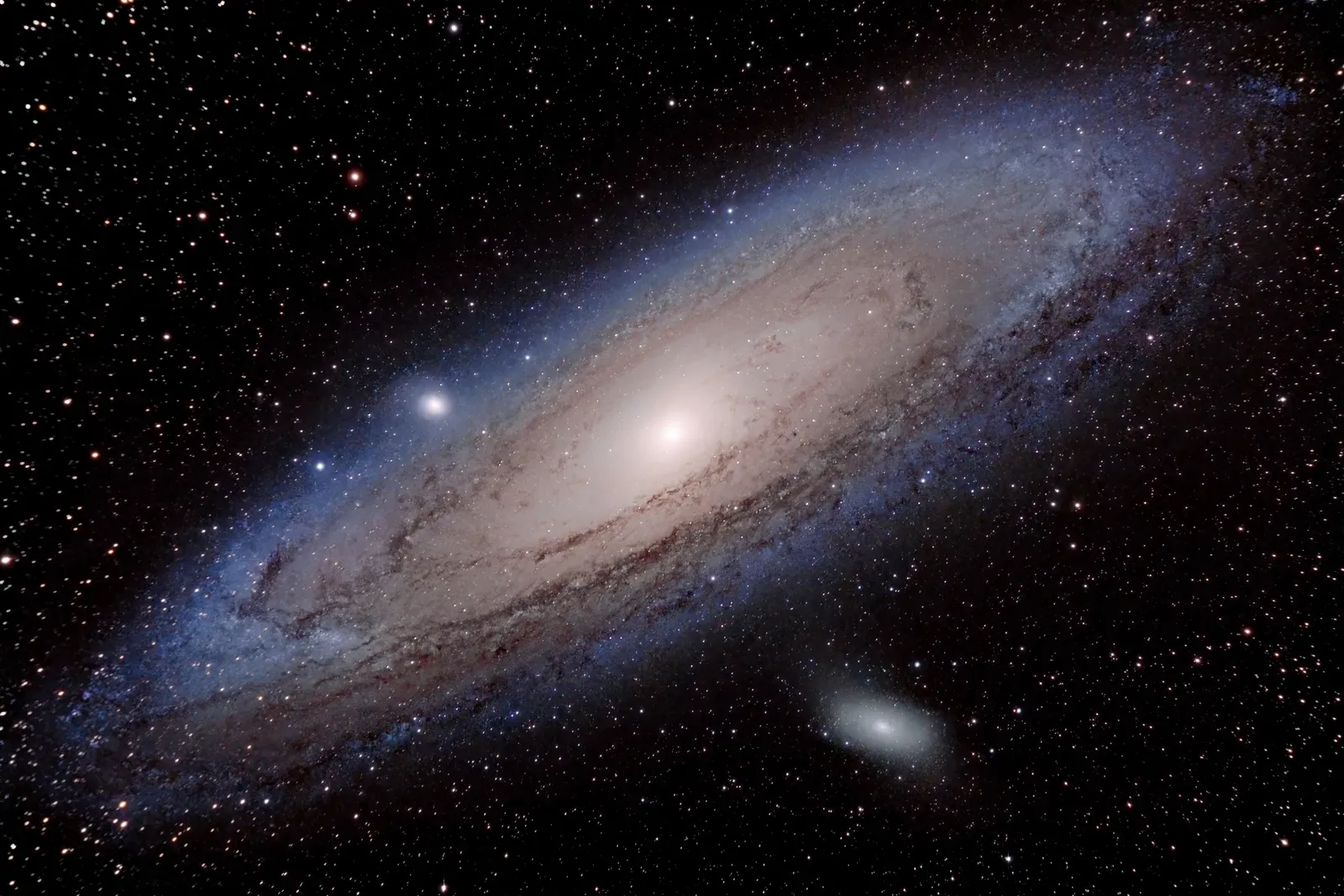
When you zoom out far enough, the headline that the Andromeda Galaxy is already interacting with the Milky Way stops being an abstract fact and becomes part of your own story. You live in a star system quietly riding the currents of an enormous gravitational river that began flowing long before your planet cooled and will continue long after your species is a memory. Instead of a static postcard universe, you inhabit a restless one, where even giant galaxies are temporary shapes in an ongoing cosmic reshuffling.
If you carry that perspective with you, everyday worries shrink just a little, not because they do not matter, but because you can see them nested inside a grander, slower drama. You are a brief observer, lucky enough to realize that the sky above you is not frozen at all, but part of a collision already underway between two colossal islands of stars. The question is not whether the merger will happen – it already is – but how knowing that might change the way you look up tonight and imagine your place in the universe. Did you ever expect that your home galaxy was already in the middle of a long, slow crash?