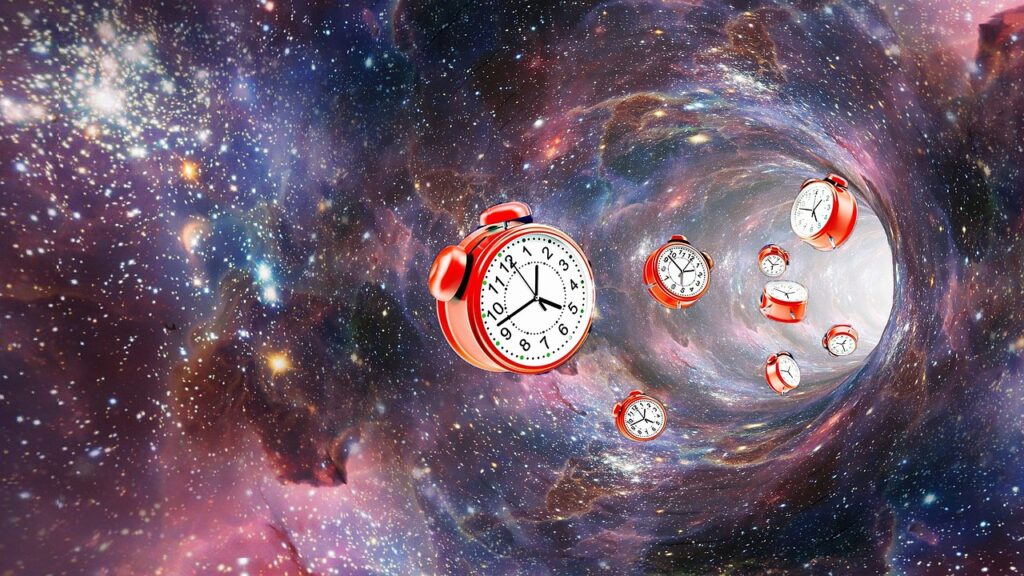

If you have ever stared at the night sky and wondered what came before everything, you are not alone. Your mind almost automatically tries to rewind the universe like a movie, frame by frame, back to some first scene, and then you want to ask what happened before that. But modern cosmology quietly delivers a shocking twist: the very concept of “before” may simply not exist when you go back far enough.
In other words, your most natural question might actually be meaningless in the strict language of physics. Time, according to the best models you have today, is not an endless line stretching forever into the past. It had a beginning. And because physics needs time as a built-in ingredient to even phrase a question, asking what was “before” time is like asking what is north of the North Pole. You feel the pull of the question emotionally, but nature might not owe you an answer.
The Big Bang: A Beginning to Time, Not Just to Stuff
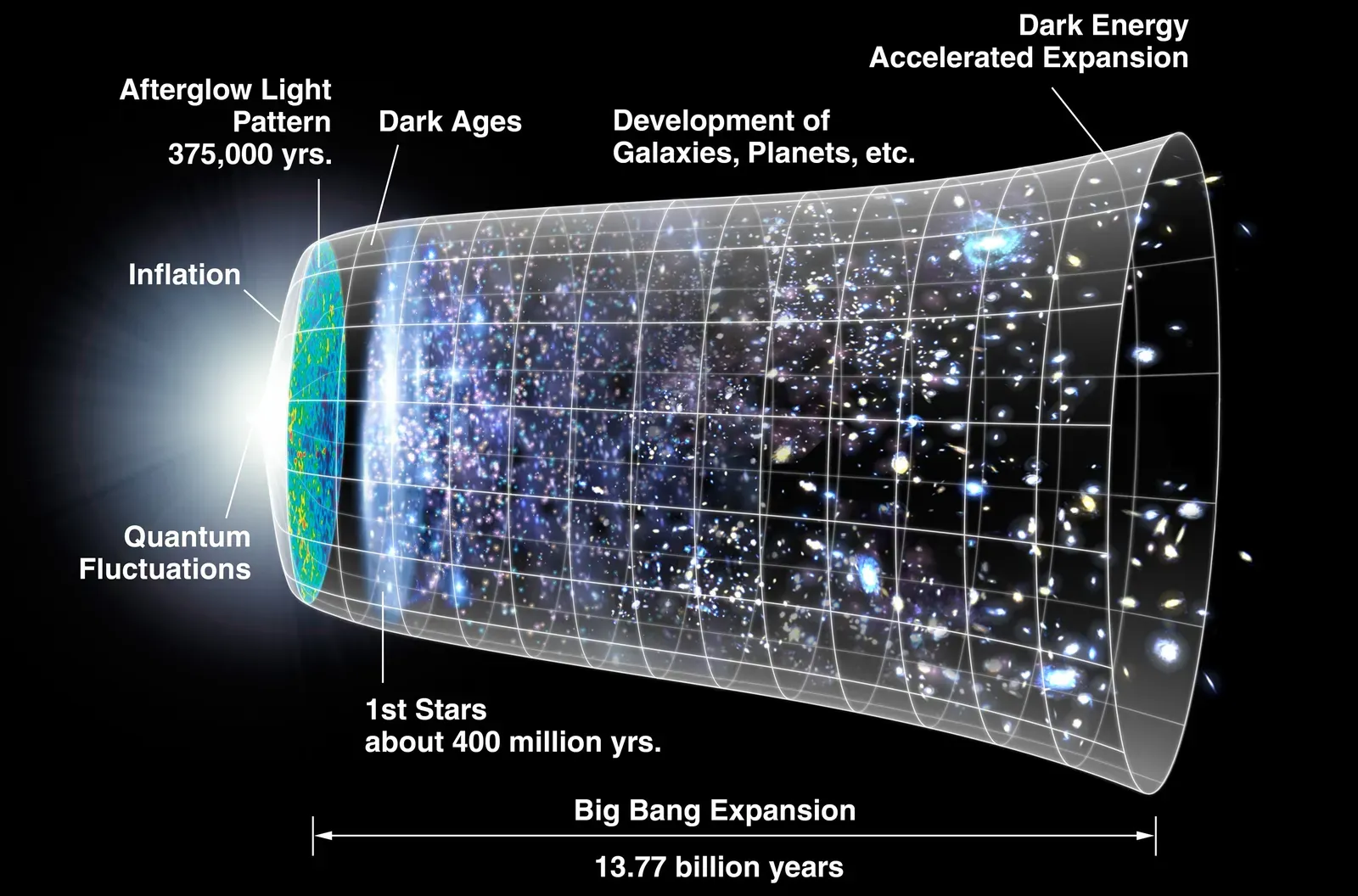
When you hear “Big Bang,” you probably imagine a huge explosion flinging matter into empty space. That mental movie is simple and vivid, but it is also wrong in one crucial way. In the standard cosmological model, you are not just talking about matter expanding into space; you are talking about space and time themselves stretching and coming into existence as the universe evolves.
Run the clock backward using Einstein’s general relativity and the equations tell you that the universe was once unimaginably hot, dense, and compressed. As you move closer to that initial state, the notion of ordinary time starts to break down, because the math pushes you toward a singularity where the theory itself fails. You are not looking at a fireball inside an already existing cosmic room; you are looking at the moment when the room, the clock on the wall, and the very idea of “earlier” and “later” all emerge together.
Why “Before Time” Is a Question Physics Cannot Formally Handle
To do physics, you need a stage: some kind of spacetime in which events can happen, clocks can tick, and equations can track how things change. Time is baked into how you write almost every law in physics, whether as a time derivative, a sequence of states, or a cause leading to an effect. Without time, those terms evaporate, and your mathematical language suddenly has no verbs, only nouns.
So when you ask what existed before time began, you are using a word that presupposes time in the first place. “Before” describes a relationship between two moments, one earlier and one later, and if there is no timeline at all, that relationship cannot be defined. You are basically asking what color is beyond the edge of the color spectrum, or what lies one step past the last number. Your intuition wants an answer, but your current physical theories are not built to even frame that as a well-posed problem.
How General Relativity Turns Time into a Flexible Ingredient
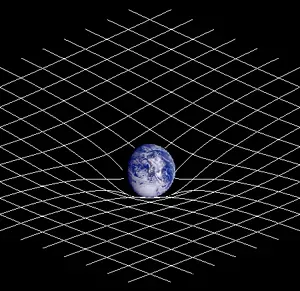
Einstein’s general relativity changed your understanding of time from something absolute and universal into something woven together with space. Instead of a rigid stage, you get a dynamic fabric that can curve, stretch, and ripple. In this picture, gravity is not a force pulling you down; it is the shape of spacetime telling matter how to move, and matter telling spacetime how to curve.
Because of that, time near a massive object or in a strong gravitational field does not pass the same way it does for you sitting comfortably at sea level. Atomic clocks on satellites run at slightly different rates than clocks on the ground, and you rely on that fact for technologies like GPS to work accurately. If time can be stretched, slowed, and bent by energy and mass, then it is not surprising that, at extreme conditions like those close to the Big Bang, your usual understanding of time would crumble completely.
Quantum Gravity and the Edge of What You Can Currently Know
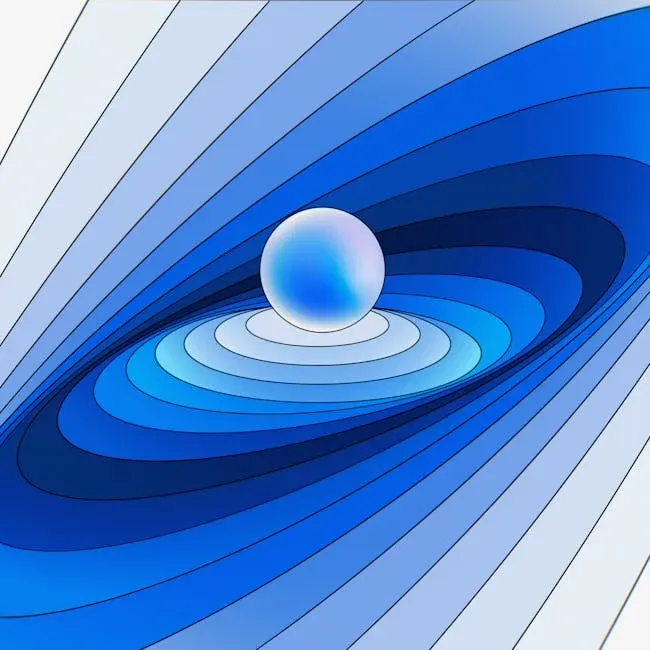
The closer you push toward the supposed beginning of time, the more you realize general relativity is only part of the story. At tiny scales and enormous energies, quantum effects become crucial, and yet your best quantum theory and your best gravity theory do not fully fit together. You find yourself in need of a theory of quantum gravity, something that can handle both the very small and the very heavy in one framework.
Candidates like loop quantum gravity or string-inspired models suggest that the universe may avoid a true singularity, perhaps replacing it with a bounce or a more subtle transition. Some of these ideas even blur the line between time and more abstract parameters. However, until you have real experimental access to those extreme conditions, any claim about what “really” happened at the very beginning stays speculative. You can explore different scenarios, but you must be honest that the hard evidence is limited right now.
Cosmic Inflation and Why “Before” Sometimes Just Means “Uncertain”
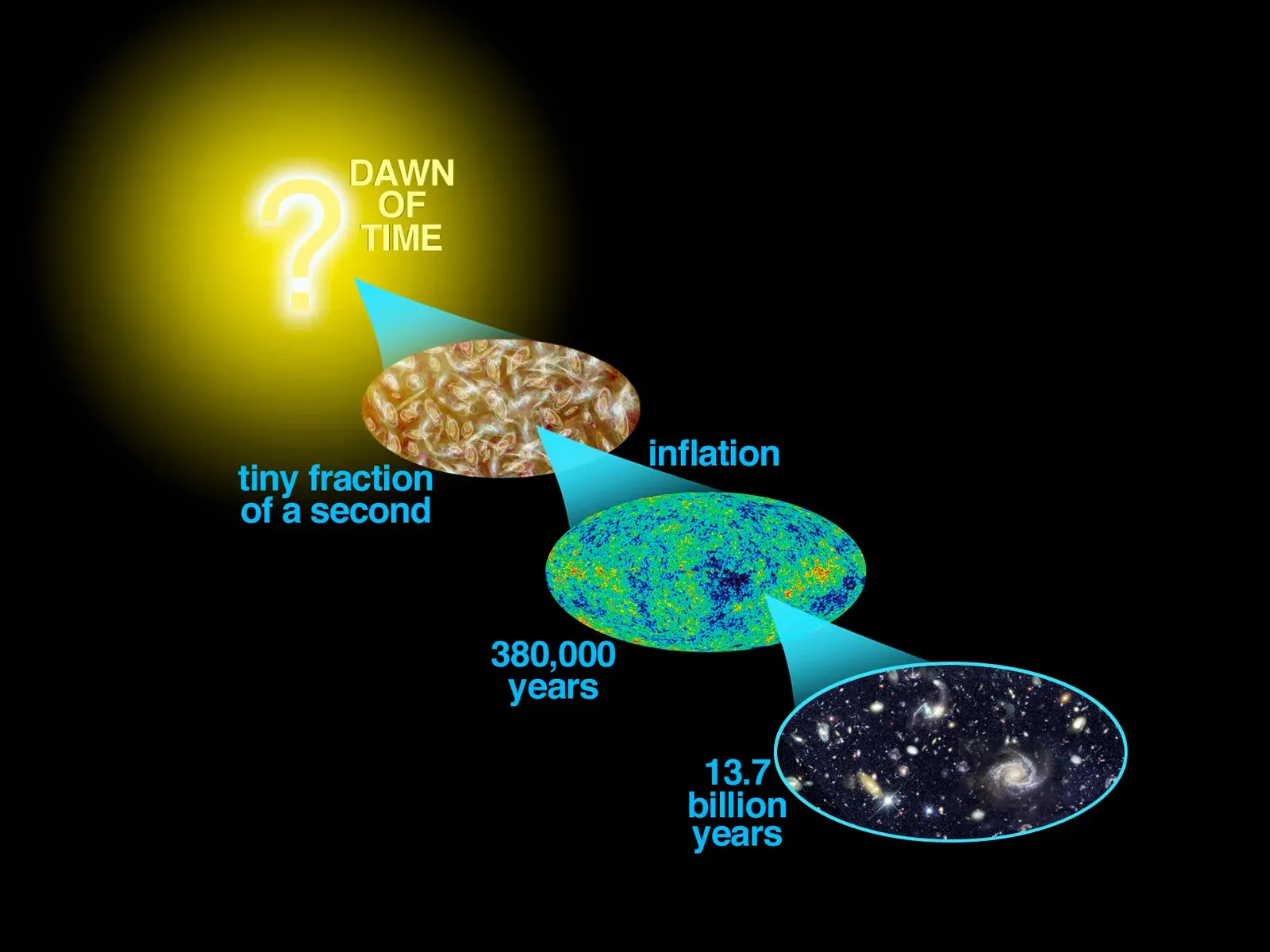
To explain why the universe looks so uniform on large scales and why tiny quantum fluctuations grew into galaxies, cosmologists often include a brief period of ultra-fast expansion at very early times, called inflation. During inflation, space itself expands so rapidly that regions get stretched far beyond each other’s horizons. This idea fits observations of the cosmic microwave background surprisingly well, which is why you see it appear in so many cosmology discussions.
But inflation raises its own version of the “before” question. Did inflation have a beginning? Did it emerge from some previous state, or is it eternal in at least some directions of time? Some models suggest that, even with inflation, you still hit a boundary where your usual concept of time stops making sense. Others allow an infinite history in at least part of the picture. As you dig into those possibilities, you realize that your curiosity is bumping into the limits of what the data can currently pin down, not just the limits of imagination.
The North Pole Analogy: When a Question Sounds Deep but Misfires
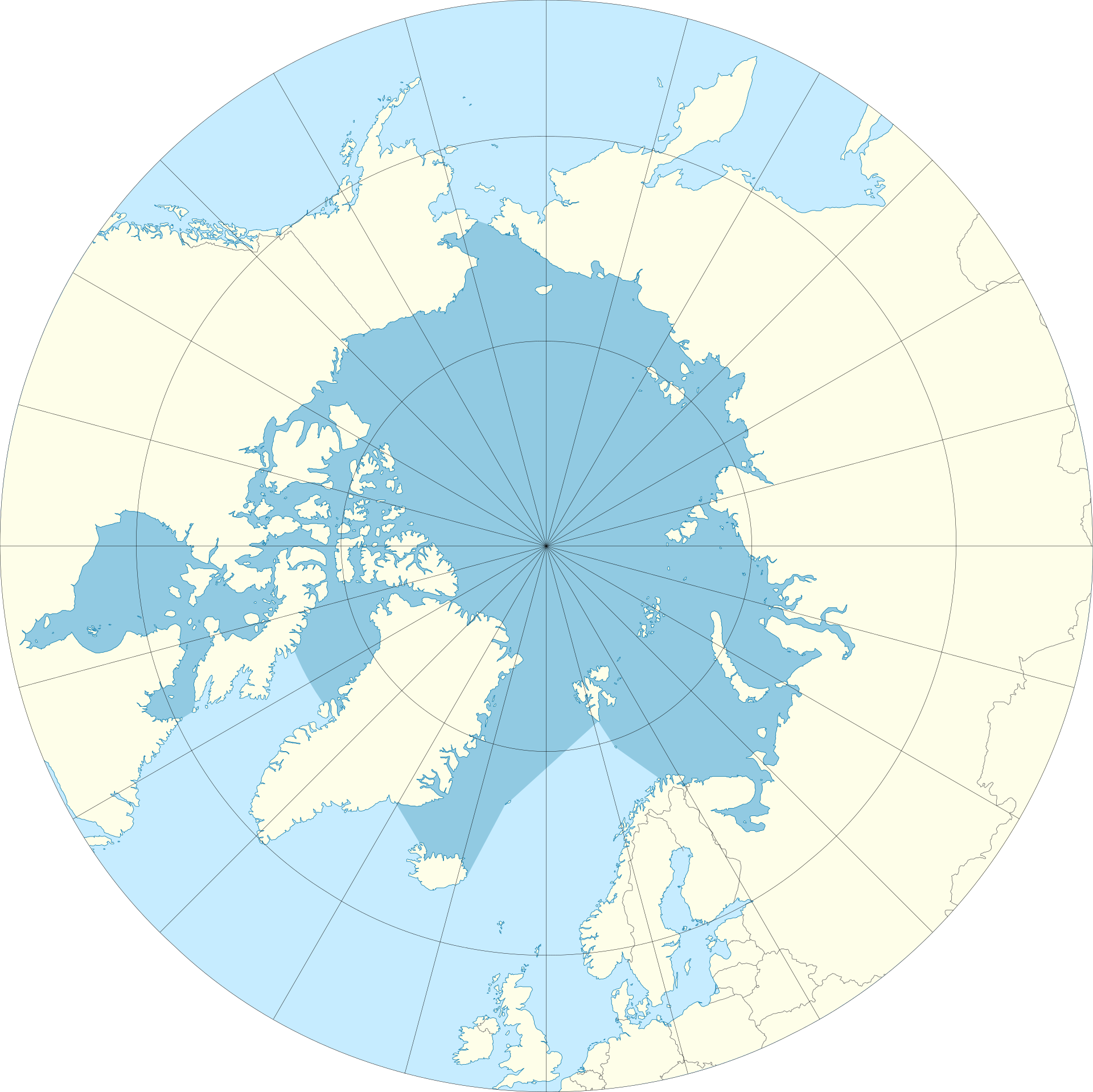
One helpful way to tame the confusion is to use a geographical analogy. Imagine standing at the North Pole and asking what lies to the north of it. On a globe, you can walk south in many directions, but there simply is no “further north” from that exact point. The word “north” only makes sense once you are somewhere else on the sphere, away from that special location. In the same spirit, you can move forward and backward in time inside the universe, but at the boundary where time itself begins, “before” might have no physical meaning.
That does not mean the boundary is a magical place, or that science sneaks in a secret exception to its own rules. It just means some questions quietly assume more structure than nature actually provides. You might feel like the universe owes you a story extending indefinitely into the past, but the models that match your best observations say otherwise. They say time, as you understand and measure it, looks like it has a starting line, and your urge to peek behind that line is a bit like trying to step off the edge of a map that already covers everything that exists.
Philosophy, Theology, and the Temptation to Fill the Silence

When physics reaches a point where it says, “I cannot even phrase that question,” philosophy and theology see an opening. Different traditions propose different ideas: maybe a timeless realm of abstract truths, maybe a necessary being, maybe an infinite cycle of universes, or something else entirely. These are powerful attempts to give your mind something to hold on to when the formal language of equations falls quiet.
There is nothing wrong with exploring those possibilities, as long as you recognize that you have stepped outside what current cosmological data can confirm. In your own life, you probably already mix scientific views with philosophical or spiritual intuitions, and cosmology is no different. The key is to keep track of which part of the story rests on measurements and which part rests on interpretation, so you do not accidentally treat a personal conviction as if it were a laboratory result.
Living with a Universe That Does Not Answer Every Question

If you are used to thinking of science as a machine that eventually spits out answers to everything, the idea that some questions are simply malformed might feel uncomfortable. Yet there is also something strangely freeing about it. Instead of imagining that you are failing to understand the past, you can recognize that your own language is running into boundaries set by the structure of reality itself.
In everyday life, you already accept plenty of limits: you cannot travel faster than light, you cannot be in two places at once, and you cannot rewind your personal history beyond your own birth. Cosmology just extends that humility to the universe as a whole. Time, as far as your best theories can tell, had a beginning. Asking what came before that is a beautiful, haunting impulse, but in the strict sense of physics, it has no answer because it is missing the very ingredient every answer needs: time itself. What do you do with a universe that refuses to tidy up its deepest mystery just for your peace of mind?