
Picture a Roman glassmaker bending a cup in his bare hands, watching it spring back into shape instead of shattering. Picture a Byzantine soldier torching an entire enemy fleet with liquid fire that burns brighter on water than on land. These aren’t fantasy scenes. They’re historical accounts, backed by archaeology, of technology so advanced that modern scientists are still trying to figure out how it worked.
Most people assume ancient civilizations were stumbling in the dark, working with crude tools and guesswork science. The truth is stranger and more unsettling than that. Some of the sharpest engineering minds in human history built things we genuinely cannot replicate today, and then those secrets vanished, sometimes on purpose, sometimes by accident, sometimes because a single craftsman took the knowledge to his grave.
#13 – Egypt’s Vanishing Embalming Formula

Egyptian mummification wasn’t just wrapping a body in linen and hoping for the best. It was an intricate, multi-week chemical process involving natron salt, tree resins, aromatic oils, and precise timing that could preserve human tissue for thousands of years. The exact ratios and specific resin blends used by elite embalmers were never fully written down, and most of what survives comes from later Greek observers describing a practice they didn’t actually understand.
When Christianity spread through Egypt and the old religious practices faded out, the priestly class that guarded embalming knowledge disappeared right along with it. The techniques used on royalty, which produced some of the best-preserved remains in the ancient world, were treated as sacred trade secrets, not public science. Modern chemists analyzing mummy residues today still find compounds they can’t fully identify.
Fast Facts
- Natron salt drew moisture out of the body over roughly 40 days
- Full mummification could take up to 70 days from start to finish
- Organs were removed and stored separately, except for the heart
- Wrapping required hundreds of yards of linen bandages per body
#12 – The Glass That Would Not Shatter
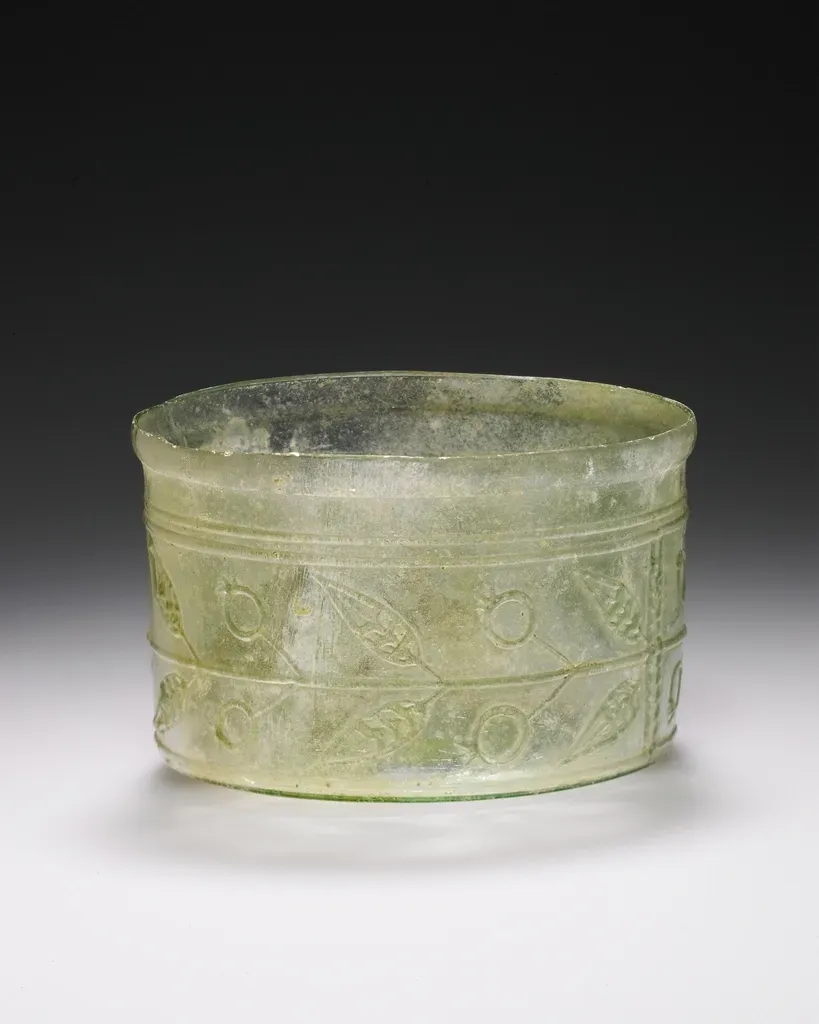
According to Roman legend, a craftsman once walked into Emperor Tiberius’s court holding a drinking cup made of glass. He threw it to the stone floor. Instead of shattering, it dented, then he simply bent it back into shape with his hands. Ancient writers called this vitrum flexile, or “flexible glass,” and claimed the inventor was hoping for fame and fortune.
Instead, the story goes, Tiberius had the man executed on the spot, worried the unbreakable glass would crash the value of gold and existing glassware. Whether the tale is literal history or Roman folklore is still debated, but it persists as one of history’s most tantalizing lost-invention myths. No formula, sample, or blueprint ever surfaced, so we’re left with nothing but a chilling story about a discovery that was reportedly killed on purpose.
#11 – The Viking Sunstone That Saw Through Clouds
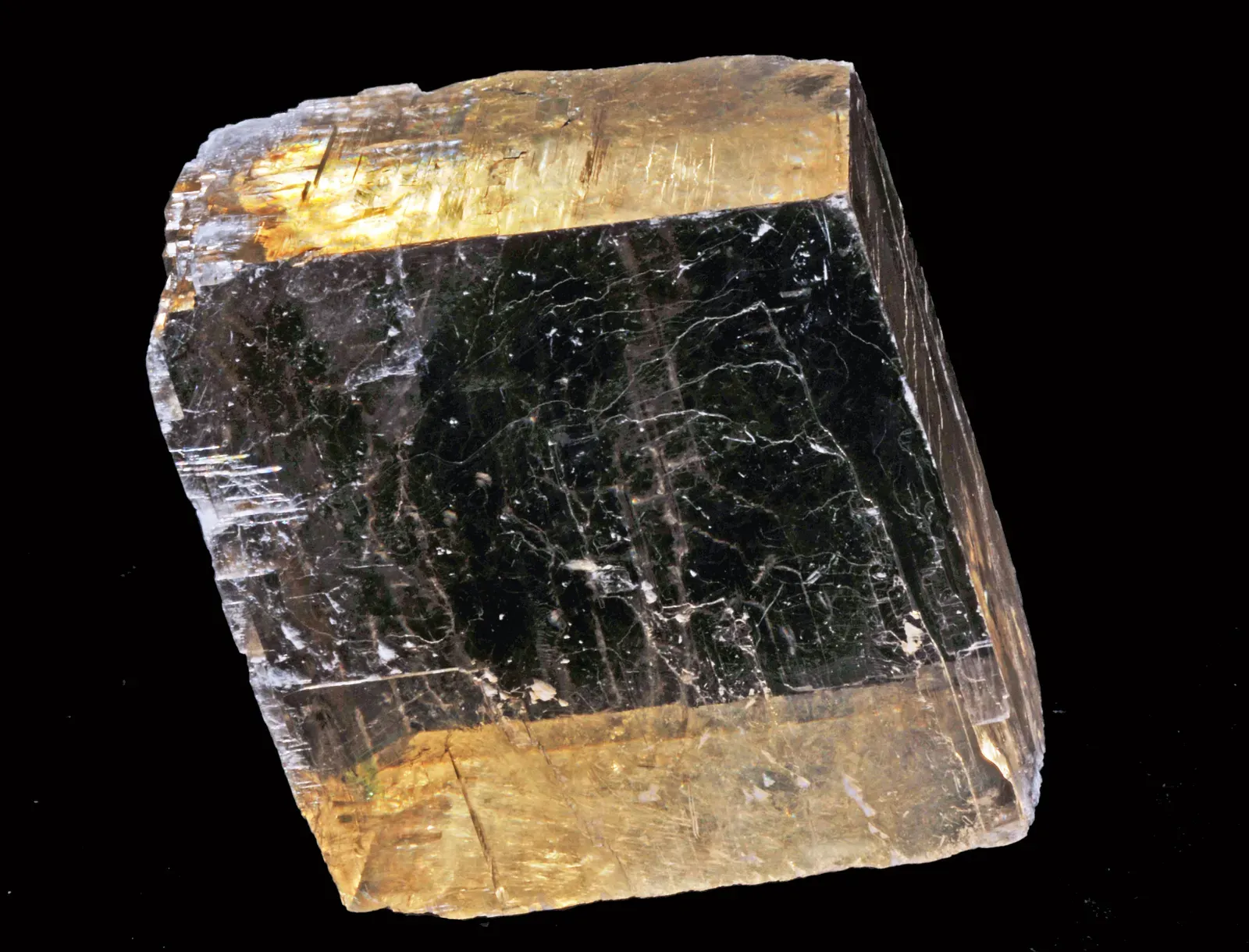
Long before magnetic compasses became standard equipment at sea, Viking sailors reportedly used a mysterious “sunstone” to navigate the open Atlantic even under thick, overcast skies. Icelandic sagas mention the stone by name, describing sailors holding it up to the sky to pinpoint the sun’s exact position when clouds hid it completely.
Modern researchers believe the sunstone was a calcite crystal, sometimes called Iceland spar, which splits light in a way that reveals the sun’s location through polarization. A genuine Viking-era crystal matching this description was recovered from a 16th-century English shipwreck near Alderney in 2013, reviving serious debate over whether this navigation trick was real all along. Once magnetic compasses became widely available, the skill of reading sunstones simply faded out of use and was never formally recorded as a technique.
#10 – China’s Earthquake-Detecting Dragon Vessel
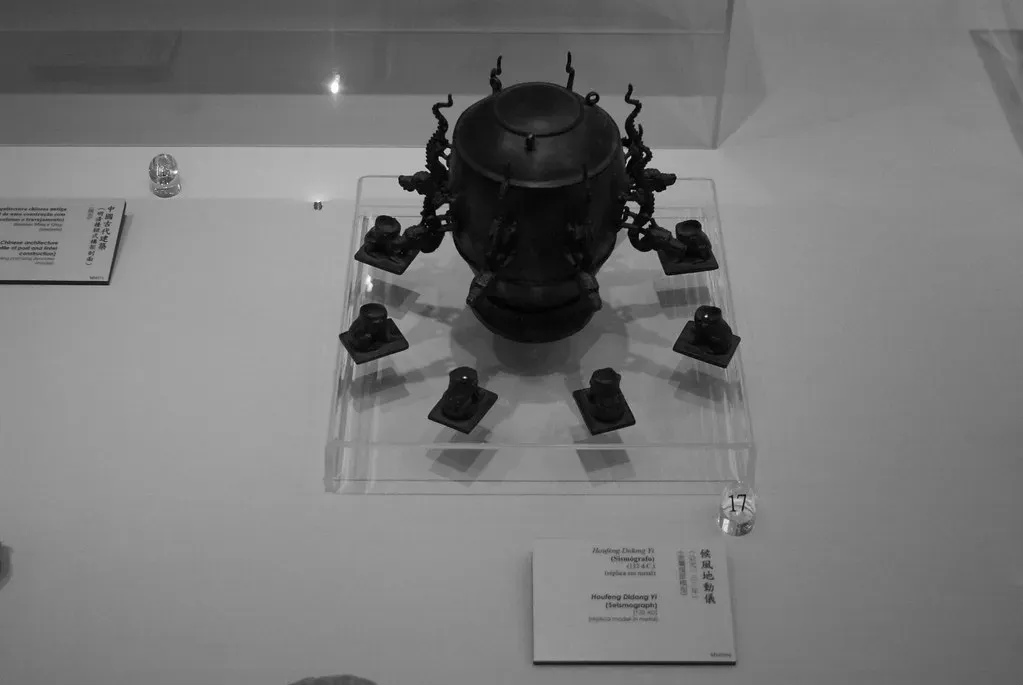
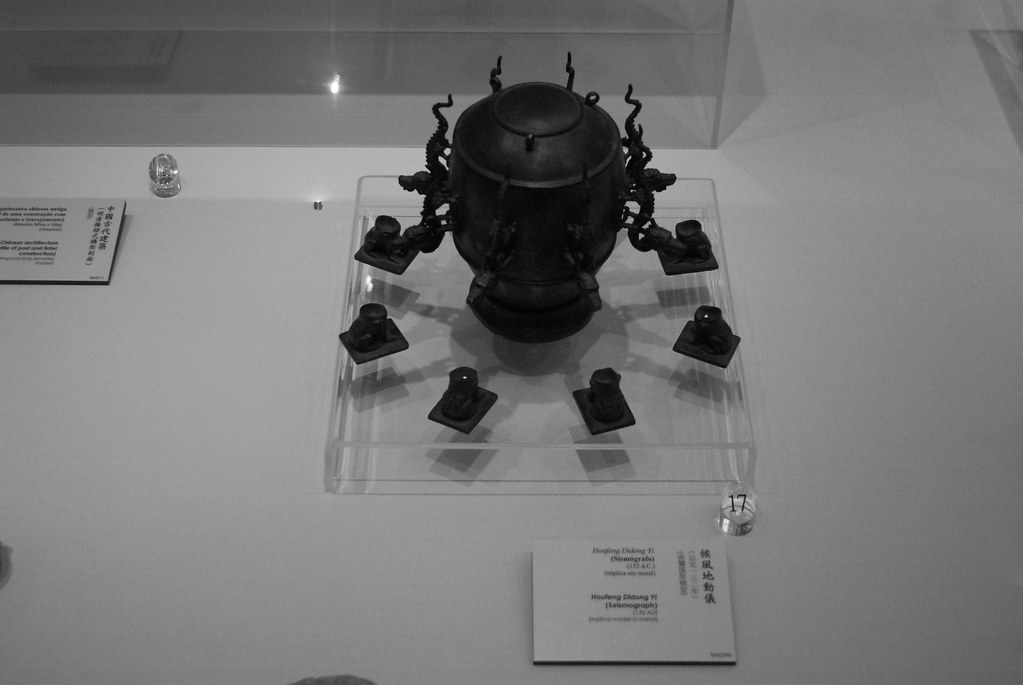
In 132 CE, Han dynasty polymath Zhang Heng unveiled a bronze vessel unlike anything Europe would produce for centuries afterward: a seismoscope built to detect earthquakes from hundreds of miles away. The device featured eight dragon heads circling its rim, each one clutching a bronze ball directly above a waiting toad’s mouth below.
When tremors struck anywhere in the empire, a ball would drop from the dragon facing the earthquake’s direction, alerting court officials to disasters long before a messenger could arrive on horseback. The internal mechanism that triggered the drop with such uncanny precision was described only briefly in the Book of Later Han and was never diagrammed in any surviving record. The original device itself was lost centuries ago, which means every modern reconstruction is still, at best, an educated guess.
At a Glance
- Built in 132 CE by court astronomer Zhang Heng
- Featured eight bronze dragon heads, each holding a ball
- Could reportedly signal earthquakes hundreds of miles away
- Original vessel lost; only textual descriptions survive today
#9 – The Purple Dye Worth More Than Gold

Tyrian purple wasn’t just a color in the ancient Mediterranean, it was a currency of raw political power. Extracted drop by drop from the glands of murex sea snails near the Phoenician city of Tyre, the dye required thousands of crushed snails just to produce a single gram of usable pigment.
Roman emperors restricted the color to imperial robes, and the finished dye reportedly rivaled its weight in precious metal. The extraction process, refined over generations by Phoenician and later Byzantine dye-masters, depended on closely guarded workshop secrets passed down through family trade guilds. When Constantinople fell and the murex trade collapsed with it, the specific techniques for achieving that signature deep purple hue disappeared right along with the artisans who practiced it.
#8 – The Maya Pigment That Survives Acid Rain
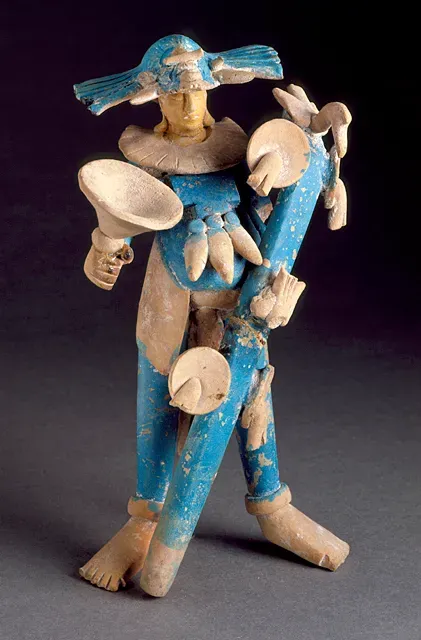
Maya Blue is one of the strangest pigments ever created by human hands. Painted onto temple walls, pottery, and ceremonial objects at sites like Chichen Itza, this vivid blue-green color has survived centuries of jungle humidity, acid rain, and blistering sunlight without fading the way ordinary paint does.
Chemists eventually cracked the secret: Maya artisans combined indigo dye with a specific type of clay called palygorskite, creating a molecular bond that essentially locks the pigment in place at a nanoscale level. The exact proportions and heating process used by Maya chemists remained a mystery until the mid-20th century, and reliable full replication only became possible decades after that. After the Spanish conquest tore apart Maya religious and artisan traditions, the specific recipe vanished along with the priests who once ritually applied it.
#7 – The Roman Dodecahedron Nobody Can Explain
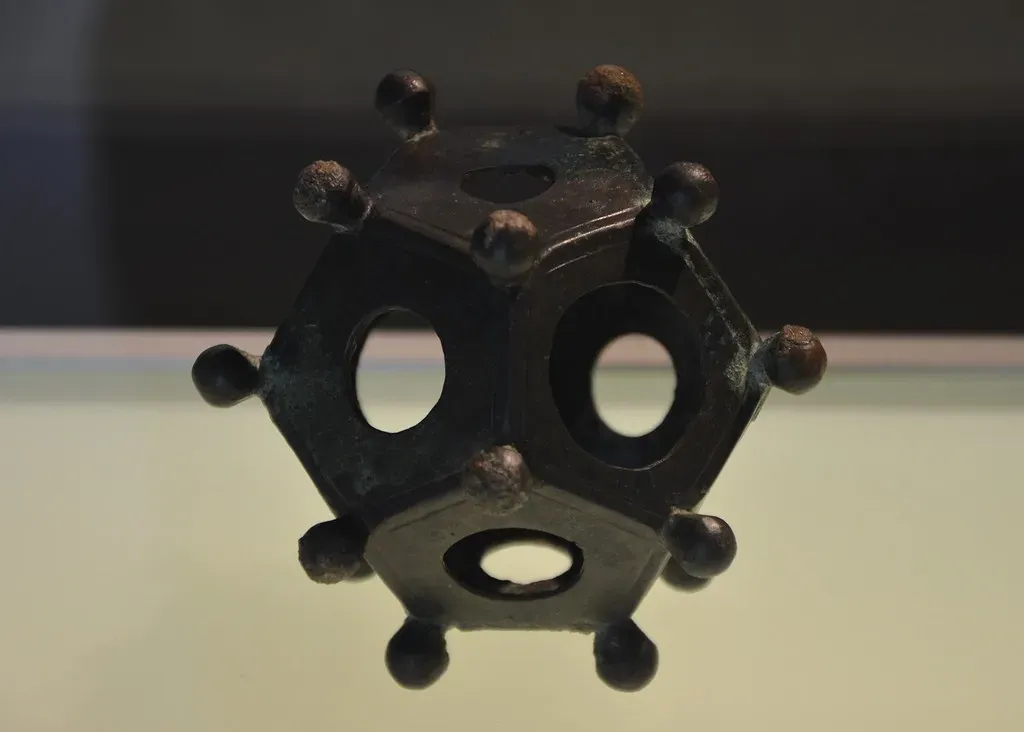
Scattered across former Roman territories in Gaul, Britain, and Germany, archaeologists have unearthed dozens of small hollow bronze objects with twelve flat pentagonal faces, each one pierced with holes of different diameters and studded with knobs at every corner. The Roman Dodecahedron has puzzled researchers since it was first dug up, and not a single surviving ancient text mentions what the thing was actually for.
Theories range from a surveying tool for measuring distances, to a device for knitting gloves, to a candle holder, to some kind of religious ritual object. No Roman author, engineer, or craftsman ever bothered to explain its purpose, despite the object clearly requiring skilled metalworking to produce. Without a surviving manual or a single inscription, historians are left guessing at an invention whose function was apparently so common in its own time that nobody thought it needed writing down.
#6 – The Clay Jar That Might Have Made Electricity
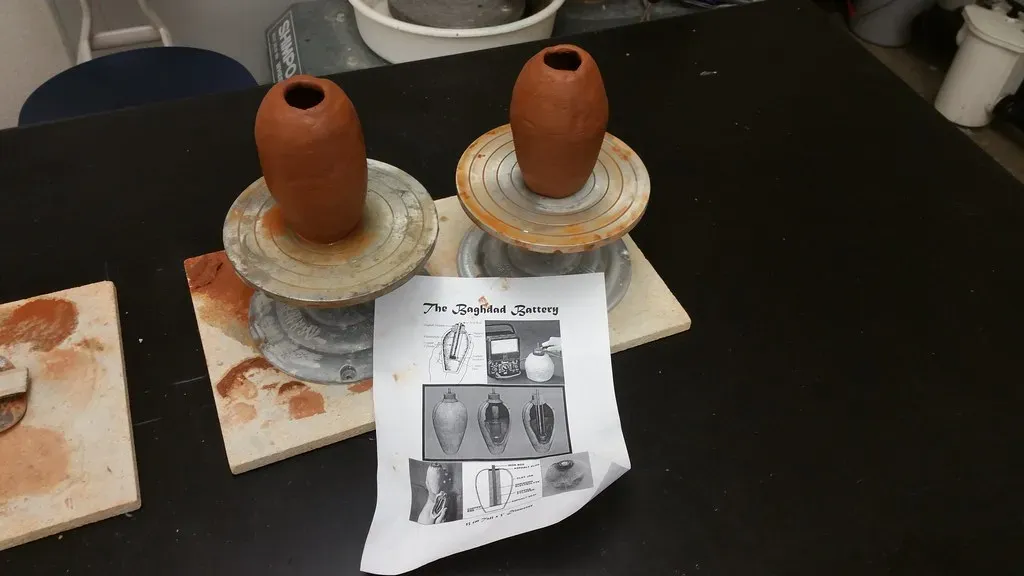
Discovered near Baghdad in the 1930s, a small clay jar containing a copper cylinder and an iron rod sparked one of archaeology’s most contentious debates ever. Some researchers argued the object, dated to the Parthian or Sassanid period, could have functioned as a crude battery capable of producing a weak electrical charge when filled with an acidic liquid like vinegar or wine.
Skeptics counter that the jar was more likely used to store sacred scrolls, with the metal components serving a purely practical or religious role that had nothing to do with electricity. No ancient text from the region describes electroplating or battery use during that era, which leaves the object’s true function genuinely unresolved. Whether it was an accidental brush with electrochemistry or simply a storage container, the intended purpose was never documented and remains wide open to argument.
Quick Compare
- Battery theory: copper cylinder plus iron rod plus acidic liquid could generate a weak charge
- Storage theory: jar held sacred scrolls, with metal parts serving a ritual role
- Missing evidence: no regional text ever describes electroplating or battery use
- Dating: object traced to the Parthian or Sassanid period
#5 – The Cup That Changes Color Like Magic
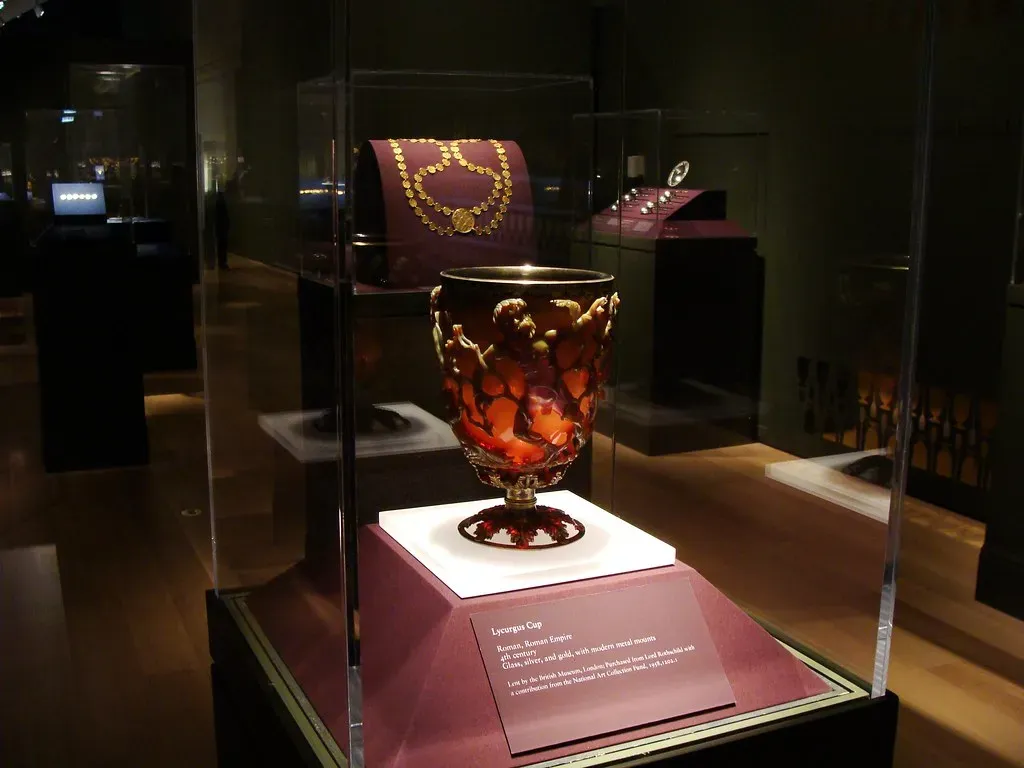
Housed today in the British Museum, the Lycurgus Cup looks unremarkable at first glance, a Roman glass goblet from the 4th century depicting the death of King Lycurgus. But hold a light behind it, and the cup transforms right before your eyes, from jade green to glowing blood red. This property baffled scientists for decades after the museum acquired the cup in the 1950s.
The mystery wasn’t solved until researchers examined broken fragments under a microscope and discovered something extraordinary. Roman artisans had impregnated the glass with particles of silver and gold, ground down to just 50 nanometers in diameter, smaller than one-thousandth the size of a grain of table salt. Roman glassmakers were unknowingly using nanotechnology over 1,600 years before scientists ever coined the term. The precise workshop technique for achieving that exact effect was never recorded and has never been fully replicated at scale.
#4 – Damascus Steel: The Blade That Cut Through Rock
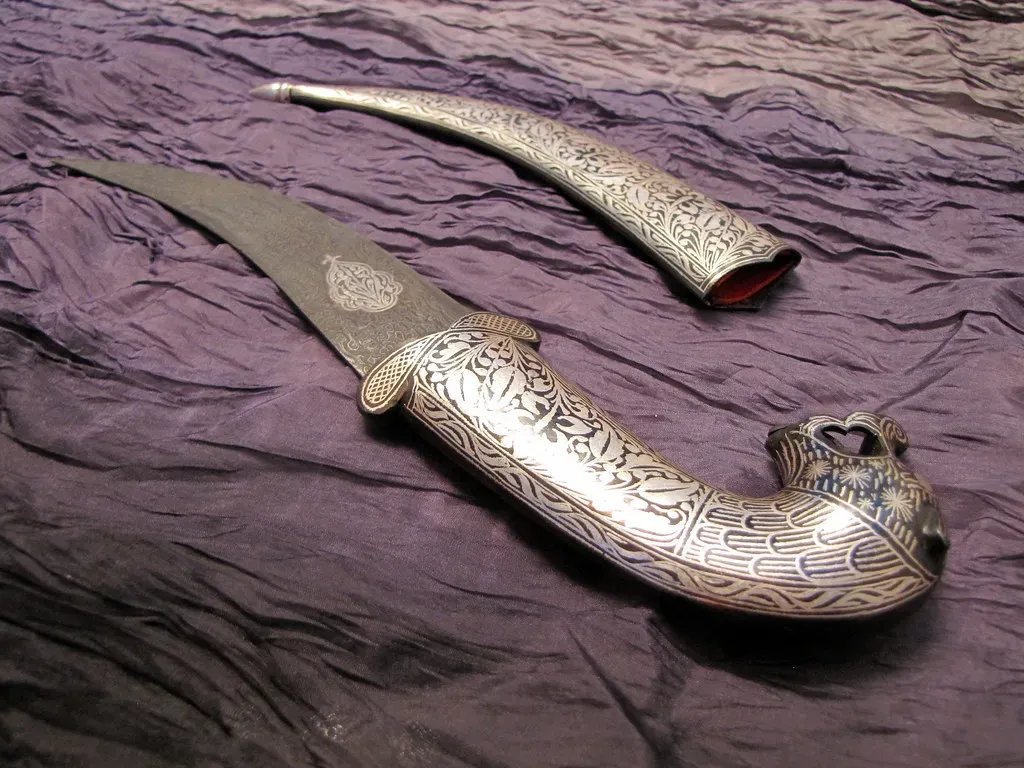
Forged in the Middle East from wootz steel imported out of India, Damascus steel blades earned a reputation that bordered on mythical. Renowned for their strength, flexibility, and razor-sharp edge retention, these blades were made from roughly 300 B.C.E. to 1700 C.E. Crusading knights came home describing swords that could reportedly slice through solid rock without ever dulling.
Then, around the mid-1700s, production simply stopped. The weapons started to vanish, and to this day nobody knows exactly why. Centuries later, researchers in Germany examined surviving blades under powerful microscopes and uncovered the extraordinary secret hiding inside: carbon nanotubes, meaning the smiths of old were inadvertently doing nanotechnology by hand. The specific Indian ore deposits believed responsible for the effect were reportedly exhausted, and the exact combination of trace impurities has never been perfectly reproduced.
Worth Knowing
- Blades were produced across a span of roughly 2,000 years, from 300 BCE to 1700 CE
- Raw material was wootz steel imported from India
- Production abruptly stopped around the mid-1700s
- Modern microscopy revealed carbon nanotubes inside surviving blades
#3 – The Concrete That Gets Stronger Underwater

Roman harbors, breakwaters, and piers have survived nearly 2,000 years of relentless wave action, saltwater, and storms, while modern marine concrete structures often crumble within decades. For years, scientists simply couldn’t explain why. More than 2,000 years ago, the Roman Empire invented a unique marine concrete that allowed for enormous, durable structures, and the exact chemistry behind it eluded researchers for generations.
Scientists eventually traced the secret to a rare mineral. Studies showed that lime, upon contact with seawater, reacted with volcanic ash to produce aluminous tobermorite, a layered mineral that forms fine fibers and plates. Instead of decaying, Roman seawater concrete actually grows stronger over time as new crystals fill in the cracks. The Romans left extensive written records about their mixing methods, and Pliny the Elder even described the process directly.
A single shower of ash, upon contact with the water of the sea, is converted into a stone impenetrable by the waves, and every day stronger.
Pliny the Elder, Naturalis Historia
Yet the precise mixing ratios and regional ash sourcing that made the formula work were never standardized, and they slipped away entirely once the empire collapsed.
#2 – Greek Fire: The Weapon That Burned on Water

Few ancient inventions inspired more raw terror than Greek Fire, the incendiary liquid weapon that helped the Byzantine Empire survive repeated sieges of Constantinople. Invented in the seventh century, Greek Fire was a flammable liquid projected through tubes onto enemy ships, where it would burst into flame on contact with water instead of being doused by it.
Its invention is credited to a Christian Greek named Kallinikos, who fled to Constantinople from Muslim-held Syria in 668 CE. The recipe was such a closely guarded state secret that even capturing the delivery equipment didn’t help enemies replicate it. Whether it contained naphtha, quicklime, sulfur, or some combination of all three, the exact formula was never confirmed and no original record survived. Humanity lost the recipe the moment the empire that guarded it finally fell.
#1 – The Ancient Computer That Predicted Eclipses
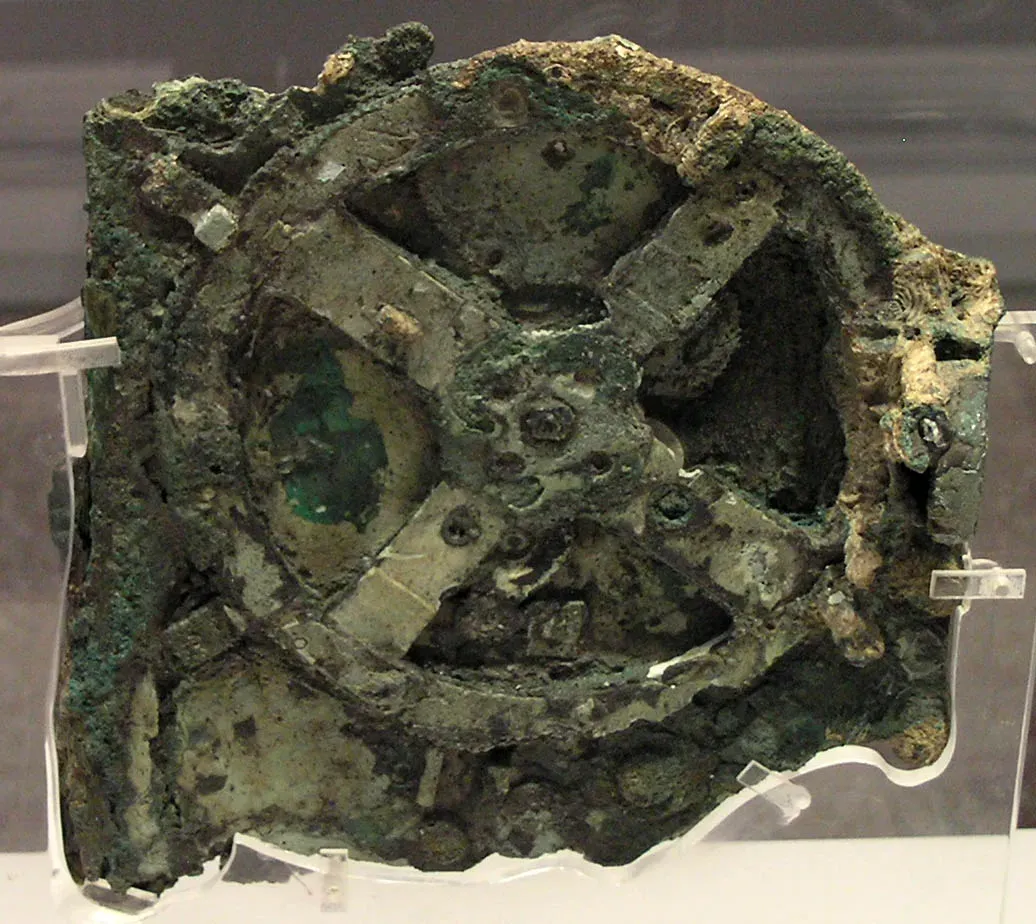
In 1901, sponge divers exploring a Roman-era shipwreck off a tiny Greek island pulled up a corroded lump of bronze that looked, at first, like scrap metal. It would turn out to be one of the most stunning technological discoveries in archaeological history. The Antikythera mechanism, dated to roughly 205-60 BCE, is now understood to be the world’s first analog computer, built to calculate the positions of the sun, moon, and planets with real precision.
Composed of more than 30 interlocking bronze gears, the device predicted the phases of the moon, upcoming eclipses, the dates of the Olympic Games, and the movement of planets and stars. This level of geared precision engineering would not reappear in human history for over a thousand years. Its sophistication wouldn’t be matched again until the fourteenth century. Whoever built it had access to mathematical and mechanical knowledge so advanced that the rest of the ancient world seemingly forgot it ever existed.
Why It Stands Out
- Discovered in 1901 in a shipwreck off the Greek island of Antikythera
- Dated to roughly 205-60 BCE
- Built from more than 30 interlocking bronze gears
- Predicted eclipses, moon phases, and Olympic Games dates
- Considered the world’s first known analog computer
The Bottom Line
Here’s an uncomfortable truth: ancient civilizations weren’t technologically inferior to us, they were often technologically isolated, and that isolation is exactly why so much brilliant engineering died with the people who understood it. Secrecy, war, collapsed trade routes, and oral-only knowledge transfer destroyed inventions that modern labs are only now beginning to explain, from self-healing concrete to nanotechnology glass centuries ahead of its time.
The real mistake isn’t assuming the ancients were primitive. It’s assuming we’ve already rediscovered everything they knew. What ancient invention do you think deserves a spot on this list? Drop it in the comments.