
Most people picture the human family tree as a tidy ladder: one species patiently climbing into the next, ape to caveman to us, in a straight and orderly line. That picture is wrong, and it has been wrong for a while.
Over the last three decades, a string of bone discoveries – some complete skeletons, some fragments smaller than a fingernail – have quietly blown up that ladder and replaced it with something far stranger. Interbreeding. Hybrid children. Tool-using dwarfs. Hominins that refuse to fit any box science had already built for them. Here’s what the fossil record actually says happened, and why paleoanthropologists are still arguing about half of it.
#14 – The Red Deer Cave People Who Don’t Fit Any Category
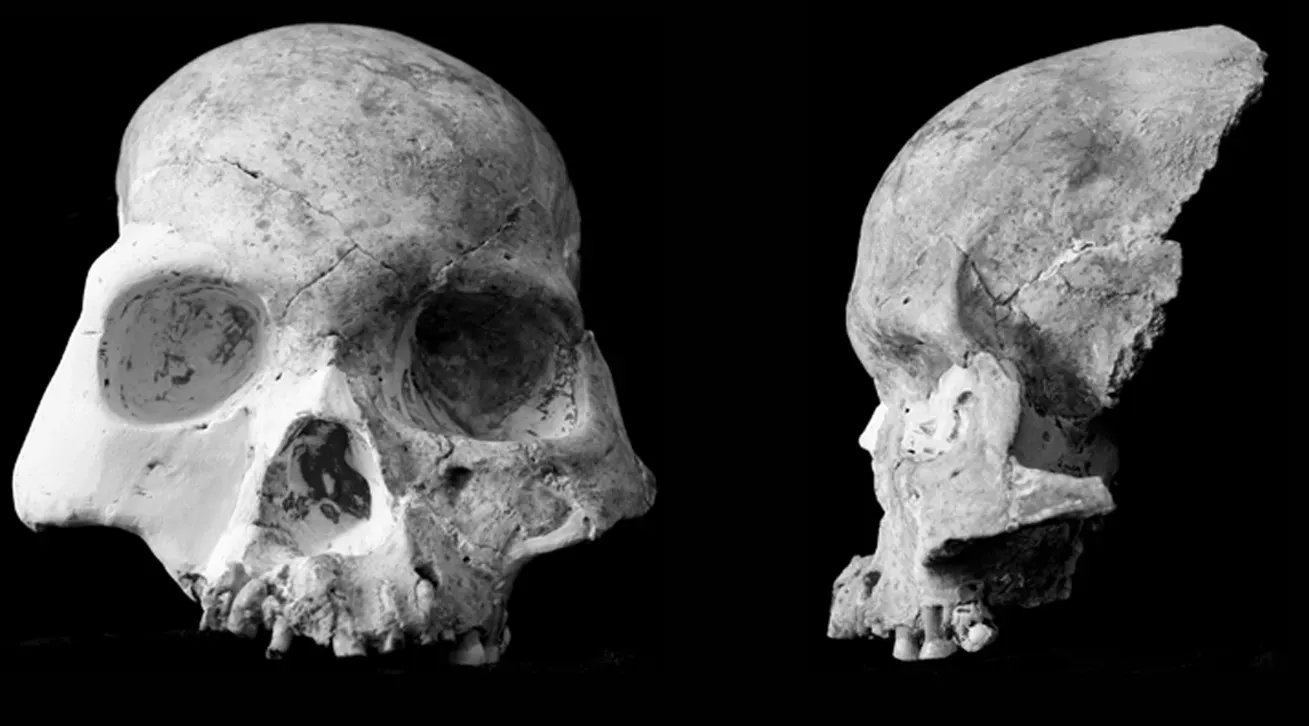
A set of bones found in two caves in southwestern China refused to match anything in the textbooks, and scientists are still arguing about what that means.
The remains, unearthed in Maludong (“Red Deer Cave”) and Longlin Cave, date to roughly 14,500 years ago – recent enough that fully modern humans should have been the only people around. Instead, researchers found a bizarre mix of features: flat faces and prominent brow ridges alongside modern-looking limbs. The combination was so unusual that some scientists initially floated the idea of a previously unknown, late-surviving archaic human population living alongside modern humans in Ice Age Asia. Most researchers now lean toward these being unusually variable modern humans rather than a new species, but the debate has never fully closed – a quiet reminder of how little we still understand about prehistoric East Asia.
#13 – The Jawbone That Proved a Man Had a Neanderthal Great-Great-Grandparent
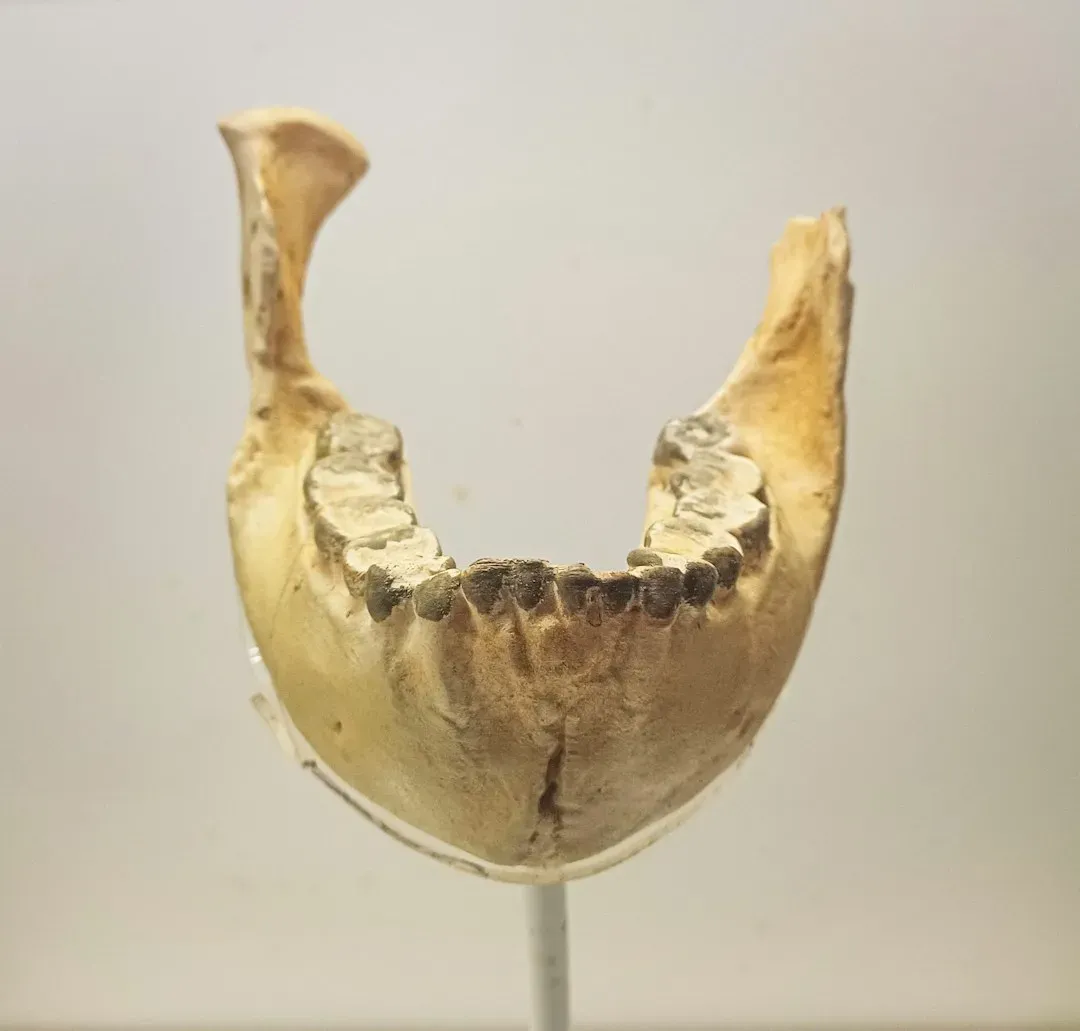
A single jaw pulled from a Romanian cave gave scientists something they never expected: a direct, personal snapshot of interbreeding caught in the act.
The specimen, known as Oase 1, belonged to an early modern human who lived in Romania roughly 37,000 to 42,000 years ago. Genetic analysis revealed an unusually high percentage of Neanderthal DNA, concentrated in long, unbroken chunks rather than the tiny scattered fragments most modern humans carry. Long DNA segments like that only happen when the mixing was recent – meaning this individual likely had a Neanderthal ancestor just four to six generations back. That’s not some distant, ancient event. That’s practically a family reunion, and it forced researchers to admit that modern humans and Neanderthals weren’t just occasional acquaintances passing in the dark. At times, they were literally family.
#12 – The Skeleton That Sparked a Nine-Year Legal War
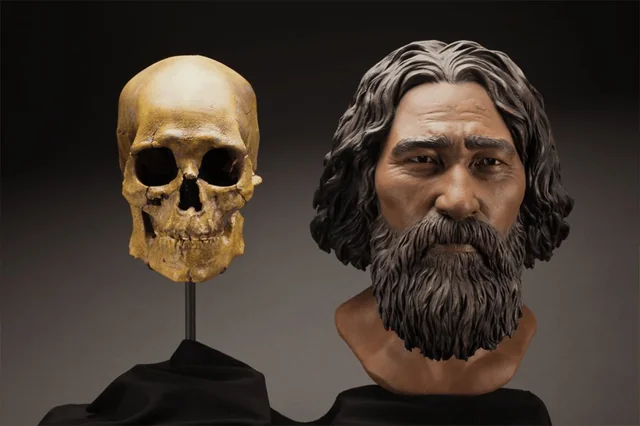
A set of bones found on a Washington riverbank in 1996 didn’t just rewrite prehistory – it triggered one of the ugliest legal battles in American archaeology.
Kennewick Man, later respectfully called “the Ancient One” by regional tribes, is roughly 9,000 years old. His skull shape looked different enough from typical Native American skulls that some early researchers speculated about non-Native origins, igniting a fight between scientists wanting to study the remains and tribal nations demanding repatriation under federal law. The controversy dragged on for nearly two decades before genomic testing settled it: Kennewick Man was more closely related to modern Native Americans than to any other population on Earth. He was reburied in 2017 with tribal ceremony. Many experts now argue the early speculation did lasting damage before the genetics ever had a chance to speak – proof that skull shape can lie, but DNA rarely does.
Fast Facts
- Discovered in 1996 along the Columbia River in Washington State
- Remains are roughly 9,000 years old
- Legal disputes over the bones lasted nearly two decades
- Genetic testing linked him more closely to modern Native Americans than any other population
- Reburied in 2017 following tribal ceremony
#11 – The Skeleton That Changed the Face of Ancient Britain
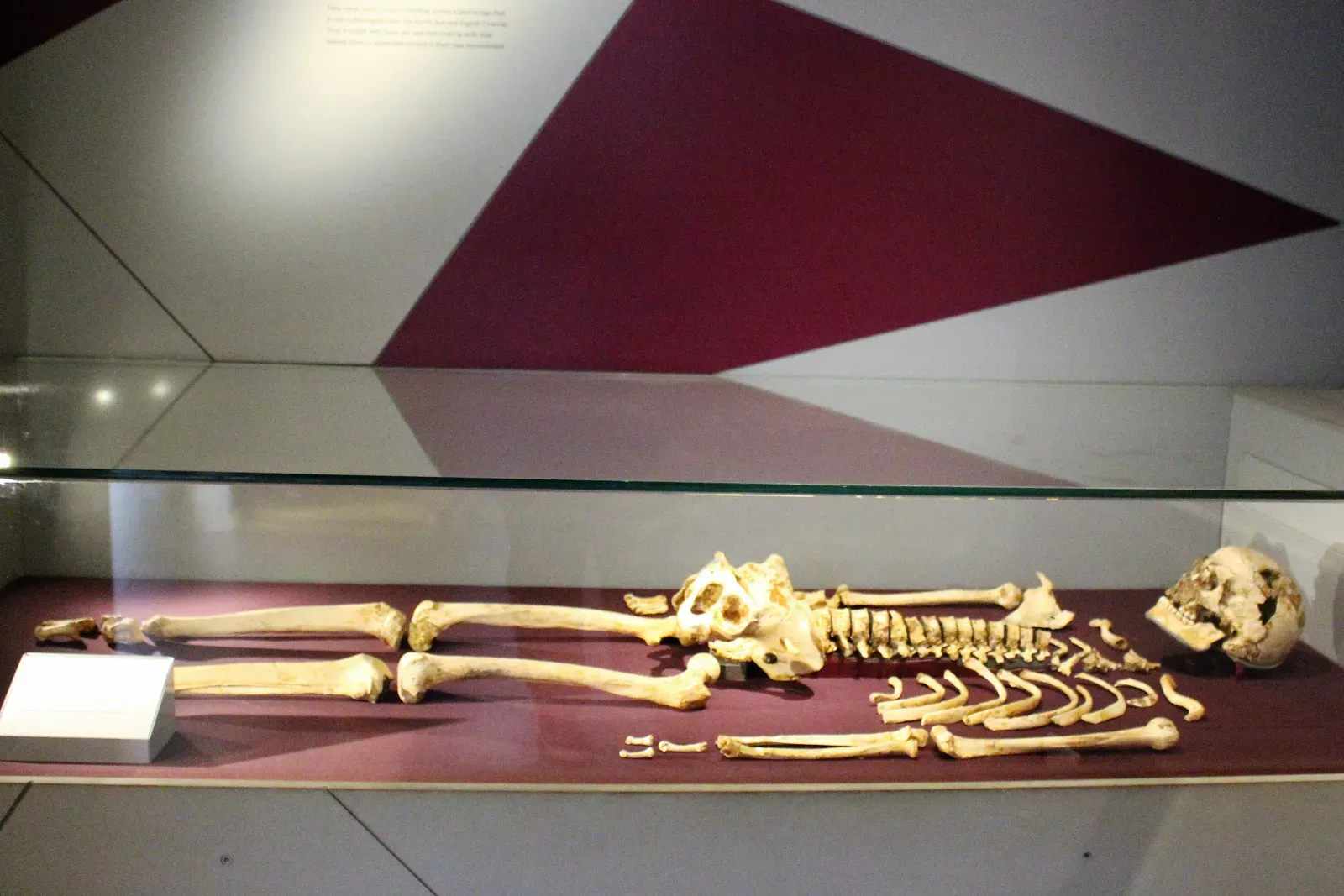
For over a century, a skeleton sitting quietly in a British museum said nothing at all about its own appearance – until DNA technology finally caught up to it.
Cheddar Man was discovered in Gough’s Cave in England in 1903 and dates back roughly 10,000 years, making him one of the oldest nearly complete skeletons found in Britain. For decades, artists reconstructed him with the pale skin typically assumed for ancient Europeans. Then genetic analysis flipped that assumption on its head. DNA extracted from the skeleton suggested he likely had dark to black skin paired with blue eyes – a combination that contradicted almost every popular image of prehistoric Britons. The finding didn’t just update a museum display; it undercut the assumption that light skin arrived in Europe alongside the first modern humans. Pigmentation, it turns out, evolved on its own timeline, long after people had already settled the region.
#10 – The “Flower Burial” That May Have Been a Myth All Along
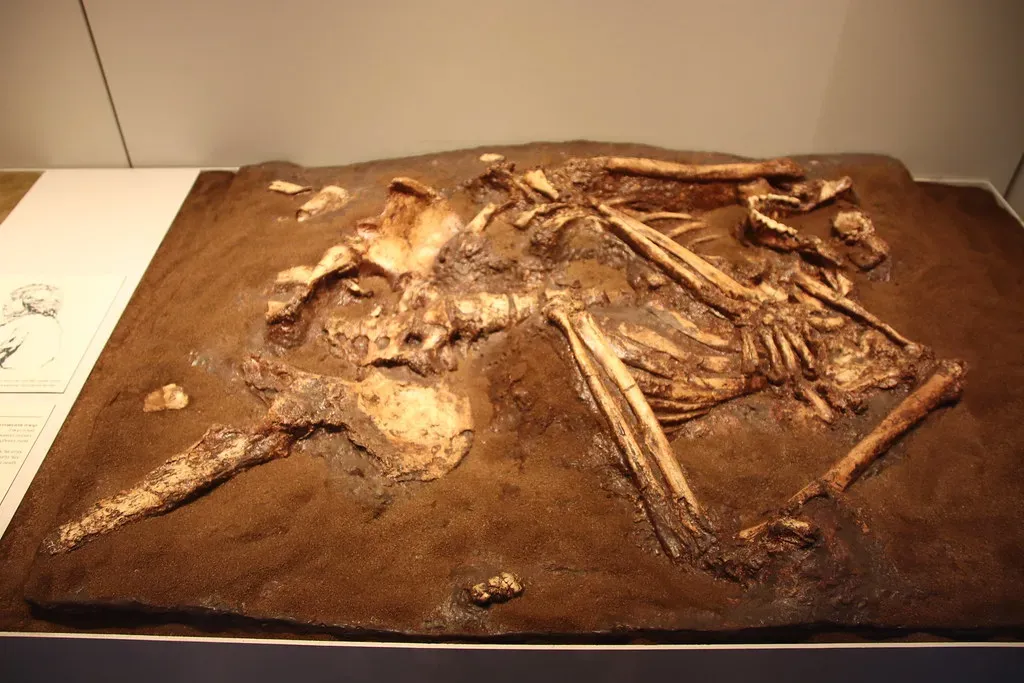
A cave in northern Iraq produced one of the most emotionally resonant claims in all of paleoanthropology – and one that scientists are now quietly walking back.
Excavations at Shanidar Cave beginning in the 1950s uncovered several Neanderthal skeletons, including one, Shanidar 4, buried with pollen clusters that researchers initially interpreted as flowers placed deliberately in the grave. The idea of grieving, flower-laying Neanderthals became one of the most quoted “humanizing” facts in anthropology. More recent analysis suggests the pollen may have been dragged in by burrowing rodents rather than placed by mourners, reigniting debate over whether Neanderthals practiced symbolic burial at all. Newer excavations at the same site, including a reconstructed individual nicknamed Shanidar Z, still support the idea that bodies were deliberately positioned – so the flower romance might be overstated, but the burial itself looks increasingly real.
#9 – The Teenage Boy Who Proved Ancient Humans Could Run Marathons
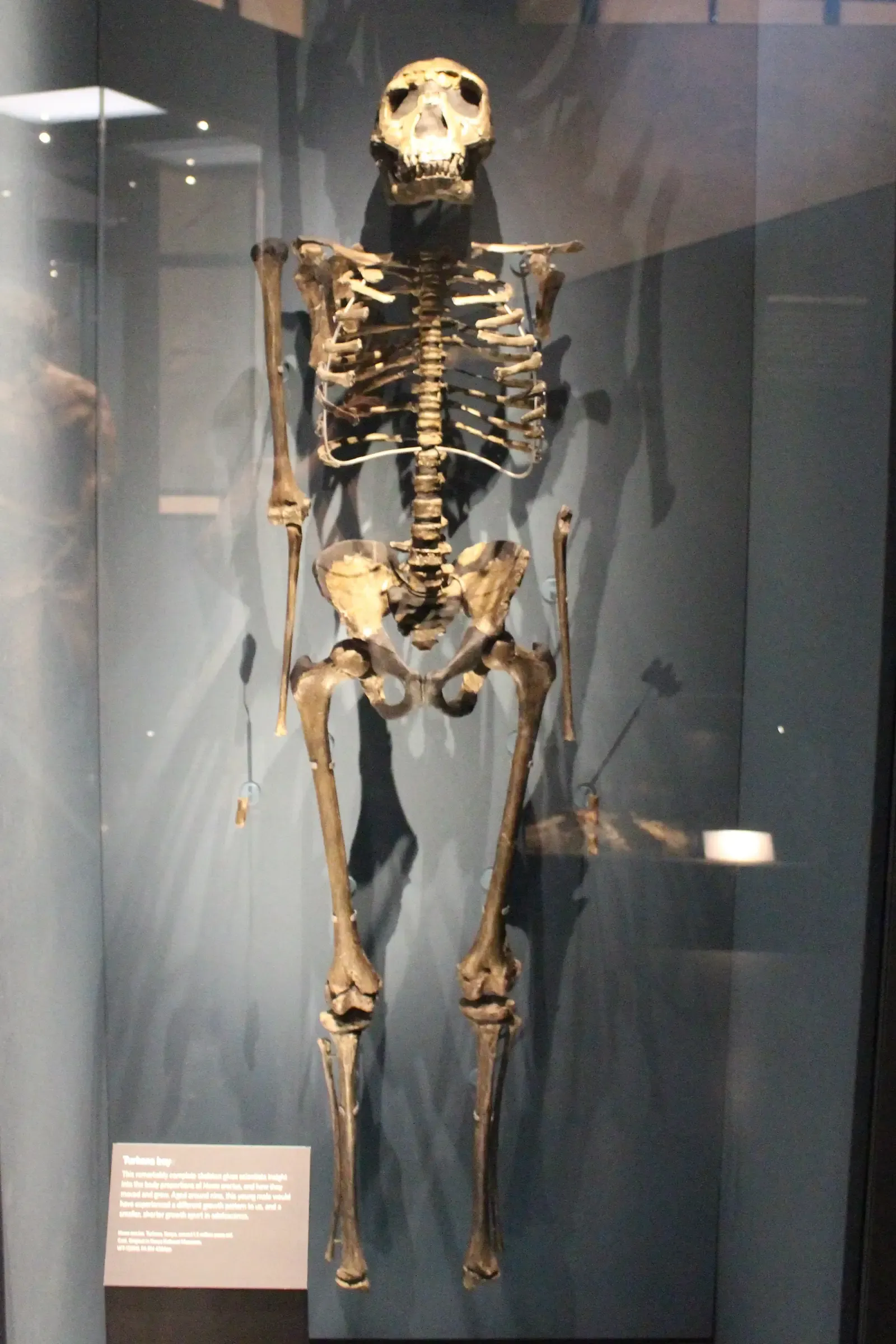
A remarkably complete juvenile skeleton found on the shores of Kenya’s Lake Turkana rewrote what scientists thought ancient bodies were even capable of.
Turkana Boy, a Homo erectus youth who died roughly 1.6 million years ago, remains one of the most complete early human skeletons ever found. His long legs, narrow hips, and efficient proportions looked strikingly similar to modern humans built for endurance rather than climbing. That body plan strongly suggests Homo erectus could travel long distances on foot, supporting theories that persistence hunting – chasing prey for hours until it collapsed from exhaustion – was already possible over a million years before modern humans existed. The skeleton also showed this individual was still growing when he died, giving researchers a rare window into ancient childhood development. Turkana Boy proved that “primitive” hominins were, physically, far closer to us than most people assume.
#8 – The Skeleton That Broke the “Savanna Ape” Theory
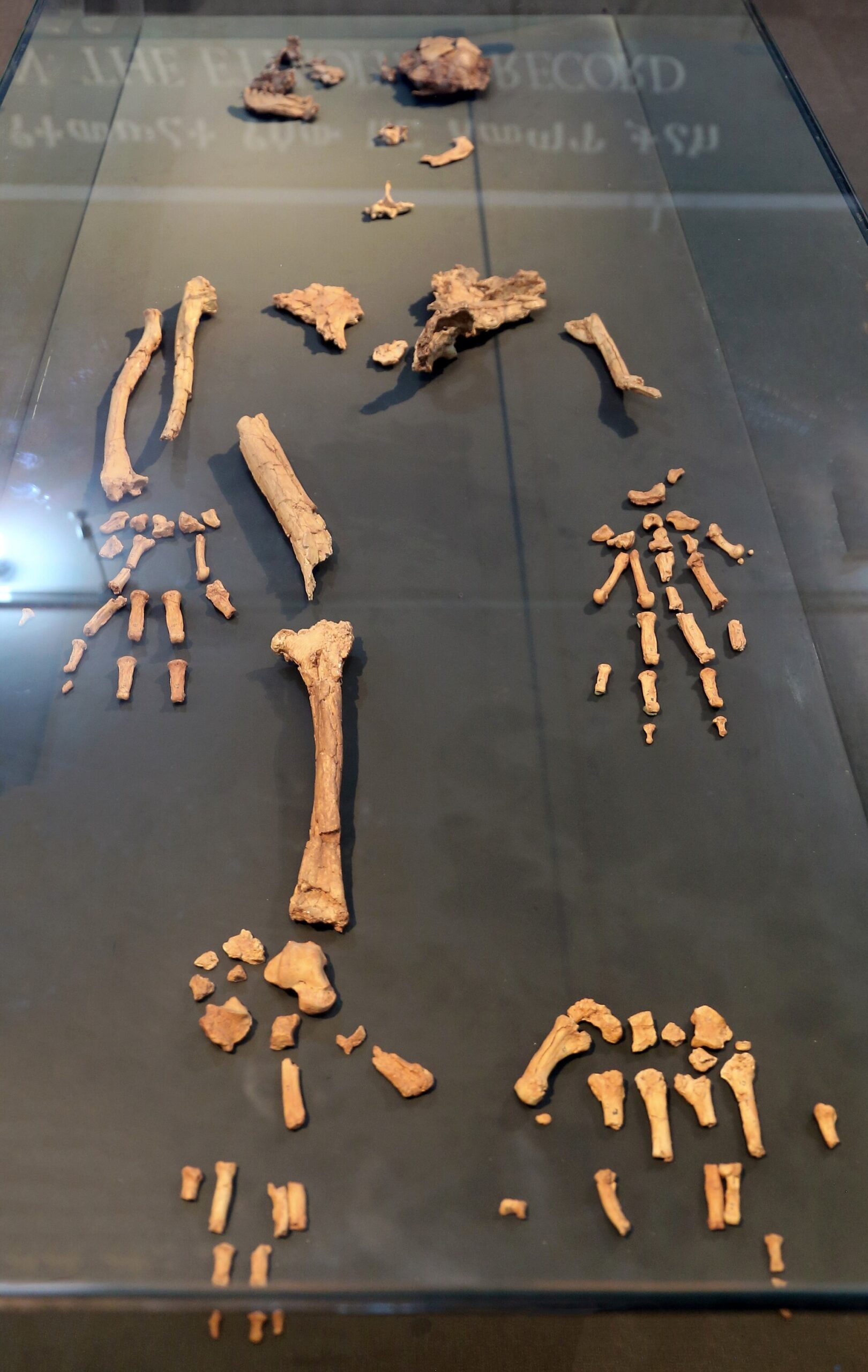
For decades, the dominant theory of human origins assumed our ancestors stood upright because forests shrank and grasslands demanded it. One skeleton quietly dismantled that idea from the ground up.
Ardi, short for Ardipithecus ramidus, was recovered from Ethiopia and dates to about 4.4 million years old – older than the famous Lucy by over a million years. Rather than confirming the expected savanna-dwelling upright walker, Ardi showed a strange mosaic: a grasping, ape-like big toe suited for climbing, combined with pelvic features suggesting she could also walk upright. The skeleton indicated bipedalism may have evolved in a wooded, mixed environment rather than an open grassland, upending a theory that had stood for generations. Researchers spent 15 years quietly analyzing the fragile bones before publishing, because the implications were so disruptive to established thinking. Ardi didn’t just push the timeline back – she rewrote the environmental story of why we started walking on two legs at all.
Quick Compare
- Ardi: ~4.4 million years old, mixed climbing-and-walking anatomy, grasping big toe suited for trees
- Lucy: ~3.2 million years old, ~40 percent complete, clear evidence of habitual upright walking
- Ardi’s habitat clues point to wooded terrain, challenging the old idea that grasslands forced upright walking
#7 – The Icon That Started the Whole Field
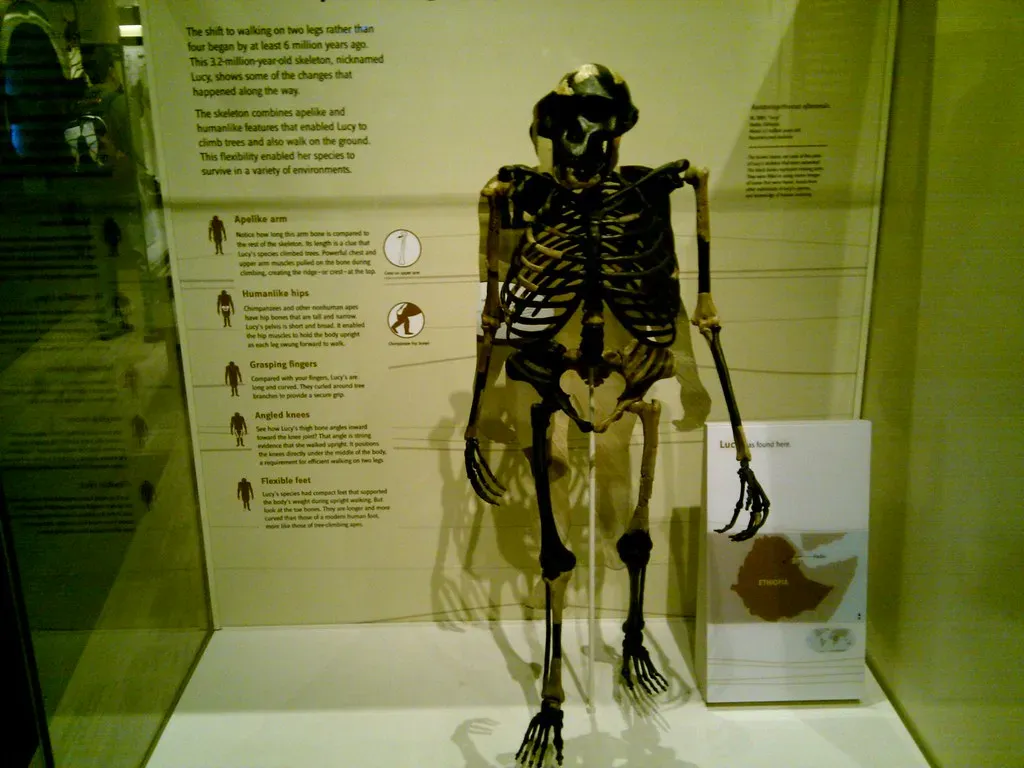
No skeleton is more famous, and arguably none did more to popularize human origins research for the general public, than one 3.2-million-year-old female skeleton from Ethiopia.
Lucy, formally Australopithecus afarensis, was discovered in the Hadar region in 1974 and represented roughly 40 percent of a skeleton – an astonishing amount for a fossil that old. Her pelvis and leg bones offered clear proof that our ancestors were walking upright long before brain size increased significantly, contradicting older theories that big brains came first. Lucy demonstrated that bipedalism, not intelligence, was the first major evolutionary leap separating our lineage from other apes. For decades she stood as the oldest and most complete early hominin known, making her the default reference point in textbooks worldwide. Newer finds have since pushed the timeline back further, but she remains the discovery that made the public fall in love with paleoanthropology in the first place.
#6 – The Boy Who Fell Into a Sinkhole and Became a Missing Link
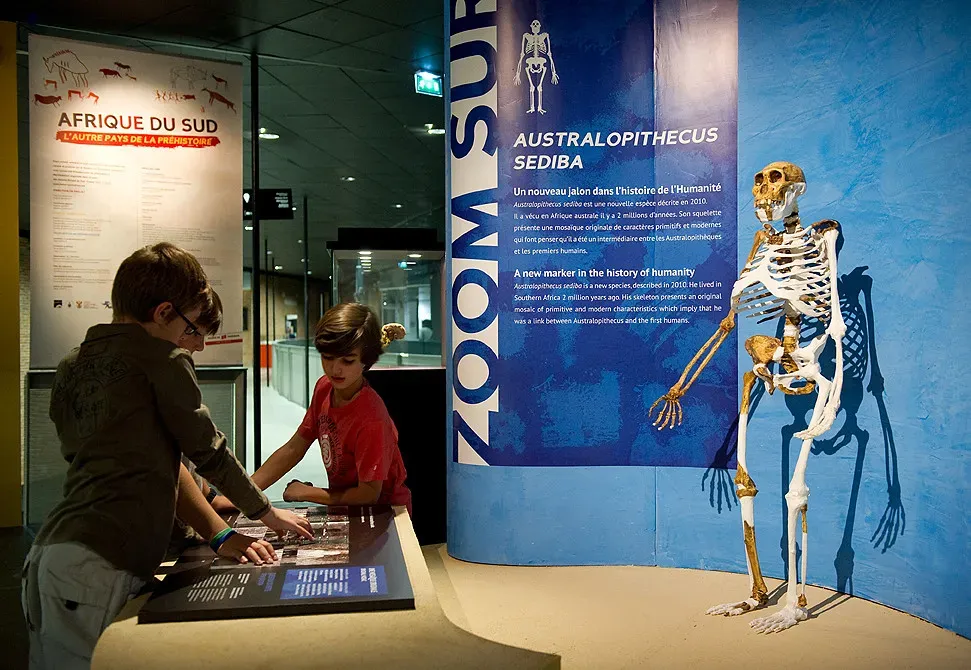
A father-and-son discovery in a South African cave produced a skeleton so mixed in its anatomy that researchers still debate exactly where it belongs on the family tree.
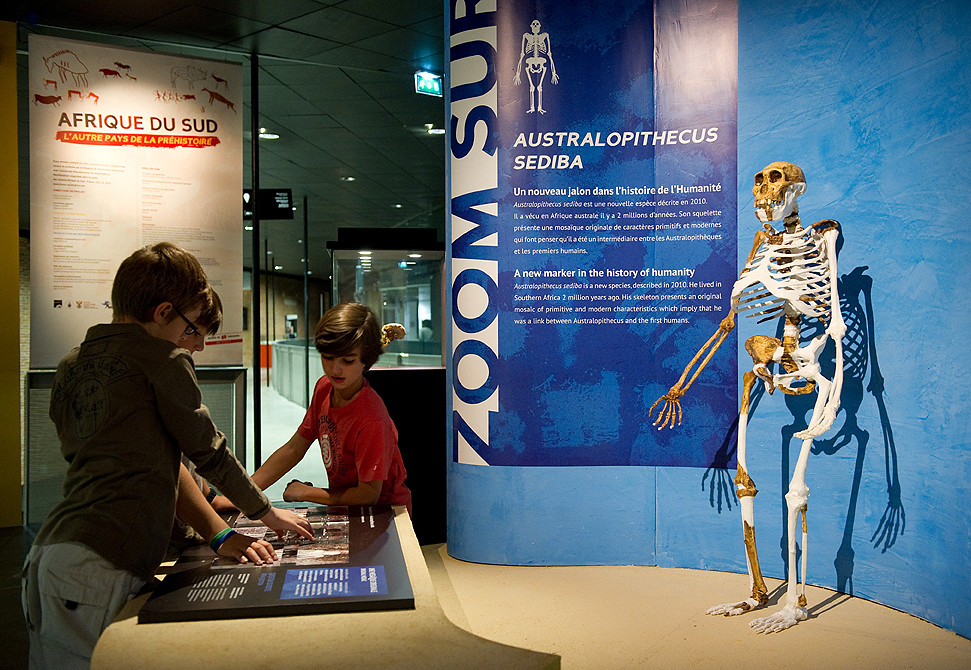
Australopithecus sediba was discovered at the Malapa site in South Africa, dated to roughly two million years old. The remains showed a startling combination of primitive, ape-like upper limbs alongside a surprisingly advanced pelvis and hand structure more similar to later Homo species. Some researchers argue sediba represents a transitional form bridging Australopithecus and early Homo, while others insist it’s simply a side branch that went extinct without descendants – and the disagreement remains genuinely unresolved. What isn’t disputed is the quality of the find: multiple individuals preserved in unusual detail, giving scientists a rare full-body look at a two-million-year-old hominin instead of just teeth and skull fragments.
#5 – The 90 Percent Complete Skeleton Nicknamed for Four Tiny Bones
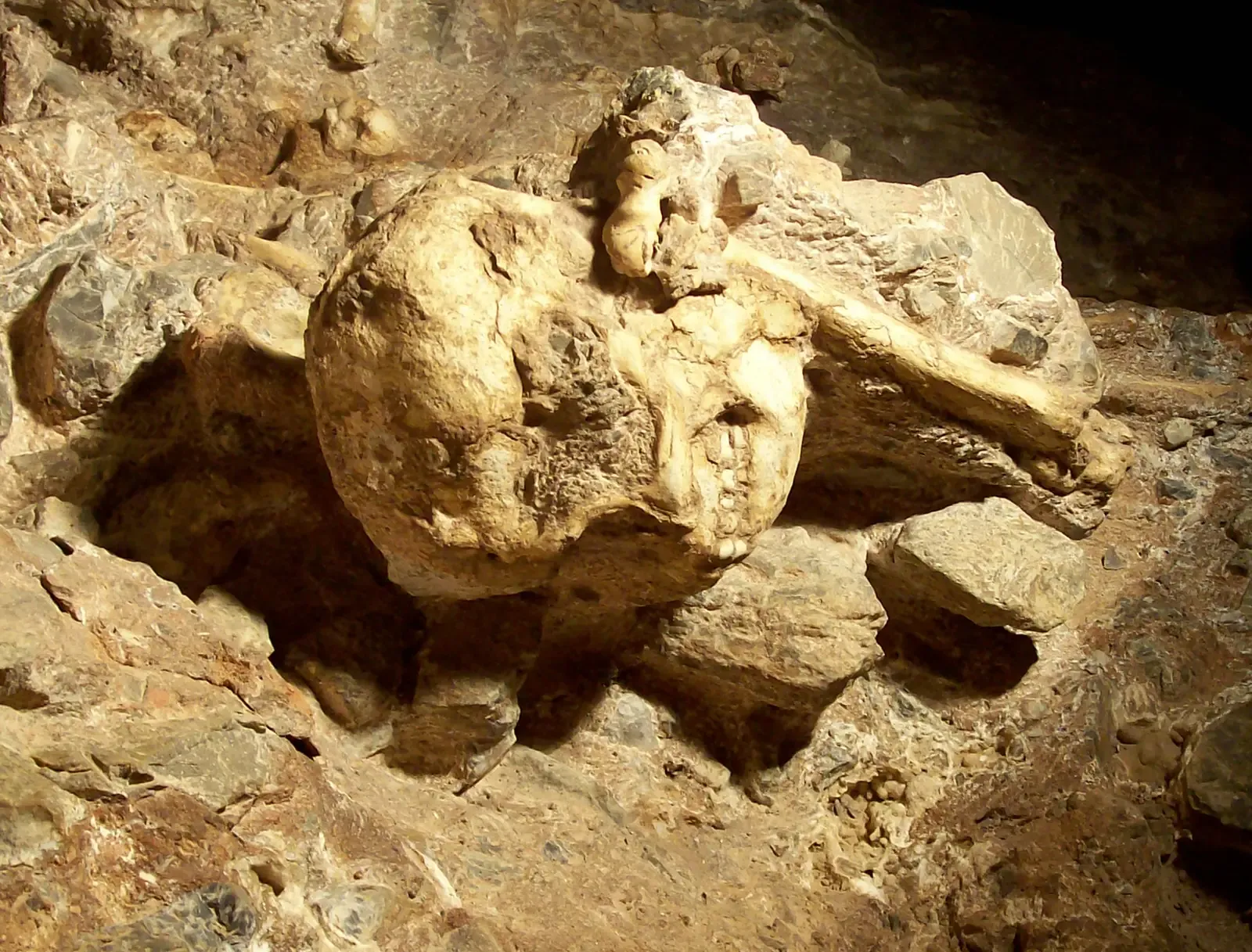
Sterkfontein cave in South Africa quietly held one of the most complete early hominin skeletons ever found, hidden in rock for two decades before anyone realized what they had.
Little Foot, cataloged as StW 573, got its nickname from four small ankle bones discovered in a box of unsorted fossils in 1994; the rest of the skeleton was later located deep in the cave system. Dating places her at roughly 3.67 million years old, making her older than Lucy and, remarkably, about 90 percent complete while Lucy is closer to 40 percent. It took researchers more than fifteen years to carefully free her skeleton from solid rock without destroying it. Analysis of her upper body later suggested our last common ancestor with apes may have looked more gorilla-like than chimp-like, quietly shifting assumptions about our own deep ancestry.
At a Glance
- Nickname traces back to four ankle bones found in a box of unsorted fossils in 1994
- Roughly 3.67 million years old – older than Lucy
- About 90 percent complete, far surpassing most early hominin finds
- Took researchers more than fifteen years to fully free from the surrounding rock
#4 – The Species Whose Bones Suggest They Buried Their Dead
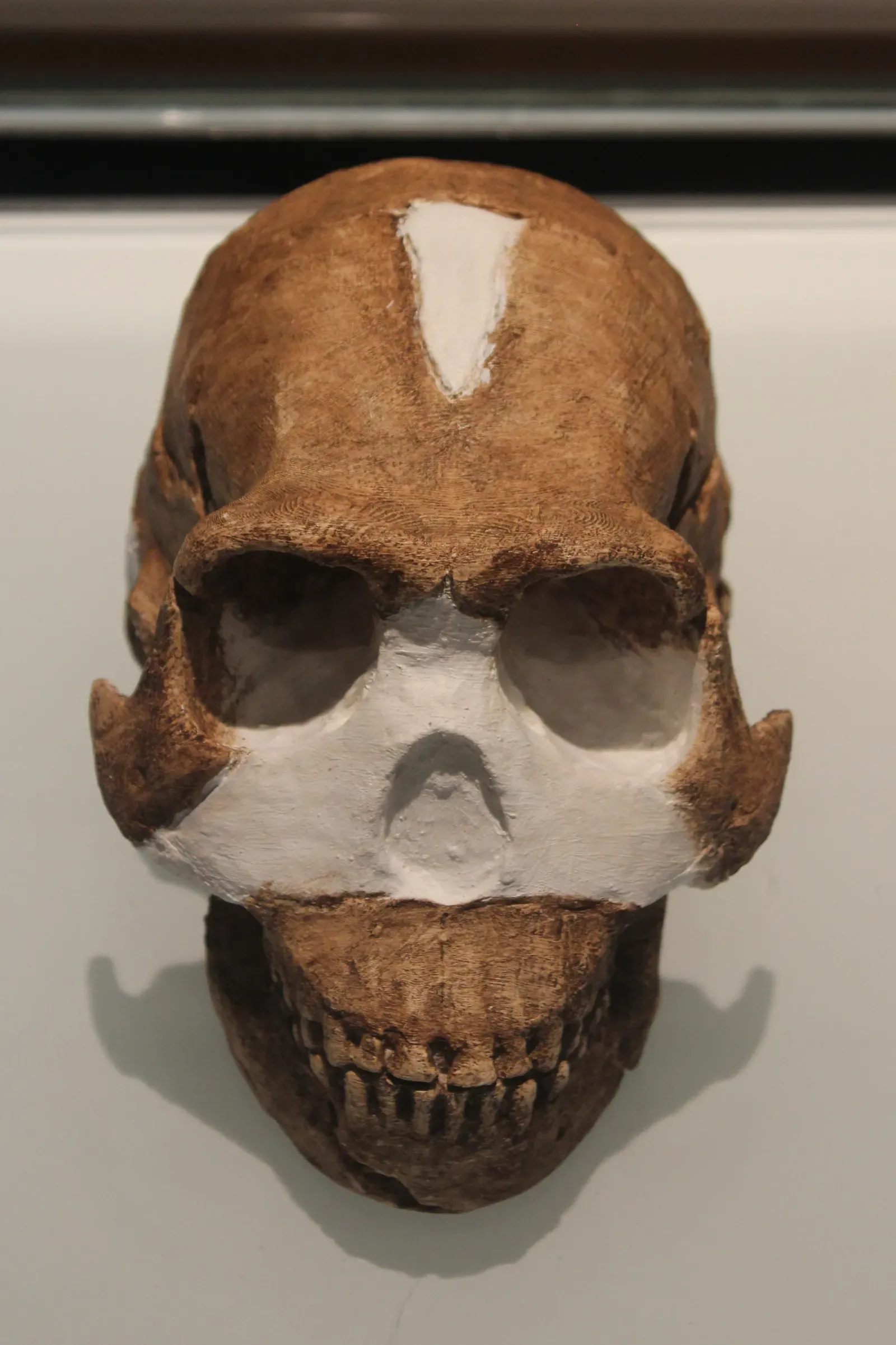
Deep inside a South African cave system so tight that only dozens of people have ever squeezed through it, researchers found the largest collection of a single ancient human species ever discovered in Africa – and then found evidence that shouldn’t exist for a creature with such a tiny brain.
Homo naledi was found in 2013 when two South African cavers entered a remote, unmapped chamber and discovered fossil bones strewn across its floor. The species had a brain roughly one-third the size of ours, yet shows humanlike adaptations of the hand, wrist, foot, and lower limb. Dating later revealed the fossils are between 335,000 and 236,000 years old – meaning this small-brained species overlapped in time with early Homo sapiens. Researchers have since proposed that Homo naledi may have deliberately placed bodies in the deep, difficult-to-access chamber, suggesting intentional burial and symbolic behavior previously assumed to require a large modern brain. That claim remains hotly contested, but if confirmed, it would mean brain size alone doesn’t decide who gets to have rituals around death.
#3 – The “Hobbit” That Lived Alongside Modern Humans
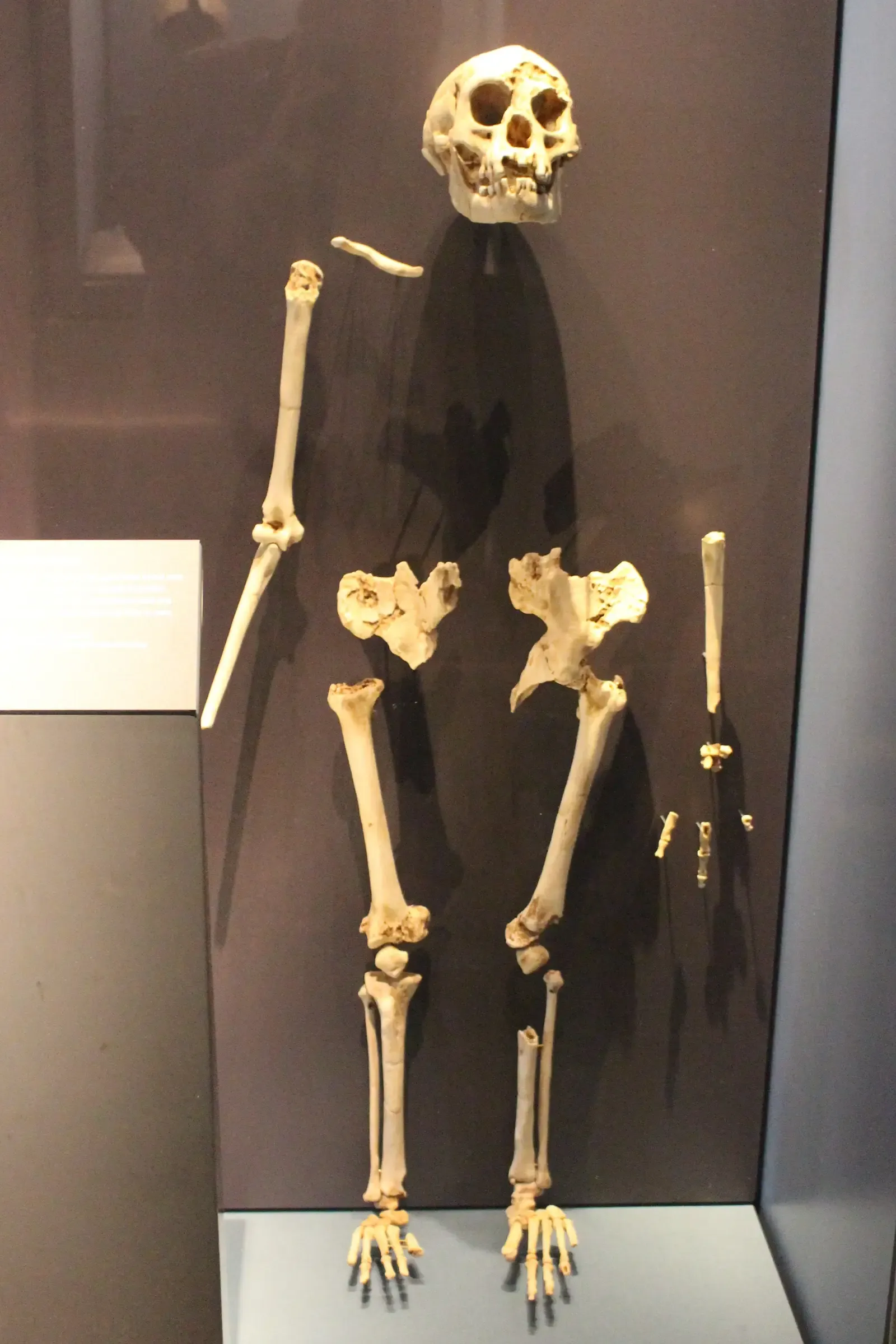
A three-foot-tall skeleton pulled from an Indonesian cave in 2003 looked so strange that researchers initially worried they’d made a mistake.
Homo floresiensis, nicknamed “the Hobbit,” was found in Liang Bua cave on the island of Flores, with an exceptionally small stature and skull. Its tiny brain paired with surprisingly sophisticated stone tools challenged the long-held belief that only one species of human, with some regional variation, had ever walked the earth at a time. Later dating revised the timeline, showing the species may have survived on Flores until around 50,000 years ago, meaning it likely overlapped with modern humans moving through the region. Researchers now believe the Hobbit’s small size came from “insular dwarfing,” a phenomenon where isolated island populations of large animals shrink dramatically over generations due to limited resources – one of the clearest proven cases of evolution actively shrinking a human lineage in real time.
#2 – The Teenage Girl Preserved in a Flooded Mexican Cave
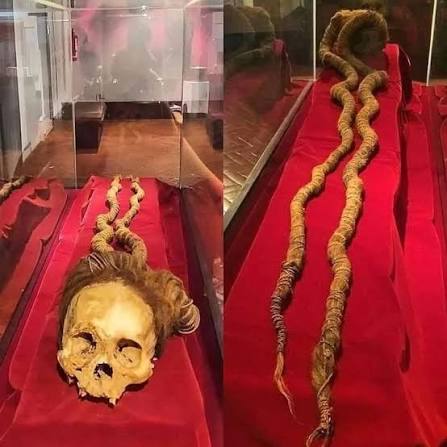
A cave diver’s flashlight beam hit a skull resting on the floor of a submerged sinkhole in Mexico, and what followed became one of the most important genetic discoveries in New World archaeology.
Naia, discovered in the underwater Hoyo Negro chamber of Mexico’s Sac Actun cave system, is described as the oldest, most complete, and genetically intact human skeleton in the New World, dating to roughly 12,000 to 13,000 years ago. Her skull shape looked strikingly different from modern Native Americans, fueling decades of debate over multiple migration waves into the Americas. Yet her mitochondrial DNA carried the same Beringian-derived haplotype found in living Native American populations, proving that despite looking physically different, she shared direct ancestry with people alive today. The preservation was so exceptional that researchers extracted usable DNA from a single molar, something rarely possible with skeletons this old, finally settling a genetics-versus-appearance argument that had confused anthropologists for generations.
#1 – The Fingertip That Rewrote Human History Without a Single Skeleton
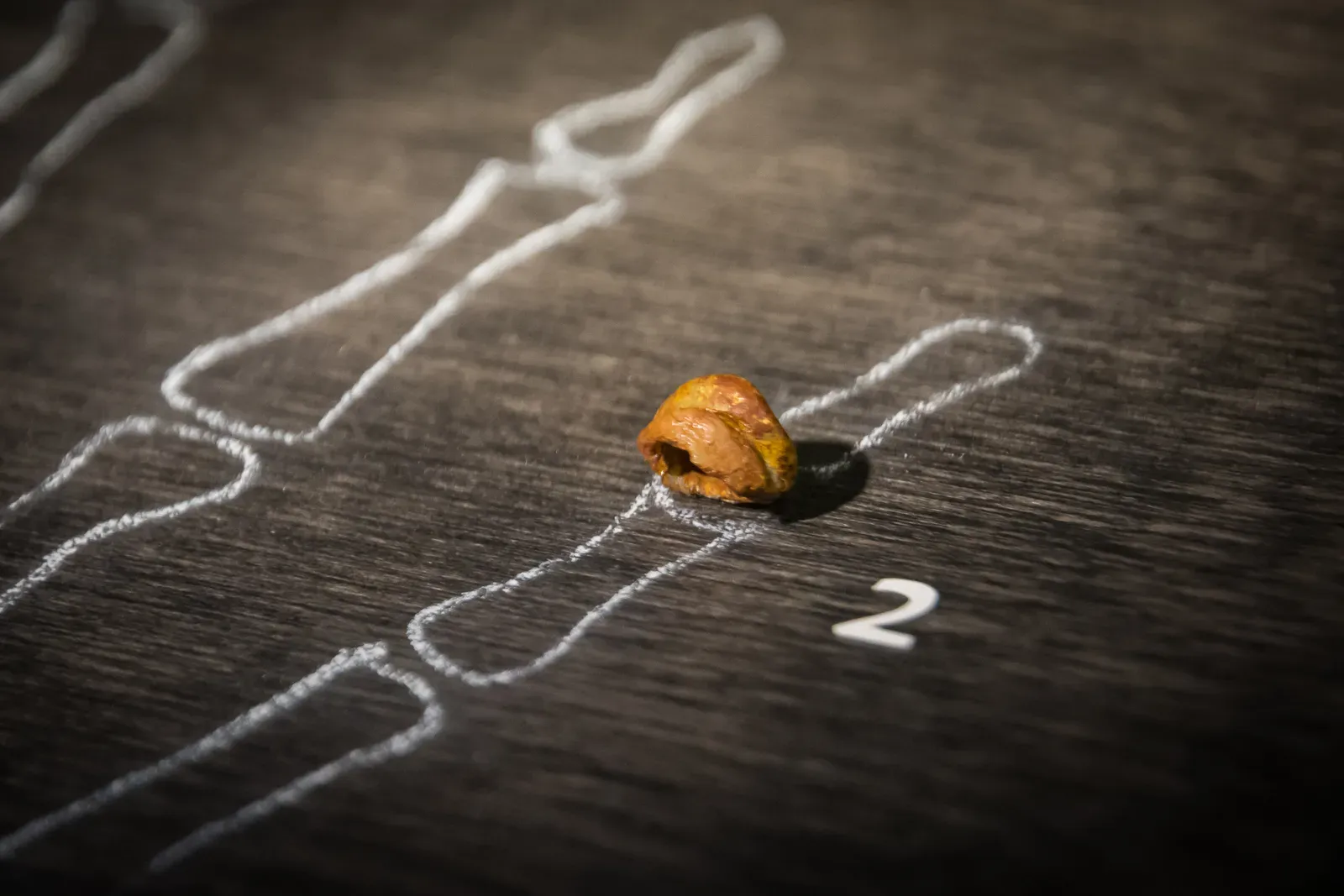
The most consequential human origins discovery of the last twenty years wasn’t a skeleton at all. It was a bone fragment smaller than a fingernail, and it upended everything.
In 2008, researchers working in Siberia’s Denisova Cave sent a small fingertip bone they had found to the lab of Svante Pääbo, a pioneering geneticist at the Max Planck Institute. When the DNA results came back, the bone didn’t belong to a Neanderthal, and it didn’t belong to a modern human either – it revealed an entirely unknown branch of the human family, now called the Denisovans. Follow-up research uncovered a bone fragment from a girl who turned out to be a first-generation hybrid, with a Denisovan father and a Neanderthal mother – direct physical proof that multiple human species weren’t just coexisting but actively interbreeding across Eurasia. Denisovans have since been traced through DNA in modern Tibetan, Melanesian, and Southeast Asian populations, despite almost no skeleton ever being found. It proved you don’t need a full skeleton to rewrite the story of our species. Sometimes a single bone fragment and a DNA sequencer are enough.
Why It Stands Out
- Identified in 2008 from a single fingertip bone, not a skeleton
- Follow-up finds confirmed a first-generation hybrid with a Denisovan father and Neanderthal mother
- DNA traces persist today in Tibetan, Melanesian, and Southeast Asian populations
- Almost no complete Denisovan skeleton has ever been recovered
The Bottom Line
Fourteen discoveries, one obvious lesson: the human story was never a straight line, and anyone who tells you it was is selling you a simplified version. Species interbred. Small-brained hominins may have buried their dead. “Primitive” bodies ran like ours. And a single fingertip outperformed entire skeletons in scientific importance.
If you ask us, the Denisovan case is the most underrated discovery in modern science – an entire vanished branch of humanity proven real without a face, a skull, or a name, just a scrap of bone and patient genetics. That should bother you a little. It means the most important human ancestor we’ve ever found might still be sitting in a drawer somewhere, unidentified, waiting for someone to run the right test. Which of these findings genuinely surprised you the most? Tell us in the comments.