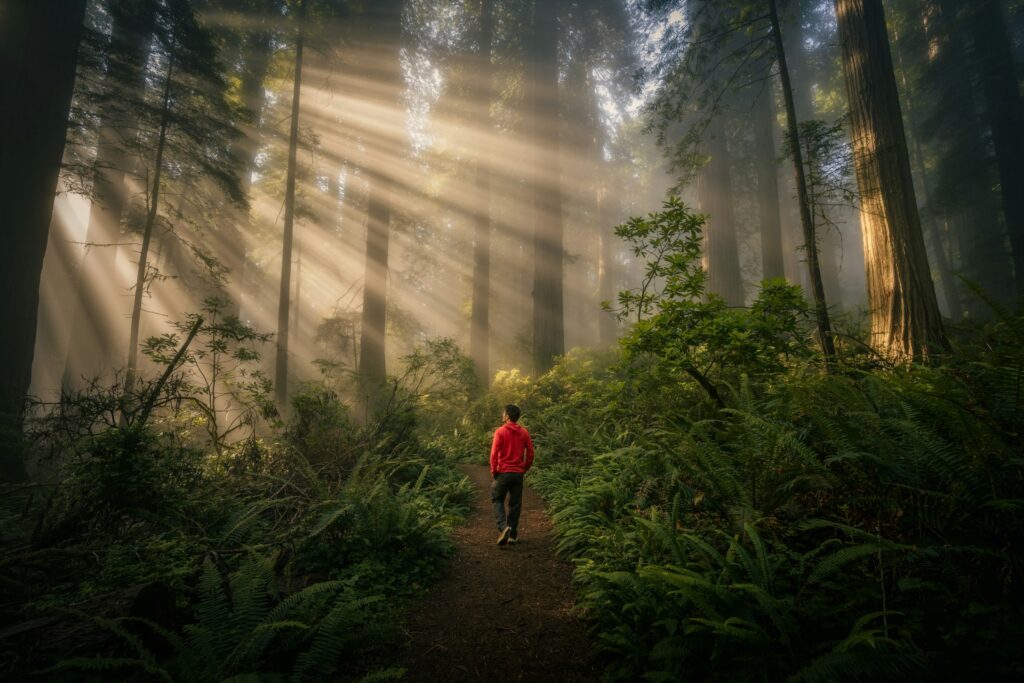
You know that odd feeling when you step into a really old forest and everything in you seems to slow down, sharpen, and stretch out at the same time? It is not just nostalgia or a poetic mood. Your brain is literally responding differently to an old-growth ecosystem than it does to a young, planted stand of trees. The complexity around you is feeding your senses in ways that your nervous system is built to notice, even if you cannot put it into words. When you walk in those towering, uneven, moss-draped woods, your visual system, hearing, sense of smell, balance, and even body awareness all start working together in a distinct pattern. You are not imagining that deeper calm or that strange sense of awe; your brain is decoding age, depth, and ecological richness from subtle cues everywhere. Once you understand how that works, you start to see forests not just as scenery, but as environments that literally sculpt your nervous system in real time.
Your Brain Loves Visual Complexity More Than Straight Lines
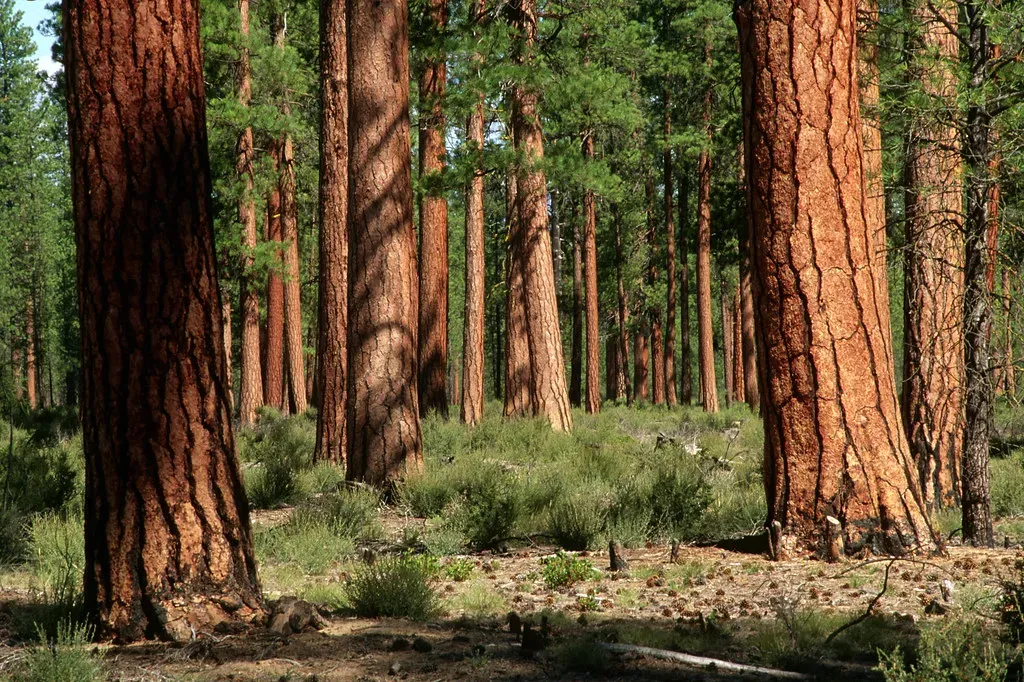
Old-growth forests bombard your eyes with a kind of organized chaos: twisted trunks, broken branches, patches of light and shadow, layers of plants at different heights, and countless shades of green and brown. Your visual cortex is tuned to detect edges, contrast, movement, and patterns, and it becomes highly engaged by this rich, fractal-like structure. You are not just seeing “trees”; you are reading an entire three-dimensional puzzle of shapes and textures, and your brain quietly enjoys the challenge. In contrast, when you walk into a young plantation with evenly spaced trunks and uniform heights, your brain has far less to decode. Straight rows, similar diameters, and regular gaps between trees might look tidy, but they offer much less visual information for your neural circuits to play with. You might feel a bit like you are standing in a parking lot of wooden poles rather than in a wild forest. Without that layered complexity, your visual system is under-stimulated, and the experience can feel flatter, thinner, and emotionally quieter.
The Soundscape of an Ancient Forest Tunes Your Nervous System
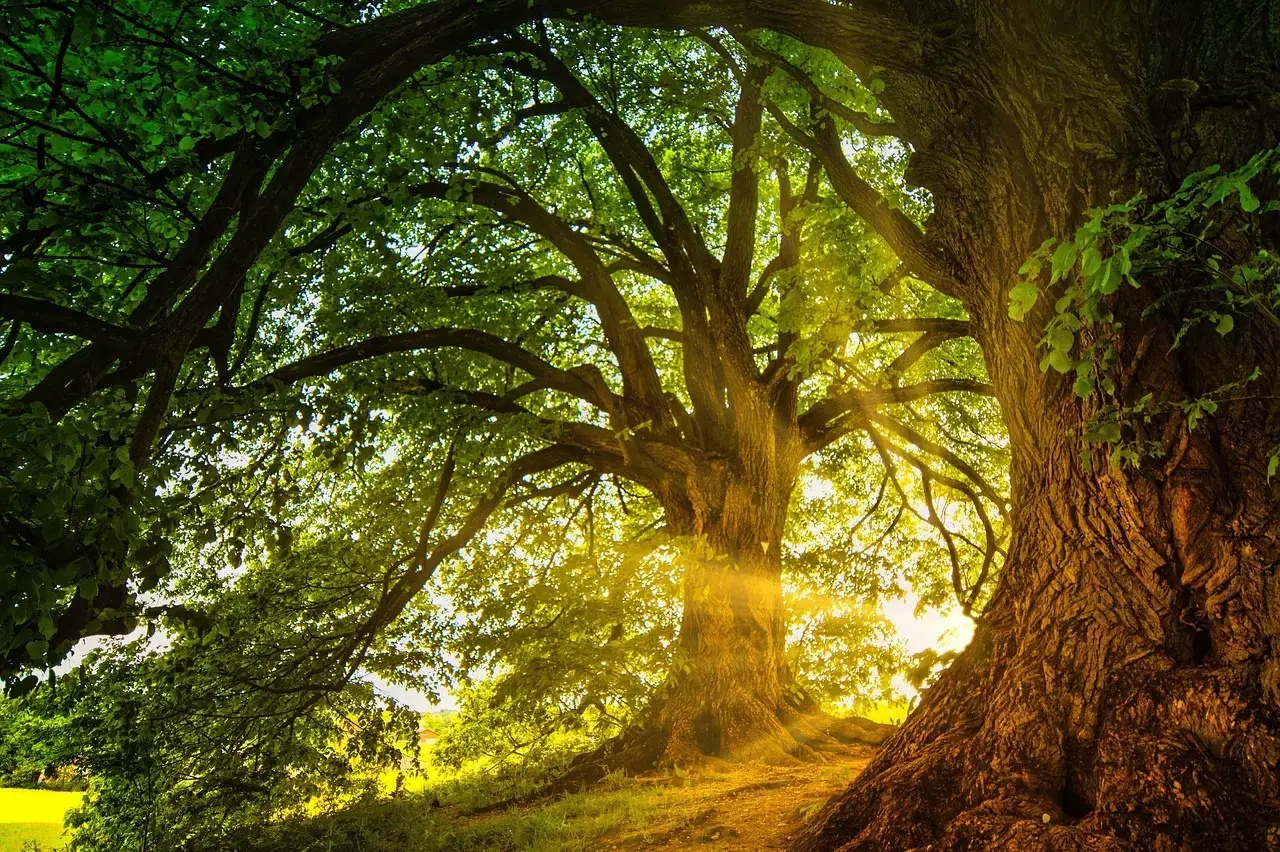
If you stop and really listen, an old-growth forest has a surprisingly intricate soundtrack: overlapping bird calls at different heights, the rustle of understory leaves, the creak of large trunks in the wind, and the dampened hush from thick moss and decaying logs. Your auditory system uses all of that to build a mental map of space and activity around you. The sheer variety of sound frequencies and directions gives your brain a sense of immersion, safety, and “aliveness” that is hard to describe but easy to feel. In a planted forest, especially younger or more simplified stands, the soundscape is often thinner. Fewer plant layers can mean fewer birds and insects, less rustling vegetation, and more hard echoes from evenly spaced trunks. Your brain still maps the space, but it has fewer acoustic clues, and the result can feel emptier, sometimes even eerie. You are not imagining that difference: your nervous system is literally receiving less auditory information about life, depth, and shelter, and your emotional tone shifts with that reduced input.
Smell and Chemistry: How Your Nose Detects Ecological Depth
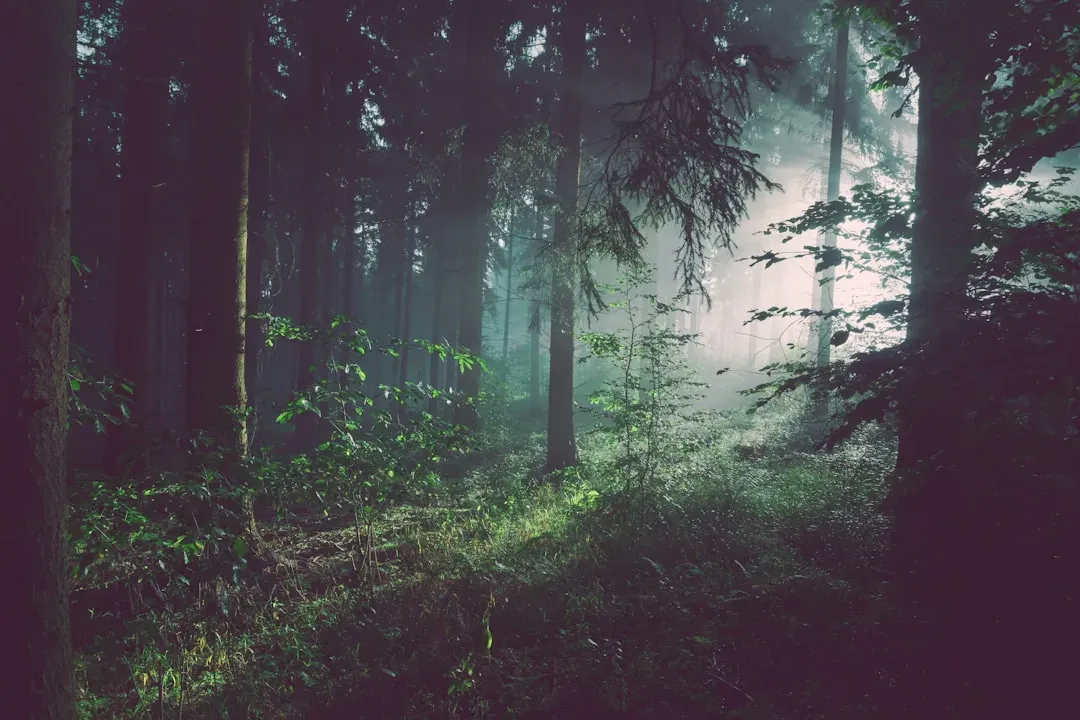
You have probably noticed that old forests have a heavy, complex smell: damp soil, decaying wood, mushrooms, resin, leaves, and sometimes a faint sweetness. That scent comes from a cocktail of volatile organic compounds released by trees, fungi, microbes, and understory plants. When you breathe them in, receptors in your nose send signals straight into brain areas linked to memory and emotion. That is why a single whiff of deep forest air can trigger a wave of calm, familiarity, or even a profound sense of “home.” In younger plantations or simplified stands, the chemical mix in the air is usually much narrower. You might smell resin and needle litter, but without the thick layer of decay, fungi, and diverse plant species, the scent profile is simpler and sharper. Your brain reads that as a different kind of environment: younger, more exposed, less layered. Even if you cannot consciously describe the difference, your body reacts to it. You may feel less grounded or less enveloped, because your nose is broadcasting a message that this place does not have the same ecological depth.
Light, Shadow, and the Way Your Brain Reads Forest Architecture
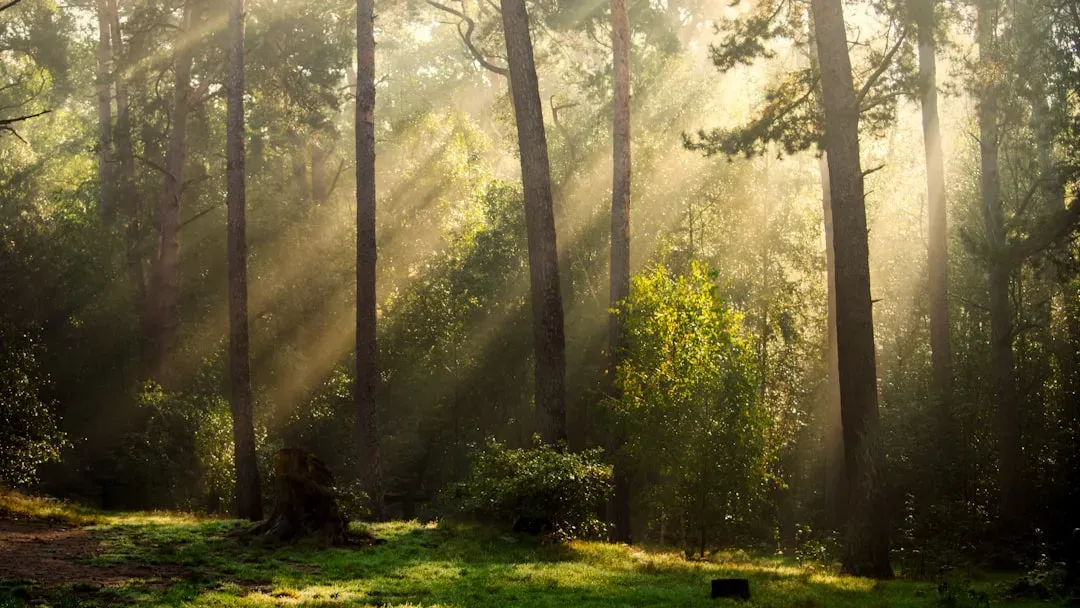
In old-growth forests, sunlight does not fall evenly; it filters in slanting beams, broken by branches, foliage, and hollows. You get pockets of bright light, soft glows on moss, and deep shade under fallen logs. Your visual system is sensitive to these gradients and uses them to understand structure and distance. That play of light and shadow makes the space feel larger and more mysterious, and your brain often responds with curiosity and a mild sense of awe. In planted forests with similar-sized trees and open understories, light often comes in more uniformly. There might be an even greenish glow, but fewer dramatic contrasts or surprising shafts of brightness. Your brain quickly maps the space and then has little left to explore visually. This can leave you feeling a kind of low-key boredom or emotional flatness, even if you cannot pinpoint why. Your nervous system is wired to respond to variety and nuance in light, and when that is missing, the experience just does not reach as deeply.
Movement, Balance, and the Way Your Body Navigates Wildness

In an old-growth forest, the ground rarely behaves like a smooth path. You navigate roots, fallen trunks, uneven soil, rocks, and soft, springy layers of leaves and moss. Every step invites your balance system, leg muscles, and joint sensors to adjust and recalibrate. Your brain’s motor and sensory circuits have to stay alert, and that full-body engagement can pull you into the present moment in a way that feels both grounding and quietly thrilling. In contrast, plantations and managed stands often have straighter trails and less messy undergrowth, especially if they are maintained for timber or recreation. Your feet land on more predictable terrain, and your brain does not have to work as hard to keep you upright. While that can be comfortable and convenient, it also means fewer signals from your body about the world beneath you. Without those constant micro-adjustments, you may drift into a more detached, less embodied state, which can make the environment feel less alive, even if you cannot explain it.
Stress, Calm, and the Subtle Shift in Your Nervous System

Your nervous system constantly juggles between states of alertness and rest. Old-growth forests tend to nudge you toward a calmer, more regulated mode, thanks to their sensory richness and relative safety. Soft, complex sounds, layered visuals, and protective undergrowth signal to your brain that you are in a stable, life-packed place where threats are not obvious. Your heart rate may ease, your breathing can deepen, and your mind often drifts into a more reflective rhythm without you trying. In younger or more uniform forests, your stress response can behave differently. The stark regularity, quieter soundscape, and simpler smells sometimes feel less comforting and more exposed. Your brain may stay slightly more vigilant, scanning for cues that never quite arrive, which can keep you subtly more tense. You might still enjoy being there, but the nervous system shift is not as deep or as restorative. The contrast is not about romanticizing old trees; it is about the way your body reads a complex, well-established ecosystem as safe and nourishing.
Memory, Meaning, and Why Old Forests Feel Spiritually “Thicker”
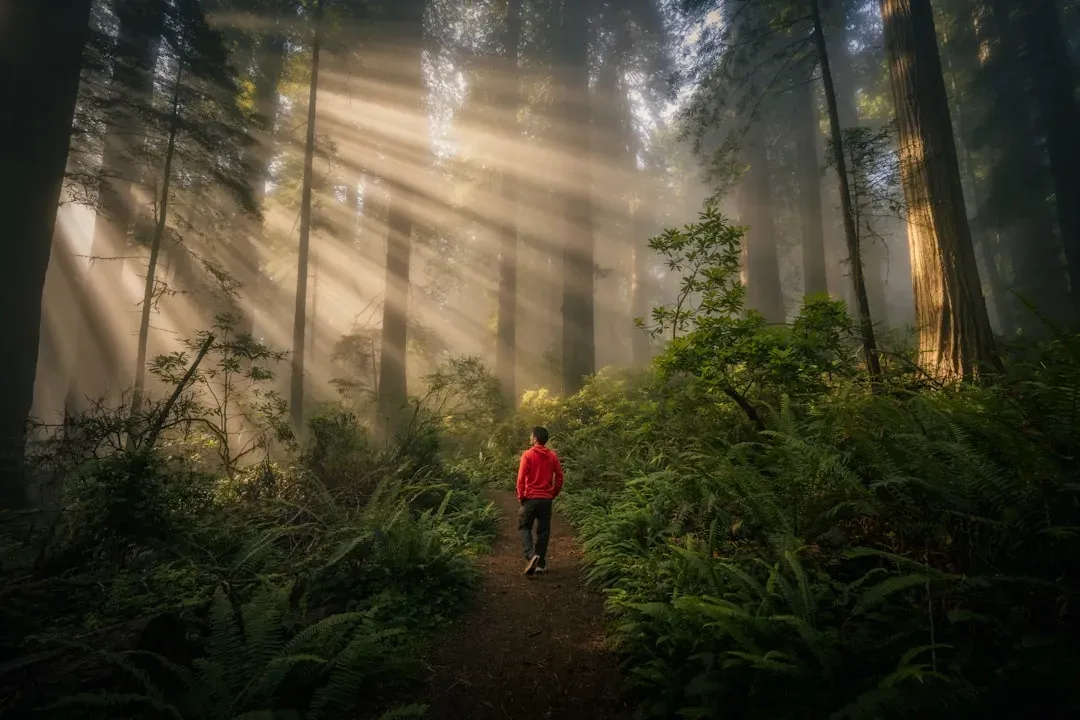
When you walk through an ancient forest, your brain is not just processing the moment; it is layering it onto personal memories, cultural stories, and even inherited ideas about wild places. The sensory richness acts like glue for memory, helping experiences stick more strongly. You might remember the way the light caught a particular trunk, the smell after a rain, or the quiet between bird calls, and those stored impressions give the forest a feeling of depth and continuity each time you return. Planted forests can absolutely hold meaning too, especially if you visit them often or associate them with specific people or times in your life. But the combination of ecological age, structural complexity, and long-term continuity in an old-growth stand gives your brain more material to work with. Over time, that can feel almost spiritual, as if the forest itself carries stories and intentions. What you are really sensing is the accumulation of countless interactions – between species, seasons, and your own experiences – woven into a place your nervous system recognizes as layered and real.
In the end, the way you feel in an old-growth forest is not just poetry or personal preference; it is your nervous system carefully reading a dense web of sights, sounds, smells, textures, and movements. Your brain is built to respond to complexity, and ancient ecosystems offer that in a way that young, planted forests simply cannot yet match. You are not being sentimental when you sense more depth there; you are accurately registering ecological age with hardware that evolved in wild, uneven places.
Next time you step into a forest, you can notice how your body responds before you even form a thought about it. Does your breathing change, does your gaze wander more, does the space feel thick or thin? You are not just walking among trees; you are in a living conversation between your brain and the structure of the world around you. Now that you know what is happening under your own skin, what kind of forest do you think your nervous system will start seeking out?