Almost everyone has had that weird, unnerving moment: you’re walking down a hallway or standing up from the couch, and out of nowhere you swear you see a dark shape flicker at the edge of your vision. You spin your head around, heart pounding a little faster, and… nothing. No intruder. No ghost. Just your brain and body doing something strange and unexplained.
What neuroscience is increasingly suggesting is both less mystical and, in a way, more fascinating. That fleeting “shadow person” in your peripheral vision can sometimes be your brain freaking out about a sudden change in your body, especially a rapid drop in blood pressure, and labeling it as danger. Your eyes do not actually see a monster; your brain generates that impression as it scrambles to keep you upright, conscious, and alive. Let’s unpack how that works, and why your own biology can feel so hauntingly like something watching you from the corner of the room.
Your Brain’s First Job Is Not Accuracy, It’s Survival
It is tempting to think of the brain as a careful scientist, calmly collecting data from the world and building an objective picture of reality. In practice, it behaves much more like an over-caffeinated security guard who would rather hit the alarm too often than miss a single real threat. From an evolutionary standpoint, a false alarm is cheap, but missing a predator hiding in the shadows could be fatal.
So when your body suddenly changes on the inside – say, your blood pressure drops as you stand up – your brain has to decide what is happening in milliseconds. Is the world suddenly dimming because the lights flickered, or because you are about to pass out? Is that vague movement in your periphery a harmless visual glitch, or a potential attacker? When the stakes are staying alive, the brain leans heavily toward “assume danger now, sort out the details later,” even if it means conjuring a split-second shadow that was never really there.
What Actually Happens During a Sudden Drop in Blood Pressure

When you stand up quickly after sitting or lying down, gravity yanks blood toward your legs and lower body. If your cardiovascular system does not instantly compensate, the amount of blood getting to your brain momentarily dips. This is often called orthostatic hypotension, and it can cause you to feel lightheaded, dizzy, or like your vision is briefly fading around the edges.
That tiny window of reduced blood flow is enough to throw your brain off balance. Neurons crave oxygen and glucose, and even short changes in supply can make them fire less reliably or in odd patterns. You might feel your heart race as your body releases adrenaline to get blood pressure back up, and your perception can become warped – world slightly dimmer, sounds more distant, or visual “glitches” like shimmering, spots, or that haunting corner-of-the-eye movement that vanishes when you turn your head.
Peripheral Vision: Designed to Detect Threat, Not Details
Your peripheral vision is like a motion detector: highly sensitive to movement and broad shapes, but terrible at fine detail and color. The cells at the edges of your retina are wired to pick up fast changes – something darting toward you, a shape looming at the edge of your visual field – rather than to read text or recognize faces. This makes sense in a world where noticing a predator early was everything.
In a brief low-blood-pressure moment, the signals coming from that peripheral network can become noisy or inconsistent. Instead of clean, stable input, your brain receives half-formed, flickering information. Because the periphery is already tuned to be jumpy and reactive, your brain would rather treat noisy input as a possible moving object than dismiss it. The result is a fleeting impression – almost like a dark figure or shadow shape – that feels real even though it never quite resolves into anything when you turn to look.
Why Your Brain Turns Vague Signals Into “Someone There”
The human brain hates uncertainty, especially when it might be related to survival. Give it an ambiguous signal – a flicker, a blur, a dark patch of almost-motion – and it is surprisingly quick to turn that into a meaningful pattern. This is the same reason you see faces in clouds or shapes in curtains; the brain would rather over-detect patterns than miss something important.
When your blood pressure drops and your sensory systems get briefly unreliable, the brain leans even harder on guesswork. If there is any prior expectation of threat – walking in a dark parking garage, home alone at night, a creepy basement – it uses that context to “fill in” the ambiguity with something that fits: a possible person, a lurking presence, a shadow that could be watching. It does not politely ask whether this is truly there; it throws you a gut-level warning in the form of a perceived movement, then lets your conscious mind play catch-up.
The Body-Brain Feedback Loop That Makes It Feel So Real
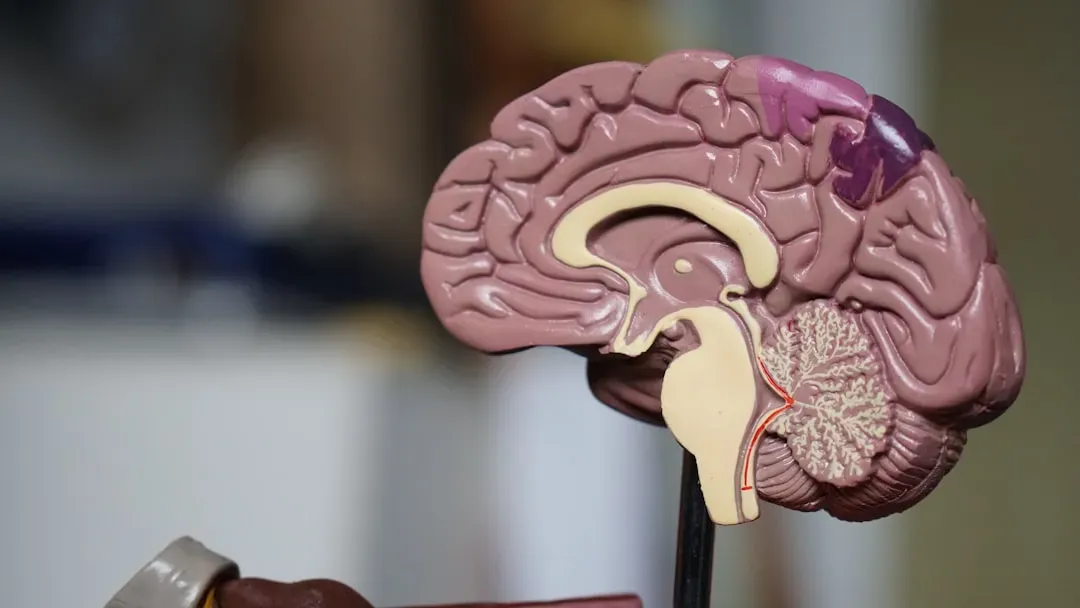
Here is where it gets wild: your brain’s threat interpretation does not stop at perception, it loops back into your body. When your brain thinks there might be danger, it activates the sympathetic nervous system – the classic fight-or-flight response. Your heart rate picks up, blood vessels constrict to push blood to critical organs, and stress hormones rise. That can partially correct the drop in blood pressure, but it also makes you feel on edge, jittery, or oddly “watched.”
Now your body is tense, your heart is pounding a bit faster, and you just “saw” something where nothing was. Your brain then reads your own physical state as further evidence that something must actually be wrong. This creates a feedback loop: a physiological blip leads to a scary interpretation, which triggers a stress response, which your brain then uses as proof that the fear is justified. No wonder that tiny corner-of-the-eye shadow can feel so convincing, even if it lasted less than the blink of an eye.
Why Some People Notice These Shadows More Than Others

Not everyone is equally sensitive to these split-second illusions. People who are more anxious, sleep-deprived, dehydrated, or who already have fluctuating blood pressure are often more likely to experience them. When you are tired or stressed, your brain is already running closer to the edge, more reactive and less patient with uncertainty, so a little wobble in blood flow or lighting can trigger a much bigger perceptual response.
There is also a temperament piece. Some people are naturally more tuned into their internal sensations – a racing heart, a flutter in the stomach, a wave of dizziness – and they tend to notice and interpret these episodes more intensely. Others shrug them off or barely register them. Personally, I used to chalk up those quick visual blips to “I must be haunted” jokes, until I started tracking how often they coincided with standing up too fast after a long work session with barely any water. Turns out, biology can feel eerily like the supernatural when you are running yourself into the ground.
Health Conditions and Medications That Can Amplify the Effect
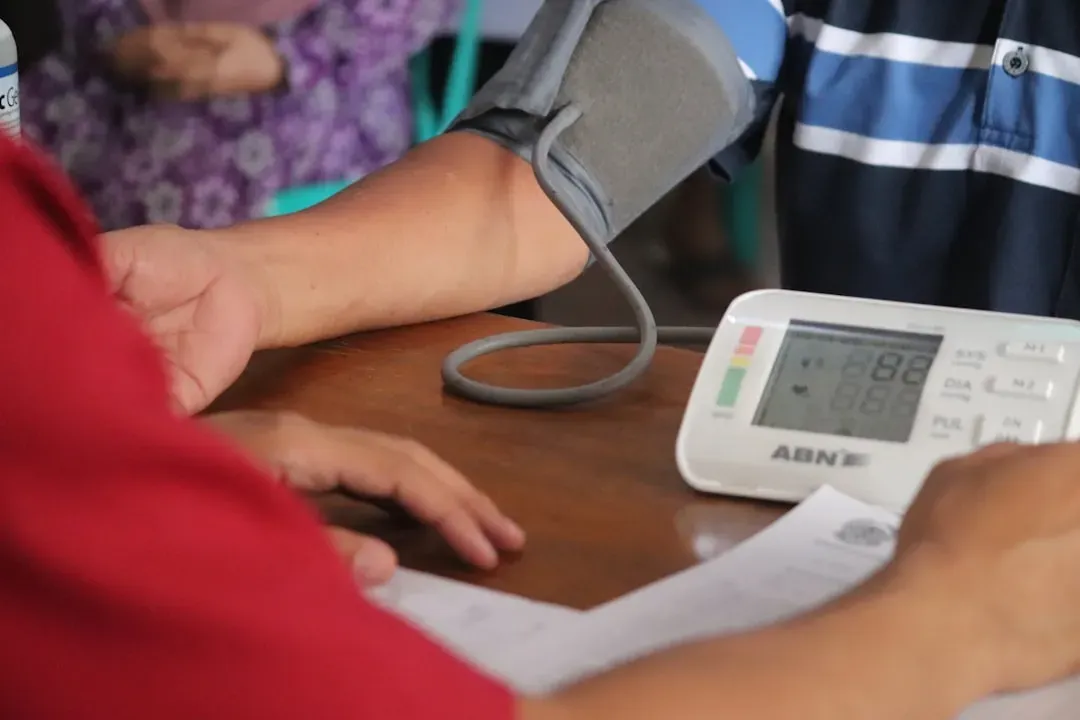
Certain health conditions make blood pressure drops more frequent or more extreme, which can in turn increase the odds of these strange visual experiences. Disorders that affect the autonomic nervous system, dehydration from illness or heavy exercise, and chronic low blood pressure can all leave the brain more vulnerable to brief periods of reduced blood flow. For some people, these episodes are not just curious illusions but real risks for fainting.
Many common medications can also contribute, especially some used for high blood pressure, depression, anxiety, or sleep. They can change how quickly your blood vessels constrict or how efficiently your heart responds when you stand up. That does not mean every flicker you see is a drug side effect, but it does mean that your “ghostly” corner-of-the-eye moments might be your nervous system reacting to a combination of posture, pills, hydration, and stress, all layered on top of a very old survival system.
Practical Ways to Reduce Those Flickers and False Alarms

While you cannot (and should not) turn off your brain’s threat-detection bias, you can make those dramatic flickers less likely. Staying hydrated, standing up more slowly, and not going from deep couch mode to fast movement in a single motion can all help your blood pressure adapt more smoothly. Small habits like flexing your leg muscles before standing or taking a moment to pause upright before walking away can give your cardiovascular system a head start.
It also helps to reframe the experience itself. When you feel that brief swoop of dizziness and swear you saw something move, you can mentally label it as “my blood pressure and brain doing their thing” rather than as a sinister sign. Strangely, that tiny mindset shift can break the feedback loop and prevent your nervous system from going fully into alarm mode. You are not denying what you felt – those moments are real – but you are refusing to feed them a story that keeps you scared long after the biology has normalized.
Conclusion: Your “Shadow in the Corner” Is a Story Your Brain Tells to Protect You

At first glance, it sounds almost disappointing to blame that uncanny shadow in your periphery on blood pressure and overprotective neural circuits. Where is the mystery in “my baroreflex kicked in and my visual cortex got confused”? But the more I learn about it, the more awe I feel. Your brain is constantly stitching together messy, incomplete signals from your body and the world into a coherent story, and sometimes that story briefly includes a threat that never existed – simply because the cost of being wrong the other way is too high.
In my view, those split-second phantom figures are not signs that something is wrong with you; they are proof that your entire system is obsessed with keeping you alive, even if it occasionally scares you half to death in the process. The trick is to respect the biology without surrendering your peace of mind to every false alarm. Next time you catch a flicker in the corner of your eye after standing up too fast, you can give a small nod to your nervous system and think: there goes my brain, choosing survival over accuracy again. Knowing that, does the “shadow in the corner” feel a little less like a haunting and a little more like a reminder of how intensely your body fights for you?