Every now and then, the fossil record throws scientists a curveball so strange it almost feels like a prank from deep time. You expect to see long, step‑by‑step transitions from one form to another, and then suddenly – boom – a creature appears in the rocks that seems to come out of nowhere, already highly specialized, already weird, and already doing its thing. If you have ever wondered why even seasoned palaeontologists sometimes sound frustrated, confused, or downright excited, these kinds of fossils are the reason.
Of course, “no transitional fossils” almost never means what internet arguments make it sound like. In practice, it usually means that for a particular species or body plan, the record is annoyingly patchy, maddeningly incomplete, or the key forms are still buried somewhere we have not dug yet. But some species really do appear very abruptly in the strata we have so far, and that abruptness has fueled decades of debate about evolution’s tempo, the quirks of fossilization, and just how much we still do not know. Let’s walk through eight striking cases – and what scientists are still arguing about behind the scenes.
1. Anomalocaris – The “Alien” Predator That Seems To Arrive Out of Nowhere
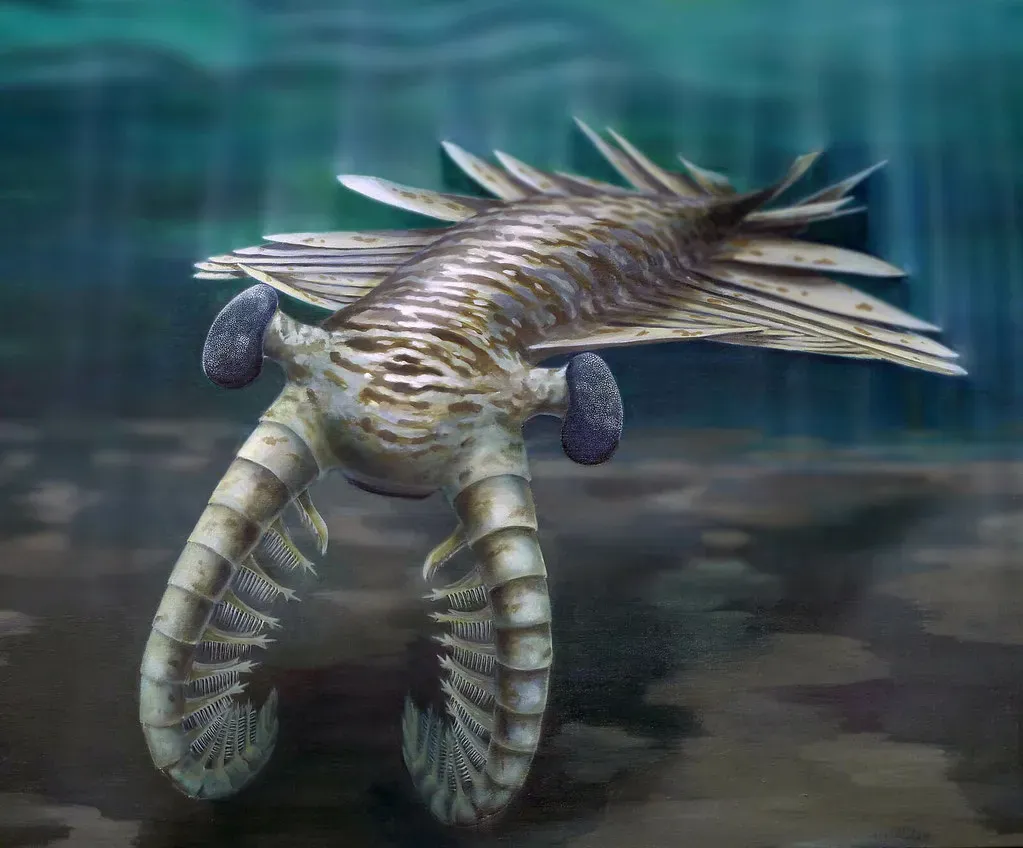
Anomalocaris looks like something a science fiction concept artist would sketch on a wild day: a torpedo‑shaped body, big compound eyes, spiny grasping appendages, and a circular, pineapple‑ring style mouth. When it first shows up clearly in the Cambrian fossil record, it is already a top predator, powerfully built and surprisingly sophisticated for such an ancient animal. There is no neat sequence of intermediate predators that gradually accumulate its distinct features; instead, it seems to crash the party already near the top of the food chain.
Palaeontologists generally think Anomalocaris belongs within a larger group related to arthropods, but how exactly it connects to the lineage that leads to modern crabs, insects, and spiders is still controversial. Part of the problem is the fossil record itself: for a long time, different parts of Anomalocaris were misidentified as separate animals, which shows how fragmentary and confusing Cambrian fossils can be. Even now, researchers argue about whether we are missing key transitional forms or whether Anomalocaris’ “sudden” appearance is just an illusion created by the few exceptional fossil sites that preserve soft-bodied animals at all.
2. Opabinia – Five Eyes, A Vacuum Hose Trunk, and Almost No Clear Relatives
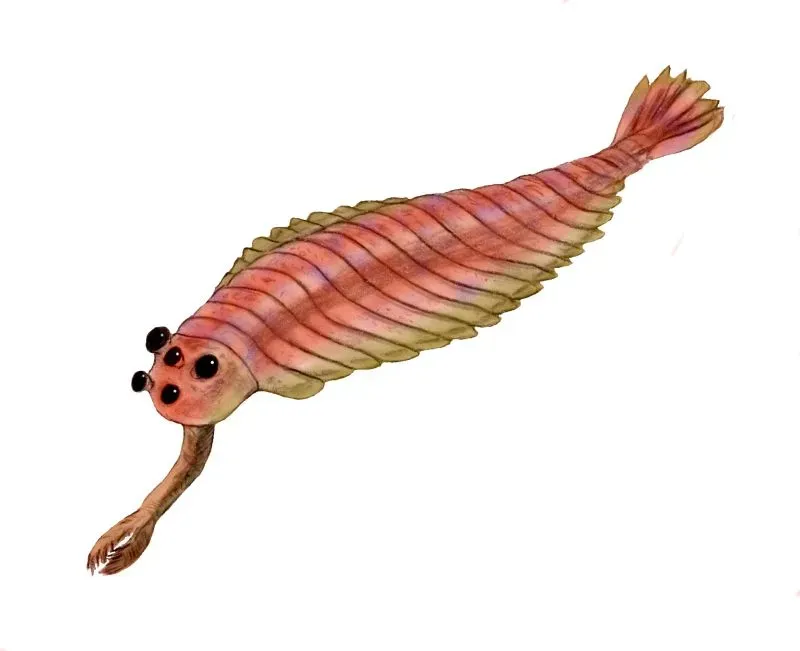
If evolution had a sense of humor, Opabinia might be its punchline. This small Cambrian creature had five eyes perched on its head and a long, flexible proboscis ending in a claw‑like grabber. When it stepped into the scientific spotlight, it did so fully formed, with that bizarre body plan already in place and no obvious chain of simpler, half‑Opabinia ancestors sitting in the preceding rock layers. Even today, it is one of those fossils that make students stare at reconstructions and quietly wonder if someone is making it up.
Researchers widely agree that Opabinia is part of the broad radiation of early arthropod‑like animals, but where exactly it sits on the tree of life is still under debate. Some see it as a side branch close to the origin of true arthropods, others treat it as part of a larger, now‑extinct set of experiments in body design that never left direct descendants. The lack of clean transitional forms before and after it leaves room for argument: is Opabinia a brief, weird evolutionary dead end, or a fleeting glimpse of stages in arthropod evolution that most of the fossil record simply failed to capture?
3. Hallucigenia – From Evolutionary Joke to Problem Child of the Cambrian
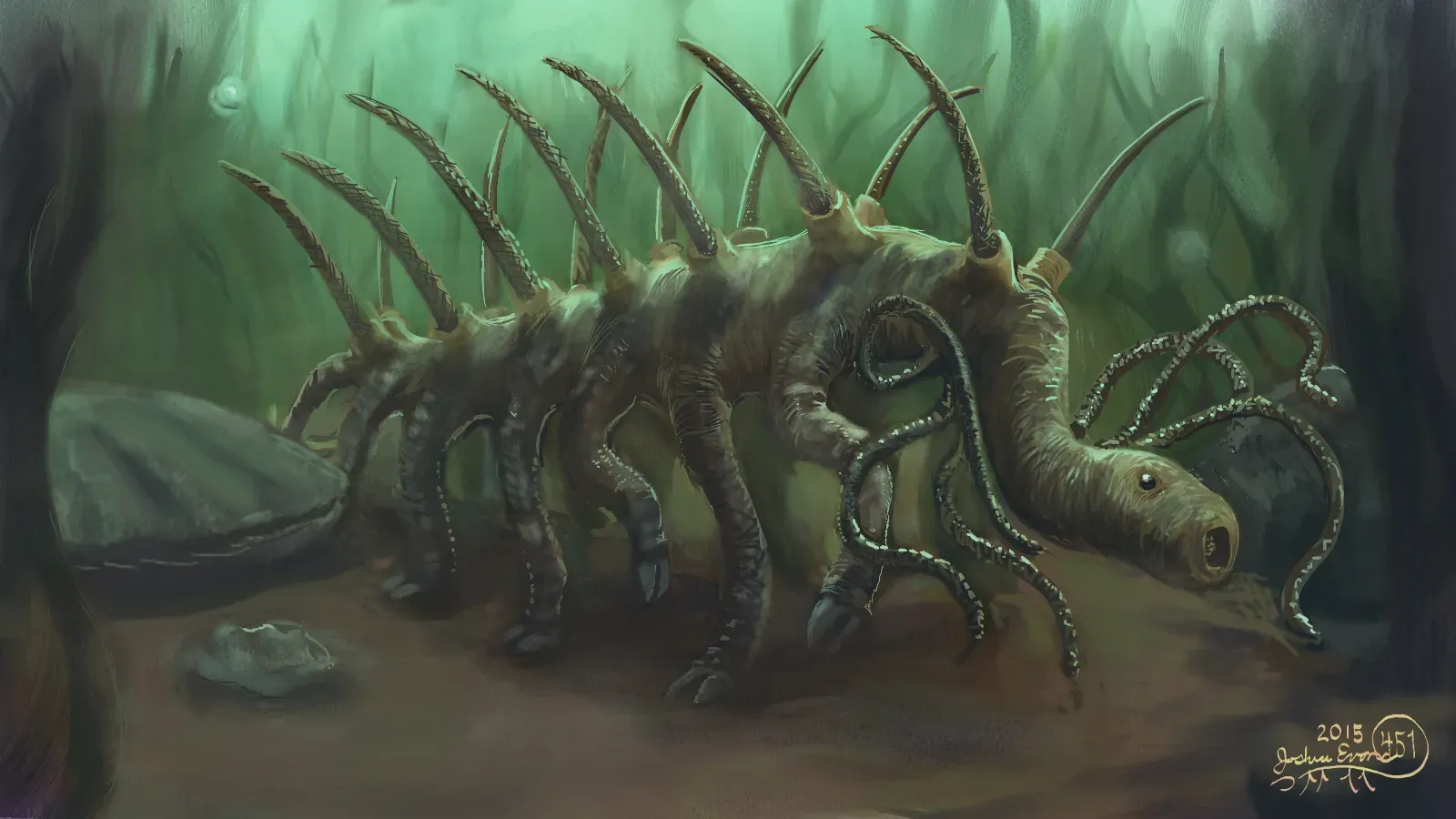
Hallucigenia earned its name for a reason: it is a spiky, tube‑like animal with pairs of clawed legs and rows of defensive spines, originally reconstructed literally upside down. When it appears in Cambrian deposits like the Burgess Shale and similar sites in China, it already has that full suite of strange features. There is no tidy fossil sequence where a simple worm gradually adds stubby legs, then claws, then a forest of spines; instead, Hallucigenia drops into view already decked out like a medieval weapon.
The puzzle is not whether Hallucigenia evolved – it clearly did – but how it fits into the bigger picture. Modern work has linked it to the broader group that includes velvet worms, a connection based on details of its claws and other anatomy. Still, the line of descent is more sketched than filled in, with gaps on both sides. Palaeontologists argue about whether we are missing an entire set of soft‑bodied transitional forms, or whether what we have is enough to say that many Cambrian animals represented rapid, branching experimentation that never produced the orderly, gradual sequences some people still expect to see.
4. Tiktaalik – Famous Transitional Fossil That Still Left an Awkward Gap
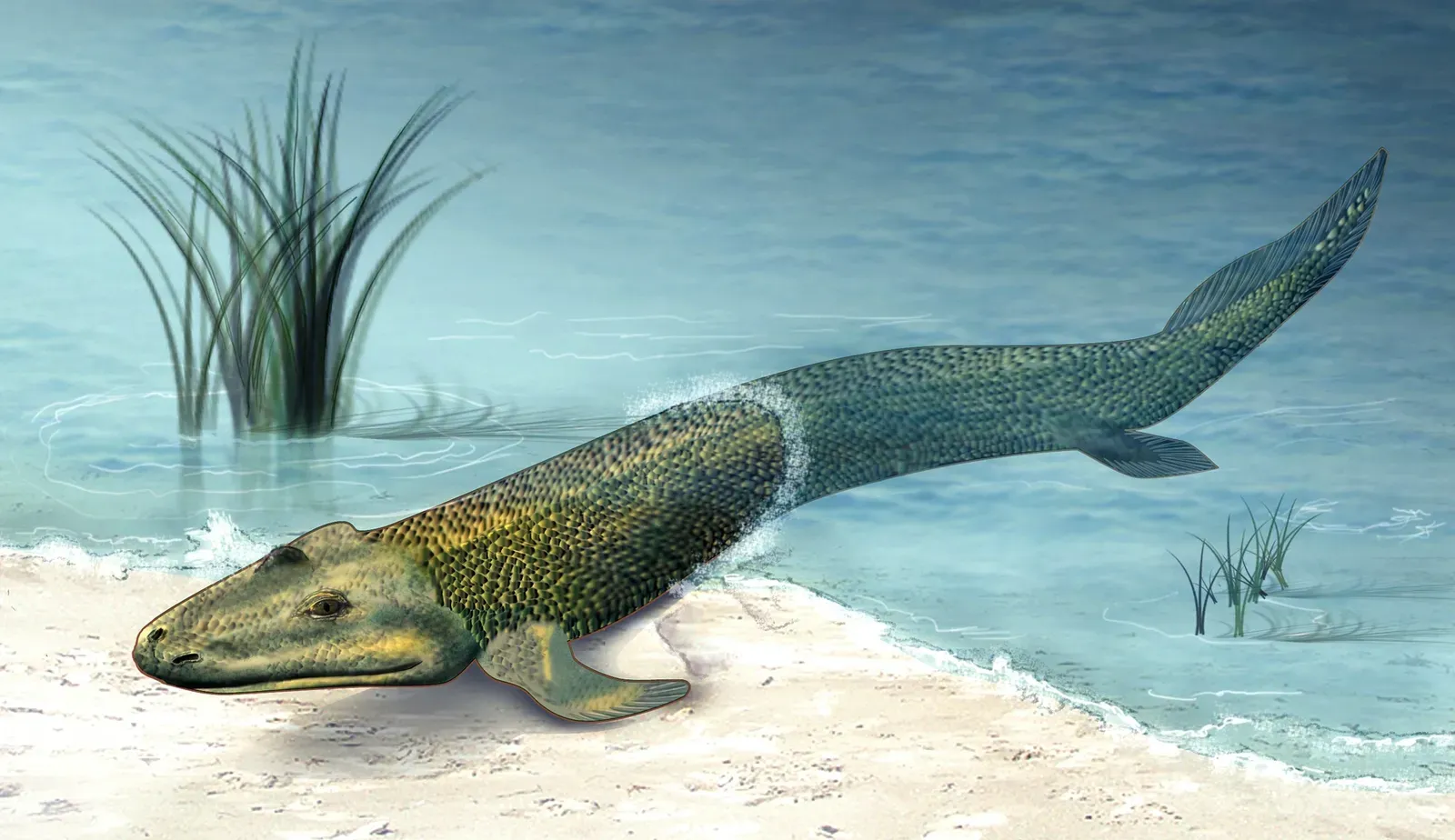
Tiktaalik is often held up as the poster child of a classic transitional fossil: a fish with robust, limb‑like fins, a mobile neck, and other features that bridge the gap between water‑dwelling fish and the first land vertebrates. Yet when Tiktaalik was described, it also highlighted something uncomfortable: in the rocks just younger than Tiktaalik, we already have fully formed early tetrapods with well‑developed limbs and toes. That means the detailed steps between Tiktaalik‑style fish and those early four‑legged animals are still frustratingly thin in the fossil record.
As more fossils of early tetrapods and lobe‑finned fish appear, the picture is gradually filling in, but there is still plenty to argue about. Some researchers think the transition to land started earlier and in more habitats than the classic narrative suggests, while others caution that we are over‑interpreting limited material. The controversy is not over whether evolution happened, but over which traits came first, how many times similar adaptations evolved in parallel, and why the record shows a apparent leap from advanced fish like Tiktaalik to strongly terrestrial tetrapods with relatively little in between.
5. Archaeopteryx – The “First Bird” That Might Not Be First at All
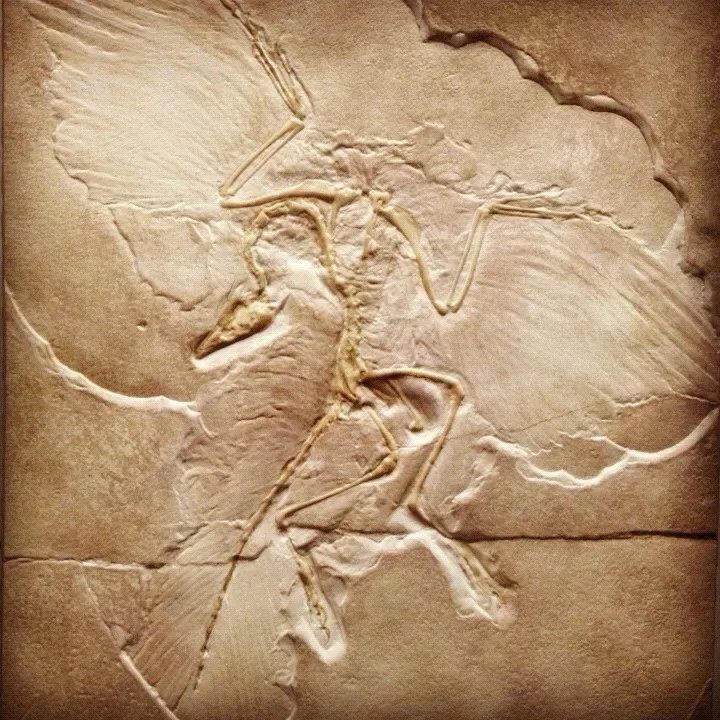
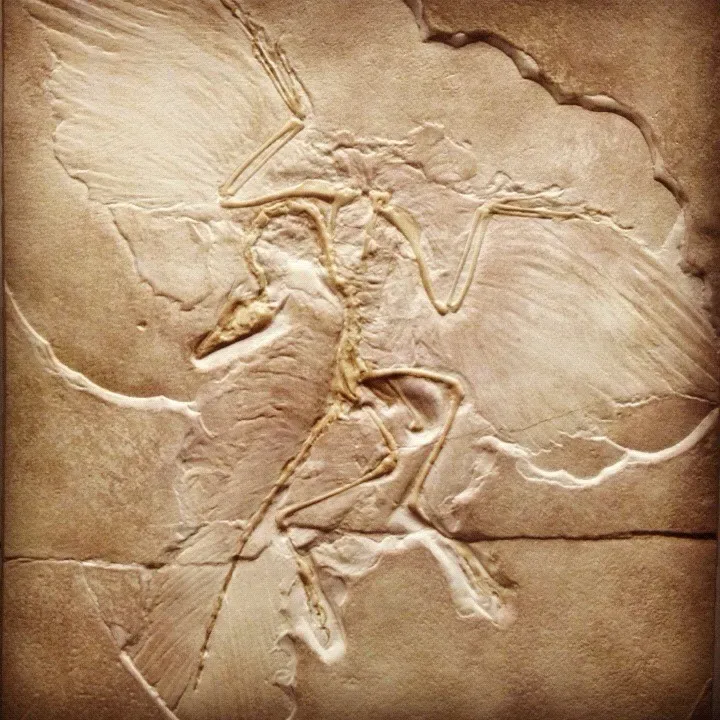
Archaeopteryx has long been celebrated as a stunning link between dinosaurs and birds, with its blend of teeth, a long bony tail, and modern‑looking feathers. When it first appears in Late Jurassic rocks, it looks surprisingly bird‑like, especially in its wings and plumage. For a long time, there seemed to be little in the way of clear transitional fossils leading up to it – no simple, half‑feathered dinosaurs in the immediate layers below, and no fuzzy continuum of “almost birds” bracketing it in time.
Over the last few decades, newly discovered feathered dinosaurs have crowded around Archaeopteryx on the family tree, but they have also made the story messier. It now looks like feathers, flight‑related features, and bird‑like behaviors evolved in a branching, mosaic fashion across many dinosaur groups. That has led some palaeontologists to argue that Archaeopteryx is not a singular “first bird” at all, but rather one of several early bird‑grade animals. The debates now focus on whether we can truly draw a neat line that puts Archaeopteryx at some clear turning point, or whether the fossil record is showing us a more tangled, overlapping set of experiments in powered flight.
6. Trilobites – Early Arthropods That Arrive Already Sophisticated
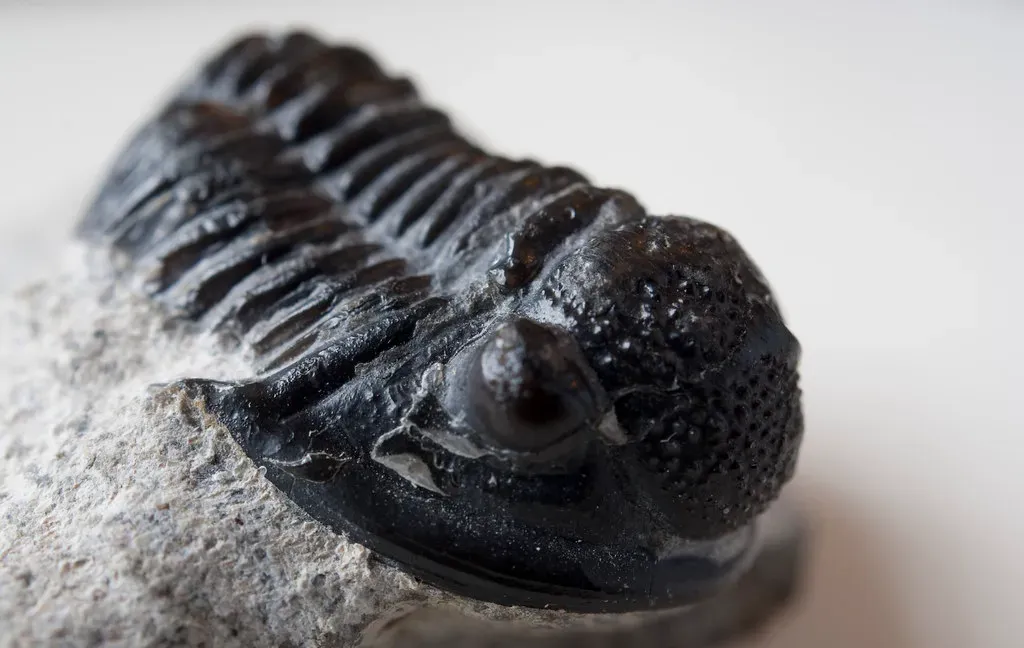
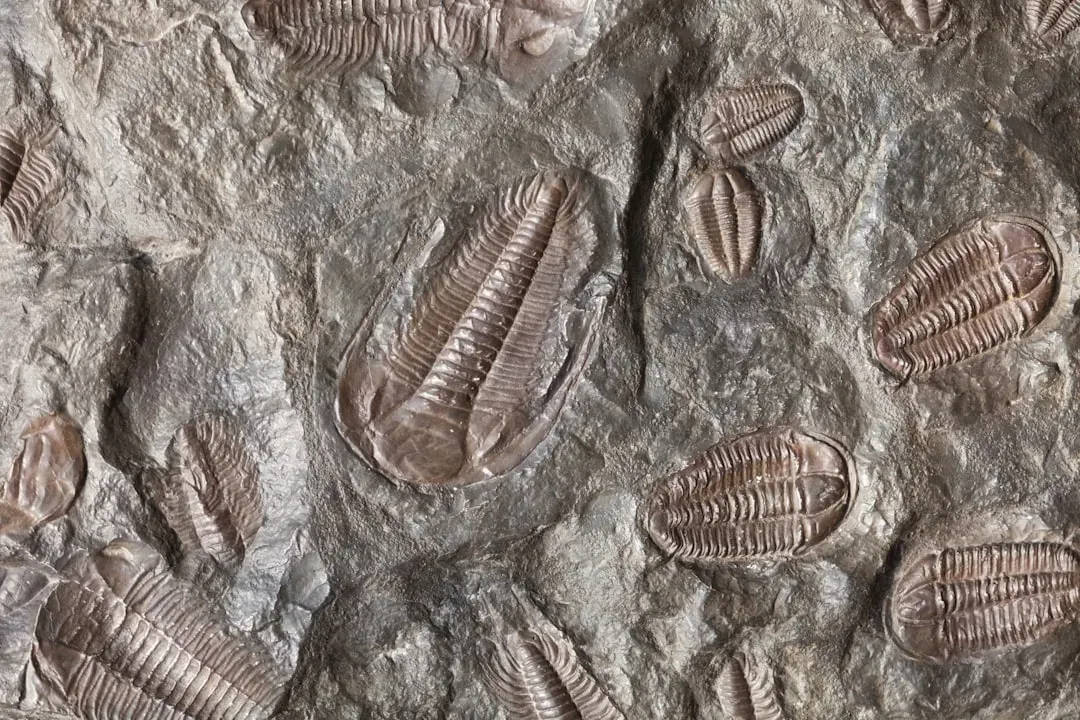
Trilobites are among the most iconic fossils on Earth, yet they also raise a basic question: why do they appear in the early Cambrian already with complex eyes, articulated armor, and diverse body shapes? The earliest known trilobites show a surprising range of forms and ecological roles, which suggests a prior history of evolution that the rocks are not currently revealing. Instead of slowly emerging from a series of simpler, half‑trilobite ancestors, they stride into the fossil record like a well‑established group.
Most researchers think that the ancestors of trilobites lived in the late Precambrian or very early Cambrian, but were either too small, too soft‑bodied, or restricted to environments where fossilization was rare. That hypothesis is reasonable, but it is still, in many places, an educated guess backed by indirect evidence. The argument is less about whether those missing forms existed and more about how fast early arthropod evolution proceeded, how biased the fossil record really is, and whether the apparent “explosion” of trilobites and their cousins reflects biology, geology, or some messy combination of both.
7. The Coelacanth – “Living Fossil” With a Long Invisible History
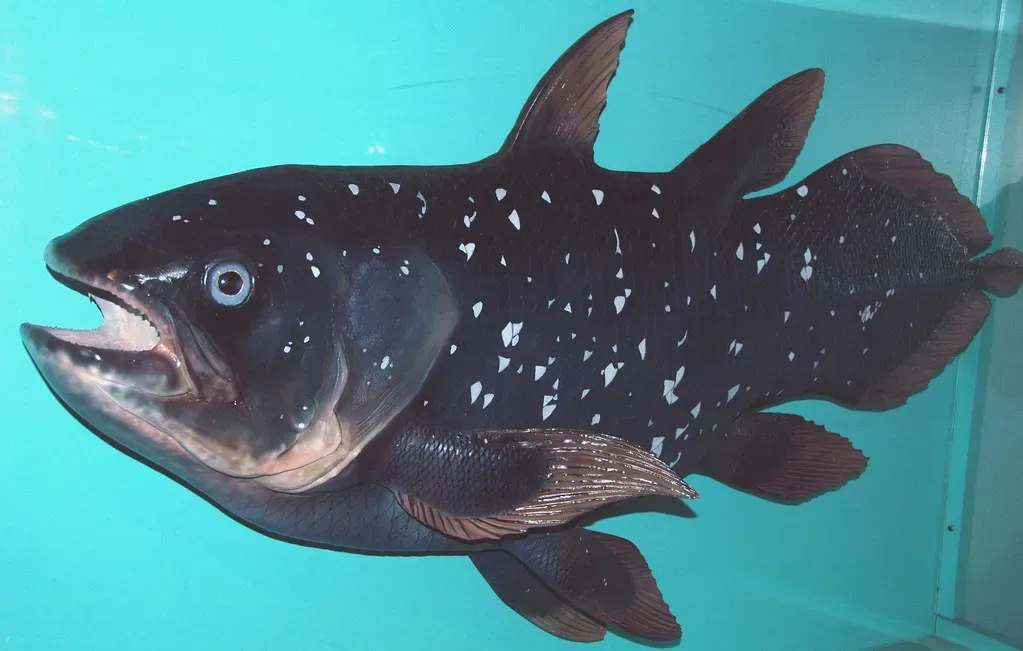
In the fossil record, coelacanths show up as distinctive lobe‑finned fish with unique, paired fins and a characteristic tail, already specialized and easy to recognize. There is not a gentle ramp where more generic fish slowly acquire the full suite of coelacanth traits; instead, the early forms we know are already clearly part of that lineage. Then, after a rich history in ancient seas, they vanish from the fossil record for a huge span of time, leading scientists to assume they had gone entirely extinct.
The surprise discovery of living coelacanths in the twentieth century did not erase the fossil gaps; it made them more intriguing. How did a lineage that appears fully formed in ancient rocks manage to persist, largely hidden from both geologists and biologists, for so long? Palaeontologists still argue about how stable coelacanth anatomy really has been, whether calling them “living fossils” is misleading, and what their patchy record says about our tendency to confuse absence of evidence with evidence of absence in deep time.
8. The Burgess Shale “Weirdos” as a Group – Abrupt Body Plans With Few Clear Precursors
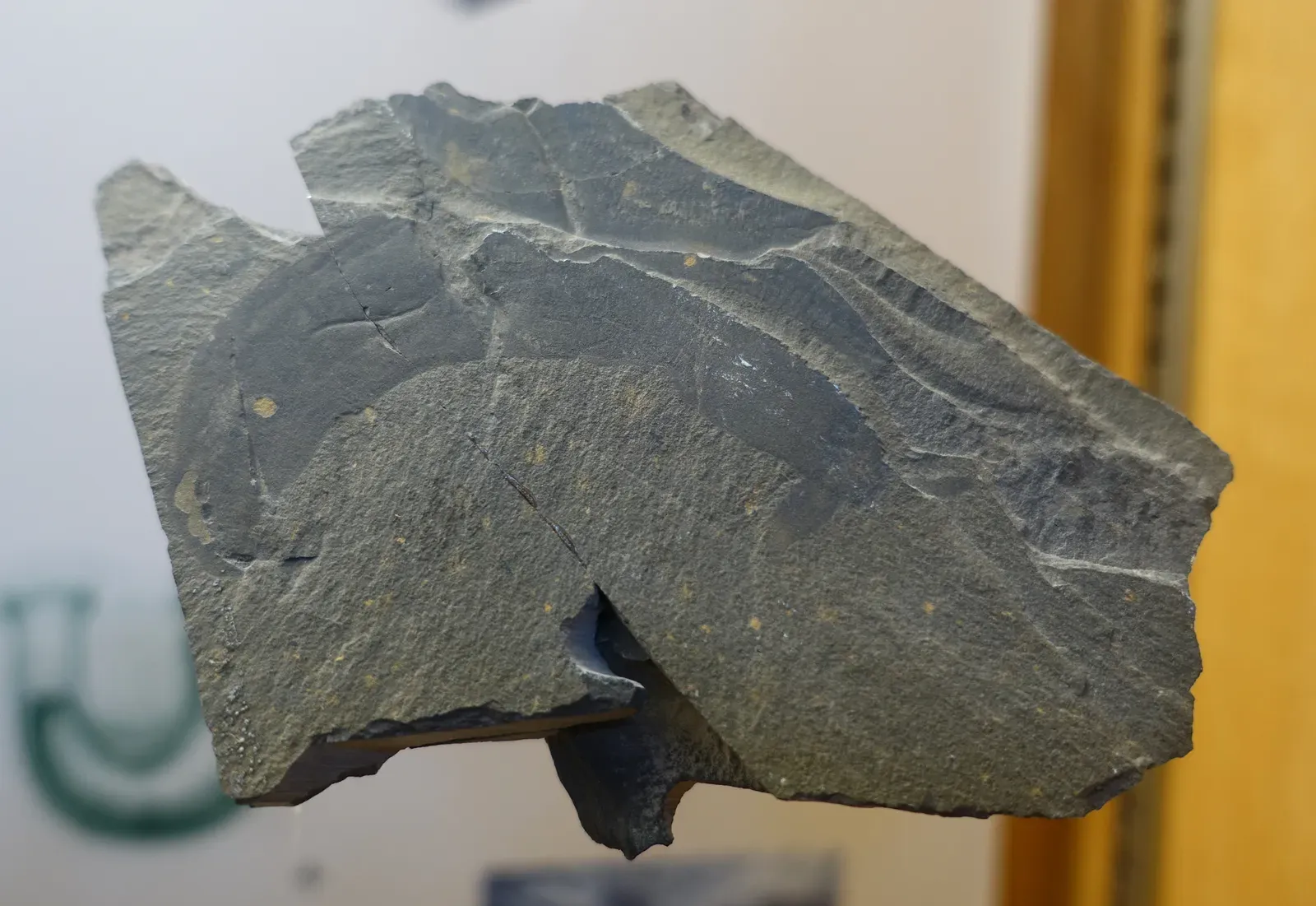
Beyond individual celebrities like Anomalocaris and Hallucigenia, entire communities of Cambrian animals appear in sites such as the Burgess Shale and similar deposits looking shockingly diverse and specialized right from the start. Many of these creatures do not have obvious look‑alikes in earlier rocks, and for quite a few of them, even identifying modern relatives is a struggle. In other words, it is not just that one or two species seem to appear fully formed; it is that whole suites of body plans seem to burst onto the scene with minimal warning.
This broader pattern has fueled long‑running debates about the so‑called Cambrian explosion: was it really an explosive burst of innovation, or is our fossil record simply too biased and incomplete to show the slower build‑up that likely preceded it? Some scientists argue that genetic and developmental changes can produce major leaps in body design over geologically short intervals, while others push back, emphasizing how much may be missing from the rocks we have sampled so far. What nearly everyone agrees on is that these “weirdos” are telling us something profound about early animal evolution – the argument is mostly about exactly what that something is, and how radical we should be in rewriting the story.
Conclusion: Abrupt Fossils, Messy Records, and Why the Gaps Actually Matter
Looking at these eight cases, it is tempting to throw up your hands and say that evolution must be full of mysterious jumps. But when you dig into the details, the picture is more subtle and, in many ways, more interesting. The fossils that appear fully formed are not evidence that evolution failed; they are evidence that our window into deep time is narrow, biased, and filtered through countless accidents of sediment, chemistry, and chance. The arguments among palaeontologists are not about whether species change, but about how fast they can change, how uneven the record really is, and which missing chapters we are most likely to uncover next.
Personally, I think the most honest stance is a mix of confidence and humility: we are sure that life has a long, branching history, but we freely admit that the book is missing many pages and some chapters are still almost blank. When a species seems to appear fully formed, it should not be a conversation‑stopper; it should be a red flag that we have more digging, more thinking, and more creative hypotheses to test. The real thrill is that every new fossil has the potential to rewrite what we thought we knew. If anything, the gaps make the story more alive – and they leave an open question hanging over all of us: which “sudden” species will be the next one to give up its secrets?