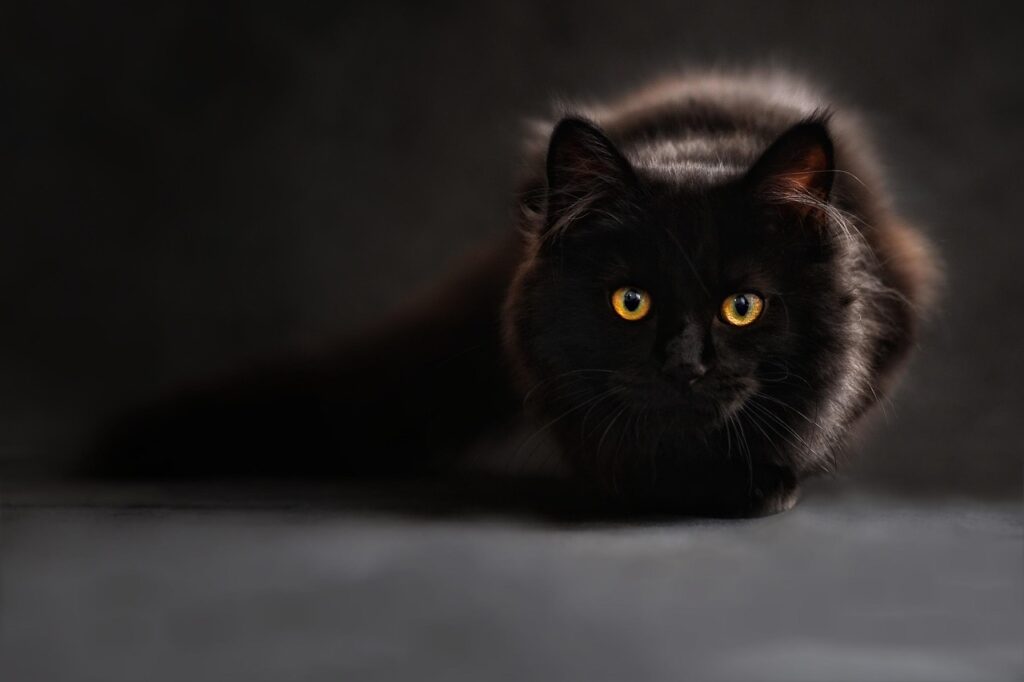
When your cat suddenly stops mid-step, pupils wide, and stares at a blank patch of wall like it just saw a ghost, it is weirdly unsettling. It feels like they’re tuned into a different channel, one that humans are permanently locked out of. The idea that they might be seeing something real but invisible to us is both fascinating and a little creepy. There is a popular claim that neuroscience has already proven cats stare into empty space because they’re processing ultraviolet images we cannot see. The reality is more nuanced and honestly even more interesting. While the headline sounds dramatic, research on animal vision, brain processing, and feline behavior suggests a mix of enhanced sensory perception, rapid data filtering, and deep evolutionary wiring is behind those chilling freeze-and-stare moments.
The Truth About Cats and Ultraviolet Vision
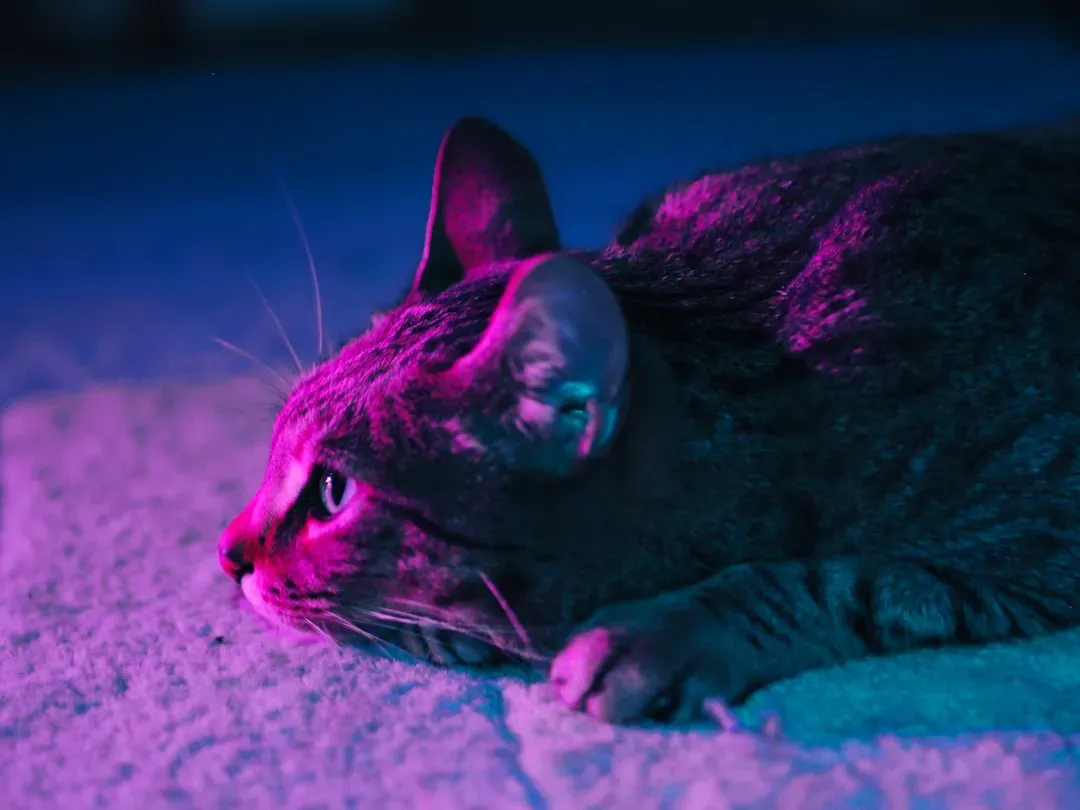
Here’s the surprising bit: there is real evidence that many mammals, including cats, can detect parts of the ultraviolet range that humans cannot. The lenses in human eyes block most ultraviolet light before it reaches the retina, but in some animals, including domestic cats, the lens is more transparent to those shorter wavelengths. That means cats probably see a richer, slightly shifted version of the world, with reflections and contrasts we simply don’t perceive. That said, it’s important to stay honest: scientists have not conclusively shown that every weird stare episode is a cat consciously “processing ultraviolet data.” What we do know is that their visual system is tuned differently, likely picking up subtle glows from fabrics, whisker marks, fur, urine traces, and reflections that would look completely plain to us. So while the headline idea is exaggerated in its certainty, the basic concept that they see more than we do, including some ultraviolet, is not just fantasy.
How a Cat’s Brain Actually Processes Visual Information
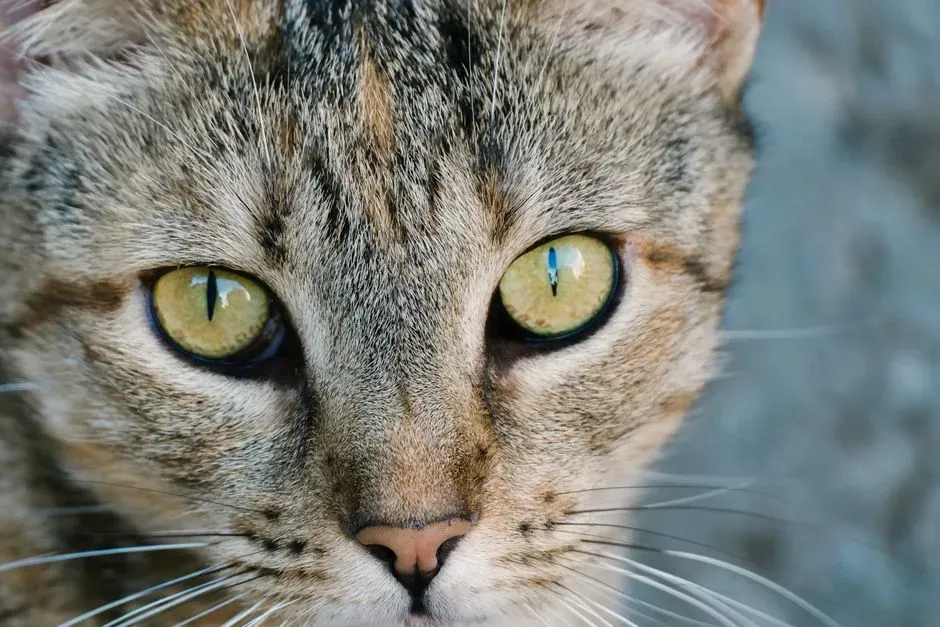
When your cat freezes, it is not zoning out in the way humans do when scrolling through social media; its sensory and motor systems are entering a hyper-focused processing mode. Feline brains devote a huge amount of neural real estate to visual motion, edge detection, and fast threat-or-prey assessment. Instead of continuously reacting to every flicker, the brain batches information, filters noise, and flags anything that might matter. During those eerie still moments, your cat might be running a kind of internal cross-check: Is that a shadow? A bug? A sound tied to that movement? Their visual cortex and higher areas integrate data from eyes, ears, whiskers, and even smell before deciding whether to pounce, flee, or ignore. To us, that looks like staring at “nothing.” To the cat, it is more like a loading screen while the brain crunches sensory data we can’t even access.
Why “Empty Space” Is Almost Never Empty to a Cat
A blank wall or a quiet corner for you is often packed with tiny, shifting signals for a cat. They can pick up faint reflections from glass, dust drifting in a patch of light, a spider thread vibrating, or micro-movements of a tiny insect far outside our awareness. Add in their ability to sense very subtle air currents and faint sounds, and that “empty” space starts to look like a noisy sensory landscape. On top of that, surfaces can carry scent traces and invisible marks from previous behavior, like clawing or rubbing. Your cat might be staring at a spot where another cat once sprayed, where you touched something unusual, or where past events have left a kind of multisensory memory. Think of it as a layered, augmented reality interface overlaid on your living room; we just see “white wall,” they see a history log.
The Role of Ultraviolet in a Predator’s World
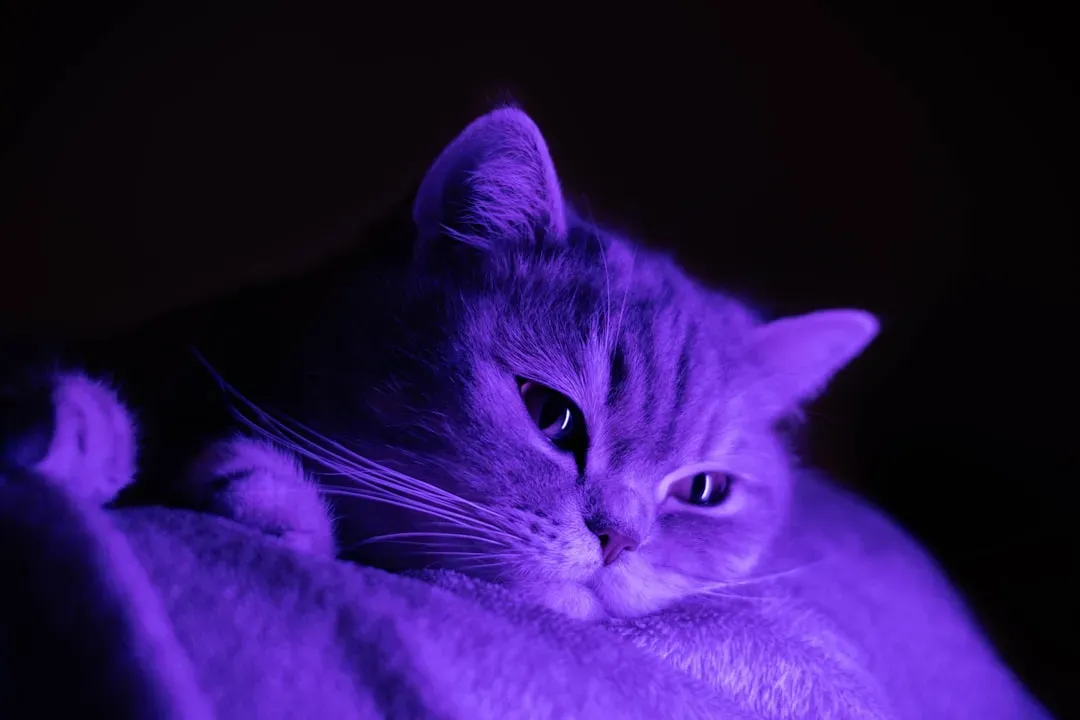
Even though we should be cautious about claiming ultraviolet processing explains every single stare, ultraviolet sensitivity does make biological sense for a small predator. In nature, some materials reflect ultraviolet differently: fur, feathers, urine, and certain plant surfaces stand out under UV. This can help a hunter track prey trails, spot contrast in low light, or distinguish paths and territory markings that would blend together for human eyes. Imagine walking through a forest where animal tracks subtly glow, where worn paths have a slightly different hue, and where bird droppings or urine traces show up like faint highlighters. That is closer to the world many animals inhabit. Your indoor cat still carries that hardware and software. Even in a modern apartment, small UV-reflective elements from cleaning products, fabrics, or outside dirt could pop out enough to warrant a freeze and stare as the brain scans for meaning.
Startle, Freeze, and Stare: Ancient Survival Programs
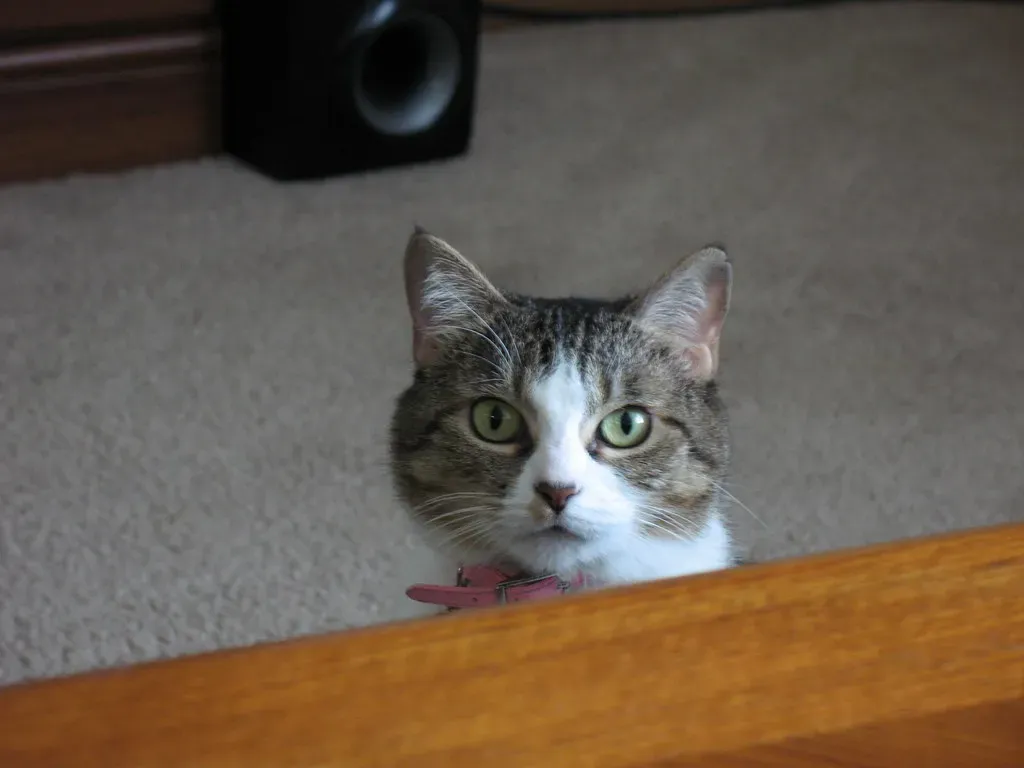
One of the most unnerving parts of feline behavior is their sudden shift from relaxed loaf to rigid statue. That freeze response is not random; it is an ancient survival program wired deeply into the nervous system. Freezing lets a prey animal become less noticeable and a predator become less detectable while it analyzes a potential threat or opportunity. It’s like hitting pause without taking your eyes off the screen. In cats, this can be triggered by the smallest cue: a distant sound, a flicker in the corner of their vision, or even an internal “what was that?” from the brain itself. During the freeze, heart rate can adjust, muscles tense, and sensory systems crank up sensitivity. The stare is not just optics; it is the visible tip of a full-body computation that helped their ancestors survive predators and catch dinner. In that light, your cat’s creepy stillness is not weird at all – it is brutally logical.
When Neuroscience Meets Internet Myth
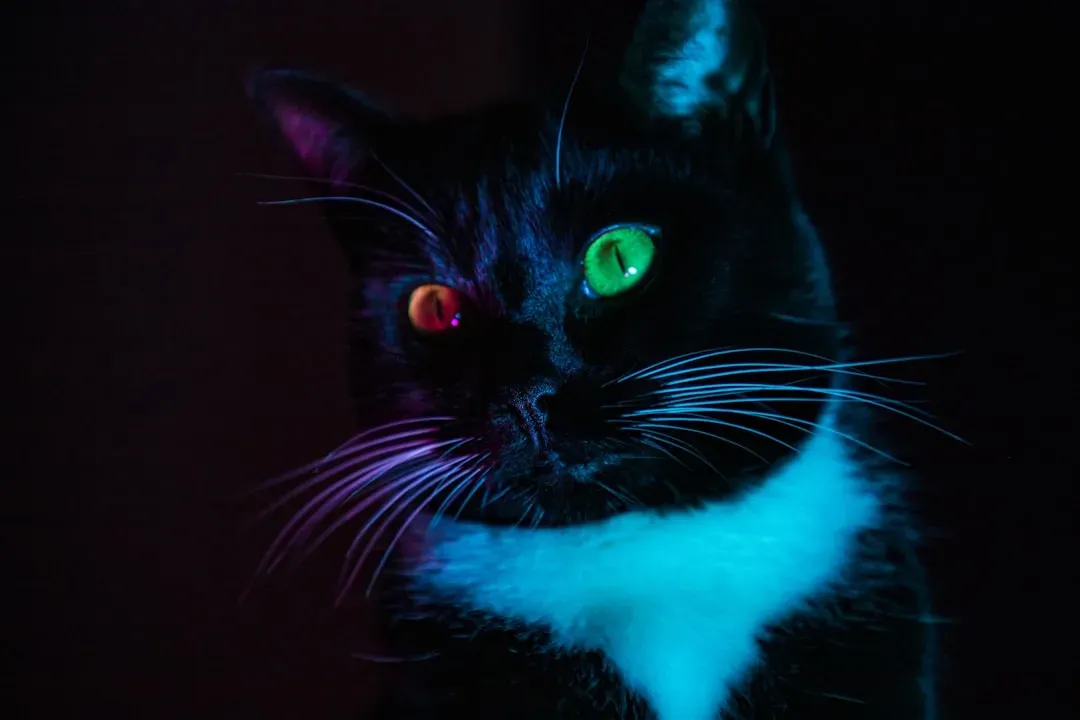
Online, subtle scientific findings often get stretched into bold, absolute claims: “Neuroscience says your cat is processing ultraviolet ghosts.” The truth tends to be quieter and more conditional. Studies suggest ultraviolet sensitivity in cats and other mammals, and research on brain processing explains why animals freeze and stare, but scientists do not have a neat, one-sentence explanation for every odd moment your cat has. Still, there is a reason these ideas spread: they tap into a genuine sense of wonder. It is comforting to think there is a tidy scientific label for what unnerves us, but biology is messier, full of overlapping causes. Your cat’s stare is probably a mix of specialized vision, ultraviolet edge cases, heightened hearing, instinctive freeze responses, and maybe even individual personality quirks. The myth simplifies it; neuroscience reminds us it is complicated in the coolest possible way.
Other Senses Quietly Shaping the “Haunted” Cat Look
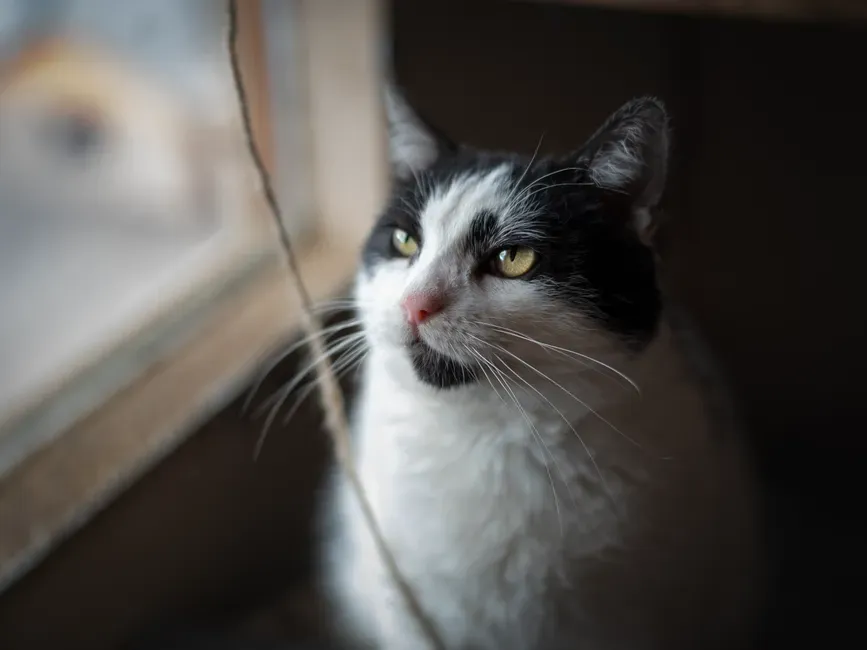
We talk a lot about vision, but those unblinking stares are rarely just about what the eyes see. Cats have insanely sensitive hearing, tuned to higher pitches than humans, and they can localize sounds in three dimensions with impressive precision. A faint rustle in the walls, a distant car, or the hum of an appliance changing tone might grab their attention and lock their gaze on a seemingly empty zone. Then there are the whiskers, which act almost like tactile antennas, picking up shifts in airflow and nearby movement. The brain has to merge all of this – visual hints, sound cues, whisker information – with past experiences. Sometimes that integration demands a moment of stillness. When your cat freezes and stares, you are watching a quiet committee meeting between all its senses, deliberating on whether the universe just changed or if it is safe to go back to licking a paw.
How to Respond When Your Cat Freezes and Stares
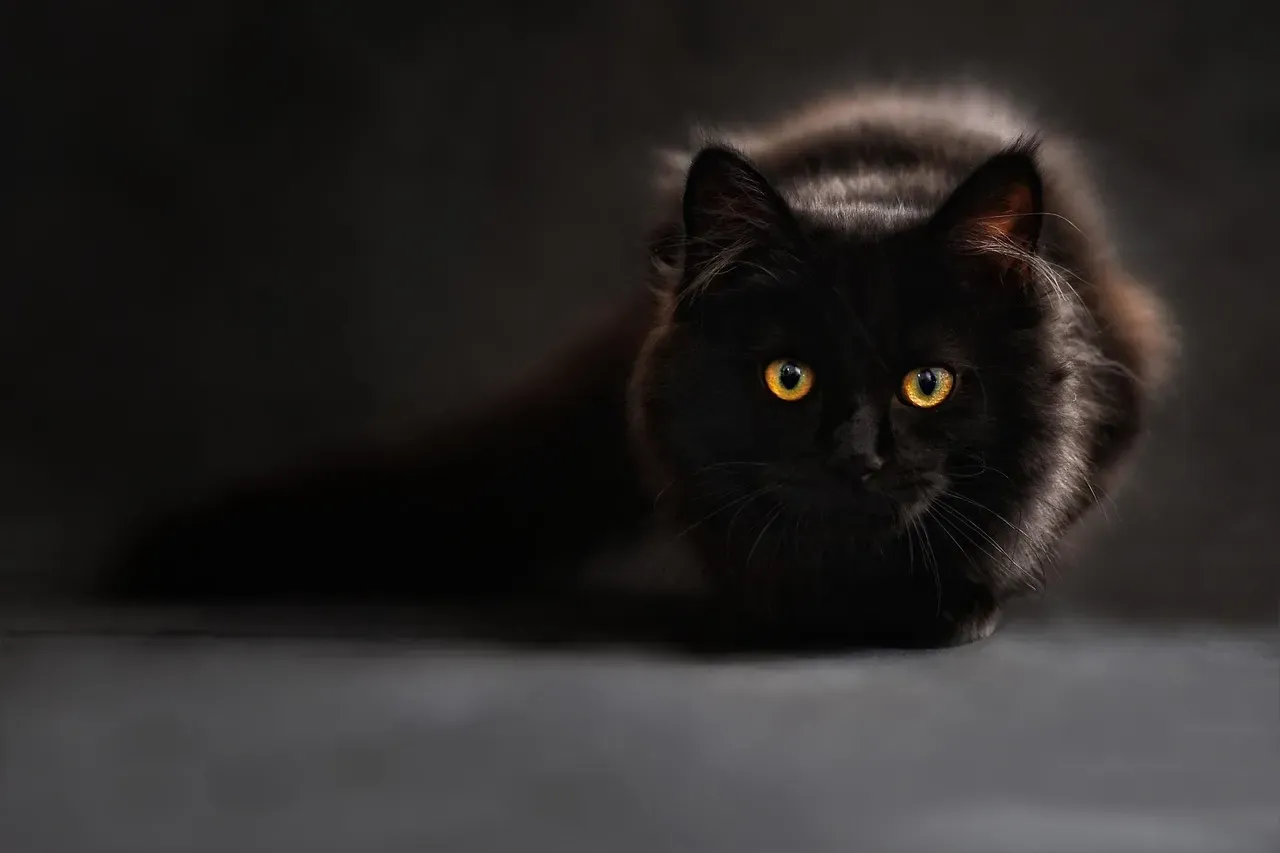
From a practical standpoint, you rarely need to panic when your cat enters statue mode and locks onto the void. In most cases, the best response is to simply observe. Give them a moment to finish whatever internal analysis they are running. If they remain tense or start showing signs of distress – flattened ears, low growls, hiding – then it may be worth checking for real-world triggers like noises, drafts, pests, or environmental stressors. You can also use these moments as a reminder that your home is part of a much richer sensory world than you experience. Try turning off some lights, reducing sudden sounds, and providing safe high places where your cat can watch from a distance. Instead of dismissing their behavior as spooky nonsense, treat it as feedback from a creature whose nervous system is tuned differently from yours. It is like living with a nervous system consultant who never sends a written report, only long, intense stares.
Opinionated Conclusion: The World Belongs More to Cats Than to Us
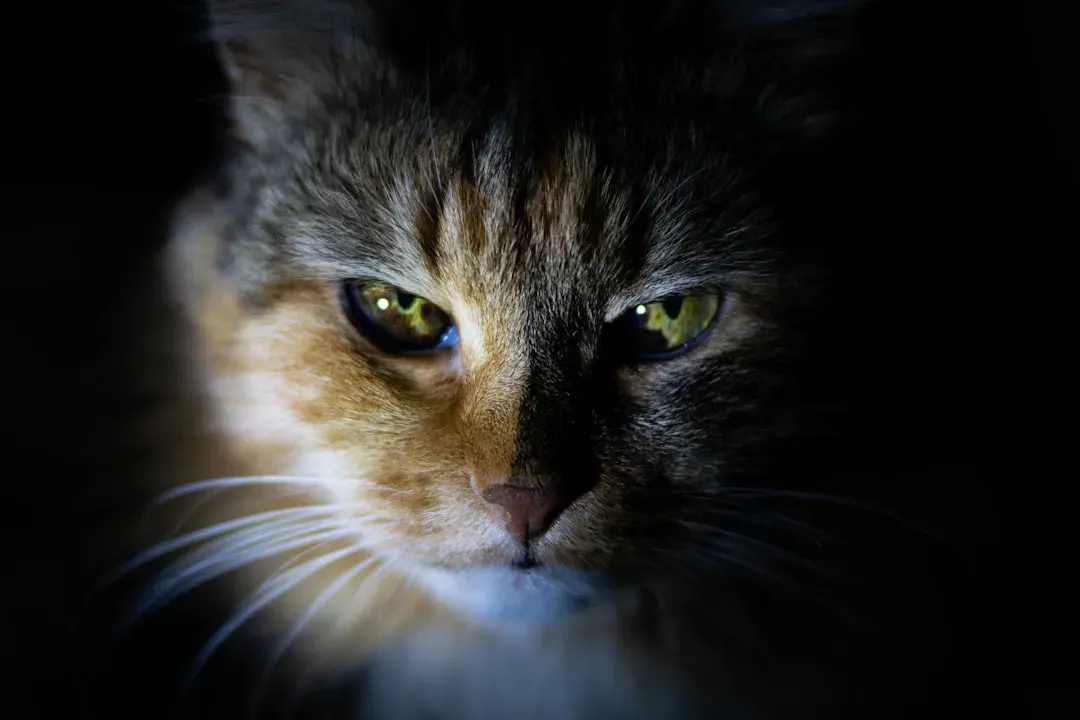
Here is my personal take: the world we walk through is probably closer to what your cat experiences than what you think you see with your human eyes. We move through a filtered, comfort-optimized version of reality, while they move through a rawer one, full of ultraviolet glints, tiny movements, faint murmurs in the walls, and invisible scent maps. When they freeze and stare, they are not being dramatic; they are catching up with a reality stream that mostly bypasses us. So no, we cannot honestly claim that every chilling pause is a cat “processing ultraviolet data” in a neat, lab-proven sense. But we can say they are processing more data than we are, some of it likely extending into ranges we cannot perceive at all. The next time your cat locks onto empty space, maybe do not joke that they are seeing ghosts; admit that they are seeing the world as it really is, while you are watching the low-resolution version. If someone in your house is tuned into the hidden channels of reality, are you sure it is you and not the cat?