
You have probably heard stories of people whose hearts stopped, who later said they floated above their bodies or rushed through a glowing tunnel toward a peaceful light. Part of you might be deeply curious, and another part might quietly wonder if any of that could possibly be real. When you look at the science, you find something far more interesting than a simple yes-or-no answer.
Researchers have been studying near-death experiences for decades, and what they keep finding is that your brain, your body, and your personal history all shape what you might experience on the edge of life and death. You are not just seeing random hallucinations; you are going through something that follows recognizable patterns, rooted in biology but filled with meaning drawn from your own mind. When you explore both sides – the hard science and the human stories – you get a picture that is stranger, richer, and more emotionally powerful than either skeptics or believers sometimes admit.
What Actually Counts as a Near-Death Experience?
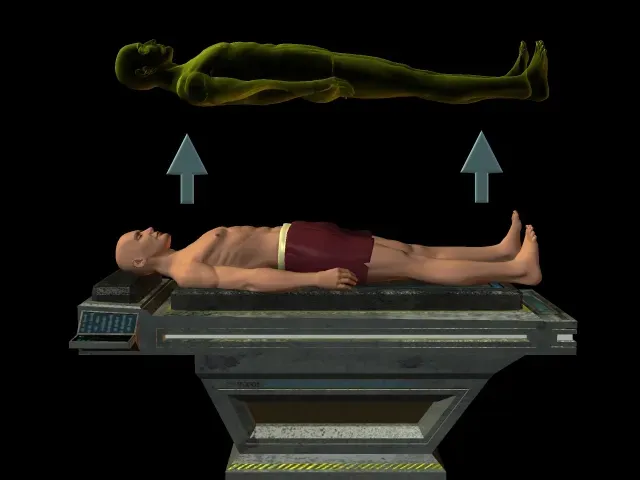
When you hear the phrase “near-death experience,” you might think it just means any close brush with death, but in research, it is more specific than that. Scientists usually talk about a cluster of recurring features: a sense of leaving your body, moving through a tunnel, seeing an intense light, feeling overwhelming peace, sometimes meeting beings or relatives, and then returning with the impression that you crossed a boundary and came back. You could be clinically close to death – during cardiac arrest, major trauma, or severe blood loss – and later report a remarkably vivid, structured experience.
You also find that not everyone who almost dies reports anything like this; many people remember nothing at all, as if that period was completely blank. That means you are dealing with a particular kind of altered state that shows up only in a subset of people, not an automatic built-in movie that plays for everyone. Researchers sometimes use standardized questionnaires to decide whether what you went through meets their criteria for a near-death experience, rather than just a hazy, confused memory. So when you read about near-death experiences in scientific papers, you are looking at a defined pattern of reported perceptions, not just any dramatic medical event.
Why Your Brain Can Stay Active When Your Heart Has Stopped
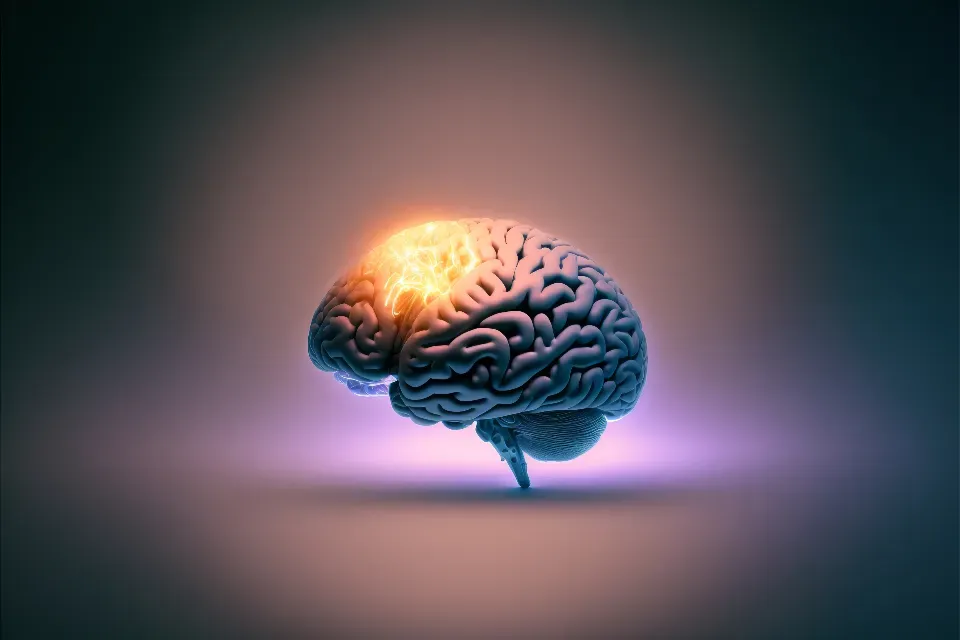
If you assume that once your heart stops, your brain just switches off like a light, near-death experiences sound impossible. But when you look closely at how your brain and heart interact, you see a more complicated picture. Even after circulation ceases, some brain cells can stay viable for several minutes, and residual electrical activity can continue for a short time while oxygen levels plummet and the system destabilizes. During that period, your brain is not working normally, yet it is not instantly destroyed either.
In some monitored cases of cardiac arrest, bursts of organized brain activity have been recorded for a brief window, including patterns that look similar to those you see during intense, vivid experiences. You can imagine your brain in that moment like a city losing power block by block, with some districts flaring brighter just before going dark. That unstable state may be enough for you to generate powerful, dreamlike experiences that your mind later knits into a coherent story once you recover. So even if you appear unresponsive from the outside, your inner world may be going through one of the most intense events of your life.
The Famous Tunnel and Light: What Vision Science Suggests
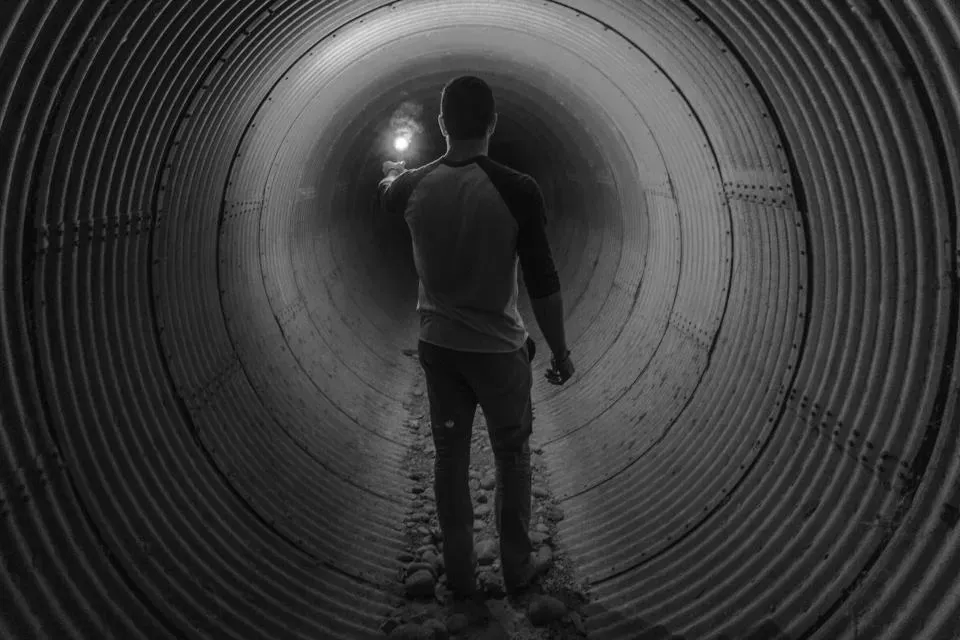
The tunnel with a bright light at the end is probably the most iconic part of near-death stories, and it can feel like a cosmic sign when you picture it. Yet your visual system actually gives you several down-to-earth reasons why you might see exactly that. When your brain is starved of oxygen, the cells in your visual cortex do not all fail at once; activity at the periphery of your visual field tends to drop off first, leaving the center relatively more active. That can create the subjective impression of a narrowing field with a bright center – essentially, a tunnel with a light.
Your eyes and brain are also used to building a coherent picture out of incomplete information, so as things start to shut down, your perception can fill in gaps with patterns it “expects.” If you have ever seen swirling colors or tunnels while fainting, meditating, or on certain drugs, you have a tiny taste of what your brain can generate under stress. So when you combine a collapsing visual field with a brain that is trying to make sense of disorganized signals, a tunnel-like image is not just poetic – it is a predictable side effect of how your visual system works. You may experience it as a deep spiritual moment, even if the mechanism is grounded in basic neurobiology.
Out-of-Body Experiences and Your Brain’s Body Map
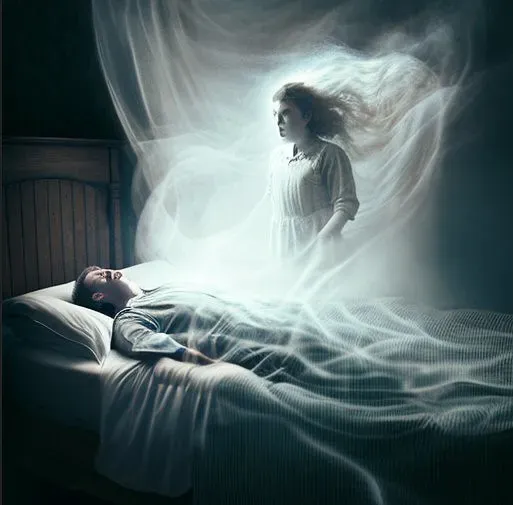
One of the most unsettling parts of a near-death experience is when you feel as if you have left your body and are floating above it, watching doctors or rescuers work on you. You might assume that if you feel outside your body, something must literally have separated from it. But scientists point you to a different explanation: your brain constantly builds an internal map of where you are in space, and under certain conditions, that map can become unstable and detach from your physical location. When this happens, you experience a shift in perspective that feels eerily real.
Researchers have even triggered similar sensations in healthy volunteers by stimulating particular brain regions or by using virtual reality setups that scramble your visual and body signals. In those experiments, you might suddenly feel as if you are hovering behind yourself, or that your body is not really your own. When your brain is in crisis during a near-death event, those same pathways can misfire dramatically, leading you to feel as if you are floating near the ceiling, looking down. To you, it can feel like proof that you are more than your body, but from a scientific angle, it is your body map glitching in a way that your mind takes very seriously.
How Culture and Beliefs Shape What You See
If near-death experiences were purely a mechanical brain reflex, you might expect everyone to report exactly the same thing. Instead, you see a fascinating mix of common themes and culture-specific details. You might see a “being of light” if you grew up with religious images of divine figures, or you might interpret the same presence differently if you were raised in a secular or non-Western context. Some people report religious figures, some see deceased relatives, and others simply feel an overwhelming presence without a clear form. Your brain seems to build the experience out of familiar emotional building blocks.
This does not mean you are just making things up; it means your mind is using its own language to represent whatever is happening. The core sensations – peace, detachment from the body, tunnel vision, brilliant light – show up across countries and faiths, but the characters and scenery can vary widely. You can think of it like dreams: your brain uses images, people, and stories already stored in your memory to express intense internal states. During a near-death episode, your deepest beliefs about life, death, and what comes next can color how you interpret every detail you perceive.
Emotions on the Edge: Euphoria, Calm, and Sometimes Terror

You might expect that nearly dying would feel purely terrifying, yet many people describe the opposite: an overwhelming sense of peace, love, or bliss that is hard to put into words. From a biological perspective, your body under extreme stress can release a powerful mix of chemicals, including endorphins and other messengers that reduce pain and fear. At the same time, parts of your brain that process threat may start to shut down, while networks that generate vivid inner imagery ramp up. Put together, you can end up with intense, dreamlike scenes wrapped in a bubble of calm.
That said, not every near-death experience is gentle or uplifting; some people report confusion, dread, or disturbing visions, especially if the event is sudden and chaotic. You are not guaranteed a comforting storybook journey just because you came close to dying. Your prior mental state, your expectations, and the specific way your brain is failing may all influence whether your experience feels like a peaceful release or a frightening plunge. This emotional intensity is one reason why, even years later, you might remember your near-death experience more clearly than almost any other moment of your life.
Time Warps, Life Reviews, and the Brain’s Storytelling Trick
Another striking feature you often hear about is the sense that time no longer behaves normally. You might feel like everything slows down or that you are seeing an entire sequence of events at once, including a rapid “life review” where past moments replay in a flash. Scientists know that your brain does not measure time like a perfect clock; instead, it stitches together small windows of experience into a smooth narrative. Under stress or altered states, that stitching process can change dramatically, making seconds feel like minutes or more.
You may have felt a mild version of this in a car accident or sudden fall, where your memories of the event seem oddly stretched and detailed. In a near-death state, with your brain flooded by unusual signals and possibly protecting you from shock, that distortion can become extreme. Your mind might rapidly scan emotionally important memories, like flipping through a photo album at high speed, then later turn that flood into a story of “my whole life flashed before my eyes.” You experience it as deeply meaningful, but behind the scenes, your brain could be scrambling to evaluate, prioritize, and protect what matters most to you.
Do Near-Death Experiences Prove an Afterlife?
This is the question that probably sits quietly at the back of your mind: if people can have vivid, structured experiences when they appear clinically dead, does that mean consciousness survives the body? Scientific studies can tell you a lot about brain states, blood flow, and perception, but they cannot step outside the physical world to test what, if anything, exists beyond it. From a conservative scientific viewpoint, you are safest saying that near-death experiences are powerful, brain-based phenomena that occur during extreme physiological stress, not definitive proof of anything after death.
At the same time, you cannot ignore the fact that many people come back from these experiences utterly convinced they glimpsed something real and beyond. Science can explain many features – tunnels, lights, body detachment, time warps – using known brain mechanisms, but it cannot fully settle the personal, existential meaning those experiences hold for you. In practice, you may find yourself living with two overlapping stories: a biological account that makes sense of the patterns, and a personal or spiritual interpretation that makes sense of your feelings. How you combine those two is a choice only you can make.
How Near-Death Experiences Can Change You Afterward

Whatever you believe about their cause, near-death experiences often leave you different from who you were before. You might come back with less fear of death, a stronger sense that life has purpose, or a deeper appreciation for everyday moments. Some people report shifting their priorities dramatically – valuing relationships more, chasing status less, or feeling more compassionate toward others. You can see this as your mind trying to integrate an overwhelming event by reorganizing what matters most.
Of course, not every change is easy or positive; you might struggle to talk about what happened, fear that others will dismiss you, or feel disoriented because your worldview no longer fits your experience. It can feel like coming home from a foreign country that no one else has visited, carrying a story that does not quite match any familiar script. When you find trustworthy people – doctors, therapists, friends, or support groups – who are willing to listen without judgment, it becomes much easier to turn that strange, intense chapter into a source of insight rather than a source of isolation.
Conclusion: Standing at the Edge Between Brain and Mystery
When you look closely at , you do not have to choose between cold skepticism and blind belief. You can see how oxygen loss, unstable brain circuits, body map glitches, and cultural memories all combine to create the rich, intense experiences that so many people describe. At the same time, you can respect the way those moments feel to the person who lived them: life-changing, deeply real, and emotionally undeniable. The border between physiology and meaning is not a brick wall; it is a blurred shoreline where waves from both sides constantly collide.
For you, the most honest stance might be a kind of informed humility: you understand more about how such experiences can arise, yet you accept that science does not answer every question about what, if anything, lies beyond death. Instead of trying to solve the afterlife like a puzzle, you can let near-death stories remind you how fragile and precious your ordinary days really are. Knowing what might happen on the edge, how do you want to live while you are still safely on this side?