

You are used to thinking of time as an invisible river, always sweeping you from past to future. Your memories sit behind you like footsteps in the sand, and your hopes stretch out ahead of you in a straight line. But when you look at what physics actually says about time, that comforting picture starts to wobble in a deeply unsettling way.
On the level of fundamental laws, the universe does not clearly care about a fixed past or a fixed future. The equations that describe particles, fields, and even spacetime itself work just as well backward as forward. The strange possibility you have to face is this: what if there is no cosmic arrow of time at all, and what you experience as “time flowing” is simply your conscious brain riding one direction of growing entropy like a surfer who only knows how to stand on one side of a wave?
The unsettling idea of a block universe
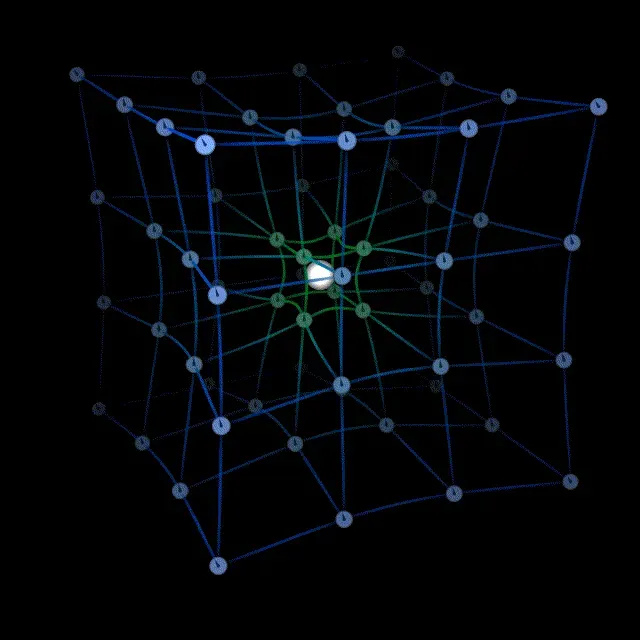
When you first hear that time might not really flow, it can feel almost offensive, as if someone is telling you your entire lived experience is a kind of optical illusion. In modern physics, though, you often run into the “block universe” view: past, present, and future all exist together in a four‑dimensional spacetime “block,” and you are just located at one particular slice of it. From that perspective, your feeling of moving from yesterday to tomorrow is more like reading a comic strip frame by frame than riding a river.
In this view, every event – your birth, your next meal, the last star going dark – already “exists” in the structure of spacetime, the way every page of a book already exists even if you have not turned to it yet. You experience a moving present because your brain is wired to update its internal model of reality one moment at a time. You are not dragging the universe forward; you are scanning along a pre‑written map, building a story as you go.
Why fundamental physics barely cares about time’s direction

If you strip the universe down to particles and fields, the rules they follow almost never single out a preferred direction of time. Many of the key equations in classical mechanics, electromagnetism, and even quantum theory are “time‑reversal symmetric,” which means that if you filmed a process and played it backward, the underlying equations would still be satisfied. You see this beautifully in simple cases like two billiard balls colliding: run the video in reverse, and it still looks physically reasonable.
There are tiny exceptions in certain particle interactions where the laws subtly distinguish past from future, but those are rare and delicate, not the kind of sweeping rule that explains why you remember breakfast but not tomorrow’s dinner. From a cold, mathematical standpoint, the universe looks oddly indifferent to the arrow of time you feel so strongly. You are left with a puzzle: if the deep laws do not care which way time points, why does your everyday world clearly seem to?
Enter entropy: how disorder gives you a sense of direction

This is where entropy crashes into the story like a plot twist you did not see coming. Entropy is a way of measuring how many possible microscopic arrangements can give you the same overall, macroscopic state – in plainer terms, how “spread out” or disordered things are. You experience this every day without using the word: a tidy room naturally drifts toward mess, a hot cup of coffee cools down, and a drop of ink disperses in water instead of clustering back together.
The second law of thermodynamics tells you that, for an isolated system, entropy tends to increase or at least stay the same. That tendency gives you a natural arrow: you say that the direction in which entropy increases is the future. The crucial point is that this “arrow” does not come from the fundamental equations themselves, but from the overwhelming likelihood that systems move from improbable, ordered states to much more probable, disordered states. You live inside that overwhelming statistical bias, so it feels like an iron law of nature.
Your brain as an entropy‑processing machine
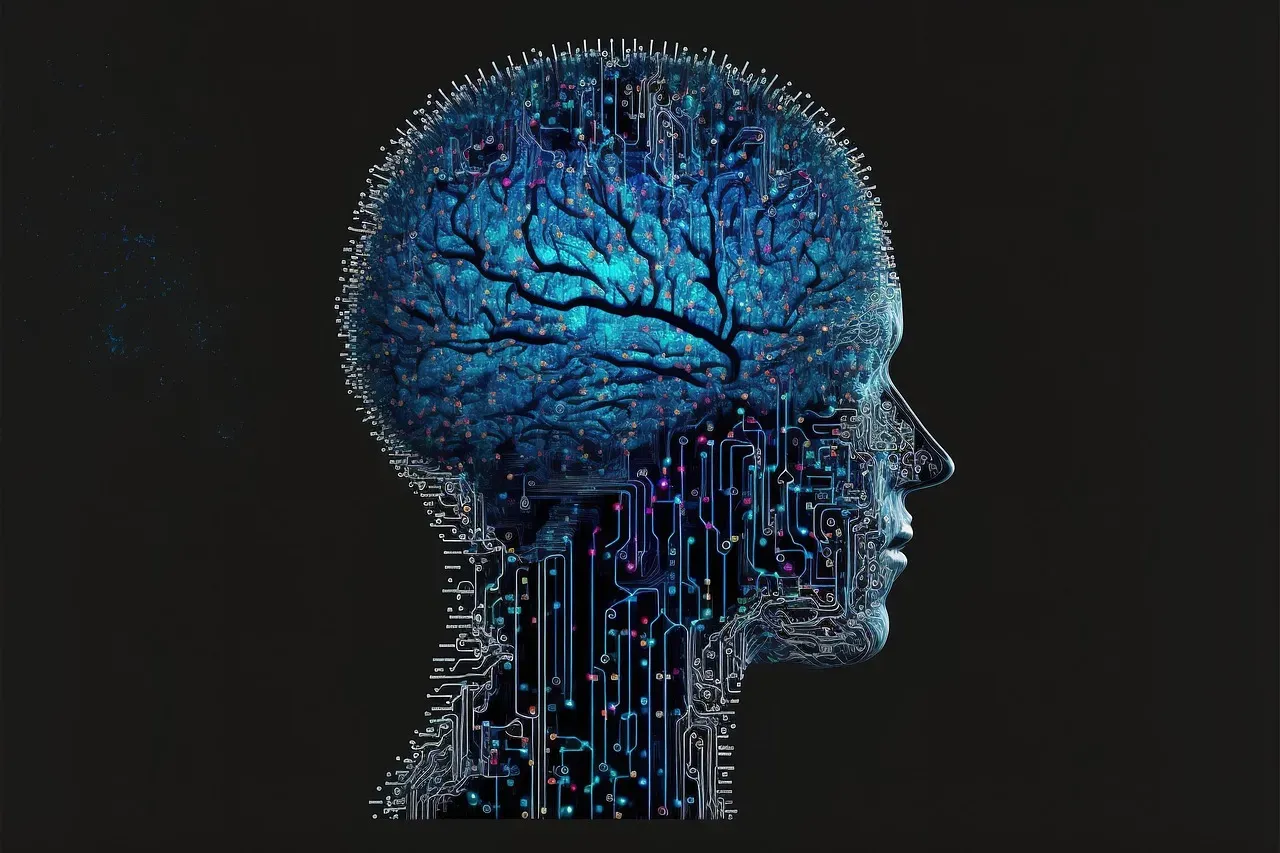
Now turn the camera on yourself. Your brain is a wet, warm, energy‑hungry organ constantly exchanging heat and matter with its environment. Every time you form a memory, integrate sensory input, or make a decision, you are pushing physical processes forward in a way that increases overall entropy. The biological machinery that supports your conscious experience simply does not run both ways in time; it is deeply hooked into thermodynamic gradients, from the chemical reactions in your neurons to the flow of oxygen and glucose in your blood.
Because of that, your conscious experience is locked to the direction in which these processes naturally unfold. You can only lay down memories of lower‑entropy states that lie behind you, never of higher‑entropy states that you call the future. You are like a camera that can only record light coming from one side; you then mistake that directional limitation for a fundamental property of the universe. In this sense, you are not just observing entropy’s arrow – your very ability to be aware rides on it.
Why you remember the past but not the future
Think about how memory works: you store records, traces, and correlations of what has already happened. Photos on your phone, scars on your skin, synaptic patterns in your brain – all of them are physical imprints of past lower‑entropy states. To remember an event is to have present‑day structures that encode information about it. For that to happen, entropy had to increase somewhere: energy was used, heat was released, molecules were rearranged.
There is no corresponding network of stable records for “future” events, because those events have not yet left imprints in the matter around you. From a block‑universe perspective, you could say that the future slice of spacetime exists, but you, as a physical system embedded in one region of that block, do not have access to those correlations yet. You experience that information asymmetry as a one‑way flow of time. In reality, you are just sitting on one side of a great information wall built by thermodynamics.
How initial conditions may fake an arrow of time

Another piece of the puzzle hides in the early universe. For reasons that are still not fully understood, the cosmos began in an extremely low‑entropy, very smooth state. Compared with all the ways matter and energy could have been chaotically arranged, that early condition was astonishingly special. It is that specialness, not just the equations, that gives you room for entropy to grow and for an arrow of time to emerge.
Once you start from that kind of improbable low‑entropy beginning, the natural evolution of the universe is toward more structure, more complexity, and overall higher entropy. Galaxies form, stars ignite, planets cool, and eventually life appears, feeding off free energy flows. You, as a conscious brain, show up late in that story, in an era where entropy is still increasing. You then interpret this long statistical relaxation from an unlikely beginning as “time moving forward,” even though the basic rules would be perfectly happy to run the movie both ways if the starting conditions were different.
Time, quantum mechanics, and the role of observation

When you drop into the quantum world, the picture becomes even stranger, and your role as an observer gets harder to ignore. The basic quantum laws evolve states in a way that is just as reversible as classical mechanics. But when you actually measure something – say, the position of an electron – you get a single definite outcome instead of a smear of possibilities. That measurement process is tied to irreversible changes in the measuring device and your brain, and those changes again increase entropy.
Some interpretations of quantum mechanics suggest that what you experience as a “collapse” from many possibilities to one outcome is really just your brain locking onto one branch of a larger, more symmetric reality. However you interpret it, the key point for you is that observation, memory, and decision‑making are entangled with irreversible physical processes. You cannot disentangle your sense of a flowing time from the way you, as a macroscopic, warm observer, interact with the world.
What this means for how you live your life

So where does this leave you, trying to get through your day, pay your bills, and remember where you put your keys? In practice, you can go on treating time as a one‑way street, because for creatures like you, embedded in a high‑entropy cosmos, that model works beautifully. Your body ages, your coffee cools, your messages get sent, and your memories pile up in one direction. There is no practical way for you to experience reversed entropy in your daily life, so your intuition is not broken – it is just provincial.
But once you appreciate that your sense of time’s flow is tied to how your conscious brain processes information and rides thermodynamic gradients, something quietly radical happens. You realize that your most intimate experience – the feeling of moving from “now” to “later” – is not a window into the ultimate structure of reality, but a specialized feature of how your kind of mind works in this kind of universe. That realization can make your life feel strangely precious: you are a temporary pattern of low‑entropy order briefly becoming aware of itself while the cosmos slowly relaxes. Did you ever expect the simple feeling of “time passing” to hide such a wild secret?