You’ve probably heard the usual longevity story: eat less, tweak a few pathways like mTOR or insulin signaling, and your life might stretch out a little longer. For years, that was the main script scientists followed, mostly based on worms, flies, and mice. But when you actually look at the rare humans who live past one hundred in surprisingly good shape, a different picture starts to appear. You’re not just seeing “slower aging” in a straight line. You’re seeing a different biology altogether. Recent work on centenarians and supercentenarians is forcing you to rethink what “living long” really means. Instead of simply dialing down the classic aging mechanisms, these people seem to be running a unique, layered program that lets them resist damage, delay disease, and stay functionally young for decades longer than average. And the twist is this: the biology that gets a lab animal to live thirty or forty percent longer is not the same biology that lets a human hit 105 and still crack jokes with the grandkids. —
You’ve Been Sold a Simple Story of Aging – Reality Is Messier

You’ve likely absorbed the idea that aging is a single, unified process that you can just “slow down” by hitting one or two master switches. For years, research zeroed in on nutrient-sensing pathways like insulin/IGF‑1 and mTOR, showing that calorie restriction or drugs like rapamycin could stretch lifespan dramatically in model organisms. In worms and flies, dialing down these pathways can make them live half again as long, which understandably made everyone think you’d found the core aging mechanism in humans too. ([pmc.ncbi.nlm.nih.gov](https://pmc.ncbi.nlm.nih.gov/articles/PMC3836174/?utm_source=openai)) But you now know aging is more like a tangled web than a single thread. Modern frameworks describe roughly a dozen “hallmarks” of aging: genomic instability, telomere attrition, epigenetic drift, mitochondrial dysfunction, loss of proteostasis, chronic inflammation, impaired autophagy, dysbiosis, and more, all feeding into each other in complex feedback loops. That means you’re not dealing with one cause but a whole network where nudging one node may or may not shift the outcome in a real human life that spans many decades. ([aging-us.com](https://www.aging-us.com/article/206078/text?utm_source=openai)) —
Extreme Longevity Isn’t Just “Less Aging” – It’s a Distinct Phenotype

If you look closely at people in their late eighties, nineties, and then at centenarians, you’re not just seeing a smooth continuum. Several studies suggest that those who make it to one hundred in relatively good health are biologically different from typical older adults, not just lucky versions of the same thing. You see unique genetic signatures, unusual patterns of resilience, and a delayed onset of chronic diseases that set them apart from those who “only” reach their eighties. ([sciencedirect.com](https://www.sciencedirect.com/science/article/pii/S0047637419302040?utm_source=openai)) In other words, you should think of extreme longevity as its own phenotype: a special configuration of genes, immune function, metabolism, and repair systems that allows someone to “bend” the usual aging trajectory. Instead of drifting gradually toward frailty, these individuals maintain a high level of intrinsic capacity far longer, then often decline relatively quickly at the very end. It’s not that they suffer the same wear and tear very slowly; it’s that their systems are wired to tolerate, buffer, and repair damage in a way that looks qualitatively different from standard aging. ([sciencedirect.com](https://www.sciencedirect.com/science/article/pii/S0047637419302040?utm_source=openai)) —
Why Centenarian Biology Doesn’t Match Your Favorite Lab Mouse

You’ve been shown countless stories where manipulating a single pathway in yeast or mice gives a dramatic lifespan bump, and it’s tempting to assume the same intervention will deliver extreme human longevity. But when scientists actually analyze the genomes and molecular profiles of centenarians, the patterns don’t line up neatly with the classic calorie-restriction and mTOR narratives you may know from popular science writing. Longevity in humans turns out to be highly polygenic and shaped by many small-effect variants across diverse pathways, from DNA repair to lipid metabolism and immune regulation. ([sciencedirect.com](https://www.sciencedirect.com/science/article/pii/S1568163726001686?utm_source=openai)) Instead of seeing one dominant mutation in a nutrient-sensing pathway, you’re seeing subtle combinations that stabilize multiple systems at once. Some studies have found rare protective variants clustering in signaling networks like mTOR, but always as part of a broader mosaic rather than a single silver bullet. Combine that with decades of environmental exposure, infections, lifestyle choices, and sheer randomness, and you get a mechanism for extreme human longevity that simply doesn’t look like the tidy, engineered lifespan extension you see in short‑lived species kept in controlled cages. ([sciencedirect.com](https://www.sciencedirect.com/science/article/pii/S1568163726001686?utm_source=openai)) —
The Hidden Engine: An Immune System That Refuses to Grow Old
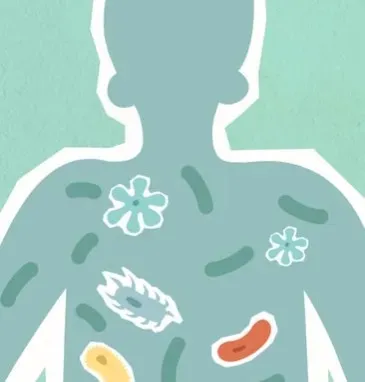
One of the biggest surprises you run into when you study centenarians is how “young” parts of their immune system still look. While most people slide into a state of chronic, low-grade inflammation and immunosenescence as they age, many extremely old yet healthy individuals somehow keep immune balance intact. Their immune cells often show youth-like gene expression patterns, better responsiveness, and reduced markers of runaway inflammation compared with typical elderly controls of the same chronological age. ([nature.com](https://www.nature.com/articles/s41577-026-01291-5.pdf?utm_source=openai)) For you, this flips the usual script: instead of thinking longevity is mainly about preventing cancer or slowing metabolism, you start seeing it as a long war of attrition between your immune system and everything that tries to break you down. In centenarians, immune surveillance, repair, and tolerance remain coordinated enough to keep infections, senescent cells, and chronic inflammatory damage from taking over for many extra years. That suggests the real key mechanism behind extreme longevity may be an unusually resilient immune network, not just a slightly dialed-down growth signal or a marginally lower calorie intake. ([nature.com](https://www.nature.com/articles/s41577-026-01291-5.pdf?utm_source=openai)) —
Genetic “Buffers,” Epigenetic Stability, and the Long Game of Repair
If you follow the trail further, you find that centenarians are not magically avoiding damage; they’re managing it differently. Work on human longevity genes and epigenetic aging suggests that long-lived individuals carry protective variants that improve DNA repair, stabilize telomeres, and maintain tighter epigenetic control over gene expression. Their molecular “clocks” often tick more slowly, with biological age lagging behind chronological age, especially in blood and immune cells. ([doi.org](https://doi.org/10.1038/s41514-026-00384-8?utm_source=openai)) For you, that means the core mechanism may not be about stopping aging, but about buffering its consequences. Think of it like driving an old car that somehow never rattles apart because the shock absorbers, alignment, and maintenance schedule are all just a bit better than average. The road is the same, the potholes are the same, but the way the system absorbs and corrects each hit is superior. That resilience shows up in more stable epigenetic patterns, less genomic instability, and a more efficient response to cellular stress over many decades. ([pmc.ncbi.nlm.nih.gov](https://pmc.ncbi.nlm.nih.gov/articles/PMC3836174/?utm_source=openai)) —
Metabolism, Fat Signals, and the Myth That Calorie Restriction Explains Everything
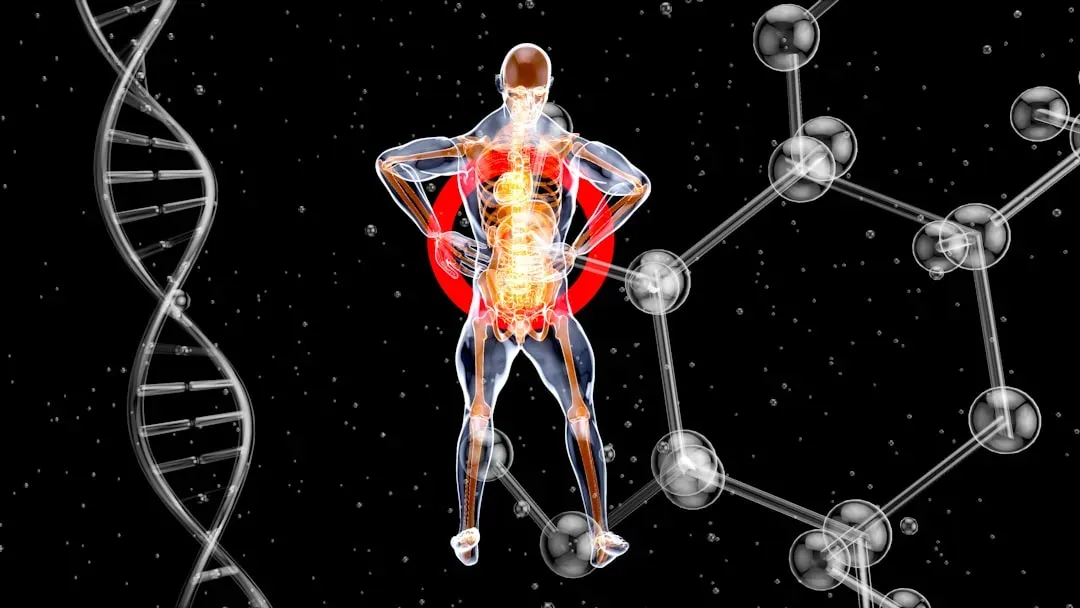
You’ve probably been told that eating less is your main ticket to a longer life. In animals, calorie restriction consistently extends lifespan and improves healthspan by tuning nutrient-sensing pathways and boosting cellular cleanup. But when you examine centenarians, you see a more nuanced metabolic picture. They often show preserved insulin sensitivity, distinct patterns of hormones released by fat tissue, and a metabolic profile that supports energy balance without the typical drift toward diabetes and fatty, inflamed organs seen in standard aging. ([frontiersin.org](https://www.frontiersin.org/journals/endocrinology/articles/10.3389/fendo.2019.00142/full?utm_source=openai)) That means you shouldn’t assume they’ve been practicing textbook calorie restriction for decades. Instead, they seem to have a metabolism that naturally runs on a more favorable setting: better handling of glucose and lipids, less harmful visceral fat signaling, and a capacity to adapt to nutritional stress without tipping into chronic metabolic disease. For you, the real lesson is that extreme longevity hinges less on heroic dieting and more on how your body’s underlying wiring responds to whatever nutrition you actually give it. ([frontiersin.org](https://www.frontiersin.org/journals/endocrinology/articles/10.3389/fendo.2019.00142/full?utm_source=openai)) —
What This Means for You: Healthspan Over Lifespan, Systems Over Single Switches
So where does all this leave you, living an ordinary life without a centenarian’s genetic lottery ticket? The emerging picture is that chasing a single “anti-aging” trick is probably the wrong game. Instead, you want to think like your body does: in systems. Your best bet is to support many small levers at once – immune resilience, metabolic flexibility, stress response, and repair capacity – rather than hoping for one drug or diet to rewrite your destiny. That aligns with what recent reviews on multi-hallmark interventions are showing: combinations of modest changes often do more than any single blockbuster. ([aging-us.com](https://www.aging-us.com/article/206078/text?utm_source=openai)) In practical terms, you’re looking at habits that repeatedly nudge your biology toward better maintenance: regular physical activity that challenges you, eating patterns that avoid constant overfeeding, deep sleep, social connection, mental stimulation, and avoiding chronic toxins like tobacco. These may sound ordinary, but they map onto the same hallmarks that centenarian biology seems to stabilize – just from the outside in, instead of from rare protective genes. Extreme longevity might be out of reach for most people, but healthier, more functional decades are very much on the table. ([pubmed.ncbi.nlm.nih.gov](https://pubmed.ncbi.nlm.nih.gov/29874566/?utm_source=openai)) —
Why the Old Research Focus Led You Slightly Astray – and What Comes Next

When you look back, it’s understandable that scientists focused so heavily on nutrient sensing, calorie restriction, and a few central pathways. These were experimentally convenient, produced dramatic effects in short‑lived species, and gave you clean mechanistic stories. The problem is that those models quietly encouraged you to think of human longevity as a simple extrapolation: take what works in a worm, stretch it out over eighty years, and expect similar magic. New work on centenarians and supercentenarians is basically telling you that this view was too narrow. ([huasan.net](https://www.huasan.net/wp-content/uploads/2025/12/Beyond-the-hallmarks-of-aging%EF%BC%9ARethinking-what-aging-is-and-how-we-measure-it.pdf?utm_source=openai)) Going forward, the real breakthroughs are likely to come from integrating longevity genetics, immune biology, epigenetic clocks, and systems-level models of aging, not from worshipping a single pathway. You’re going to see more research that uses extreme human longevity as the starting blueprint, then back‑engineers interventions that mimic its multi-layered resilience rather than just copying rodent calorie restriction. For you, that shift matters because it reframes the goal from merely “living longer” to preserving function, independence, and resistance to disease across as many years as possible. ([sciencedirect.com](https://www.sciencedirect.com/science/article/pii/S1568163726001686?utm_source=openai)) — In the end, the new research is asking you to trade a neat story for a truer one. Extreme human longevity is not just regular aging slowed down; it’s a distinct configuration of defenses, repair programs, and immune stability that most people don’t naturally have. You still benefit from many of the same levers scientists discovered in animals, but you use them to tilt a complex system toward healthier decades, not to magically transform yourself into a supercentenarian. Maybe the most useful takeaway for you is this: instead of hunting for one hidden switch that will give you an extra twenty years, you start living as if your everyday choices are constantly teaching your cells how seriously to take maintenance and repair. In that sense, you’re not just a passenger on the ride of aging; you’re part of the mechanism that decides how rough the journey feels. Knowing that, how differently are you willing to treat your body today?