

Physics is the science that is supposed to make the world make sense. Yet, the deeper you go into it, the more it starts to feel like the universe was designed to mess with your intuition. Things can be in two places at once, time can stretch, empty space is not really empty, and objects move not because they are pushed but because they are trying not to accelerate. It sounds like a collection of plot twists, but this is the best description of reality we have.
What I love about these ideas is how they force you to admit that your everyday instincts are only good for slow, medium-sized objects on Earth. Take those away, and common sense breaks instantly. Let’s walk through twelve of the strangest, most counter-intuitive physics facts that are actually true, even if every part of you wants to say, “No way that’s how it works.”
1. Time Really Does Run at Different Speeds

It feels obvious that time should tick the same everywhere, like some invisible cosmic clock keeping perfect rhythm. In reality, time is stretchy. The faster you move or the stronger gravity is where you are, the slower your time runs compared with someone else’s. This isn’t just theory; ultra-precise atomic clocks on planes, satellites, and mountaintops actually tick at slightly different rates.
Here’s the wild part: you and your feet don’t even experience time at exactly the same speed. The top of your head is a tiny bit farther from Earth’s center than your feet, so it is in slightly weaker gravity and ages slightly faster. The effect is absurdly small in everyday life, but it means you are literally not the same age from top to bottom. It turns “What time is it?” into the wrong question; the right one is, “Whose time are we talking about, and where are they?”
2. Objects Move Straight Unless Forced to Curve

Most people think of motion in terms of forces making things move: you push, it goes; you stop pushing, it stops. But in physics, especially in relativity, the default is motion. If nothing acts on an object, it will keep moving in a straight line at constant speed forever. What we call “stopping” is usually just friction and other forces constantly nudging objects away from their natural cruise mode.
Einstein pushed this one step further and argued that objects in free fall are actually following the straightest possible paths through curved spacetime, even if from our perspective they look like they’re accelerating. A falling apple isn’t being yanked by some invisible rope; it’s just taking the natural route through the warped fabric created by Earth’s mass. Gravity, in that view, isn’t a force pulling things down; it’s spacetime bending the definition of “straight.”
3. Light Behaves Like Both a Particle and a Wave
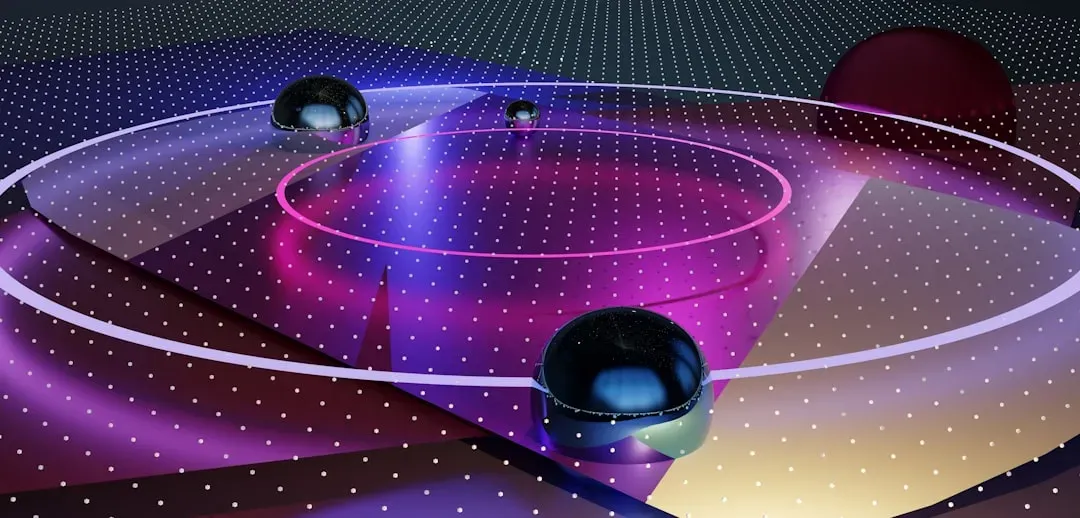
If you throw a stone into a pond, you see waves. If you throw a handful of sand, you see lots of tiny particles. Common sense says waves and particles are very different things. Light happily ignores that rule. In some experiments, it behaves like a smooth wave that can interfere with itself, creating bright and dark patterns. In others, it shows up as individual packets of energy called photons, like tiny bullets hitting a detector one by one.
The truly brain-bending part is that this dual behavior is not just because our measurements are clumsy. Even when you send single photons through an experiment, they can build up patterns over time that scream “I am a wave.” Yet each photon only ever lands at one specific point like a particle. So light is not a wave pretending to be a particle or a particle pretending to be a wave. It is something deeper that happens to always show up in one of these two very human-made categories, depending on how we look at it.
4. You Can Be in a Superposition of States

Everyday experience tells you that a thing has to be one way or another: the light is on or off, the cat is awake or asleep, your coffee cup is on the table or it’s on the floor. Quantum physics completely betrays that intuition. At tiny scales, particles can exist in a superposition, meaning they are in several possible states at once until a measurement forces one outcome. It is not just that we do not know which state they are in; the state literally has not been decided yet.
Think of flipping a coin and letting it spin in the air. While it’s spinning, you could say it is technically both heads and tails in a classical blur. But in quantum mechanics, that “in-between” state isn’t just ignorance; it is a genuine both-at-once reality. Only when the coin lands and you look does the universe commit to heads or tails. It is a horrifying idea if you like a neat, orderly reality, and yet our best experiments refuse to let this superposition picture go.
5. Measuring Something Can Change What It Is
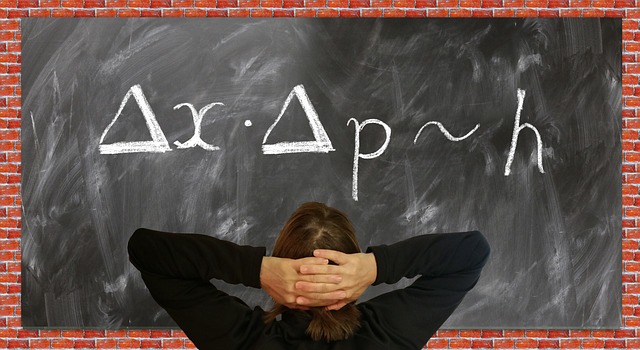
We like to think of measurement as passive: you look at a thing, write down what you see, and the thing itself doesn’t really care. Quantum physics wrecks that assumption. At small scales, the act of measuring a system is not like checking a box on a form; it is more like barging into a room and rearranging the furniture just by walking in. Observing can change the outcome, not just reveal it.
One classic example is trying to measure both the position and momentum of a particle very precisely. The more accurately you pin down where it is, the fuzzier its momentum becomes, and vice versa. This is not about bad instruments; it is a built-in property of nature. It feels deeply unfair, like the universe set up a rule specifically to stop us from knowing everything at once, but it is that very fuzziness that keeps atoms stable and matter from collapsing.
6. Empty Space Is Teeming with “Nothingness” Energy
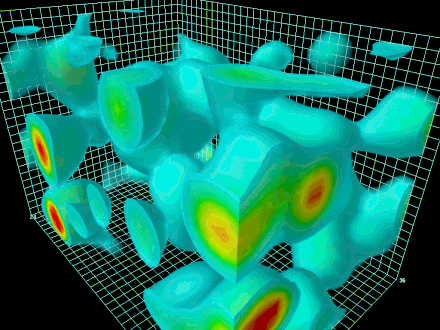
Our gut says that empty space should be, well, empty. No particles, no fields, no anything. On the quantum level, though, even a perfect vacuum boils with activity. Particles and antiparticles flicker into existence and annihilate each other in ridiculously short times, leaving behind subtle effects we can actually measure. What we call “nothing” is more like a restless ocean with waves too quick and small for ordinary senses to notice.
This vacuum energy is not just a weird footnote; it shapes the entire universe. The accelerated expansion of the cosmos seems to be driven by something like a tiny, uniform energy built into the fabric of space itself. So when you look up at a clear, dark night sky, you are not seeing an empty background. You are staring into an arena where even total darkness is filled with invisible energy that defines the future of everything.
7. Solid Objects Are Mostly Empty Space
Knock on a table and it feels reassuringly solid. Try walking through a wall and you learn the hard way that matter seems pretty compact. But if you zoom into the structure of atoms, the story changes fast. An atom is a tiny nucleus surrounded by an electron cloud. The size of the nucleus compared with the whole atom is like a pea in a stadium. Almost all the atom’s volume is just empty space.
So why can’t you casually stroll through walls? Because what you experience as solidity is not atoms densely packed like marbles, but electromagnetic forces and quantum rules refusing to let certain particles occupy the same states. When you press your hand against a table, you’re essentially feeling electric fields pushing back and quantum principles saying “no overlap allowed.” You are never actually touching in the way your brain imagines; it’s more like two force fields stubbornly refusing to pass through each other.
8. Your Mass Increases as You Move Faster

We grow up thinking of mass as something fixed, like a label: this object weighs this much, end of story. Relativity rewrites that story. As an object moves faster and faster, closer to the speed of light, it becomes harder and harder to accelerate. You can think of it as its “relativistic mass” increasing with speed, even though its rest mass stays the same. In a sense, motion itself adds resistance to changing motion.
That is why nothing with mass can ever be pushed to the speed of light. The energy required keeps climbing without limit, like trying to sprint up a mountain that gets steeper the higher you go and never flattens. High-energy particle accelerators slam tiny particles to speeds unimaginably close to light, and their effective mass becomes many times what it is at rest. Your car never goes fast enough for you to notice this, but the universe absolutely does notice at extreme velocities.
9. Entangled Particles Behave Like a Single System, Even When Far Apart
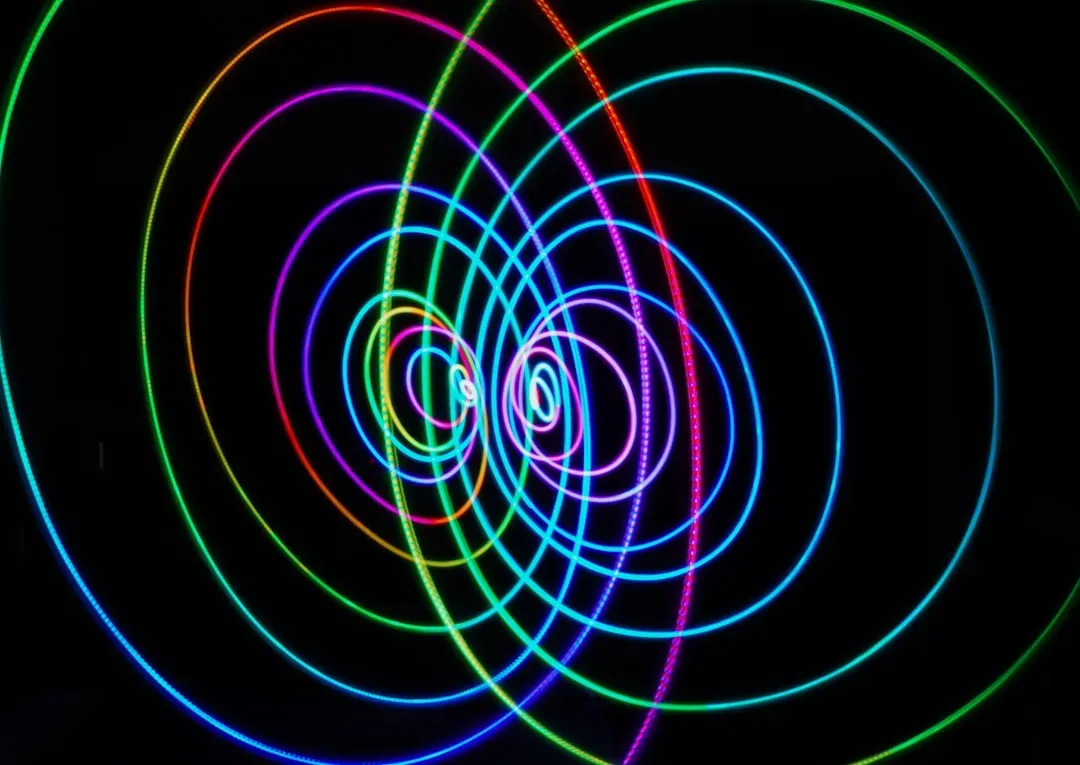
Common sense says that if you separate two objects far enough, what you do to one cannot instantly affect the other. Quantum entanglement laughs at that rule. When particles become entangled, their properties are linked so tightly that measuring one immediately tells you about the other, no matter how far apart they are. It looks suspiciously like faster-than-light communication, even though it is not carrying usable information that way.
The strange part is that before you measure, the outcomes are not fixed. Only when you check one particle does the combined system “decide” on a consistent pair of results. It is as if the universe keeps its options open until the last second, then snaps to a coordinated story that always matches. If this feels unsettling, you are in good company; it forces us to rethink what it means for something to be separate in a world where correlation can ignore distance.
10. Heat Is Just the Jittery Motion of Tiny Things
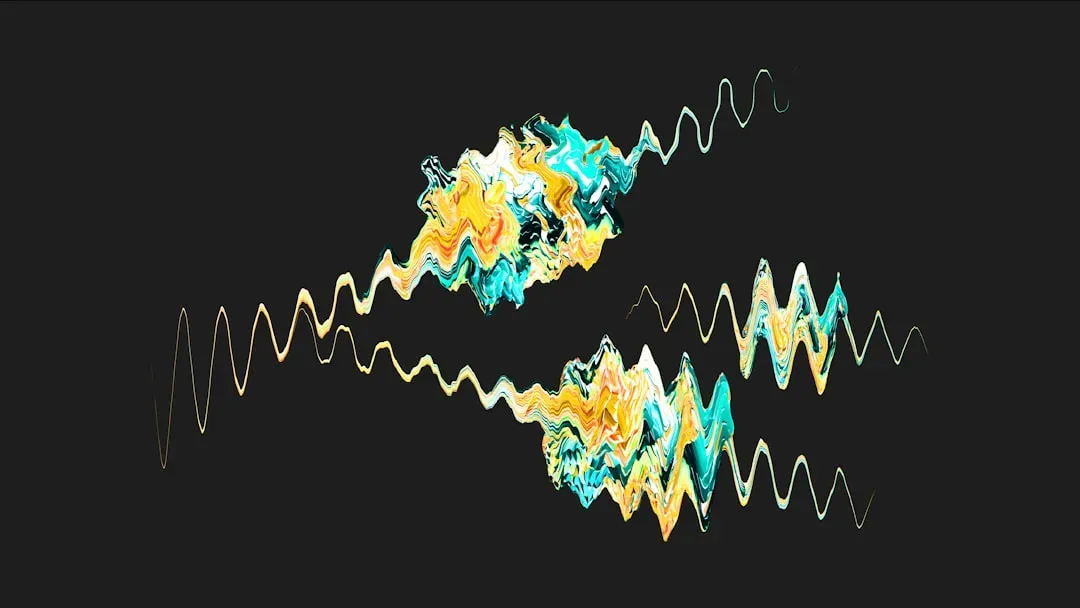
When you feel something as hot or cold, it seems like a property the object simply has, like color or shape. At the microscopic level, temperature is a measurement of random motion. The hotter something is, the more its atoms and molecules are bouncing, vibrating, and jostling each other. Cold is not a mysterious substance; it is what we call the absence of much motion.
This perspective leads to a quiet but profound idea: absolute zero, the coldest possible temperature, is the point where you have removed as much motion as the laws of physics allow. You can never get every last bit of jiggle out, because quantum mechanics prevents motion from dropping exactly to zero. That means there is always some minimum restless energy baked into matter, even at the edge of “as cold as possible,” which is a wonderfully stubborn limit set by nature.
11. Motion Is Relative, but the Speed of Light Is Not

If you are on a train moving past someone on a platform, your speed relative to them is different from your speed relative to the ground miles away. That idea of relative motion feels totally natural. What is not natural is that light refuses to join this game. No matter how fast you move toward or away from a beam of light in empty space, you will always measure its speed as the same cosmic speed limit.
This stubborn constancy of light’s speed is what forces time to dilate and lengths to contract at high velocities. The universe seems to prioritize “keep light’s speed fixed” over “keep time and space behaving the way we expect.” The result is a reality where moving clocks tick slower and moving rulers shrink along their direction of travel. You can treat that as a bug or as the universe’s most fundamental feature; either way, it is non-negotiable.
It also flips your idea of what simultaneity means. Two events that happen at the same time for one observer might not be simultaneous for someone moving fast relative to them. There is no single, universal “now” spread across the universe, just different slices of reality depending on how you are moving. That is an uncomfortable idea at first, but once you accept it, relativity stops feeling like a magic trick and more like a tough but honest geometry of spacetime.
12. Energy and Mass Are Two Sides of the Same Coin
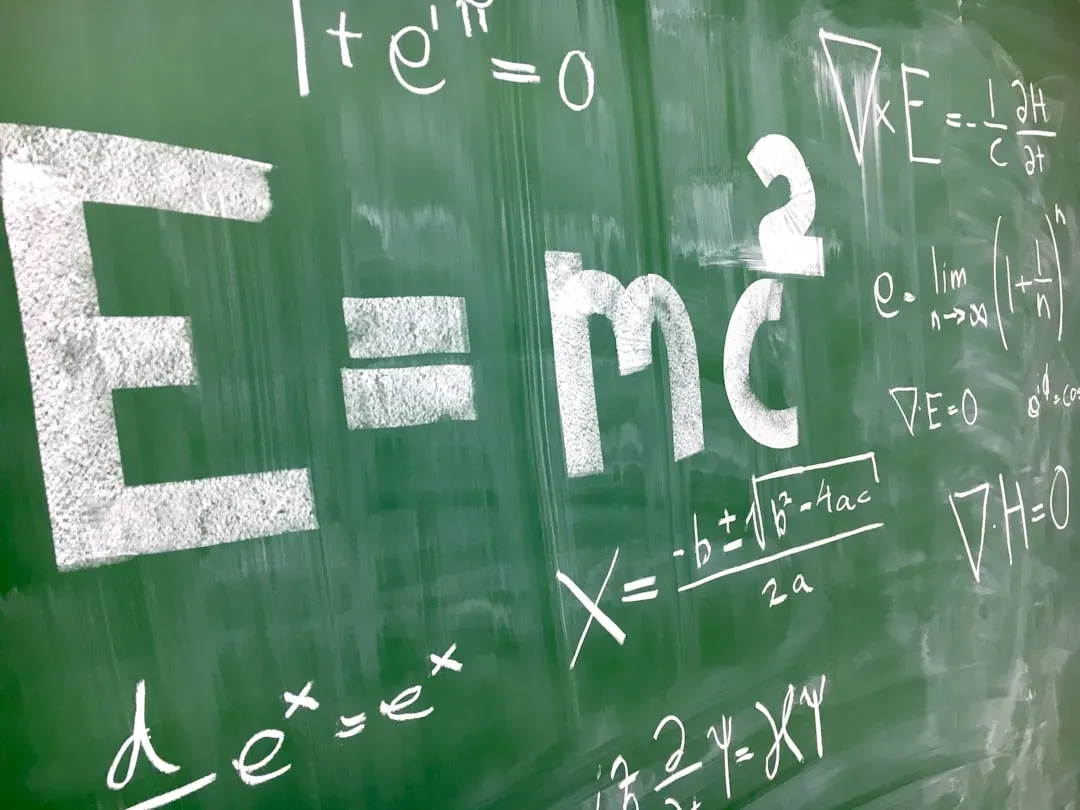
We usually treat energy and mass as separate: energy is what makes things happen, and mass is how heavy something is. Relativity again comes in and tells us that this separation is cosmetic. Mass is a very concentrated form of energy; you can turn one into the other under the right conditions. The famous relationship between mass and energy explains why tiny amounts of matter can release staggering amounts of energy in nuclear reactions.
This equivalence also means that when you add energy to a system, you are effectively increasing its mass. Heat up a box of gas, and in a strict relativistic sense, the whole box weighs a bit more because of the energy you pumped in. It is not something you can feel stepping on a bathroom scale, but it is part of the deep bookkeeping that the universe never cheats on. To me, this is one of the most elegant insults to common sense: the “stuff” and the “oomph” of the universe are not different ingredients at all, just different expressions of the same underlying reality.
Conclusion: Why Embracing Weird Physics Makes You More Grounded, Not Less

It is tempting to treat all these bizarre physics facts as mere trivia, like party tricks the universe plays when nobody is looking. But I think that is the wrong attitude. The clash between common sense and real physics is not a bug; it is a clue that our everyday intuitions were never meant to handle the cosmic extremes of the very fast, the very small, or the very vast. When you absorb that, you become less certain in a healthy way, more willing to ask, “What else am I wrong about?”
To me, the most counter-intuitive truth of all is that accepting how strange the universe is actually makes you more realistic, not more detached. Instead of insisting that reality match our gut feelings, we let data, experiments, and careful reasoning lead, even when the result feels uncomfortable. In a world that often rewards loud confidence over quiet curiosity, that mindset is almost rebellious. So when you next hear some wild-sounding physics claim, will you dismiss it because it offends your common sense, or will you pause and wonder whether common sense is just out of its depth again?