
There’s something quietly mind-blowing hiding in the way cosmologists talk about the Big Bang. We’re told it was an explosion, a beginning, maybe even a “cosmic firework.” Our brains instantly picture a place: a point in empty space where everything blew outward. But that picture is wrong in a deep and stubborn way. According to modern cosmology, the Big Bang did not happen at one specific spot in a pre-existing void. It happened everywhere at once – and most of us never really update our mental model to match that.
Once you let that sink in, a lot of casual questions people ask about the universe start to feel different. “Where did it happen?” “What’s it expanding into?” “Where is the center?” These questions all quietly assume a background space waiting for the show to start. But space itself is part of the show. In a sense, every point around you right now was once part of that early, dense, hot state. You are literally sitting in the aftermath, not near it. Getting comfortable with that fact – genuinely feeling it, not just nodding at the words – is harder than it sounds.
The Big Bang Was Not an Explosion in Space
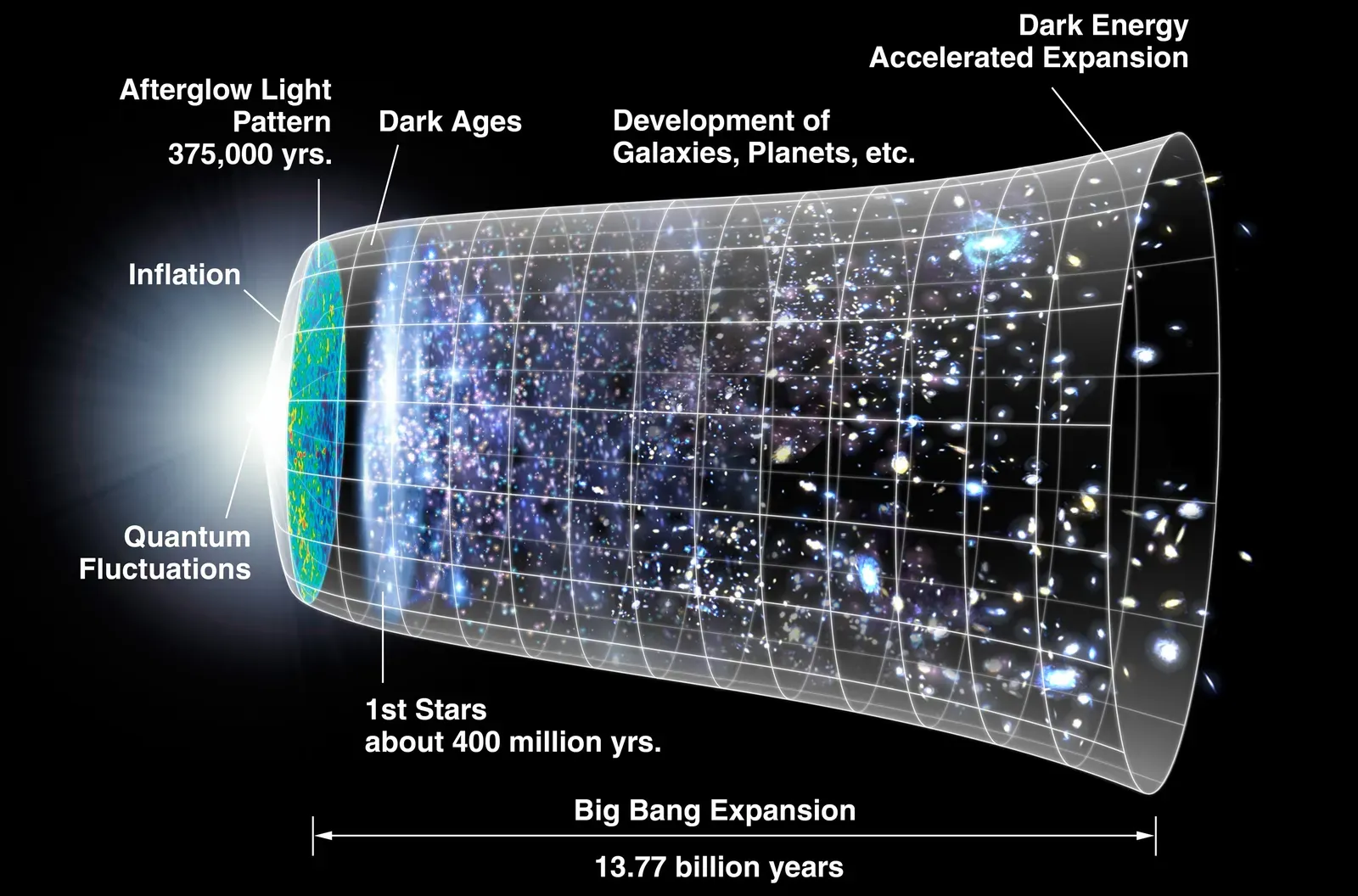
The most persistent misunderstanding about the Big Bang is that it was like a bomb going off somewhere out there. Our everyday experience trains us to think in terms of explosions in an already existing room, sky, or landscape. Cosmic expansion simply doesn’t work that way. The Big Bang is not matter racing outward into a pre-made emptiness; it’s the stretching and evolving of space itself, carrying matter and radiation along for the ride.
Imagine a pattern printed on a rubber sheet. When the sheet stretches, the pattern expands, but nothing is “moving into” some external void beyond the rubber. The sheet itself is the thing changing. In a similar way, galaxies are not hurtling away from a cosmic central crater; instead, the distances between them grow as the underlying space expands. That’s why cosmologists are so insistent that the “explosion in space” metaphor misleads us. It makes us look for a center and a place of origin that simply do not exist in the way our gut expects.
Everywhere Was Once the Big Bang
When cosmologists say the Big Bang happened everywhere, they mean that if you rewind the universe far enough in time, everything we see today – every galaxy, every cluster, every atom – was packed into an unimaginably hot and dense state. Crucially, that description doesn’t point to a single location. The early universe was, as far as we can tell, roughly the same in every direction and at every place, just smaller and denser overall. There’s no special “Big Bang spot” you could in principle fly toward.
This means the ground under your feet, the air you’re breathing, the space between your fingers – all of it traces back to that early state. The Big Bang is not “over there, long ago.” It’s the entire cosmic history of everywhere, starting from a radically different phase. When people ask where the Big Bang happened, the most honest answer is slightly unsettling: it happened right where you are, and also where everyone else is, and in every piece of empty space you’ve ever seen in the night sky.
Why Our Brains Keep Imagining a Center Anyway
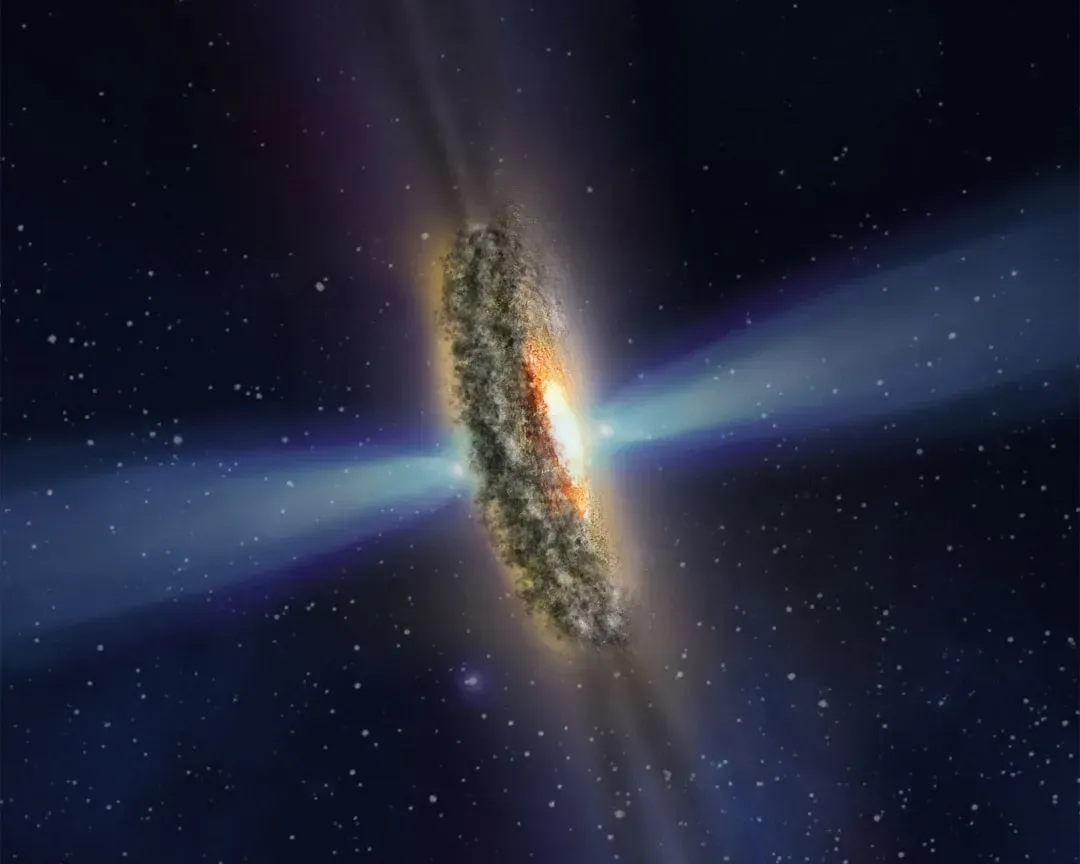
Our intuition evolved for throwing rocks, not thinking about four-dimensional spacetime. On Earth, everything important happens at places: a campfire over there, a storm on the horizon, a city in the distance. Explosions, in our experience, always have a center and an outside. So when we hear “Big Bang,” our brain instantly builds a movie in which there’s a central flash and stuff flies out into a dark outside. It’s automatic, and it feels reasonable, even though it’s cosmologically wrong.
I’ve caught myself slipping into that mental movie more times than I’d like to admit, even after reading the real story. It’s the same way you can know the Earth is round but still feel like you are standing on a flat surface. Your body clings to one model; your mind tries to install another. The result is this weird double-vision: we can repeat the phrase “space is expanding” but secretly picture galaxies traveling through space instead. That mental mismatch is exactly what “the human mind has never fully accommodated” in the title is pointing at.
Space Is Not a Stage: It’s Part of the Cast
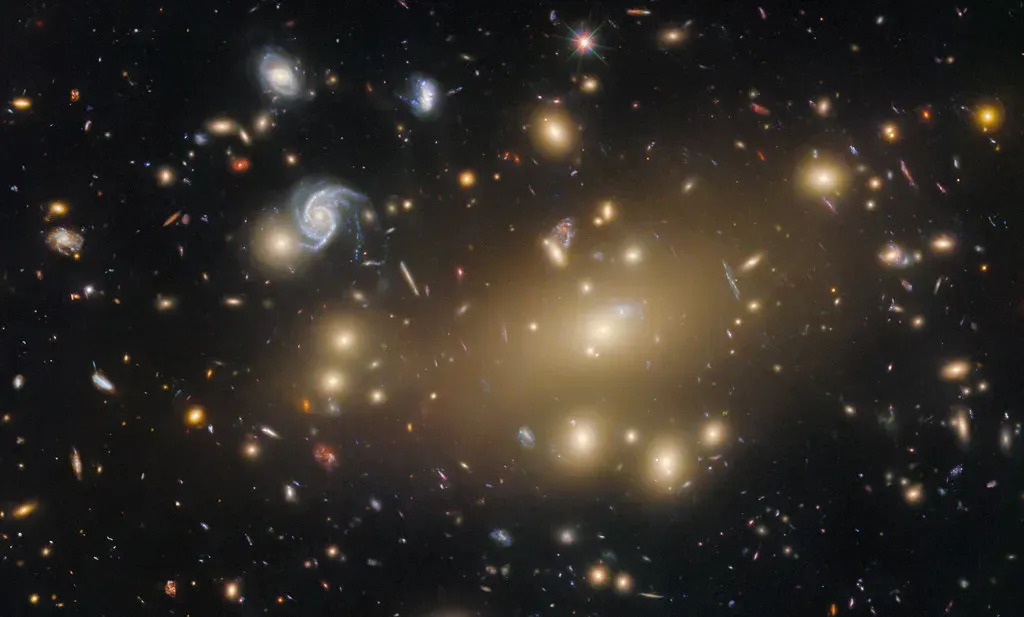
One of the hardest shifts is to stop thinking of space as a quiet backdrop where events unfold. In general relativity, space and time are dynamic. They bend, stretch, ripple, and interact with matter and energy. The Big Bang represents an early era when that spacetime fabric itself was in an extreme state, not just a scene in which matter was densely crowded. The story is not “stuff inside space” exploding; it’s “the geometry of space” changing in a dramatic way as the universe evolves.
A useful mental twist is to think less in terms of objects moving through space and more in terms of distances changing over time. Galaxies can stay more or less where they are locally, but the metric – the way we measure large-scale distances – evolves so that faraway galaxies drift away from us. It’s like owning a ruler that quietly stretches over billions of years. If you keep using that ruler to measure the distance to distant galaxies, the numbers grow not because the galaxies ran off into some outside, but because the underlying fabric that defines distance has changed.
So Where Is the Center of the Universe?
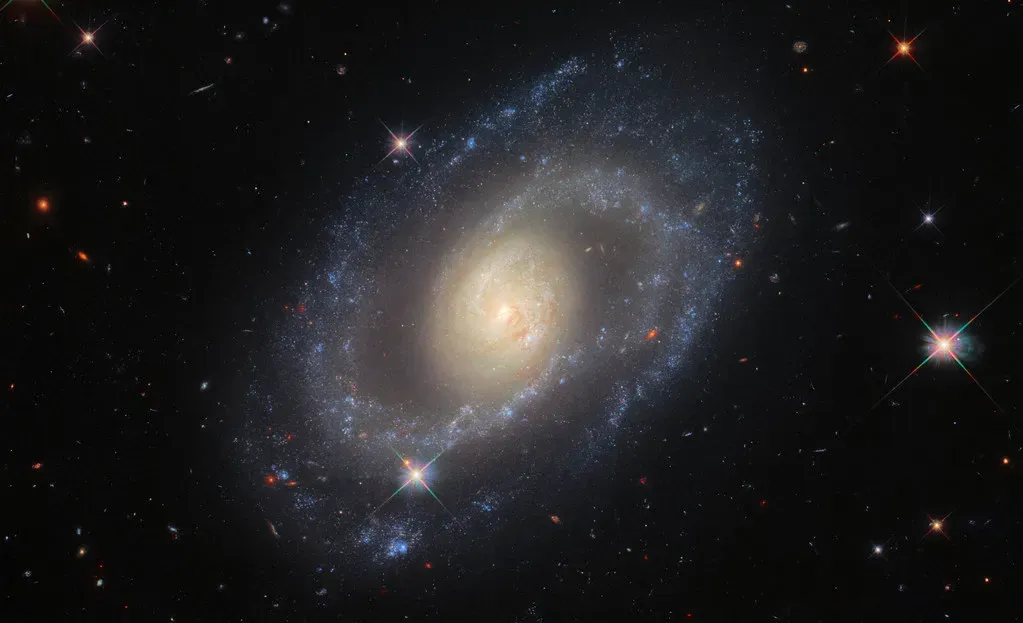
Once you really accept that the Big Bang happened everywhere, the question “Where is the center?” starts to look suspicious. In the standard cosmological picture, on large scales the universe is homogeneous and isotropic: it looks roughly the same in every place and in every direction. No location gets a special gold star that marks it as the central point of expansion. If there were a center, distant galaxies would recede in a lopsided way. Instead, wherever you stand, you see other galaxies generally moving away, and the pattern looks similar from any vantage point.
One analogy that helps is the surface of an inflating balloon with tiny dots drawn on it. The two-dimensional creatures living on that surface could watch every dot move away from every other dot as the balloon expands, but none of the dots would be the center of the expansion from their point of view. The center is “somewhere else,” in a dimension they don’t inhabit. For our universe, the analogy is not perfect, but it captures the key idea: you are not off to the side of some cosmic origin. You are in a universe that has no unique central spot within its own space.
What Does “Before the Big Bang” Even Mean?
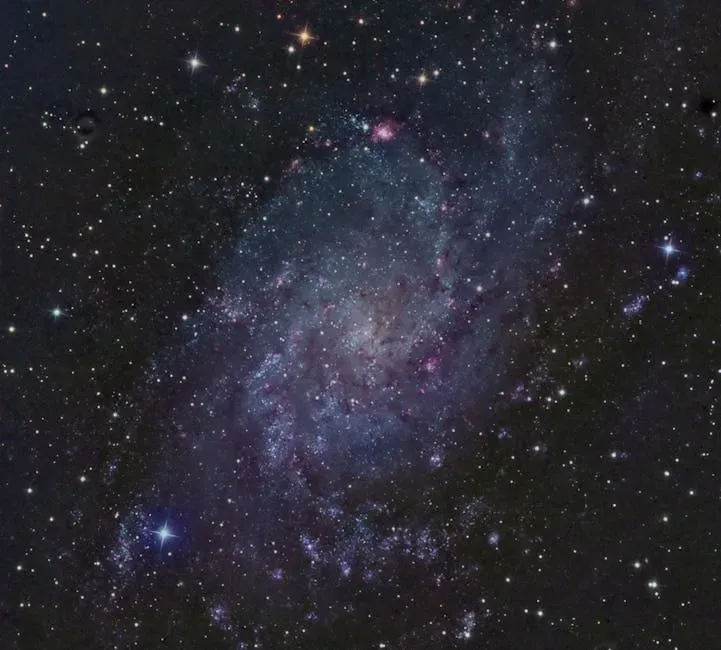
Another place where our intuition crashes into the math is the question of what happened “before” the Big Bang. We are used to thinking of time as a straight line stretching into the past and future, with every event having a earlier cause. But in many cosmological models, the Big Bang marks the boundary of the time we can meaningfully talk about, at least using the same concepts of space and time we apply today. Asking what happened before can be a bit like asking what is north of the North Pole: the question sounds simple but hides a flawed assumption.
That doesn’t mean there is definitely no “before”; it means that our current theories run into limits there. Some speculative models describe bouncing universes or earlier phases, but the evidence is still tentative, and the math is brutally hard. What is clear, though, is that the Big Bang is not just “a moment in time” within a larger cosmic calendar. It might be closer to the origin of time as we know it, the point where our familiar ideas about “before” and “after” stop making sense. That’s a bigger conceptual leap than most popular explanations ever really force us to confront.
The Strange Comfort of Living in an Everywhere-Big-Bang Universe
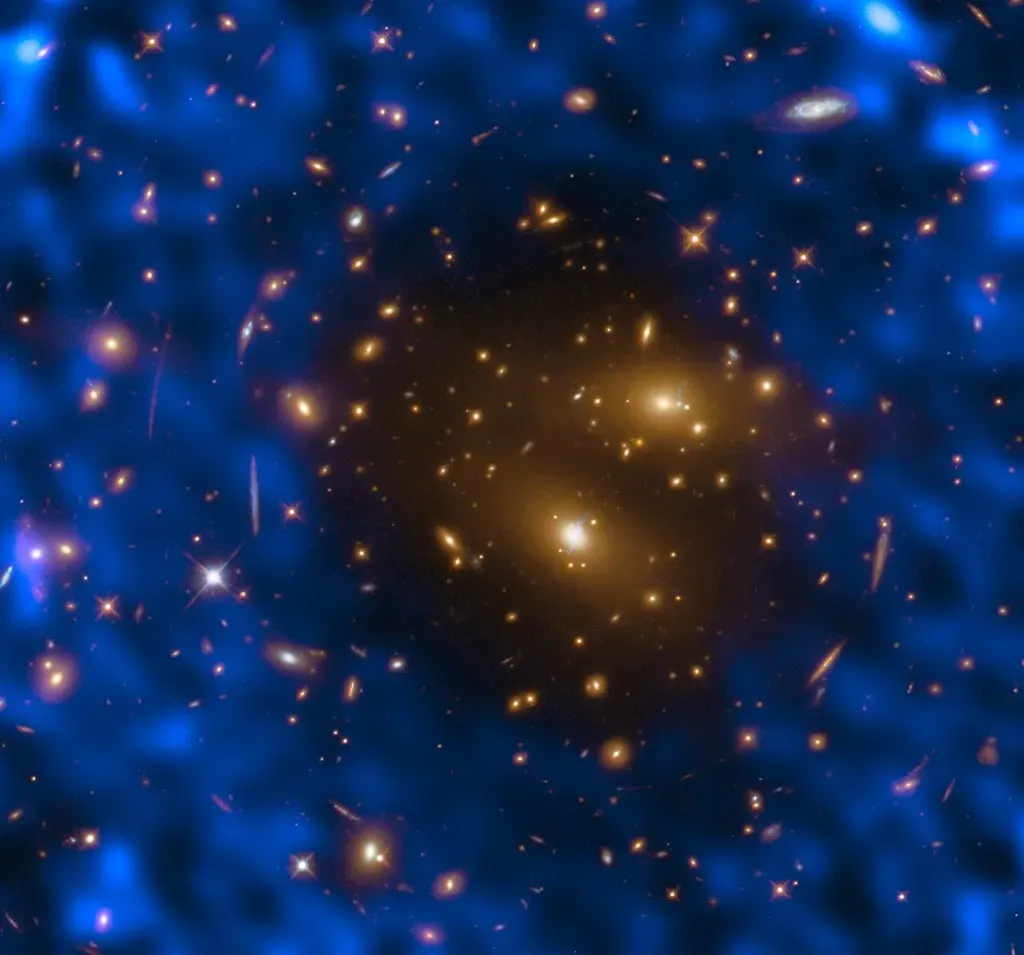
Once you start to live with the idea that the Big Bang happened everywhere, something surprisingly beautiful emerges. This isn’t a story about a distant, inaccessible origin point. It’s a story in which every patch of space around you is part of the same continuous unfolding from that early state. The atoms in your body, the light from your screen, the cold of the night sky – all of it is woven from the same event, not as spectators but as participants.
I find that oddly grounding. It means you’re not sitting on the sidelines of some great explosion that happened far away; you’re sitting in the middle of the ongoing aftermath, deeply entangled with it. The cosmic story is not about a far-off blast; it’s about a universe that has been busy cooling, expanding, and structuring itself into stars, planets, and people who ask questions about beginnings. In that sense, accepting that the Big Bang happened everywhere is less an abstract fact and more an invitation to see your own existence as an intimate piece of cosmic history.
Conclusion: Our Minds Are Still Catching Up
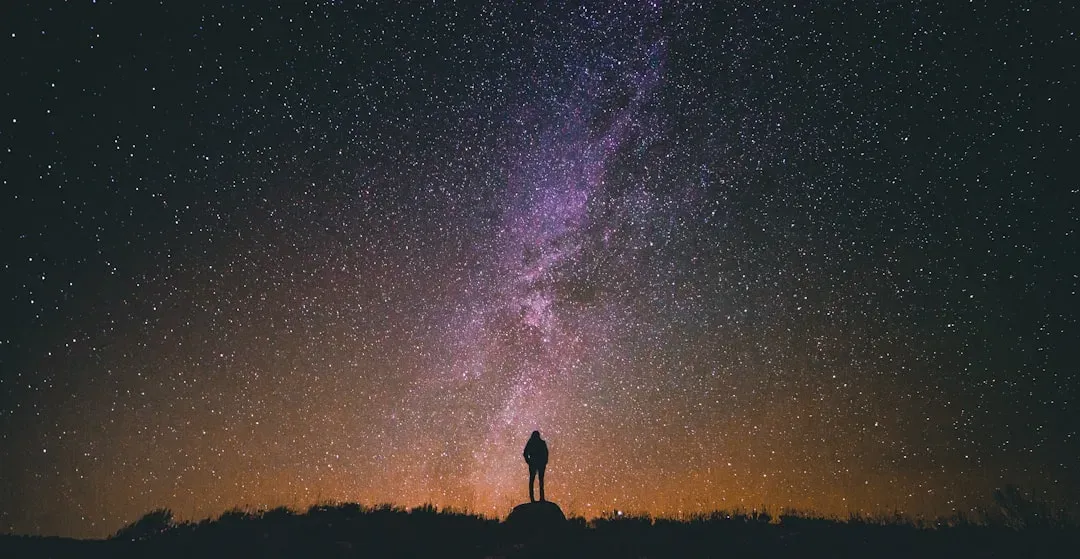
If I’m honest, I don’t think most of us, even those who love science, have fully adjusted to what modern cosmology is actually saying. We nod along with ideas like “space is expanding” and “the Big Bang happened everywhere,” then slip right back into mental pictures drawn from fireworks and shock waves. It’s understandable: you’re trying to retrofit primate instincts to a universe that runs on curved spacetime and non-intuitive geometry. Of course the old metaphors keep sneaking in through the back door.
But I also think we sell ourselves short when we decide those metaphors are good enough. Letting go of the “explosion in a pre-existing space” story isn’t just a technical correction; it completely reshapes how we imagine our place in the cosmos. It says there is no center to run toward, no outside to escape to, and no privileged vantage point where the Big Bang really happened. Instead, the origin is smeared across all of space, including right where you are. To me, that’s more humbling and more thrilling than any firework show could be. The real question is: how far are you willing to let your everyday intuitions bend to meet the universe we actually live in?
Jan loves Wildlife and Animals and is one of the founders of Animals Around The Globe. He holds an MSc in Finance & Economics and is a passionate PADI Open Water Diver. His favorite animals are Mountain Gorillas, Tigers, and Great White Sharks. He lived in South Africa, Germany, the USA, Ireland, Italy, China, and Australia. Before AATG, Jan worked for Google, Axel Springer, BMW and others.