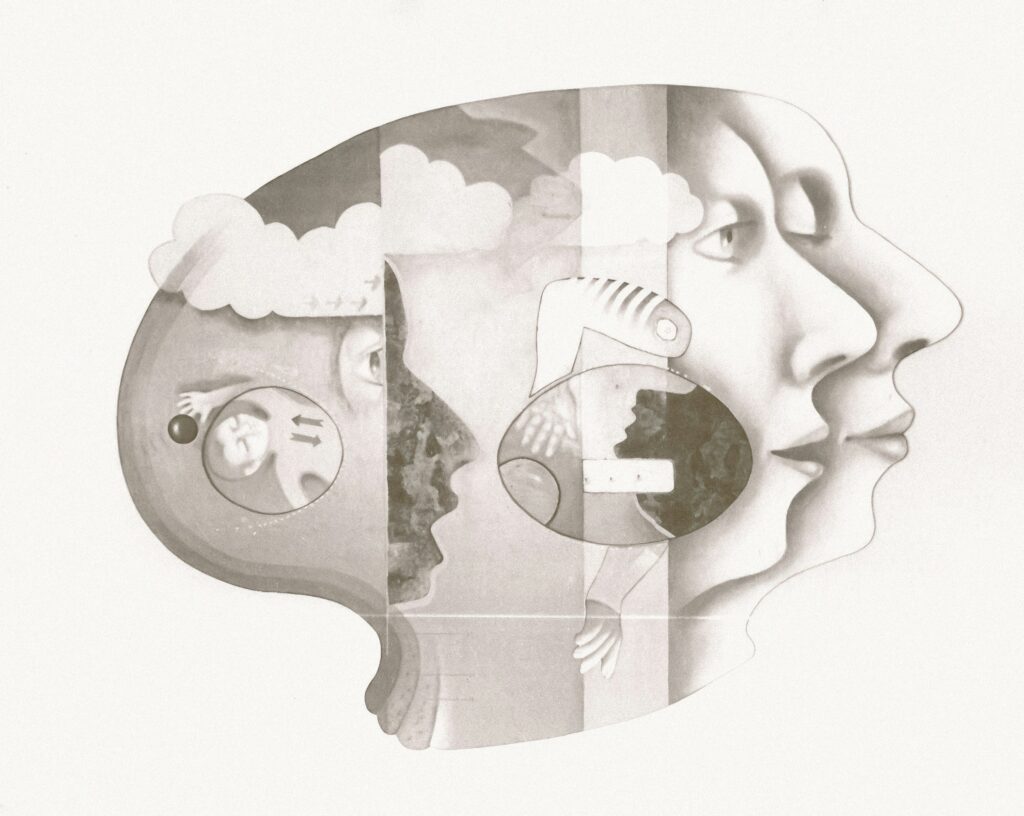

You know that weird, slippery moment when you wake up, remember a dream vividly, and then by the time you swing your legs out of bed… it’s gone? It feels like the dream simply evaporated, as if your brain had never really stored it at all. But modern neuroscience hints at a more interesting story: your dream may not have been forgotten in the usual sense. Instead, the physical act of standing up might have literally cut off a fragile replay process in your brain that was still working to keep the dream alive.
Once you start looking at your mornings through this lens, that tiny slice of time between waking and standing feels enormous. In those few seconds, your brain is still running a quiet background operation, trying to stabilize the shaky memory trace of the dream you just left. By moving too quickly, you might be interrupting that process mid-stream. Think of it less as your mind being bad at remembering and more as you accidentally yanking the plug before the download has finished.
The Strange Moment Between Sleeping and Standing

Right after you wake up, you are in a strange, in‑between state where your brain is not fully “online” yet, but not fully dreaming either. You might notice that if you lie still with your eyes closed for a few seconds, the details of your dream feel rich and close, almost like you could step back into them. In this liminal window, your brain is still buzzing with the neural activity that produced the dream, and the memory trace is extremely delicate. Any strong new input, like bright light, movement, or checking your phone, can quickly overpower that fragile pattern.
When you suddenly sit up, throw off the covers, and stand, you are forcing your brain to pivot from inward, dreamlike processing to outward, goal-directed behavior. Instead of quietly replaying what just happened in your internal world, your brain now has to prioritize balance, posture, and the next steps of your morning routine. In practical terms, the moment you stand, you are telling your brain that remembering the dream is less important than not falling over and getting to the bathroom. That shift in priority can wipe the dream memory before it fully settles into something you can recall later.
How Neural Replay Tries to “Save” Your Dreams

Your brain does not store memories in one instant; it needs time to stabilize and consolidate them. Neuroscientists have shown that after experiences, your brain spontaneously replays patterns of neural activity, often in a compressed, rapid-fire way during sleep and quiet wakefulness. You can think of this replay as your brain hitting “save” on the raw footage of your lived experiences, including dreams. Without enough replay, the memory trace remains weak and can easily fade or be overwritten by something new.
When you first wake up from a dream, your brain is likely still in the tail end of that replay process. The images, emotions, and storylines are being reactivated in a specific pattern that strengthens connections between neurons. If you stay still, focus on the dream, and mentally walk through it again, you are effectively supporting this replay. But if you jump straight into movement, noise, and problem-solving, you interrupt the brain’s quiet work. The dream is not lost because it never existed; it is lost because the saving process got cut short.
Why Standing Up Is Such a Powerful Interrupt

Standing up may sound simple, but for your brain and body, it is a surprisingly complex task. Your brain has to coordinate your muscles, adjust your blood pressure, manage your sense of balance, and orient you in space. That takes major attention and processing power, which means fewer resources left over for subtle, internally driven processes like dream replay. In a way, when you stand, you are flooding your brain with a strong “deal with the body now” signal that drowns out the gentler “remember that dream” signal.
You might have noticed that dreams are easier to recall if you wake up and keep lying in the same position you were in when you were dreaming. That is not just a random superstition; it fits with the idea that less physical change means less disruption to ongoing neural patterns. Standing, on the other hand, radically changes your sensory input: gravity feels different, pressure points on your skin shift, and your inner ear starts sending balance information. All that new data can scramble the delicate echo of your dream replay, leaving you with only a vague feeling that you were just somewhere else.
Short-Term vs Long-Term Memory: Where Your Dream Gets Stuck

To stick around, a dream has to move from a fragile, short-term form of memory into a more stable, long-term one. When you first wake, the dream usually exists as a kind of echo: vivid, emotional, but not yet locked in. This echo depends heavily on ongoing neural activity, not just on established structural changes in the brain. If the activity stops or gets overridden, the memory may never make it into a form you can easily access an hour later or tell someone about at lunch.
When you stand up immediately, you may be freezing your dream in that half-finished state. It is as if the brain started to write the dream into long-term storage but got interrupted halfway through the sentence. You then experience this as a frustrating blank or as a sense that you remember “having a dream” but cannot pull out a single scene or detail. In reality, nothing mystical happened; the memory trace simply did not get the extra moments of replay and attention it needed to transition from fleeting to solid.
Why Some Dreams Survive Your Morning Rush

Of course, you also have those morning-after dreams that are impossible to forget. Maybe a dream was scary, emotionally intense, or highly unusual, and you remember it even though you jumped out of bed immediately. That does not contradict the idea of interrupted replay; it just means that certain dreams are strong enough, or rehearsed enough during the night, to withstand the disruption. Their neural patterns may have been replayed many times while you slept, making them more robust by the time you woke up.
You also tend to talk about those powerful dreams, write them down, or mentally replay them throughout the day. Each time you do, you give your brain more chances to reinforce the memory. Less intense or less emotionally charged dreams, on the other hand, might get only a brief window to consolidate when you first wake. If you stand quickly, check your notifications, or start mentally going through your to-do list, those quieter dreams do not stand a chance. It is not that your brain gave them zero value; it just had limited bandwidth and triaged them out.
How to Remember More Dreams: Practical Morning Habits

If you want to remember more of your dreams, you can start by protecting that fragile replay window as soon as you wake up. Instead of leaping out of bed, try lying still for a few extra seconds or a minute. Keep your eyes closed or half-closed, and gently ask yourself what you were just experiencing. Do not strain or panic; just let images, emotions, or fragments float up. Often, one tiny detail, like a color or location, can unlock a whole chain of scenes.
Once you have a piece of the dream, silently retell it to yourself as if you were explaining it to a friend. Then, if you can, jot down a few notes in a journal or on your phone before you stand. This simple ritual gives your brain an extra round of replay and increases your chances of storing the dream in a more durable way. You are not hacking your brain with anything extreme; you are just working with its natural need for time and repetition, instead of cutting that process off the moment your feet hit the floor.
The Role of Attention: You Save What You Care About

Your attention is like a spotlight that tells your brain what to bother saving. When you wake up and immediately direct that spotlight to emails, worries, or your schedule, you send a clear message: this is what matters. Dream memories, already fragile, fall outside that spotlight and are treated as background noise. If you have ever remembered a dream more easily on a slow weekend morning than on a stressful workday, you have already felt this dynamic in your own life.
By choosing to pause and gently focus on your dreams upon waking, you shift your brain’s priorities. You signal that these inner experiences are meaningful enough to be kept, not just discarded like random mental static. Over time, this shift can change the way your brain handles dreams altogether. You may start noticing more vivid dreams, richer narratives, and deeper emotional insights, simply because you consistently give them a few precious moments of undivided attention before standing up and plunging into the day.
Rethinking “Bad Memory”: You Are Not Broken, Just Interrupted

It is easy to blame yourself when you cannot remember your dreams and assume you just have a bad memory. But when you see how delicate the replay process is, it becomes clear that you are not broken; your routine is. The problem is not that your brain fails to form dream memories at all. The problem is that those memories are given almost no breathing room to stabilize before being flooded by new sensory and cognitive demands.
When you understand this, you can be kinder to yourself and more curious about your own mind. Instead of shrugging and saying that you never dream, you can experiment with tiny changes: waking without an alarm when possible, lying still for a bit, or keeping a notebook by your bed. Each of these habits reduces interruption and gives your brain more space to complete the replay that protects your dreams. You may discover that you are capable of remembering far more than you ever thought.
Conclusion: Giving Your Dreams a Chance to Stay

The next time you wake up with the fading sense that you were just somewhere else, treat that moment as something precious. Rather than rushing to stand, you can let yourself hover in that in‑between space for a little longer, knowing that your brain is still working behind the scenes. The dream is not gone because it never mattered; it is at risk because the replay that preserves it is so easy to interrupt. You have more influence over that process than you might realize.
If you start viewing your first waking seconds as part of your memory system, not just dead time before the “real day” begins, your relationship with your dreams can change dramatically. By slowing down, staying still, and giving your mind a brief chance to replay what just unfolded, you make it far more likely that your dreams will follow you into the light. In the end, the question is simple: will you stand up and break the replay, or will you give your dreams a few extra heartbeats to be remembered at all?