
There is a strange moment that many people recognize but rarely analyze: the instant your car skids on wet asphalt, or you slip off a ladder, or you get terrible news over the phone, and suddenly the world seems to drop into slow motion. Your thoughts race, but everything around you appears to crawl. It can feel eerie, almost supernatural, as if someone secretly reached over and turned down the speed of reality itself. Then, just as quickly, time snaps back to normal, leaving you wondering what just happened and why your memory of those few seconds feels so stretched.
Modern physics and neuroscience offer a surprisingly grounded way to make sense of this. When you start to unpack how the brain encodes experiences and how physics treats time, you land on a quietly radical idea: the sense that time speeds up or slows down is not just a psychological quirk, it is a clue that time is not a single, fixed thing we all move through in the same way. Instead, time behaves more like something we partially construct, stretched and compressed by our biology, our motion, and even the structure of spacetime itself. Once you see that, the slow-motion feeling during extreme stress stops being a glitch and becomes a window into how time really works.
Why Your Brain Makes Crises Feel Like Slow Motion
In a life-threatening moment, your nervous system hits a kind of emergency override. Stress hormones surge, your heart rate spikes, your senses sharpen, and your brain starts sampling the world more aggressively, taking in more “snapshots” of what is happening. One useful way to picture this is like switching your phone camera from normal video to a high-frame-rate slow-motion mode: you are capturing more frames per second, so when you look back, those seconds feel stretched out and packed with detail. Your experience of time thickens because your brain is processing more events in the same physical interval.
Neuroscientists have found that under stress, attention narrows and memory encoding becomes more intense, especially in structures involved in emotional learning and survival. Later, when you recall the event, you are pulling from a dense archive of vivid impressions rather than the sparser record you would have from a calm walk down the street. The key point is that your subjective sense of how long something lasted is built afterward from memory, not read off from some built-in clock. In that sense, time during extreme stress does not exactly “slow down” in the outside world; your brain simply builds a longer-feeling story about it.
The “Internal Clock” Model: Time As Brain-Built, Not Given

Psychologists often talk about an internal clock, but it is not a literal ticking gear in your head. A better analogy is a counter that registers events, changes, or neural pulses. When more pulses are counted in a certain span, time feels longer; when fewer are counted, it feels shorter. Under intense stress, that counter speeds up because arousal, attention, and sensory gain are cranked to maximum. Everyday boredom is the opposite: the system is under-stimulated, collecting fewer meaningful events, so the same physical duration feels like less.
This model may sound simple, but it hints at something profound. If your sense of “how much time passed” depends on how many internal events your brain tallies, then time perception is essentially the brain’s bookkeeping over change, not a direct perception of an external river of time. The world can be ticking along at the same physical rate, while two people, or even the same person at two different levels of stress, live completely different subjective timelines. Time, from a psychological standpoint, is not handed to you; it is assembled by you.
Relativity’s Time Dilation: Physics Agrees Time Is Not One-Size-Fits-All
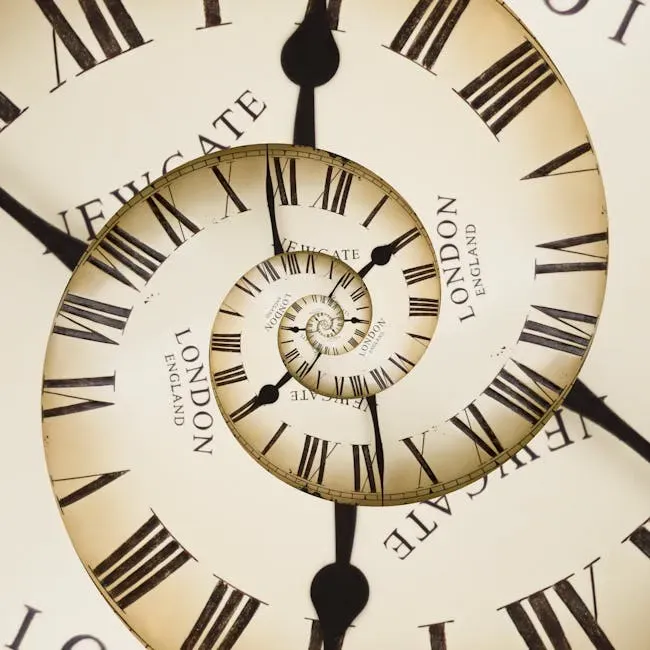
Long before neuroscientists studied stress, physics had already broken the idea that time is fixed. Einstein’s theory of relativity shows that time is elastic: it runs differently for observers depending on their speed and the strength of the gravitational field they are in. A clock on a fast-moving spacecraft, or closer to a massive object, will tick more slowly compared to a similar clock on Earth. This is not a trick of perception. It is a measurable effect: particles decay at different rates when accelerated, GPS satellites need constant relativistic corrections, and ultra-precise atomic clocks show time passing at slightly different speeds just a few floors apart in a tall building.
That means there is no universal, shared “now” that every observer agrees on. Each person, each clock, each path through spacetime has its own proper time, its own private measure of duration. At large scales and everyday speeds, these differences are tiny, so we can ignore them and pretend there is one common timeline. But at high velocities or near strong gravity, the fiction collapses, and time’s variability becomes unavoidable. Relativity quietly tells us that time is not a rigid background stage on which events unfold. It is woven into the fabric of space and is shaped by motion and mass.
How Stress-Time And Relativistic Time Point To The Same Deeper Idea

At first glance, the slow-motion feeling during an accident and the time dilation of an astronaut orbiting Earth seem like totally different animals: one is psychological, the other physical. But they share a big underlying theme: there is no single, absolute tempo of time that everyone experiences in the same way. In both cases, the rate at which time unfolds depends on the state of the system. For the astronaut, it is their velocity and gravitational field; for you in a car crash, it is your brain state, stress level, and information-processing speed.
When you put these together, you get a deeper picture: time is relational and context-dependent, not a universal metronome. Physics tells us that different observers trace different temporal paths through spacetime; neuroscience tells us that different brain states construct different temporal narratives from the same physical interval. The human experience of slow motion in a crisis can be seen as a kind of “subjective time dilation” layered on top of the already non-absolute time of relativity. Both levels say the same thing in different accents: time is not fixed; it is what you get when you measure change, and measurements depend on who is doing the measuring and how.
The Information-Processing Model: Time As Data Rate
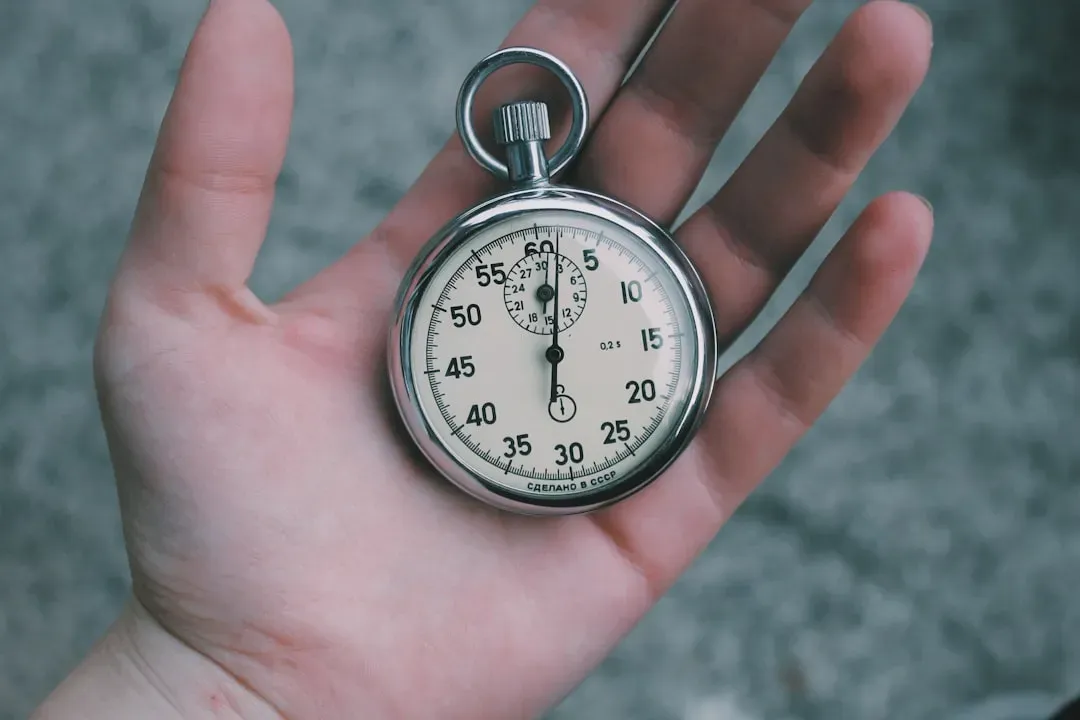
One powerful way to link brain science and physics is to think of time as closely tied to information flow. In this view, what we call a second is less about a mysterious cosmic tick and more about how much change or information gets processed between one state and the next. Under extreme stress, your brain ramps up its data rate: neurons fire more frequently, attention is locked onto critical stimuli, and you are sampling the environment much more densely. That higher sampling rate creates the experience of more moments “fitting” into the same clock-defined period.
Physics has its own version of this idea: many modern approaches treat time as deeply connected to entropy, information, and state changes. The so-called arrow of time is associated with the increase of disorder or the spreading out of information. From that angle, time is not a separate thing that events sit inside; it is a way of describing the sequence of changes a system undergoes. Your stressed brain is a local example of this: as its internal information-processing accelerates, your subjective time stretches, much like a high-speed camera making a falling water droplet look like a long, graceful ballet instead of a blink.
Memory, Emotion, And The Illusion Of “Real” Duration
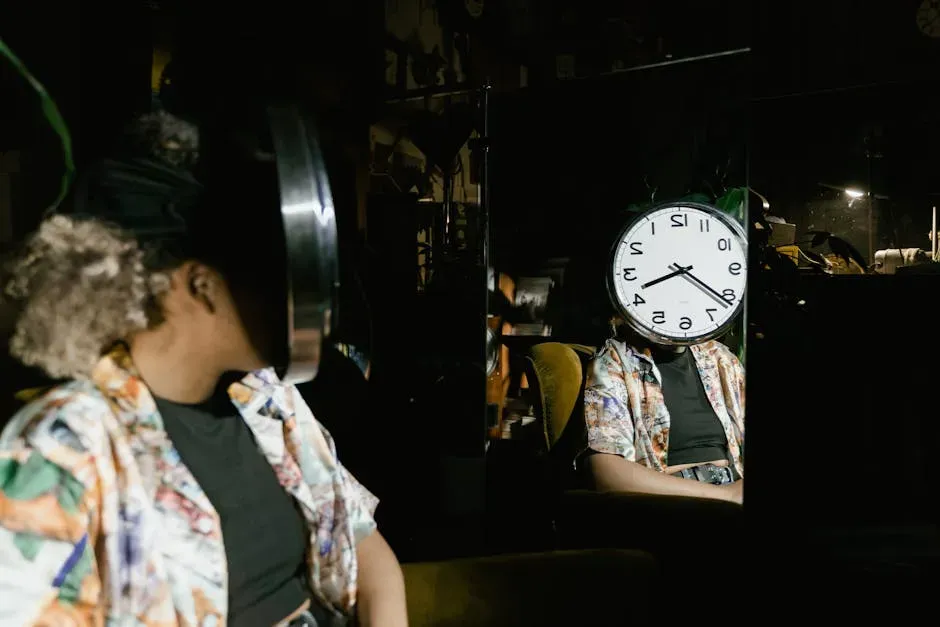
One of the more unsettling findings from psychology is that our sense of how long something lasted is heavily reconstructed. During an intense event, people do not actually experience each present moment in slow motion with full clarity; instead, afterward, they remember those moments as longer and richer because emotional arousal stamped them deeply into memory. This is why a terrifying thirty-second accident can feel, in retrospect, like it lasted several minutes, while an uneventful hour of scrolling on your phone can feel like a blur that barely happened.
Emotion and attention act like a zoom lens on the brain’s internal clock. The more emotionally charged, surprising, or meaningful an event is, the more “time markers” your brain lays down. When you later run your mental finger over that stretch of memory, you encounter more distinct points, so the interval feels long. Calm, repetitive stretches have fewer markers, so they collapse into a shorter-feeling duration. That means that what feels like the “real” amount of time is an illusion built from how memories are laid out, not a faithful reading from some master timer. Duration, for the human mind, is a story we tell about how much change we lived through.
Does Any Of This Mean Time Is An Illusion? A Careful Answer
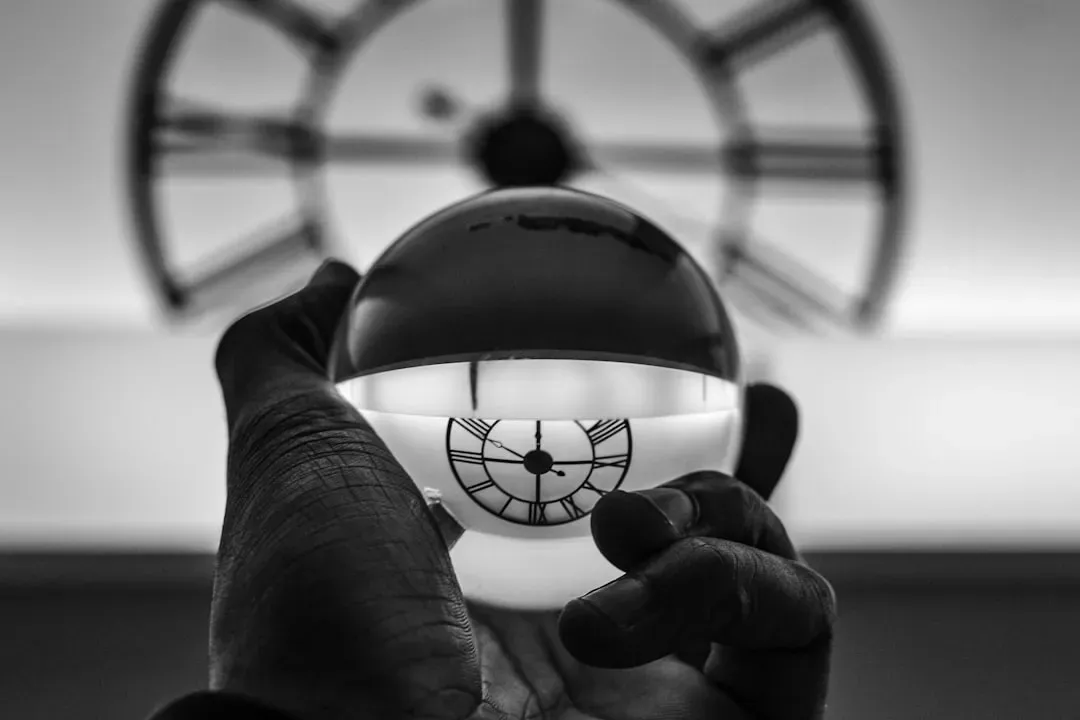
It is tempting to jump from “time is relative” and “time perception is constructed” to a dramatic claim that time is completely unreal. That goes too far. There is something very stable and objective about the order of events and the physical durations we measure with high-precision clocks. If two particles collide or a star explodes, that is not just a matter of opinion. Physics can predict and verify the timing of such events with stunning accuracy, and those predictions keep working. So there is clearly a structured, external aspect to temporal order that does not depend on anyone’s mood or memory.
What the evidence really suggests is subtler and, in a way, more interesting: time is not a single, simple thing. There is physical time as described by equations and measured by instruments, and there is psychological time as constructed by brains. Both are real in their own domains, but neither fits the old picture of a fixed, universal flow that is the same for every observer. Instead of an illusion, time looks more like a multi-layered phenomenon: partly an emergent property of physical change and information, and partly a narrative our minds build out of signals and memories.
Why It Matters That Time Is Not Fixed

Realizing that time is not fixed is more than a fun science fact; it can change how you relate to your own life. When you understand that your brain stretches or compresses time based on attention, emotion, and information, it becomes obvious why childhood summers felt endless while adult years can vanish in a blink. You are not crazy; your internal clock truly runs differently depending on how richly you are experiencing and encoding your days. Filling your life with novelty, presence, and meaningful challenge quite literally creates more lived time in memory, even if the calendar is the same.
On the physics side, accepting that time depends on motion, gravity, and the structure of spacetime forces you to drop the comforting but outdated idea of a single universal timeline. Instead, each of us moves along a personal path through a malleable temporal landscape, our bodies obeying relativistic time while our minds remix that raw input into subjective experience. To me, that is quietly liberating. It means that while we cannot escape the fundamental limits and arrows of time, we are not just passengers. We are, in a very real sense, co-authors of how much time we feel we have lived.
Conclusion: Time As A Story Written On A Flexible Canvas

When I think back to my own “slow motion” moments – a near-miss on the highway, a sudden fall on ice, a medical scare – the common thread is not magic, it is intensity. Those events grabbed every available circuit in my brain and forced a high-speed recording that later replayed as expanded time. Layer that over what physics tells us about clocks running at different speeds in different conditions, and it becomes hard to defend the comforting myth that there is one fixed time we all move through together. The evidence points instead to a universe where time is a flexible canvas and each physical or mental system paints its own timeline on top.
My opinion is that we should stop talking about time as a single thing we “have” and start talking about times – plural: physical, psychological, relational. Your body follows one, your brain constructs another, and modern technology reveals still others when we push speed, gravity, or computation to extremes. Far from making life meaningless, that multiplicity makes every moment more precious, because how you attend, remember, and move literally shapes the time you inhabit. If time is not fixed, then the real question is not just how much of it you get, but how deeply you choose to live within the slice you have – how will you use your next few minutes?