
You know that weird moment when you meet someone for the first time and, within seconds, you feel like you already know them? It can be unsettling, almost spooky, like you’ve skipped a few chapters in a story and jumped straight into the middle. Many people chalk that up to intuition, fate, or some vaguely mystical sense of connection. But a growing body of research suggests something much more grounded is happening: your brain is doing incredible pattern recognition work in the background, especially from tiny, rapid-fire facial movements called micro-expressions.
I remember once sitting at a friend’s dinner party, shaking hands with a total stranger, and immediately feeling a kind of quiet familiarity, as if we had shared a late-night conversation years before. Later, as we talked, I realized he reminded me uncannily of an old mentor – same way of lifting an eyebrow, same half-smile before a joke. That moment stuck with me because it felt like I “knew” him before logical thought had time to kick in. Neuroscience and consciousness research are increasingly pointing to an explanation: our brains are built to decode these micro-signals at a speed that outpaces conscious awareness, turning what feels like magic into a deeply human, deeply biological skill.
The Fast Lane of the Brain: How You “Know” Before You Think

Here’s the first surprising thing: your conscious mind is actually late to almost every party your brain throws. A lot of processing happens hundreds of milliseconds before you become aware of anything, especially in social situations. Sensory areas, emotional centers, and pattern-recognition networks are constantly scanning faces, voices, and body language, making predictions about who this person is and how safe or familiar they feel. By the time you’re thinking “I like this person” or “Something feels off,” your neural circuits have already done a quick background check.
This plays out like a high-speed, behind-the-scenes edit. While you’re busy introducing yourself and remembering their name, lower-level brain systems are quietly comparing the new person’s facial configuration and fleeting expressions to a vast archive of previous encounters stored in memory. You can think of it like your brain’s version of a “face and vibe search,” cross-referencing thousands of old files in a snap. That instant hit of familiarity – what people call chemistry, gut feeling, or an instant connection – often shows up as a fully formed emotion, not a detailed thought, because that’s simply how fast and how quietly this machinery is running.
Micro-Expressions: The Tiny Emotional Glitches Your Brain Is Reading

Micro-expressions are incredibly brief, usually involuntary facial expressions that leak out in a fraction of a second, often revealing genuine emotion before we have time to mask it. Someone might flash a micro-second grimace before they smile politely, or show a split-second look of softness before returning to a neutral expression. Consciously, you almost never notice these, because they come and go faster than your deliberate attention can lock on. But your visual and emotional systems are more sensitive than your verbal mind gives them credit for, and they register these micro-events as data points about a person’s emotional state and authenticity.
Over a lifetime, your brain basically trains on this data. Every argument you’ve watched, every comforting hug, every fake smile at a customer service counter gets logged. So when you meet someone new, your brain is not starting from zero. Micro-expressions function like emotional fingerprints, and your neural circuits learn correlations: this tiny eye crinkle often means warmth, that quick tightening of the mouth has often preceded sarcasm or hostility, that fleeting uplift of the cheeks has often come with genuine joy. When a new face matches many of those familiar emotional fingerprints, the system flags it as “known,” even if your conscious mind has never seen that person before.
Your Emotional Memory Bank: Why Some Strangers Feel Like Old Friends

One of the most powerful ideas from consciousness and memory research is that you rarely interact with the present moment in isolation. Instead, every new experience is filtered through enormous networks of stored patterns from your past. If someone you just met feels like an old friend, it’s usually because your brain has noticed overlaps – maybe in the rhythm of their speech, the tilt of their head when they listen, the softness in their eyes when they talk about something they care about. These cues echo the traits of people you have trusted, admired, or loved before.
In that sense, “knowing” someone is often your nervous system saying, “I’ve seen this movie before, and it usually goes like this.” The feeling of ease, openness, or instant rapport can be your brain predicting that this person is safe and likely to behave in familiar, manageable ways. It can be comforting, like finding a song that feels nostalgic even though you are hearing it for the first time. The flip side is just as important: sometimes you feel uneasy with a stranger because their micro-expressions or mannerisms resemble someone who once hurt or disappointed you. Your brain is not always accurate in these snap assessments, but it is almost always referencing real, learned patterns rather than pure coincidence.
Thin Slices and Snap Judgments: Why First Impressions Hit So Hard

Psychology has a term for those rapid, intuitive judgments we make about people based on extremely limited information: thin-slicing. Even a brief video clip, a few seconds of conversation, or a momentary glimpse of someone’s body language can be enough for us to form a surprisingly stable impression. These impressions can feel unfair or irrational from the outside, but inside the brain, they’re built on an avalanche of visual, emotional, and social cues that are processed in parallel. Micro-expressions play a major role in these thin slices, acting like high-speed highlights of a person’s internal life.
Of course, thin-slicing is a double-edged sword. On one side, it allows you to quickly sense danger, read group dynamics, or latch onto someone who might be a good ally or friend. On the other side, it can solidify snap judgments that are hard to revise, even when new evidence appears. You might keep believing someone is untrustworthy simply because their face unconsciously reminds you of a bully from school, or you might over-idealize someone because they mirror the warmth of a beloved family member. The feeling of “knowing” is powerful, but it does not automatically mean “knowing accurately.” It means your brain has confidently matched a pattern – which is impressive, but not infallible.
Faster Than Thought: What Neuroscience Says About Preconscious Processing
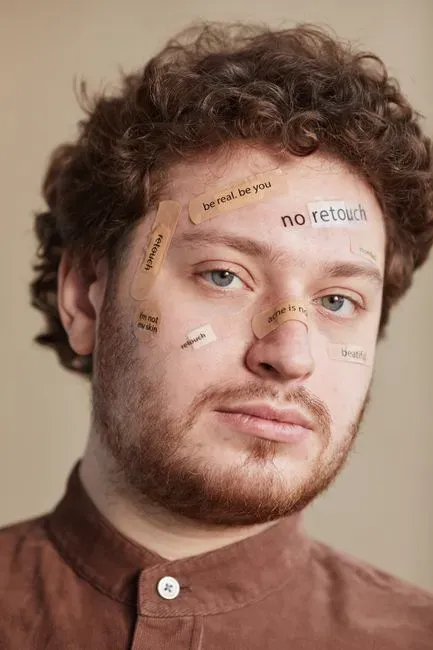
Neuroscience experiments have repeatedly shown that the brain can detect and respond to emotional or social cues before people report any conscious awareness of seeing them. In some studies, emotionally charged faces shown for only a split second – too quick for participants to describe clearly – still trigger measurable changes in brain activity and bodily responses. That suggests your nervous system is picking up and reacting to subtle emotional information faster than you can form a sentence about it. When you “just know” that someone is upset or kind or uninterested, it might be because your brain’s early warning systems have already fired, long before your inner narrator tries to explain why.
Consciousness, from this lens, is more like a delayed commentary than a live broadcast. The backstage crew – sensory systems, pattern-recognition networks, emotional circuits – does most of the work, and your conscious mind steps out like a host summarizing events that have largely already happened. Micro-expressions are perfectly suited to this backstage process because they are brief, subtle, and rich in meaning. Your brain’s visual pathways can catch them and route them through emotional centers quickly, while the slower, more reflective parts of your mind struggle to even notice they were there. The “faster than thought” feeling is not mystical; it is literally about timing and neural architecture.
When Your Gut Is Wrong: Bias, Projections, and Social Conditioning

It is tempting to treat the feeling of “instantly knowing” someone as always wise or trustworthy, but that would be giving your brain too much credit. Those same pattern-recognition skills that help you pick up genuine warmth or danger can also be warped by bias, stereotypes, and unresolved emotional baggage. If you have learned, consciously or unconsciously, to associate certain facial features, accents, or gestures with specific traits, your brain may generate a feeling of familiarity or distrust that has more to do with culture and bias than with who the person actually is. What feels like pure intuition can sometimes be a dressed-up version of old conditioning.
This is where things get tricky: your brain does not label its guesses as “guess.” It sends them up as feelings: comfort, suspicion, attraction, irritation. You might instantly like someone who laughs the way an ex-lover did, even if they are nothing alike in values or character. You might bristle at someone whose neutral expression resembles the face of a strict parent, even if they are kind and supportive. Recognizing that your sense of “knowing” is built on real pattern recognition but not guaranteed to be correct can be humbling. It invites a stance of curiosity instead of certainty – treating first impressions as useful hints, not final verdicts.
Can You Train This Superpower? Awareness, Empathy, and Slowing Down

The good news is that the same brain systems that create these instant impressions are also plastic, which means they can be shaped and refined. Training in emotional awareness, empathy, and nonverbal communication can sharpen your ability to notice subtle cues more consciously, not just rely on vague gut feelings. Some programs and workshops specifically teach people to recognize common micro-expressions of basic emotions like joy, fear, anger, and disgust by slowing down video footage and practicing careful observation. Over time, this can help bridge the gap between what your brain picks up automatically and what you can actually articulate.
On a more everyday level, simply slowing down your reactions can transform how you use this fast, pattern-based knowledge. Instead of obeying the initial feeling of “I know this type of person,” you can treat it as a hypothesis: maybe this person is like the kind teacher you once had, or maybe your brain is just grabbing the closest match in its filing cabinet. Pausing to ask a few more questions, listen a bit longer, and give space for surprise lets reality override old assumptions. In my experience, the most satisfying connections happen when you honor your intuition as data – but still leave room to be wrong, and to be pleasantly surprised by who someone actually turns out to be.
Conclusion: Your Brain Is Brilliant, But You’re Still Writing the Story

The feeling of instantly “knowing” someone you just met is not a cosmic accident, and it is not pure magic either. It is your brain doing what it does best: racing ahead, matching patterns, and reading micro-expressions at a speed your conscious mind can barely track. That familiarity, that sudden sense of connection, often reflects years of accumulated experience, emotional memories, and social learning condensed into a few electrical bursts behind your eyes. In a way, it is awe-inspiring; you are carrying around a social supercomputer that never really stops making sense of the faces around you.
But here is my opinionated take: treating that feeling as the full truth about a person is a mistake. Your brain is brilliant, but it is also biased, nostalgic, and sometimes lazy, more interested in fitting people into old stories than patiently discovering who they really are. The real power move is to use that instant sense of “knowing” as a starting point, not a verdict – to notice it, respect it, and then actively test it against real conversations and lived experience. After all, the most meaningful relationships are not the ones your brain predicts in a split second; they are the ones you choose to build slowly, on purpose, long after the first impression fades. When you feel that sudden click with someone new, the better question might not be “Is this fate?” but “What story is my brain trying to replay – and do I want to write a different one this time?”