You know that weird, slightly unsettling moment when you switch off the lights and suddenly feel almost blind? For a few seconds, you wave your hands around, bump into a chair, and wonder how your insanely advanced human body can be this useless in the dark. Then, a few minutes later, shapes start to appear, the room slowly reappears from the black, and after a while you can move around almost confidently. It feels a bit like your eyes are booting up on slow, old hardware.
That delay is not laziness or some glitch in your biology. It is a carefully tuned, deeply complex process that balances sensitivity with safety, detail with survival, day vision with night vision. Under the hood, your eyes and brain are running a long list of chemical, electrical, and mechanical changes that simply cannot happen instantly. Once you see how much is going on, that frustrating “why can I not see yet?” moment in the dark starts to look less like a flaw and more like a quiet engineering miracle.
The Shock Of Sudden Darkness: Why Your Vision “Crashes” First

When the lights go out, the first thing you experience is not graceful adaptation, but a visual crash. Your eyes were just tuned for bright conditions, with your pupils relatively small and your light-sensitive cells partly desensitized. In a lit room, your retina is flooded with photons, and your visual system sets its “gain” lower so it does not get overloaded, much like turning down the volume on loud speakers. The moment the lights disappear, your system is suddenly underpowered, and for a few seconds you are operating with settings that are completely wrong for the new environment.
This mismatch explains why you sometimes cannot even see your own hand in front of your face right away, especially after staring at a bright phone or computer screen. Your retinal chemistry is still in bright-mode, your pupils have not fully opened, and your brain has no time to compensate. The result is that short period of near blindness that feels dramatic and a bit disorienting. Only after this initial crash does the gradual, multi-step process of dark adaptation kick in, and that is where the real delay comes from.
Pupils: The Fast But Limited “Aperture” Fix
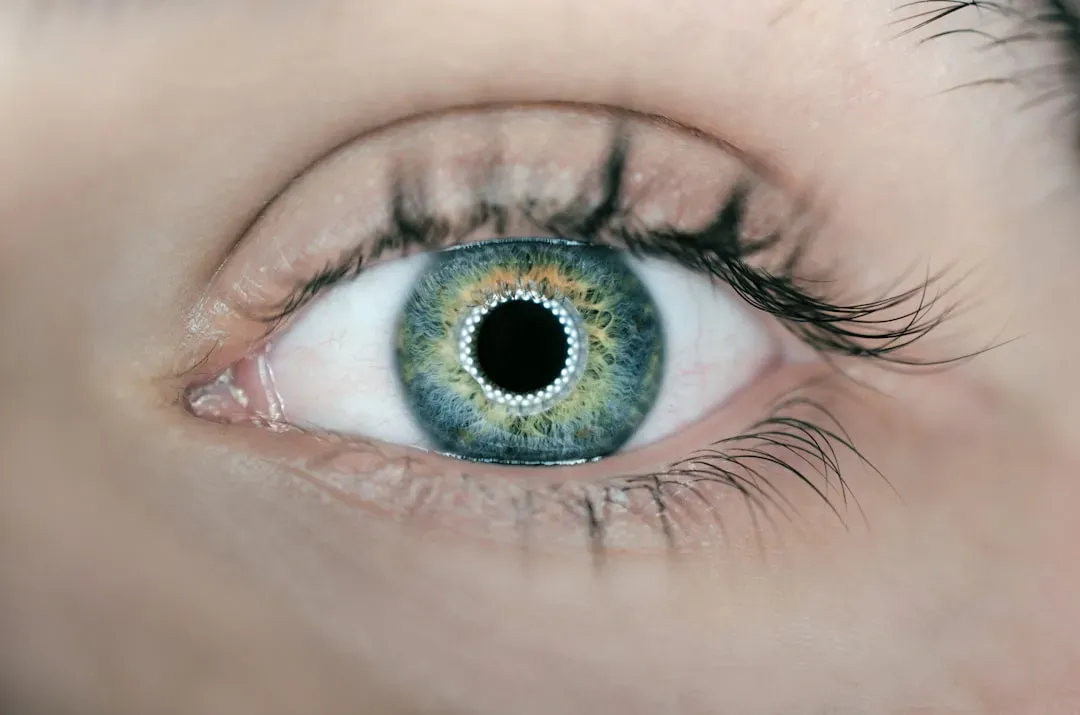
The first, and fastest, adjustment your eyes make is mechanical: your pupils open up. In brighter conditions, the pupil constricts to protect the retina and sharpen depth of field, acting like the aperture on a camera. In lower light, the muscles relax and the pupil widens, letting in more light. This response can start within a second or two, and within a short time your pupils can roughly double in diameter, which means many times more light entering the eye. It feels quick, which is why you might assume your eyes should be done adapting at that point.
But this aperture trick only gets you so far. Even a fully dilated pupil can only increase the amount of incoming light by a limited factor, while your full dark adaptation can boost sensitivity by many thousands of times. That extra performance has to come from deeper, slower processes inside the retina, where photoreceptors and their chemical machinery gradually reset. So the pupils are like pulling open the curtains a bit wider; you still have to wait for all the intricate electronics in the system to recalibrate.
Cones Versus Rods: Two Vision Systems On Different Timers
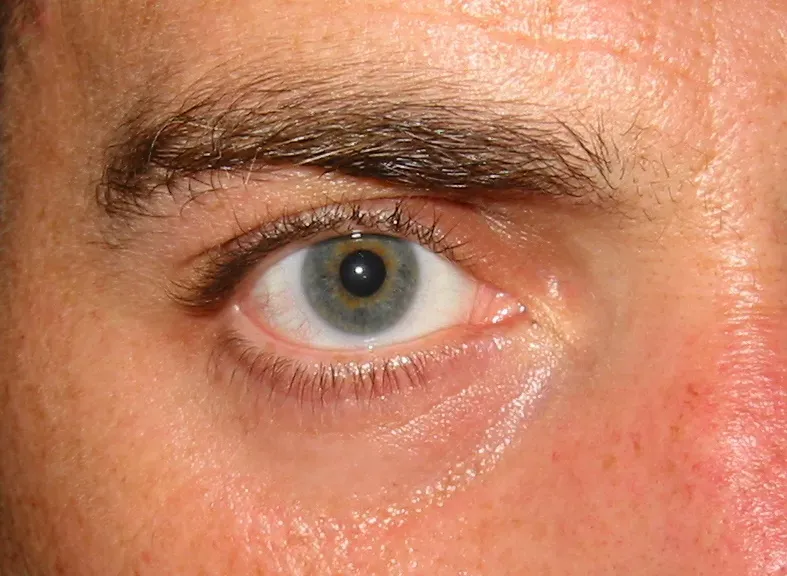
Your eyes contain two main kinds of light-sensing cells: cones and rods, and they play by very different rules. Cones are responsible for color vision and sharp detail in bright light, the kind you use when scrolling social media or reading this text. They adapt to darkness relatively quickly, often within several minutes, giving you a first improvement in dim vision but not anywhere near your ultimate night sensitivity. During this early phase, things are still murky and washed out, and colors fade toward gray.
Rods, on the other hand, are the specialists for low light. They are far more sensitive than cones but cannot distinguish colors and do not give you the same crisp detail. Their chemistry takes much longer to reset after exposure to bright light, sometimes tens of minutes before reaching peak sensitivity. That slower timeline is a big reason dark adaptation feels like it takes forever. You are not just waiting for one system to adjust; you are waiting for an entire second vision mode to come fully online.
The Slow Rebuild Of Rhodopsin: Chemistry Takes Its Time
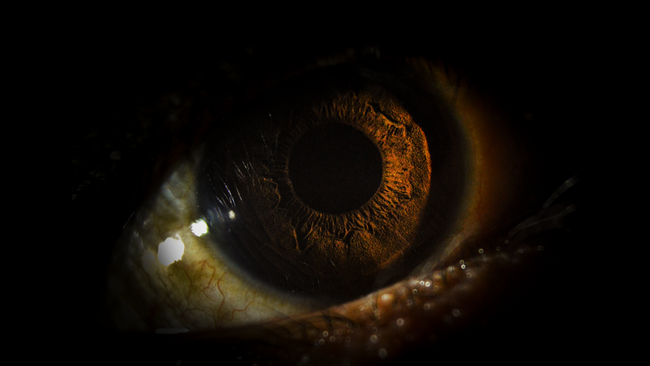
At the heart of rod-based night vision is a light-sensitive pigment called rhodopsin. In bright conditions, rhodopsin molecules get repeatedly activated and then broken down, a process sometimes described as being “bleached.” When the lights go off, your rods cannot instantly become sensitive again because they are short on ready-to-use rhodopsin. Your body has to rebuild these molecules through a chemical cycle that depends on enzymes, nutrients, and time. There is no shortcut; it is like restocking a warehouse after a big sale.
As rhodopsin is gradually regenerated, rods become more responsive to even tiny amounts of light, and your sense of the dark room slowly transforms. What once looked like a solid black wall begins to show outlines, textures, and movement. This rebuilding process does not run on the scale of seconds, but on the scale of many minutes, sometimes around half an hour for full sensitivity. That biochemical delay is fundamental to why you cannot just snap into dark mode the instant the lights go down.
The “Dark Adaptation Curve”: Why It Feels Like Nothing, Then Suddenly Something
If you could graph your eyes’ performance as you sit in a dark room, you would see a very distinctive curve instead of a smooth line. At first, your sensitivity improves fairly quickly as your cones adjust and your pupils open, which you may notice as faint shapes starting to show up. Then progress seems to slow down or even plateau, leading to a frustrating impression that you are no longer getting better at seeing. Many people give up here and assume that is the limit of their night vision.
But if you stay in the dark longer, a second wave of improvement arrives as your rods take over. This shift creates a break in the curve: your sensitivity suddenly jumps again, and you begin to see much more than before, even though the room’s lighting has not changed. That stepped pattern explains why people are often surprised by how well they can see if they stay outside at night or in a dark theater long enough. The feeling that you hit a wall and then unexpectedly push past it is simply the visual system switching from cone-dominated to rod-dominated mode.
Why Screens And Bright Lights “Erase” Your Night Vision Progress
One of the most annoying parts of dark adaptation is how fragile it is. You can spend twenty minutes outside letting your eyes adjust, only to blow it all by glancing at a bright phone screen or a car’s headlights. That burst of light activates and bleaches your photopigments again, especially in the rods that were slowly regenerating. In a single careless second, you can undo a big chunk of the chemical work your retina has been doing and push yourself back toward the early phase of the adaptation curve.
This is why people who need reliable night vision, like astronomers or sailors, are almost obsessive about avoiding bright white light. They use dim red lights because rods are less sensitive to longer red wavelengths, which disturbs night vision less. If you have ever stepped out of a dark movie theater into the bright lobby and felt temporarily blind, you have experienced the same principle in reverse. Your eyes had invested time in building up rod sensitivity, and the sudden brightness forced them to tear it all down in seconds.
Central Blind Spot In The Dark: Why You See Better “Out Of The Corner Of Your Eye”
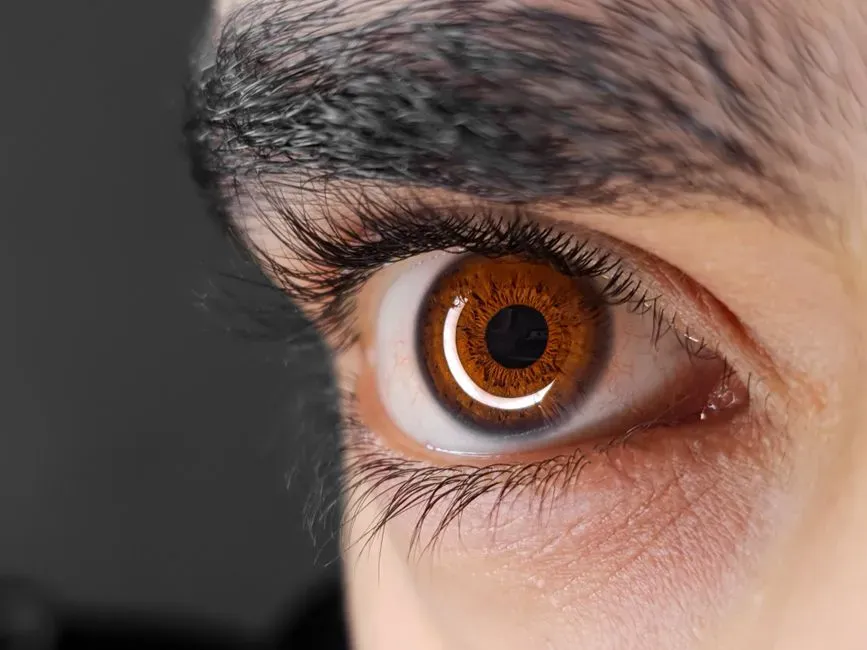
A strange quirk of human night vision is that your central line of sight is not actually the most helpful spot in very low light. The center of your retina, called the fovea, is packed densely with cones and has almost no rods. That makes it perfect for reading fine print or catching color detail in daylight, but it is surprisingly weak in near darkness. When you try to look straight at a faint star or a small dim object in the dark, it can seem to disappear or fade out.
Shift your gaze slightly to the side, and your rod-rich peripheral retina takes over, often making the object suddenly pop into view. Pilots and stargazers use this little trick intentionally, looking slightly off to one side of what they want to see. It can feel counterintuitive, almost like cheating, but it is really just working with how your eye is wired. The longer it takes your rods to fully adapt, the more obvious this central dark “hole” can feel, adding to the sense that your eyes are sluggish in low light.
Age, Health, And Nutrition: Why Dark Adaptation Differs From Person To Person
Not everyone adjusts to the dark at the same speed, and that difference is not just in your head. As people get older, their eyes often become less efficient at dark adaptation. The lens can cloud, the pupil may not dilate as widely, and the chemical processes in the retina may slow down. That means an older person might need more time than a younger person in the same room to reach similar night vision, or they may never reach quite the same level of sensitivity. This can make night driving or walking in poorly lit areas feel tougher with age.
Health and nutrition also play real roles. Certain vitamin deficiencies, especially involving vitamin A, can impair the regeneration of rhodopsin and rod function, directly undermining dark adaptation. Some medications or eye conditions can affect the retina or pupil behavior, changing how quickly and how fully your vision adjusts. So when you are frustrated that your eyes seem slow, keep in mind that there is real biology behind that experience, and in some cases, it is worth bringing up with an eye care professional rather than just blaming bad luck.
Brain Processing: It Is Not Just Your Eyeballs Doing The Work
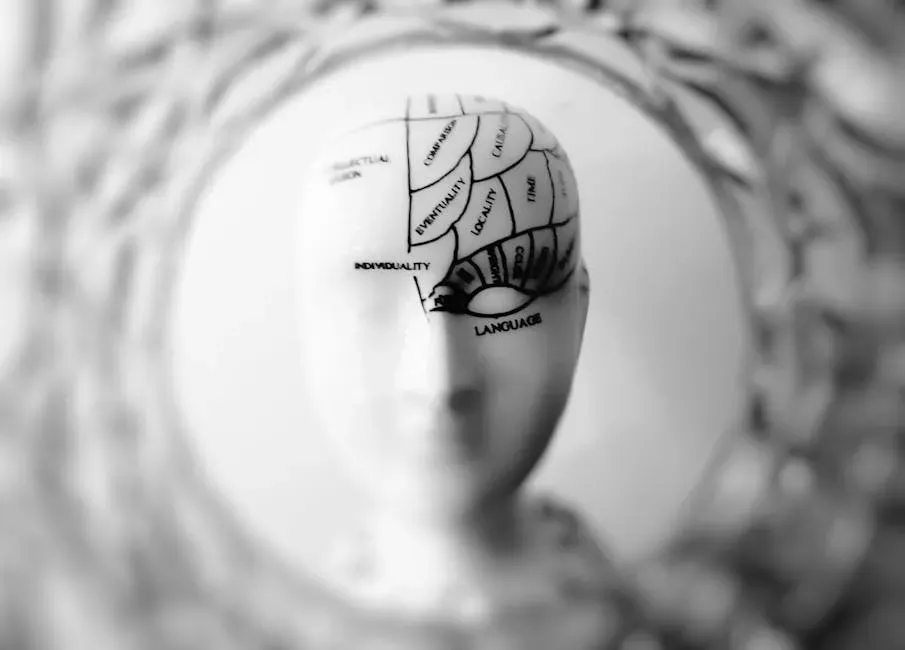
While the retina does a lot of the heavy lifting, your brain is quietly adapting alongside your eyes. Visual signals from rods are noisier and less detailed than those from cones, so your brain has to lean more on pattern recognition, context, and expectation when you are in very low light. That shift does not happen instantaneously either. Over time in the dark, your brain gets better at interpreting faint, fuzzy signals and turning them into a coherent picture of the environment, which changes your subjective sense of how well you can see.
This neural adaptation helps explain why a familiar room at night feels more visible sooner than a completely unfamiliar space. Your brain fills in gaps using memory, like knowing where the couch is or how far the door sits from the wall. It is a bit like walking through your own home with your eyes half closed: you might not see every detail, but your brain “knows” enough to navigate. As your rods ramp up and your brain recalibrates, the world of the dark stops feeling like a void and starts feeling like a low-resolution but workable reality.
Conclusion: Our “Slow” Night Vision Is A Feature, Not A Flaw
It is tempting to complain that our eyes are annoyingly slow at dealing with the dark and to wish for instant night vision like some superhero. But when you look closely at what is happening – chemical rebuilding, dual systems handing off control, the brain rewiring its expectations – this delay starts to feel less like bad design and more like a careful compromise. Daylight and darkness are radically different worlds, and your visual system is trying to serve both without breaking. Rapid change in such a complex network usually comes with trade-offs, and biology has chosen safety and flexibility over speed.
Personally, the more I learn about dark adaptation, the more I think of that “blind for a while” window as a quiet reminder of how non-digital our bodies are. We are not LED screens that can instantly switch brightness modes; we are living chemistry, with cycles, limits, and rhythms that refuse to be rushed. If anything, the real mistake is not in our eyes, but in our expectation that everything in life should respond as fast as a phone display. Next time the lights go out and you are stuck waiting in the dark, maybe ask yourself: is this slowness really a flaw, or is it one of those patient, old-school features of being human that we have forgotten how to appreciate?