There’s something quietly shocking about the fact that you’re reading this sentence right now and not just processing information like a machine, but actually feeling like someone is home. You can taste coffee, feel heartbreak, worry about the future, remember the past, and somehow all of that plays out inside a fragile body that will one day cease to exist. Consciousness is not just a feature of our lives; it is the stage on which our entire reality appears, and yet science still cannot fully explain why this inner world exists at all.
When I first realized as a kid that one day I would die, I remember staring at the ceiling thinking, “But where does the ‘me’ go?” That question never really went away; it just got more complicated, with neuroscience papers and philosophy texts piled on top of the same old fear and curiosity. Why should a mortal, temporary brain give rise to something that feels so fundamental, so irreducibly “real”? In a universe that seems perfectly happy to run on blind physical laws, the fact that we are not only here but aware of being here remains one of the deepest mysteries we have.
The Strange Fact That Anything Feels Like Something

Stop for a second and notice what it is like to be you right now: the texture of your thoughts, maybe a vague emotion in the background, a faint awareness of the room around you. That private, first-person feeling is what philosophers call phenomenal consciousness, and it is honestly weird that it exists at all. The brain is just matter, a network of cells exchanging chemicals and electrical impulses, yet out of this storm of activity comes color, pain, music, jealousy, awe.
The heart pumps blood and the liver cleans toxins, but they do not seem to have an inner movie. The brain does all kinds of information processing that could, in principle, be described from the outside without mentioning feelings at all. That gap between objective brain activity and the subjective feel of experience is what many call the hard problem of consciousness. We can increasingly link specific brain regions and patterns to specific experiences, but why that processing should be accompanied by a felt inner life instead of being just dark and silent processing remains unanswered.
Brains, Neurons, and What Science Can Actually Explain
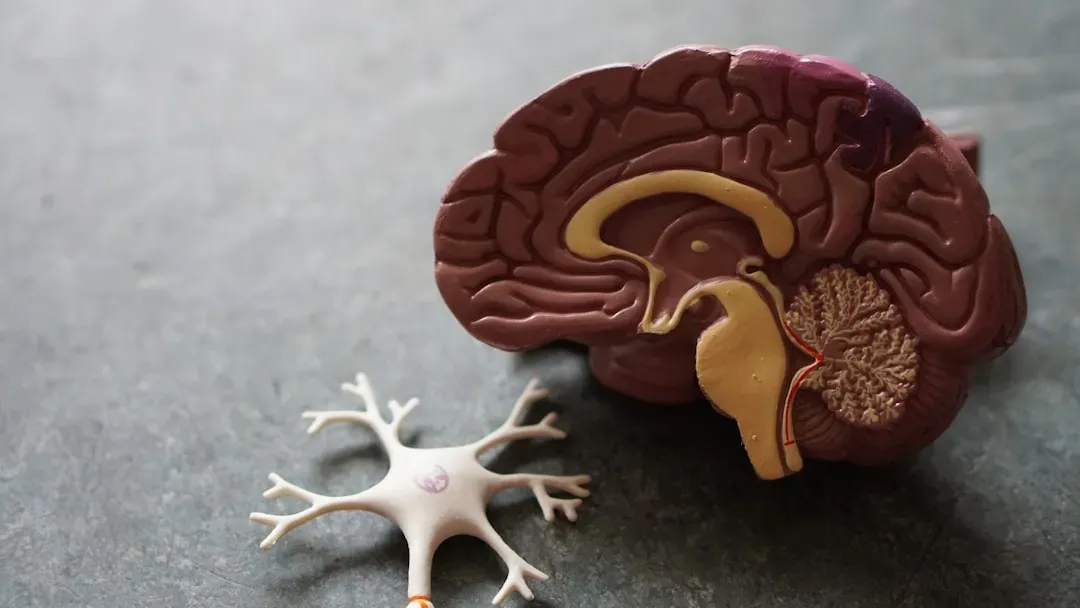
Modern neuroscience has gotten surprisingly good at mapping which parts of the brain light up for different experiences: certain regions for visual perception, others for language, still others for fear, pleasure, or decision-making. We know that damaging particular networks can dramatically change personality or even delete specific types of awareness, like the ability to perceive faces or to feel ownership of a limb. This strongly suggests that consciousness is tightly linked to the physical structure and activity of the brain.
At the same time, knowing that consciousness depends on neurons firing is not the same as understanding why that dependence produces what it does. We can describe how information flows through neural circuits, how attention enhances signals, how the brain integrates multiple senses into a coherent scene. Yet the scientific story tends to stay in the third-person view: what can be measured, imaged, and quantified. The leap from patterns in a scan to what it is like to be the person in the scanner is where the mystery digs its heels in and refuses to move.
Evolution’s Perspective: Did Consciousness Help Us Survive?
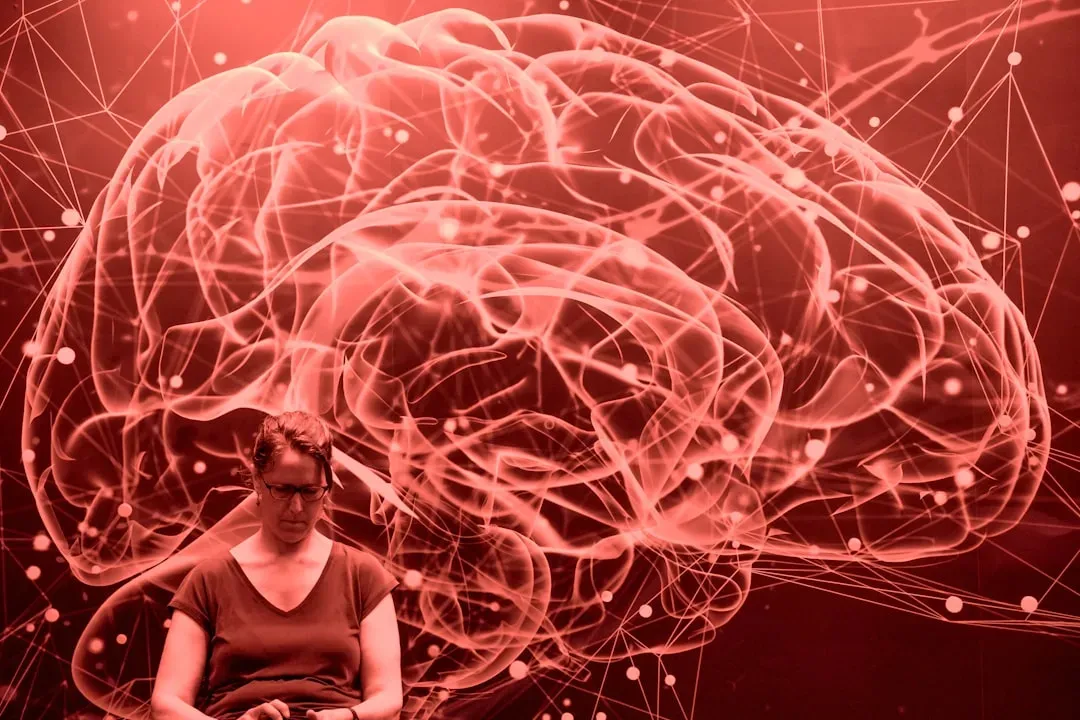
One common idea is that consciousness must exist because it helped our ancestors survive and reproduce in a dangerous world. Being aware might have allowed early humans to simulate possible futures, weigh options, and learn from mistakes in a more flexible way than hardwired instincts alone could manage. The ability to reflect on past experiences, imagine consequences, and coordinate with others through shared stories could have given conscious creatures a serious edge.
However, even if evolution explains how conscious systems became more complex over time, it does not fully explain why those systems had to be conscious instead of just behaving as if they were. You can build sophisticated robots that navigate environments, recognize faces, and adapt to new situations without any clear sense that they feel anything. From a purely functional standpoint, it is at least possible that all the survival benefits could have been achieved with unconscious information processing, which brings us back to the haunting question: why should life’s struggle for survival come packaged with a vivid inner drama?
Are We Just Very Complicated Biological Machines?
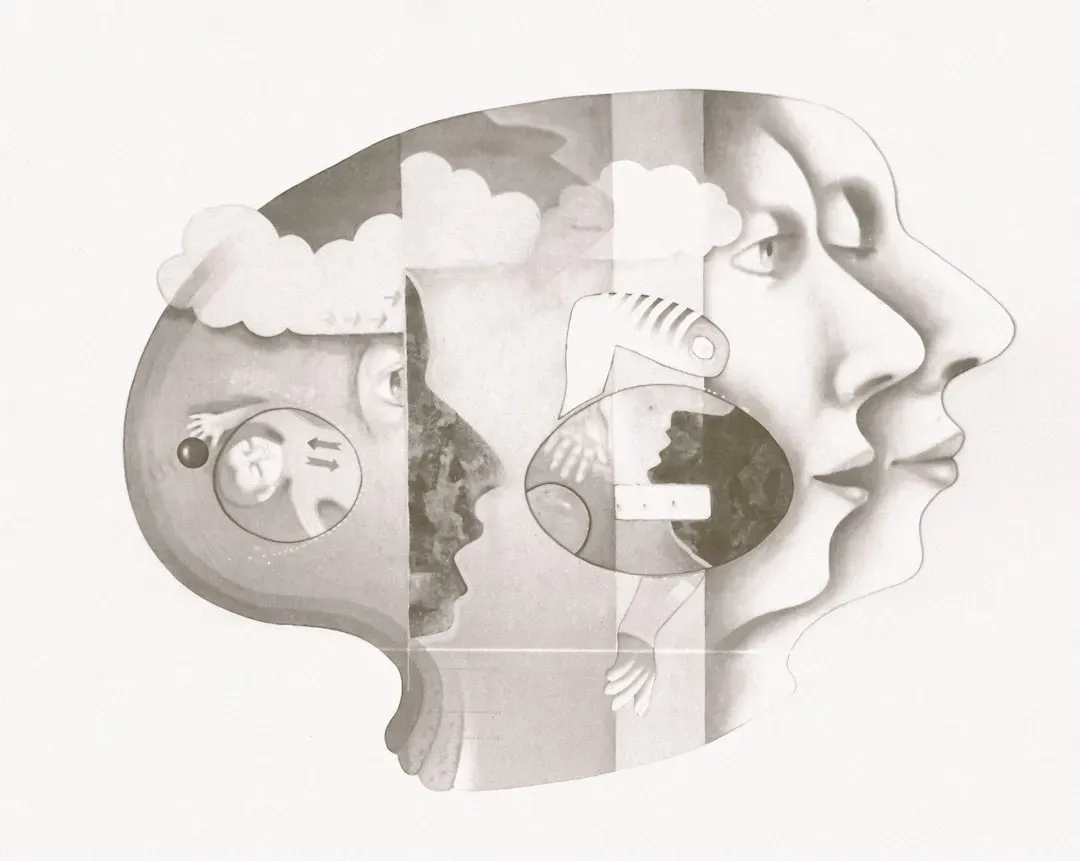
A lot of scientists and philosophers lean toward the idea that consciousness is what it is like from the inside to be a highly complex biological system. On this view, if you had a complete description of every physical process in the brain, you would not need anything extra; the subjective feeling would simply be another way of talking about that physical process. It is a bit like saying that heat is not some special extra ingredient beyond particle motion; it just is particles moving in a certain way, described from a different angle.
Still, for many people, this explanation feels emotionally unsatisfying, even if it might be correct. If we are ultimately just elaborate machines running on biological hardware, then our deepest loves, fears, and hopes are outcomes of electrochemical processes obeying physical laws. There is a certain coldness in that picture, but there is also something quietly liberating: it means that being “just” a machine does not thin out the richness of experience. Instead, it reveals how astonishingly intricate the machine must be to create something as wild and layered as a human life.
Panpsychism and the Idea That Mind Might Be Everywhere
Because it is so hard to see how consciousness arises out of matter, some thinkers have revived an old idea in a new form: maybe some primitive form of consciousness is built into the fabric of the universe. This family of views, often called panpsychism, suggests that even very simple physical systems have tiny, unimaginably basic “proto-experiences” that combine and grow more complex in brains like ours. On this view, consciousness is not an add-on to matter; it is a fundamental aspect of reality, like mass or charge.
This sounds poetic, maybe even absurd at first glance, but it is partly motivated by a desire to avoid a mysterious jump from dead matter to suddenly conscious organisms. If mind-like qualities are everywhere in some faint way, then the emergence of rich, human-level consciousness is more like organizing and amplifying what is already there. The downside is that we have no clear way to test these claims, and saying that every particle has a tiny mind risks sounding more like a modern myth than a scientific theory. Still, it speaks to how far people are willing to go to make sense of why awareness exists in a world that seems mostly indifferent.
Does Mortality Shape the Way Consciousness Feels?
Living things die, and human beings know they will die. That alone might explain why consciousness feels as heavy and meaningful as it does. The awareness of our own mortality turns simple experiences into something bittersweet: a sunset is beautiful partly because you will not see infinitely many of them, and a conversation with a friend matters more when you know there is only a limited number of such moments in a lifetime. The shadow of an ending sharpens the edges of everything.
I sometimes think that if we were immortal, our inner lives might feel flatter, less urgent, almost like a video game with endless retries. Our consciousness is not just a neutral camera recording events; it constantly filters them through the knowledge that time is slipping away. That awareness can be terrifying, but it is also what gives us depth: we regret, we cherish, we grieve, we plan. In a mortal world, consciousness is not just a bonus feature; it is the lens through which finiteness becomes meaning instead of just loss.
Is Consciousness an Illusion, or Is Everything Else the Illusion?
Some thinkers argue that we are confused about consciousness because we keep expecting it to be more mysterious than it is. On illusionist views, the brain builds a simplified internal story about “being a self” and “having experiences,” and we mistake that story for some extra magical stuff beyond the physical processes. Consciousness, in this sense, is like a clever user interface that hides the messy underlying workings. What feels like a unified, continuous self might actually be a quick construction, refreshed moment by moment.
Others push in the opposite direction and claim that consciousness is the most undeniable thing we have, and that our sense of an external world might be more fragile than we think. You can doubt many things, but doubting the fact that you are having some kind of experience seems almost impossible. This tension between “consciousness is less than it seems” and “consciousness is more fundamental than anything else” captures how divided even serious, careful thinkers are about what is really going on. For the rest of us, it can feel like being pulled between two extremes without a clear place to stand.
What If the Point Is Not Why It Exists, but What We Do With It?

After getting lost in theories, it is tempting to step back and ask a simpler, more personal question: given that you are conscious in a mortal world, how do you want to live? Maybe we never find a fully satisfying theoretical answer to why experience exists, or why it had to be this vivid and emotionally charged. But the raw fact remains: right now, there is an inner life happening, full of choices, relationships, fears, and possibilities. That is already extraordinary, even if the universe offers no explanation.
My own rough, opinionated take is this: consciousness might be an emergent biological process with no cosmic purpose at all, and yet it becomes meaningful through how we use it. The very fragility of our awareness, the knowledge that it will one day blink out, gives us a strange sort of responsibility. We can choose to pay attention or drift, to connect or to numb out, to create or to consume. Maybe the deepest answer we get in this lifetime is not why consciousness exists, but the feeling, at the end, that we either honored or wasted the brief window we had. What are you going to do with the fact that, against all odds, you are here, and you know it?