

Imagine waking up one morning and realizing that everything you thought you knew about your own mind might be backwards. Instead of your brain somehow manufacturing consciousness like a factory makes cars, what if it is more like an antenna, tuning into a signal that is already there? That single flip in perspective is both unsettling and oddly comforting, and it forces us to ask questions most of us quietly avoid: Who are we, really, if the brain is not the ultimate source of “you”?
This idea sounds wild at first, almost like science fiction or spiritual poetry. But when you look closer at the hardest problems in neuroscience and philosophy, the “receiver” model of consciousness starts to seem less like a fringe thought and more like a serious possibility people are cautiously circling around. It does not mean we abandon science or run into mystical fantasy; it means we entertain a different map for the same territory. And sometimes a new map makes confusing landscapes suddenly make sense.
The Strange Mystery At The Heart Of Your Mind
Here’s the awkward truth: nobody actually knows how physical brain tissue gives rise to the feeling of being you. Neuroscientists can point to brain regions that light up when you see red, remember your birthday, or feel embarrassed, but the leap from electrical activity to the raw experience of redness or shame is unexplained. This gap has a name – the “hard problem” of consciousness – and despite decades of research, it remains more of a question mark than a solved puzzle.
Think of it this way: if you open a radio and look inside, you can trace wires, measure voltages, even break parts and see what sound stops playing. That still doesn’t show you how music, with all its emotion and meaning, “comes from” those circuits; you eventually realize the device is interacting with a signal that wasn’t inside the box to begin with. Some philosophers and scientists suspect consciousness might be like that signal – something brains hook into and shape, rather than something they magically summon out of nowhere.
Why The “Brain As Generator” Story Is Not As Solid As It Sounds
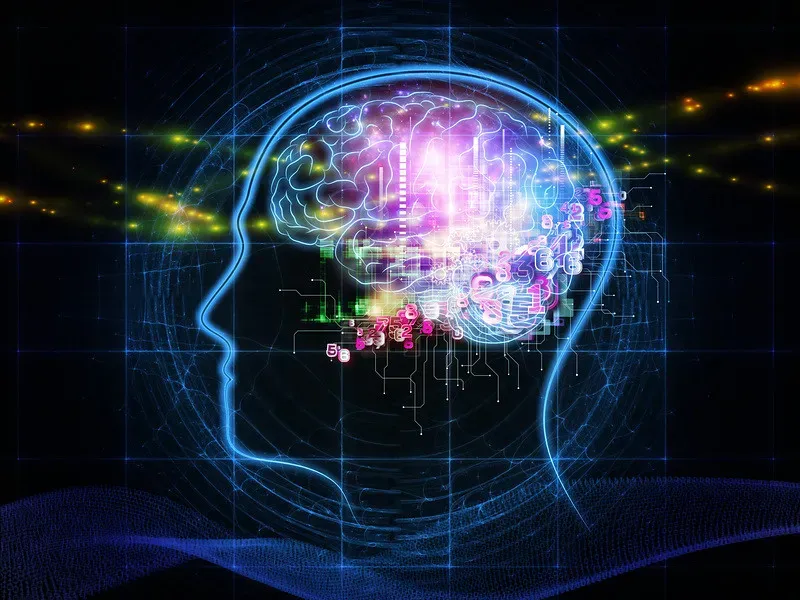
The standard story in modern science insists that the brain produces consciousness the way the liver produces bile. At first glance that sounds clean and rational, especially if you are used to thinking in strictly material terms. But when you dig in, that analogy starts to wobble. No matter how detailed our maps of neurons become, the data always describes structure and function, not the felt spark of awareness itself.
It is like having a complete user manual for a smartphone that describes the chips, the screen, the battery, and the software, but never explains why there is a subjective experience of color, sound, and touch when you use it. The generator model tends to brush this under the rug, assuming that if we keep adding detail, the mystery will eventually evaporate. So far, that has not happened. If anything, our improved understanding of the brain has made the emergence of consciousness look even more puzzling, not less.
The “Receiver” Model: Brains As Antennas For Awareness

In the receiver model, the brain is not a factory that produces consciousness; it is more like a tuner that shapes, filters, and localizes a wider field of awareness. On this view, consciousness is more fundamental, like a background field, and brains are intricate biological devices that pick up and organize that field into a personal experience of “I am.” This sounds abstract, but you already understand it intuitively if you have ever switched between radio stations or streaming profiles and felt how the same device can show very different worlds.
Under this model, damage to the brain changes how the signal is received, just like breaking a radio affects the sound without destroying the existence of broadcast waves. This does not prove that awareness survives death or floats free of matter, but it opens that door as at least logically possible rather than automatically ridiculous. It also fits the everyday observation that your conscious state can be radically altered – by sleep, anesthesia, psychedelics, or injury – as if someone is fiddling with dials on a receiver rather than turning existence on and off.
Clues From Near-Death Experiences And Anesthesia Oddities

Some of the most provocative hints for a receiver-like view come from edge cases where brain function should be minimal or absent, yet people report vivid, structured experiences. Near-death experiences are an obvious example: individuals whose brains appear severely compromised sometimes later describe detailed perceptions, coherent thoughts, and a strong sense of continued identity. These reports are controversial and not airtight evidence, but they raise questions that a simple “brain off, consciousness off” model struggles to neatly erase.
Even in operating rooms, anesthesiologists occasionally encounter strange mismatches between the depth of anesthesia and a patient’s later recollection of events or sensations. Together with unusual cases of brain damage where large portions of tissue are missing yet basic awareness and personality persist, these phenomena can be interpreted as cracks in the purely generative model. None of this conclusively shows that the brain receives consciousness from “outside,” but it does keep the door open for theories that treat the brain as a sophisticated interface rather than the sole origin point.
Physics, Fields, And The Temptation Of A “Conscious Universe”
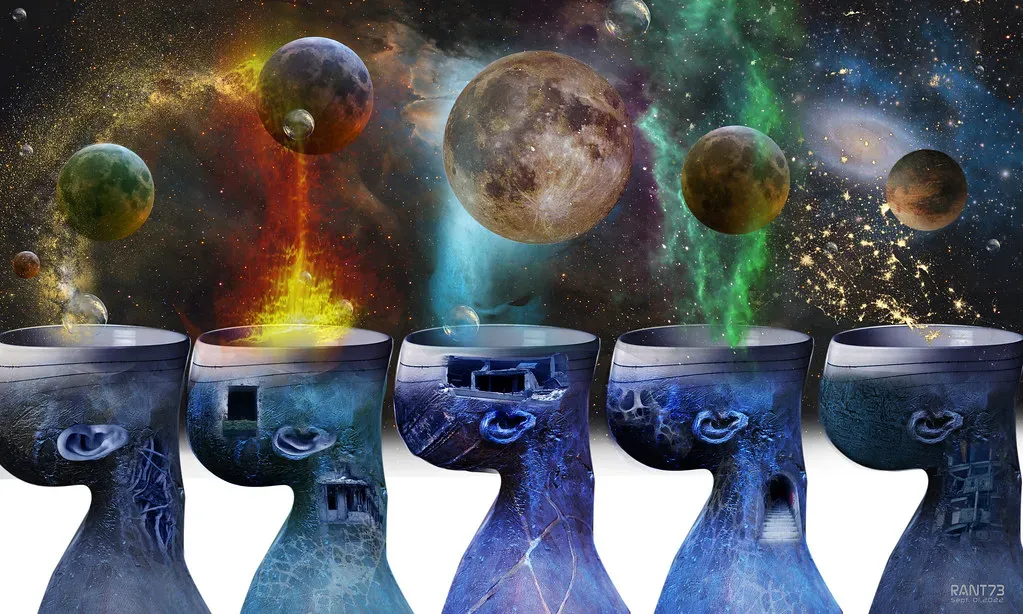
Modern physics is already comfortable with invisible fields that permeate everything – electromagnetic fields, quantum fields, gravitational fields. Your smartphone, Wi‑Fi router, and GPS only work because we take these unseen layers of reality seriously. This has led some thinkers to wonder if consciousness might be another kind of field, not in a crude “thoughts are beams” sense, but as a basic property woven into the fabric of the universe, just as mass and charge are.
There is a family of ideas, sometimes grouped under “panpsychism,” that suggest some rudimentary form of awareness could be present wherever there is matter or information. In that picture, a brain’s job is to concentrate, organize, and reflect that underlying mental aspect into the rich inner life we know intimately. Crucially, this is not about proving that rocks have opinions; it is about recognizing that our usual split between “dead matter” and “live mind” might be more of a mental habit than an accurate map of reality.
How This Changes Who You Think You Are

If your brain is receiving, not creating, consciousness, then your deepest sense of “I” might not be as small and fragile as it seems. Instead of a brief spark tossed up by random biology and snuffed out just as randomly, you might be more like a focused point where a broader field of awareness is temporarily looking out through your eyes. That can be a strangely comforting idea, especially when facing anxiety about death, isolation, or meaninglessness.
At the same time, it can be a little destabilizing. You are used to thinking of yourself as a separate, sealed-off entity, a kind of mental island. The receiver model nudges you toward seeing yourself as a wave on a much larger ocean of awareness. Your individual memories, preferences, and quirks still matter – they are the shape of the wave – but they might not be the full story of what you essentially are. Whether you find that liberating or unnerving often depends on the day and what you are going through.
Everyday Life Under The Receiver Lens

All of this might sound abstract, but it actually changes how ordinary moments feel. When you are stuck in traffic, arguing with someone online, or scrolling late at night, you can pause and ask: what if this stream of thoughts and feelings is not something I am forcing into existence, but something I am meeting and shaping as it passes through? That slight shift can soften the sense of being trapped inside your own head and make experience feel a bit more spacious.
Personally, I find this lens helpful in the same way it helps to remember that a cloudy day does not mean the sun has disappeared; it just means the view is currently obscured. When your mood crashes or your mind spirals, you can hold the idea that awareness itself – the sheer fact that anything is showing up at all – might be more stable and larger than the particular storm moving through it. You still deal with the storm, but you do not confuse it with the entire sky.
Where Science Stands Now (And Why Humility Matters)
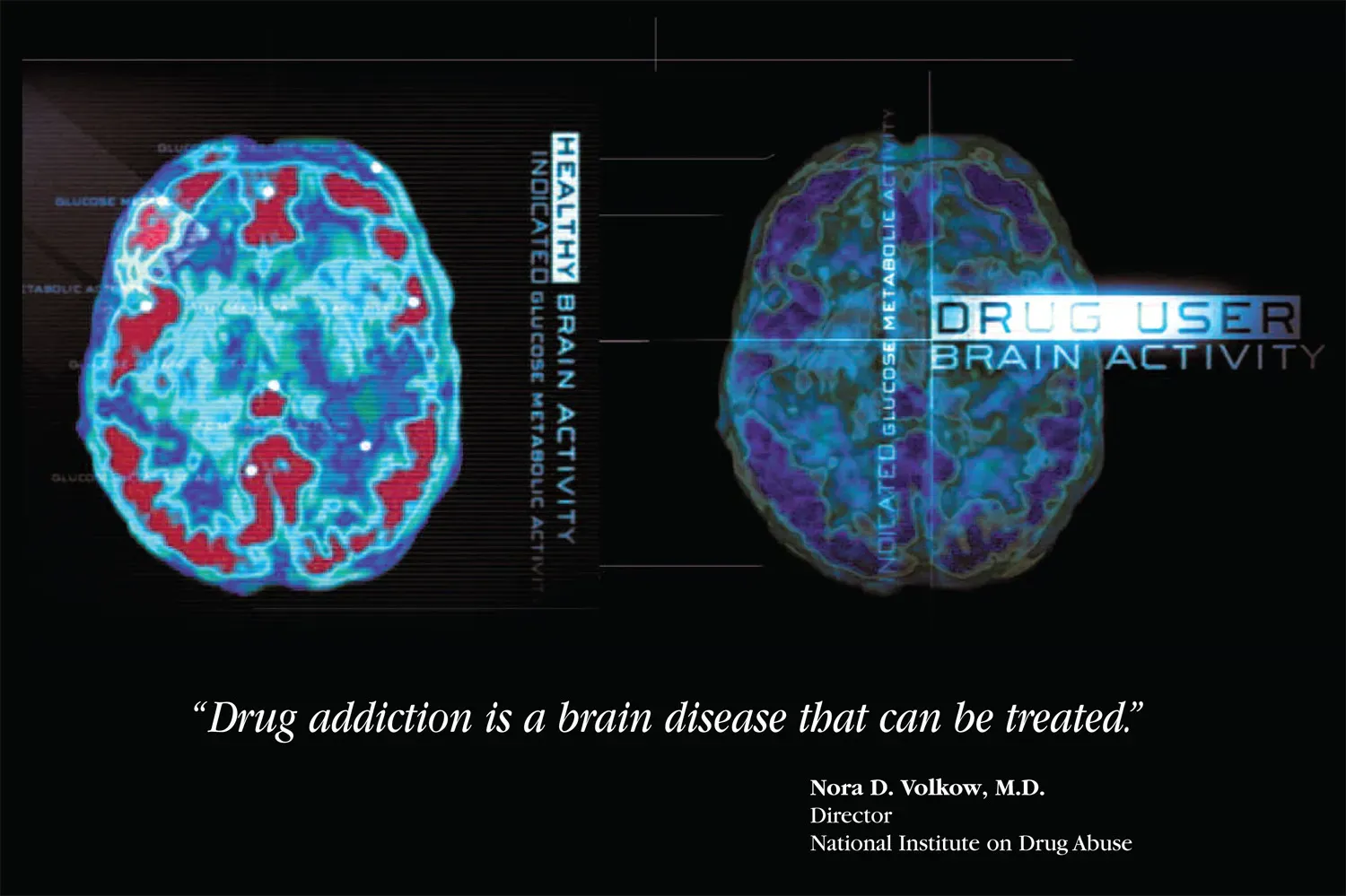
It is important to be honest: the receiver model of consciousness is not mainstream settled science. It is more of a serious speculation, a live option on the table as researchers admit that the traditional “brain as generator” story has deep, unresolved gaps. Current neuroscience remains incredibly valuable; it maps correlations between brain activity and experience with increasing precision. What it has not done yet is turn those correlations into an airtight explanation of why there is any inner experience at all.
That means we are in a phase where humility is not just nice, it is necessary. We have powerful data, clever experiments, and sophisticated theories, but no definitive answer. So the most honest stance is to treat the receiver idea as a plausible contender rather than a proven fact. It is a framework that can guide new experiments and fresh thinking, especially at the edges – near-death states, altered consciousness, and unusual neurological cases – without requiring anyone to abandon science or surrender to wishful thinking.
Conclusion: Why The Receiver Idea Is Worth Taking Seriously

If I had to take a stand, I would say this: treating the brain as a possible receiver of consciousness is not only intellectually legitimate, it is psychologically and ethically useful. It challenges the flat, purely mechanical picture that often leaves people feeling like accidental biological machines, and replaces it with a story that leaves room for depth without discarding rigor. At the same time, it resists the temptation to declare victory and claim we have solved the mystery; it keeps us honest about how much we still do not understand.
Thinking this way nudges you to see your life as a particular tuning of something larger, rather than a lonely spark sealed in a skull. That does not magically answer whether consciousness survives death or prove that the universe is secretly spiritual, but it encourages a kind of grounded awe – a sense that simply being aware at all is stranger and more precious than we usually admit. Maybe the real question is not just whether your brain receives consciousness, but what you choose to do with the rare chance to experience reality through this particular channel. Given that possibility, how differently might you live today?