Every few years, a bold headline declares that science is on the verge of explaining consciousness once and for all. Then, quietly, the excitement fades, and the mystery remains. We get sharper brain scans, cleverer experiments, and better AI models, yet the core question still stares back at us: why does any of this activity feel like something from the inside? You can map every neuron in my brain, but how does that ever add up to the taste of coffee, the sting of embarrassment, or the soft ache of nostalgia?
I still remember the first time I read a serious neuroscience paper and thought, a bit deflated: this is brilliant, but it’s all description, no “why it feels like this.” That gap between what the brain does and what experience is like is exactly where the so‑called hard problem of consciousness lives. And the more we learn about the brain, the more stubborn that gap seems to become. Let’s walk straight into that tension and look at why, in 2026, the hard problem simply refuses to pack its bags and go home.
What Exactly Is the “Hard Problem” Supposed to Be?
The phrase “hard problem of consciousness” points to a very specific puzzle: explaining why and how physical processes in the brain give rise to subjective experience. You can explain how you move your arm, how your pupils contract, how your brain integrates information from your eyes and ears. Those are sometimes called the “easy problems” – not because they’re simple, but because, in principle, we know what a solution would look like: a detailed physical and functional account. The hard problem cuts deeper and asks: why does all that activity feel like something from the inside, rather than just being a complicated, unconscious machine?
Think of a robot that can describe colors and objects perfectly, detect danger, and navigate cities better than any human. We could, in theory, explain every circuit and algorithm it uses. But that still leaves an eerie question: is there any “inner movie” there, any actual feeling of red or fear or joy? With humans, we assume there is, because each of us is directly aware of our own inner life. The hard problem is that leap from third‑person description to first‑person experience. It is like having a complete instruction manual for a piano, down to every string and hammer, but still having no idea why certain chords feel heartbreaking and others feel triumphant.
Why Neuroscience Keeps Hitting a Conceptual Wall
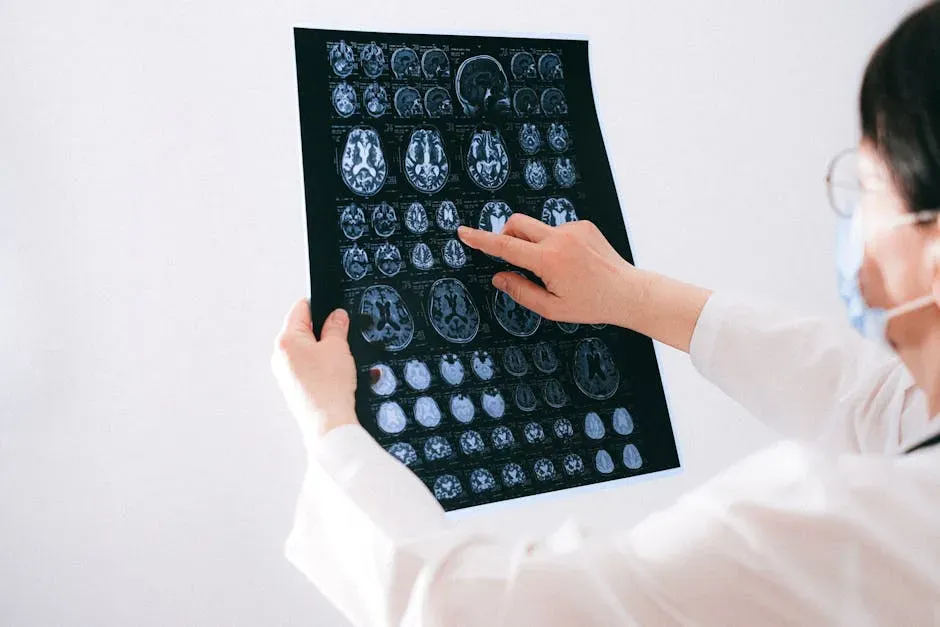
Modern neuroscience is staggeringly powerful at linking brain activity to mental states. We can see which networks light up when you recognize a face, make a decision, or feel pain. We can alter brain chemistry and watch mood or perception change. These discoveries absolutely matter, and dismissing them would be ridiculous. But if you’re looking for an explanation of why there is anything it is like to be in those brain states, you keep finding that the data only describe correlations: state X in the brain tends to go with experience Y.
This is the conceptual wall: even a perfect correlation between neural pattern and experience does not explain why that pattern is accompanied by experience at all. Knowing that certain oscillations accompany visual awareness is like knowing that a particular radio frequency carries your favorite song. You still have not explained why any sound feels rich or moving to a listener. Neuroscience is giving us an ever clearer, high‑resolution map of the territory, but the question of why the territory has a “view from within” does not obviously fall out of the data. Many researchers quietly admit this, even while they focus (very productively) on the parts they can measure and manipulate.
Are We Just Asking the Question in the Wrong Way?
Some scientists and philosophers argue that the hard problem is not deep but confused. On this view, we have tricked ourselves with language. They suggest that once we fully understand the functions of attention, memory, self‑representation, and reportability, the urge to ask about some extra “inner glow” of consciousness will fade. In other words, the hard problem is like wondering where the “vital spark” of life is; once biology explained metabolism, reproduction, and heredity, the old mystery dissolved rather than being solved in the way people first imagined.
But the analogy only goes so far. With consciousness, the thing we are trying to explain is not an abstract property like “vitality,” it is the raw feel of being. You do not infer your consciousness from data; you are immediately aware of it. Saying the question is malformed can feel, to many people, like standing in front of a blazing fire and being told that heat is an illusion. Even if some aspects of the traditional way of posing the hard problem are muddled, the stubborn fact remains: there is a difference between a process happening and that process being experienced from the inside. Waving this away as a “bad question” often feels less like progress and more like avoidance.
Why Explaining Functions Is Not the Same as Explaining Feelings
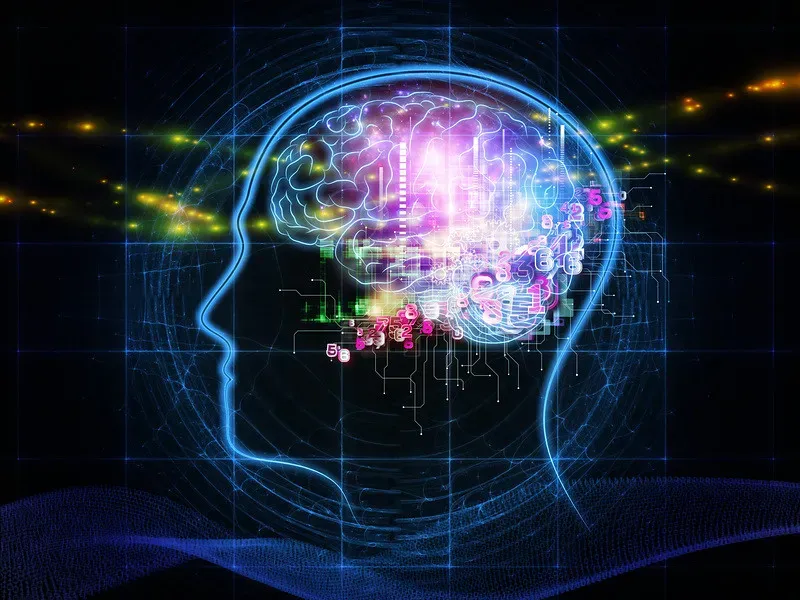
One reason the hard problem hangs on is that there is a gap between function and feeling that no amount of clever theorizing has fully closed. You can build a system that categorizes colors, recognizes faces, avoids danger, even talks about its internal states. That system might behave exactly as a conscious being would. Yet you can still ask: does it actually feel anything? This is sometimes framed using thought experiments about philosophical zombies – beings physically and functionally identical to us but lacking subjective experience. Whether such zombies are metaphysically possible is hotly debated, but the thought experiment crystallizes the intuition that you can, in principle, copy what a mind does without being sure you have captured what it is like.
From a purely functional perspective, once you have explained everything a system can say and do, what is left to explain? That is the pushback from many scientists. But from the inside, it feels like everything important has been left out if you do not talk about the quality of experience itself. Imagine explaining romance entirely in terms of hormone levels and messaging behavior. You would capture real mechanisms, but you would not have captured the way heartbreak can feel like a physical weight on the chest. The hard problem persists because many people feel that moving from mechanisms to feelings involves a conceptual leap that is not yet accounted for by functional stories alone.
AI, Large Language Models, and the New Urgency of the Question
The rise of advanced AI systems, including large language models and multimodal models, has poured gasoline on the consciousness debate. We now have systems that can hold conversations, describe emotions, and even reflect on their “own” limitations in ways that sound uncannily human. Some people instinctively feel that such systems are just elaborate parrots, rearranging symbols with no inner life. Others suspect that at some point, if behavior is rich and flexible enough, drawing a hard line and saying there is definitely “nobody home” might be more superstition than science.
This technological shift makes the hard problem more than just a philosophical hobby. If we ever approach systems that plausibly suffer or feel, questions about moral status become impossible to dodge. But again, all our current tools for evaluating AI are third‑person: we look at outputs, benchmarks, failure modes, internal representations. None of that tells us in a straightforward way whether there is any subjective experience. In a sense, AI is mirroring the human case: we can describe structures and functions in great detail, but the bridge to felt experience remains shrouded. The hard problem refuses to go away partly because we are building more and more entities that force us to confront it.
Panpsychism and the Temptation to Put Consciousness Everywhere

One radical response to the hard problem is to say that consciousness is not something that magically appears when matter gets complex enough, but a fundamental feature of the world. This family of views, often called panpsychism, suggests that even very simple systems have extremely simple forms of experience, and human consciousness is what you get when those basic ingredients are organized in particular ways. On this picture, the hard problem is softened: you no longer need to explain how experience arises from the utterly non‑experiential; you only need to explain how simple forms of experience combine and evolve into richer ones.
This move is intellectually tempting because it sidesteps the blunt clash between mind and matter, but it also raises its own problems. If everything has some degree of experience, what exactly does it mean for an electron or a rock to “feel” something? And how do tiny, scattered micro‑experiences combine into the unified, structured stream of consciousness you are having right now? That combination issue is sometimes called the “combination problem,” and it is arguably just as gnarly as the hard problem it aims to ease. Still, the fact that panpsychism is getting serious attention again shows how far some thinkers are willing to go rather than declare the hard problem solved by standard physical stories.
Maybe the Brain Is Doing Something We Don’t Know How to Describe Yet
Another possibility is less philosophically dramatic but equally humbling: perhaps the brain is implementing kinds of processes that our current scientific concepts do not properly capture. Just as people once tried to explain electricity with metaphors of fluids and spirits, we might be trying to jam consciousness into categories – like computation, representation, or information processing – that do not quite fit the phenomenon. On this view, the hard problem persists because we are missing a key piece of theoretical vocabulary, not because the world is fundamentally inexplicable.
I tend to find this possibility oddly comforting. It suggests that consciousness might someday be understood in a way that feels as natural as germ theory feels to us now, even if earlier thinkers found disease utterly mysterious. But comfort is not evidence, and right now we simply do not have that missing conceptual tool. We have promising frameworks that tie consciousness to information integration, global broadcasting in the brain, recurrent processing, or predictive modeling. Those help with many of the “easy” problems, and they might eventually reshape the hard one. For now, though, we are still very much in the awkward teenage years of consciousness science.
Why the Hard Problem Might Be a Feature, Not a Bug
There is a provocative idea worth taking seriously: maybe the hard problem is not an obstacle to be crushed, but a kind of compass that keeps us honest about what we are and are not explaining. When we ask why experience exists at all, we are pressing against the edges of what our current physical theories are built to handle. The discomfort is a signal that our worldview is being stretched. In that sense, the persistence of the hard problem could be a sign that we are doing something right by refusing to gloss over the gap between third‑person description and first‑person reality.
Personally, I think the refusal of the hard problem to go away is healthy. It prevents us from mistaking better correlations for deeper understanding. It keeps room open for genuine surprise, for the possibility that our descendants might look back on our current theories the way we look back on alchemy. At the same time, romanticizing the mystery can become an excuse to ignore real progress. The trick is to let the hard problem motivate careful work rather than paralyze it – to treat it as an open question that orients our research, not as a brick wall that blocks every path forward.
Conclusion: Living with a Mystery That Looks Back
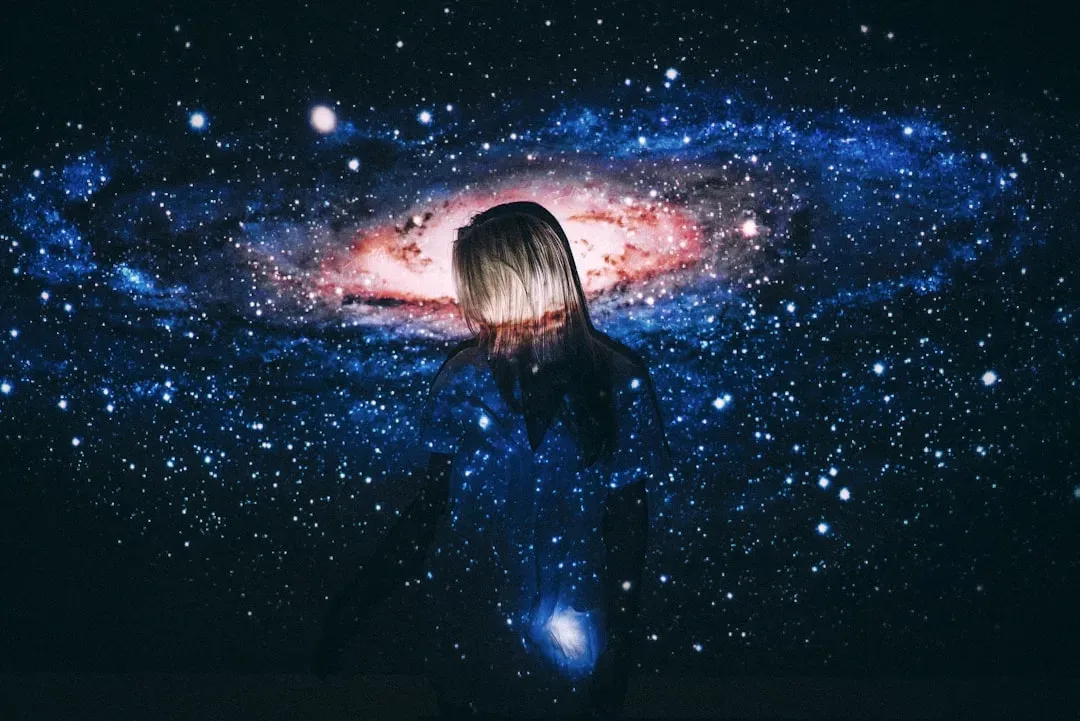
If you were hoping for a neat answer, consciousness is a frustrating topic. We can chart neural networks, simulate intelligence, and even argue that the traditional formulation of the hard problem is misguided. Yet the simple fact remains that your own awareness, the sheer presence of your experience right now, resists being flattened into diagrams and equations. In my view, any honest account of the mind in 2026 has to admit that the hard problem is alive and well, not because people have failed to read the right paper, but because our best tools are still shaped for explaining behavior, not being.
That is not a pessimistic conclusion, though it might feel unsettling. Living with the hard problem is a bit like living with an unanswered question at the center of your own life – a puzzle that you are also made of. Maybe the real mistake is thinking that all good questions must eventually disappear. Some questions keep us awake, creative, and humble. For now, consciousness is one of those. The mystery is not just out there in the universe; it is looking out through your own eyes. What could be more worth taking seriously than that?