
You probably grew up with the quiet assumption that aging is just how life works: you are born, you grow, you peak, and then you slowly fall apart. Yet when you look closer at the living world, that story starts to crack. Some creatures barely seem to age at all, some can regrow entire body parts, and others downright cheat death in ways that sound like science fiction.
Right now, scientists are not just trying to slow aging a little bit; they are asking whether you could radically extend healthy life, or even flirt with something close to biological immortality. At the same time, your body sticks stubbornly to the old script, accumulating damage year after year. Understanding why that happens – and why other organisms escape it – is the key to seeing what might actually be possible for you.
The Strange Creatures That Refuse To Grow Old
If you think aging is universal, you have not met the so‑called immortal jellyfish, Turritopsis dohrnii. Under stress, this tiny creature can rewind its life cycle, turning its adult body back into a youthful, simpler form, essentially starting over instead of dying. You also see astonishing longevity in animals like certain rockfish that can live well over a century, or Greenland sharks that may cruise through the oceans for close to three centuries with surprisingly low signs of age-related decline.
Then there are species like naked mole-rats that barely show the usual rise in cancer or heart disease risk as they get older, even though they can live far longer than other rodents. When you zoom out, you start noticing a pattern: evolution has already built multiple ways to slow, sidestep, or radically reshape aging. You are not dealing with a law of physics that cannot be broken; you are looking at a biological habit that can, under the right conditions, be rewritten.
Why Your Cells Carry an “Expiration Date”

To understand why you age while some creatures resist it, you have to go down to the level of your cells. Most of your cells are programmed to divide only a limited number of times, a phenomenon called cellular senescence. Each time a cell divides, the protective caps on the ends of your chromosomes – telomeres – get a little shorter, like the plastic tips fraying on a shoelace, until the cell eventually stops dividing or self-destructs.
This limitation is not just bad luck; it is a trade-off that evolved to reduce the risk of runaway cell growth and cancer. By keeping tight control over how often cells can copy themselves, your body lowers the chance that a dangerous mutation turns into a tumor. The downside is that over the decades, more and more of your cells become old, damaged, or stuck in a senescent state, and tissues lose their ability to repair and renew themselves. Aging, in that sense, is the long-term price you pay for short-term cancer protection.
Damage, Entropy, and the Slow Internal Collapse

Even if you could make your cells divide forever, you would still run into another brutal fact: everything breaks down over time. Inside you, molecules bump into each other, energy reactions release by-products, and DNA suffers hits from radiation, chemicals, and simple copying errors. Your body has a stunning set of repair tools, but they are not perfect, and over many years, damage slowly builds up in ways you cannot fully reverse.
You see this in misfolded proteins that clump together in neurons, in bits of broken DNA that never get fixed quite right, and in mitochondria – the tiny power plants in your cells – gradually losing efficiency. Think of your body as a city that never shuts down; potholes appear, pipes corrode, and buildings wear out. Maintenance teams patch what they can, but there is always some hidden damage left behind. Aging is that backlog of unrepaired wear, accumulating quietly until it becomes impossible to ignore.
The Allure and Limits of Telomere Lengthening

Because telomeres shorten as you age, it is tempting to imagine that you could just lengthen them and solve aging in one clean move. Your body already uses an enzyme called telomerase in certain cells – like stem cells and reproductive cells – to keep their telomeres long and their division potential high. Researchers have experimented with boosting telomerase in animals, and in some cases, have seen improvements in tissue health and lifespan.
But there is a catch you cannot ignore: the same telomerase that preserves youth in your cells can also help cancer cells become virtually unstoppable. Cancer cells often hijack telomerase so they can divide without limit. That means any strategy where you simply crank up telomerase everywhere in your body risks trading one problem – aging – for another – aggressive tumors. As appealing as the idea sounds, telomere lengthening is more like adjusting a delicate slider than flipping a magic immortality switch.
Senolytics: Clearing Out Your “Zombie” Cells
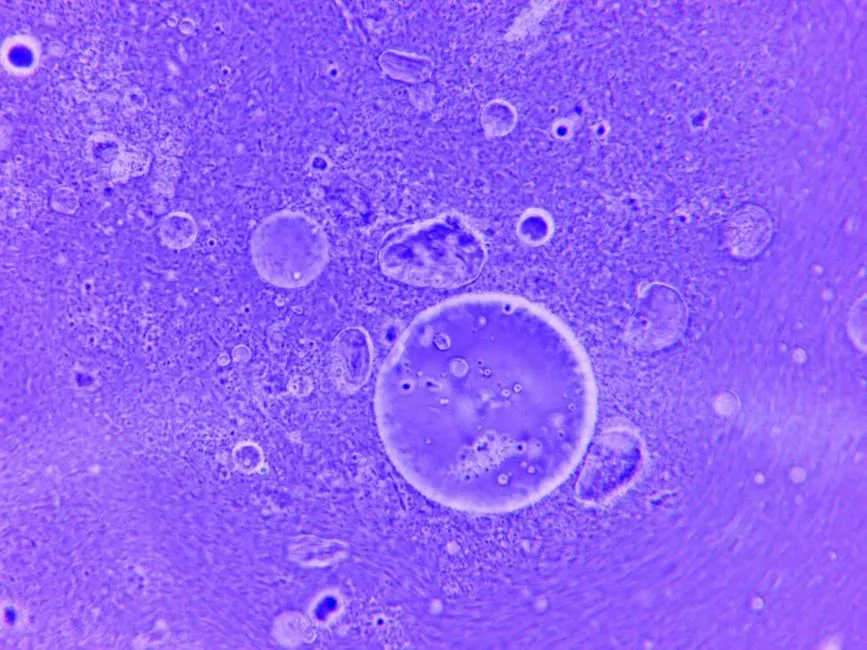
As you age, more of your cells drift into a strange limbo where they stop dividing but do not die. These senescent cells secrete inflammatory signals and harmful molecules, irritating nearby healthy cells and contributing to conditions like arthritis, cardiovascular disease, and perhaps even neurodegeneration. You can think of them as cellular squatters that refuse to leave and slowly turn the neighborhood toxic.
Senolytic drugs are an emerging class of treatments designed to hunt down and remove these old troublemakers. In animal studies, clearing senescent cells has led to healthier tissues, better physical function, and in some cases longer lifespans. For you, that suggests a future where part of staying youthful might involve regularly sweeping your body clean of zombie cells. It is not immortality, but it is a concrete, mechanistic way to tackle one piece of the aging puzzle.
Reprogramming Cells Back Toward Youth

One of the most radical ideas in modern biology is that you can partially rewind the age of cells without erasing their identity entirely. In the lab, scientists can already take mature cells, like skin cells, and reprogram them into induced pluripotent stem cells that behave more like embryonic ones. During this process, many marks of cellular aging – like certain chemical tags on DNA and patterns of gene activity – are reset to a younger state.
The big challenge is doing something like this inside your body without turning your tissues into a chaotic mass of stem cells or triggering tumors. Some experiments in animals show that brief, carefully controlled pulses of reprogramming factors can rejuvenate cells and improve organ function without completely wiping their identity. If that approach can be made safe for humans, you might one day have treatments that roll back your cellular clock inside your own tissues, almost like gently polishing scratches off a well-used surface.
Why Evolution Never Optimized You for Immortality

At this point, you might wonder why evolution did not simply favor organisms that live forever, or at least for vastly longer than you do. The answer lies in how natural selection works: it mainly cares about how many offspring you leave behind, not how comfortable you are at ninety. Once you have passed your peak reproductive years, the evolutionary pressure to maintain your body drops sharply, and harmful changes that affect you late in life can quietly accumulate in your genes.
There is also a trade-off between investing energy in long-term maintenance and investing in early growth and reproduction. Species that live in dangerous, unstable environments tend to benefit from growing fast and reproducing quickly rather than building bodies that last centuries. You, as a human, are already unusually long-lived compared with many mammals, thanks to traits like extended childhood, complex social structures, and intelligence. But evolution never had a strong reason to push you all the way to immortality; that is a dream your culture and technology are only now trying to chase.
What You Can Actually Do Now To Slow Your Aging

With all the futuristic science swirling around, it is easy to overlook the uncomfortable truth: the strongest, most reliable levers you have over your aging today are boring and familiar. Regular physical activity, a diet rich in whole, minimally processed foods, good sleep, and strong social connections all measurably slow the onset of many age-related diseases. These habits lower chronic inflammation, protect your cardiovascular system, and support the resilience of your brain and muscles.
On top of that, you are seeing early but promising evidence for targeted interventions like certain drugs that mimic aspects of calorie restriction, or compounds that support metabolic health. None of these make you biologically immortal, but together they can compress the period of frailty at the end of life, giving you more years of high function. The reality is that while the cutting-edge research is racing ahead, your everyday choices still set the baseline for how you personally experience aging.
The Future: Radical Life Extension or Just Better Endings?

Looking ahead, you are standing at an odd crossroads. On one side, realistic skeptics argue that there are hard biological limits to human lifespan, shaped by deep evolutionary trade-offs and accumulating damage that can never be fully erased. On the other side, more optimistic researchers believe that by combining multiple approaches – senolytics, reprogramming, gene therapies, advanced regenerative medicine – you might not just add a few years, but fundamentally shift what it means to grow old.
What is most likely in the coming decades is not a single breakthrough that makes you immortal, but a stack of incremental advances that together delay major diseases, extend healthspan, and possibly push maximum human lifespan upward. You may not end up living for three hundred years like a Greenland shark, but you could see a world where reaching ninety or a hundred in good shape becomes much more common. In that sense, the real revolution may be less about never dying, and more about staying deeply alive for far longer.
In the end, the search for biological immortality forces you to confront a paradox: you are built from the same kind of matter as so-called immortal jellyfish and ageless worms, yet your story includes wrinkles, aches, and eventual decline. Science is slowly learning how to bend that story, but not completely rewrite it – at least not yet. As you watch this field unfold, you have to decide what kind of longer life you would actually want, not just how many years you could theoretically add. When you imagine your own future, do you find yourself wishing for endless time, or for a finite life that is simply lived more fully and vividly?