
There is a quiet question most people carry but rarely say out loud: what actually happens to our senses in those final moments of life? Not in a dramatic movie-scene way, but in the real, biological, messy, strangely tender way that science is slowly uncovering. For a long time, families at the bedside have been told to keep talking to their loved one “because hearing is the last sense to go” – but is that actually true, or just something we say to feel better?
In the last decade, researchers have started looking seriously at the dying brain, using EEG recordings, ICU monitoring, and studies with hospice patients to see which senses flicker out first and which stubbornly hang on. The answers are more nuanced, more humbling, and honestly more comforting than the old myths. Hearing does seem to linger in surprising ways, but it doesn’t exist in isolation; it’s intimately tied to awareness, touch, pain, and the strange twilight state between consciousness and death. Let’s walk through what we really know – and what we still do not – about how our senses fade when life comes to an end.
The Fading Symphony: Do Our Senses All Switch Off at Once?
One of the biggest misconceptions about death is that it’s like flipping a master power switch: one second you are fully present, the next you are simply gone. Biologically, it’s nothing like that. Death is more like a slow, uneven dimming across a city during a blackout, with some neighborhoods going dark while others still glow for a while. Circulation, oxygen delivery, and brain function all deteriorate at different speeds, and each sense depends on a delicate chain of organs, nerves, and brain regions that do not all fail at the same time.
Vision usually falters early, not because the eyes themselves instantly stop working, but because the brain’s visual processing is highly oxygen-hungry and very sensitive to drops in blood flow. Smell and taste, which are already dulled in many people near the end due to medications, illness, and dry mouth, tend to fade without much notice. Touch and hearing, especially low-frequency sound and gentle physical contact, appear to be more resilient, often hanging on as other senses go quiet. The overall picture is not a clean, ordered shutdown, but a messy, overlapping process where the brain selectively keeps processing whatever it still can.
Why Hearing Is Considered the Last Sense to Go
So where does that persistent line come from – that hearing is the last sense to fade? It turns out, this is not just sentimental hospice lore. Studies using EEG recordings in unresponsive, actively dying patients have shown that the brain can still respond to sounds, including familiar voices and patterns, even when the person looks completely unconscious. Researchers have observed brain activity that resembles what you’d see in healthy volunteers who are listening attentively, suggesting that auditory pathways are among the last to fully shut down.
From an evolutionary standpoint, this actually makes some sense. Hearing is a distance sense that can warn us of danger or signal safety even when we cannot see or move. The basic wiring for detecting sound and orienting to it runs deep in the brainstem and midbrain, areas that are relatively more robust than the fragile, oxygen-hungry cortex. That doesn’t mean the dying person is having a full, vivid experience of every word, but it does suggest that spoken voices and sounds can still register in some meaningful way when other senses and higher cognitive functions are already fading.
Brain Waves at the Bedside: What EEG Studies Reveal
One of the most striking developments in recent years has been bedside research with EEG – a cap of electrodes placed on the scalp to record electrical patterns from the brain. In hospice and ICU settings, scientists have played sequences of sounds, like tones or repeated names, to patients who were believed to be unresponsive and very close to death. In many of these patients, the EEG still showed organized brain responses to these sounds, even when the person could not move, speak, or open their eyes. It is as if the brain is still listening from beneath the surface.
Importantly, these responses are not just random noise; they can show patterns of discrimination, where the brain reacts differently to a familiar voice or an unexpected sound pattern. That suggests something beyond a simple reflex. At the same time, we have to be careful not to romanticize it. An EEG spike does not guarantee a rich internal experience or a clear sense of “I am hearing my daughter speak.” It may be more like a fading echo in a large, mostly darkened room. Still, the fact that any organized activity remains in response to sound that late in the dying process is a powerful hint that hearing really may be the last functional sense for many people.
Consciousness vs. Raw Sensation: Are They Aware They Are Hearing You?

This is where the science bumps straight into the emotional core of the question: if hearing is the last sense to fade, does that mean the dying person actually knows you are there and understands what you say? The honest answer is: not necessarily, and certainly not in a simple, all-or-nothing way. Raw sensory processing – the brain reacting to a sound, a touch, a light – can persist even when the networks that produce self-aware, reflective consciousness have already broken down. In other words, the brain may still be “taking in” sounds without the person being fully aware in the way you and I are right now.
Researchers who study disorders of consciousness, like coma and vegetative states, see a similar divide. Some patients show complex brain responses to speech or music and later report fragments of awareness, while others do not remember anything despite similar EEG patterns. The dying brain is even more unstable, with blood pressure swings, irregular breathing, and surges or drops in electrical activity. That means we should be open to the possibility that some people hear and emotionally register more than they can show, while also accepting that for others it may be a more primitive, dim, or purely automatic process. Both possibilities can be true across different individuals and diseases.
The Role of Touch, Pain, and Comfort at the End
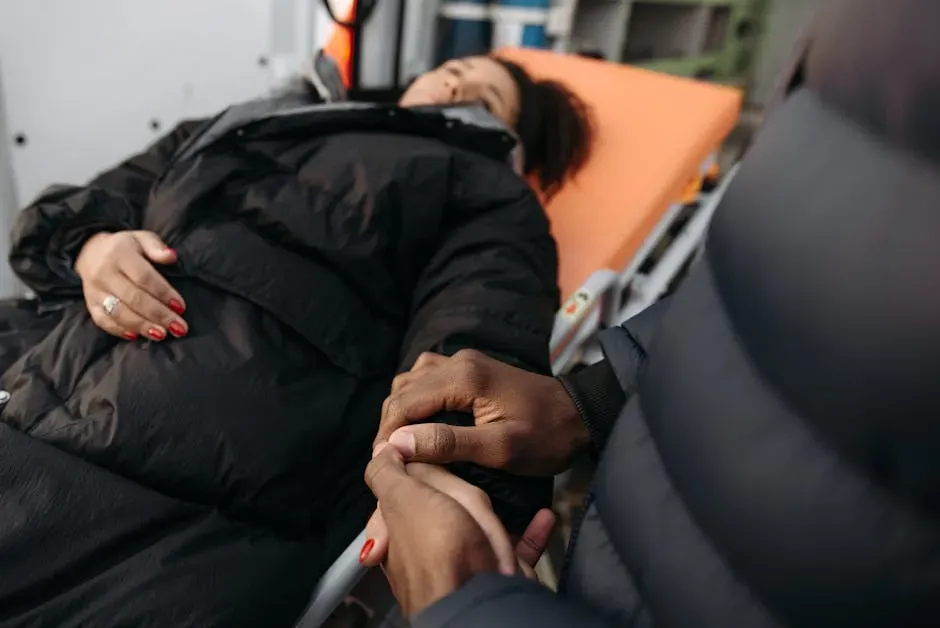
Hearing tends to get all the attention in these conversations, but touch plays a huge role in the final days and hours. Light stroking of the hand, a firm but gentle squeeze, or a cool cloth on the forehead often seems to soothe even patients who cannot respond verbally. The nerve fibers that carry information about pressure and warmth, especially the slower “emotional touch” fibers in the skin, project into deep brain regions involved in comfort, attachment, and calm. Those circuits can sometimes keep working even when higher reasoning and memory are slipping away.
Pain is the darker side of this sensory story. Many people worry that losing consciousness means losing their ability to signal distress while still feeling pain. That is exactly why palliative care teams focus so heavily on symptom control before and during the active dying phase. Opioids, sedatives, and other medications are carefully titrated to reduce pain and air hunger without hastening death. The goal is to stay ahead of suffering so that, even if some sensory processing continues, what remains is more likely to be gentle touch and reassuring sound rather than uncontrolled discomfort. In that way, touch and hearing become tools not just for connection, but for shaping what the last sensations might actually feel like.
What Families Do at the Bedside – And Why It Still Matters

If hearing really is among the last senses to fade, it changes how we think about those final hours when a loved one seems to be “already gone.” Many families instinctively keep talking: sharing memories, apologizing, saying thank you, or simply narrating what is happening in the room. Clinicians often encourage this, not as empty comfort, but because there is real, if imperfect, scientific support for sound still reaching the brain. I’ve sat with people who later said they regretted not speaking more openly at the end, and that alone is a good reason to err on the side of saying the things you need to say.
You do not have to craft a perfect speech. In fact, the most powerful bedside moments are often messy and ordinary: humming a song you used to sing together, describing a favorite vacation, or just repeating that you are there and that they are not alone. Even if their conscious mind is mostly gone, your voice becomes part of the sensory landscape of their final experience, like a familiar scent in a childhood room. When you combine that with gentle touch, a calm environment, and good symptom control, you are not just a witness to their dying; you are an active shaper of how that death feels.
Smell and taste tend to quietly recede as breathing slows and the mouth dries. Food usually stops being appealing, then even water may no longer be safe or comfortable to swallow. Smell, which is tightly tied to breathing and airflow through the nose, likely dwindles in parallel with the weakening respiratory pattern. By the time someone is near death, they are typically not experiencing flavors or scents in the way they once did, even if trace signals still reach the brain. These senses simply do not play a large visible role in the last hours in the way that sound and touch clearly do.
Vision is a bit more dramatic. People may keep their eyes closed, stare unfocused, or report seeing shapes or loved ones who have died, especially earlier in the process. As circulation worsens, the retina and visual cortex suffer quickly, leading to dimming, blurring, and finally darkness. That is one reason the room’s visuals matter less than its sounds and sensations. You might carefully arrange photos or objects in the space for your own comfort, but for the dying person, it is far more likely that what still matters is the tone of your voice, the rhythm of your breathing, and the feeling of your hand wrapped around theirs.
So Is Hearing Really the Last Sense to Fade? A Careful Conclusion
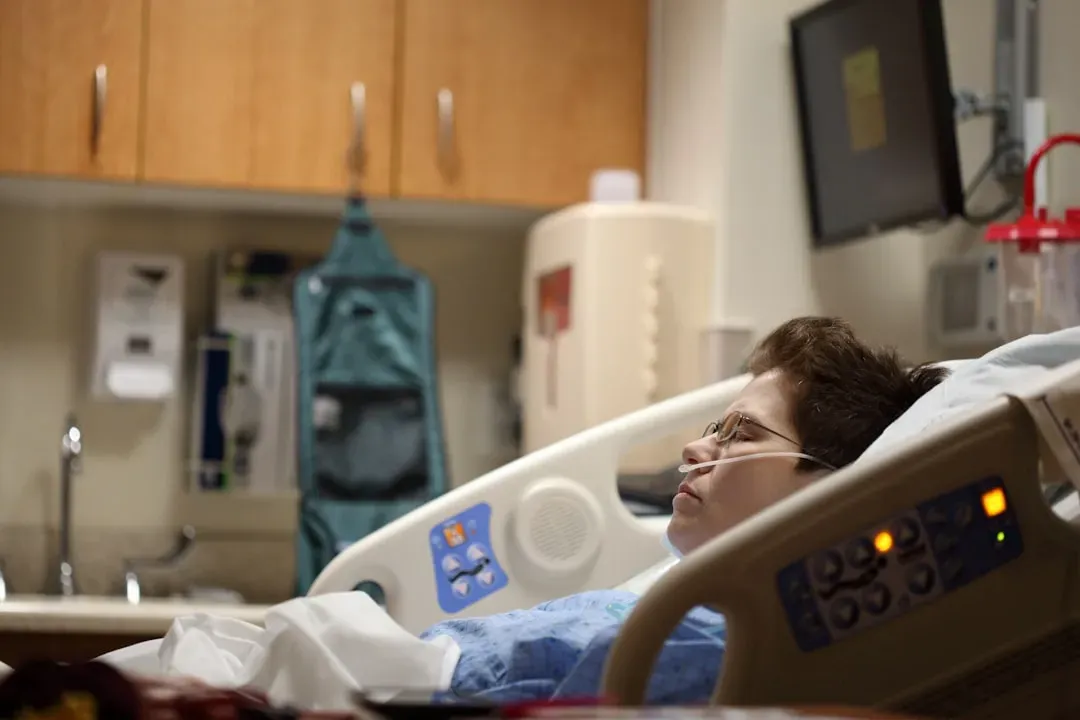
Putting all of this together, the fairest answer is that hearing appears to be one of the last senses to fade in many people, and may often be the most meaningful surviving channel of connection, but it is not a universal, guaranteed rule carved in stone. Different diseases, medications, and complications can shift the order in which senses fail. A brain ravaged by a massive stroke or severe trauma may lose hearing early, while someone dying slowly of organ failure might retain some auditory processing almost to the end. Science gives us strong clues, not certainties, and we should resist tidy slogans that pretend otherwise.
Personally, I think it is more honest and more humane to say this: there is good evidence that the dying brain often continues to respond to familiar voices and sounds even after a person seems unresponsive, and we should act as if they can still hear us, because the cost of that kindness is low and the potential meaning is enormous. Talk, sing, whisper apologies or gratitude, and hold their hand as if it all still matters – because it probably does, and because you will live with those choices long after their senses have gone quiet. In the end, the last sense to fade might not just be hearing; it might be our human sense of being connected to one another, right up to the edge. Did you expect it to be that way?