

Think back to the last time you stood under a truly dark night sky. Maybe you were out in the countryside, or on a beach miles from the city, when suddenly the Milky Way appeared as a hazy river of light overhead. For a moment, your to‑do list, your notifications, even your sense of “me” seemed to melt into the background. Time stretched, your chest loosened, and the only thing that felt real was that vast, glittering dome above you.
Neuroscience is finally catching up to that feeling. Researchers are discovering that when we experience profound awe, especially in response to grand natural scenes like a star-filled sky, key brain networks involved in self-focus and internal chatter actually quiet down. It is as if the brain turns down the volume on the “me channel” to make room for something larger. This article explores how that works, why awe feels the way it does, and what it might mean for our mental health, creativity, and sense of meaning in a world that rarely slows down.
Awe Under the Stars: What Your Brain Is Really Doing
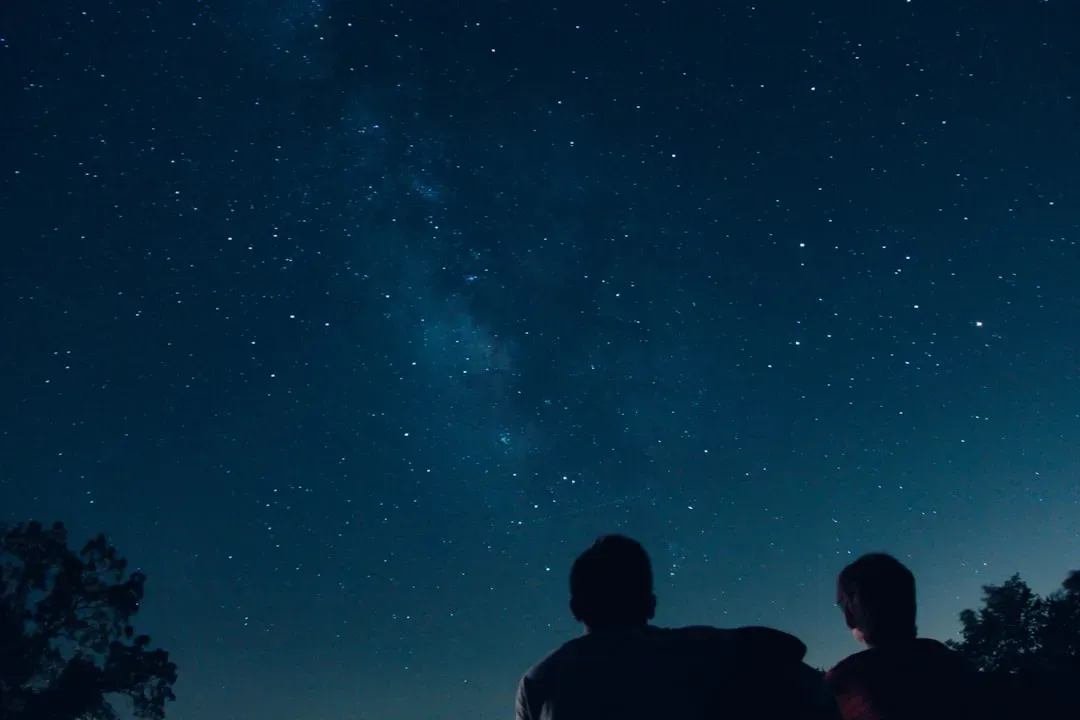
When people report feeling intense awe while staring at the night sky, brain imaging studies suggest that certain regions tied to self-focused thinking and mental time travel become less active. These regions are part of what neuroscientists call the default mode network, a set of areas that light up when your mind is wandering, ruminating, or replaying your life story. In awe, especially in the presence of something vast and mysterious, that network seems to dial back its activity for a while, like a radio being gently turned down so you can hear a different station.
At the same time, areas involved in visual processing, attention, and emotional salience can become more engaged. You are not just looking at stars; your brain is reorienting to the outside world in a more open, receptive way. People often describe this as feeling “small but connected,” or as if the boundary between themselves and the world has softened. From the outside, you might just look like someone quietly stargazing. Inside, your neural priorities have shifted: less self-story, more raw experience.
The Default Mode Network: Your Brain’s “Me, Myself, and I” System

The default mode network, often abbreviated DMN, is like the brain’s background narrator. It includes regions in the medial prefrontal cortex, posterior cingulate cortex, and parts of the parietal lobes, among others. When you are not focused on an external task, this network tends to hum along, supporting daydreaming, reflecting on the past, imagining the future, and thinking about yourself and other people. It is essential for having a coherent sense of identity and continuity over time.
The flip side is that an overactive or inflexible default mode network has been linked to patterns of rumination, anxiety, and depression. Many of us know the feeling of being trapped in our own heads, cycling through worries or regrets. Awe, especially in wild, expansive settings like the night sky, appears to temporarily interrupt this loop. Neuroscientifically, that “wow” moment is less about discovering something mystical and more about the brain easing off its usual self-referential script, letting other networks take the lead for a change.
Why Vastness and Mystery Shut Up Your Inner Monologue
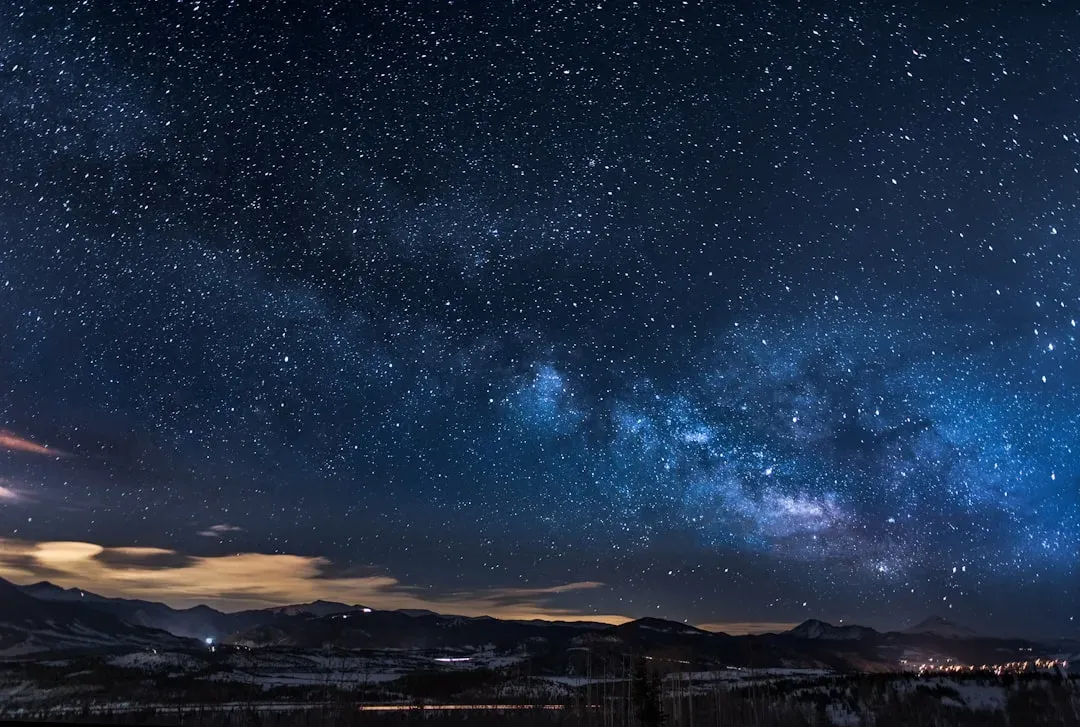
Awe researchers often talk about two ingredients: perceived vastness and the need to adjust your mental frameworks. The night sky scores high on both. It is physically and conceptually vast: billions of stars, unimaginable distances, and timescales that make human lifespans look microscopic. When your brain confronts something that big and strange, your usual mental models for understanding the world feel too small, and that can nudge the self-referencing network into the background while your mind updates its map of reality.
In practical terms, this can feel like your inner monologue briefly stalling out. You stop rehearsing conversations or replaying that awkward email. Instead, you are pulled outward, absorbing detail: the smudge of a galaxy, the faint color differences between stars, the slow movement of a satellite gliding overhead. The brain’s attention and sensory networks are recruited to deal with this overwhelming input, and the default mode network steps aside. It is not gone, just temporarily quieted, the way a dominant voice in a group conversation might fall silent when something truly astonishing happens.
The Emotional Blueprint of Awe: Small Self, Big World
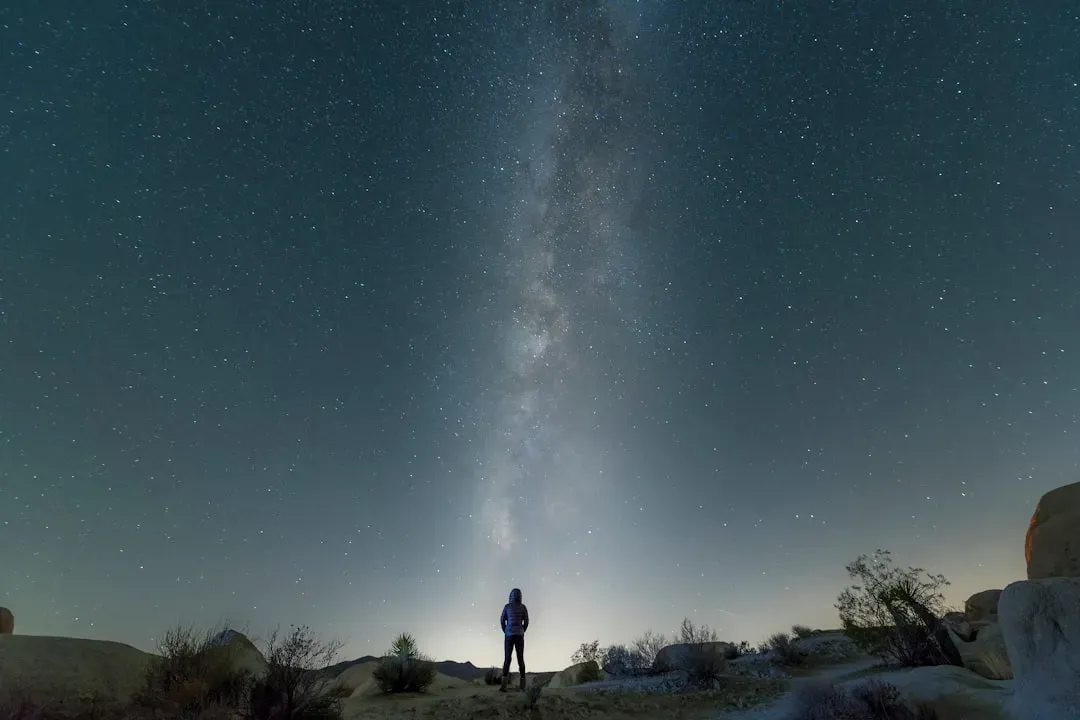
One of the most striking psychological effects of awe is the “small self” feeling. People often report that under a starry sky they feel tiny, but not in a humiliating way – more like being a single note in a huge symphony. Neuroscientifically, this matches the idea that when self-referential processing is toned down, the emotional center of gravity shifts away from “How does this affect me?” toward “What does this mean in the grand scheme of things?” That shift can be both humbling and relieving, especially if you usually live in your head.
Interestingly, feeling small in this context often comes with increased connectedness and prosocial feelings, not despair. Studies on awe have found that after awe experiences, people are more likely to help others, feel part of a larger whole, and value community and cooperation more strongly. So when the brain de-emphasizes self-focus, it is not just subtracting; it is adding a broader, more relational sense of self. The night sky becomes more than a backdrop – it turns into a kind of emotional reset button, reminding you that you are part of something that stretches far beyond your own biography.
Awe as a Natural Antidote to Rumination and Stress
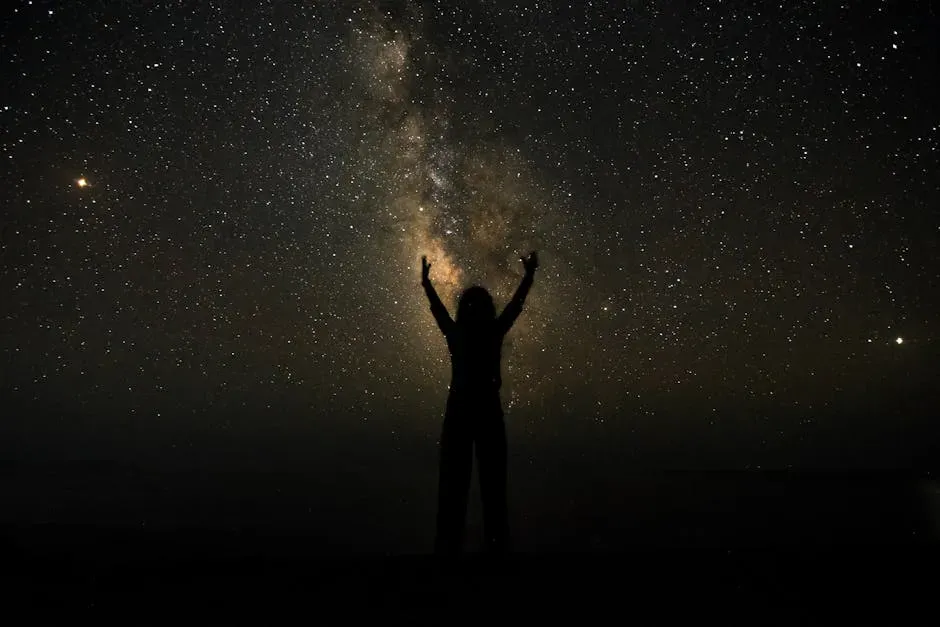
From a mental health perspective, the temporary suppression of the self-referencing network during awe might be a feature, not a bug. Many stress-related symptoms revolve around getting stuck in repetitive, self-focused loops: What if I fail, what did I do wrong, why am I like this. When the brain’s default mode network is overactive, those loops can feel like mental quicksand. Awe seems to briefly interrupt that pattern, offering a cognitive and emotional timeout in which your problems shrink in perceived size compared to the sheer scale of the universe.
This does not mean that looking at the night sky is a cure for clinical conditions, and it would be irresponsible to suggest that it is. But there is growing interest in using awe – through nature, art, music, or even immersive media – as a complementary way to ease stress and broaden perspective. Think of an awe experience as a mental palate cleanser. For a short while, your brain diverts resources away from internal self-narration toward spacious, external awareness. When you come back to your everyday life, the issues are still there, but you might relate to them with just a little more distance and a little less panic.
How Culture, Personality, and Tech Shape Awe Under the Night Sky
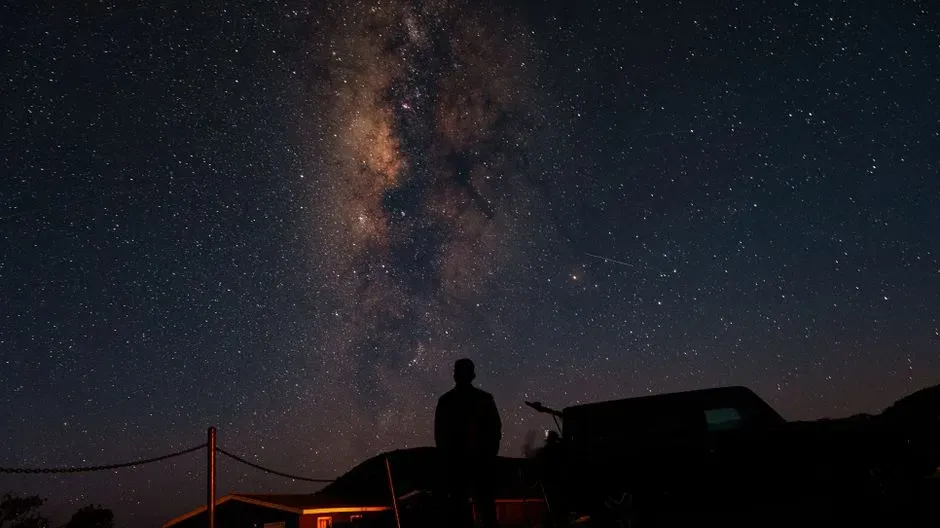
Not everyone feels the same level of awe under the stars, and neuroscience is starting to explore why. Personality traits like openness to experience, baseline anxiety, and spiritual orientation can shape how strongly the default mode network quiets down in response to vast stimuli. Cultural background also matters. In some traditions, the night sky is deeply woven into stories, rituals, and identity, making it a powerful trigger for awe and meaning. In other contexts, light pollution and urban life have made the sky feel almost irrelevant, like a forgotten ceiling above the city’s neon glow.
Technology adds another twist. On the one hand, apps and telescopes can guide you to planets, galaxies, and meteor showers you would never find on your own, deepening the sense of vastness and discovery. On the other hand, constant notifications and the habit of reaching for your phone the moment boredom appears can keep your self-focused networks online, even while your eyes are technically pointed at the stars. I have caught myself doing this – checking messages in between gazes up at the sky – and it is honestly a little tragic. The more we treat the night sky like just another backdrop for content, the harder it becomes for awe to do its quiet, neurological work.
Practical Ways to Invite More Awe (and Less Self-Chatter)
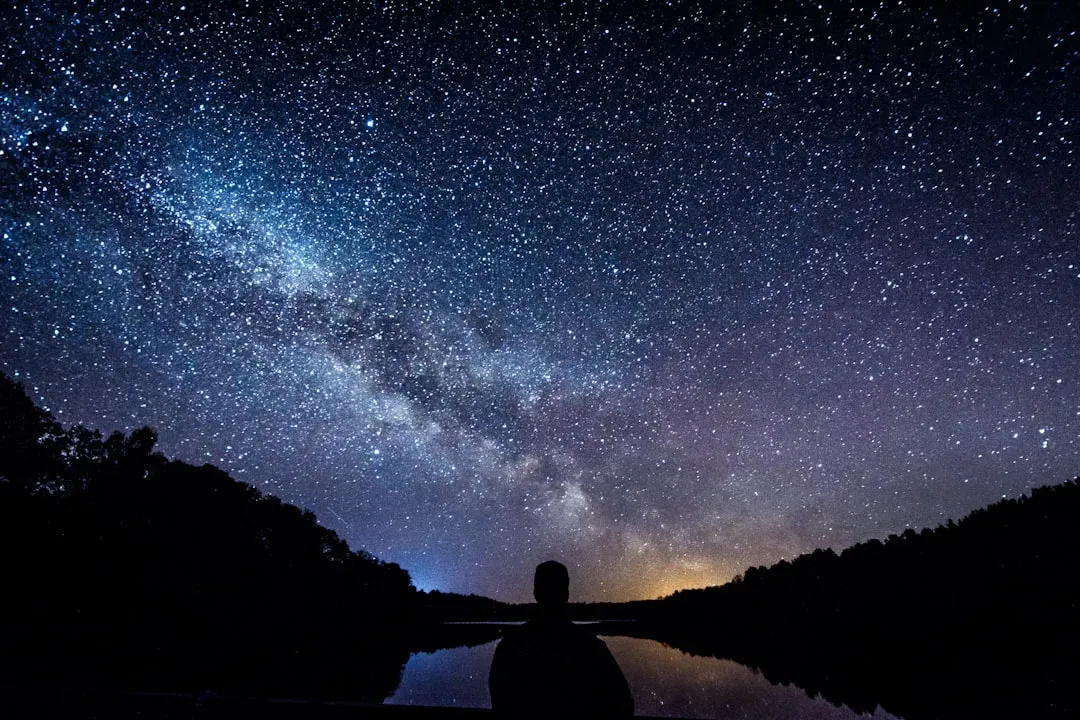
The good news is that you do not need a PhD or a perfect mountain observatory to tap into this neural shift; you just need intentionality and a bit of darkness. One simple strategy is what you might call “scheduled awe.” Pick a night with clear weather, get as far from city lights as is reasonably safe and practical, and give yourself at least twenty to thirty minutes of uninterrupted time just to look. Leave your phone in the car or on airplane mode. Let your eyes adjust, notice what appears, and see if you can resist the urge to label or analyze everything you see.
You can also pair awe with simple grounding practices. Focus on your breath while you stare at the sky, or feel your feet on the ground while you trace constellations with your eyes. The goal is not to force some mystical experience but to create the conditions in which your brain’s default settings can shift on their own. If you live in a light-polluted area, planetariums, dark-sky parks, and even high-quality space imagery can still evoke awe, though often in a slightly different way. The point is to give your mind something vast enough that your personal storyline can release its grip, even if only for a few precious minutes.
What This Means for Who We Think We Are

All of this raises a more philosophical question: if awe can temporarily quiet the brain’s self-referencing network, what does that say about the nature of the self? Neuroscience does not claim that awe erases who you are, but it does suggest that your sense of self is more flexible and context-dependent than it feels from the inside. Under the stars, the “I” that normally dominates your thoughts steps into the wings, and a more spacious, less tightly bounded mode of awareness takes center stage. That shift can be disorienting, but also deeply liberating.
Personally, I find this both humbling and hopeful. Humbling, because it reminds me that my inner drama is a tiny flicker in a universe that has been unfolding for billions of years. Hopeful, because it implies that our brains are wired with built-in ways to loosen the grip of that drama when it becomes too much. In a culture that constantly tells us to focus on our brand, our productivity, our individual success, awe is almost a quiet act of rebellion. It says: you are not the center of the universe – and that might be the best news you hear all week.
Opinionated Conclusion: We Need More Cosmic Perspective, Not More Self-Focus
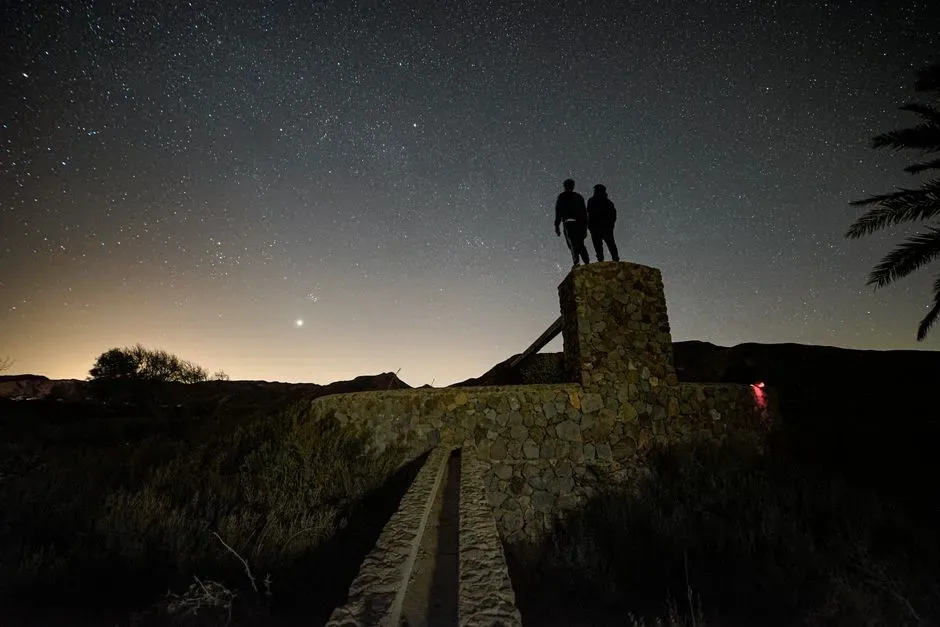
If the science is pointing in the right direction – and so far, it seems to be – then our world has the balance all wrong. We flood our brains with stimuli that crank up the self-referencing network: social media comparison, endless self-optimization advice, metrics for everything from steps to sleep to “engagement.” Then we wonder why we feel anxious, burnt out, or trapped in our own thoughts. Meanwhile, experiences that naturally hush that inner narrator, like lying under a dark sky, are treated as luxuries, vacation activities, or quirky hobbies for space nerds.
Here is my blunt take: we should treat regular awe, especially under the night sky, as mental hygiene, not a rare indulgence. You do not skip brushing your teeth until you are in crisis; you do it every day to prevent problems from building up. In the same way, deliberately seeking out moments that quiet the brain’s self-focused circuits is a way of keeping perspective, sanity, and humility intact in a hyper-individualistic era. The universe does not need us to look up – but we clearly need it. When was the last time you let the stars interrupt your story?