Every time a new sci‑fi epic drops, we see glowing skies, impossible landscapes, and worlds that feel light‑years away from anything on Earth. Yet the wildest twist is this: our own planet quietly hides places that look far stranger than most movie sets. Some of them are so extreme that space agencies literally use them to rehearse for missions to Mars and beyond.
Once you realize that you can stand on a blood‑red lake, walk through a forest made of stone, or hike across a desert of razor‑sharp salt, the line between Earth and alien starts to blur fast. The spots below are not concept art or CGI; they are real locations you could, in theory, visit. As you read, you might catch yourself thinking that if you saw these places in a film, you’d probably say they went too far.
1. Danakil Depression, Ethiopia – Walking On A Toxic Rainbow
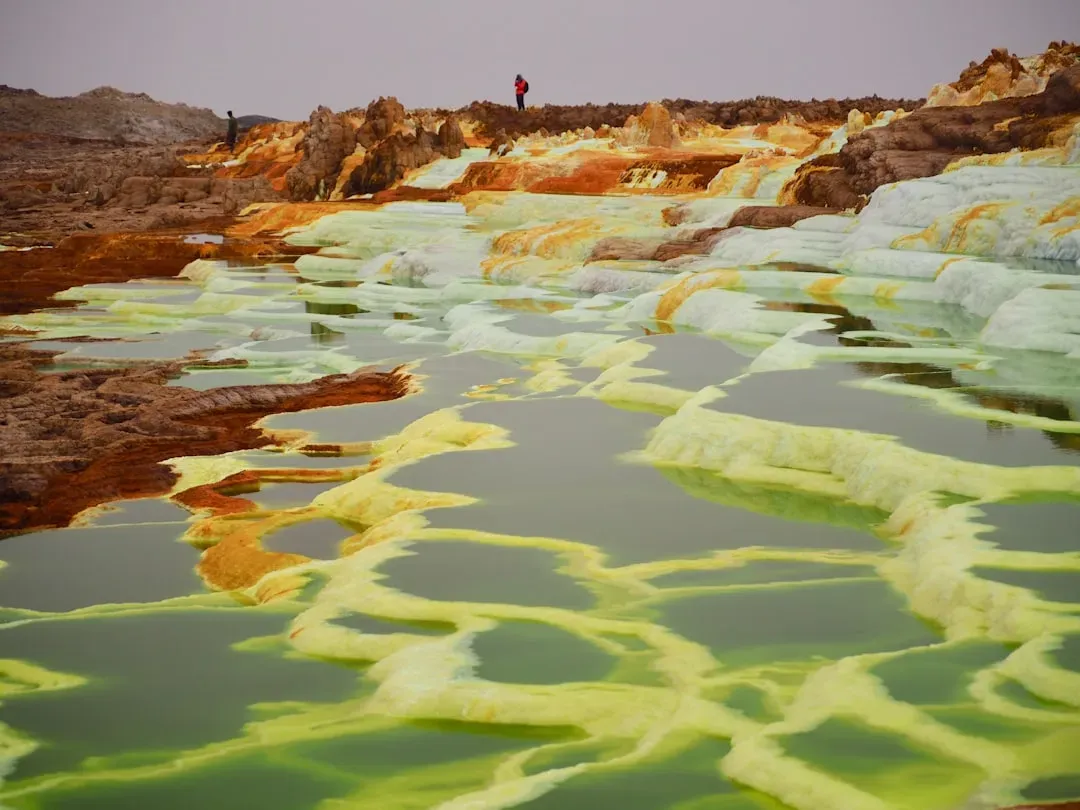
The Danakil Depression in Ethiopia is one of the hottest, driest, and most inhospitable places on Earth, and it looks the part. Picture steaming pools of neon green and yellow, crusted over with sulfur and salt, set against patches of rust‑red rock and choking fumes. It sits in a tectonic triple junction where the African and Arabian plates are literally tearing the crust apart, letting magma, mineral‑rich water, and volcanic gases leak right to the surface.
Temperatures here regularly soar past what most people would ever call survivable, and the combination of heat, acidity, and toxic gases makes long visits dangerous without serious protection. Microbiologists study the strange microbes that manage to live in these pools because they resemble the kind of life scientists hope to find on Mars or the icy moons of Jupiter. In a strange way, Danakil is both a nightmare landscape and a natural laboratory, proof that life and chemistry can get bizarre long before you ever leave Earth.
2. Salar de Uyuni, Bolivia – An Endless Mirror To The Sky
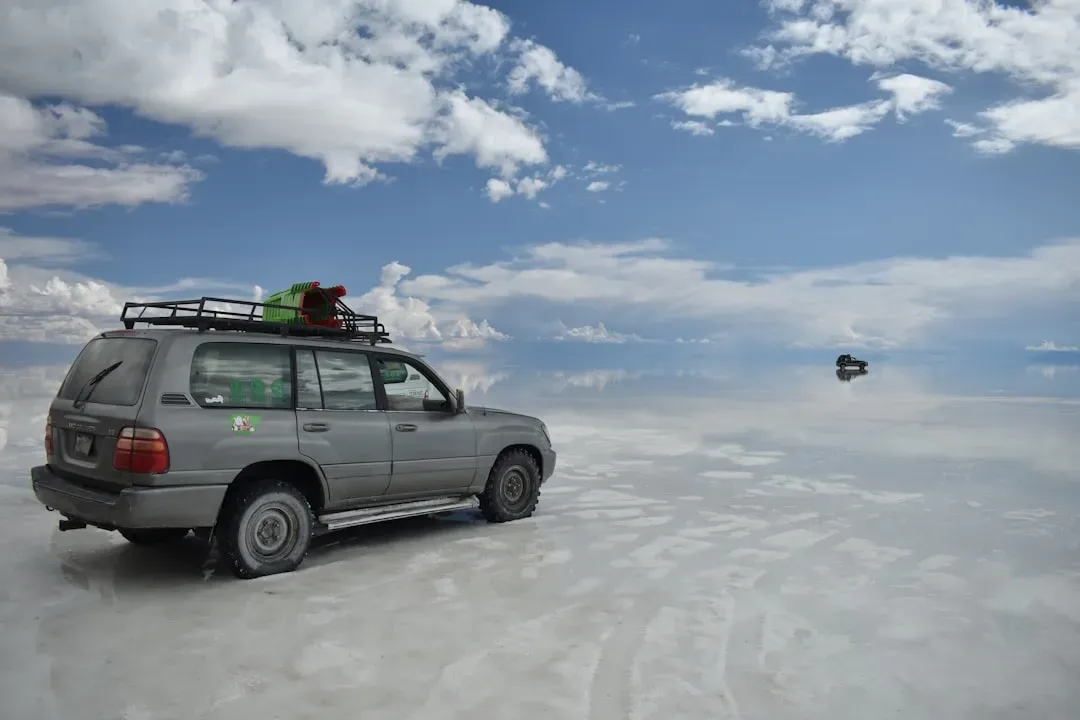
At first glance, Bolivia’s Salar de Uyuni is “just” a salt flat, but that description is like calling a galaxy “a few stars.” This vast white expanse is the dried‑out skeleton of an ancient lake, now a crust of hexagon‑shaped salt tiles stretching so far that the horizon feels broken. When a thin layer of rainwater pools on the surface, the whole place turns into a perfect mirror, erasing the boundary between ground and sky.
From certain angles, people crossing the salt look like they’re floating in empty space, walking on clouds or wandering across the surface of a giant frozen moon. The air is thin at this high altitude, which only sharpens the light and adds to the surreal feeling that you’ve stepped out of normal physics. It’s no coincidence that giant satellite systems use the Salar as a calibration target; its surface is so flat and uniform that it functions like a man‑sized, naturally occurring test grid from some distant, engineered world.
3. Socotra, Yemen – The Island That Forgot It’s On Earth
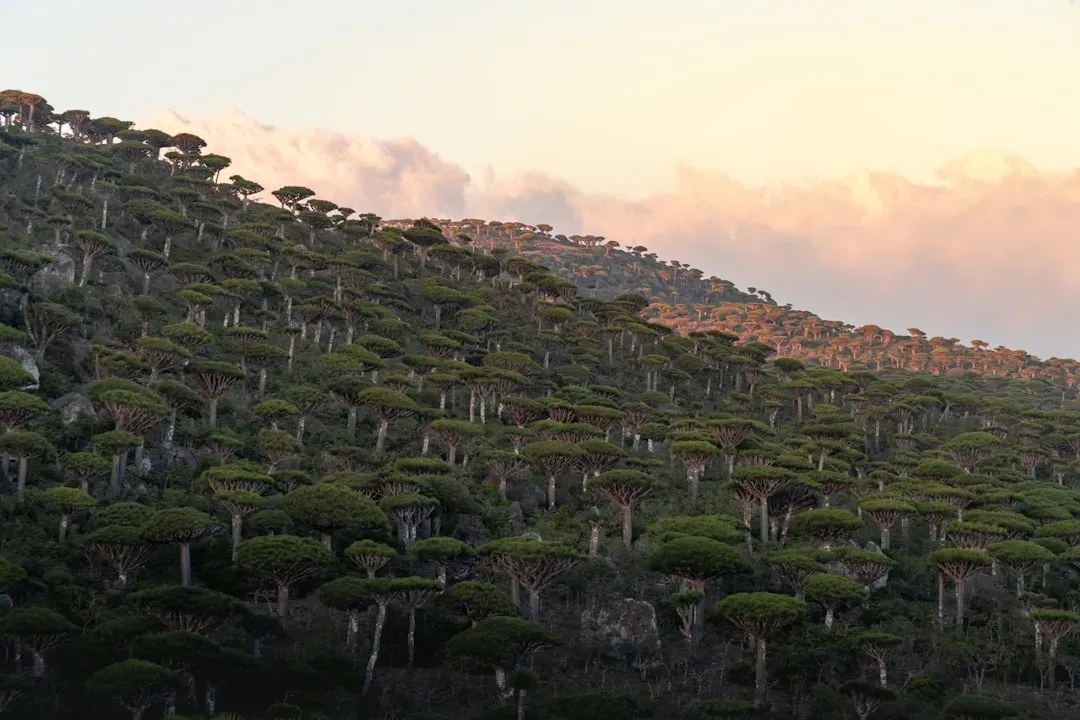
Socotra Island in the Arabian Sea has such an odd collection of plants that it genuinely feels like a misfiled alien ecosystem. The most iconic are the dragon’s blood trees, with their thick trunks and umbrella‑shaped crowns that look like something an over‑enthusiastic concept artist sketched for a high‑budget space opera. When cut, their sap oozes a deep red resin that’s been prized for centuries, adding to their eerie mythology.
Around them, you find bottle trees swollen like giant pink bottles, twisted shrubs, and endemic species that evolved in isolation due to the island’s long geological separation from nearby landmasses. Walking through Socotra’s interior, you feel more like an explorer on a terraformed exoplanet than a tourist on Earth. The fact that most people have never even heard of the place only adds to its otherworldly aura, as if it somehow slipped through the cracks of mainstream geography.
4. Lake Natron, Tanzania – The Blood‑Red, Life‑Limiting Lake
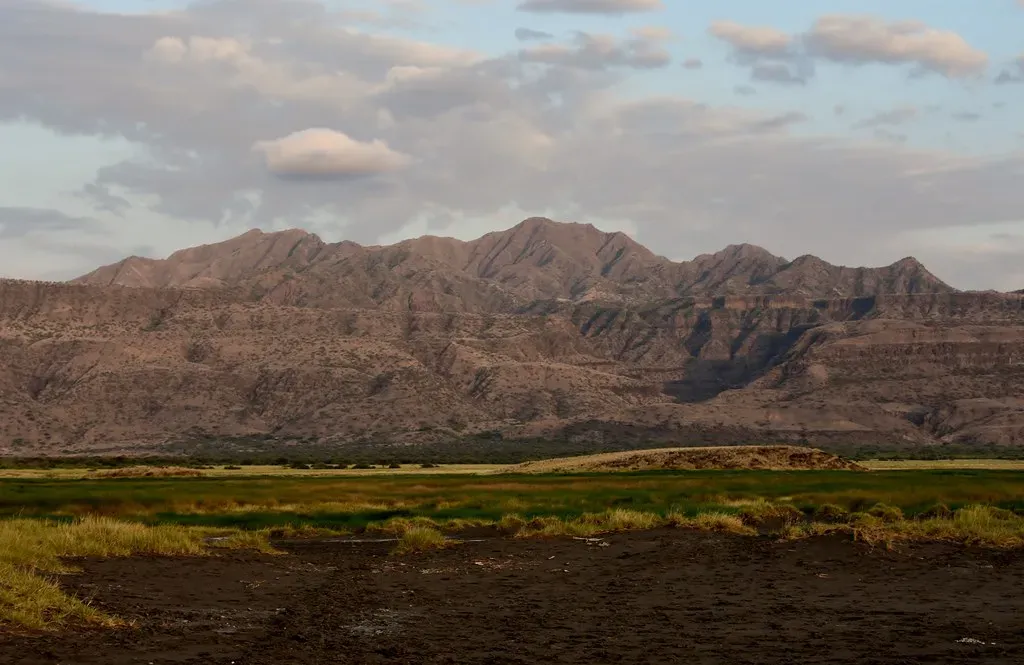
Lake Natron in northern Tanzania is the sort of place that would be dismissed as overly dramatic if it appeared in a sci‑fi movie. Its waters often glow deep red or pink, colored by salt‑loving microorganisms that thrive in the alkaline brine. The lake’s chemistry is extreme enough that it can preserve animal remains in a way that makes them appear eerily “turned to stone,” fueling morbid photos and myths.
The water can reach temperatures hot enough to burn, and the pH is so high it rivals strong cleaning products, which makes the lake fundamentally hostile to most life forms. Despite that, specialized flamingos and microbes manage to exploit its niches, turning the area into a study in biochemical stubbornness. Staring across the crimson water toward hazy volcanoes on the horizon feels more like observing a hostile alien world than visiting an East African lake you could drive to from a nearby town.
5. Zhangye Danxia Landform, China – Mountains Painted Like A Graphic Novel
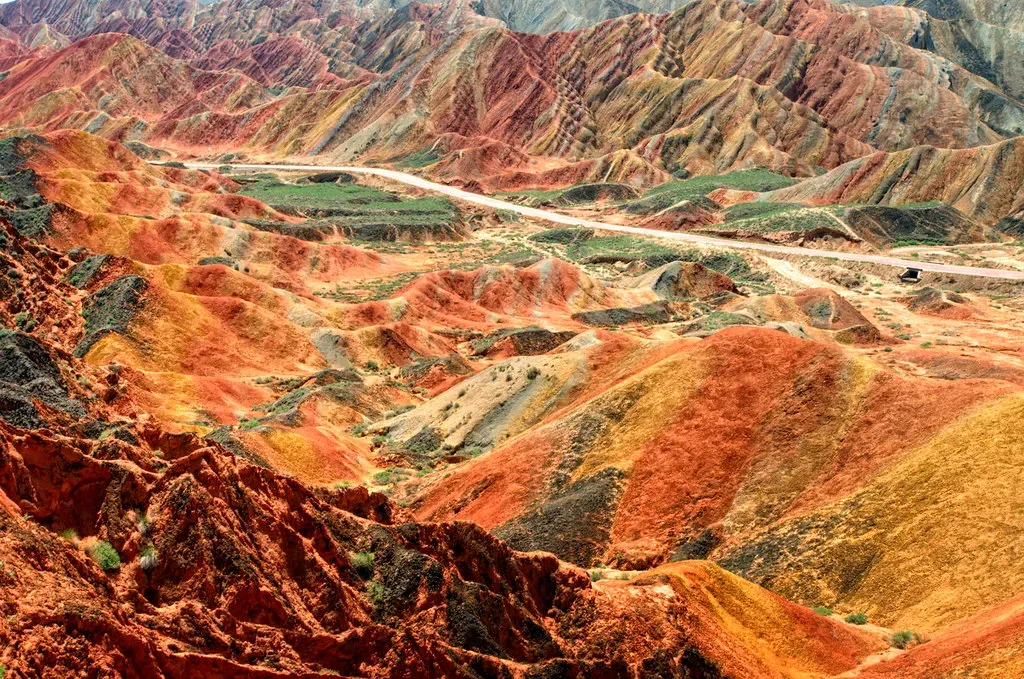
The Zhangye Danxia landforms in Gansu, China, look like someone airbrushed an entire mountain range for a fantasy comic. Layer after layer of mineral‑stained sandstone folds across the hills in bands of red, gold, bluish gray, and white, creating a striped, rippled landscape that hardly looks natural. These colors come from iron and other minerals deposited over millions of years, tilted and sculpted by tectonic forces and erosion.
When the sun is low, shadows carve even sharper lines into the colored strata, and the entire scene can resemble a glitching terrain texture from a video game. It’s easy to imagine these as mountains on a planet where the bedrock itself is artificially engineered or grown. Instead, they are simply the slow, patient result of water, wind, and plate tectonics doing their work on Earth’s crust, accidentally producing something that looks suspiciously like a movie backdrop.
6. Waitomo Glowworm Caves, New Zealand – A Galaxy On The Ceiling
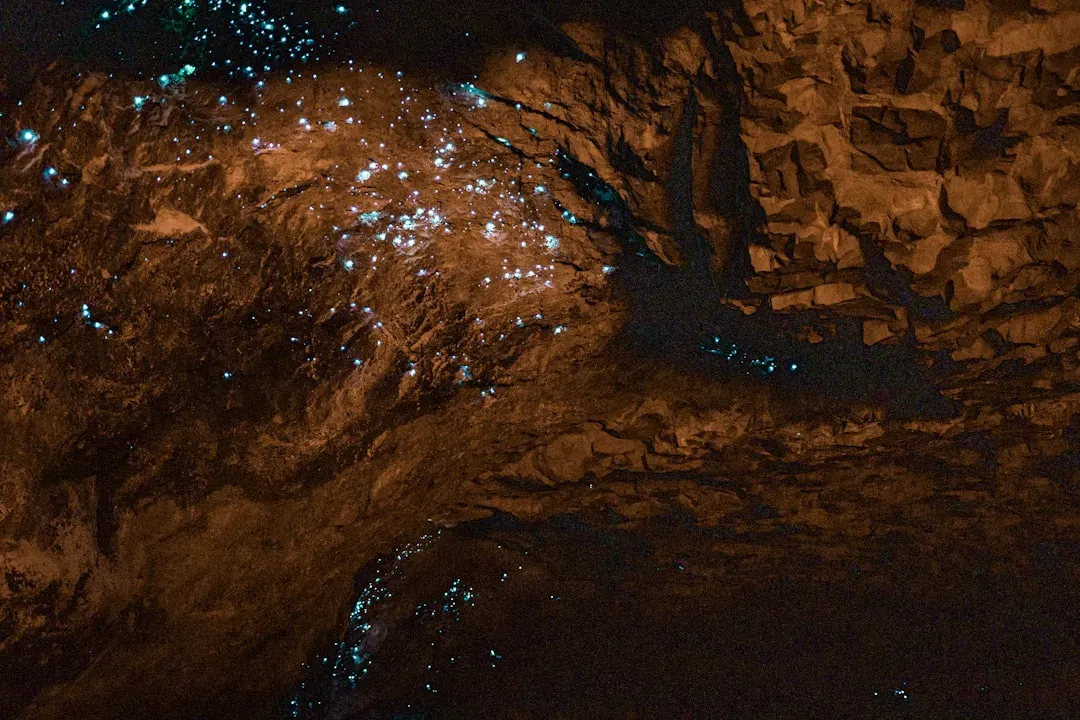
Deep below the green hills of New Zealand’s North Island, the Waitomo glowworm caves bend your sense of scale in a quiet, almost sacred way. You drift along underground rivers while thousands of tiny glowworms hang from the ceiling, each emitting a soft blue‑green light. Together they form a sparkling canopy that looks uncannily like a night sky seen from a planet in a distant nebula.
What feels like magic is actually ruthless biology: the glow is a lure to attract prey into sticky silk threads. Still, floating in the darkness with only this bioluminescent “galaxy” above you taps into the same awe people chase through telescopes and space photos. It is a reminder that if you dug a little into almost any world, you might find entire hidden star fields just running on chemistry instead of fusion.
7. Wadi Rum, Jordan – Mars With A Breathable Atmosphere
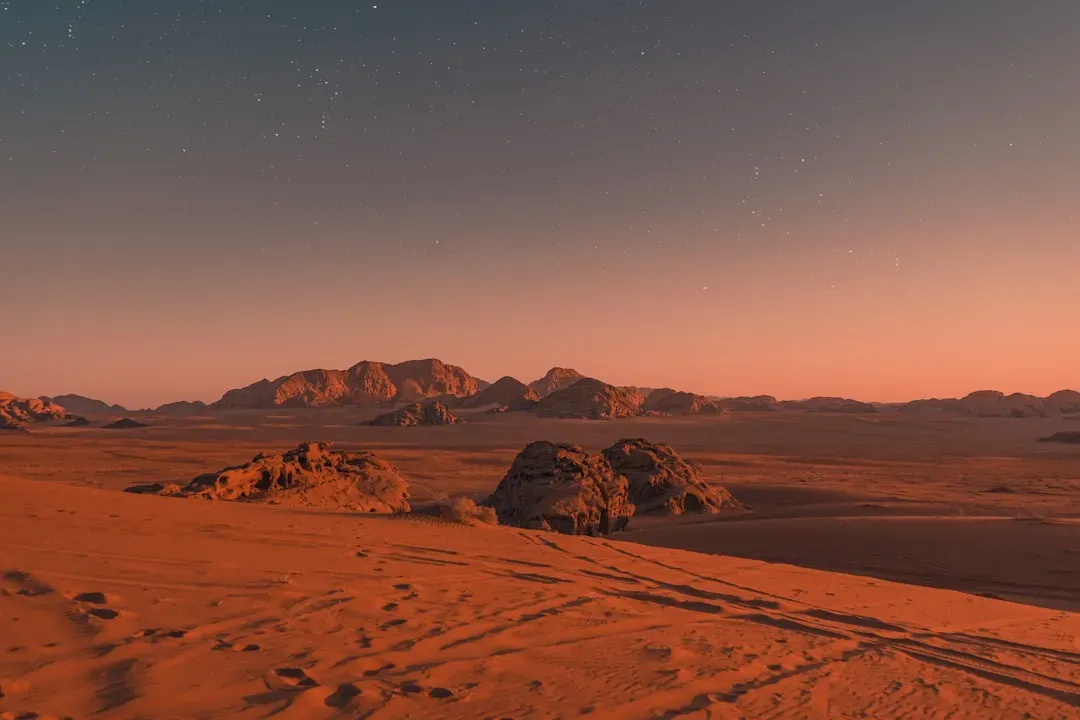
Wadi Rum in southern Jordan has become famous as a stand‑in for Mars in films, and once you see it, that makes perfect sense. Vast ocher and red sand plains stretch between towering sandstone and granite outcrops, some of them eroded into bizarre, gravity‑defying shapes. The light, the silence, and the scale combine to make you feel like you’ve walked straight into an astronaut’s helmet‑cam footage.
Geologically, Wadi Rum is a showcase of ancient sandstone carved by wind and water over staggering spans of time, leaving behind arches, cliffs, and canyons that look sculpted rather than weathered. Camp under its night sky and the illusion deepens: bright stars, faint dust lanes of the Milky Way, and complete darkness in every direction. It is Mars as humans secretly wish it might be one day: harsh and raw, but just cozy enough to pitch a tent and make tea under alien‑looking cliffs.
8. Pamukkale and Cappadocia, Türkiye – Cotton Castles And Fairy Chimneys
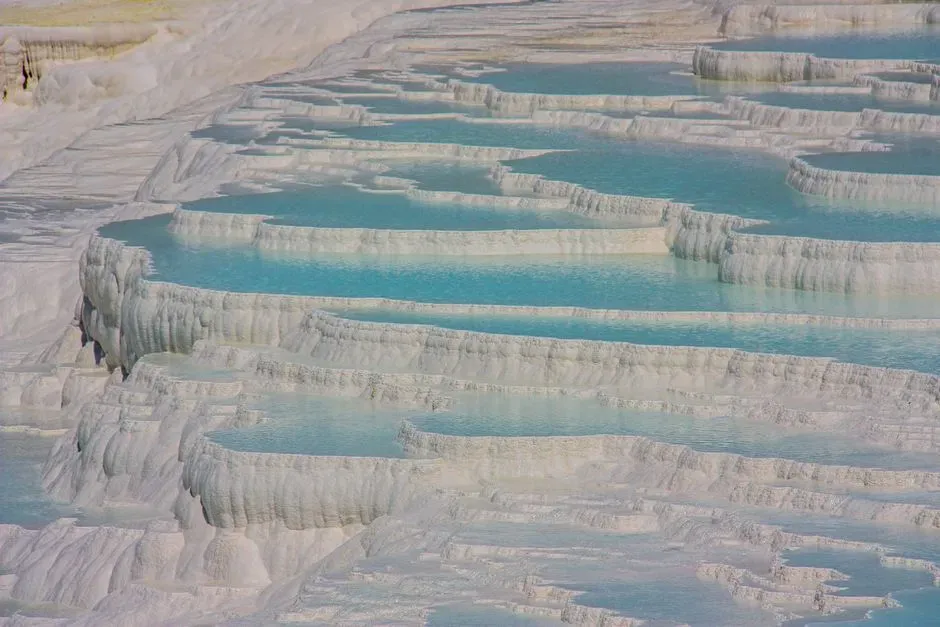
Türkiye offers a double feature of strangeness that feels almost unfair. In Pamukkale, mineral‑rich hot springs have built pure‑white terraces of travertine that cascade down a hillside like frozen waterfalls or cotton clouds. Shallow, turquoise pools collect in each terrace, creating a stacked landscape that looks like a spa designed on a water‑world orbiting some distant star.
Travel inland to Cappadocia and you suddenly find yourself on what might as well be another planet again. There, soft volcanic tuff has been sculpted by erosion into thousands of tall, thin rock spires often called fairy chimneys. For centuries, people carved homes, churches, and storage rooms right into these formations, effectively turning an already alien landscape into a honeycombed habitat that would not look out of place in a sci‑fi colony simulation.
9. Fly Geyser, Nevada, USA – An Accidental Extraterrestrial Sculpture
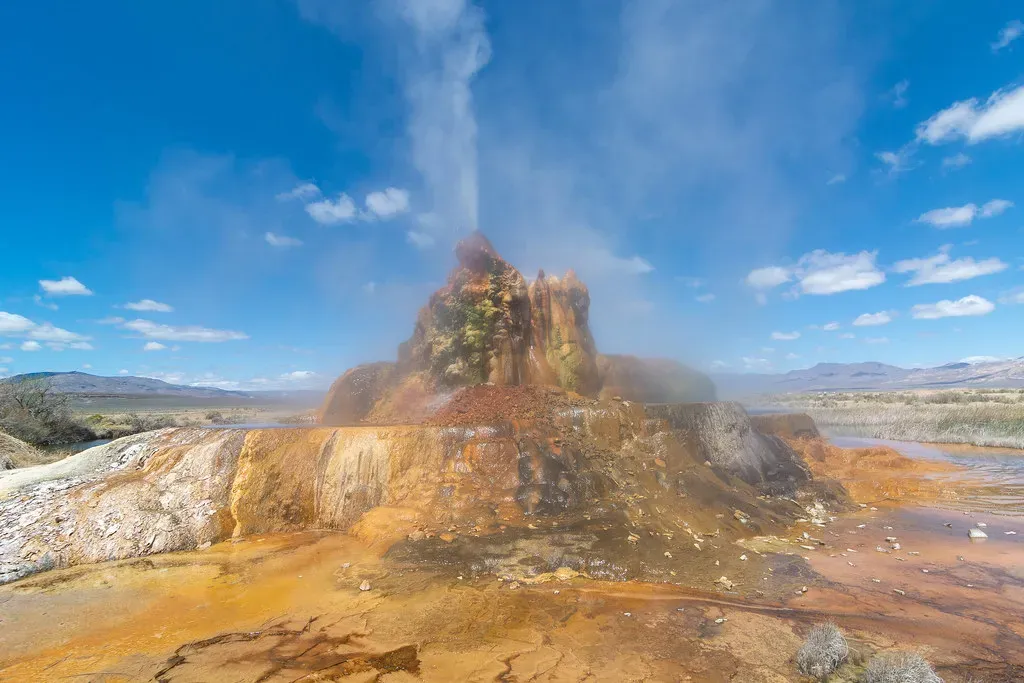
Fly Geyser in Nevada’s Black Rock Desert looks like something that tunneled up from beneath the crust of an alien moon, but it’s actually a strange side effect of human activity. Decades ago, a well drilling operation tapped into geothermal water, and mineral‑rich hot water began to spew out. Over time, dissolved minerals built up fantastically colored mounds and cones, stained in reds and greens by algae adapted to the heat.
The result is a cluster of steaming, multi‑horned geyser formations that seem almost too sculptural to be natural, framed by flat desert and big western skies. Thin streams of hot water arc into the air, cooling into terraces of bright mineral deposits that look a bit like the bones of a colossal creature. It’s one of those places where a simple fence separates a regular dirt road from a sight that could easily be passed off as a geothermal vent on a distant, habitable world.
10. Petrified Forests And Stone Trees – Fossilized Time Capsules
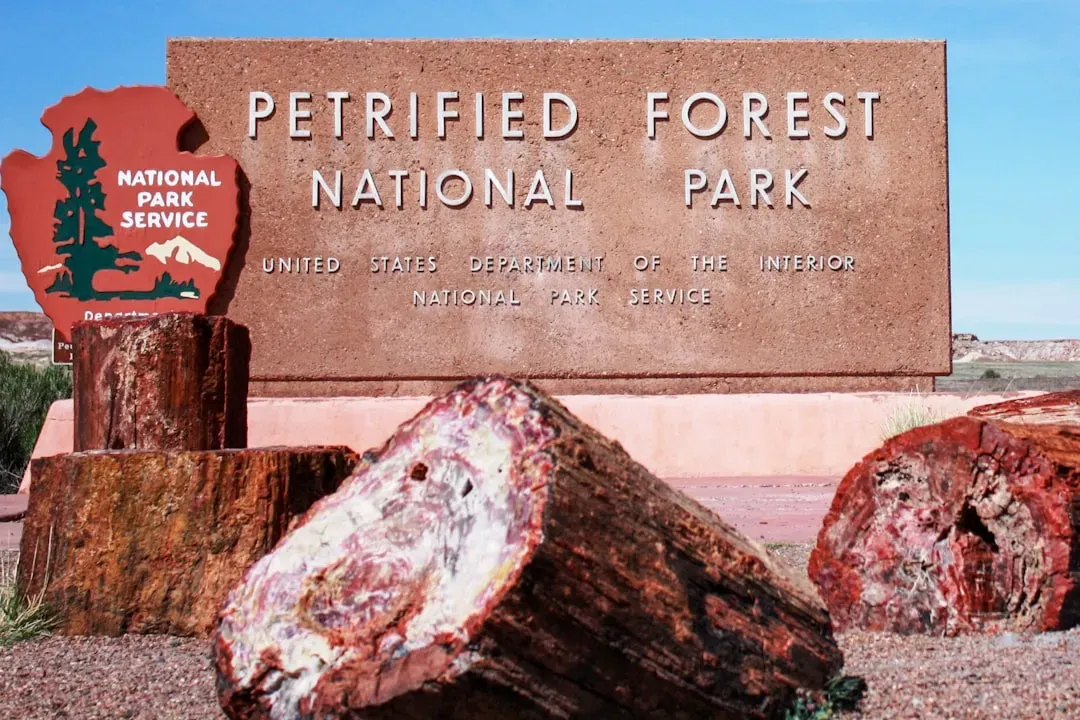
Scattered across regions like Arizona’s Petrified Forest and parts of Namibia and Argentina, you can walk through forests where every fallen log has literally turned to stone. Millions of years ago, trees were buried by sediment and volcanic ash, cutting them off from oxygen while mineral‑rich water seeped into their tissues. Over an almost unimaginable timescale, the organic material was replaced by quartz and other minerals, preserving the shape of trunks and rings in colorful, rock‑solid detail.
Standing among these stone trees is strangely disorienting, as if you’ve stepped onto a world where someone tried to reconstruct a forest from memory but used crystal instead of wood. Broken sections gleam with bands of red, orange, purple, and white, looking more like polished gemstones than anything that ever photosynthesized. To me, these fossilized logs feel like nature’s own time‑capsule sculptures, proof that even something as familiar as a tree can end up as an alien monument given enough time and the right chemistry.
Conclusion – Maybe We’ve Been Living On The “Alien Planet” All Along
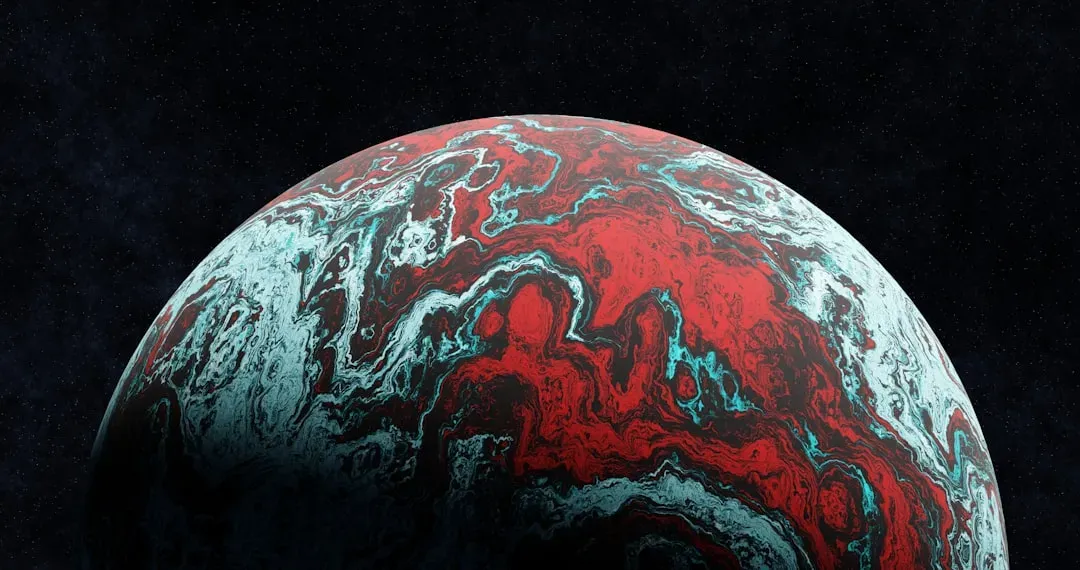
When you stack all these places side by side, it becomes hard to pretend that alien worlds are only out there in space. We are already orbiting a star on a planet that grows stone trees, bleeds red lakes, paints mountains in stripes, and lights underground skies with living stars. In some ways, science fiction might actually be underestimating how weird reality is, because writers are always afraid of making things look “too unrealistic.”
Personally, I think that is the quiet superpower of Earth: it keeps revealing landscapes that feel impossible until you are standing in them, blinking, trying to make your brain catch up. You do not have to leave this planet to feel like an explorer walking onto a brand‑new world; you just have to know where to look, and be willing to let your sense of normal get rearranged. Next time a movie shows some dramatic alien planet, it might be worth asking yourself a simple question: are we sure our own world has shown all its tricks yet?