
Every few years, cosmology drops an idea that sounds like pure science fiction, only for it to slowly sneak into serious discussion. The notion that our universe might have a kind of structural twin – a mirror-like partner with a matching large‑scale pattern of galaxies, voids, and cosmic structures – is one of those ideas. A decade or two ago, most working cosmologists would have politely smiled and filed it under speculative philosophy. Today, they are not smiling quite as confidently, and that shift alone is worth paying attention to.
This does not mean anyone has “proved” a twin universe exists. We are still very far from that. But a mix of high‑precision data, mathematical models, and some nagging cosmic coincidences has pushed the idea from the fringe toward the edge of mainstream conversation. The real story is not that we suddenly know the universe has a twin, but that the reasons to dismiss the idea out of hand are quietly eroding. Once you see why, it is hard to unsee it.
The Cosmic Microwave Background Is Not Quite As Random As We Expected
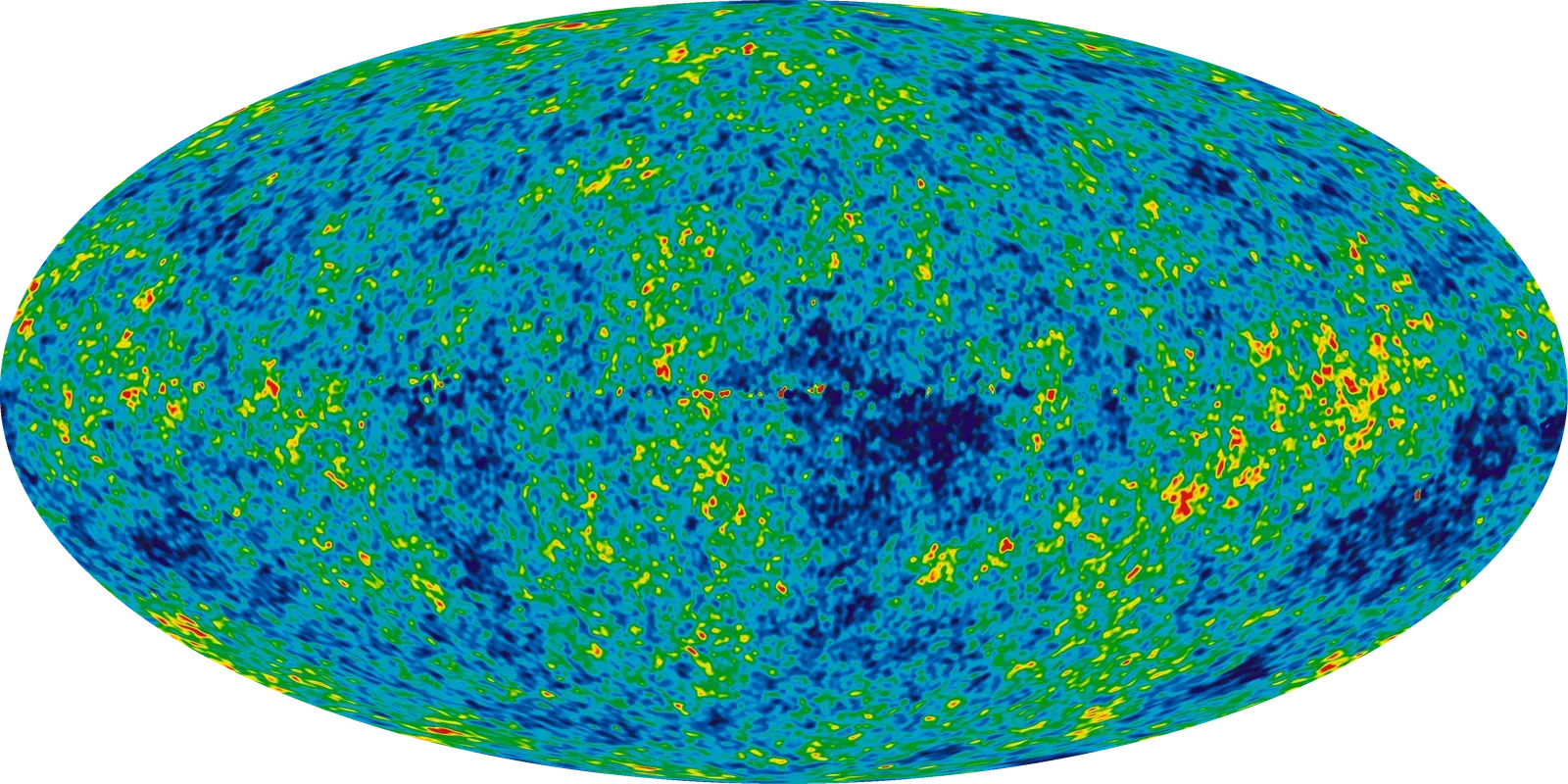
The turning point for a lot of these discussions is the cosmic microwave background, the afterglow of the Big Bang that satellites like WMAP and Planck have mapped in exquisite detail. In simple terms, this is the oldest light we can see, a baby picture of the universe when it was only a few hundred thousand years old. For decades, the working assumption was that its tiny temperature fluctuations were essentially random, like static on an old TV, shaped only by simple statistical rules. That picture turns out to be a little too simple.
When researchers started staring hard at the data, they began finding strange large‑scale features: alignments, asymmetries, and odd patterns that should not stand out if everything were purely random. Some of these anomalies, like the so‑called “axis” aligning certain multipoles or an unusually cold patch on the sky, are still debated and could be flukes. But they keep showing up in different analyses with different methods, and that repetition makes people uneasy. It is like rolling dice over and over and getting just enough weird sequences that you start wondering if the dice are loaded, even if you cannot prove it yet.
Symmetry Principles Keep Pushing Physicists Toward Mirror‑Like Universes
On the theory side, there is a second drumbeat that never really went away: symmetry. Modern physics is obsessed with symmetry, because the deepest laws we know – from electromagnetism to the Standard Model of particle physics – are built from it. If you ask what the simplest, most mathematically natural universe might look like, you do not get a messy, lopsided cosmos; you get something with balancing acts everywhere. That bias toward balance keeps resurrecting mirror‑style or twin‑style universes in serious models.
Some proposals imagine a second sector that mirrors our own particle content, with its own kinds of matter and forces that barely interact with ours. Others play with the idea that what we call matter and antimatter might be balanced globally by a structured partner region, not visible to us but part of a larger symmetric whole. The details vary wildly, and most specific models are probably wrong in their fine print, but the pattern is clear: when theorists push for elegance, they tend to land in territories where our universe does not stand alone. A structural twin is not a wild add‑on; it sometimes falls out as the “clean” solution.
Dark Matter and Dark Energy Leave Room For a Hidden Structural Partner
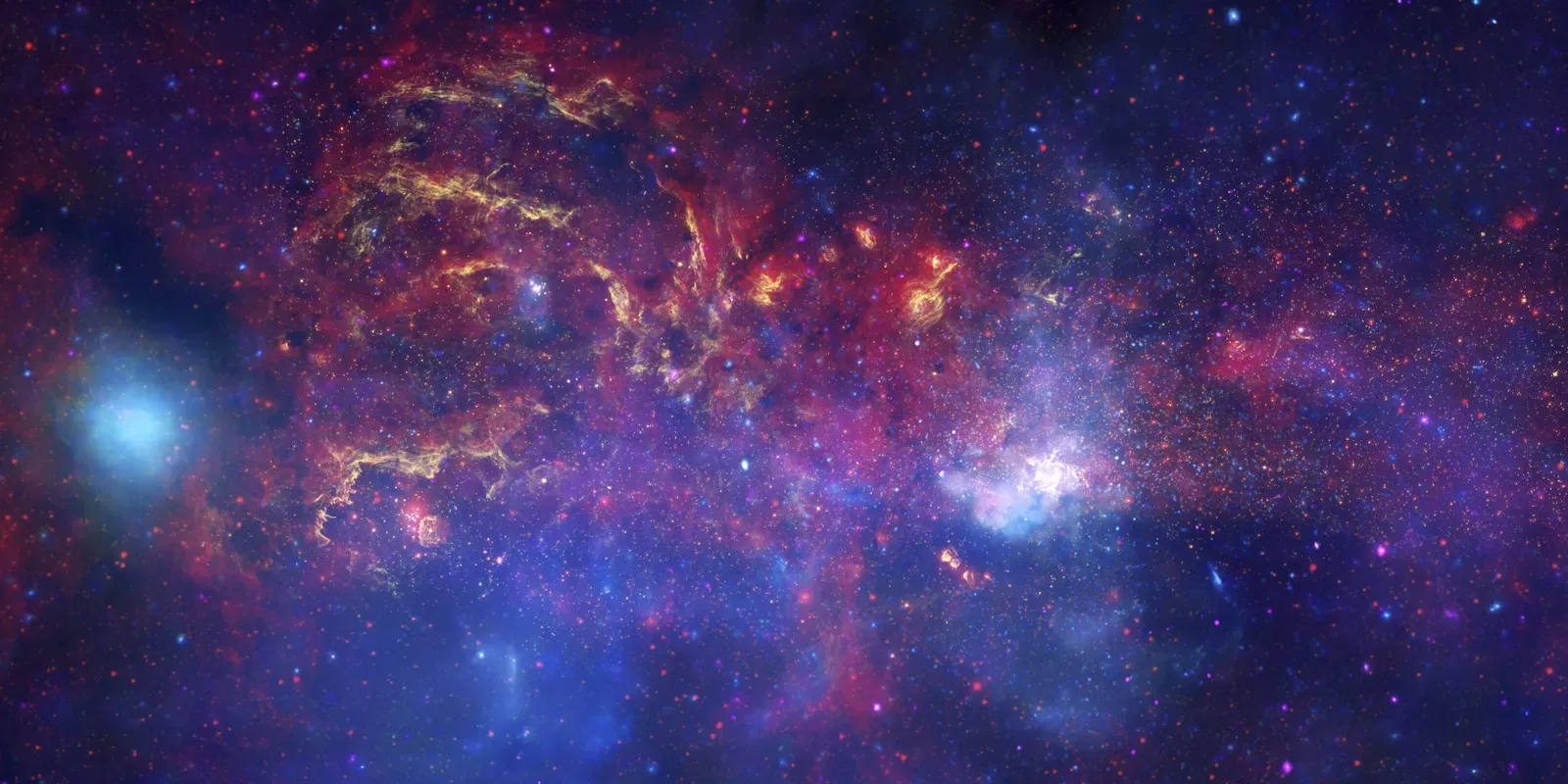
Then there is the elephant in the room: the vast majority of the universe is invisible to us. The matter that makes up stars, planets, and people is only a small fraction of the overall cosmic budget. The rest appears as dark matter, which clusters with galaxies but does not shine, and dark energy, which drives the accelerated expansion of space itself. We know they exist because of their gravitational fingerprints, but we have no direct handle on what they are made of. That ignorance creates a big, tempting space where a structural twin could hide.
Some cosmological models explore the idea that part of what we call dark matter or dark energy could be a manifestation of a hidden sector with its own structure. Imagine a shadow cosmos, with galaxy‑like concentrations of stuff, but coupled so weakly to our world that we only feel its influence as extra gravity or a smooth background pressure. In that picture, the large‑scale patterns we observe – the cosmic web of galaxies and voids – might be one layer of a double‑exposed photograph, with another matching web overlaid in a different “color” of physics we simply cannot see directly. Technically, that is not fantasy; it is one of the ways people try to make sense of the data we already have.
Large‑Scale Structure Surveys Hint at Subtle, Hard‑to‑Explain Coincidences
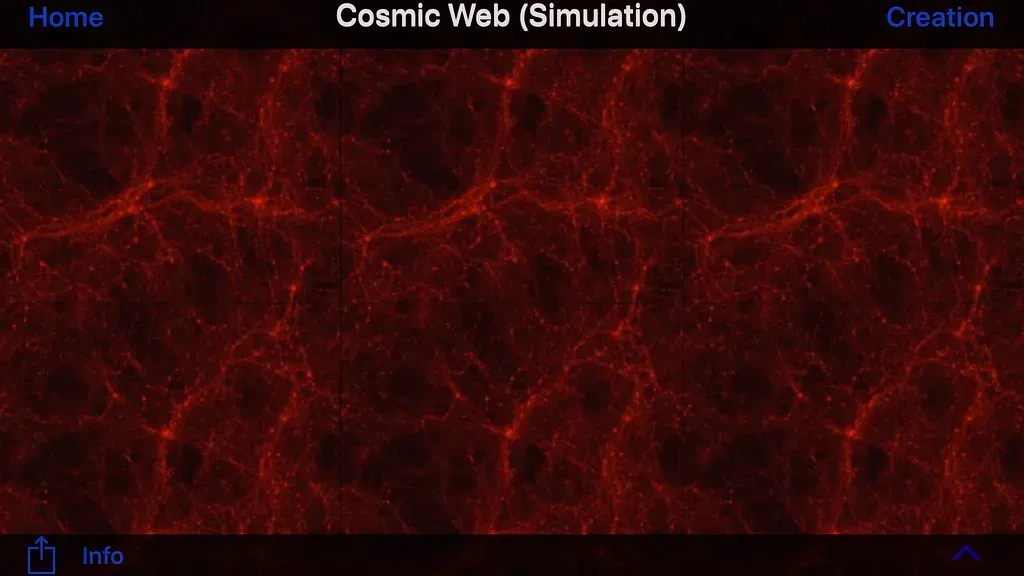
Over the past two decades, sky surveys like the Sloan Digital Sky Survey and newer projects have revealed the universe’s large‑scale structure in incredible detail. Galaxies are not scattered randomly; they trace out a gigantic three‑dimensional web, with dense clusters, long filaments, and huge nearly empty voids. On average, this web looks almost the same in every direction and in every region we have mapped. That homogeneity is one of the triumphs of standard cosmology, but it also raises a quiet question: why is the pattern so statistically smooth and yet so richly organized at the same time?
Standard models can generate this web from tiny quantum fluctuations stretched by inflation, and they do a decent job matching what we see. Still, some features of the distribution – characteristic scales, correlations across very large distances, and the near‑perfect statistical uniformity – feel oddly fine‑tuned. A structural twin hypothesis offers a different angle: perhaps the large‑scale structure we observe is constrained or mirrored by a partner structure, enforcing a kind of global balance. That does not replace the usual story, but it adds an extra layer of explanation for why the universe looks so cleanly patterned across such absurdly large volumes of space.
The Hubble Tension and Other Cosmological Puzzles Are Eroding Confidence in the Simplest Models
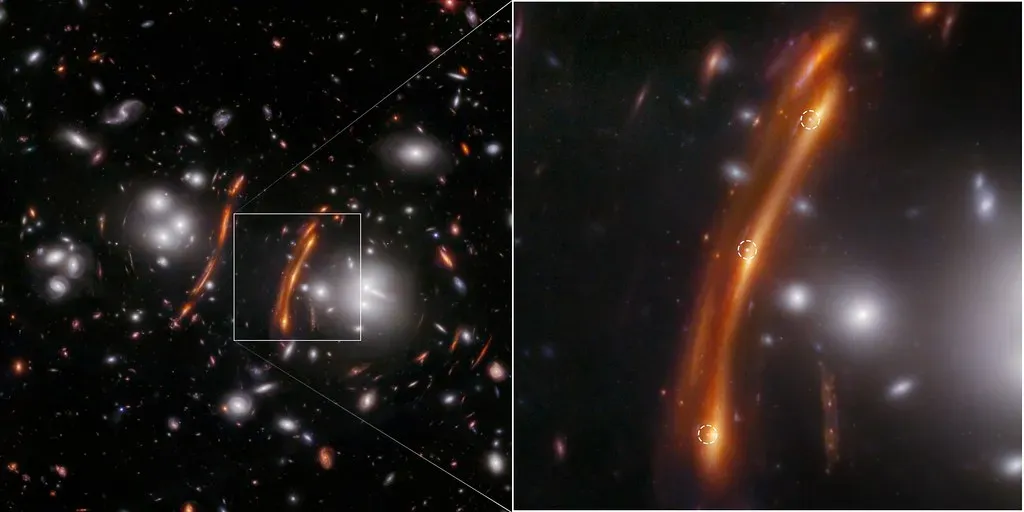
One of the most uncomfortable developments in modern cosmology is the growing conflict over how fast the universe is expanding today, known as the Hubble tension. Measurements based on the early universe, especially the cosmic microwave background, point to one value for the current expansion rate. Measurements based on nearby galaxies and exploding stars give a higher value. The mismatch is not gigantic in everyday terms, but in precision cosmology it is the kind of persistent discrepancy that makes theorists sweat. It suggests that the simple model tying together the early and late universe might be missing a piece.
When people start looking for that missing piece, they often end up modifying the dark sector, the behavior of gravity, or the geometry of space‑time itself. Some of those modifications naturally lead to scenarios where our observable universe is just one “sheet” or “branch” of a larger connected structure. In such setups, the parameters we measure – like the expansion rate or the amount of dark energy – can differ slightly between branches while still being linked by deeper symmetries. That is not a smoking gun for a structural twin, but it makes the concept less ridiculous. Once your best‑fit model already includes extra layers of reality, adding a partner structure does not feel like crossing a sacred line anymore.
From Fringe Speculation to Respectable “What If”: Why Attitudes Are Shifting
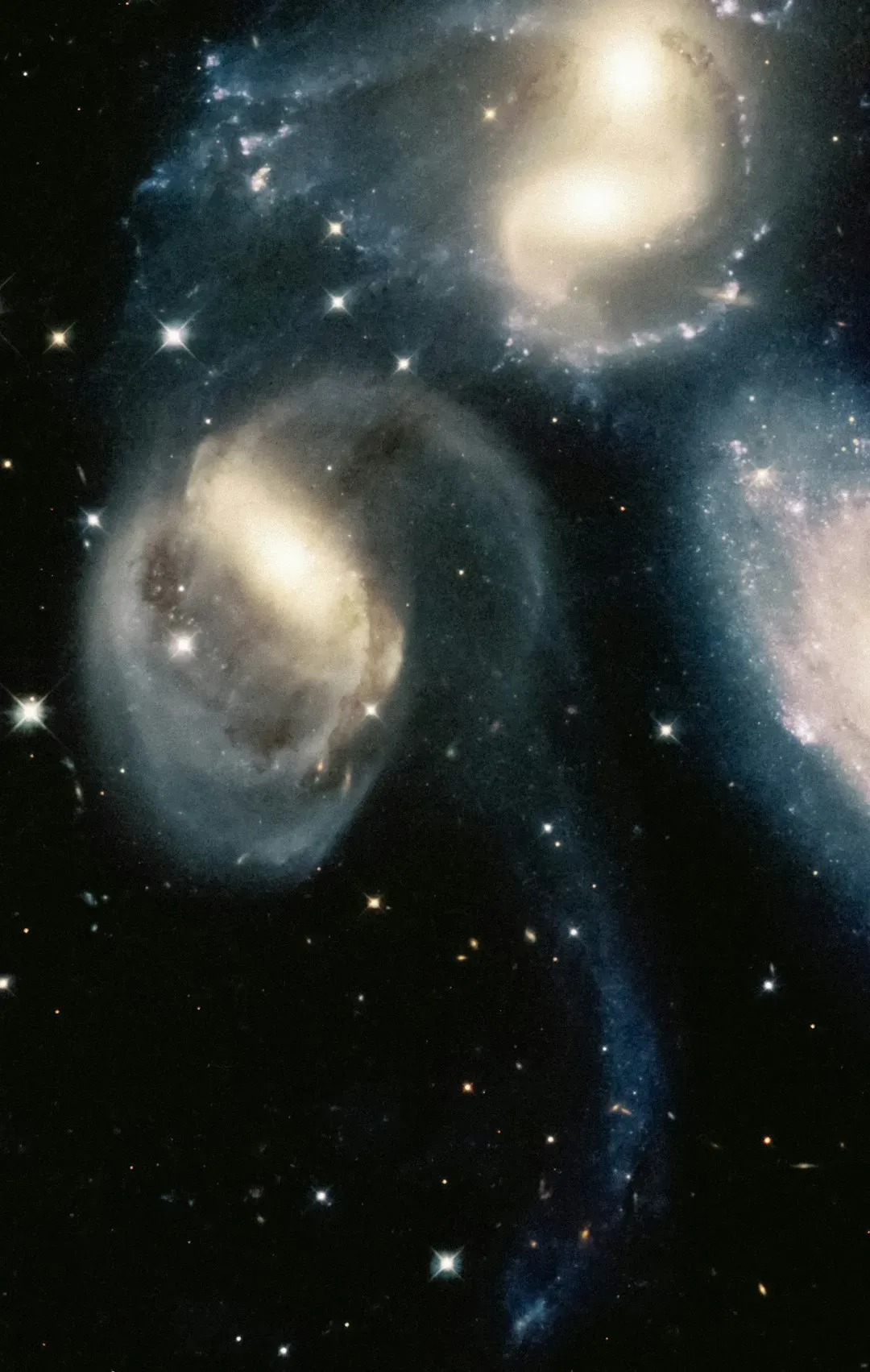
What has really changed in the last decade is not that someone found a dramatic, direct signature of a twin universe, but that the landscape of respectable speculation has widened. Precision data has poked enough holes in the simplest textbook models that cosmologists are now much more open to exploring richer scenarios. When you attend conferences or read current papers, you see a lot less eye‑rolling at ideas that would once be dismissed as too exotic. Instead, people are asking, in a very practical way, what predictions those exotic ideas would make and how to test them.
I remember talking to a cosmologist friend who admitted, almost reluctantly, that models involving mirror sectors and twin structures used to feel like career poison, but now sit alongside more conventional extensions as part of the standard menu. That shift does not guarantee any of those models are true, but it signals something important: the community is no longer confident that the bare‑bones picture is enough. If you combine that intellectual humility with the persistent anomalies and the theoretical pull of symmetry, a structural twin stops being a bizarre outlier and becomes one of several serious contenders for how the universe might be organized at the deepest level.
Why Caution Still Matters: What We Do Not Know (And Might Never Prove)
With all this said, it is crucial not to get carried away. The evidence we have right now is circumstantial, indirect, and open to multiple interpretations. Cosmic anomalies might fade as data improves or turn out to be statistical flukes. Elegant symmetry arguments have misled physicists before; nature does not owe us mathematical beauty, even if we desperately want it. A structural twin might remain forever in the category of “plausible but unconfirmed,” a kind of cosmic ghost that fits nicely on paper but never shows its face in a decisive measurement.
There is also a deeper philosophical issue: even if a twin structure exists, it might be fundamentally inaccessible, hidden behind causal horizons or weak couplings that no experiment can realistically probe. That would put it in a strange limbo between physics and metaphysics, suggested by our best theories but immune to direct tests. Personally, I think that possibility is both frustrating and fascinating. It forces us to confront what we really mean by understanding the universe: is a model less “real” if we can never fully verify it, even though it explains everything we can see more naturally than the alternatives?
Conclusion: A Twin Universe Is No Longer Laughable – And That Changes Everything
The most honest way to sum up the situation is this: cosmologists have not proved our universe has a structural twin, but they have lost the old, easy reasons for dismissing the idea. High‑precision maps of the early universe, detailed surveys of the cosmic web, stubborn tensions in key measurements, and the relentless pull of symmetry all point toward a reality that might be bigger, more layered, and more mirrored than we first imagined. The twin‑universe hypothesis sits in that uncomfortable sweet spot where it is speculative yet grounded enough to demand attention, like a half‑seen shape in the dark that might be a shadow or might be something more.
My own opinion is that we are living through a quiet revolution in how we think about cosmic structure, and a structural twin – in some form – will end up being part of the most satisfying picture. Not because it is romantic or dramatic, but because the data keeps nudging us toward frameworks where balance and hidden sectors play a crucial role. If we get lucky, future observations will reveal a clear signature that clinches the case one way or the other; if not, we will keep refining models at the edge of what is testable. Either way, the fact that serious cosmologists no longer laugh this idea out of the room is already a profound shift. When you stare up at the night sky, it is hard not to wonder: are we really looking at the whole story, or just one side of a cosmic mirror we are only beginning to notice?