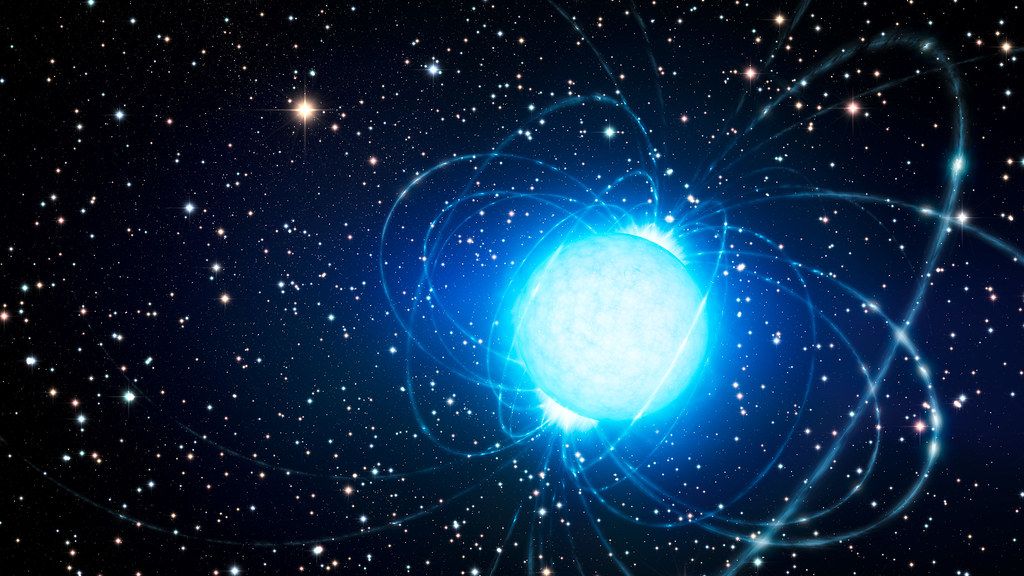

If you could somehow see magnetic fields with your eyes, a magnetar would look like a cosmic buzzsaw tearing at the fabric of reality. These stellar corpses sit in distant galaxies, yet their magnetism is so extreme that, in theory, even a brief encounter at a safe-seeming distance could shake apart matter itself. This is not science fiction; it is where real astrophysics pushes right up against the limits of what we can comfortably imagine.
When I first read about magnetars, it felt less like astronomy and more like a horror story written by the universe. We are used to thinking of space as empty and calm, but magnetars remind us that the cosmos hides monsters whose power laughs at our intuition. Their magnetic fields are trillions of times stronger than anything we can create on Earth, strong enough to twist atoms, scramble electronics, and maybe even rewrite what we consider “solid.” Let’s unpack how that is even possible.
What Exactly Is a Magnetar, And Why Is It So Extreme?
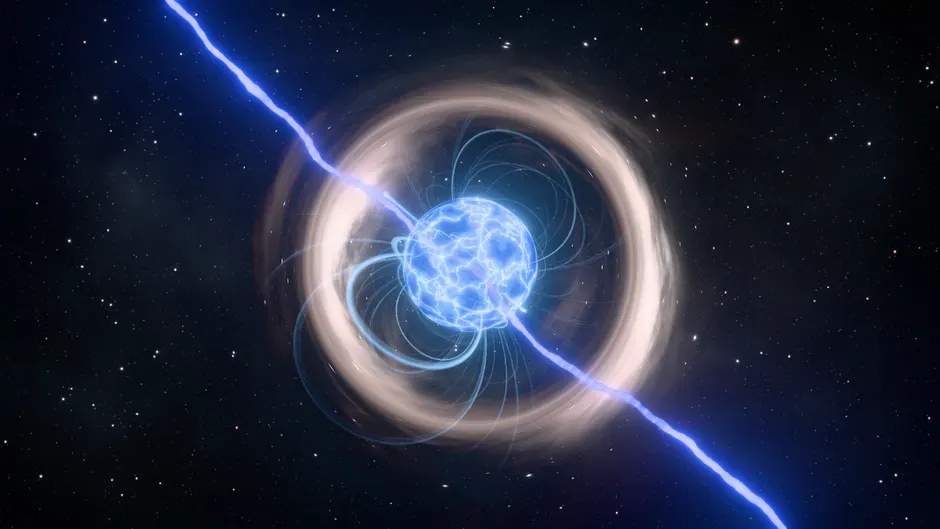
A magnetar is a type of neutron star, the ultra-dense remnant left behind after a massive star explodes as a supernova. Imagine cramming a mass greater than that of our Sun into a sphere only about twenty kilometers across; a single teaspoon of magnetar material would weigh as much as a mountain. Now take that already extreme object and wrap it in a magnetic field so intense it makes normal neutron stars look tame. That is a magnetar: the cosmic equivalent of a tiny, furious core of nuclear matter wrapped in an unimaginable magnetic storm.
These objects likely form when a rapidly spinning, massive star collapses and its rotation and internal motions amplify the magnetic field through violent dynamo processes. The result is a magnetic field billions to trillions of times stronger than Earth’s, so powerful that it dominates everything around it: particles, radiation, even the structure of space near the surface. While all neutron stars are extreme, magnetars are the drama kings of the stellar graveyard, prone to sudden high-energy outbursts, flashes of X-rays and gamma rays, and tectonic “starquakes” in their crust that would make any planetary earthquake look gentle.
Magnetic Fields So Strong They Threaten Atomic Structure
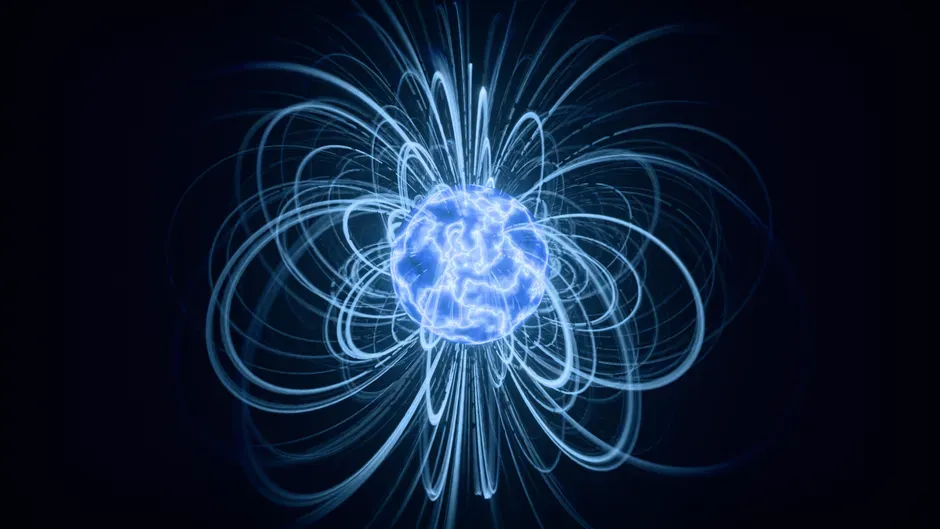
We usually think of atoms as little solar systems: electrons orbiting a nucleus in defined clouds, held by the electromagnetic force. In everyday magnetic fields, those electron clouds are stable, maybe distorted a tiny bit, but never truly rewritten. Around a magnetar, that mental picture breaks down completely. The field is so strong that the usual balance of forces within an atom is smashed, and quantum mechanics has to be described in new ways just to make sense of it.
In fields this intense, electrons are forced into tightly confined states along magnetic field lines, and their motion perpendicular to the field becomes quantized into narrow “landings” rather than free orbits. At the most extreme field strengths, theorists predict that atoms could become elongated, needle-like structures, stretched along the field direction, with their usual spherical symmetry destroyed. You end up with matter that is still technically atomic, but in a form that would be unrecognizable in any normal laboratory, almost like taking a familiar building block and pulling it into a strange, one-dimensional spaghetti of charge.
Can a Brief, Distant Exposure Really Alter Matter at the Atomic Level?
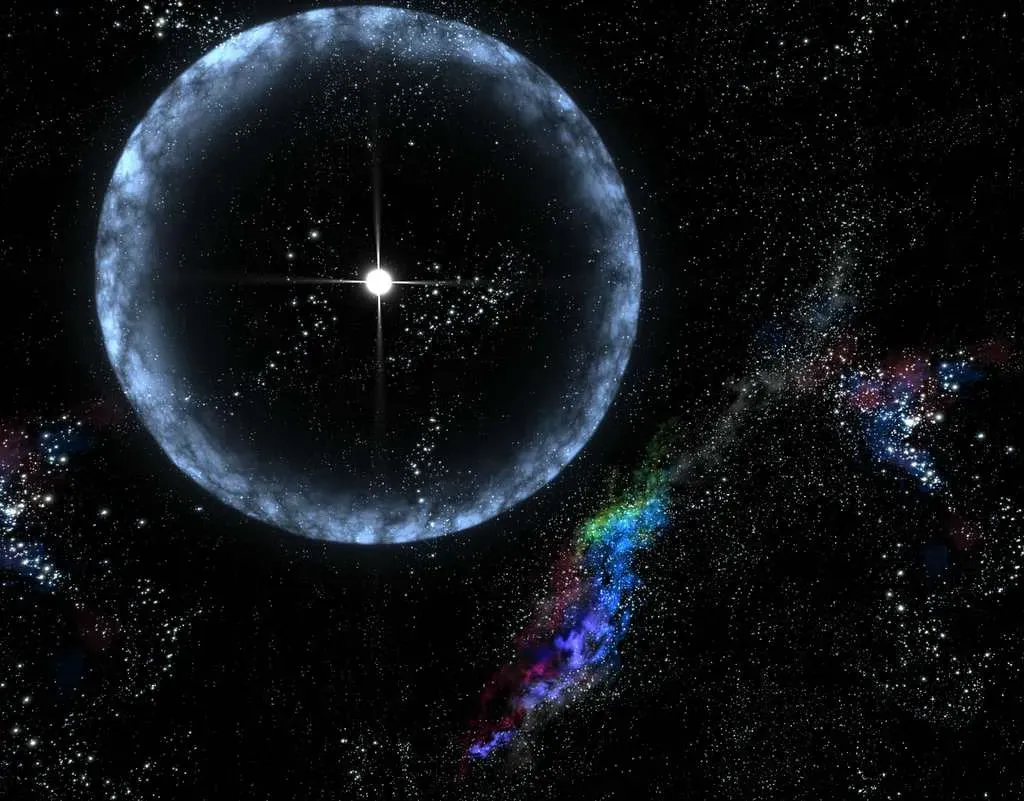
The wild claim in the headline – that a momentary exposure from deep space distance could alter matter at the atomic level – sounds like a sci-fi exaggeration, but the underlying physics is grounded in real calculations. The key idea is that magnetars do not need you to be right next to them for their magnetic influence to be dangerous; their fields extend outward, weakening with distance but still capable of disturbing delicate structures if you get anywhere near the wrong zone. In practice, we are talking about distances that are still astronomically close compared to interstellar scales, but far enough that you would not be skimming the surface.
Near a magnetar, even tens of thousands of kilometers away, the field could overwhelm chemical bonds and atomic arrangements in ordinary matter, aligning spins, distorting electrons, and potentially triggering cascades of radiation emission. While humans or spacecraft are fantastically unlikely to get that close, the principle is clear: there exists a region around these stars where a brief flyby would be sufficient to warp materials at the microscopic level. It is like wandering too close to an industrial electromagnet so powerful that your metal tools do not just get yanked away – they get subtly reshaped in the process.
When Space Quakes: Magnetar Flares and Their Violent Consequences
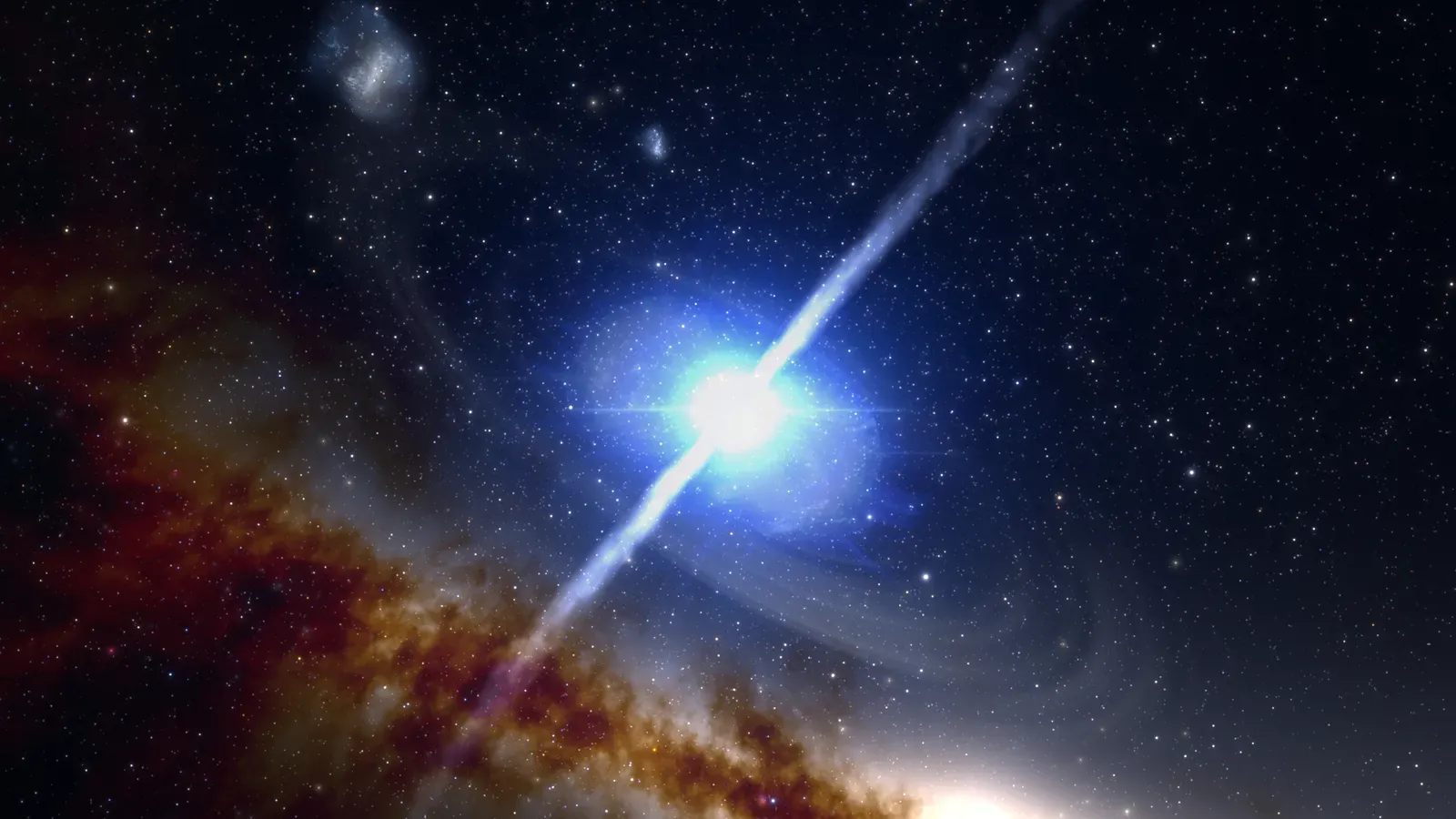
Magnetars do not simply sit quietly broadcasting magnetism; they can erupt with sudden, terrifying flares that flood their surroundings with high-energy radiation. These giant flares release in a fraction of a second as much energy as our Sun emits over long stretches of time, mostly in the form of intense X-rays and gamma rays. The trigger is thought to be a kind of stellar tectonics: the magnetic field twists and stresses the solid crust of the star until it cracks, snapping and rearranging the field in a catastrophic event.
When such a flare goes off, it does more than just brighten the star; it can send a pulse of radiation and magnetic disturbance racing across space. At close distances, this onslaught could ionize matter, strip electrons from atoms, and induce powerful currents in any conductive material. Even at enormous distances, these flares have been detected in our own galaxy and beyond, sometimes briefly saturating detectors on satellites. The combination of flare radiation and titanic magnetism creates a kind of multi-pronged attack on matter: heating it, ionizing it, and yanking at its atomic structure all at once.
How Close Is “Too Close” To a Magnetar?
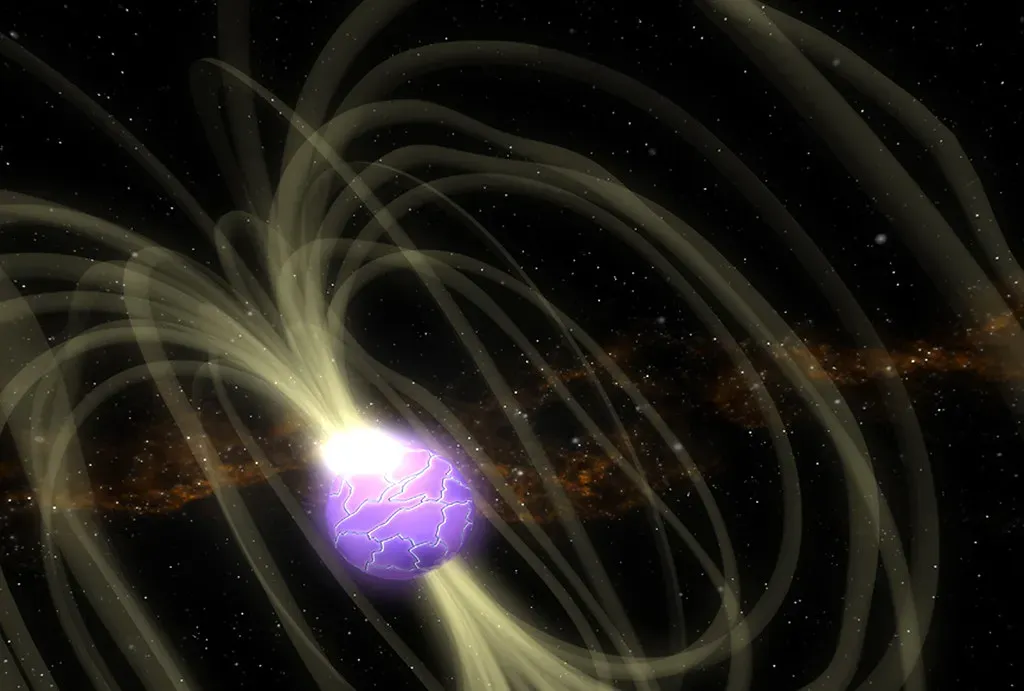
One of the most haunting questions is where the line is between “safely curious” and “atomically doomed” around a magnetar. The answer is not a single neat number, because it depends on what kind of matter we are talking about, how long the exposure lasts, and whether the magnetar is flaring. However, theoreticians can estimate zones where magnetic fields become strong enough to seriously change atomic and molecular behavior. In those regions, ordinary chemistry stops working the way we know it, and materials would not retain their familiar properties.
Think of it like approaching a campfire versus falling into a volcano. Far away, the fire is just a glow in the distance; closer in, you feel the warmth; too close, and the heat is catastrophically destructive. For magnetars, the “heat” is largely magnetic and radiative, and the destructive threshold, for solid matter and complex molecules, would be reached well before you reached the surface. From an engineering standpoint, any spacecraft venturing into such a zone would likely see its electronics fried, its materials weakened or altered, and its atomic-scale structure distorted long before mechanical stress alone could explain the damage.
Why Magnetars Matter for Physics Far Beyond Astronomy
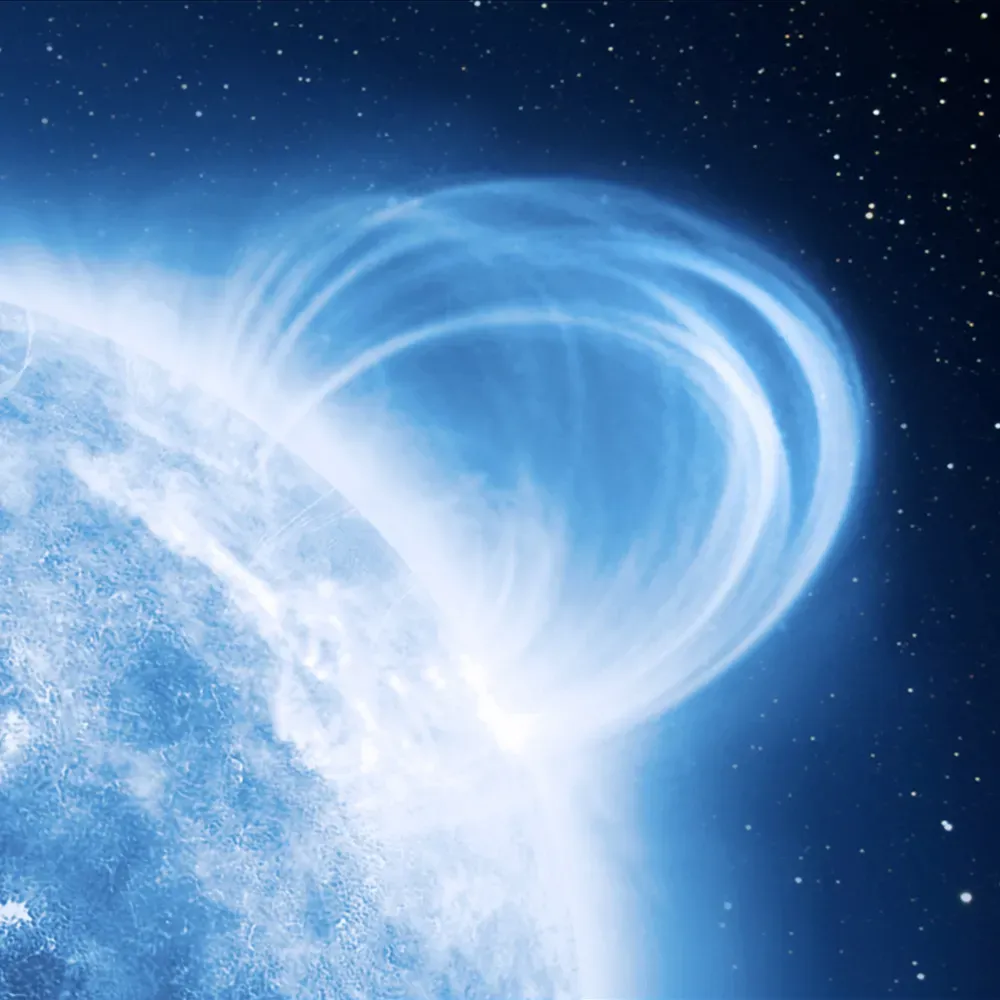
Magnetars are not just dramatic space curiosities; they are natural laboratories for physics that we can barely probe on Earth. Their magnetic fields test quantum electrodynamics – the theory of how light and charged particles interact – under conditions that push it to its limits. Phenomena like vacuum birefringence, where empty space behaves like a strange optical medium because of intense fields, might be observable in the light from these stars. In other words, magnetars let us watch fundamental physics bend and twist under stress we could never generate in a terrestrial experiment.
On a more practical level, understanding how matter behaves in ultra-strong fields could feed back into plasma physics, fusion research, and high-field laboratory experiments. While we are nowhere near magnetar-level conditions, the same equations and concepts apply in watered-down form to advanced magnets and intense laser facilities. It is a bit like studying the most extreme hurricanes in order to better understand a gentle breeze; the extremes illuminate the rules of the game in a way mild conditions never could. Magnetars force our theories to either hold up under pressure or be rewritten.
The Human Side: Why Magnetars Capture Our Imagination
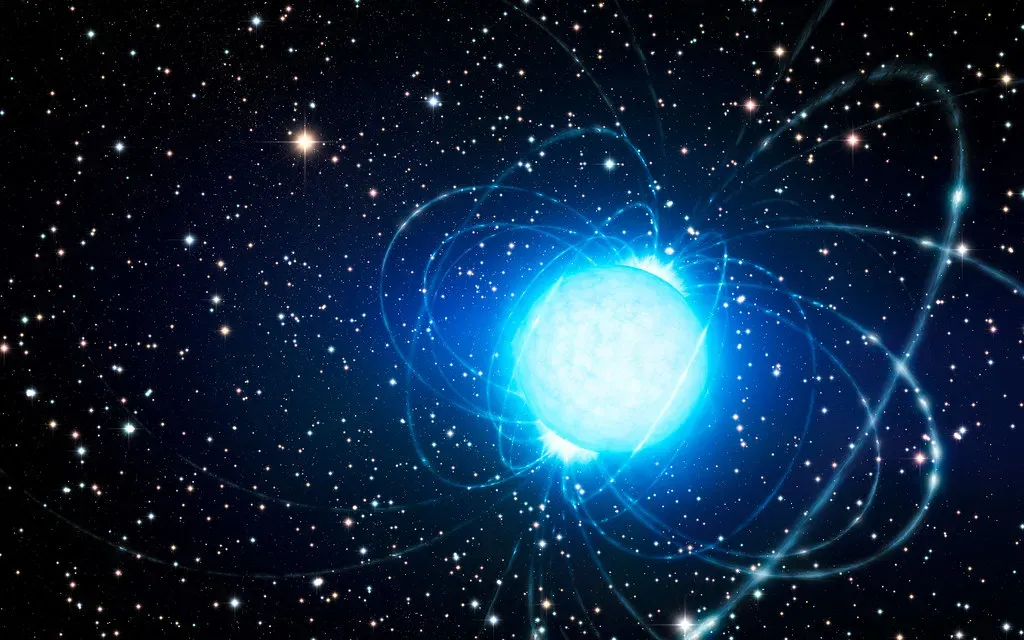
There is something viscerally unsettling about the idea that a distant star’s magnetic field could, in principle, reach out and tamper with the atoms in your body. Gravity we can at least picture – things falling, orbits curving – but a field that invisibly reorders matter feels almost supernatural, even though it is pure physics. Magnetars hit that sweet spot of cosmic story: far enough away that we are safe, but potent enough that we cannot help imagining what it would be like to wander into their domain. They are a reminder that the universe has power levels far beyond our technological arrogance.
I sometimes think of magnetars as the universe’s way of telling us we are still very small. We have particle colliders, fusion experiments, space telescopes, yet here sit these tiny stellar corpses doing casually, as a side effect, what would be impossible feats in our most advanced labs. That mix of awe and humility is part of why they fascinate both scientists and the public. They turn the sky into a stage where the stakes are not just about light and gravity, but about what “matter” itself means when pushed to extremes.
Conclusion: A Universe That Can Tear Atoms Apart Deserves Our Respect
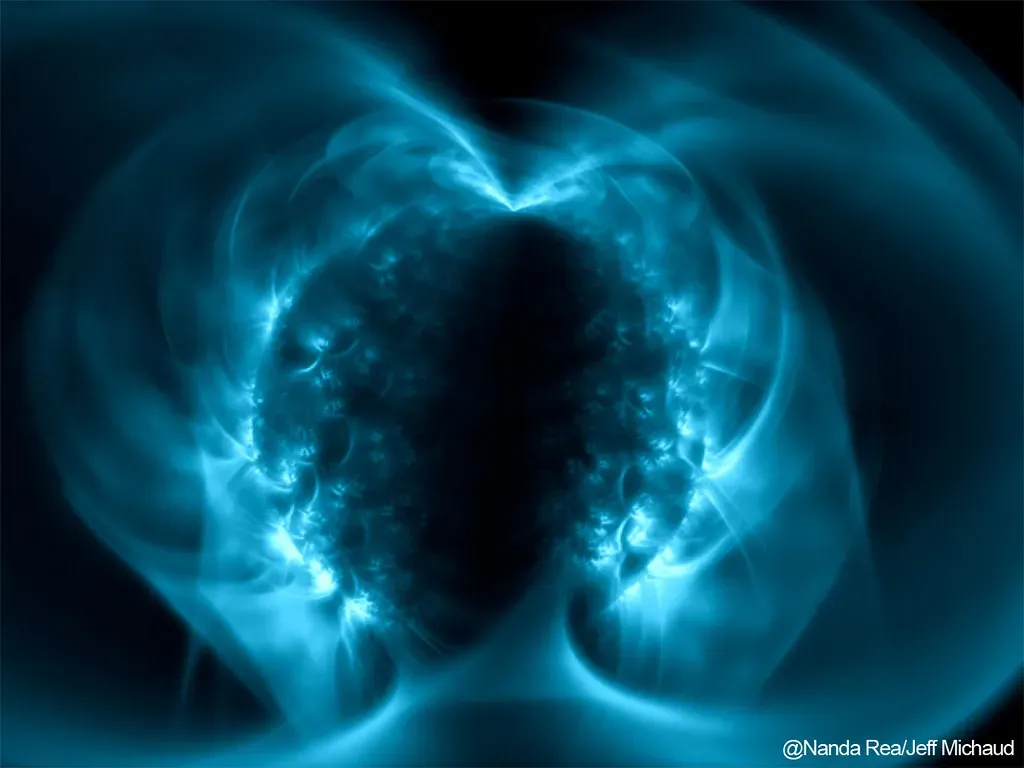
When you put it all together, magnetars are a loud message from the cosmos: the rules we take for granted on Earth are only local guidelines. Their magnetic fields can twist atomic structures, their flares can bathe space in brutal radiation, and their very existence mocks the scale of our strongest magnets and densest materials. The idea that a brief passage through the wrong neighborhood around one could alter matter at the atomic level is not a sensational fantasy; it is a sober extrapolation of physics into a regime where intuition fails. In my view, we should treat that as a challenge rather than a horror story.
Studying magnetars is not about fear; it is about honesty. They force us to confront the fact that our everyday experience is just one small corner of what nature allows, and that matter, light, and fields can behave in ways that feel alien yet remain rigorously lawful. If the universe can casually build objects that can shred atoms and warp empty space, what else is it capable of that we have not yet discovered? And when you think about your own life, your phone, your body, your planet, all held together by gentle, everyday physics – does it not feel just a little more fragile, and a lot more miraculous, knowing what lurks out there in the dark?