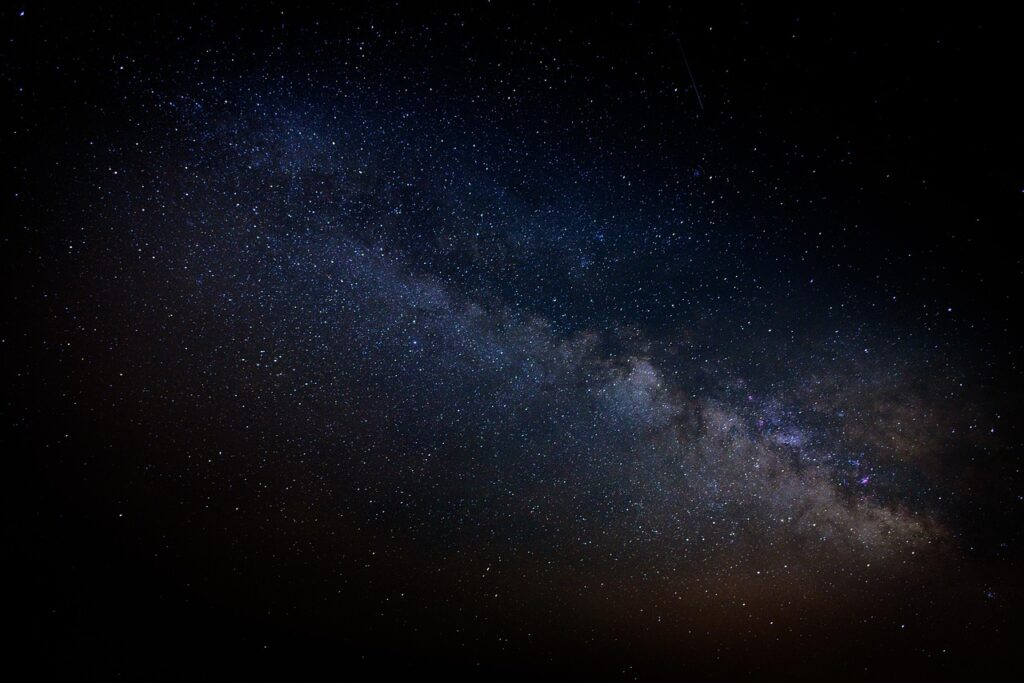

You have probably stared up at the night sky and assumed that the black spaces between the stars are just nothingness. It feels natural to think that way: bright dots are “something,” dark patches are “empty.” But modern cosmology says you’ve got that backward. Those apparently empty regions are where most of the universe’s matter is hiding, and you cannot see it, touch it, or even detect it directly with any telescope on Earth.
For roughly half a century, scientists have been quietly wrestling with a cosmic paradox: all the visible stuff you know – stars, gas, dust, planets, even you – seems to be only a small fraction of what actually exists. The rest is a mysterious substance called dark matter, spread through those black gaps like a hidden scaffolding that holds the universe together. As you follow the story of how we found it, what we think it is, and why it refuses to show its face, you start to realize that the sky you grew up with is only a faint sketch of the real thing.
The Shocking Clue: Galaxies Spinning Too Fast
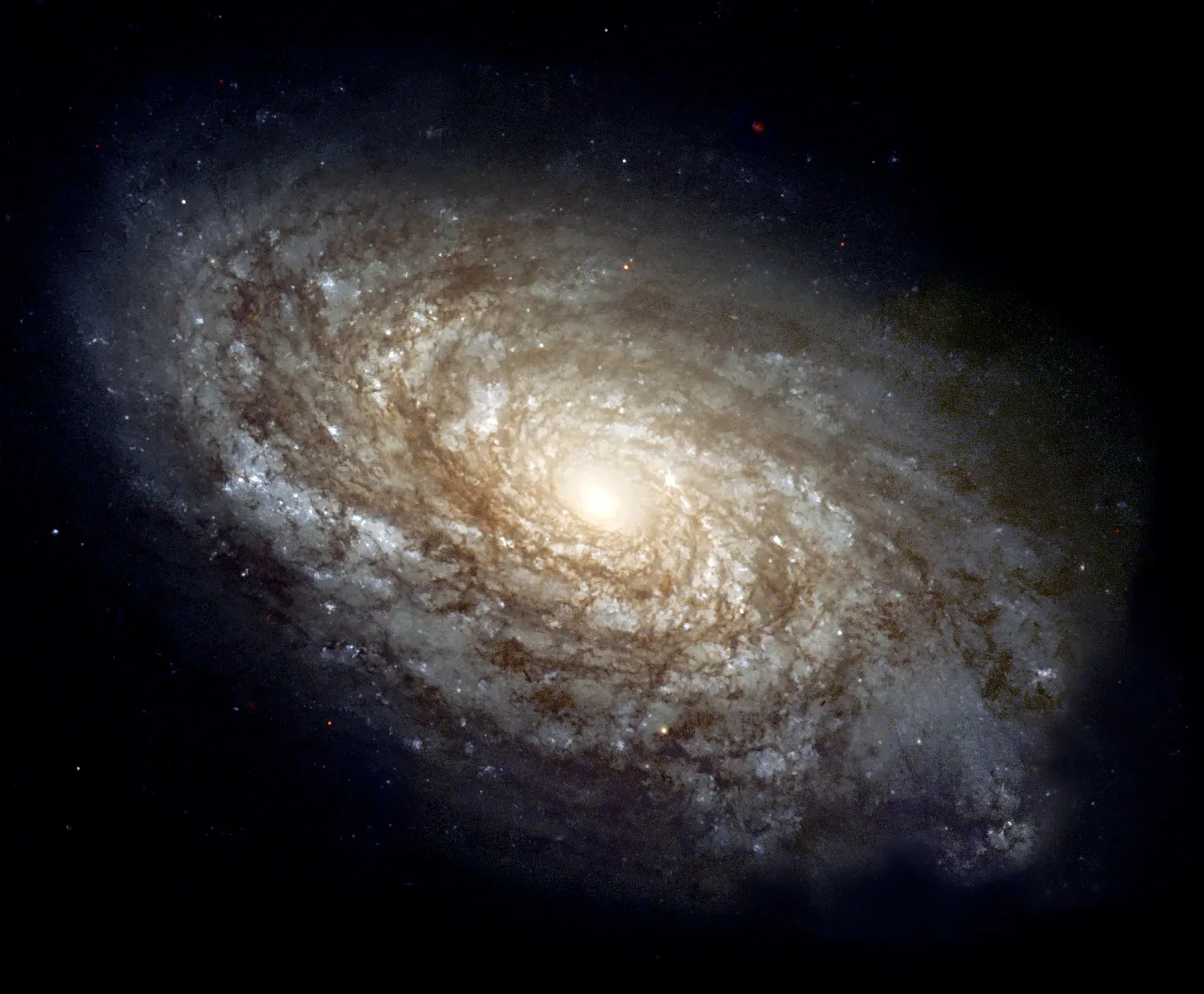
If you could hold an entire galaxy in your hand and spin it like a luminous pinwheel, your everyday sense of physics would tell you something simple: stars near the center can move faster, while stars far out on the edge should slow down, the way planets in your solar system move more slowly the farther they are from the Sun. When astronomers measured these motions for real galaxies, you would expect to see that steady slowdown at the outskirts. Instead, you find a stubborn, unsettling pattern: the stars in the outer regions keep zooming around far too fast.
In your everyday world, if something spins too fast, gravity loses its grip and material flies off. Yet these galaxies stay intact. The only way that makes sense is if there’s much more mass there than you can see, quietly boosting the gravitational pull. It is as though each galaxy is embedded in a massive, invisible halo that holds it together. When you add up the numbers, this hidden mass has to outweigh the visible stars and gas by several times over. In other words, what you see when you look at a spiral galaxy is just the bright frosting; the real cake is dark, heavy, and invisible.
The Cosmic Weigh-In: Most Matter Is Missing From Your Eyes
Now imagine you could put the entire universe on an enormous set of scales and ask what fraction of its weight comes from things you can actually see. Cosmology has done a version of this grand weighing, using multiple independent methods: galaxy rotation, the way light bends around massive structures, the afterglow of the Big Bang, and the large-scale pattern of galaxies across space. Every line of evidence points you to the same unsettling conclusion: the visible matter you are familiar with is only a minority share of the cosmic budget.
When you hear that the vast majority of matter is “dark,” it does not mean it is just cold rock or dim dust. You already account for those in the visible tally. Dark matter is something else entirely, a new category. You only know it is there because its gravity tugs on stars, gas, and light itself in ways that you can measure. The darkest regions between stars, which your eyes interpret as emptiness, are where this invisible mass quietly dominates the story. You are living in a universe where the familiar stuff is the exception, not the rule, and that should shake up your sense of what “normal” even means.
Seeing the Invisible: Gravity as Your Only Flashlight
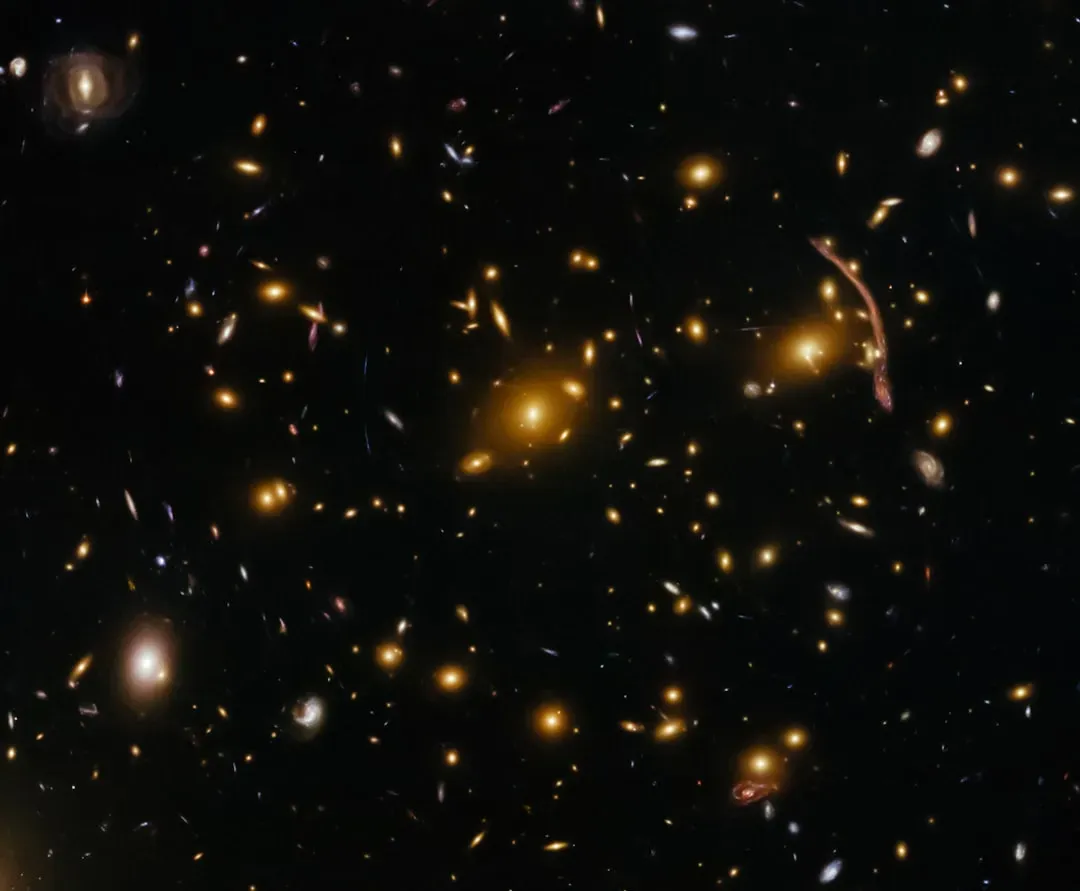
If you want to study dark matter, you are forced into a strange kind of science, because ordinary tools fail you. You cannot put dark matter in a jar, shine light on it, and see what color it is. It does not glow in any wavelength your instruments can pick up, and it does not block light like a dust cloud would. The only reliable way you can “see” it is through its gravitational fingerprints: how it moves things and how it bends light as it passes by.
One of the most striking techniques is gravitational lensing, where a massive cluster of galaxies acts like a huge, natural magnifying glass, warping and stretching the images of more distant galaxies behind it. When you map out these distortions, you find far more mass than the visible galaxies and gas can explain. By turning gravity into a kind of cosmic flashlight, you can sketch where dark matter must be, drawing ghostly maps of halos and filaments that crisscross the universe. What you end up with looks like an enormous three-dimensional web, with bright galaxies as tiny dewdrops clinging to thick, invisible strands.
Clues From the Early Universe: Ripples in the Cosmic Afterglow
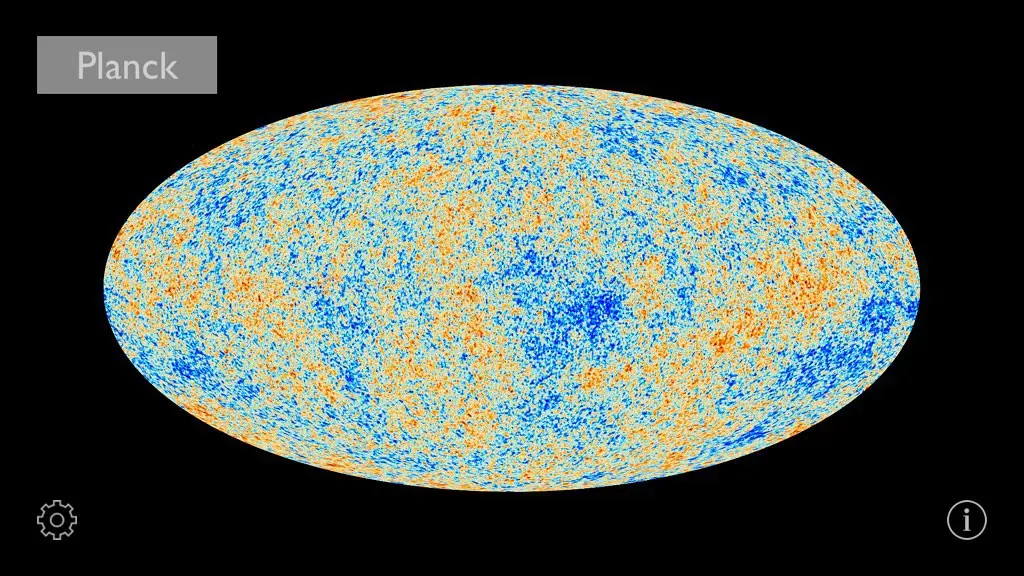
If you roll the cosmic clock back almost all the way to the beginning, you find the universe in a hot, dense, uniform state, filled with a kind of glowing fog. As it expanded and cooled, tiny variations in density left faint imprints in the cosmic microwave background, the leftover radiation you can still detect today as a very cold, almost uniform glow filling all of space. When you look closely at this glow and analyze its slight temperature variations, you basically get a snapshot of the infant universe and the seeds of all later structure.
Here is the twist: when you compare those ripples with models of how the universe should evolve, you discover you cannot get from those baby ripples to the rich web of galaxies you see today unless there is a lot of additional, invisible matter helping gravity along. Dark matter behaves like a silent partner in the early universe, clumping together well before normal matter can, and providing deep gravitational wells for gas to fall into. As you follow that story through cosmic time, you realize that without this hidden substance, galaxies like your own Milky Way would be extremely hard to form in the time available. The universe you know appears to be built on a foundation you can never see directly.
What Dark Matter Might Be: Exotic Particles You Never Meet
Once you accept that something unseen is shaping galaxies and bending light, the obvious question hits you: what is it actually made of? Your familiar catalogue of particles – electrons, protons, neutrons, photons – does not do the job. If the hidden mass were made of ordinary stuff, it would interact with light, heat up, cool down, and clump in ways that do not match what you observe. That pushes you toward the idea that dark matter is made of entirely new kinds of particles, beyond the standard menu of physics that you learn in school.
Physicists have proposed a zoo of candidates, from heavy, slow-moving particles that barely interact with anything, to ultralight particles that behave more like waves spread out over huge distances. You might hear about ideas like weakly interacting massive particles or axions, each with its own predictions about how dark matter should be distributed and how rarely it might bump into regular matter. The frustrating part for you, as a curious observer, is that after decades of hunting in deep underground detectors, particle accelerators, and astronomical surveys, none of these candidates has stood up and said, “I am the one.” You are stuck in a detective story where the clues are real, the crime scene is the whole universe, and the culprit remains just out of reach.
Why You Still Have Not Caught It After Fifty Years
It might sound strange that you can be so confident dark matter exists and still admit you have not directly detected a single particle of it. But that is exactly the position modern cosmology is in. Since the mid-twentieth century, the evidence from galaxy motions, galaxy clusters, large-scale structure, and the cosmic microwave background has only piled higher. Each independent test points you toward a universe dominated by a non-luminous form of matter. Yet when you build exquisitely sensitive detectors designed to catch a rare interaction – maybe one dark matter particle bumping into an atomic nucleus in a tank of ultra-pure material – you keep coming up empty-handed.
This long string of null results forces you to rethink your assumptions. Maybe dark matter is lighter than you thought, or heavier, or interacts even more weakly than your original models allowed. Maybe it comes in several varieties, or maybe your basic understanding of gravity needs a subtle update. For now, the weight of the evidence still favors the dark matter picture, but you are reminded that nature does not owe you easy answers. If the hidden majority of matter in the universe is playing hard to get, that just means your tools and imagination have to grow sharper.
How Dark Matter Shapes the Cosmic Web You Live In
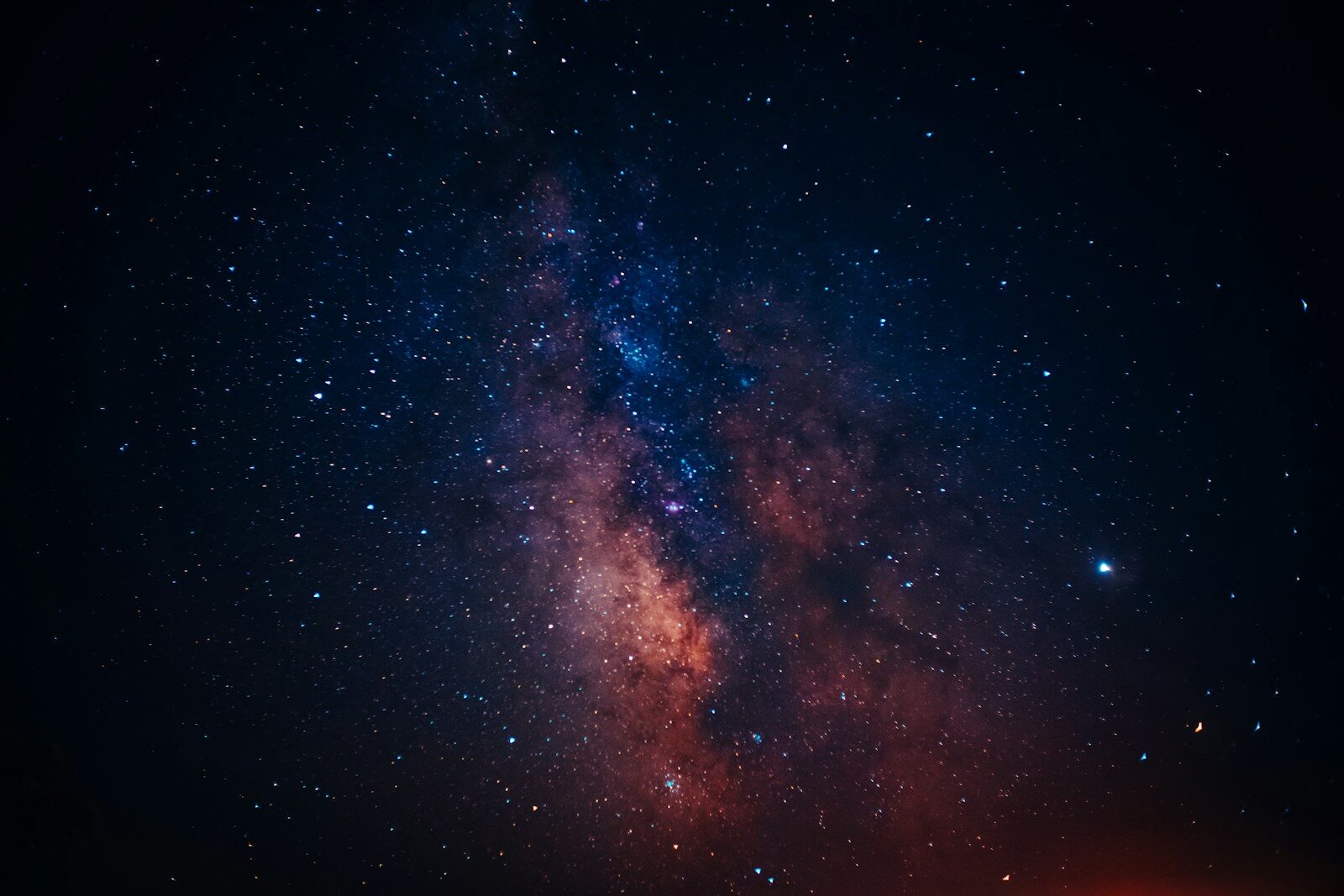
When you zoom out and look at the universe on the largest scales, you no longer see isolated galaxies sprinkled randomly through space. Instead, you see a vast, interconnected pattern sometimes called the cosmic web. Galaxies gather in clusters and superclusters, linked by long filaments and separated by enormous voids where almost nothing shines. When you run large computer simulations that start from the early-universe conditions and include a dominant component of dark matter, you naturally produce this web-like structure. In a very real sense, dark matter is the skeleton on which the luminous universe hangs.
For you personally, this means your own galaxy, your solar system, even your body sit in a region of space threaded by these invisible filaments. The Milky Way is probably wrapped in a huge halo of dark matter that extends far beyond the visible disk, and your solar system orbits within it as if swimming through a very thin, almost ghostly sea of particles. This sea is so diffuse that you do not notice it in your everyday life, but on galactic and intergalactic scales, its gravitational pull is the main sculptor of cosmic architecture. The bright stars and nebulae that catch your eye are simply the glowing highlights on a much larger, darker canvas.
What It Means for You: Living in a Universe You Barely See
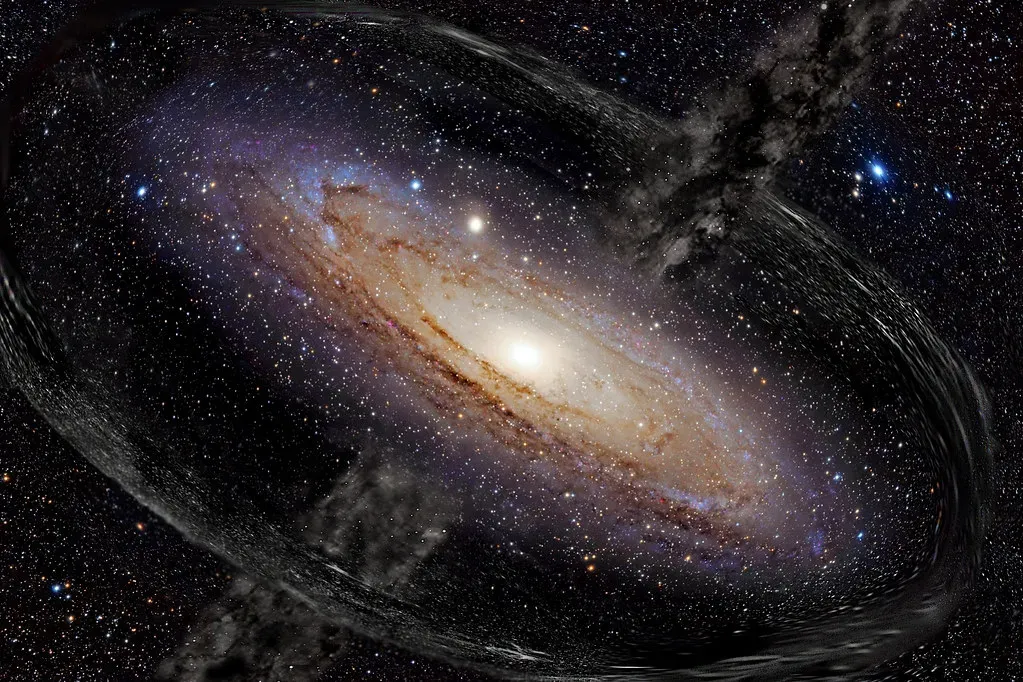
Once you absorb the idea that the darkest patches of sky are actually packed with unseen matter, your sense of place in the universe shifts. You realize that your senses are tuned to a narrow slice of reality, optimized for survival on a small planet rather than for grasping the full structure of the cosmos. Your eyes latch onto stars and galaxies because they shine, but the real mass, the real backbone of the universe, lurks in the shadows your vision ignores. The night sky becomes less a sparse field of lights and more a hint of a much denser, hidden world.
There is something oddly comforting in this, too. You are part of a species that has managed, in a few generations, to figure out that the universe is far stranger and richer than it appears. Even though you cannot yet hold a dark matter particle in your hand or see a photograph of one, you can trace its influence across billions of light-years and billions of years of cosmic history. As you stand under the stars and look at the black spaces between them, you can remind yourself that those dark swaths are not empty at all. They are full of something profound that you have only just begun to suspect, and the fact that you can even ask about it is a kind of quiet miracle.
In the end, dark matter forces you to live with mystery in a very concrete way. You know it shapes galaxies, guides light, and outweighs all visible matter combined, yet it still slips through your detectors without a trace. That tension between strong evidence and incomplete understanding is not a sign of failure; it is the heartbeat of science itself. The next time you look up into what seems like emptiness, you might feel a little thrill knowing that most of the universe is hiding there, just beyond your reach. And really, would it be as exciting if you already had all the answers?