
You know that tiny jolt you feel when you spot a spider in the shower or a snake in a nature documentary, even if you’ve never actually been in danger from either one? That reaction is so fast and so visceral that it almost feels like it bypasses thought entirely. You might even laugh it off, but the truth is, your body is acting as if it just got a message from an ancient alarm system wired deep inside your brain. You’re not just being “jumpy” or “dramatic” – you’re tapping into something that has been shaped over countless generations.
What’s wild is that people who grow up in places with almost no venomous spiders or snakes often have the same instinctive response as those living near truly dangerous species. Evolutionary science suggests that this isn’t a coincidence; it’s a kind of inherited readiness, like software preinstalled before you were born. You may never have met a lethal snake, but your ancestors did, and that history still lives in you. Once you start seeing your fears as ancient survival tools rather than personal quirks, your own reactions suddenly look a lot less random – and a lot more meaningful.
The Deep Roots Of Your Fear: Why Evolution Targets Spiders And Snakes
If you could rewind human history back hundreds of thousands of years, you’d see your ancestors walking through environments where a single bite could mean death. Spiders and snakes were not movie villains or Halloween props; they were silent, real threats hiding in the grass, under rocks, or in dark corners. Over time, the people who were quicker to notice and avoid these animals were more likely to survive and have children, and that advantage added up across generation after generation. You inherited the brain shaped by those successful survivors, not by the ones who casually reached into holes without looking.
That’s why your fear shows up even in places where venomous species are rare or absent: your brain isn’t calibrated to your ZIP code; it’s calibrated to your evolutionary past. You can think of it like an old security system that still treats every rustle in the bushes as a potential ambush, even if your biggest daily danger is tripping over a charging cable. Evolution is conservative; it tends to keep strategies that worked, even if the world has changed. So when you flinch at a harmless garden spider, you’re running an age-old survival playbook that once made the difference between life and death.
Your Brain Is Wired To Spot Snakes And Spiders Shockingly Fast

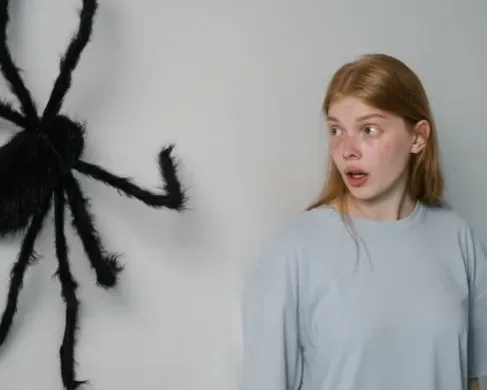
When you notice a spider on the wall before you notice the giant painting next to it, that’s not an accident – your visual system is biased. Studies have repeatedly found that people detect images of snakes or spiders more quickly than neutral objects like flowers, mushrooms, or birds, even when everything is shown briefly and in cluttered scenes. Your brain seems to treat these shapes as priority items, flagging them in milliseconds. You don’t sit there saying to yourself, “Hmm, let me carefully inspect this area for eight-legged arthropods”; your eyes and brain are already on the job before you realize it.
What’s even more telling is that this quick detection happens in both adults and very young children, including those who haven’t had bad experiences with these animals. That suggests you’re not starting from a blank slate. Instead, you’re born with a kind of template for “this might be dangerous” that gets activated by certain shapes and movements. Your modern world might be full of cars, power tools, and electrical sockets – all of which can hurt you badly – but your brain is disproportionately good at finding that one spider hanging in the corner. It’s like having an internal search engine that auto-focuses on very old threats.
Babies, Fear, And The Question: Are You Really Born Afraid?

You might wonder whether you come into the world already afraid of spiders and snakes or whether you simply learn that fear from adults and culture. Interestingly, when researchers show babies pictures of snakes or spiders paired with certain sounds, babies tend to pay more attention and show heightened responses compared with other animals or objects. That doesn’t necessarily mean a newborn is terrified, but it does suggest a built-in alertness. In other words, your brain seems tuned to treat these creatures as “special cases” from very early on, long before you binge-watch nature documentaries or hear anyone screaming in the kitchen.
What you seem to inherit is not a fully formed, inevitable phobia, but a strong readiness. Think of it as preloaded software waiting for updates. If you grow up seeing calm, neutral reactions to spiders and snakes, that initial sensitivity might stay relatively mild. If you grow up seeing panic, disgust, or constant warnings, that same sensitivity can blossom into a full-blown fear or phobia. So you’re probably not doomed from birth to be terrified, but you are starting the game with a deck that’s slightly stacked in favor of caution around these shapes and movements.
Fear Before Experience: Why You React Even Without Local Threats

Here’s the part that really drives home how deep this wiring goes: you might feel intense fear of snakes even if you’ve never encountered a venomous one in your home country. Many people’s strongest experiences with snakes come from movies, photos, or zoo visits, yet their bodies react as if they’ve stepped into real danger. Your heart rate spikes, your palms sweat, you freeze or jump back. That mismatch between actual risk and emotional response can be confusing, and you might even judge yourself for it. But from an evolutionary standpoint, it makes sense to lean toward overreaction rather than underreaction.
Imagine your ancestors walking through unfamiliar territory. They didn’t have a detailed map of which regions had deadly species and which did not; the safer bet was to treat any snake-like or spider-like shape as a possible threat. Being a little too cautious in a safe area cost almost nothing. Being too relaxed in a dangerous area could cost everything. That “better safe than sorry” logic carries over into your modern life, even in neighborhoods where the most hazardous animal you’ll meet is a grumpy squirrel. Your fear is not perfectly aligned with your personal history; it’s aligned with a long, uneven history that started long before your city, your country, or your current ecosystem existed.
The Brain’s Fear Circuit: How Ancient Threats Bypass Your Rational Mind

When you react to a snake or spider, the part of your brain doing the heavy lifting is not the calm, logical voice that helps you compare insurance plans. Deep structures like the amygdala are involved in rapid threat detection and emotional responses, and they can act in a split second, before your rational brain has fully processed what you’re seeing. That’s why you might find yourself jumping back from a coiled garden hose before you realize it’s not a snake. Your brain absolutely prefers a false alarm to a missed one when it comes to ancestral threats.
Over millions of years, this circuitry was constantly fine-tuned by natural selection. Every time a fast, defensive reaction helped someone avoid a deadly bite, that pattern got another small reinforcement in the genetic lottery. You’re living with the outcome of thousands of such tweaks, which explains why your fear can feel automatic, almost involuntary. Logical knowledge – like knowing that the spider on your ceiling is harmless – can help you calm down afterward, but it often arrives late to the party. By the time your rational brain chimes in, the ancient alarm has already sounded.
Culture, Stories, And How Your Environment Amplifies Ancestral Fear
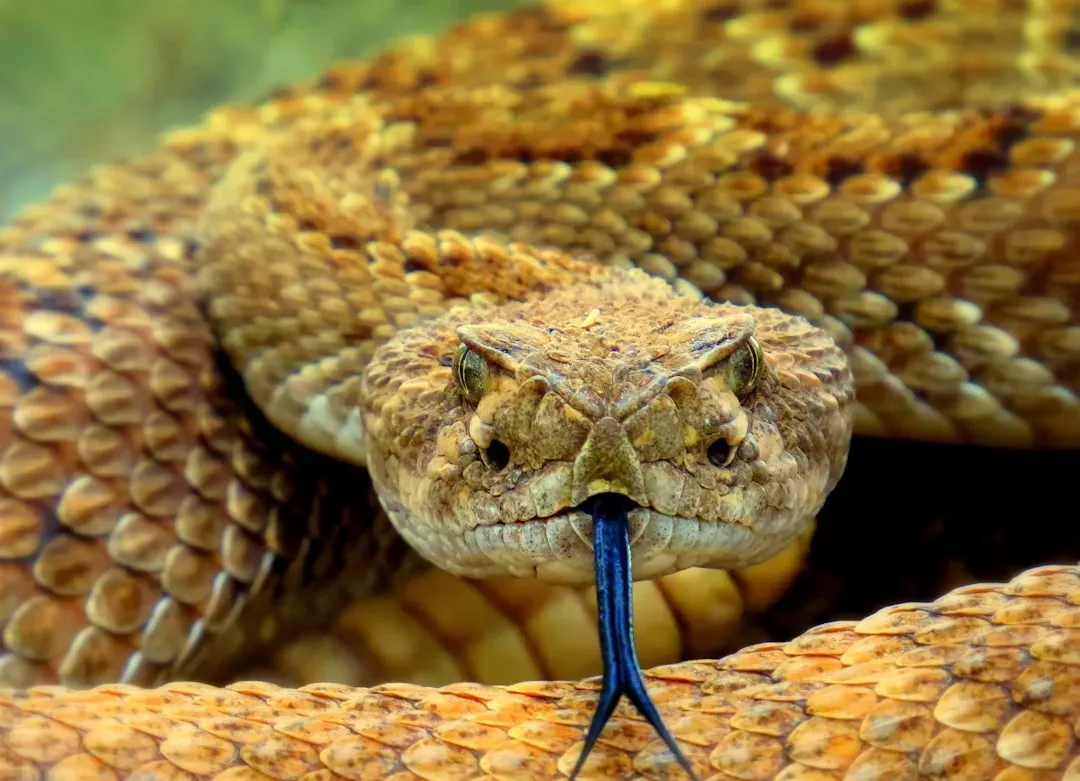
Even though your fear has ancient roots, it’s not frozen in time. Culture, stories, and personal experiences all interact with this biological baseline. You grow up surrounded by tales where spiders and snakes are villains, symbols of treachery, poison, or lurking danger. Horror movies zoom in on their fangs and eyes, nature shows linger on their strikes, and social media rewards dramatic reactions more than calm, educational ones. All of that adds extra fuel to a fire that is already smoldering in your nervous system, making your responses stronger and more memorable.
On the flip side, some cultures and communities treat snakes and spiders with respect or even reverence, seeing them as powerful, protective, or spiritually meaningful. If you were raised in an environment where people handled them carefully but calmly, your fear might have grown in a different direction – more cautious awareness than outright panic. That’s the key point: the evolutionary “encoding” in your brain sets the stage, but your life writes the script. You’re not just a prisoner of your genes; you’re also shaped by what you’re taught, what you see, and how the people around you react.
When Normal Fear Becomes A Phobia – And What You Can Do About It

It’s one thing to feel uneasy when you see a spider sprint across your living room, and another thing entirely to avoid basements, parks, or even pictures in books because of it. When your fear starts to interfere with your daily life – making you rearrange activities, avoid places, or feel trapped by constant worry – it’s moved beyond a useful evolutionary warning and into the territory of a phobia. That doesn’t mean you’re weak or irrational; it means that an ancient system designed to keep you safe has gotten stuck on maximum volume.
The encouraging news is that you’re not stuck with that setting forever. Techniques like gradual exposure, cognitive behavioral strategies, and working with a mental health professional can help you retrain your threat responses. Essentially, you’re teaching your ancient brain that certain modern situations are actually safe. Over time, your body can learn to stand down instead of launching into full-blown alarm at every eight-legged silhouette. You’re not changing the fact that your species evolved to be wary of spiders and snakes; you’re updating how that wariness plays out in your everyday life.
Living With Old Fears In A New World

Once you understand that your instinctive fear of spiders and snakes was shaped long before modern houses, cities, and national borders existed, your reactions start to look less like personal flaws and more like inherited survival tools. You’re carrying a nervous system that remembers landscapes your feet have never touched. That old memory does not care whether you live in a downtown apartment or a rural village; it still thinks that something small, fast, and potentially venomous deserves your full attention. In a strange way, every startled jump is a nod to how many of your ancestors successfully navigated a far more dangerous world.
At the same time, you’re not just a museum piece of ancient instincts. You can choose how to respond after that first jolt – whether to lean into curiosity, seek accurate information, or practice calming techniques. You can respect the evolutionary story behind your fear without letting it dictate your every move. So the next time you feel your heart race at the sight of a spider on the wall or a snake on a trail video, you might pause and think: this fear was written into human brains long before my neighborhood even existed. Knowing that, how do you want to relate to it now?