
You grow up hearing that dragons belong in fantasy novels, video games, and CGI-heavy movies. But if you step back into the centuries before you, you find something much stranger: serious churchmen, royal chroniclers, physicians, sailors, and naturalists calmly writing about dragons as if they were just another part of the world. To them, dragons were not just spooky decorations in the margins of maps. They were animals you might meet on the road, omens sent by God, or terrifying hazards at sea.
When you look closely at those accounts today, you can feel two powerful and conflicting reactions at once. Part of you wants to roll your eyes and say everyone was gullible. Another part of you wonders what on earth people were actually seeing, fearing, or trying to explain. Those old “sightings” sit right on the blurry line between myth and reality, and they tell you far more about human imagination, anxiety, and early science than about any literal fire‑breathing reptiles. Let’s walk through ten of the most striking cases history really did take – and what you can make of them now.
1. When Natural History Books Listed Dragons Like Real Animals

If you had picked up a learned natural history book in Renaissance Europe, you would have found dragons listed alongside lions, elephants, and crocodiles. Authors such as Pliny the Elder in antiquity and later early modern naturalists treated dragons as creatures that lived in far-off lands, usually India or Africa, described with “measurements,” habitats, and behavior in the same calm tone used for camels or leopards. You would have been told that some dragons hunted elephants, wrapped around their legs, and suffocated them, and nobody writing those passages thought they were doing fantasy.
From your perspective today, it is easy to underestimate how persuasive a printed book once was. When your world has no internet, little travel, and very slow scientific correction, you lean heavily on the authority of big compilations of knowledge. If a sober, Latin‑writing scholar says dragons exist, and repeats older authoritative writers who said the same, you are highly likely to accept it. In that context, “dragon sightings” were less about one dramatic event and more like a continuous assurance from the educated class that somewhere out there, these creatures prowled. You end up with a world in which you, a literate person in the sixteenth century, could argue about the correct size of a dragon’s wings the way you might debate whale species today.
2. Dragons Crawling Over Medieval World Maps
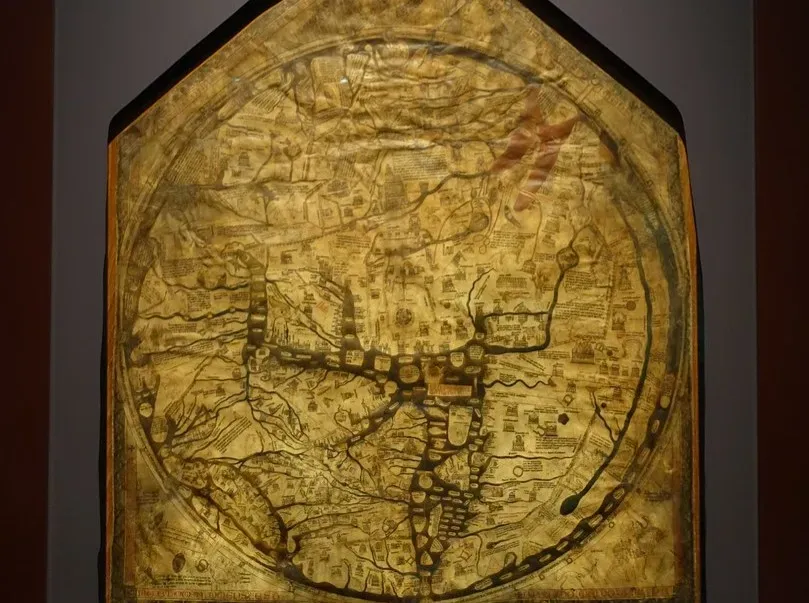
Imagine unrolling a giant medieval world map in a cathedral or scriptorium and seeing not just cities and rivers, but strange beasts swimming off the coasts and crouching in distant mountains. On maps such as the famous Hereford Mappa Mundi, you would have seen dragons and dragon‑like monsters scattered near the edges of the known world. These were not doodles meant to be cute; they were part of how scholars of the time believed the world was structured, mixing geography, theology, and travel lore into one visual argument about reality.
When a mapmaker put a dragon just beyond a familiar coastline, you were meant to take it as a warning and a claim: beyond this bay or desert lie creatures so strange that only travelers’ tales and scriptural interpretation can describe them. Later mappers adopted similar habits, putting sea serpents and dragon‑ish beasts in oceans that had barely been explored. For you, used to satellite images and precise charts, that seems decorative. For someone in the thirteenth or fifteenth century staring at that same map, dragons were a way to fill in terrifying blanks. Just because they were drawn near “here be monsters” zones did not mean people thought they were metaphor only; they were the best guesses of the day about what might really live where no one you knew had gone.
3. Saint George’s Dragon as a Historical Event
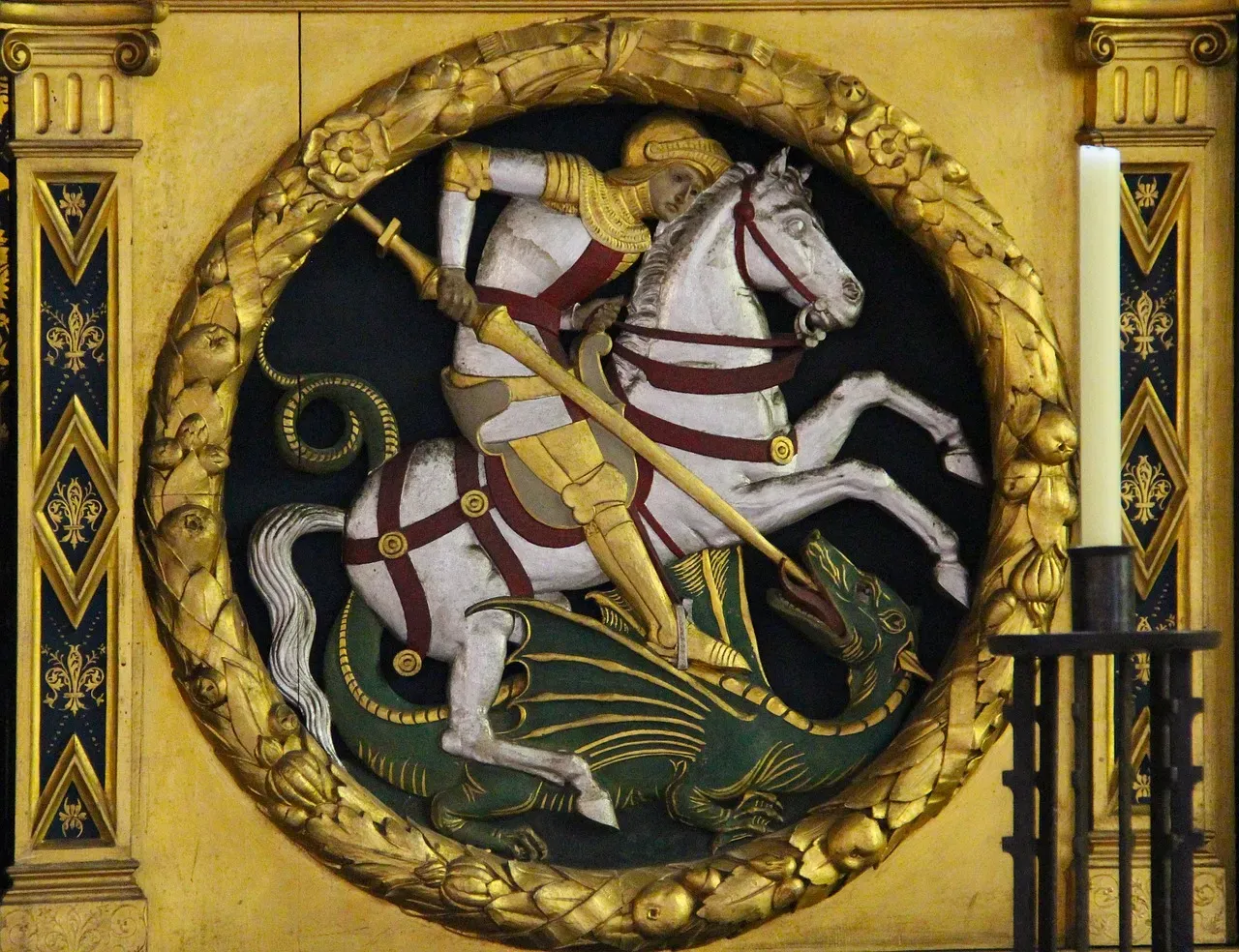
You probably treat the story of Saint George and the dragon as a fairy tale, but for medieval Christians, it sat dangerously close to history. By the late Middle Ages, the story told you that a real Roman soldier‑saint saved a real princess in a real city from an actual dragon that terrorized the locals until they promised to convert. Compilations of saints’ lives, which people read for moral instruction and factual edification, recounted the episode as though it were just one more miracle report, no more doubtful than a healing or a martyrdom.
When you stood in a church and looked up at a painting or sculpture of George striking his spear into a writhing dragon, you were being asked to believe this was something that had truly happened in time. Preachers used the dragon both symbolically and literally. You might be told that the monster represented paganism or sin, but also that such beasts genuinely inhabited desolate places. For many centuries, the dragon in George’s story functioned like a semi‑historical animal whose defeat had geopolitical and spiritual consequences. You were not supposed to shrug it off as a nice myth any more than you would shrug off accounts of battles or plagues.
4. Beowulf’s Final Dragon and the “Real” Wyrm
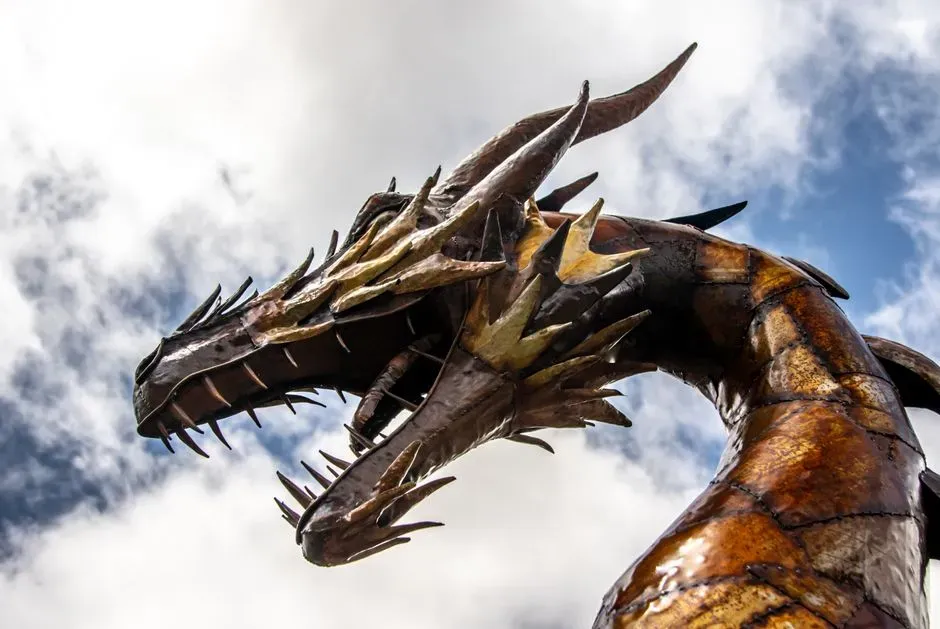
When you read Beowulf now, you treat the dragon that appears at the end as legendary, the natural climax of an epic poem filled with monsters. To the original audience in early medieval northern Europe, though, that dragon was not just a symbol of greed or doom. The poem draws on a broader Germanic sense that dragons, or wyrms, belonged to the same world as wolves and bears, even if they were thankfully rare and mostly far away. If you had heard the story recited in a hall, you might have nodded along at details of its lair, its hoard, and its fiery revenge, because they matched expectations you already held about such beasts.
The poem’s dragon is described in ways that echo more prosaic references to dragons in other early medieval texts, where they sometimes appear as hazards, portents, or animals who guard ancient treasures. You are not dealing with a clear boundary between “myth” and “natural history” in that culture. A dragon could be both a metaphor and a terrifying creature someone might swear their grandfather’s cousin once saw on a bleak hillside. When the story has Beowulf’s people later remember the dragon’s attack as a real calamity, you can glimpse how comfortably listeners could slide between poetic drama and a world where such a monster might just exist over the next range of hills.
5. Chronicles That Calmly Record Dragons in the Sky
If you flipped through certain medieval chronicles, you would find short, serious entries that sound oddly like local news: a comet appeared this year, there was an earthquake, and dragons were seen flying in the air. To their authors, those were all pieces of the same puzzle – signs in nature that God sent to comment on human events. When a chronicle reports that in such‑and‑such a year, fire‑breathing dragons or fiery serpents appeared overhead, you are reading what the writer thought was a factual record of prodigies that deserved to be preserved.
From your vantage point, it is fairly clear that these “dragons” were probably bright meteors, comets, auroras, or atmospheric phenomena interpreted through a dragon‑shaped lens. You know that when you see something strange in the sky, your brain races to match it to existing patterns: aircraft, fireworks, satellites. A medieval viewer reached for dragons and serpents instead. That does not make the sighting itself insincere; in fact, it shows you how honestly people tried to make sense of dazzling, frightening events using the limited explanatory tools they had. A chronicler writing “dragons were seen in the air” was, in his mind, doing honest work, not spinning fantasy.
6. Sea Serpents: Dragons of the Deep
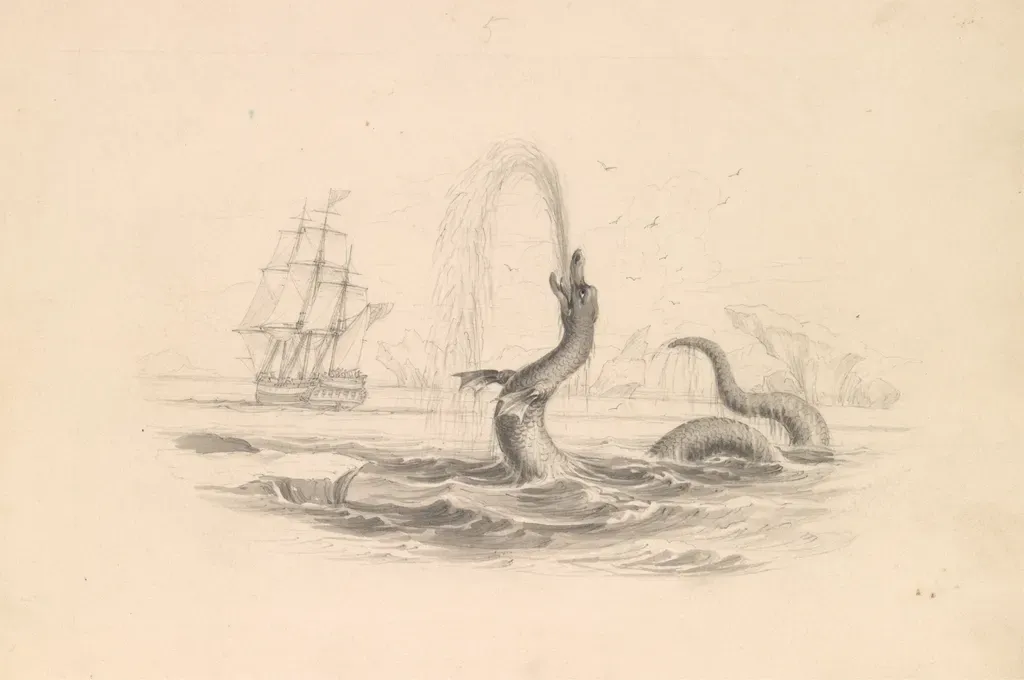
Out on the open ocean, long before sonar and marine biology textbooks, almost anything unusual could turn into a monster in your mind. Sailors’ logs and later newspapers carried accounts of enormous, serpentine creatures rising from the sea, with humps along their backs and heads like horses or camels. Many of those narratives were treated so that scientific societies set up committees to investigate them, sketch the creatures, and decide if a new species had been found. You would have been reading about sea serpents in respectable reports, not just lurid penny pamphlets.
When you compare those descriptions with what you now know swims in the ocean, a less magical picture emerges. Elongated whales, oarfish, basking sharks, and even whales tangled in ropes or debris can look eerily like giant serpents from the right angle. Nineteenth‑century naturalists already suspected that many sightings were misidentifications, and modern researchers have gone further, suggesting that “battles” between sea serpents and whales were often whales struggling against entanglements. Still, if you imagine yourself standing on a ship’s deck in rough seas, exhausted and half‑blind with spray, you can see how easily a half‑glimpsed creature could become an unquestionable sea dragon once you and your crewmates began to talk about it.
7. Fossil Bones and “Dragon” Skulls in the Ground
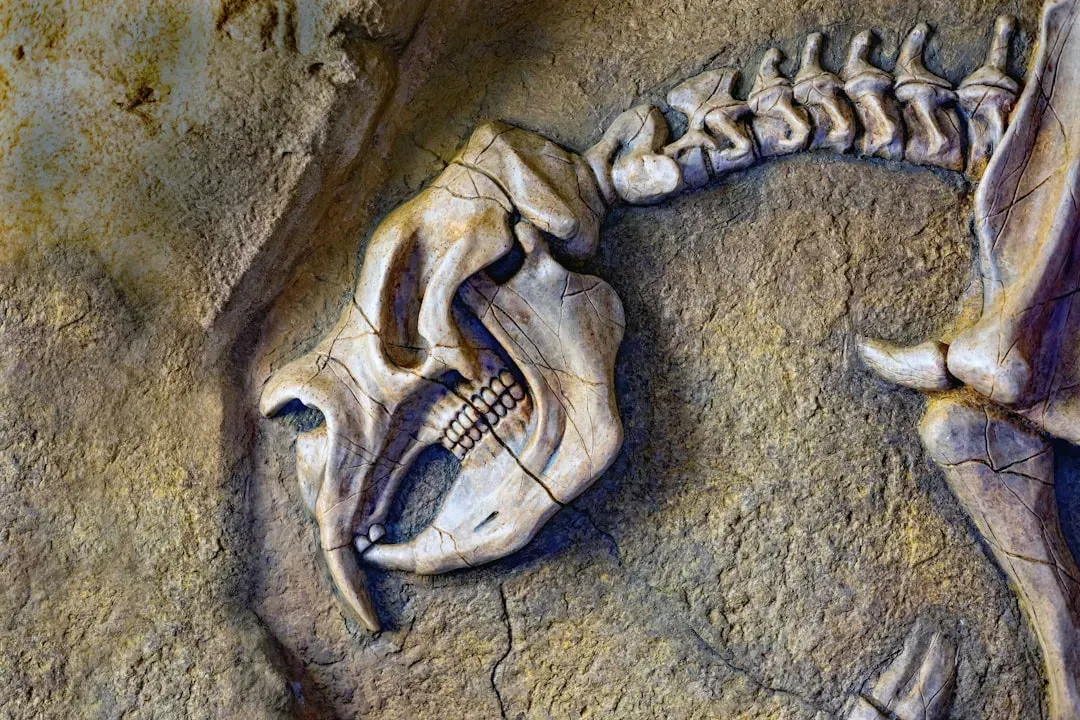
Long before paleontology gave you dinosaurs, people were digging up big, puzzling bones and skulls and trying to make sense of them. In parts of Europe and Asia, villagers unearthed huge fossilized remains that did not match any animal they knew. Without a framework for deep time or extinction, the simplest conclusion for many communities was that these must be the bones of dragons or dragon‑like monsters. Local shrines and town halls sometimes displayed such “dragon bones” as trophies and protective relics, and no one saw that as playful fiction.
If you walked into one of those spaces, a priest or town elder might show you an enormous skull and tell you in all seriousness that a dragon once plagued the region until a hero or saint slew it. You are seeing a genuine scientific problem – mysteriously large bones – answered with the best story available in that culture. In hindsight, you know some of these remains likely belonged to prehistoric mammals or reptiles, or to crocodiles moved from distant regions. But faced with a massive jawbone and legends already circulating about serpents and winged beasts, it would have taken a remarkable leap for you to say, “Perhaps this is from a totally unknown kind of animal that died out millions of years ago,” instead of, “So that dragon story was true after all.”
8. Local “Dragons” as Very Real Regional Hazards

Across Europe, you find place‑names and local legends tied to specific dragons: a cave where a worm supposedly lived, a hill where a dragon’s blood flowed, a lake that once held a lurking beast. For the people who lived there in past centuries, these were not vague myths. They formed part of the practical mental map of the landscape. You might avoid a marshy area at night because stories said a dragon or great snake haunted it, and when neighbors claimed to hear roars or see glowing eyes, they were speaking from what they thought was experience, not playing along with a game.
From your position now, you can see likely candidates behind many of those stories: large snakes, boars, bears, or even geological hazards like toxic gases and sinkholes that got blamed on a beast. If people and animals died mysteriously at a certain spot, calling it a dragon’s haunt turned random tragedy into a coherent narrative. It also gave your community a way to imagine victory over danger, by telling tales of a knight or peasant who finally defeated the creature. So when someone in the seventeenth century wrote down that a dragon once ravaged a region and was slain, you are reading a community’s attempt to compress lifetimes of fear, real risks, and half‑seen animals into one very serious “sighting” story.
9. Bestiaries That Explained Dragon Biology

If you leafed through a medieval bestiary – a kind of illustrated animal encyclopedia used for teaching – you would find dragons with detailed descriptions of their bodies, habits, and weaknesses. The text might explain that dragons lurk in caves, hate elephants, or suffocate prey by coiling around them. Each detail was accompanied by a moral lesson, comparing the dragon to sin or the devil. But the physical description itself was often presented as straightforward zoology. To you, that feels like reading a biology textbook that suddenly inserts unicorn anatomy between deer and goats.
The people copying and reading those bestiaries, though, did not draw a sharp line between creatures they had personally seen and ones reported by authoritative tradition. If Scripture, classical authors, and church teachers all treated dragons as part of the created order, you had no compelling reason to doubt it. The result is that a child or monk turning those pages in the thirteenth century would have absorbed dragon lore as part of how the natural world works. You can think of those bestiaries as handbooks for how to imagine reality; dragons went in not because somebody sat down to write fantasy, but because older “sightings” and stories had already persuaded people that these animals really did inhabit remote corners of God’s earth.
10. The Long, Slow Death of the Dragon as a “Real” Creature
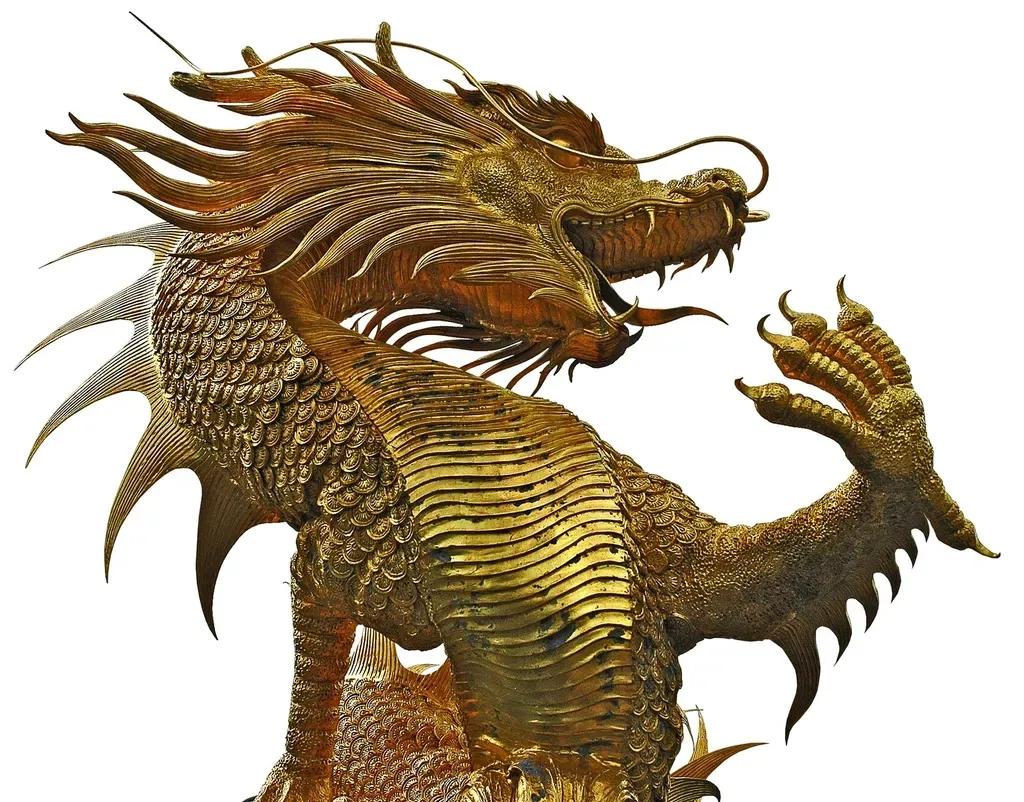
What may surprise you most is how late serious belief in dragons and sea serpent‑like creatures persisted. Well into the eighteenth and even nineteenth centuries, reports of massive, serpentine animals at sea or in remote lakes still reached newspapers and scientific societies. Committees drew up tentative descriptions, and some naturalists proposed Latin names for creatures they had never personally seen but were willing to accept on testimony. You are watching the last phase of dragons being treated as possibly real in learned circles, just as geology, zoology, and global exploration were closing off mystery after mystery.
As better maps, faster ships, and more systematic science spread, the “dragon” category shrank. Each time a supposed sea serpent washed ashore and turned out to be a decaying shark, each time a “dragon bone” was re‑identified as part of a known animal, the space for literal dragons got tighter. By the time you reach the modern era, dragons have fully migrated from natural history into fantasy and fiction, and you meet them in role‑playing games and novels instead of scholarly treatises. Yet echoes of those old, serious sightings linger in everything from cryptid stories to conspiracy‑tinged online debates. When you see a dragon today on screen or page, you are looking at a creature with a surprisingly long paper trail behind it.
Conclusion: What You Really See When You Look for Dragons

When you trace these ten strands of dragon “sightings,” you are not collecting evidence for real fire‑breathing reptiles. You are watching human beings like you wrestle with the unknown in the only language they had. Dragons stood in for misidentified animals, for unexplained bones, for dangerous places, for strange lights in the sky, and for moral anxieties about chaos and evil. But for centuries, those symbols were not neatly separated from reality. If you had lived then, it would have felt entirely reasonable to accept that somewhere beyond your horizon, scaled wings beat and long bodies coiled.
Looking back from 2026, you have the luxury of better data, but you are not as far from those people as you might like to think. You still turn UFOs, blurry wildlife photos, and deep‑sea shadows into monsters in your head before the facts come in. The dragon’s long career as a “real” creature reminds you that knowledge advances, but imagination never retires; it just finds new lairs. So the next time you see a dramatic headline about some unexplained beast, you might ask yourself: are you witnessing the birth of tomorrow’s dragon legend, or just replaying an ancient habit in a new disguise?