
You probably grew up with a picture in your head: the Big Bang as a kind of cosmic grenade going off at one point in empty space, spraying galaxies outward into the void. It feels intuitive, almost cinematic. The problem is, that picture is wrong in a deep, almost unsettling way. Modern cosmology says the Big Bang did not happen at one location in space. It happened everywhere at once, to all of space, and you are still living inside that ongoing story.
Once you really let that sink in, a lot of things you thought you knew about beginnings, centers, and edges start to wobble. You realize that your everyday sense of “where” and “when” was never built to handle something this large. Cosmologists have slowly learned to work with this idea using math, observations, and careful models. Your mind, on the other hand, keeps wanting to snap back to simpler images. That tension – between what the universe is really doing and what your brain prefers to imagine – is exactly what this article explores.
The Big Bang Was Not an Explosion in Space
When you picture the Big Bang as an explosion, you naturally imagine a central blast point, a cloud of debris, and a surrounding emptiness. You think of a firework in the night sky or a bomb going off in a field. But in cosmology, the Big Bang is not an explosion of stuff into space; it is an expansion of space itself. Matter did not fly out into a preexisting emptiness. Instead, every tiny patch of the early universe expanded, stretching distances and carrying matter along with it.
To see why this matters, imagine you are standing inside a loaf of raisin bread dough as it rises in an oven. The raisins are galaxies, and the dough is space. As the dough expands, every raisin sees every other raisin moving away. There is no central raisin where the “explosion” started; the whole dough is involved everywhere. That is the Big Bang: not a bomb in a room, but the room itself swelling, with you stuck to the walls and floor.
Every Point Was a Beginning – Including Where You’re Sitting
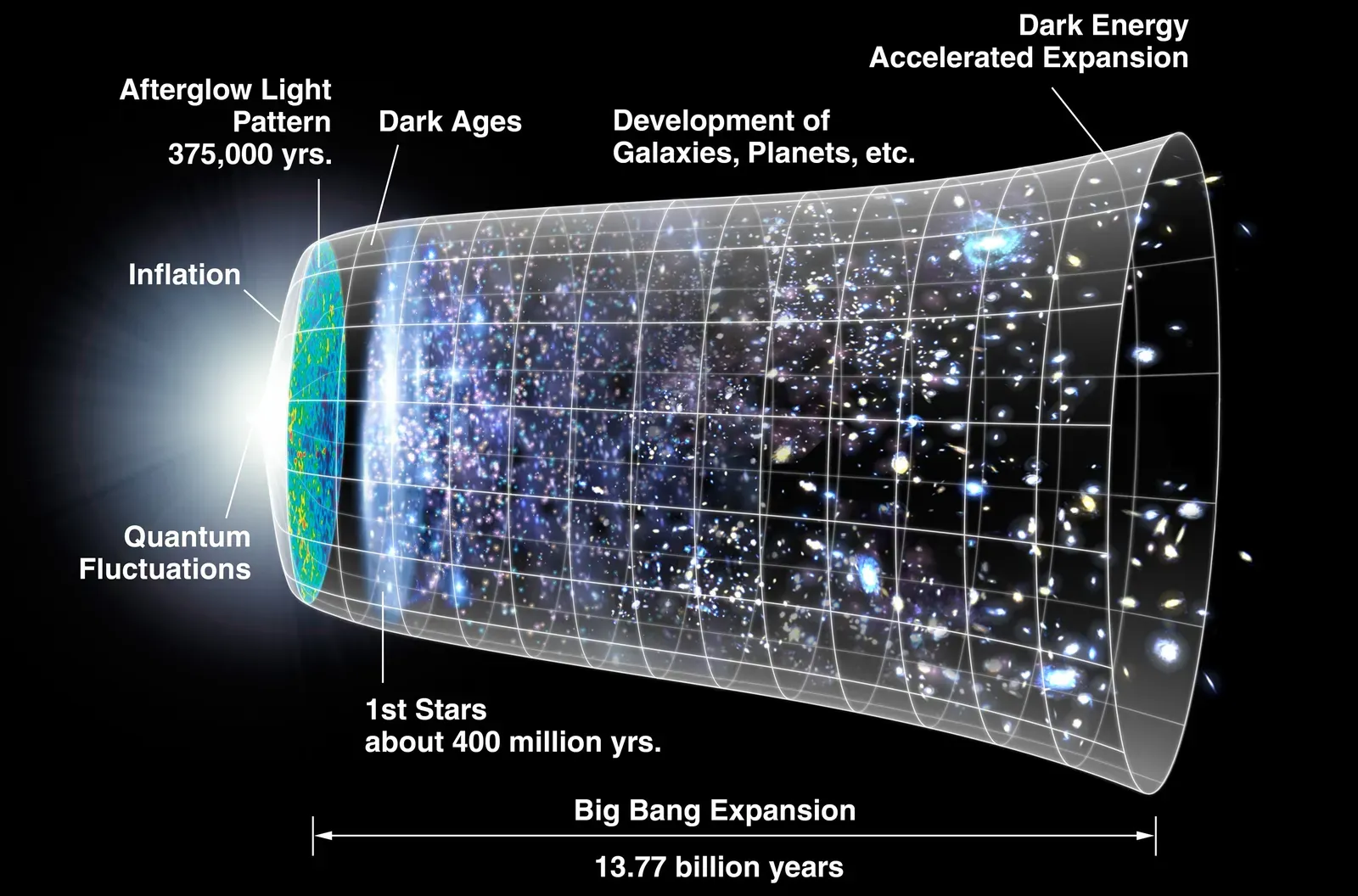
The really wild part is this: if you roll the cosmic clock backward, space does not shrink toward a point over there somewhere. It shrinks everywhere, including right where you are now. In a very real sense, the region of space that currently holds your chair, your room, and your body was once part of that hot, dense early universe. So was the region of space holding a distant galaxy billions of light-years away. There is no preferred birthplace; every location you can point to was once equally close to that beginning.
That means you are not looking out from a random spot toward the place where it all started; you are sitting inside a place that has been expanding for billions of years since its own beginning. When you look at the night sky, you are not seeing the aftermath of an explosion far away – you are seeing light from other regions of the same everywhere-at-once event. The Big Bang did not happen somewhere else in space. It happened to the very fabric of reality you occupy right now.
Why There Is No Center and No Edge to the Universe You See
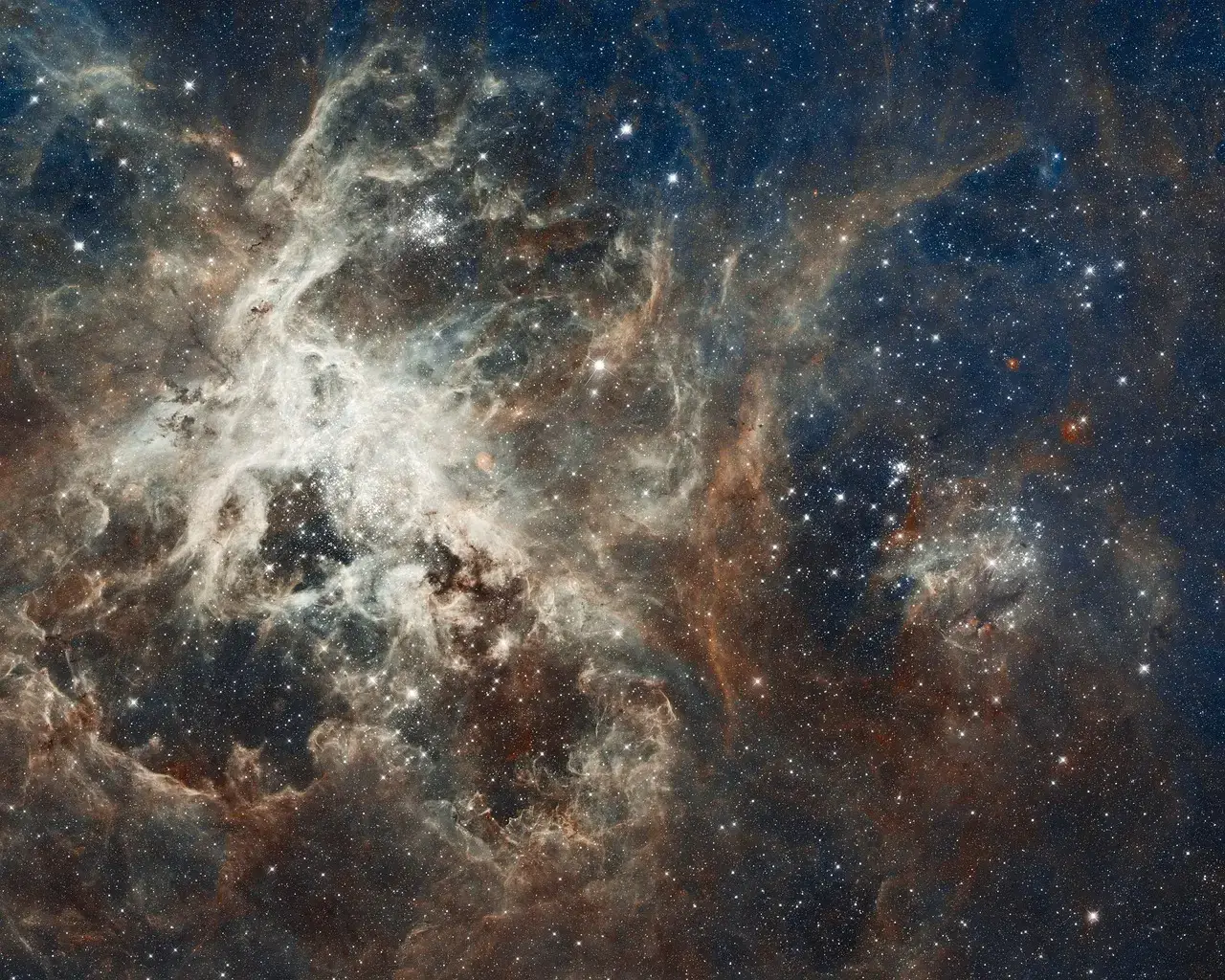
Your brain likes centers and edges. You want to know where the middle is and where it all stops. Cosmology, however, tells you that in the standard picture of the universe, there is no special central point where the Big Bang “happened,” and no physical edge where space abruptly ends. From your point of view, everything seems to be moving away from you in all directions, so it is tempting to put yourself at the center. But if you lived in another galaxy, you would see the same pattern and feel just as central.
A useful way to picture this is to imagine you are an ant walking on the surface of a balloon as it is inflated. The balloon’s surface represents space, but you can only move along that surface, not inside the balloon. As the balloon grows, every point on the surface recedes from every other point. Yet there is no center on the surface itself, and from the ant’s perspective there is no edge where the universe stops. The center lies in a dimension you cannot access in the analogy, and in our real universe, that extra perspective simply does not exist. You are always inside, never outside looking in.
How Cosmic Expansion Actually Shows Up in Your Night Sky
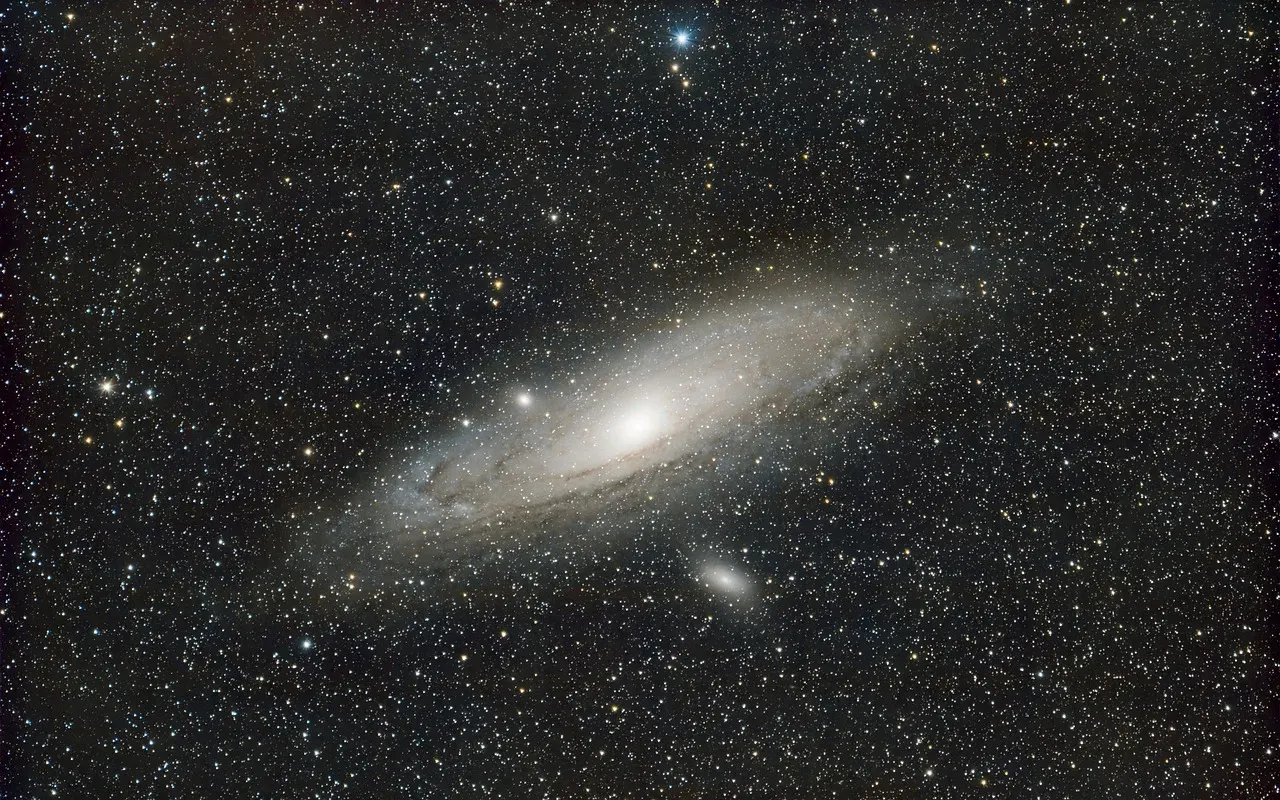
You do not see expansion by watching galaxies physically stretch in your backyard; you infer it from the light they send you. When astronomers aim telescopes at distant galaxies, they see that the light is shifted toward longer, redder wavelengths. The farther away a galaxy is, the more its light is shifted. You can interpret that as those galaxies receding from you – not because they are moving through space like rockets, but because the space between you and them has stretched while their light was in transit.
Here is the strange twist: from those galaxies’ own point of view, you are the one receding. Every observer sees roughly the same pattern: more distant galaxies appear to speed away faster, in all directions. This is exactly what you would expect in a universe where the underlying space is expanding everywhere, not in a universe where matter exploded from a single point. The sky you see at night is not a picture of fragments thrown out from a cosmic detonation; it is a map of how expansion has been unfolding across the entire cosmos.
Why Your Brain Keeps Reverting to the Wrong Picture
Your intuition was never designed for cosmology. It evolved to help you throw spears, read faces, and avoid cliffs, not to imagine four-dimensional spacetime or the global behavior of an entire universe. So when you hear “Big Bang,” your mind reaches for mental tools it already has: explosions, blasts, shrapnel, smoke. Those images come from everyday experience, and they feel vivid and satisfying, even if they are completely misleading in this context.
Even when you learn the correct story – that the Big Bang is an expansion of space everywhere at once – your brain tends to quietly smuggle in old pictures. You might imagine a preexisting void, or forget that your own location was part of the earliest universe too. That is normal. You are trying to use a backyard toolkit on a universe-sized construction project. The challenge is not just learning new facts; it is catching yourself when your imagination tries to simplify them back into something familiar but false.
Living in a Universe with No Absolute “Before” and “Outside”
The idea that the universe did not begin at a point in space also messes with your sense of before and outside. You might want to ask what existed “before” the Big Bang or what lies “outside” the universe. But in the standard cosmological model, time as you know it is part of the same spacetime that emerged in the Big Bang. Asking what happened before time began is like asking what is north of the North Pole. It sounds like a reasonable question, but the concepts you are using simply stop applying.
Likewise, an “outside” of the universe assumes space extends beyond everything we call the universe, which is not something standard cosmology requires or supports. The Big Bang is not something that happened inside a larger room. It is the origin and evolution of the room itself. There are speculative ideas – like multiverses and bouncing cosmologies – that try to go beyond this, but they are not yet backed by the same level of evidence. For your everyday understanding, it is safer and more accurate to accept that the universe is not sitting in a bigger container, and that the usual before-and-outside instincts do not have anywhere to grab on.
You Are Literally Made of the Universe’s Ongoing Expansion
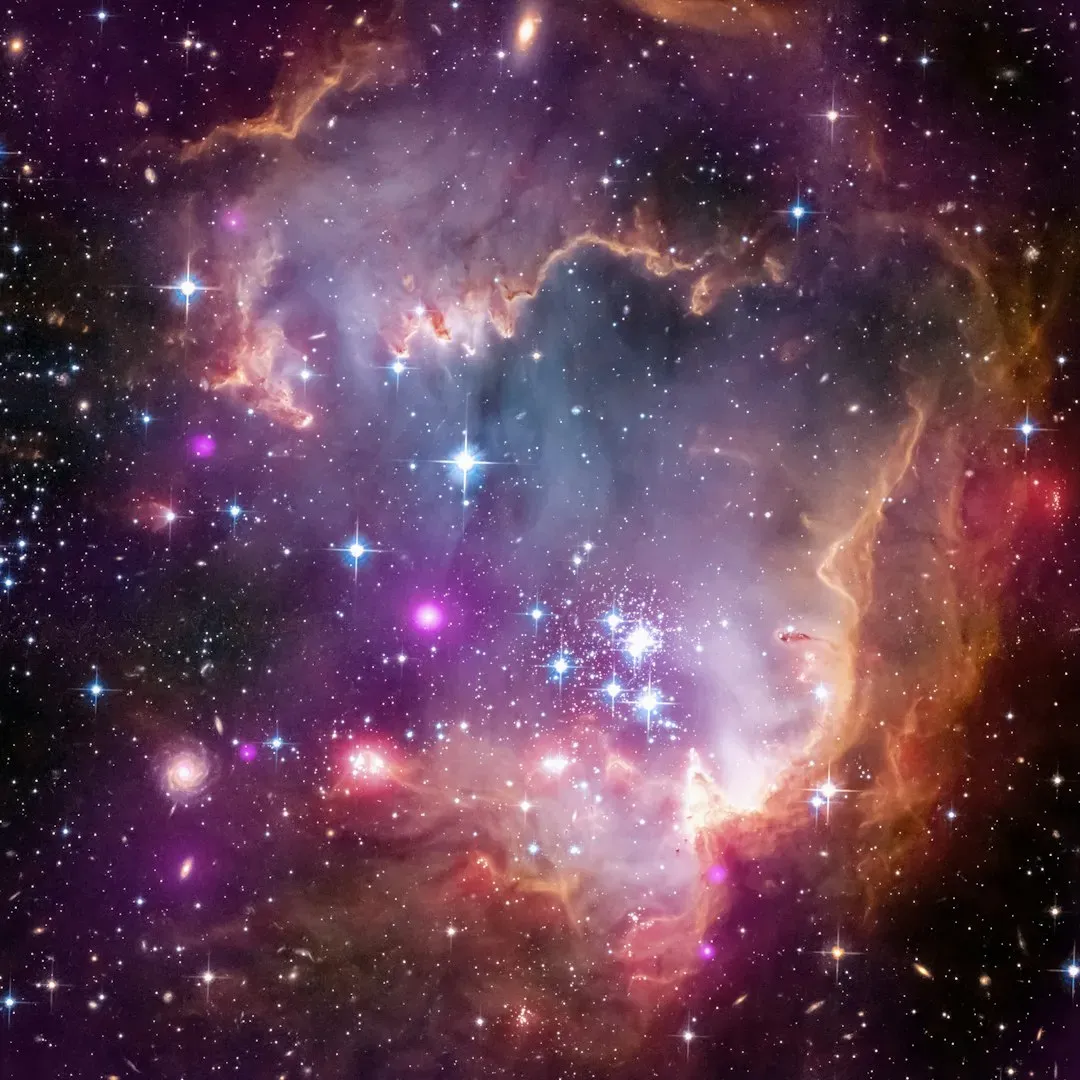
It is tempting to treat cosmology as something distant: big numbers, distant galaxies, abstract theories. But the fact that the Big Bang happened everywhere at once means it happened to the matter that eventually became you. The hydrogen in the water you drink traces back to the early universe. The heavier elements in your blood and bones were forged in stars and supernovae, which themselves formed as the expanding universe cooled and clumped. Your body is not just in the universe; it is a product of the universe’s expansion history.
If you froze the universe’s expansion at different stages and took snapshots, you would see a sequence that eventually leads to you sitting here, reading about it. You are effectively a pattern that the universe learned to make later in its own story, on one small planet orbiting one star in one galaxy among many. When you realize that your own existence depends on the Big Bang being an everywhere-at-once event, the whole thing stops being a detached science fact and starts feeling like a biography you are accidentally starring in.
How to Hold an Uncomfortable Idea Without Letting It Go Flat
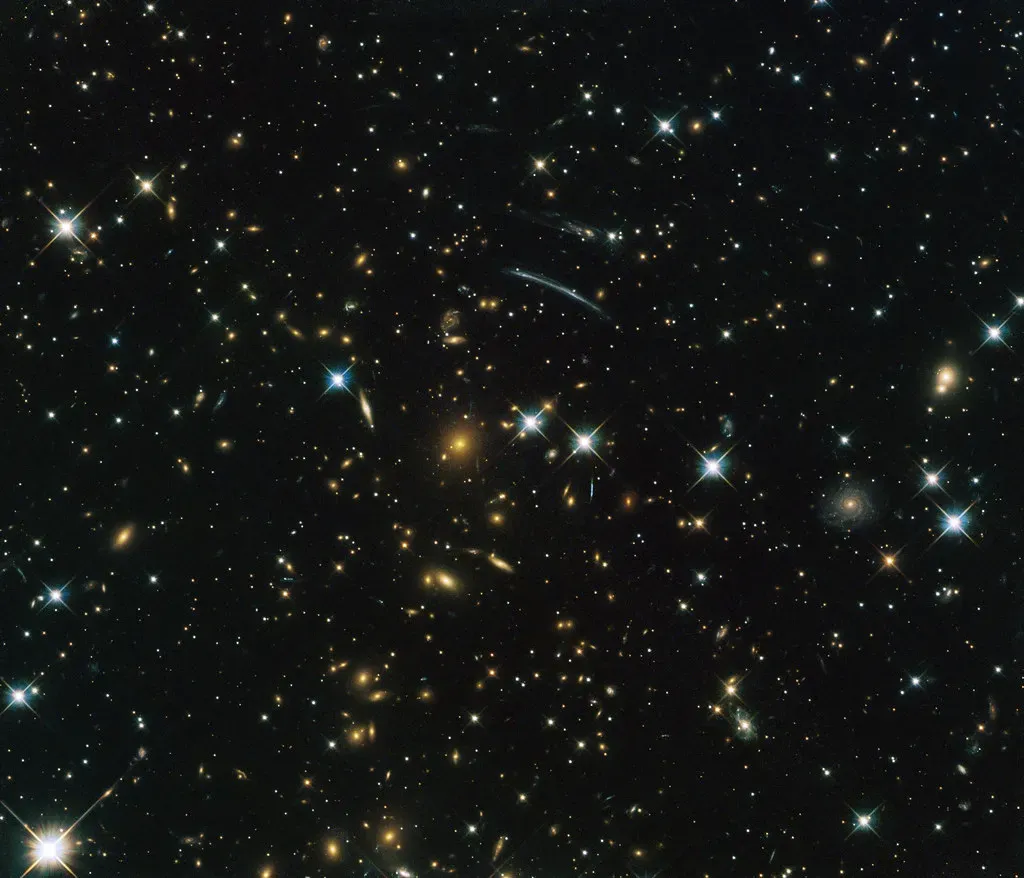
It is easy to nod along to all of this – no center, no edge, expansion everywhere – and then quietly go back to picturing an explosion in space because that is simpler. If you want to really internalize the cosmological view, you have to practice with it. That might mean revisiting the raisin bread or balloon analogies, but also consciously noticing when your mind slips back into old images. You can remind yourself that when you look at a distant galaxy, you are not looking at something shot out of a cosmic cannon; you are looking across an expanding stretch of space that once shared the same hot beginning as your own location.
You can also let yourself feel a bit of the strangeness instead of trying to iron it away. It is okay if the idea that the Big Bang happened everywhere at once never feels completely natural. The scale of the universe dwarfs the mental habits you built from daily life. When you accept that mismatch, you stop trying to force the cosmos into a familiar box and start learning to live with a picture that is grander, weirder, and more honest than your first instincts allow.
Conclusion: Letting the Universe Be Bigger Than Your First Picture
When you drop the idea of the Big Bang as a local explosion, you gain something much more profound: a universe where every point, including the space you occupy, shares in the same vast origin story. You stop looking for a center on a map and start understanding that the map itself has been stretching from the very beginning. That realization can feel disorienting at first, but it also puts you in direct contact with the real structure of the cosmos as far as we know it today.
If you let this sink in, you start to see that your everyday intuition was never meant to handle something this big – and that is okay. You can keep your human-scale sense of distance and direction for normal life while also carrying, in the back of your mind, the stranger truth: that you are a small, conscious patch of a universe that began everywhere at once and is still unfolding. Next time you look up at the sky, will you still imagine a distant blast, or will you remember that you are sitting inside the expansion itself?