
Imagine stepping outside, looking up at the night sky, and being told that, from where you stand, you are literally at the center of the universe. Not in a poetic, self-help-book kind of way, but in a mathematically precise, cosmological sense. Then imagine someone on a distant galaxy, billions of light-years away, being able to say exactly the same thing – and also being right. That is the deeply unintuitive, slightly ego-shattering, and strangely comforting claim modern cosmology makes about space.
This is not marketing fluff from astronomy outreach posters; it drops straight out of the geometry of an expanding universe described by general relativity. Our brains, trained on everyday three‑dimensional experiences and straight-line intuitions, simply did not evolve to deal with this kind of thing. Yet if you are willing to let go of the idea that space is a big empty container with a single obvious middle, a much richer and more beautiful picture appears: a universe where every location is central, not because you are special, but because space itself plays by rules that are nothing like the ones in your living room.
The Universe Is Not Expanding Into Anything (And That Breaks Our Intuition)
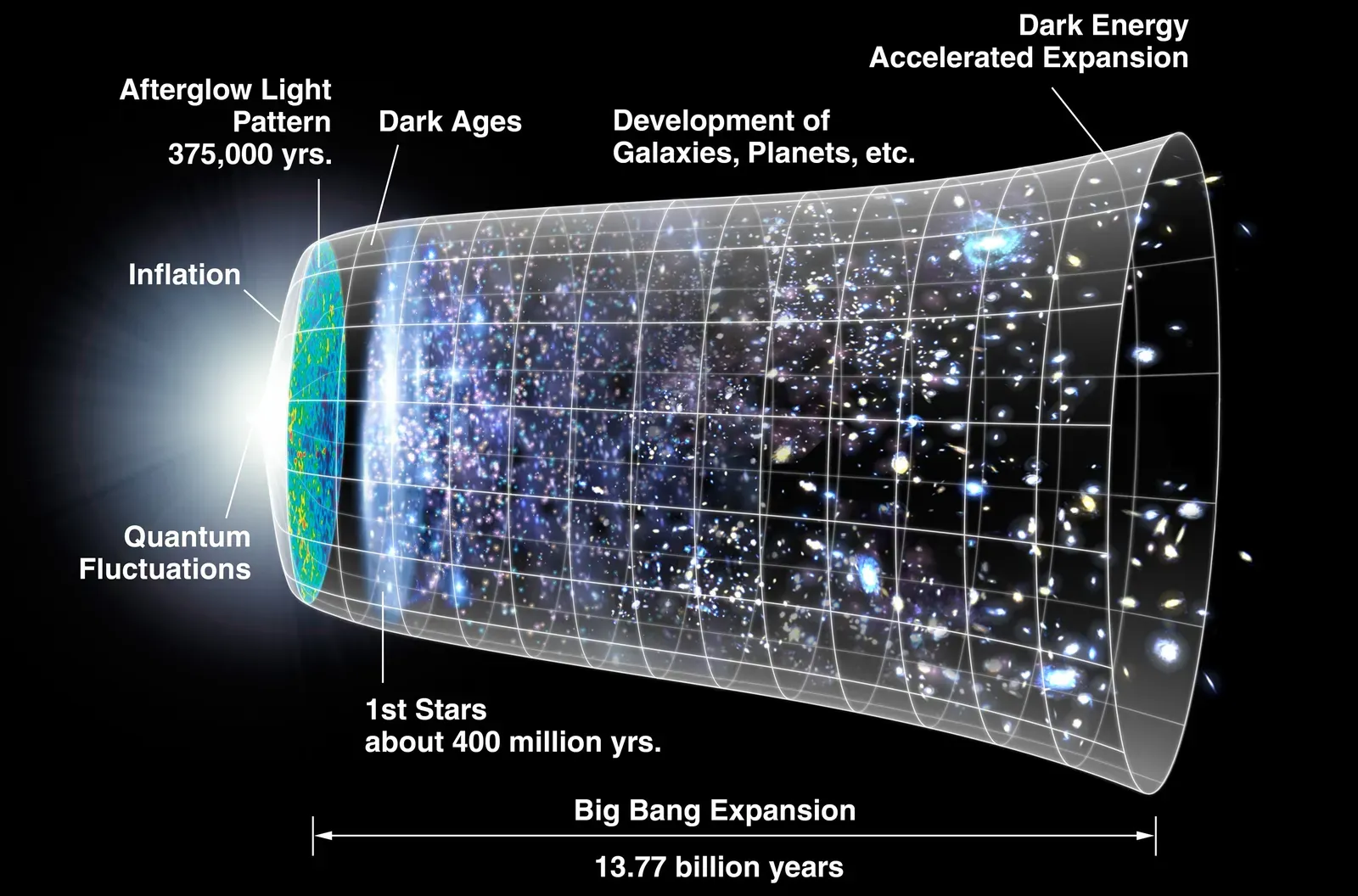
One of the hardest ideas to swallow is that the universe is expanding, but not into preexisting empty space the way an inflating balloon expands into the air. In our daily lives, every expanding thing expands into something else: a drop of ink spreads into water, a crowd spills into a street, a balloon presses against the air in the room. So when cosmologists say space itself is expanding, our brains quietly rewrite the story as a big explosion spreading outward into some larger void, with a clear center somewhere back where it all began.
In standard cosmology, though, there is no such surrounding “outside” and no unique central point inside. Instead of galaxies moving out from a central explosion site, the distances between galaxies grow because the underlying geometric fabric between them is stretching. A better mental image is not shrapnel from a bomb, but the distances on a map being rescaled while every town keeps its position relative to its neighbors. The trick is that, on the largest scales, that rescaling happens everywhere at once, which means no location gets to claim it is the privileged place from which everything else flees.
The Balloon Analogy: Why Every Point Feels Like the Center
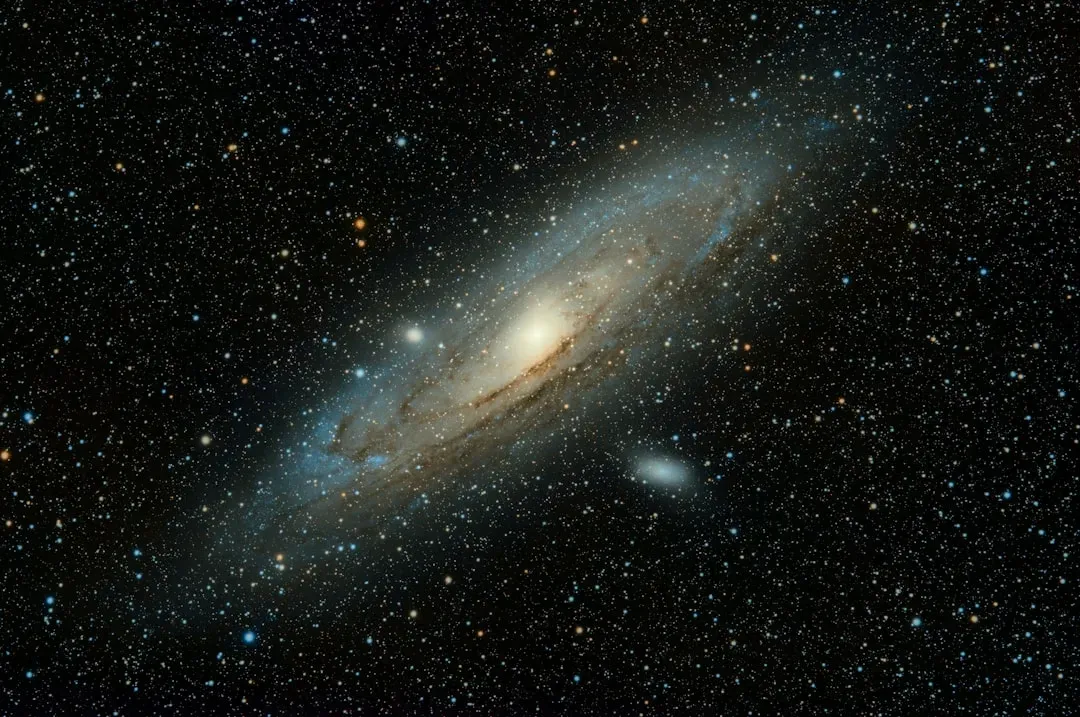
The classic way to visualize this is with the surface of an expanding balloon. Picture tiny dots drawn on the rubber to represent galaxies. As you inflate the balloon, each dot sees every other dot moving away, roughly in proportion to how far apart they already are. From the perspective of any one dot, the situation looks like it is at the center of expansion, even though the true center of the balloon lies in a dimension “above” the surface and is not on the surface at all. The surface itself has no special center point; it is homogeneous and isotropic, a fancy way of saying it looks the same everywhere and in every direction on large scales.
Our universe, according to general relativity and the standard cosmological model, is like that balloon surface but in three dimensions instead of two. Space is the “surface” that is expanding; if there is some deeper structure or meta-space in which the whole thing sits, standard cosmology does not need or use it to explain observations. What matters is that if you pick any galaxy not in a bound cluster, measure how fast other galaxies recede, and plot that speed against distance, you get the same law of expansion. From that vantage point, you would be entirely justified in thinking you are sitting at a universal center – and so would every other observer everywhere else.
Hubble’s Law: The Math Behind the Everywhere-Center Idea
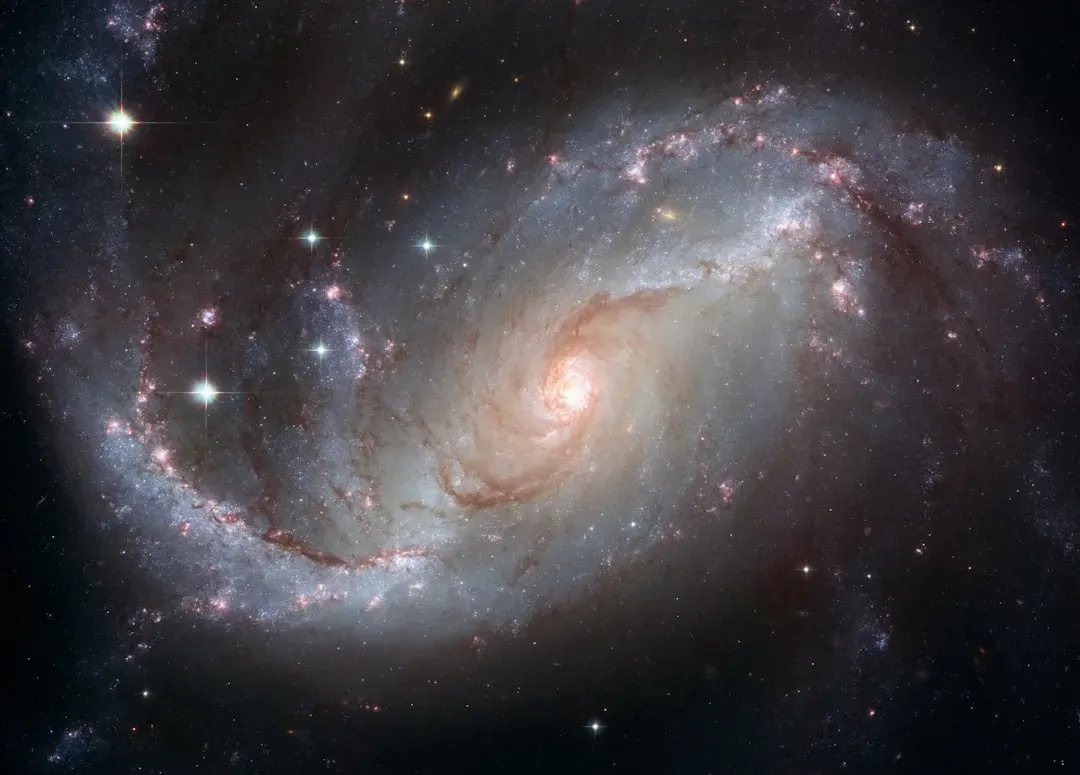
This “everyone is central” claim is not just philosophical; it is captured in a simple, ruthless relation called Hubble’s law. It says that, on large scales, the recession speed between two galaxies is roughly proportional to the distance between them. Double the distance, and you roughly double the recession speed. Because this relation holds in every direction we look, and because the cosmic microwave background radiation is nearly uniform across the sky, the picture that emerges is of a universe that is statistically the same from any vantage point on cosmic scales.
Mathematically, you can describe this with a metric – a rule for measuring distances – that has a built-in scale factor which grows with cosmic time. The details involve solutions to Einstein’s field equations known as Friedmann–Lemaître–Robertson–Walker (FLRW) models. The key punchline, though, is easy to state: the equations do not single out any particular place as special. Any point can be taken as an origin for coordinates without changing the large-scale properties of the cosmos. The idea that there must be an absolute middle is a projection of our everyday geometry onto a universe that simply does not care about that preference.
Why Your Brain Hates This: Flat-World Intuitions in a Curved-World Cosmos
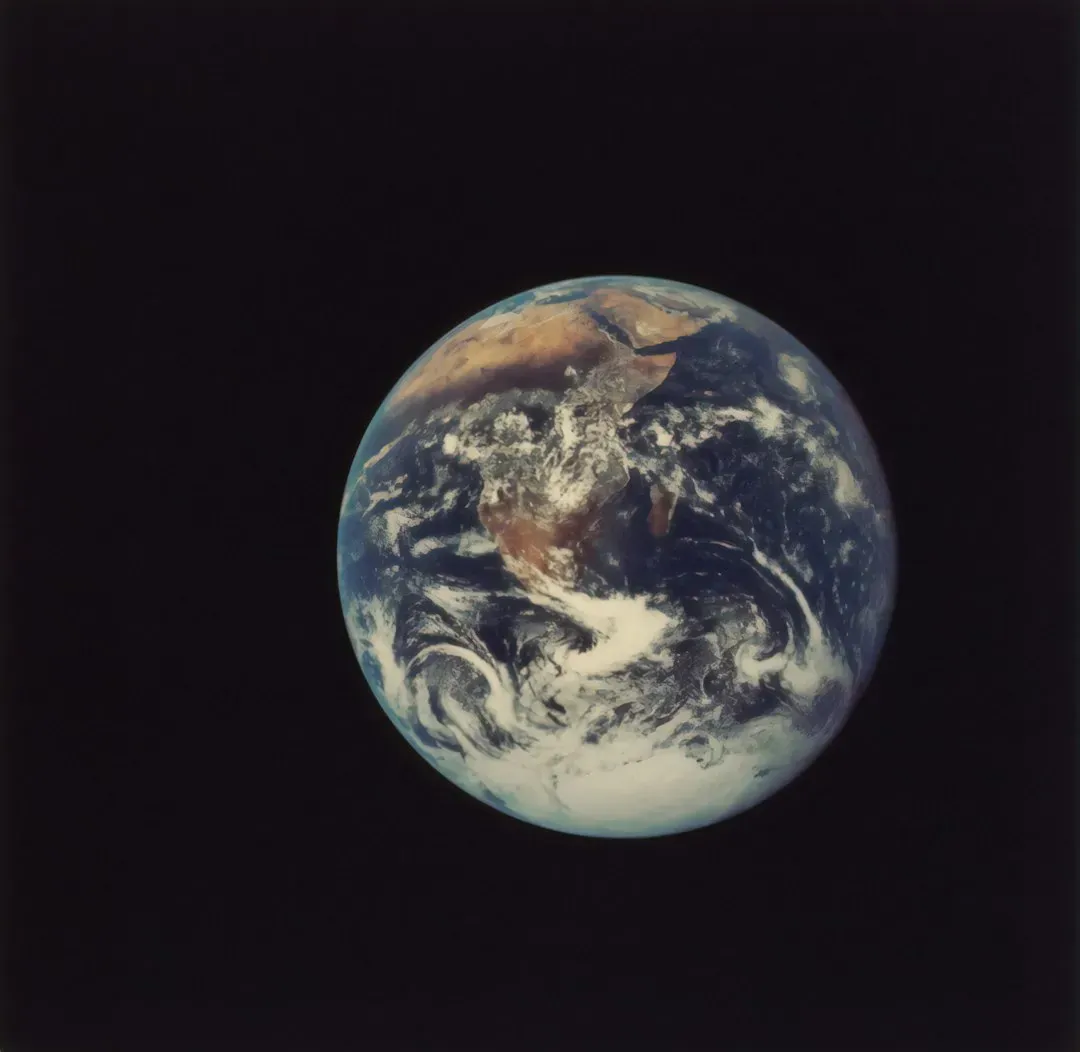
Our intuition for space is built out of walking, throwing, driving, and occasionally flying. In all of those activities, distances are small compared to cosmic scales, gravity is weak, and spacetime curvature is negligible. That means the geometry we subconsciously internalize is basically Euclidean – the high school geometry of straight lines, fixed rulers, and absolute centers. When cosmology comes along and says, actually, the large-scale universe might be curved, expanding, and centerless, your mental model naturally rebels. It is like asking someone who has only ever seen a flat parking lot to imagine the surface of the Earth without leaving the ground.
On top of that, we instinctively think in terms of things moving through space, not space itself changing. We are comfortable with cars driving down a highway, not the highway lengthening underneath the cars while they mostly sit still. When told that every point is the center, we picture a finite blob with a definable middle, then get stuck trying to reconcile that with the claim that everyone is central. The trick is to throw away the finite-blob mental picture and switch to the idea of a space that is either infinite or curved without edges, where “center” is not a global property, just a local feeling you get by looking around.
Infinite Versus Finite: How You Can Have No Edges and No Center
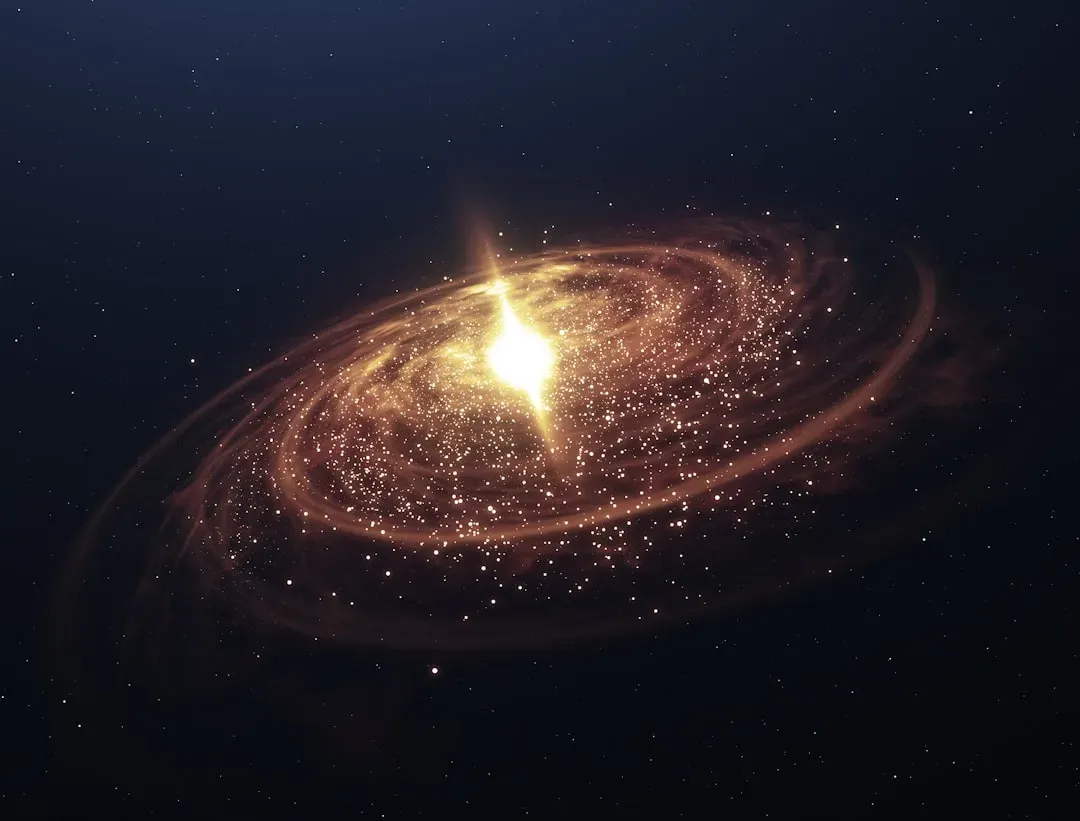
There are two broad geometric possibilities that both support the idea that every point is central. One is that the universe is spatially infinite on large scales. An infinite, uniform space simply has no meaningful center; you can always move farther in any direction, and nothing about the large-scale structure singles out a preferred location. In that case, the statement that every point is the center is almost trivial: there is no middle of an infinite line or an infinite plain, so of course no one gets to claim the role of cosmic center stage.
The other possibility is that space is finite but unbounded, like the two-dimensional surface of a sphere generalized to three dimensions. Such a space can have a finite total volume but no edges; you can travel forever without hitting a boundary, just cycling around in various possible ways. In that kind of geometry, there is still no special central point within the space itself. The only way to define a “center” is by embedding the whole thing in a higher-dimensional arena, which is a mathematical convenience, not a physical requirement. Either way, the lesson is the same: our craving for a single, absolute center is not backed up by how space behaves on cosmological scales.
The Observable Universe Trick: Why You Seem Extra Special From Where You Stand
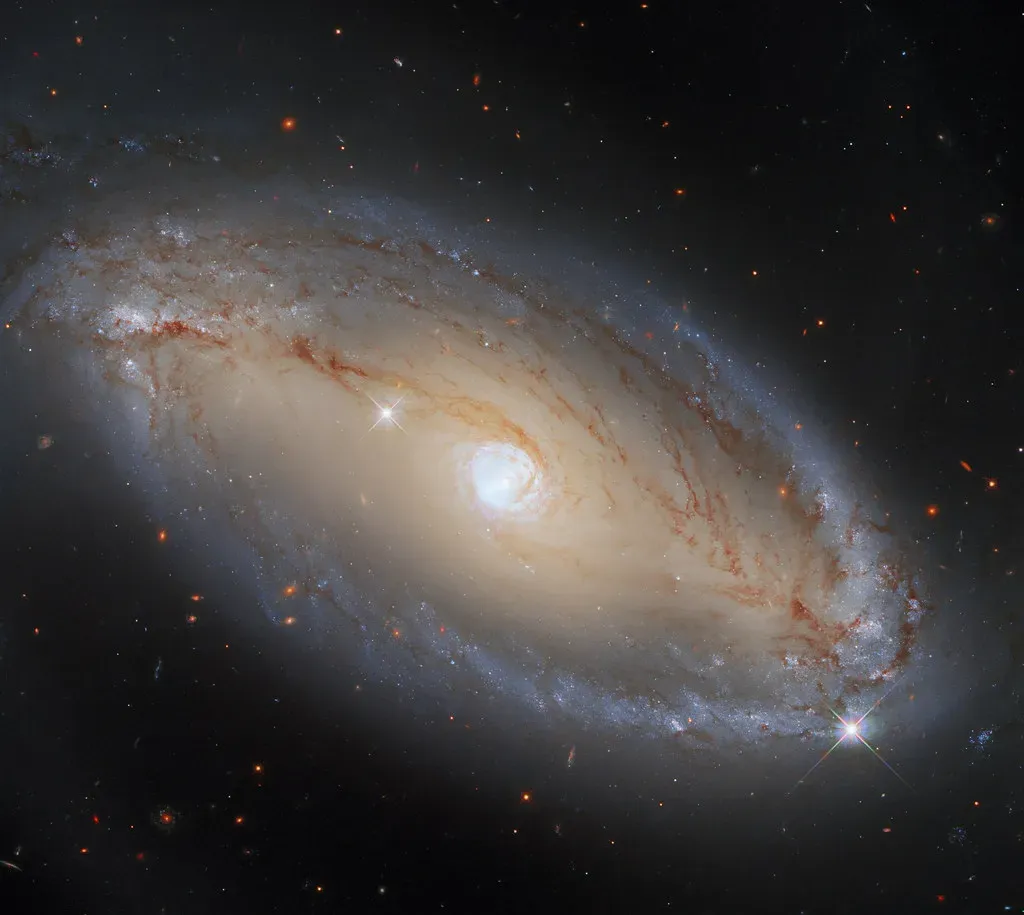
There is a subtle twist that makes this even more confusing. Despite everything said so far, it is completely true that you are at the center of your observable universe. That phrase “observable universe” just means the region of space from which light has had time to reach you since the Big Bang. Because light travels at a finite speed and the universe has a finite age, there is a horizon around you beyond which you cannot see. Draw a sphere centered on your position out to that distance, and you are smack in the middle, with galaxies in every direction arranged in a roughly similar pattern.
But here is the crucial bit: every other observer, anywhere in space, also has their own observable universe and also sits at the center of that personal sphere. Their horizon will overlap with yours partly, and extend into regions you cannot see. None of these observers is more or less central in any absolute sense; each simply occupies the center of their own expanding light bubble. When people casually say that the universe has no center, they mean there is no single, global center of all space, not that you are wrong to put yourself in the middle of what you can actually observe.
So What Does It Mean That “Every Point Is the Centre” in a Deep Sense?
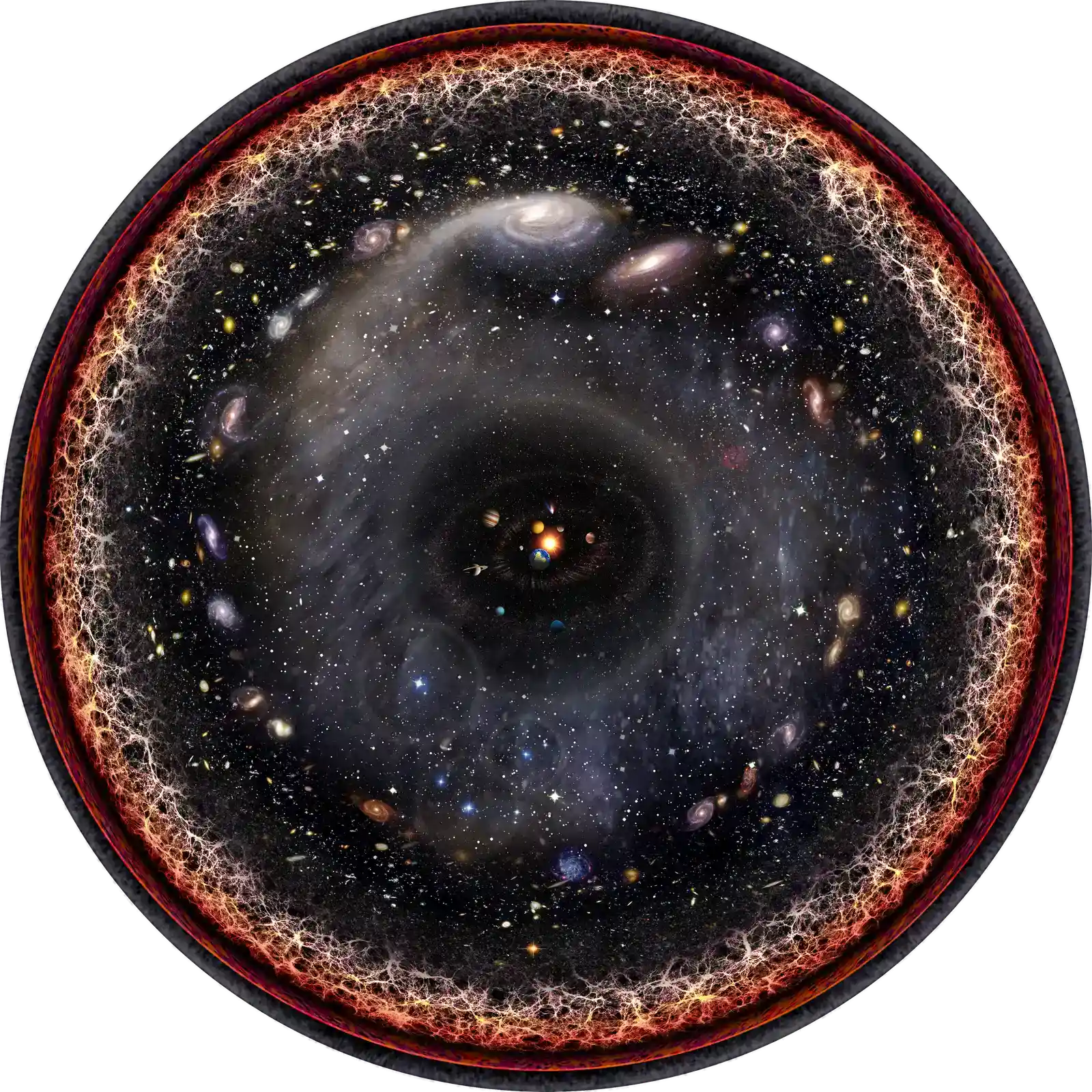
When cosmologists say that every point in space is simultaneously the center of the universe, they are stating a geometric fact about a space that is homogeneous and isotropic on large scales and undergoing expansion described by a uniform scale factor. In that setup, the expansion looks the same from every location, and no experiment confined to one region can reveal an off-center drift or a preferred direction baked into the fabric of space. The phrase is not meant as a metaphor about human importance; it is a blunt description of how the math of general relativity plays out when applied to a universe like ours.
Personally, though, it does change how I think about our place in the cosmos. There is something quietly radical about a universe where centrality is not denied to you, but also not denied to anyone else, anywhere. You are the geometric center of your observable universe, just as someone in a galaxy you will never see is the center of theirs, and the laws of physics shrug at both of you in exactly the same way. It undercuts both cosmic narcissism and cosmic nihilism at once: you are not the single chosen center, but you are also not exiled to some meaningless fringe. In a very literal sense, you are as central as it gets – and so is everyone else. Did you expect that to be the way the universe levels the playing field?