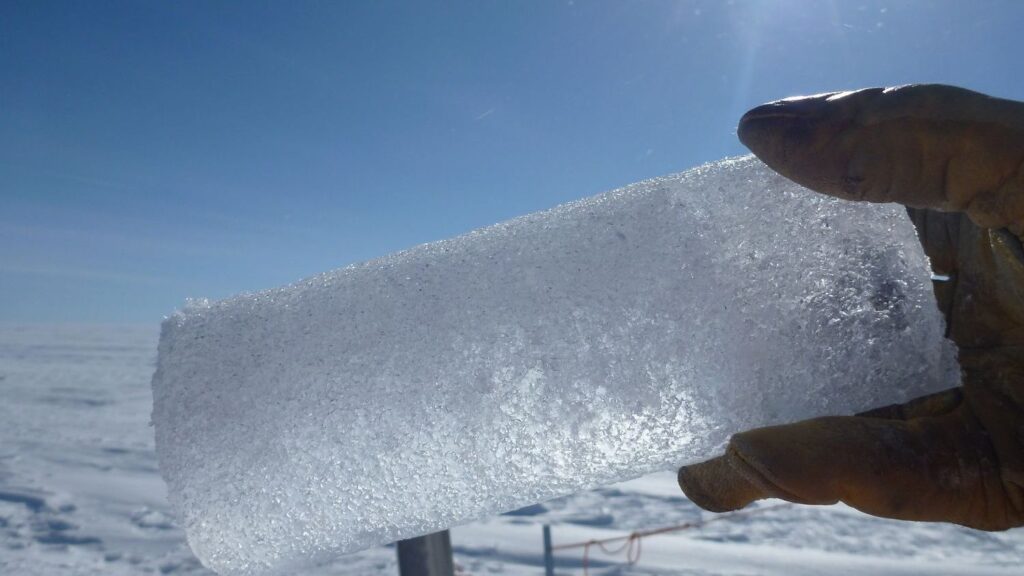

Imagine spending your entire career learning how ice should behave, only to pull a core out of Greenland in 2024 and see a layer staring back at you that simply does not belong there. That is the kind of quiet scientific shock that ripples through a research camp long before the headlines ever catch up. To most of us, ice is just something in a drink or on a sidewalk, but to glaciologists it is a living archive that is supposed to follow rules: deeper means older, chemistry follows a pattern, layers line up like pages in a perfectly bound book.
So when a sealed ice core comes up with a layer at a depth where it should not exist, it hits like a plot twist in a story that was assumed to be predictable. It does not mean aliens, instant catastrophe, or that everything we know is wrong; it means the planet just handed us a puzzle in crystalline form. That mix of surprise and restraint is where real science lives. In this article, we will unpack what such an “impossible” layer could mean, how seriously experts take it, and why the most interesting part might be what we still do not know.
The Greenland Ice Sheet: A Planet-Sized Archive With Rules
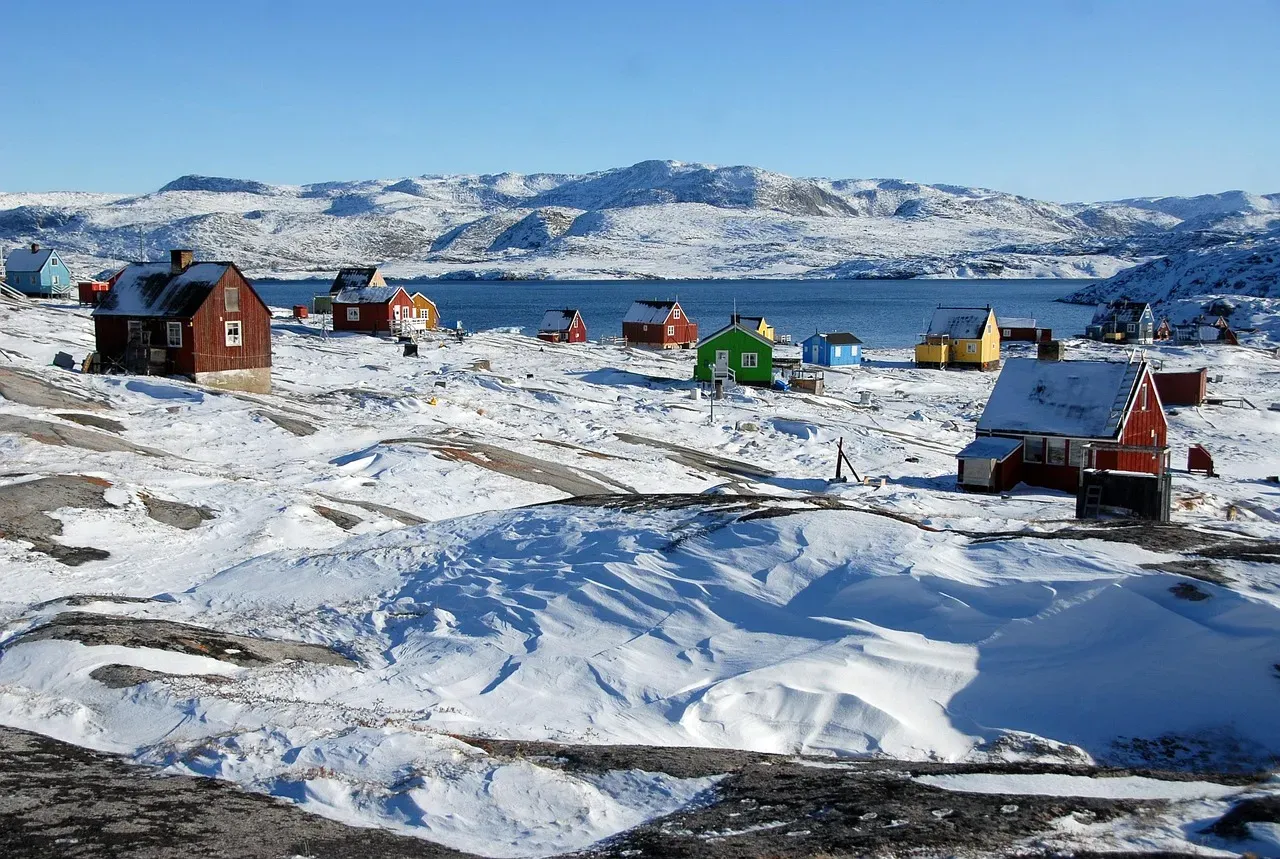
The Greenland Ice Sheet is basically Earth’s slowest, coldest historian. Snow falls, gets buried, and over time compresses into ice, trapping tiny samples of air, dust, volcanic ash, and even traces of ancient wildfires. Deeper layers, in broad terms, are older, and glaciologists have spent decades mapping how temperature, chemistry, and trapped gases change with depth. Those expectations are not guesses; they are built from hundreds of cores, satellite observations, and models that have been stress-tested again and again.
Because of that, researchers go into a drilling season with a pretty solid idea of what they ought to see at a given depth: perhaps a volcanic marker here, a known warm period there, a shift in dust load that should line up with other cores. When the data from a new core suddenly goes off-script, it is like reading a familiar book and discovering an extra, out-of-place chapter in the middle. That does not automatically mean the whole book is wrong, but it does force you to ask whether the binding, the printing, or the entire story needs another look.
What It Means for a Layer to “Not Belong” at That Depth
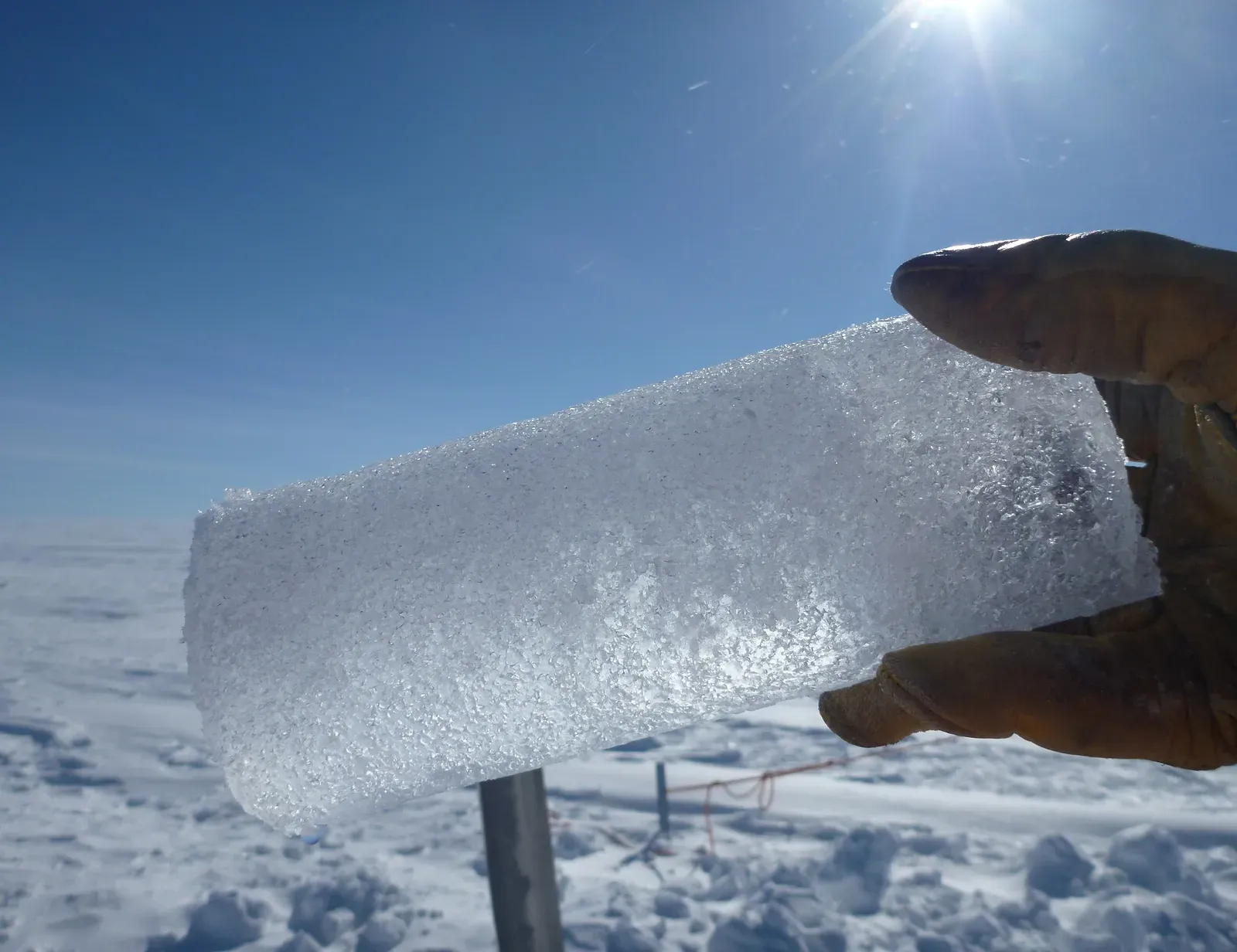
When glaciologists say a layer “should not exist” at that depth, they are not making a wild emotional claim; they are flagging a mismatch between observation and well-established expectations. Maybe the chemistry suggests a relatively recent warm period, but the depth corresponds to ice that should be many tens of thousands of years older. Or perhaps the physical properties of the ice hint at surface melting or refreezing that should not be possible under the long-term climate conditions assumed for that era. In technical language, the age–depth relationship, the layer sequence, or the ice flow history is breaking the pattern.
This kind of anomaly can show up in multiple ways: an unexpected spike in greenhouse gas concentrations, a layer with melt features that resemble modern conditions, or even a sediment-rich horizon where only clean blue ice was expected. The key point is not that the layer is magical; it is that, given the depth and position within the core, it does not align with current models of how ice accumulated, deformed, and flowed. In a field that relies heavily on stacking many consistent signals together, one stubborn outlier at the wrong depth forces everyone to slow down and reconsider how confident they really are about the timeline.
Possible Explanations: From Boring Errors to Wildly Interesting Processes
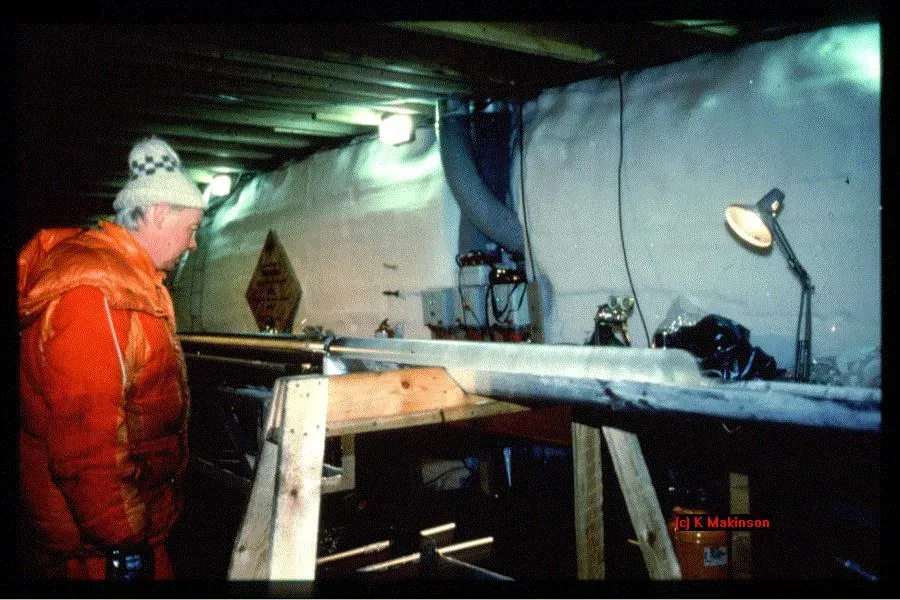
The unglamorous truth is that the first suspects are always mundane: an instrument calibration problem, a mislabeled segment, contamination during handling, or a misinterpretation of the initial datasets. Labs will cross-check measurements with different techniques, repeat analyses, and compare with other cores. No serious glaciologist jumps straight to dramatic conclusions; the culture of this science leans heavily toward patiently ruling out the dull possibilities before entertaining the exciting ones. It is frustrating, but it is also how you avoid embarrassing yourself with a “revolutionary finding” that turns out to be a cracked sensor.
If the anomaly survives that gauntlet of skepticism, then the conversation shifts to more interesting physical explanations. Perhaps the ice has been folded or overturned at depth, like pages in a book that have been bent back on themselves by slow, creeping flow. Maybe a buried canyon, subglacial lake, or ancient erosion surface altered how ice moved and stacked, producing a pocket of younger ice stranded deep below older layers. There is also the possibility of previously underappreciated episodes of melting or rapid climate swings that left a stronger signal at certain locations than models expected. None of these ideas are science fiction, but they would demand a rethink of how tidy and predictable we assumed Greenland’s history really is.
Layer Folding, Flow Distortions, and the Messiness of Deep Ice
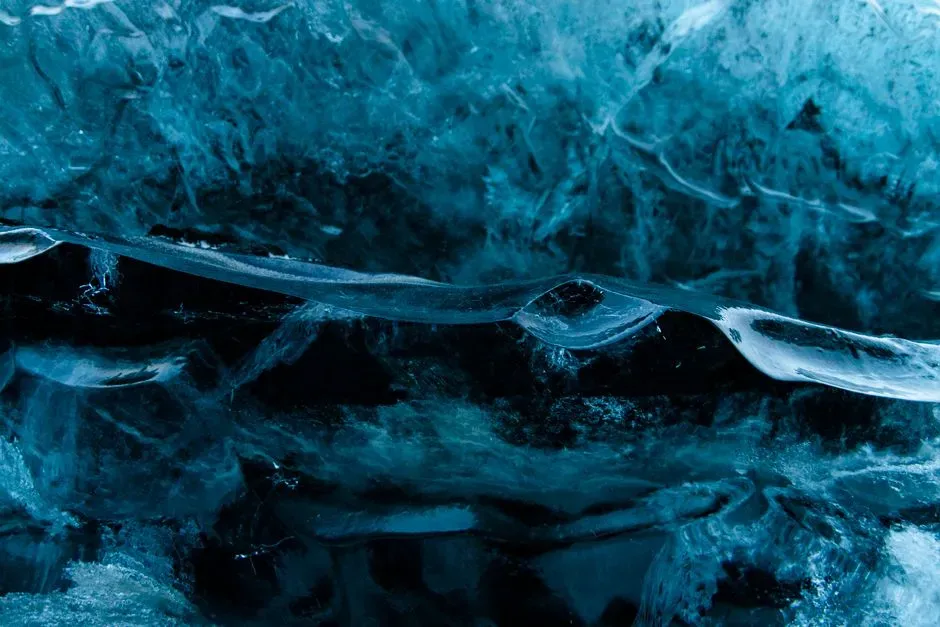
One of the hardest things for outsiders to appreciate is how violently slow ice can be. Over thousands of years, the pressure and flow within a massive ice sheet can twist and fold layers the way tectonic forces crumple rock. In the deepest parts, layers that were deposited in tidy order at the surface can be stretched, thinned, overturned, or stacked in ways that look almost nonsensical if you imagine the ice as static. What looks like a clean, vertical history on a textbook diagram is often a tangled three-dimensional mess in reality.
So a “wrong” layer at depth might actually be perfectly normal ice that has been moved far from where simple models say it should be. Sophisticated ice-flow models account for some of this complexity, but no model captures every hidden ridge, valley, or basal condition under Greenland. When a new core reveals a layer that defies the standard age–depth curve, it can be a clue that the underlying flow pattern is richer and stranger than assumed. To me, that is one of the most exciting possibilities: not that the laws of physics are broken, but that the ice sheet is more alive, more dynamic, and more three-dimensional than we have dared to simplify in our global reconstructions.
Climate Signals: Could This Be Evidence of an Underestimated Past Warm Period?
Whenever a suspicious layer shows modern-like features at unexpected depths, the climate community understandably perks up. If, after careful checks, the chemistry and trapped gases strongly resemble conditions usually associated with relatively recent warm periods, but the depth says it should be far older, it raises a provocative question: are we underestimating how often or how intensely Greenland has warmed in the past? That matters because ice-sheet sensitivity to warmth is at the heart of long-term sea-level projections. If past climates were more volatile than we thought, they could hint at tipping behaviors we have not fully captured.
It is important, though, to keep this in perspective. One strange layer does not overturn decades of ice-core climatology. Instead, it acts like a bright highlighter across a specific part of the timeline, telling researchers to revisit regional climate models, compare records from Antarctica, and cross-check marine sediments for matching signals. The most responsible reading is cautious: treat it as a potential piece of evidence that might sharpen our picture of ancient warm periods, not a smoking gun that proves everyone has been wrong about past climate. If anything, anomalies like this are reminders that Earth’s climate story is still being edited, and some of the biggest edits are happening in frozen archives we have not fully decoded.
Public Imagination vs. Scientific Caution: The Temptation of the “Impossible” Layer
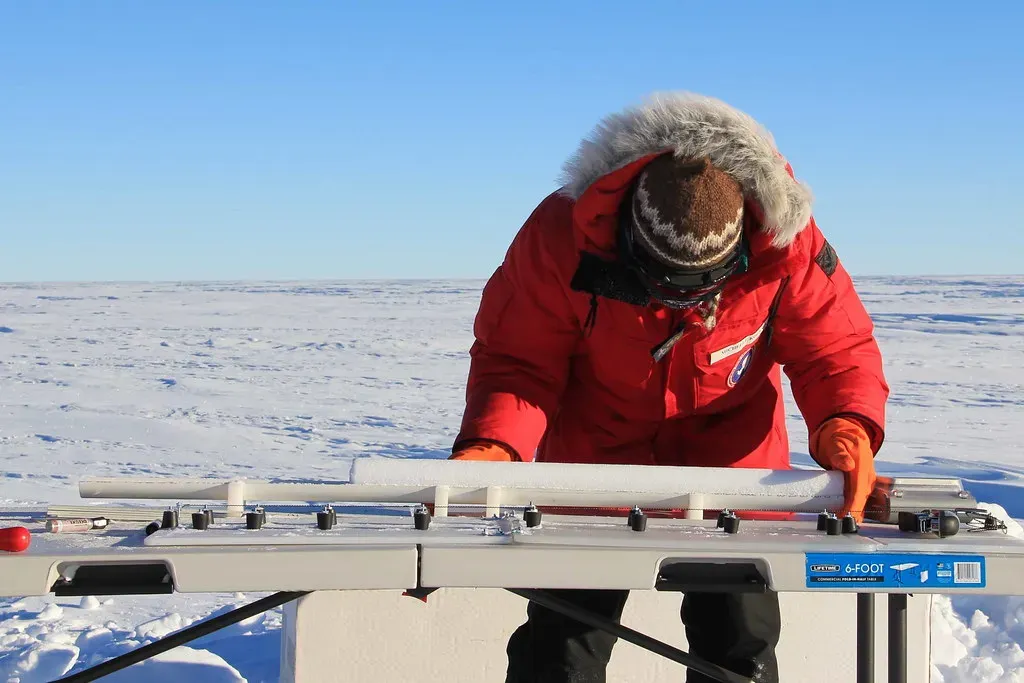
Stories about ice cores that “should not exist” at certain depths practically beg to be exaggerated. It is easy to see how a single puzzling layer could morph, in the public imagination, into claims about hidden civilizations, lost technologies, or catastrophic events no one has ever heard of. The reality is almost always less cinematic but more impressive in its own way: patient cross-checks, careful lab work, small corrections to timelines, and an incremental but real improvement in how we understand a massive ice sheet that directly affects coastal cities worldwide. The drama is in the difficulty, not in secret revelations.
Personally, I think scientists sometimes underestimate how hungry people are for the real story, even when it is slower and messier than a headline suggests. A layer that “should not be there” is fascinating precisely because it showcases how science wrestles with uncertainty. You get to watch experts debate whether the surprise points to a subtle flaw in the model, a local oddity, or a genuinely new piece of information about Earth’s climate machinery. It may not make for a splashy movie plot, but it is the kind of quiet, cumulative work that builds the foundation of everything from sea-level forecasts to infrastructure planning.
Why This Matters Now: Greenland, Sea Level, and Our Near Future
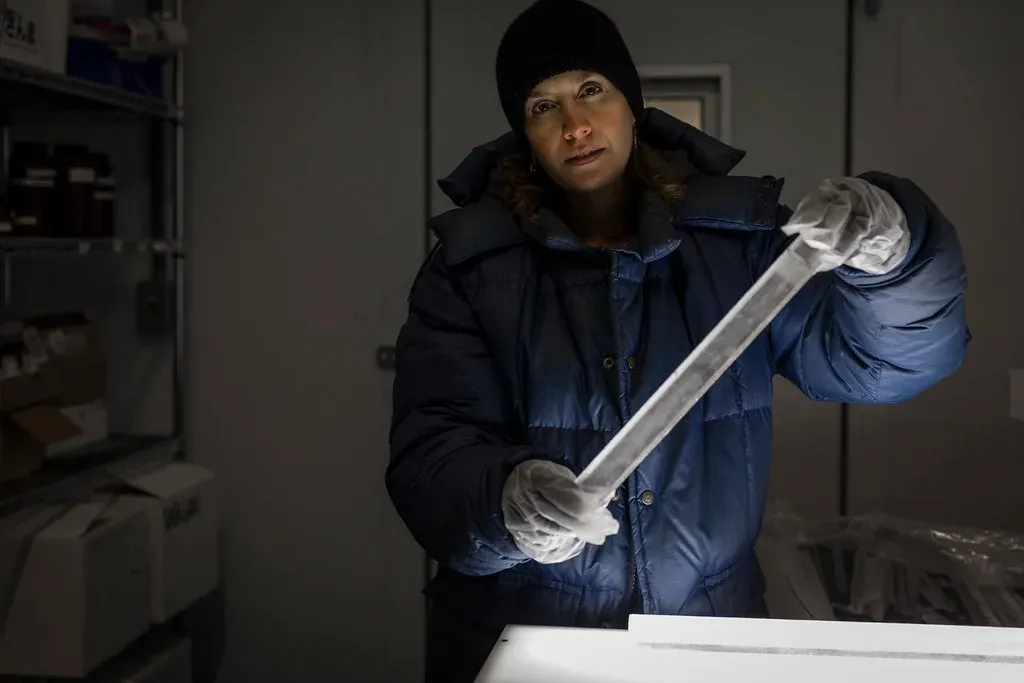
It might be tempting to treat a weird deep layer as a purely academic curiosity, but Greenland’s ice is tied directly to very practical questions about the coming centuries. The more accurately we can reconstruct its past behavior – how quickly it melted in warm periods, how fast ice flowed toward the coasts, how often it experienced surface melting in a given climate – the better we can constrain projections of future sea-level rise. Anomalies in the core record can point to episodes where the ice sheet responded more strongly or more weakly to warming than expected, and that difference translates into real-world risk for millions living near the coasts.
In that sense, a single confusing layer can act like a warning flare: there are parts of Greenland’s story we still do not fully grasp, but we are already betting infrastructure, insurance markets, and long-term planning on simplified versions of that story. I find that both unsettling and motivating. We do not get to wait for a perfectly complete picture before making decisions, but we absolutely need to respect the places where the data is telling us, quite plainly, that our understanding has gaps. If an “impossible” layer forces us to refine models and narrow uncertainty, it is doing us a favor, even if it complicates the narratives we like to tell about how sure we are.
Conclusion: An “Impossible” Layer as a Necessary Discomfort
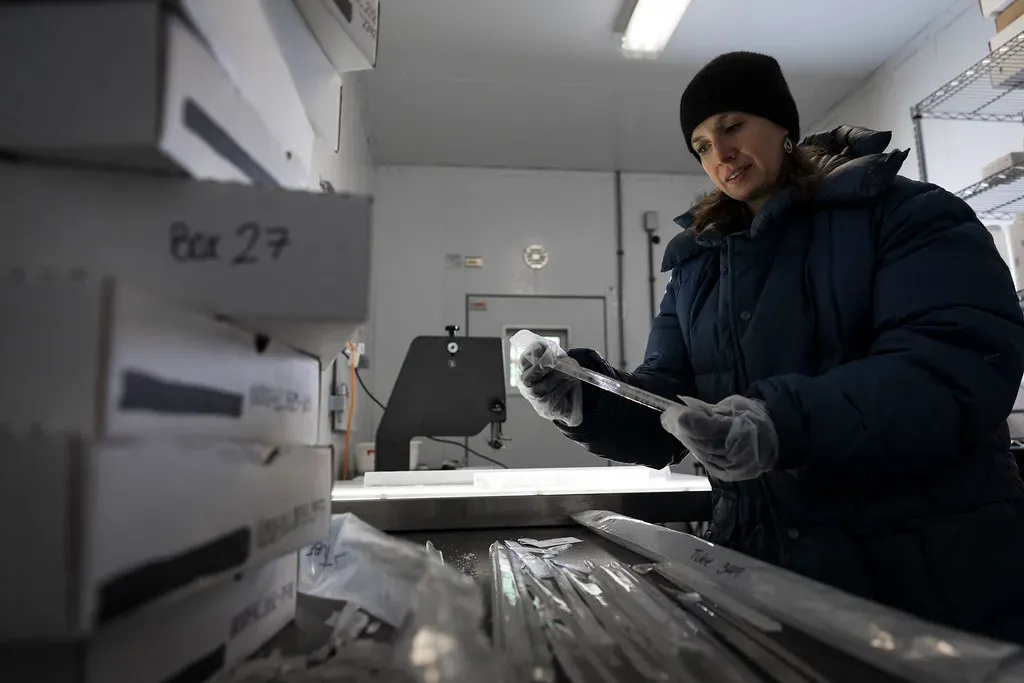
If there is one thing this 2024 Greenland ice core anomaly should teach us, it is that discomfort is a feature, not a bug, of real science. A layer that refuses to fit neatly into age–depth curves or climate reconstructions is not an embarrassment to glaciology; it is exactly the kind of friction that keeps the field honest. My opinion is that we should resist both extremes: the urge to dismiss it as a trivial local glitch and the urge to promote it as proof that everything we know is broken. The truth almost certainly lives in the uncomfortable middle, where models need tweaking, assumptions need revisiting, and some cherished simplifications have to be retired.
In a world hungry for certainty about climate futures, it is tempting to crave clean, unambiguous records that tell a single, simple story. But the planet is not simple, and the ice is not obligated to match our tidy graphs. A sealed core that brings up a layer from the “wrong” place is a reminder that Earth’s history is still under negotiation, written slowly in compressed snow and revealed to us in narrow cylinders of ice. Maybe the real question is not whether that layer should exist, but whether we are ready to let it change our minds where the evidence demands it. If the ice is willing to surprise us, are we willing to be surprised?