
Imagine standing on a dry, cracked lakebed in the middle of one of the hottest places on Earth, and realizing the ground around you is a crime scene with no obvious culprit. Giant stones have dragged long, ruler-straight tracks across the mud, yet there is no wind, no water, nothing moving at all. For decades, the sailing stones of Death Valley have felt almost supernatural, like the desert was quietly rewriting the laws of physics when nobody was looking.
Now layer on a new mystery: after years of apparent silence, are they moving again? Or did they ever really stop? That question has become weirdly emotional for a lot of people, including me. It mixes nostalgia for the old, unsolved-mystery version of the story with a very modern anxiety about climate, extremes, and what we are doing to places like Death Valley. Let’s dig into what scientists actually know, what they strongly suspect, and where a little honest uncertainty still lives.
The Strange Desert Stage Where Rocks Appear to Come Alive
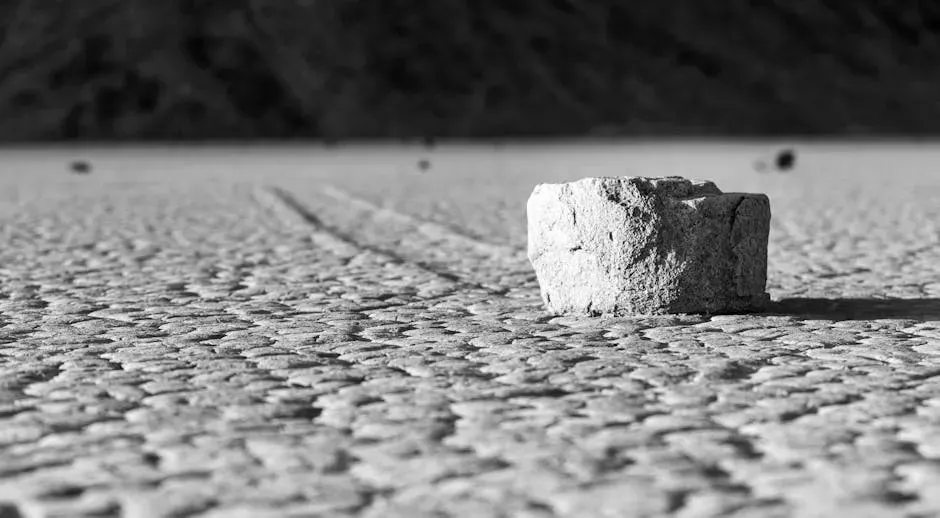
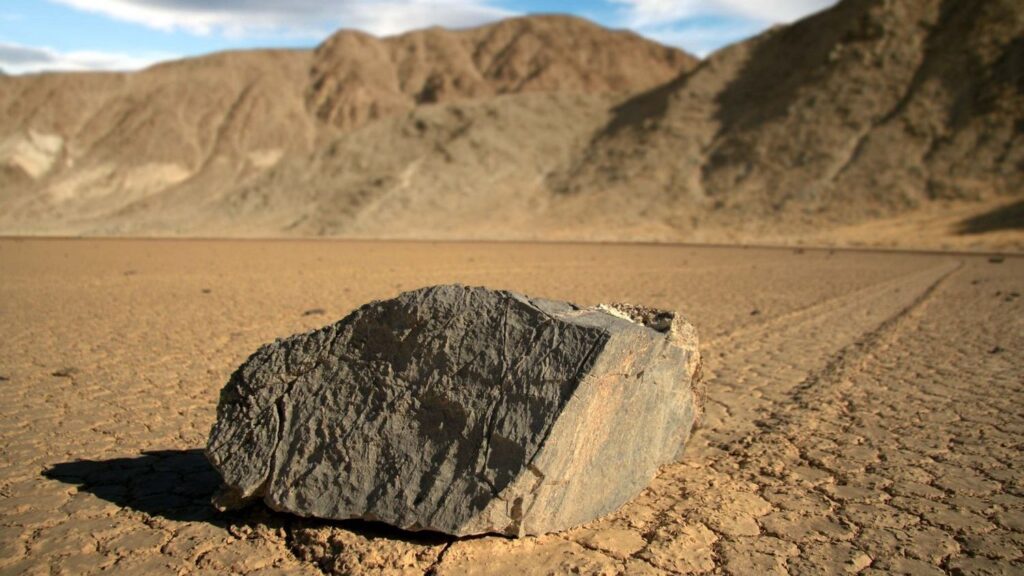
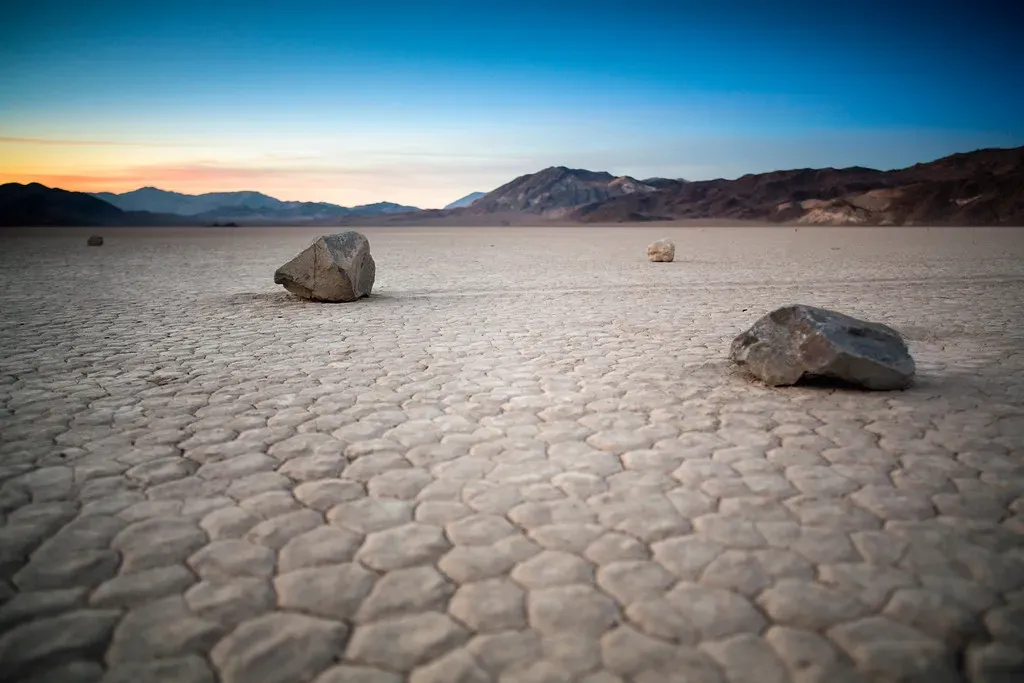
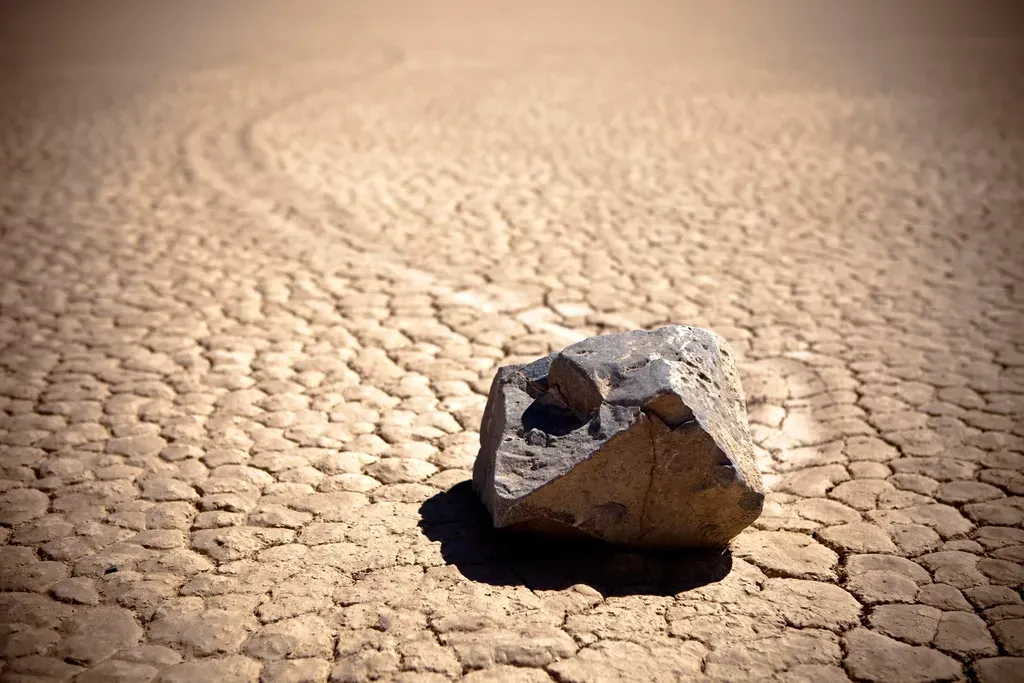
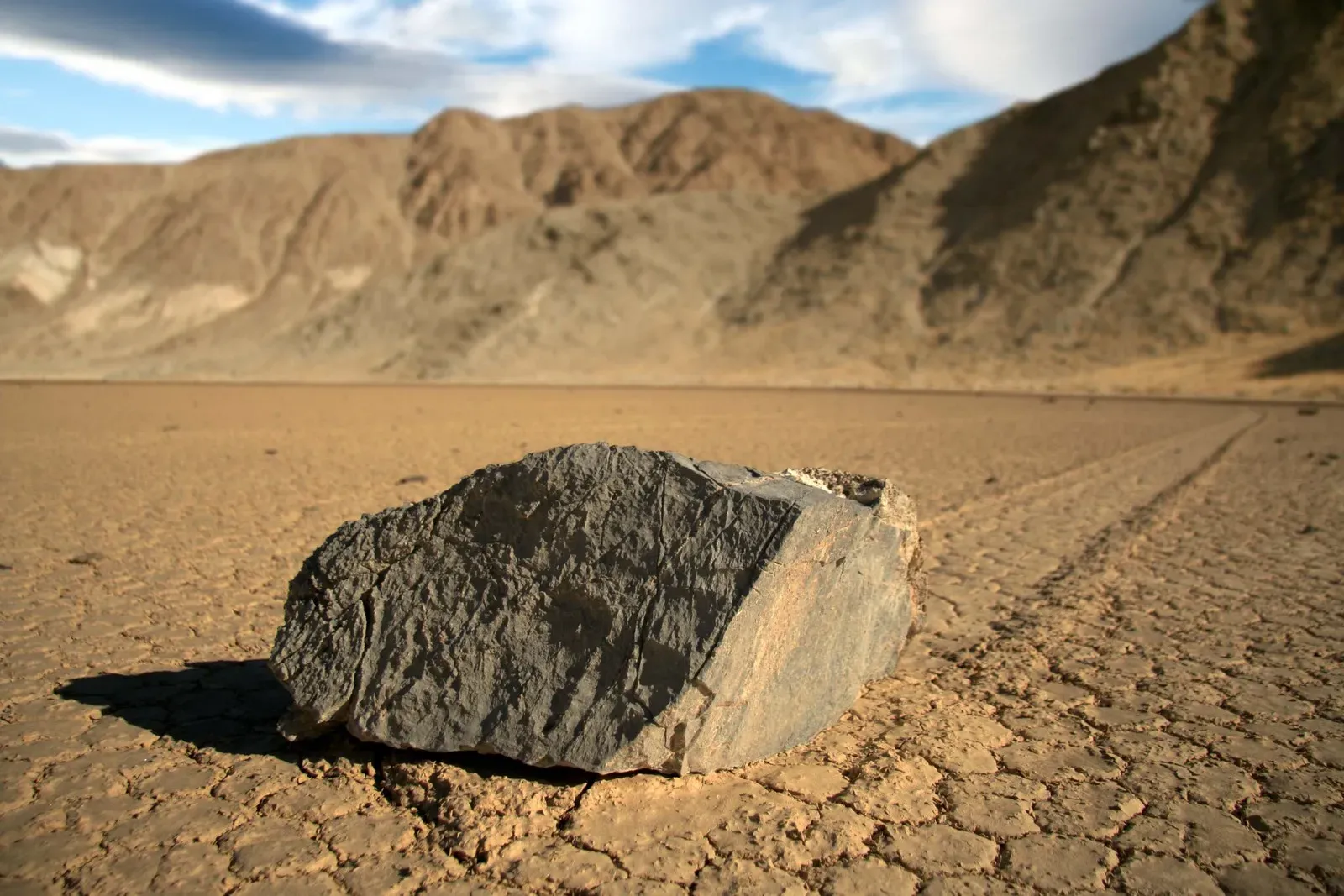
If you have never heard of Racetrack Playa, the home of the sailing stones, picture a huge, flat, clay-pan lakebed about the size of a small town, ringed by dark volcanic hills and empty sky. For most of the year, it looks lifeless and still, like someone forgot to finish rendering the landscape. Then you notice it: heavy rocks scattered across the surface, each with a long, narrow track scratched into the dried mud behind it, as if the stone had decided to go for a walk and changed its mind halfway. The tracks can be many meters long, sometimes straight, sometimes with odd curves and sharp corners.
What gets under people’s skin is not just that the rocks moved, but that nobody ever saw them move for most of the twentieth century. Early visitors came back years later and saw the same stones in totally different positions, making it easy to imagine ghosts, aliens, or some mysterious magnetic force at play. In reality, Racetrack Playa is more like a stage that spends most of its time in rehearsal: months of utter stillness, interrupted by rare, finely tuned conditions that let these rocks glide over the surface on a thin, temporary layer of ice and water. It feels magical, but it is, at its core, a very specific kind of physics happening in a very specific kind of place.
From Mystery to Mechanism: How Scientists Finally Caught the Stones in the Act
For decades, researchers proposed all kinds of ideas for how the stones moved, from powerful windstorms pushing them over slick mud to thick ice rafts dragging multiple rocks together. None of these theories had rock-solid proof (pun absolutely intended), because nobody had actually seen the motion happen in real time. The turning point came when a team of scientists set up GPS-tagged stones and time-lapse cameras, patiently waiting through baking heat, cold winter nights, and many disappointingly uneventful seasons. Eventually, a perfect cocktail of shallow water, thin ice, and light winds lined up, and the cameras finally caught the stones creeping along the playa at a slow walking pace.
The footage and data revealed a surprisingly delicate process. A thin sheet of ice forms overnight when temperatures dip, then cracks into large floating panels as the morning sun warms it. A light breeze pushes those panels, which nudge the embedded rocks and help them slide over slick, saturated mud beneath a few centimeters of water. The stones do not rocket across the playa; they drift, sometimes only a few centimeters per second, in motion so subtle that a casual visitor would probably miss it. The mystery did not vanish when scientists explained it, but it did shift shape: the question became less about whether rocks could move at all, and more about how often the right conditions still come together in a warming, increasingly unpredictable climate.
Did the Sailing Stones Really Go Silent for Seven Years?
The idea that the stones have been silent for seven years sounds dramatic, and I get why it sticks in people’s heads. It suggests a sort of eerie pause, like the desert has stopped breathing. But here is the catch: nobody has a perfectly continuous, year‑by‑year motion log for every stone on Racetrack Playa. Observations are patchy, driven by fieldwork schedules, weather, access conditions, and the simple fact that this place is remote and harsh. In other words, gaps in reports do not automatically mean the stones stopped moving; they often just mean fewer people were there at the exact right moment to catch them in the act.
What we do know is that sailing events have always been sporadic. There can be multi‑year stretches with no obvious new tracks, followed by a winter where several stones move within days. It is a bit like those rare firefly nights I remember from childhood: most evenings were dark and unremarkable, and then, suddenly, one humid night would light up with swarms that vanished again by morning. When you look back years later, it is easy to compress all the quiet nights into a single story of absence, even though life was happening out of sight.
Are They Moving Again? What Recent Conditions Suggest
So, have the sailing stones started moving again after this supposed quiet stretch? The most honest answer, as of now, is cautious: conditions that allow them to move almost certainly still occur, but direct, widely publicized observations in the last several years have been scarce. Death Valley has seen dramatic heat records, heavy storm events, and occasional flooding, including enough water in some years to turn sections of the desert into temporary lakes. Those wet winters and rare cool nights can, in principle, still create the thin ice sheets and shallow water the stones need to drift.
However, motion is not guaranteed just because there is some water. The timing has to be weirdly precise: enough overnight cooling to make ice, enough morning sun to break that ice into panels, and just enough wind to slide those panels across a very specific depth of water over relatively smooth, saturated clay. If one of those pieces is missing, the stones stay put and the playa just looks messy. My personal hunch, based on how sensitive the system is, is that some stones probably have moved in subtle ways even if nobody has turned those moments into viral photos or fresh research papers yet. The desert does not care whether we are watching; it just cares about physics.
Climate Change, Heat Extremes, and the Future of Moving Rocks
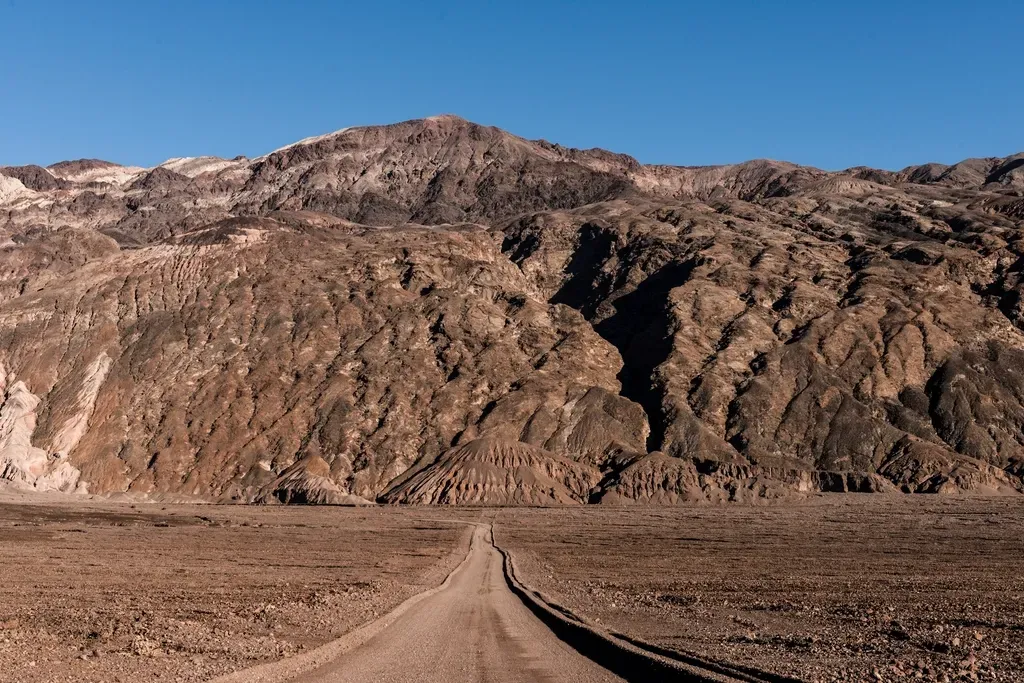
We cannot talk about Death Valley in the 2020s without talking about climate extremes. This is a place that already pushed the limits of human endurance, and now it is breaking its own records with frightening regularity. Hotter summers mean longer periods when the playa is bone‑dry and baked hard, reducing the window of time when water can pool and linger on its surface. At the same time, some climate models suggest more intense downpours, which might flood the playa more violently instead of giving it gentle, shallow water that can freeze into a delicate skating rink for stones.
That combination creates a strange tension: future winters might be wetter in short, brutal bursts, but not necessarily colder in the gentle, ice‑forming way that the stones depend on. Think of it like trying to bake a souffle in an oven that keeps slamming between scorching and off instead of holding a steady temperature. You might get something spectacular by accident now and then, but you also risk ruining the conditions that made the phenomenon possible in the first place. The sailing stones story, in that sense, becomes a tiny, almost poetic side plot in the wider climate narrative: the fate of a quiet, subtle desert trick that relies on the world not being quite as extreme as it is becoming.
Science Solved the Puzzle, But the Magic Never Really Left
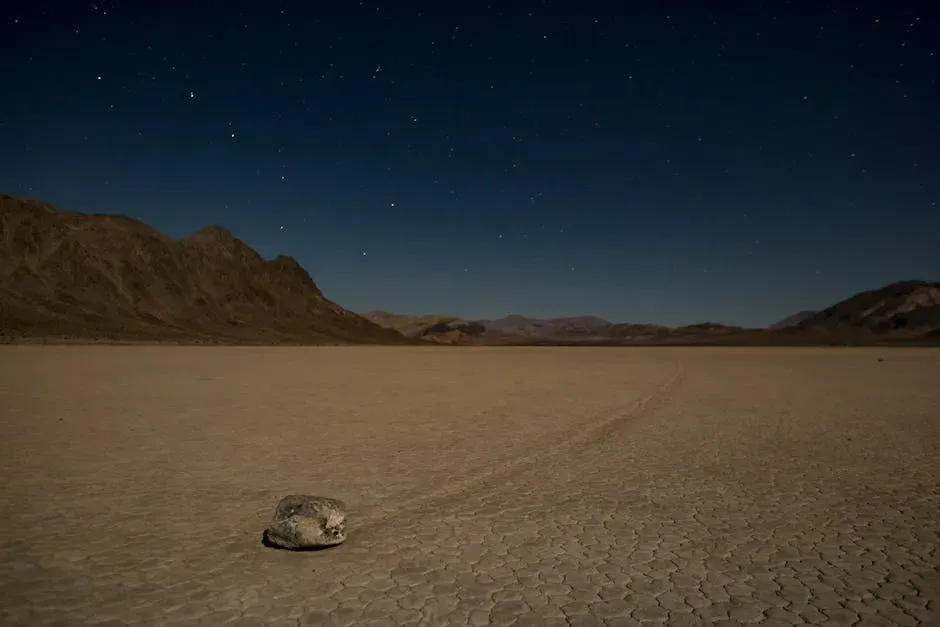
One unexpected twist in this whole saga is how some people felt almost disappointed when the mechanism behind the sailing stones was finally nailed down. There was a sense of losing a childhood ghost story, like having a beloved magic trick explained in bright, clinical light. I felt a little of that too, to be honest. But the more you sit with the details, the more you realize the explanation is just as wild as any paranormal theory: heavy stones gliding on ultrathin ice sheets in a desert that can kill you with heat a few months later. That is not mundane; that is nature flexing in a way we rarely get to witness.
For me, the magic has simply moved from the unknown to the unlikely. Instead of thinking the rocks move for no reason, I am amazed that just the right mix of water depth, air temperature, sun angle, and wind speed can line up for even a few hours in an entire year. It is like watching a perfectly timed dance that only happens when all the dancers, the stage, and the lighting accidentally sync up. The beauty now lies in understanding how precarious that dance is, and how easily it could fade away without any dramatic announcement, just a quiet failure of conditions over time.
Visiting the Playa: Human Footprints on a Fragile Natural Experiment
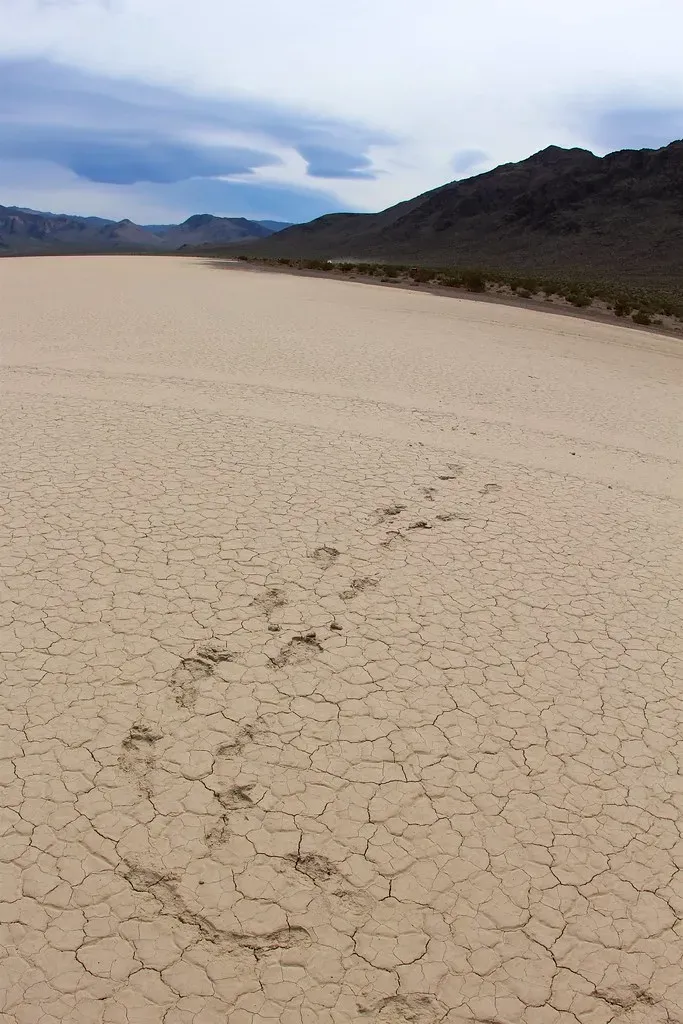
There is another uncomfortable piece to this puzzle: us. Racetrack Playa has become a kind of pilgrimage site, and it is easy to see why. Photographers want those iconic images of a single stone with a sharp track leading into the distance. Curious travelers want to stand where legends about haunted rocks were born. But the playa’s surface is extremely fragile; one careless set of tire tracks or muddy footprints can scar it for years, outlasting delicate natural grooves and confusing future observations. Every time someone drives off the designated route to get closer, they are basically scribbling on an irreplaceable notebook that the desert has been writing in for centuries.
At the same time, thoughtful visitors can keep the story alive in a healthy way. Sticking to marked roads, keeping a respectful distance from the most delicate areas, and resisting the urge to move or arrange stones for better photos all add up. When I think about going there myself, I picture treating it like a quiet museum gallery, where the art is constantly, slowly being repainted by wind, ice, and time. You do not touch the paintings, you do not rearrange the sculptures – you just stand there, let your brain stretch around the experience, and leave it as untouched as you found it for the next set of eyes.
Opinionated Conclusion: A Quiet Phenomenon in a Loud, Changing World
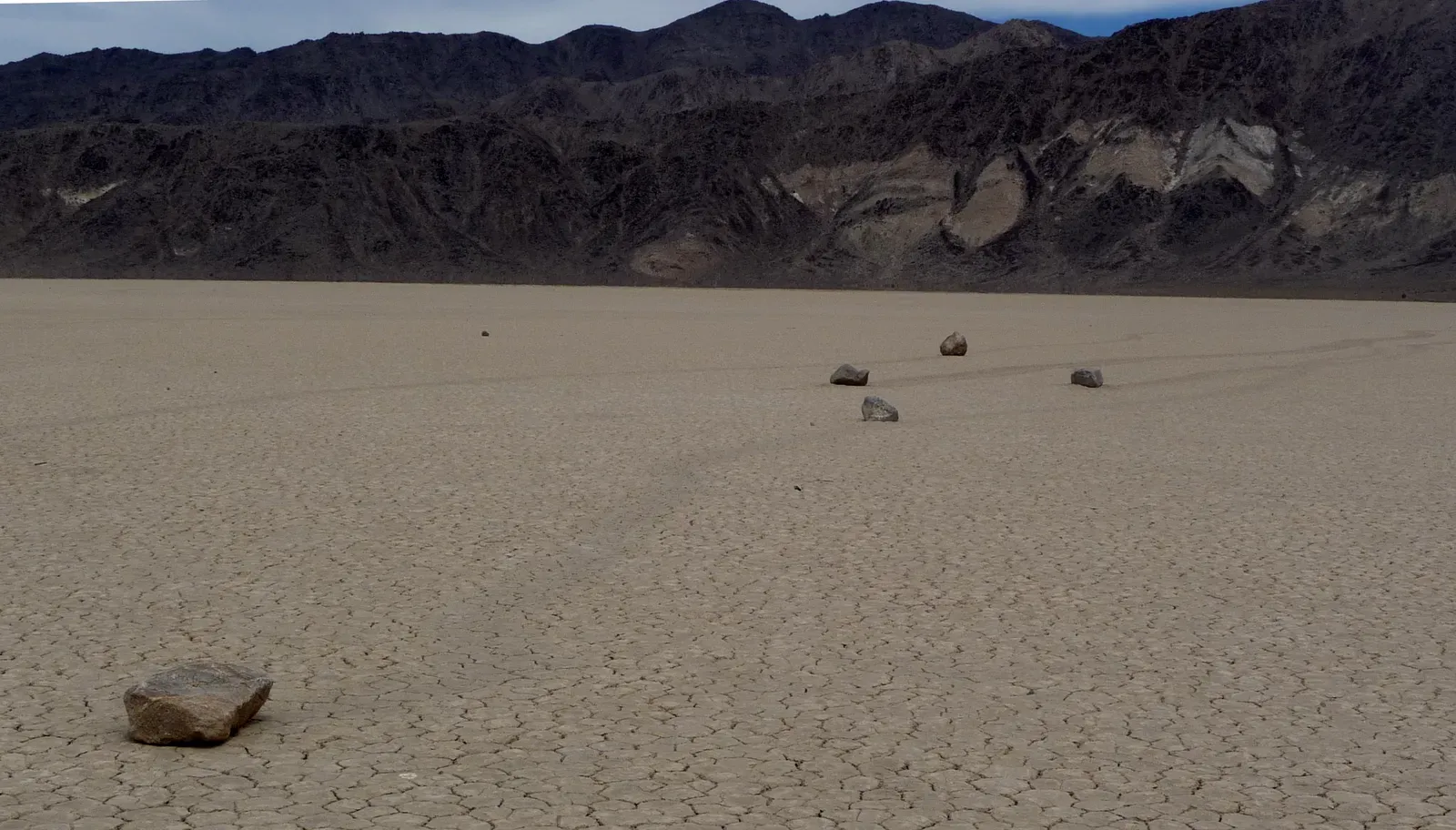
So, have the Death Valley sailing stones started moving again after seven years of silence? My take is that the idea of a clean, all‑or‑nothing pause is more of a human story than a scientific one. The stones have probably never followed a neat calendar schedule; instead, they have always moved in fits and starts, tied to rare combinations of ice, water, and wind. What has changed is not just the stones, but us: we now see them through the lenses of high‑resolution cameras, climate anxiety, and a craving for big, definitive answers. When nothing dramatic happens for a while, we are quick to declare an ending, even when the desert itself is just waiting for the next weirdly perfect night.
In a world that feels louder and more chaotic every year, I find something grounding in the idea that the sailing stones will either move quietly when conditions are right, or sit there stoically when they are not. No press release, no countdown, no easy storyline. If they move less often in the future because our climate is veering off into harsher territory, that will be a loss worth mourning, not just because of the rocks themselves, but because of what their silence will say about the delicate, overlooked edges of our planet. Maybe the better question to carry with us is not whether the stones have started moving again, but whether we can still create a world where such fragile, improbable dances are even possible.