

Right before you fall asleep, there’s this eerie, magical moment where your sense of self starts to dissolve, sounds feel farther away, and your thoughts stop behaving like normal thoughts. You might think nothing much is happening in that tiny window, but inside your skull, your brain is flipping more switches than a control room before liftoff. In roughly about a minute, your brain shifts from a fast, outward‑focused, problem‑solving machine into a slow, inward‑drifting, sensory‑filtered world that we call sleep.
Scientists have finally started to map that transition in detail, and it’s more dramatic than most people realize. Electrical rhythms ricochet across your cortex, control centers hand off responsibility like a relay race, and whole networks that define your waking “you” temporarily step back. Understanding this short passage is not just nerdy trivia; it changes how we think about insomnia, creativity, memory, and even what it means to lose consciousness every single night. Let’s walk through that last, strange minute together.
The Moment Your Brain Stops Being “On Call”

In the last minute before sleep, one of the biggest shifts is that your brain stops acting like an emergency dispatcher that’s on call for every ping from the outside world. While you’re awake, areas in your frontal and parietal lobes stay primed to respond to anything: a text, a dog bark, a sudden thought about tomorrow’s meeting. As sleep approaches, those attention networks start to release their grip, and their activity becomes less synchronized with incoming sights and sounds. It feels a bit like when a lively party suddenly quiets down and people start leaving in twos and threes.
At the same time, sensory regions are still working, but they begin to pass fewer signals forward for conscious processing. Your ears hear the traffic, but your brain decides it doesn’t matter. This is why you might vaguely register a sound and then, a moment later, not remember it at all. I’ve had nights where I can remember “almost” hearing my phone buzz, but not caring enough to look; that is your brain’s “on call” status quietly winding down. That sixty‑second slide is the shift from being accountable to the world to being allowed to turn inward.
The Alpha Wave Fade‑Out: When Wakefulness Lets Go
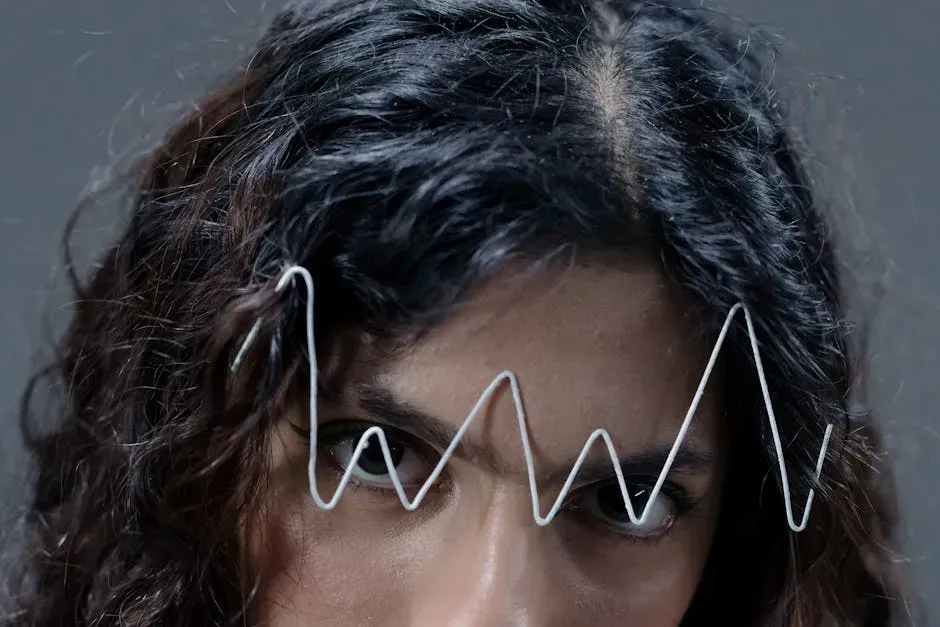
If you could look at your brain’s electrical activity in that last minute, you’d see a familiar signature of wakefulness – alpha waves – start to melt away. Alpha rhythms are those gentle, eight‑to‑twelve‑cycles‑per‑second oscillations that show up when you’re relaxed, eyes closed, but still very much awake. As you approach sleep, those alpha waves flicker, break apart, and shrink, like a radio station fading as you drive out of range. This fading is one of the clearest signs that your brain is letting go of its organized waking rhythm.
In their place, slower and more irregular waves begin to creep in, especially in the back of the brain where vision lives. This overlap – where alpha has not quite vanished, but slower activity is intruding – is one reason the boundary between being “barely awake” and “actually asleep” feels so fuzzy. You might swear you were awake the whole time, while an EEG would already classify you as dozing. The alpha fade‑out is your brain’s way of saying: we’re done broadcasting; from here on out, it’s mostly local programming.
Hypnagogic Flashes: When Random Images Hijack Your Thoughts

One of the strangest things that happens in the seconds before you fall asleep is the arrival of hypnagogic imagery – those brief, vivid flashes of images, phrases, or scenes that pop into your mind out of nowhere. You might see a random street you walked down once, a face you barely know, or a weird mashup of colors and shapes. These are not full dreams yet, but they’re not normal waking thoughts either. They reflect a brain whose sensory filters are loosening while memory systems are firing in short, disjointed bursts.
What seems to be happening is that the brain’s usual “editor” in the frontal lobes steps back, allowing fragments from the visual and memory centers to surface without being organized into a coherent story. It’s a bit like your mental browser has a dozen tabs open and, right before shutdown, they all start flashing for attention. Personally, I’ve had hypnagogic moments where a random childhood scene pops up so sharply it feels like a teleportation glitch. That’s the last gasp of your waking mind as it hands the wheel to the sleeping networks.
The Sensory Gate Slams (Almost) Shut

Another key change in that last minute is the tightening of your brain’s sensory “gate.” Structures deep in the brain, especially the thalamus, act like relay hubs that decide which signals from your eyes, ears, and skin get forwarded to the cortex. As you slide toward sleep, the thalamus starts to pulse in more rhythmic patterns, reducing the steady flow of incoming information. It is not that your ears stop hearing or your eyes stop sensing darkness; instead, those signals simply do not get promoted to conscious awareness as often.
This sensory gating is why someone can call your name, and you hear it in some vague, underwater way, yet not fully wake up unless it is loud or emotionally important. Right before you fall asleep, the threshold for what counts as “worth waking up for” rises sharply. Think of it like putting your phone on a stricter “do not disturb” mode, where only certain calls get through. That last sixty seconds is the moment your brain changes the settings, letting the outside world fade into the background so the inner world can take over.
The Default Mode Network Hands Over the Mic
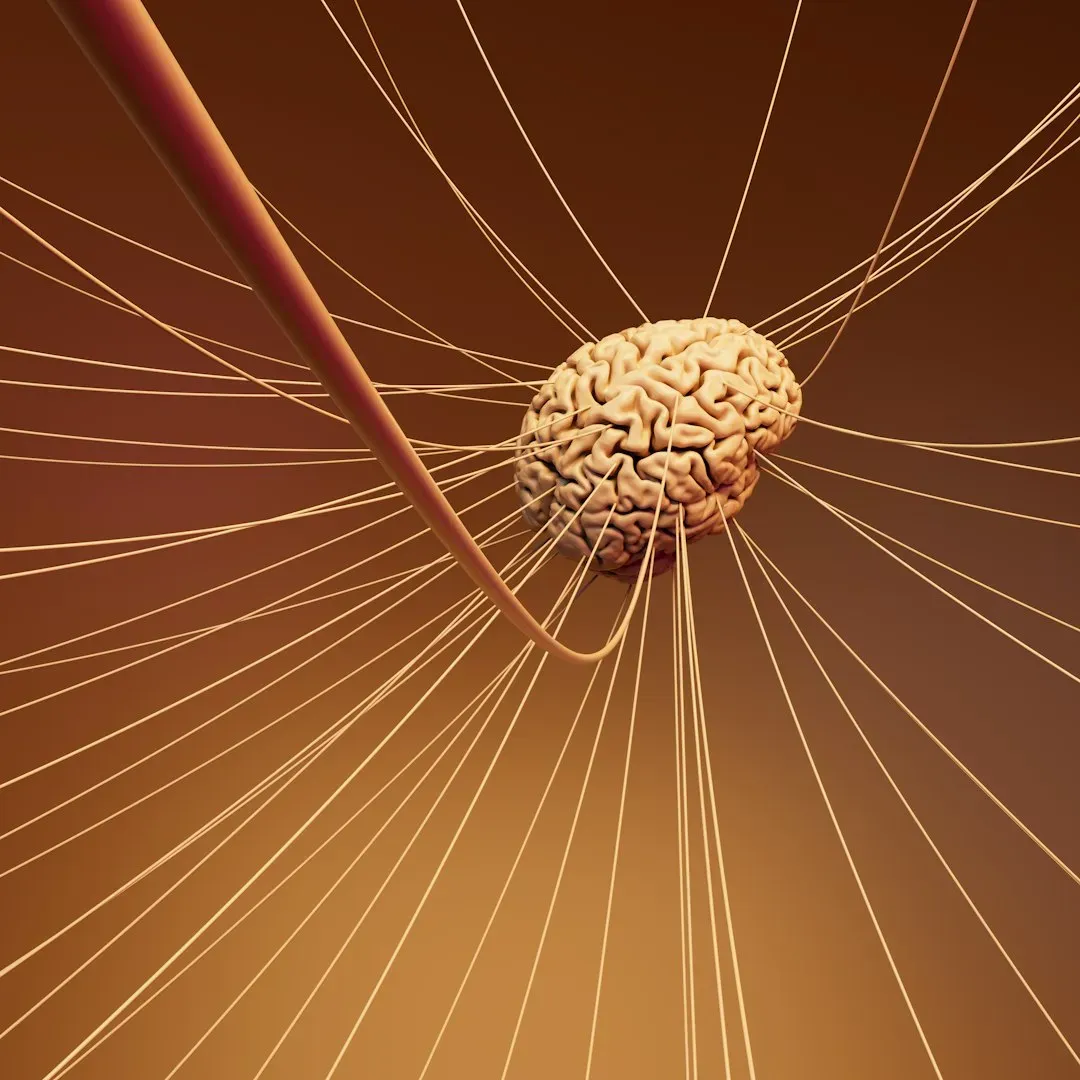
During the day, a set of brain regions called the default mode network (DMN) hums along whenever your mind wanders, you daydream, or you think about yourself and your future. In the minute before sleep, this network starts to fragment and lose its usual coordination. Your self‑focused narrative – rehashing conversations, planning tomorrow, replaying that embarrassing thing from ten years ago – begins to lose its grip. The DMN is, in a sense, the home base of your waking “me,” and in this brief window, that home base powers down.
As the DMN’s chatter quiets, other, more local networks gain the freedom to fire in shorter bursts without being woven into a big story about “you.” This is one reason why thoughts in that window can feel oddly impersonal or detached, more like watching mental weather than deliberately thinking. When people say they “lost themselves” right before sleep, that is not just poetic language; the brain’s main self‑referential circuitry really is stepping offstage. For anyone who struggles with racing thoughts, this hand‑off is the crucial moment your brain is trying to achieve – and sometimes fails to reach easily.
Muscle Twitches and Falling Sensations: The Body’s Last Check

Many people experience sudden jerks or the sensation of falling in the moments before sleep, often called hypnic jerks. These movements are tied to how the brain and spinal cord wind down motor control while still maintaining basic posture and safety checks. As the brain decreases its conscious supervision of muscles, small misfires in motor circuits can trigger a brief, startling contraction. It feels dramatic, but in most cases, it’s simply the nervous system running its last diagnostics before going offline for the night.
Some scientists think these twitches may be leftover from ancient survival circuits that made sure our ancestors did not fall out of trees as they dozed. Whether or not that specific story is fully correct, the pattern fits a broader theme: your brain is double‑checking the body right up until the moment of sleep. I often notice these jerks on nights when I am overtired or stressed, almost like my body is slamming on the brakes. That last sixty seconds is where the brain decides: we are safe enough, still enough, and now we can let go.
Memory Systems Start Filing the Day Away

Even before you fully drift off, the brain is already preparing to sort and stabilize memories from your day. The hippocampus, a deep structure crucial for forming new memories, begins to coordinate with the cortex in more rhythmic ways that set the stage for later replay during deeper sleep. You may notice that thoughts about the day’s events start to feel less sharp and more like soft echoes. This is the mental equivalent of putting papers into a “to be filed” tray before the night shift starts.
In that final waking minute, you are still somewhat in control of what gets highlighted for storage. The worries you dwell on, the details you revisit, or even the gratitude you consciously bring to mind can influence what is tagged as important. I sometimes mentally review a single good moment from the day as I drift off, and it often shows up more clearly in my memory later. The transition to sleep is not just a shutdown; it is a handover to the brain’s internal archivists, who are getting ready to work while you are unaware.
Why This One Minute Matters for Insomnia and Mental Health

If that last sixty seconds is so packed with change, it is no surprise that this is exactly where things can go wrong for people with insomnia or anxiety. When stress circuits stay active and the frontal “worry” networks refuse to power down, the alpha fade‑out stalls, the default mode network keeps chattering, and the sensory gate never fully closes. You feel tired but wired, stuck at the doorway between wake and sleep, repeatedly bounced back into full awareness. It is like trying to leave a party while someone keeps pulling you back into new conversations.
On the flip side, learning how this minute works gives you leverage. Calming your body, dimming lights, avoiding harsh alerts, and giving your mind a simple, repetitive focus (like slow breathing or a neutral mental image) all help those brain switches flip more smoothly. My opinion, after looking at how rich this transition is, is that we underestimate it badly. We treat sleep as an on‑off switch you can slam whenever you feel like it, when in reality it is a finely tuned sequence your brain must be allowed to run. If there is one lesson here, it is that protecting that fragile last minute before sleep is not a luxury; it is a form of basic brain care.
Conclusion: The Most Important Minute You Never Notice

That tiny window before you fall asleep is not empty time; it is a controlled crash‑landing where your brain reroutes attention, filters the world, loosens your sense of self, checks your body, and quietly starts organizing your memories. The more scientists map it, the clearer it becomes that this minute is its own distinct state, not quite wakefulness and not quite sleep. Ignoring it is like ignoring the runway and only caring about the flight; technically you can do that, but you will misunderstand how the whole journey really works. I think we have been far too casual about this transition, and it shows in how many of us struggle to wind down at night.
My personal take is blunt: if you treat those last sixty seconds as disposable – scrolling angrily, answering work messages, flooding your brain with light and noise – you are fighting against how your brain is built to switch states. But if you respect that fragile hand‑off, give it softer input and fewer demands, you are working with the grain instead of against it. The science is still evolving, and there is a lot we do not know in perfect detail, but one thing is clear: that minute before sleep is not just where your day ends; it is where tomorrow’s brain health quietly begins. So next time you feel yourself slipping over that edge, will you let your brain land smoothly or keep yanking it back into the cockpit?