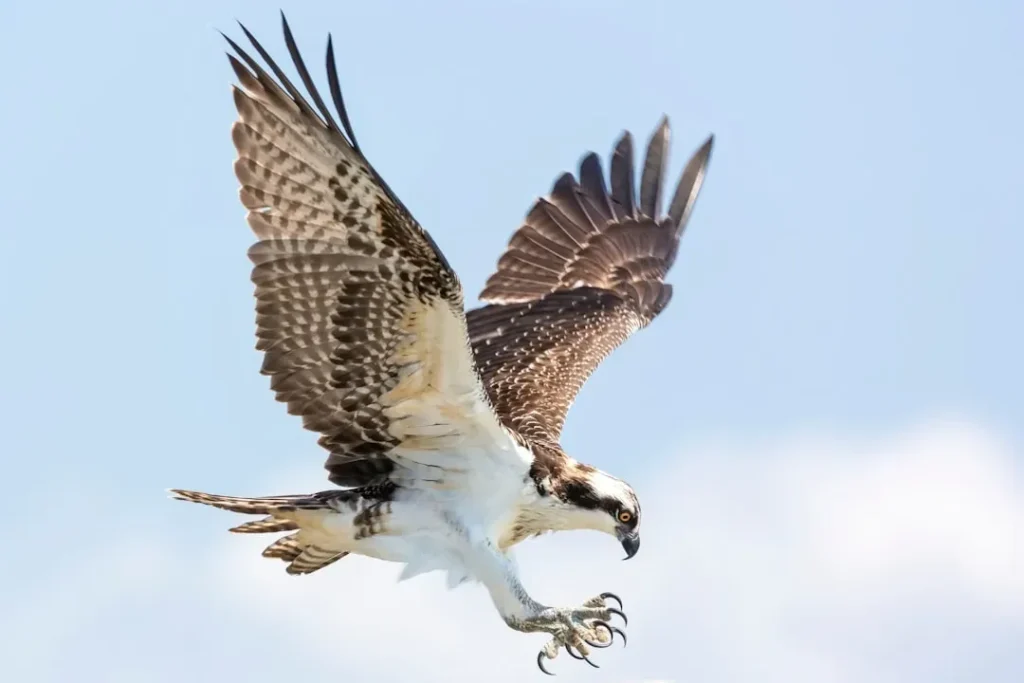

If birds had an Olympic team for fishing, ospreys would be the undefeated champions. Long before humans were designing fishing lures and sonar, these raptors had already evolved a toolkit so specialized that their entire lives revolve around one main goal: catching fish and not wasting the effort. Watching an osprey dive is a little like watching a guided missile lock onto a moving target, except the missile has feathers, talons, and an attitude.
What makes them so good, though, is not just one trick. It’s a whole bundle of weird, wonderful adaptations layered over millions of years. From reversible toes to water‑repellent feathers and laser‑focused vision, everything about an osprey screams “fish hunter.” Once you start to unpack those details, you realize you’re not just looking at a bird; you’re looking at one of nature’s most refined pieces of engineering. Let’s dig into the most amazing facts that explain why ospreys sit at the very top of the freshwater and coastal fishing game.
1. Ospreys Eat Almost Nothing But Fish
Most birds of prey are generalists: they’ll grab a rabbit today, a snake tomorrow, maybe a pigeon if it looks slow enough. Ospreys are different. Their diet is overwhelmingly made up of live fish, usually caught near the surface of lakes, rivers, estuaries, and coastlines. In many areas, essentially all of an osprey’s meals are fish, which makes them one of the most specialized raptors on the planet.
That narrow focus is a huge part of why they’re so good at what they do. When your survival depends almost entirely on one kind of prey, evolution has a very strong incentive to fine‑tune every part of your body for that task. Ospreys have shaped their flight style, their talons, their beak, their vision, and even their feathers around the simple but demanding problem of catching a slippery, fast‑moving animal in another medium: water. They’re not just birds that sometimes fish; they are fishing machines that happen to have wings.
2. Reversible Toes Turn Their Feet Into Natural Fish Grippers
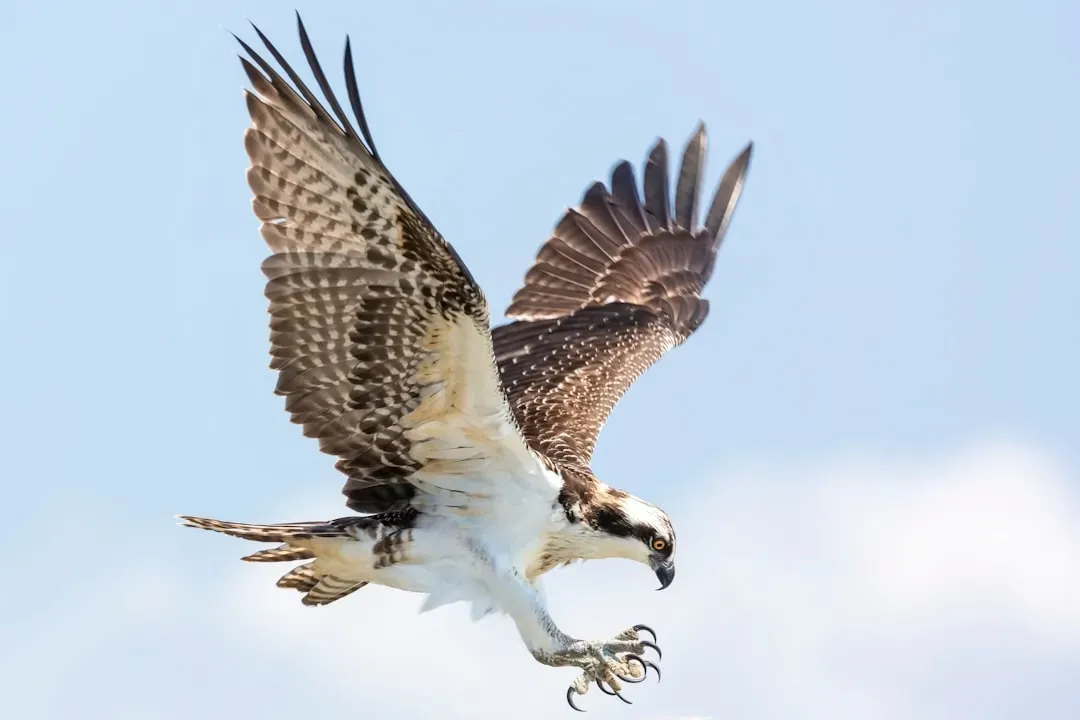
One of the coolest – and most underrated – osprey secrets is hidden in their feet. Ospreys have a reversible outer toe, which means they can shift their grip from the standard three toes forward and one back, to two forward and two back. That might sound like a small anatomical quirk, but in practice it turns their feet into flexible clamps that can lock onto wriggling fish from different angles.
If you’ve ever tried to pick up a wet bar of soap, you already know what ospreys are up against. Fish are slick, streamlined, and determined to get away. With the two‑and‑two toe configuration, an osprey can balance the fish more evenly, distributing its weight and gripping it more securely during flight. It’s like switching your hand from a casual hold to a precise, two‑handed clamp. The fact that they can do this mid‑hunt, in the chaos of spray and wind, is part of what makes them look almost unfairly effective compared to other birds.
3. Needle‑Sharp, Spiky Talons and Footpads Stop Slippery Escapes
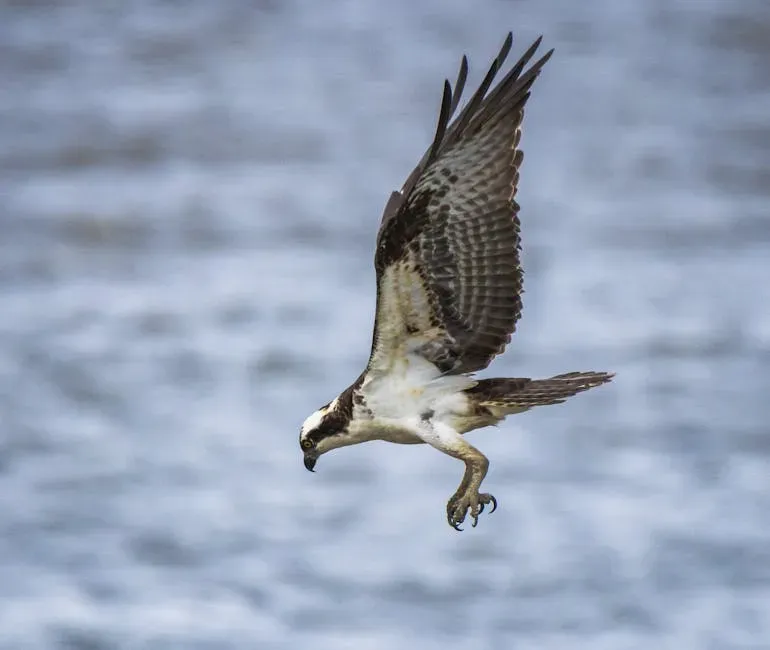
The toes alone aren’t enough; ospreys double down with vicious hardware at the tips. Their talons are sharply curved and extremely pointed, built to penetrate deep into a fish’s body rather than just pinching the surface. Once those hooks sink in, it is incredibly hard for the prey to twist free, even if it thrashes violently. That penetrating grip is important because a fish’s smooth scales and muscular body are excellent at shedding shallow holds.
On top of that, the undersides of their toes have rough, spiky pads called spicules. These tiny, cone‑shaped projections act like built‑in anti‑slip tread, a bit like the knobby texture on a high‑end grip or the rubber nubs on a yoga mat. The combination of needle talons and sandpapery toe pads means the osprey is holding its lunch with something closer to a studded clamp than a bare-footed grasp. When you watch an osprey fly off with a decent‑sized fish, you are seeing a bird that has essentially solved the “wet, struggling object” problem better than most of our gear does.
4. They Dive Feet‑First at High Speed Like Guided Missiles
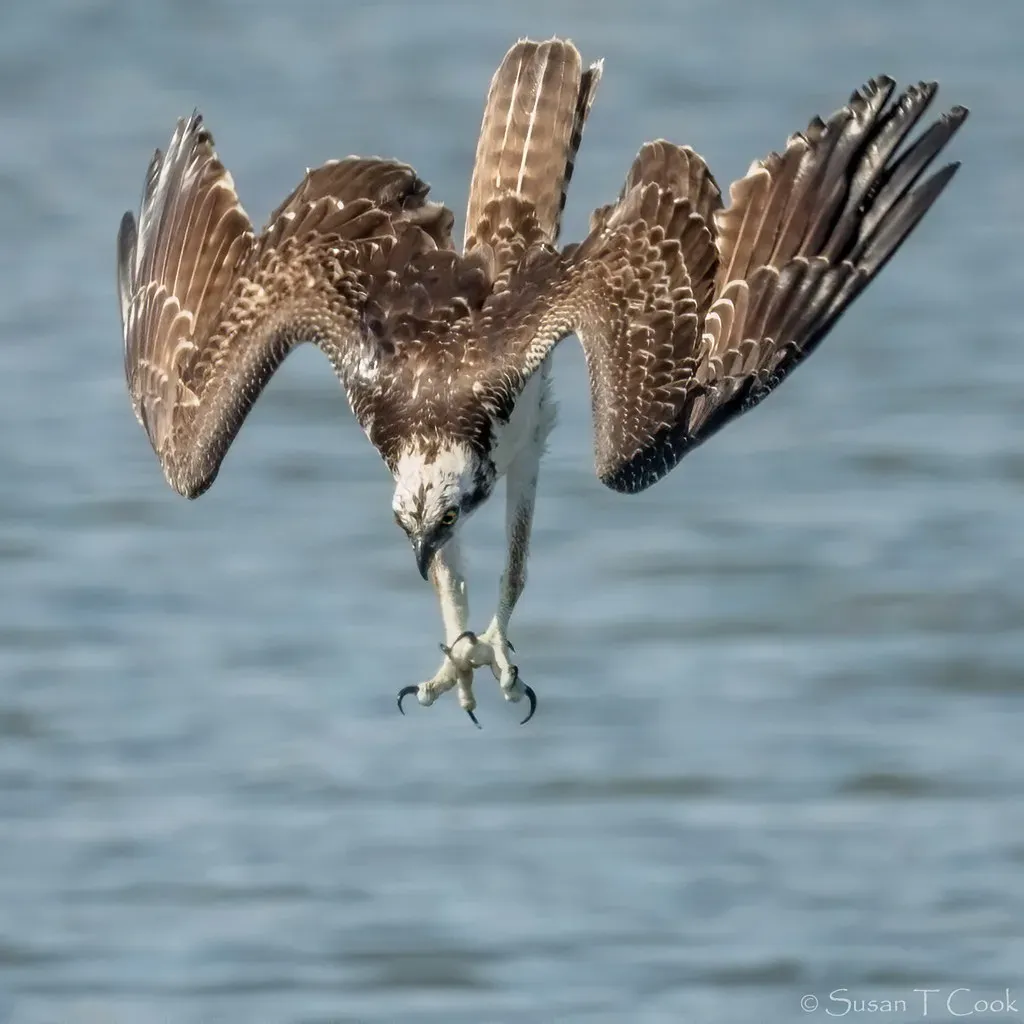
Many birds skim water or snatch prey from the surface while flying past, but ospreys take it to another level by committing to full, feet‑first dives. From as high as several dozen feet in the air, they hover briefly to lock onto a fish, then angle their body downward and drop in a controlled plunge. Their wings narrow and pull slightly back, and their legs shoot forward to meet the water first, like a skydiver switching to a streamlined landing posture.
This style of attack allows them to enter the water at a steep angle with exactly the right body orientation to strike. The feet‑first technique is crucial: the talons hit the target directly, rather than the bird having to swing them down at the last second. It’s like the difference between trying to catch a ball from the side versus reaching straight out toward it. Add gravity, momentum, and years of practice, and you get that dramatic, almost cinematic moment when an osprey crashes into the water and then explodes back into the air with a fish in tow.
5. Remarkable Vision Lets Them See Fish Through Glare and Waves
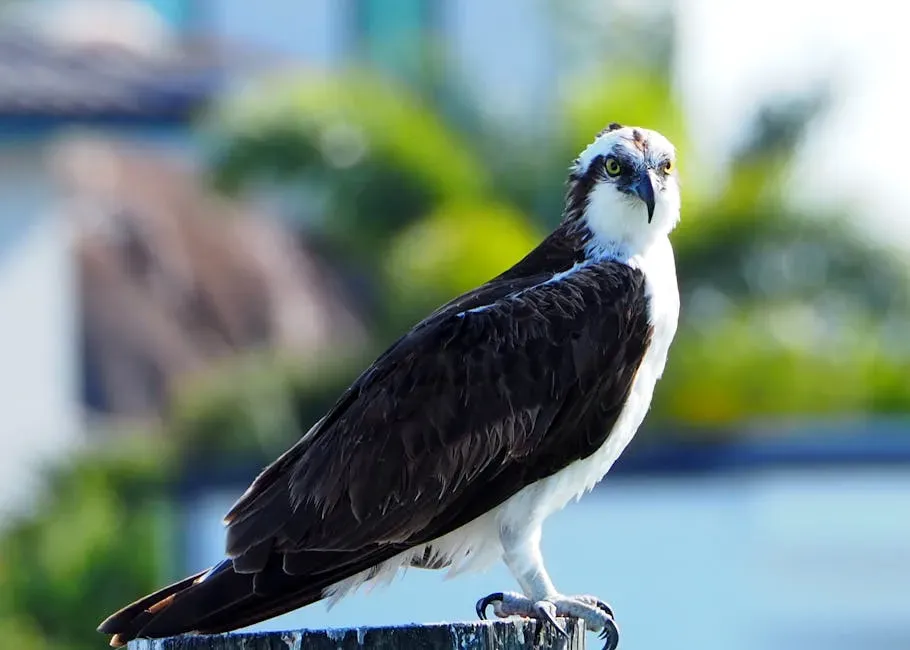
Of course, none of that acrobatic diving matters if the bird can’t see what it’s aiming for. Ospreys have outstanding eyesight, with visual acuity significantly better than ours. They can detect fish near the surface from impressive heights, even when light conditions are far from perfect. Their eyes are tuned to pick up subtle movements and contrasts, which helps them pick out a fish’s outline in a shifting, reflective world of ripples and reflections.
On top of sharp focus, ospreys benefit from adaptations that help them deal with bright light and glare off the water. The dark stripe through their eye – almost like natural sports sunglasses – reduces lateral glare and may improve contrast when they’re hunting under strong sun. Combined with very fine control over head movements, they can keep a target locked in their field of view while hovering in gusty wind. If you’ve ever lost sight of your keys in shallow, sunlit water, you can appreciate how insane it is that an osprey can not only see a fish in similar conditions, but also hit it with millimeter‑level precision.
6. Water‑Resistant Feathers and Nostrils Built for Impact
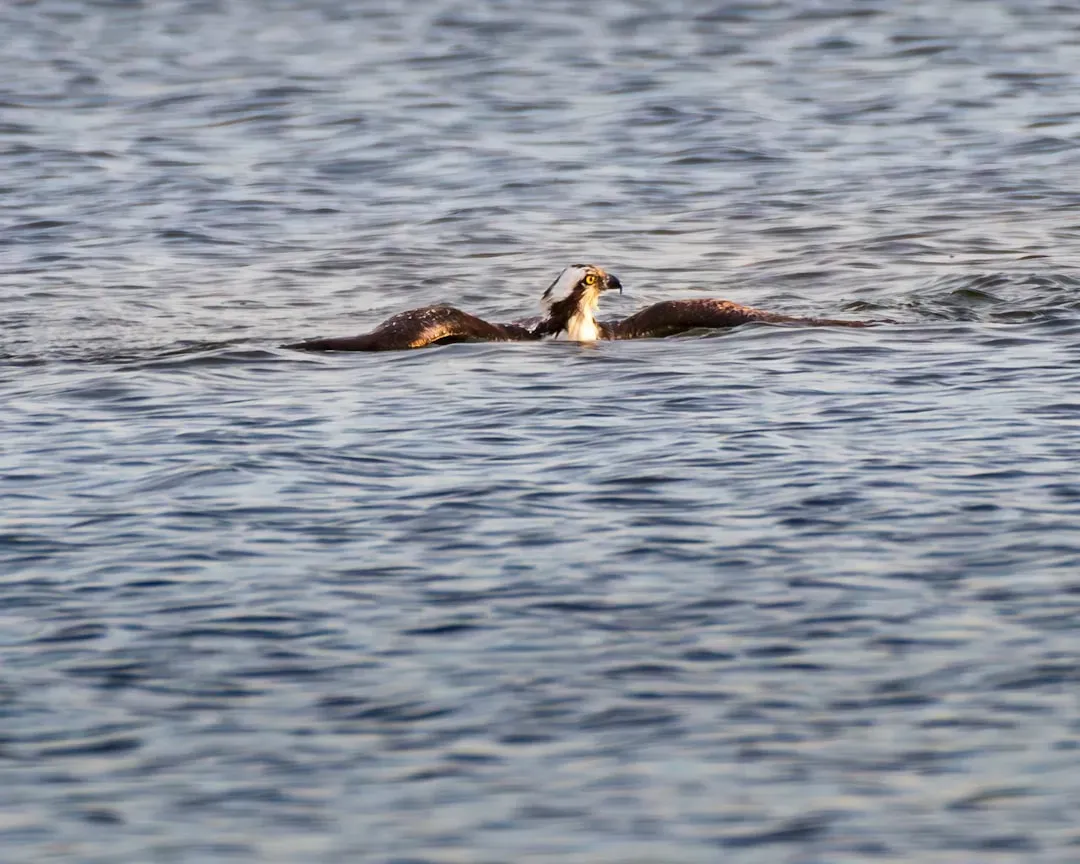
Diving into water at speed is risky. Feathers can soak, drag increases, and the bird can be left heavy and grounded if it gets too wet. Ospreys handle this with specialized, somewhat oily plumage that sheds water quickly. Their feathers do take on some moisture, but they are much better at drying out and staying buoyant than those of many other raptors. After a dive, you’ll often see an osprey shake itself mid‑flight, flinging off water the way a dog does after a swim, then cruising off as if nothing happened.
There’s also a clever trick in the head design: ospreys can close their nostrils when they hit the water. This simple but effective adaptation prevents water from rushing into their nasal passages during impact and submersion. It’s similar in spirit to a swimmer blowing out or pinching their nose before diving. Taken together, the semi‑waterproof feathers and sealable nostrils mean they can crash into lakes or ocean bays again and again, multiple times a day, without wrecking their flying gear or their airways. It’s a rugged, repeatable system geared toward daily, high‑energy fishing patrols.
7. They Rotate Their Catch Mid‑Flight for Aerodynamic Efficiency
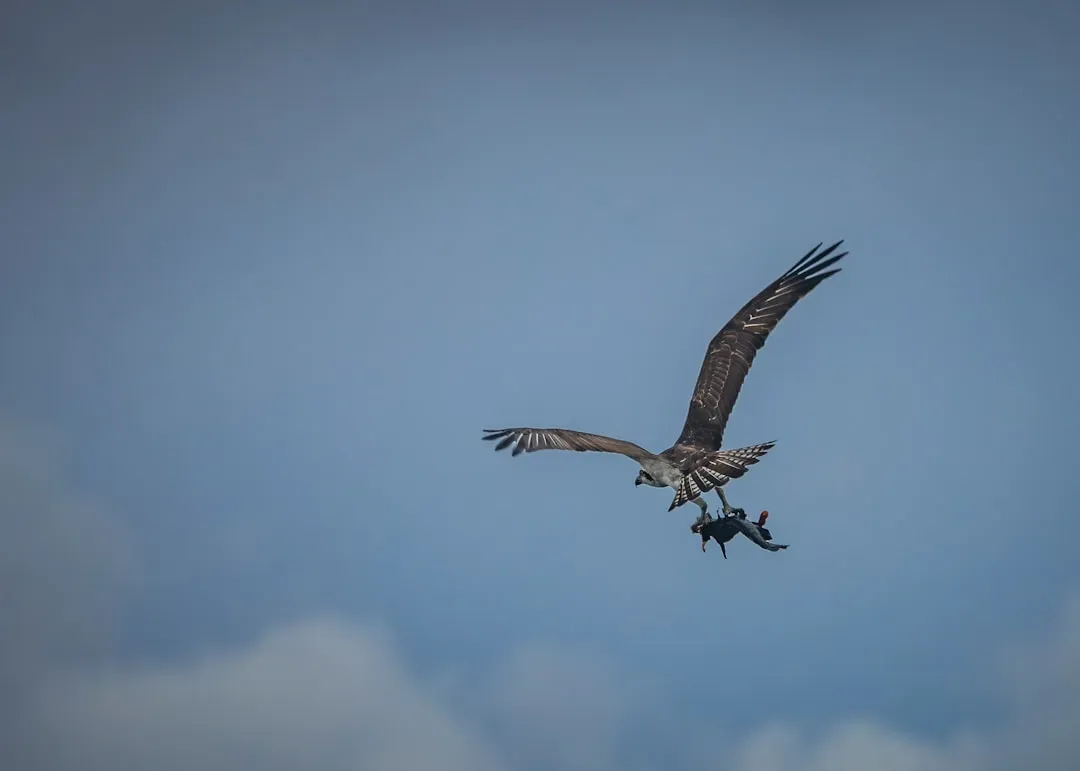
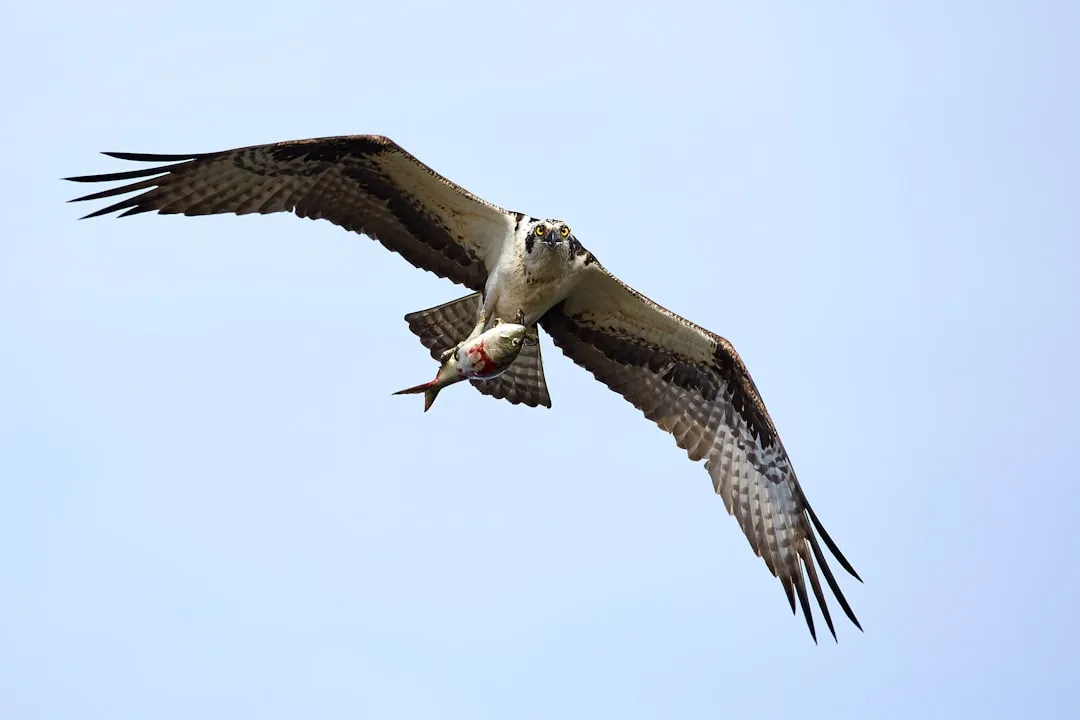
One of the most satisfying little osprey behaviors to watch is what happens after a successful catch. Once airborne with a fish, the bird often repositions it so the fish’s head faces forward, aligned with the direction of flight. That might seem like a quirky habit, but it actually reduces drag. A long, sideways fish is like flying with a flat board under you; a streamlined, head‑first fish slices through the air with less resistance.
This kind of mid‑air load management makes a difference, especially when the fish is heavy relative to the bird’s body weight. By rotating the prey, the osprey conserves energy during the flight back to the nest or a feeding perch. There’s a quiet kind of elegance to it: the same way a cyclist tucks in to become more aerodynamic, an osprey fine‑tunes its cargo. To me, it feels like watching an experienced traveler automatically shift their luggage to balance the weight; they don’t think about it anymore, they just do it because thousands of trips have taught them the most efficient way.
8. They Can Lift Surprisingly Large Fish – But Not Without Limits
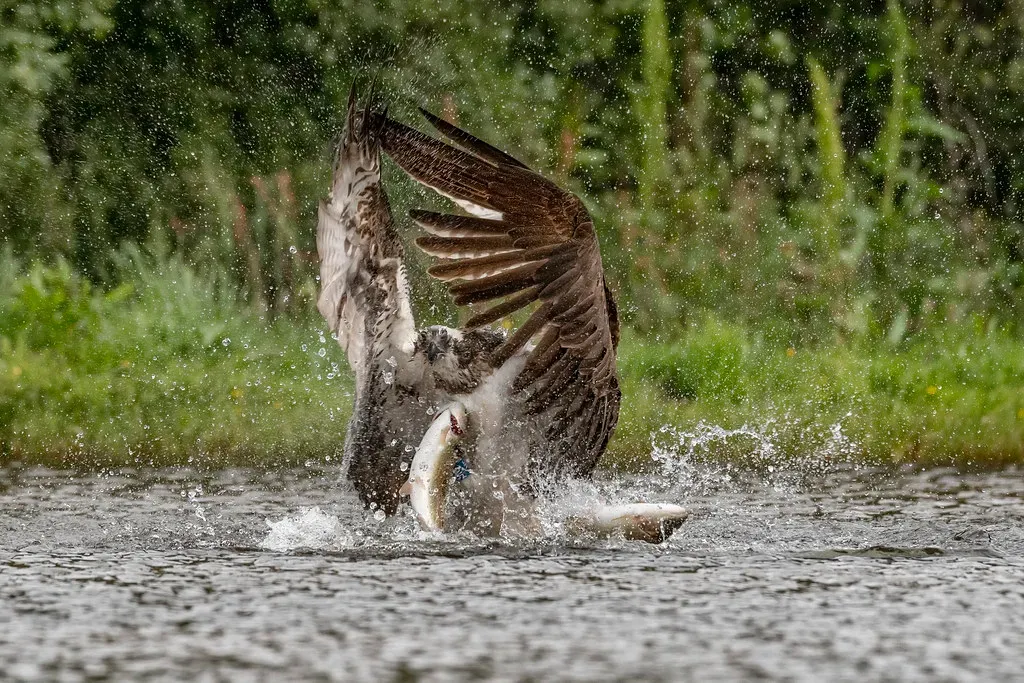
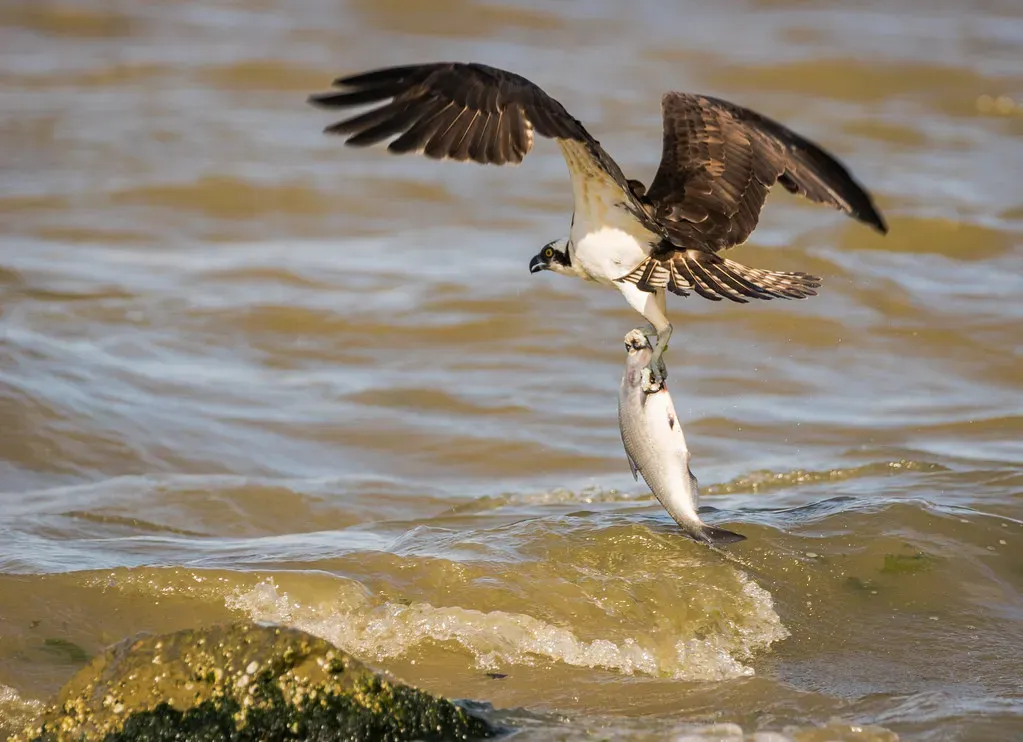
People love to swap wild stories about ospreys flying off with huge fish, and sometimes those tales get a little exaggerated. Still, there’s a solid core of truth: ospreys are able to lift fish that are a significant fraction of their own body weight, especially when the wind and angle of takeoff help them. Their long wings and powerful chest muscles give them serious vertical thrust, and that allows them to yank a struggling fish out of the water with impressive force.
That said, physics always has the final word. If the fish is too heavy or too deeply submerged, an osprey may not be able to get fully airborne. Bird watchers have documented birds dragged briefly or forced to let go when the load is simply too much. Every successful lift is a balancing act between strength, lift, and hydrodynamic resistance. I actually find that limitation almost reassuring; even these elite hunters play by the same rules of mass and energy that the rest of us do. They’re extraordinary, not magical, and that makes their true achievements even more impressive.
9. Global Distribution Shows How Well Their Strategy Works
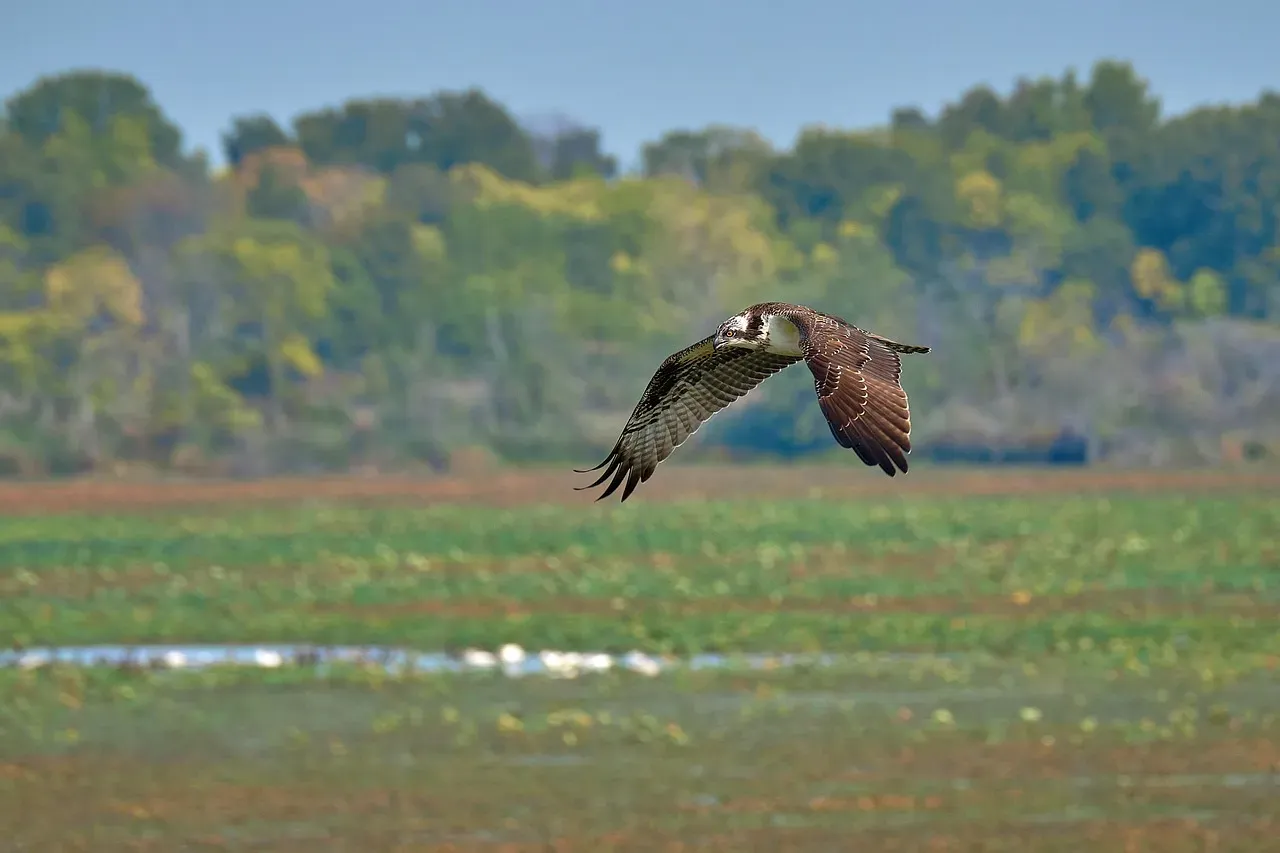
Ospreys are found on every continent except Antarctica, which says a lot about how successful their fishing strategy is. Wherever there are shallow waters with decent fish populations – lakes, rivers, reservoirs, estuaries – you’ve got a decent chance of finding an osprey or two, especially during migration seasons. This wide distribution is unusual for such a specialized predator. It means their core design is flexible enough to work across a huge range of climates and ecosystems.
To make that possible, ospreys migrate long distances, tracing coastlines and flyways that connect breeding sites and wintering grounds. You can think of them as seasonal commuters between fish‑rich regions. Their ability to read landscapes and exploit different kinds of aquatic habitats shows that while they are extreme specialists in diet, they are remarkably adaptable in geography. In a world where many species struggle when their niche is narrow, ospreys are proof that if your specialty is good enough – and fish are widespread enough – you can go almost anywhere.
10. Nesting Habits Keep Them Close to the Best Fishing Spots
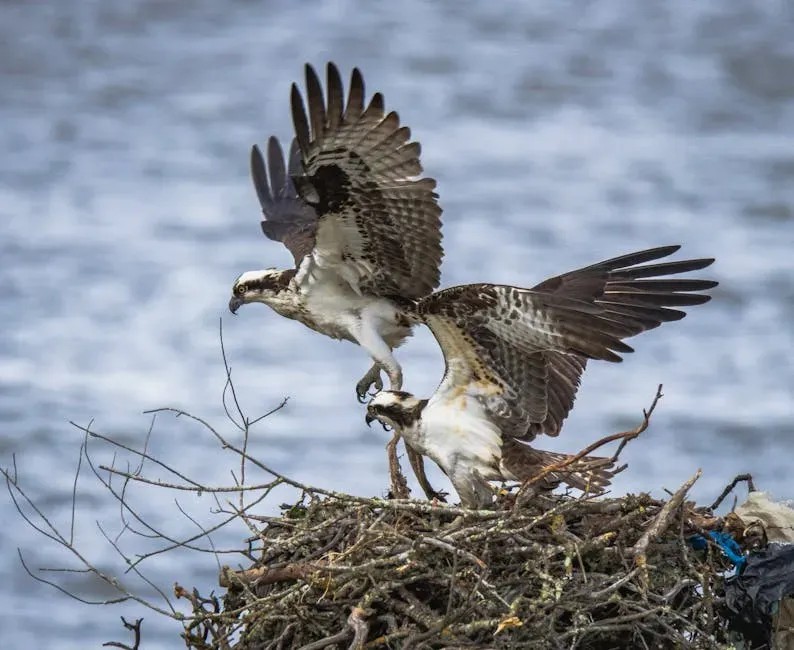
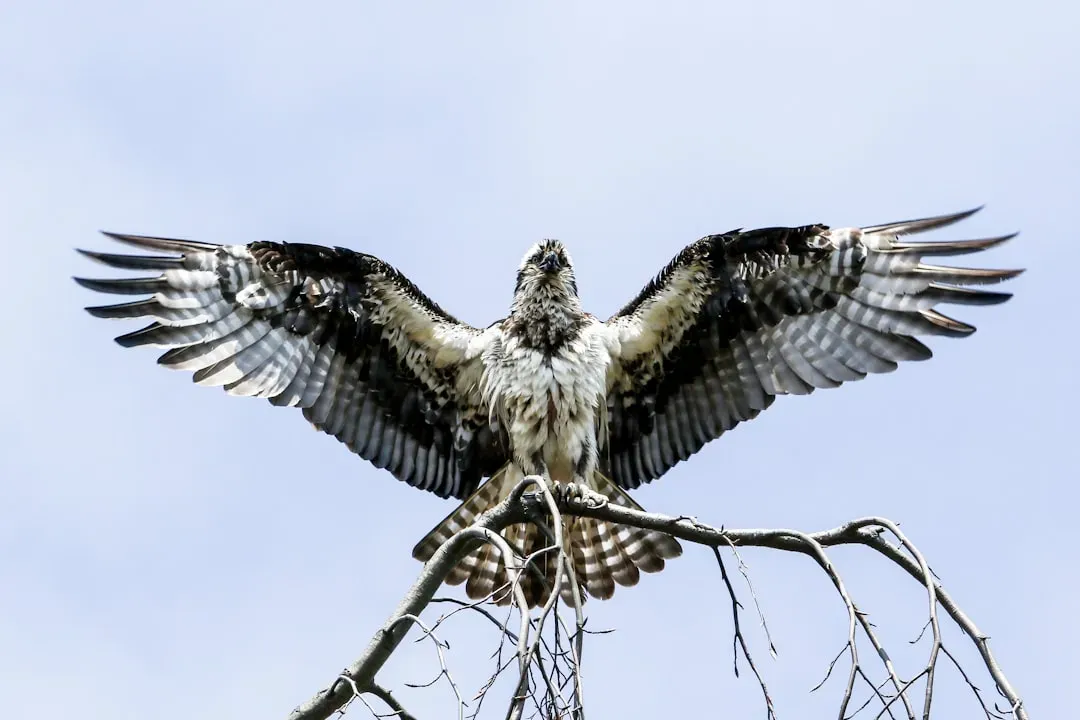
Another quiet edge ospreys have is where they choose to live. They build large, often messy stick nests on high, open platforms close to water – on trees, cliffs, utility poles, channel markers, and specially installed nest platforms. This elevated, waterfront real estate gives them a commanding view of nearby lakes or bays and lets them launch quickly into hunting flights. It’s efficient: less commuting, more fishing, better visibility for both partner and chicks.
Over time, these nests grow into impressive structures, reused and added to year after year. The size alone says a lot about how central a territory is to a pair. A good nest site near a productive fishing area becomes a long‑term base of operations, and in many regions humans have started putting up artificial platforms to encourage ospreys to nest away from power lines. I love that detail: our solution to potential conflict is basically to say, “Here, have a better fishing‑view condo,” and the birds happily accept the upgrade.
11. Their Comeback Story Proves How Resilient Top Predators Can Be
Beyond their hunting tricks, there’s one more reason I think of ospreys as elite: they survived us at our worst. In the mid‑twentieth century, widespread use of certain pesticides caused huge declines in many birds of prey. Ospreys, sitting high in aquatic food chains and eating mostly fish, were hit especially hard. Their numbers crashed in many regions, and for a while it looked like they might simply vanish from large parts of their former range.
But when regulations changed and key chemicals were phased out, ospreys began to rebound. Conservation projects helped by protecting nesting sites and building safe platforms, and slowly the birds re‑colonized lakes, rivers, and coasts where they had been absent for years. To me, their comeback is an argument in favor of cautious optimism: when we stop poisoning the system they depend on, they do an incredible job of taking care of the rest. Watching an osprey slice into the water today feels like a small, living reminder that some damage can be undone if we give nature enough of a fighting chance.
Conclusion: The Perfect Combination of Precision, Power, and Persistence
When you put all these pieces together – the specialized feet, the spiked talons, the sharp vision, the aerodynamic cargo control, the water‑ready feathers, and the global reach – you end up with a bird that feels over‑qualified for the job of catching fish. In my view, ospreys are one of the clearest examples of evolution going all‑in on a single strategy and absolutely nailing it. They are not just good hunters; they are a masterclass in how form follows function when the stakes are survival.
At the same time, their history reminds us that even the most perfectly adapted predators are still vulnerable to what we put into their world. Ospreys can handle storms, distance, and the daily grind of hunting far better than they can handle contaminated water or disappearing habitats. Maybe that’s the real “amazing fact” here: their future is now partly in our hands. The next time you see one circling a lake, hovering for that decisive dive, it’s worth asking yourself a simple question: in a world that produces hunters this extraordinary, what kind of role do we want to play – ally, or obstacle?