Imagine waking up to the news that four long‑lost aircraft, written off as mysteries from another era, have just been found on the seafloor – and that their black boxes, against all odds, still power up and play their final moments. It sounds like the start of a prestige TV series, but it cuts much deeper: into grief that never fully healed, questions that were never answered, and a strange kind of second chance delivered by the ocean itself. There’s something unsettling and beautiful about the idea that technology built in another century has been quietly keeping its secrets in the dark all this time, waiting for us to catch up.
Right now, no such discovery has actually happened. Four decades‑old planes have not been pulled from the ocean with perfectly functional black boxes. But the headline captures a scenario that oceanographers, accident investigators, and families of the missing still dream about. So let’s lean into that thought experiment – carefully, honestly, and grounded in what we really know – and walk through four of the most haunting ocean aviation mysteries that people wish the sea would finally give back: Malaysia Airlines Flight 370, Air France Flight 447, South African Airways Flight 295, and TWA Flight 800. If the ocean handed us all four wrecks with recoverable flight recorders today, what could we finally learn, and what would it actually change?
Malaysia Airlines Flight 370 (MH370): The Disappearance That Rewired How We Think About “Modern” Flying
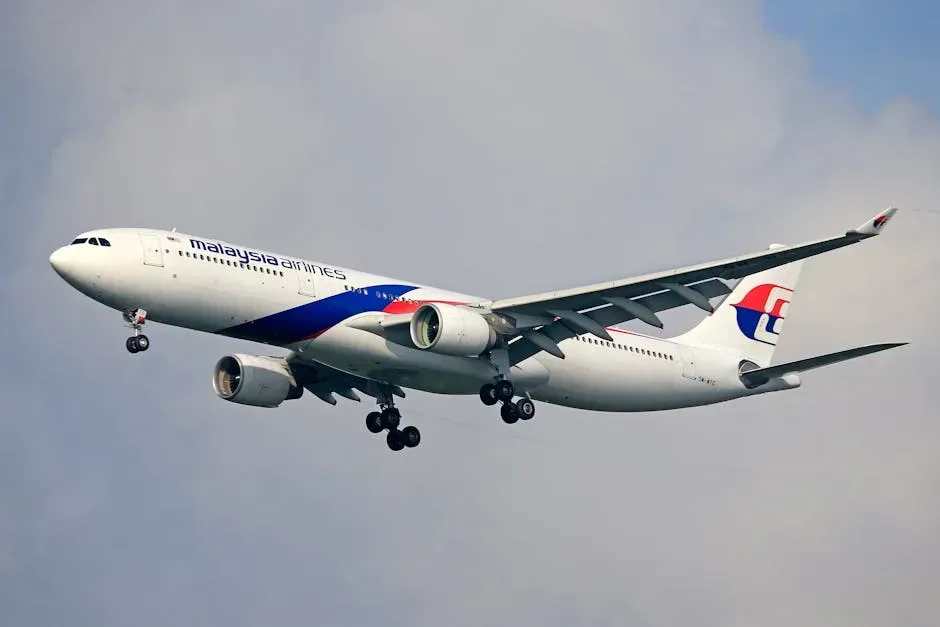
It’s hard to overstate how shocking it was when a large, modern Boeing 777 simply vanished in March 2014 as Malaysia Airlines Flight 370, en route from Kuala Lumpur to Beijing. We live in a world where people assume that everything is tracked all the time, from their phone battery level to their food delivery driver’s exact turn on a side street. Then MH370 disappeared over the ocean, and suddenly the illusion of constant aviation visibility was shattered. Families were left with almost no concrete wreckage at first, just radar traces, satellite handshakes, and a widening spiral of possible explanations.
Over the years, investigators have found debris that almost certainly came from MH370, washed ashore on beaches around the western Indian Ocean. Sophisticated analysis of satellite data has narrowed down a suspected crash zone, but the main wreck and, crucially, the flight data recorder and cockpit voice recorder remain missing. If the ocean somehow “gave back” MH370 tomorrow with fully functioning black boxes, we would finally know whether the flight’s strange path was the result of deliberate human action, catastrophic technical failure, or some combination that nobody has yet pieced together. Personally, I think that clarity would not only close a chapter for families; it would also force the entire industry to confront just how comfortable it became with blind spots over remote oceans and how urgently we need global, continuous tracking that doesn’t vanish with a single switch or system failure.
Air France Flight 447 (AF447): When Storms, Sensors, and Human Limits Collide
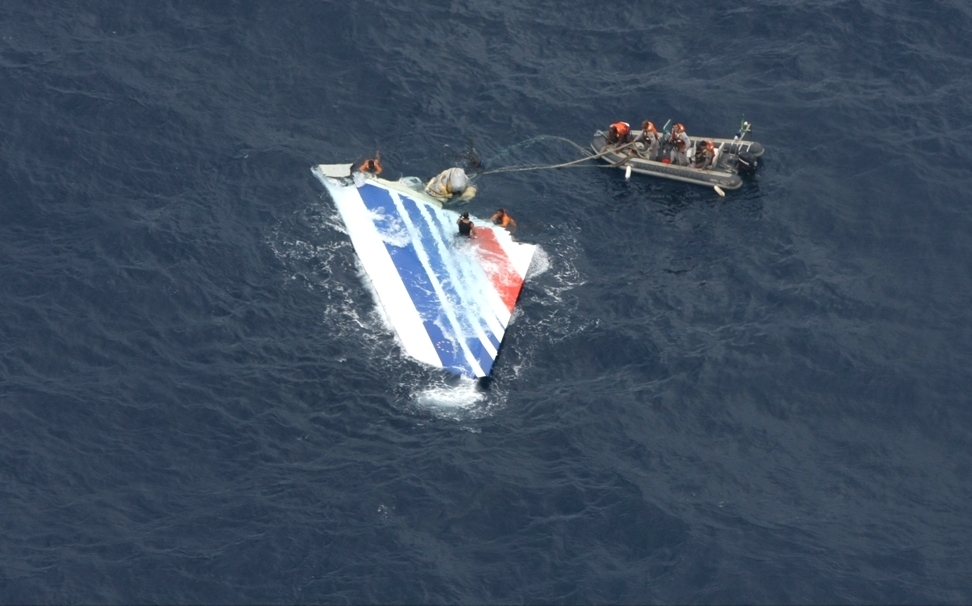
Air France Flight 447, an Airbus A330 flying from Rio de Janeiro to Paris in June 2009, did not disappear in the same way MH370 did, but for a long time it felt almost as mysterious. The aircraft entered a zone of powerful thunderstorms over the Atlantic, sent a flurry of automated fault messages, and then fell off radar. For two years, search teams struggled to locate the main wreckage deep on the ocean floor. When they finally did, they found the black boxes – and, remarkably, were able to recover the data after a long time underwater. Those recorders changed the conversation from wild speculation to a sobering, detailed understanding of what went wrong.
The investigations into AF447 showed a complex chain: blocked pitot tubes that confused the airspeed readings, autopilot disconnects, and human pilots suddenly thrust into a high‑altitude crisis with misleading cues and limited time. If AF447 had been one of our hypothetical four planes just found today with brand‑new‑looking black boxes, the story would probably still land in the same place: the ocean preserves some things and destroys others, but data can be surprisingly resilient when the hardware is built with redundancy and sealed against pressure and corrosion. To me, AF447 is a powerful example of why we crave those black box insights so badly. They do not turn tragedies into happy stories, but they turn murky fear into precise lessons that can change pilot training, sensor design, and how we think about flying through violent weather far from land.
South African Airways Flight 295 (Helderberg): Fire, Rumors, and the Limits of Underwater Answers
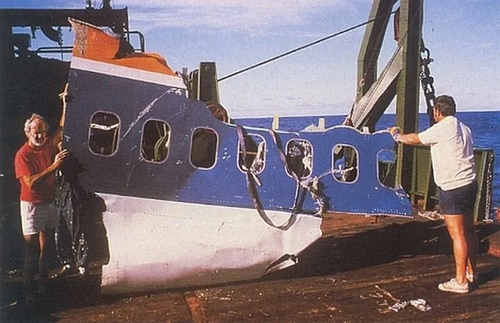
South African Airways Flight 295, nicknamed the Helderberg, crashed into the Indian Ocean in November 1987 while flying from Taipei to Johannesburg, with a stop in Mauritius. The aircraft was a Boeing 747 Combi, carrying both passengers and cargo, and the official narrative centers on a fire that broke out in the cargo hold. Wreckage was eventually located in very deep water, and investigators retrieved the cockpit voice recorder, which offered some haunting clues but did not fully erase all the doubts. For many people, the tragedy is wrapped in allegations of undeclared cargo and government secrecy, which turned a technical accident into a political and emotional minefield.
If the Helderberg were only just now being found, fully intact with a pristine flight data recorder and cockpit voice recorder ready to play back, I suspect the public debate would explode all over again. On a technical level, we would want to see precise temperature readings, smoke detection patterns, and how long systems remained functional after the first signs of trouble. On a human level, we would probably replay those final minutes obsessively, hunting for any shred of confirmation of long‑held suspicions – about what was in the cargo hold, about what the crew knew, and about whether more might have been done. My own take is a bit uncomfortable: even when black boxes survive, they do not necessarily settle every argument. Sometimes they narrow the story to the point that the remaining unknowns feel even sharper, and SAA 295 is a reminder that truth in aviation accidents is often a mix of physics, policy, and politics that does not fit neatly into a single recording.
TWA Flight 800: An Explosion Off Long Island and a Battle Over Explanation
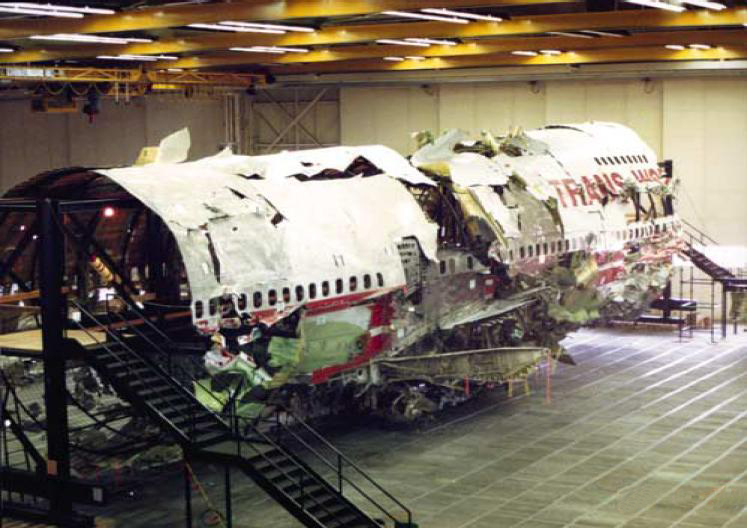
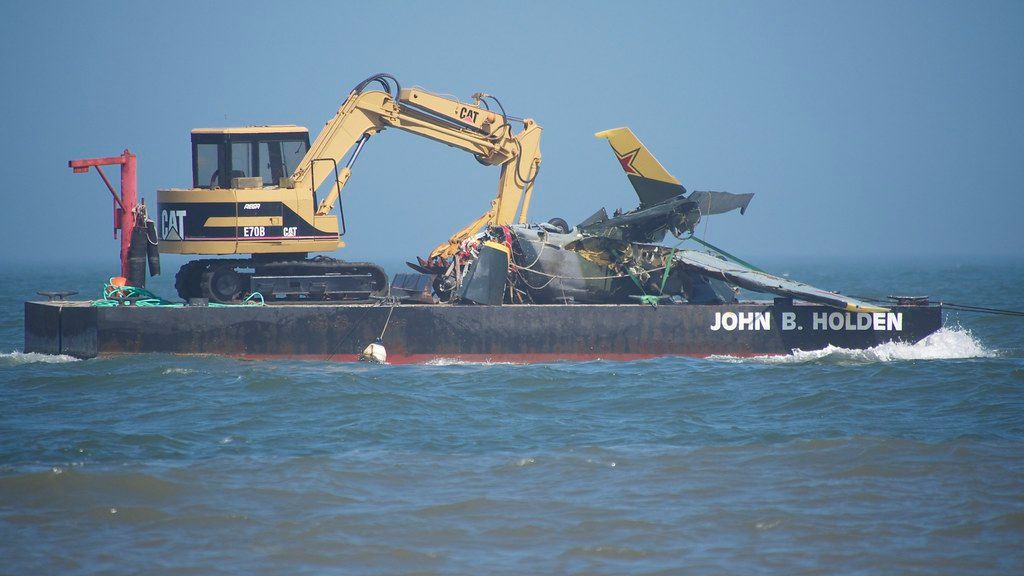
Trans World Airlines Flight 800 exploded and crashed into the Atlantic Ocean shortly after taking off from New York’s JFK Airport in July 1996, killing everyone on board. Witnesses reported streaks of light and flashes in the sky, and almost immediately the speculation machine went into overdrive: was it a missile, a bomb, or some other hostile act? The wreckage was relatively close to shore compared with deep‑ocean losses, and recovery operations brought up large sections of the aircraft that were even painstakingly reassembled for analysis. The official investigation concluded that a fuel tank explosion, triggered by an electrical fault, was the most likely cause.
The black boxes in the real‑world TWA 800 case were recovered and analyzed, but they did not capture an obvious smoking gun moment that silenced every alternative theory. If TWA 800 were one of the newly “returned” planes in our imagined scenario, with perfectly clear data after all these years, I doubt the core story would change: a vulnerable design, aging components, and a catastrophic chain reaction in the fuel system. What might be different today is the public’s willingness to accept a prosaic technical cause over more dramatic narratives. Personally, I find TWA 800 a good example of how modern aviation accidents can be both terrifyingly sudden and painfully ordinary in their root causes, and even when investigators do the work, trust in their conclusions can lag behind for decades, no matter how many times the data are re‑read.
Why Working Black Boxes Still Matter – And Why the Ocean’s Silence Is Its Own Verdict
When you imagine the ocean handing back these four planes – Malaysia Airlines Flight 370, Air France Flight 447, South African Airways Flight 295, and TWA Flight 800 – with black boxes that still work like new, it is tempting to see those recorders as magic truth machines. In reality, even the best data has limits: it tells you what sensors saw and what microphones heard, not what people sitting in those seats felt in their final moments or how their families carried that loss forward through the decades. Still, for regulators, designers, and pilots, these devices are non‑negotiable; they are the closest thing aviation has to an honest memory, unblurred by rumor or the selective focus of human recall.
My own opinion is that we rely too heavily on the idea of recovery after the fact and not nearly enough on building a world where we do not need to ask the ocean for favors in the first place. With today’s technology, we could stream critical flight parameters in real time, store redundant data in satellites, and design locator beacons that do not simply go quiet after a limited battery life. Yet implementation moves slowly, often dragged by cost arguments and a sense that worst‑case scenarios are too rare to justify bold changes. The truth is that when a plane goes missing over water, the ocean’s silence becomes its own verdict unless we have already designed around that possibility. So the uncomfortable question for all of us is not whether the sea will someday give back four lost planes with working black boxes, but whether we are willing to demand systems that stop letting them disappear so completely in the first place.