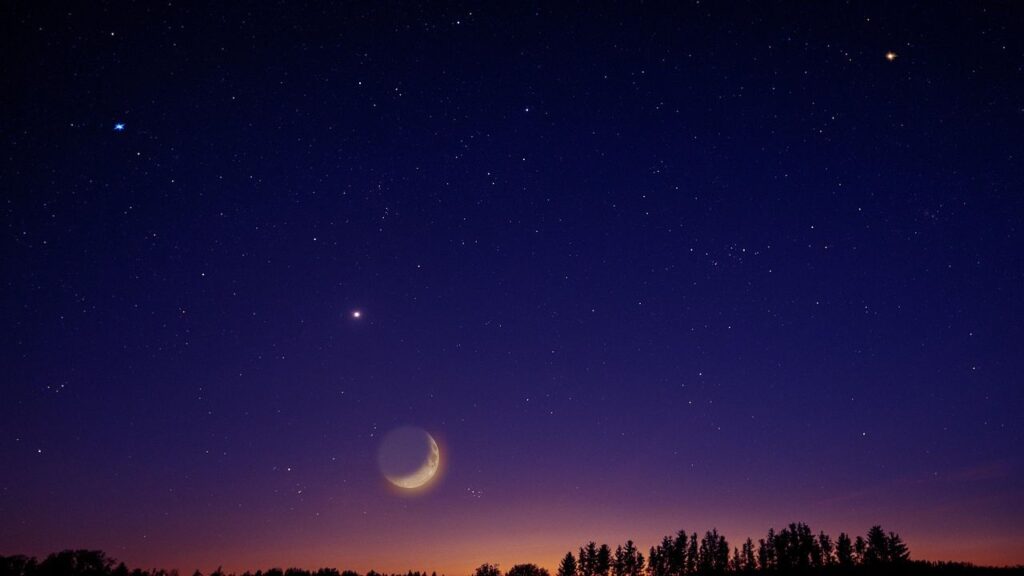
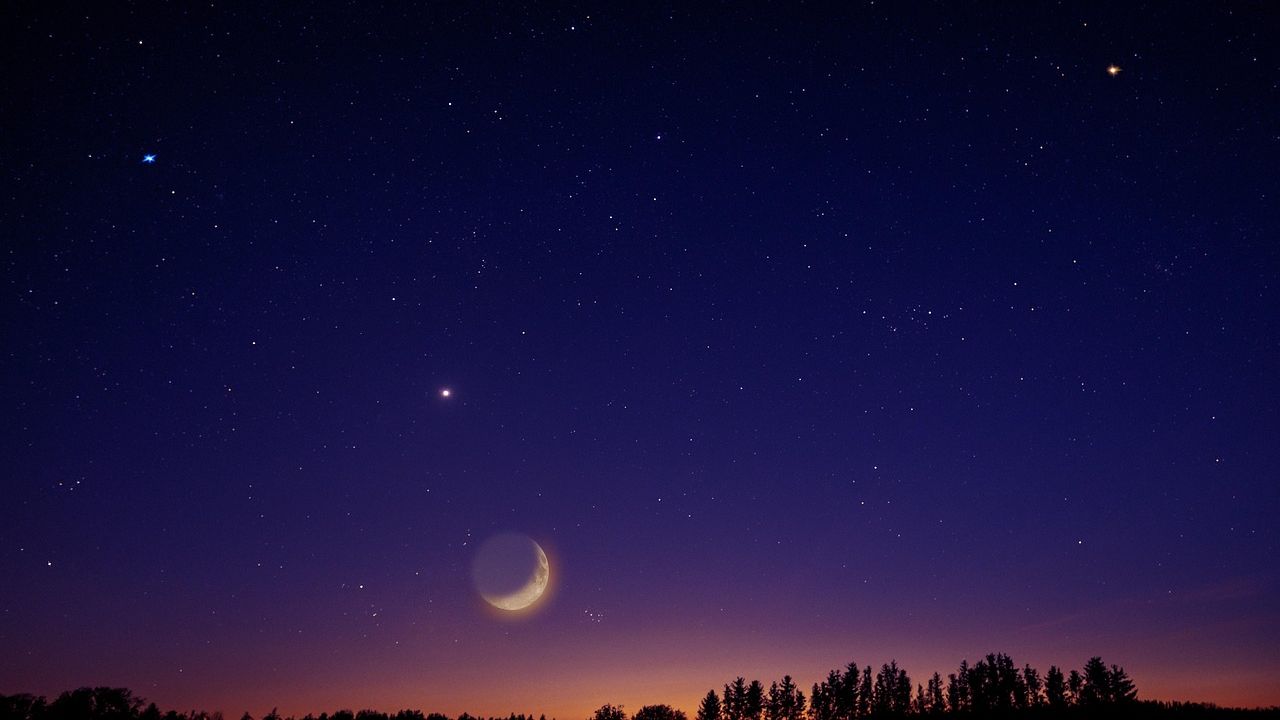
July 2026: What’s in the Southern Hemisphere sky this month? – Image for illustrative purposes only (Image credits: Pixabay)
Sky watchers across the Southern Hemisphere can expect a striking sight as July 2026 opens. Three planets appear in the early evening sky, with Venus standing out as the brightest. The planet reaches magnitude –4.1 and becomes visible roughly 30 minutes after sunset.
Venus Shifts Position Through the Month
Observers looking northwest will find Venus easily once twilight fades. The planet moves gradually away from the Sun, placing it in a progressively darker portion of the sky as the weeks pass. This slow drift improves viewing conditions and allows more time for detailed observation before it sets. Venus also grows more rewarding when viewed through a telescope. Its phase changes become noticeable, revealing a disk that shrinks slightly while its illuminated portion increases. These details reward patient viewers who return to the same spot on successive evenings.
Additional Planets Join the Evening Scene
Two other planets accompany Venus during this period. Their positions relative to the brighter world create a compact planetary grouping that stands out against the fading twilight. The arrangement offers a natural opportunity to compare the different brightness levels and colors of the objects without needing advanced equipment. The overall configuration remains stable enough for casual observers to track changes from one night to the next. Clear horizons to the northwest help, though even modest light pollution does not prevent the brightest member from showing clearly.
Practical Viewing Advice
A simple pair of binoculars enhances the view of Venus and its companions once the sky darkens further. No special filters are required, and the planets remain accessible from most locations in the Southern Hemisphere. Regular checks throughout July reveal the gradual separation of Venus from the Sun and the shifting geometry of the group. Conditions improve steadily after the first week, giving later dates in the month a slight edge for extended sessions. The display serves as an accessible introduction to planetary observing for newcomers while still offering interest to those with more experience.