

If you feel like you cannot fall asleep without a fan, white noise app, or humming air purifier in the background, you are far from alone. You might tell yourself it is about blocking traffic sounds or noisy neighbors, but deep down, you probably sense there is more going on in your head than in your environment. That tiny machine on your nightstand can start to feel like a shield between you and your own mind.
Psychology does not say that using a noise machine is bad, but it does suggest something important: when you crave constant sound at bedtime, you may be trying to soften, blur, or outright drown out your restless thoughts. Once you see your noise habit as a psychological signal, not just a sleep preference, you can start working with your mind instead of only trying to mute it. That is where the real change begins.
The Real Reason Silence Feels So Uncomfortable At Night

Have you ever noticed that your brain gets loud the moment the room gets quiet? During the day, you are distracted by tasks, screens, conversations, and background noise, so your mind never has to sit alone with itself for very long. Once you lie down and the lights go off, there is nowhere else for your thoughts to go, and all the worries, regrets, and half-finished to‑do lists rush in like they have been waiting at the door all day.
In that stillness, silence can feel anything but peaceful. Instead of being soothing, it becomes a spotlight that shines directly on your anxieties and what‑ifs. A noise machine steps in as a kind of mental dimmer switch, softening that harsh spotlight into a blur of sound where your thoughts seem less sharp and less demanding. You are not just avoiding outside noise; you are trying to escape the inside noise that feels too intense when everything else finally quiets down.
How White Noise Hijacks Your Brain’s Attention (In A Good Way)

When you turn on a noise machine, you are basically giving your brain a simple, predictable sound to latch onto so it stops chasing every random thought that appears. Your attention has limited bandwidth, and a steady hum or gentle rain track quietly occupies part of that bandwidth, leaving less space for intrusive thoughts about work, relationships, money, or that awkward thing you said three years ago. It is the mental equivalent of watching a calm, repetitive video instead of scrolling through a chaotic feed.
This constant, non‑threatening sound helps your nervous system feel like nothing unpredictable is about to happen. Instead of listening for sudden noises or replaying the day, your brain relaxes into the consistency of the noise, and your arousal level drops. In psychological terms, you are using sound as a form of attention control and emotional regulation. In everyday terms, you are distracting yourself just enough so your mind cannot obsessively chew on everything that went wrong or might go wrong tomorrow.
Anxiety, Overthinking, And The Mind That Refuses To Power Down

If you need noise to sleep, there is a good chance your brain leans toward worry, rumination, or perfectionism. You might find yourself rewriting conversations in your head, rehearsing future disasters, or mentally reviewing every possible mistake you could make. When you hit the pillow, those thinking habits do not magically stop just because you want to rest; if anything, they get stronger without daytime distractions to drown them out.
In that sense, the noise machine becomes a coping strategy for an underlying anxiety or overthinking pattern. Instead of working through the root issues, you are putting on mental headphones and turning up the volume so you do not have to hear your own inner commentary. There is nothing shameful about that; it simply means your mind is trying to protect you from feelings and thoughts that feel too heavy at the end of the day. But if you only ever turn up the sound, you never learn how to turn the thoughts themselves down.
When A Sleep Aid Quietly Becomes An Emotional Crutch

There is absolutely nothing wrong with using a noise machine as part of your sleep routine, just like there is nothing wrong with using a fan, cozy blanket, or eye mask. The problem sneaks in when you start to believe that you cannot sleep at all without that exact sound, device, or setup. If the power goes out or you forget your machine while traveling and your stress spikes immediately, that is a sign the tool has edged into crutch territory.
Psychologically, what is happening is simple: you are outsourcing your sense of safety and calm to a device instead of developing those feelings from within. Over time, your brain learns that quiet equals danger or discomfort and noise equals safety, so you cling to noise more and more. That reliance can keep you from building internal skills like self‑soothing, emotional regulation, and cognitive flexibility. Your goal is not to throw away your noise machine, but to make sure you can sleep without it if you need to, because your calm comes from you, not from a plastic box by your bed.
Healthier Ways To Soothe Your Restless Thoughts Before Bed
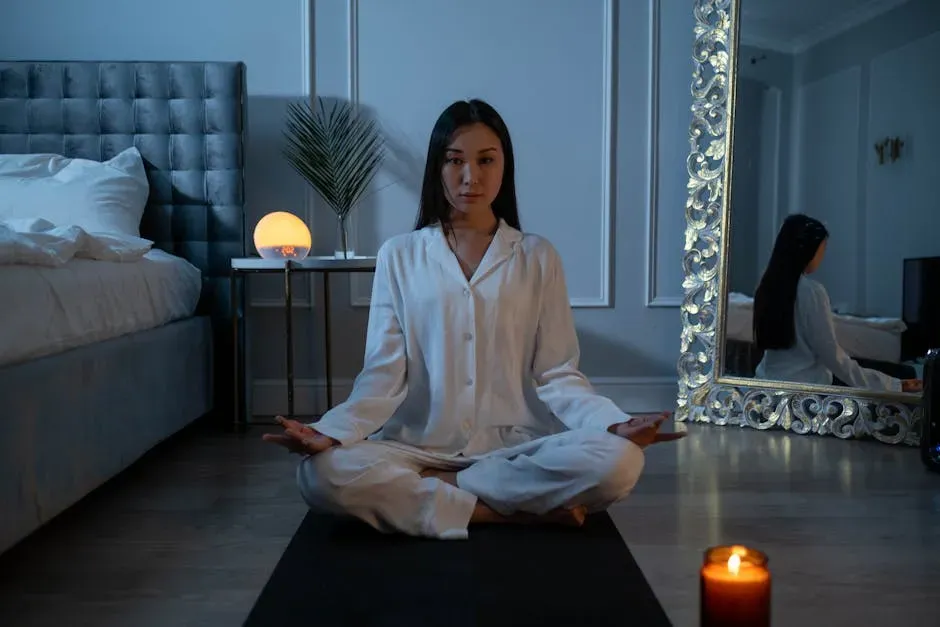
If you want to keep your noise machine but also deal with the restless thoughts underneath, you can start by giving your brain a gentle runway into sleep instead of dropping it straight from chaos into silence. A short evening wind‑down ritual can help: you might jot down tomorrow’s tasks, write out a few worries, or even schedule ten minutes of “worry time” earlier in the evening so those thoughts feel heard instead of ignored. When you finally lie down, your brain is less likely to ambush you with everything you have been trying not to think about.
Relaxation techniques can also train your mind and body to settle without needing as much external noise. Slow breathing, progressive muscle relaxation, or a brief body scan can shift your attention from mental noise to physical sensations. If your thoughts race, you can practice gently noticing them and bringing your focus back to your breath or your body, like returning to a home base. Over time, you teach your nervous system that it is safe to be quiet, and the need to drown out your mind with sound starts to loosen its grip.
Using Your Noise Machine More Intentionally (Instead Of On Autopilot)

Rather than seeing your noise machine as a guilty secret or something you are stuck with forever, you can treat it as a conscious tool. You might decide to keep the noise a little lower than usual, or set a timer so it fades out after you fall asleep instead of running all night. You can also experiment with softer, more natural sounds, like gentle rain or distant ocean waves, that feel less like a wall of noise and more like a calm backdrop to your own thoughts.
You can even use your attachment to the noise machine as a kind of self‑check each night. When you notice you are absolutely desperate to turn it on, that is a clue your thoughts feel especially loud and you might need a few extra minutes of journaling, stretching, or grounding before bed. Instead of asking only whether you can hear the noise, you start asking what the noise is helping you avoid hearing inside your own head. That subtle shift turns the machine from a way to escape your mind into a reminder to care for it more intentionally.
Learning To Make Peace With Your Thoughts, Not Just Muffle Them

At the core of all this is a simple but uncomfortable truth: you have to live with your mind for your entire life, so learning to coexist with your thoughts is not optional. If you always respond to mental noise by adding external noise, you never really get to know what your mind is trying to tell you. Often, the thoughts that keep you up at night are about unresolved feelings, unmade decisions, or needs you have been pushing aside during the day. They are not random; they are signals.
When you start to listen to those signals with curiosity instead of fear, your relationship to silence changes. Quiet stops feeling like an ambush and starts feeling more like a conversation you are finally willing to have. You might still choose to use a noise machine, but you no longer depend on it to protect you from yourself. In the end, the most powerful sleep aid you can ever develop is not a sound machine or an app; it is the ability to sit with your own thoughts, soften them, and let them pass. And once you can do that, the question is no longer whether you can sleep with silence, but what else in your life might change when you are no longer trying to drown out your own mind.
So if you find yourself reaching for that familiar hum every night, maybe the real question is not whether the room is too quiet, but whether your thoughts feel too loud. What might happen if, little by little, you learned to gently turn down the volume in your head instead of cranking up the noise outside it?