
Some places on this planet behave as if they missed the memo on how reality is supposed to work. Compasses spin, lights appear where no people live, rocks move silently across deserts, and entire patches of forest seem to swallow sound. You do not have to believe in the paranormal to feel your skin prickle when you read about them; it is enough to notice how often scientists quietly add the word “unknown” to their explanations.
I remember standing once on a windless hill where my phone’s compass could not decide which way north was, and the unnerving part was not the glitch itself, but the sudden feeling that all my normal ways of “knowing” where I was had slipped. That is the kind of mental jolt these places deliver. In this article, we will explore ten locations that stubbornly resist neat answers, where solid data and strange stories collide and remind us that, even in 2026, Earth still keeps secrets.
1. The Bermuda Triangle, Atlantic Ocean
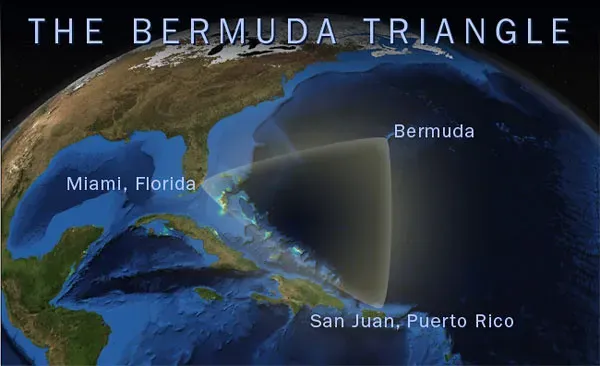
Few places have soaked up as much mystery as the Bermuda Triangle, that roughly triangular patch of Atlantic Ocean between Miami, Bermuda, and Puerto Rico. For decades, people have linked it to vanishing ships and aircraft, from military bombers to small private boats, feeding a reputation for danger and the unknown. Skeptical investigations often point out that this is a heavily traveled region with intense storms and strong currents, so sheer traffic and bad weather alone might explain much of the tragedy.
At the same time, there are enough puzzling details to keep curiosity alive: distress calls that cut off mid-sentence, wreckage never found, navigation instruments reportedly going haywire. Some researchers have floated ideas like sudden rogue waves, bursts of turbulent air, or the release of gas from the seafloor that could destabilize vessels, but none of these fully lines up with every story told about the area. I tend to think the Bermuda Triangle is mostly a case study in how human brains notice patterns in random misfortune, yet its mix of hard ocean science and enduring folklore makes it a modern legend that refuses to sink.
2. The Nazca Lines, Peru
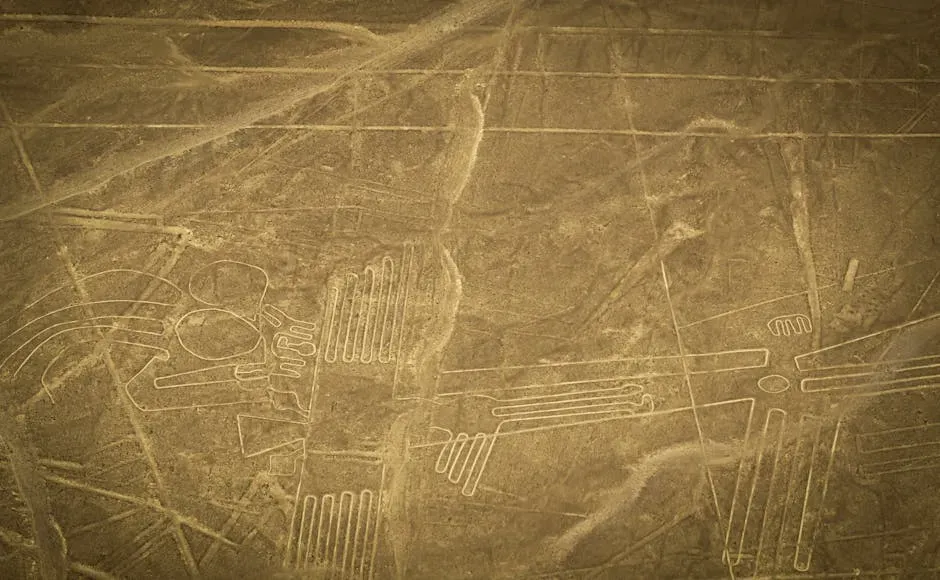
In the dry desert plains of southern Peru, enormous figures stretch across the ground: hummingbirds, monkeys, spiders, straight lines that run for kilometers, and geometric shapes only clearly visible from the air. These are the Nazca Lines, created by removing the dark surface stones to reveal the lighter soil underneath, a feat achieved long before modern aircraft or satellites. Archeologists generally agree that the Nazca people made them between about two thousand and one thousand five hundred years ago, but the purpose of these geoglyphs is still fiercely debated.
Some scientists suggest they were ritual pathways walked during ceremonies to call for rain, while others see giant calendars or markers aligned with astronomical events like solstices. Fringe theories have even dragged in extraterrestrials, exploiting the eerie fact that you can only truly appreciate the designs from high above, something the makers could never experience directly. What fascinates me most is that a culture invested enormous labor and planning into art meant for the sky, not human eyes on the ground, as if they were deliberately leaving a message for the cosmos or for future minds to puzzle over forever.
3. The Zone of Silence, Mexico
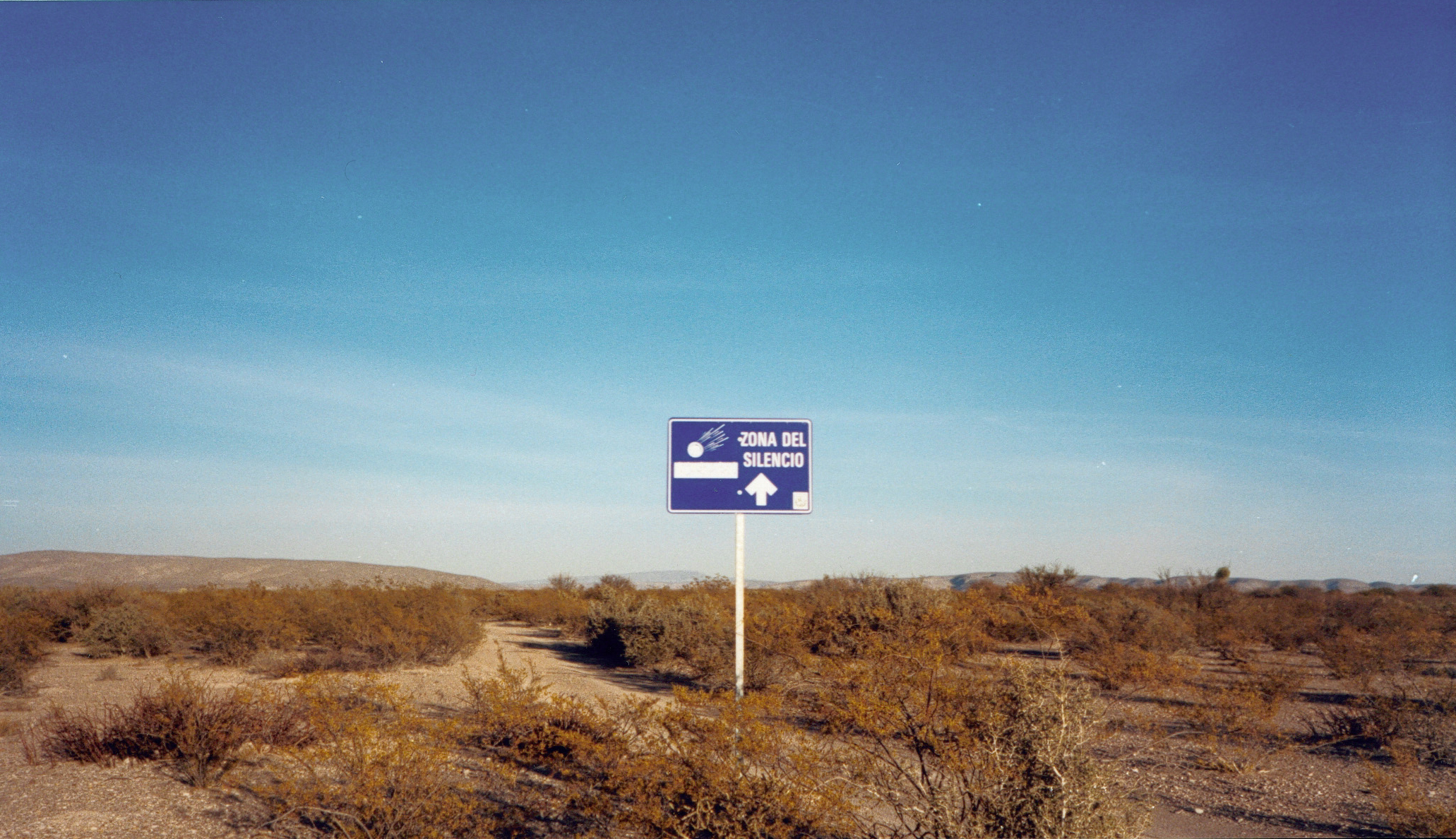
Deep in the Mapimí desert of northern Mexico lies an area popularly known as the Zone of Silence, where, according to travelers, radios fail, compasses behave oddly, and communication signals can suddenly weaken or drop. The legend grew after a United States test rocket accidentally crashed there in the 1970s, attracting attention and, inevitably, rumors of unusual magnetic fields and government secrets. Scientists who have studied the region point out that equipment generally works fine and that spotty coverage or interference in remote deserts is not exactly magical.
Still, the area does sit in a zone rich in meteorites and unusual mineral deposits, and locals share stories of strange lights and time distortions that sound like something from a science fiction film. It is probably a blend of natural radio interference, harsh environment, and a lot of human imagination layered on top, but that combination is powerful. When you are standing under a massive, silent sky, far from cities, with iron-rich rocks under your feet and stories in your head, even a simple static-filled radio can feel like proof that the rules of reality are loosening around the edges.
4. Hessdalen Lights, Norway
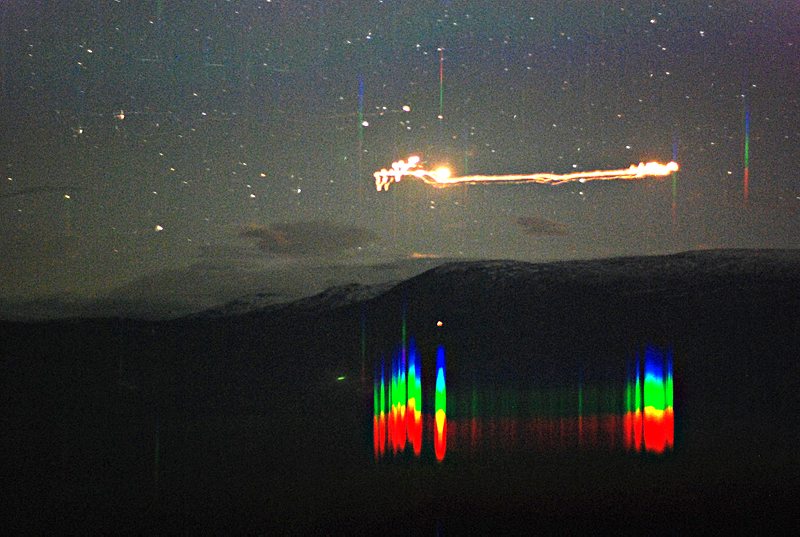
In a quiet valley in central Norway, residents have spent decades reporting strange lights in the sky: glowing orbs that hover, move slowly, or dart away at surprising speeds. These are known as the Hessdalen lights, and unlike many “mysterious lights” stories, this phenomenon has actually drawn serious scientific attention. Researchers have set up cameras and instruments, recorded data, and confirmed that something real is happening, even if they still argue about exactly what.
Leading ideas include rare types of plasma created by interactions between the local geology and the atmosphere, possibly involving metallic dust and ionized air that flickers like a natural neon sign. Others have looked at how temperature inversions and reflections might cause distant lights to appear strange to observers on the ground. None of these proposals fully fits every observation, and that is what keeps this case so compelling to me. It sits in that rare category of mysteries where eyewitness reports, video evidence, and open scientific curiosity overlap, proving that weird lights in the sky do not always have to be dismissed or sensationalized; they can simply be puzzles we have not finished yet.
5. The Devil’s Kettle, Minnesota, USA
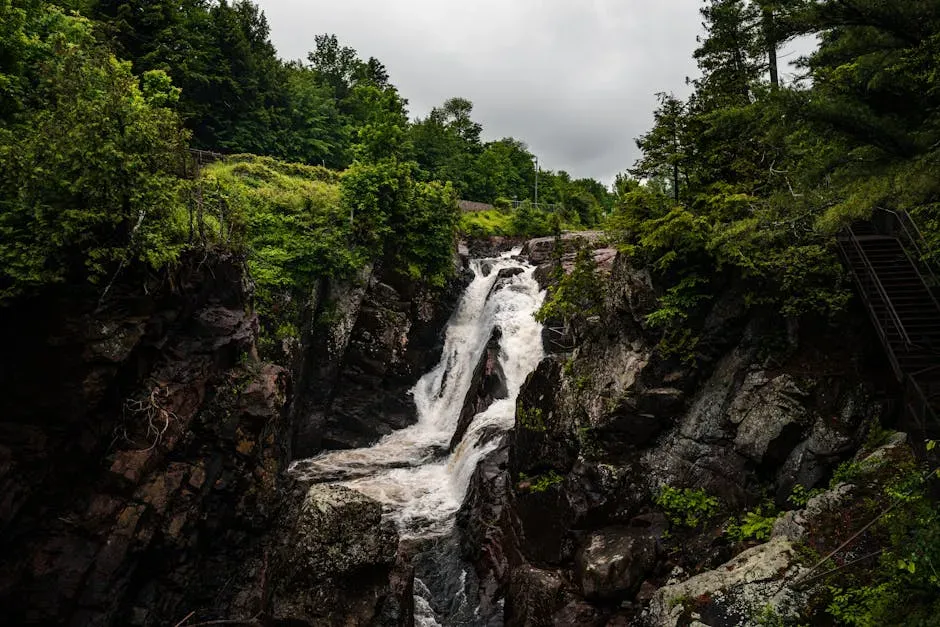
Along Minnesota’s rugged North Shore, the Brule River splits around a massive rock formation at a waterfall called the Devil’s Kettle. One half continues downstream like a normal river, but the other disappears into a deep, churning hole that seems to swallow the water without a trace. For years, people tossed in dye, ping-pong balls, and even rumors of larger objects, only to claim they never saw them reappear, fueling the idea that this was a geological magic trick.
More recent hydrological studies suggest a more grounded explanation: measurements of water volume above and below the falls indicate that what goes in must come out nearby, likely through underground cracks and reemerging into the same river system. The catch is that the exact route remains hidden, and the idea of a hole in the Earth that eats rivers has already imprinted itself on popular imagination. For me, the Devil’s Kettle shows how a fairly ordinary piece of geology can become mythic when direct observation is hard; until someone maps every concealed channel, the river will keep its reputation as a place where logic stumbles.
6. Blood Falls, Antarctica
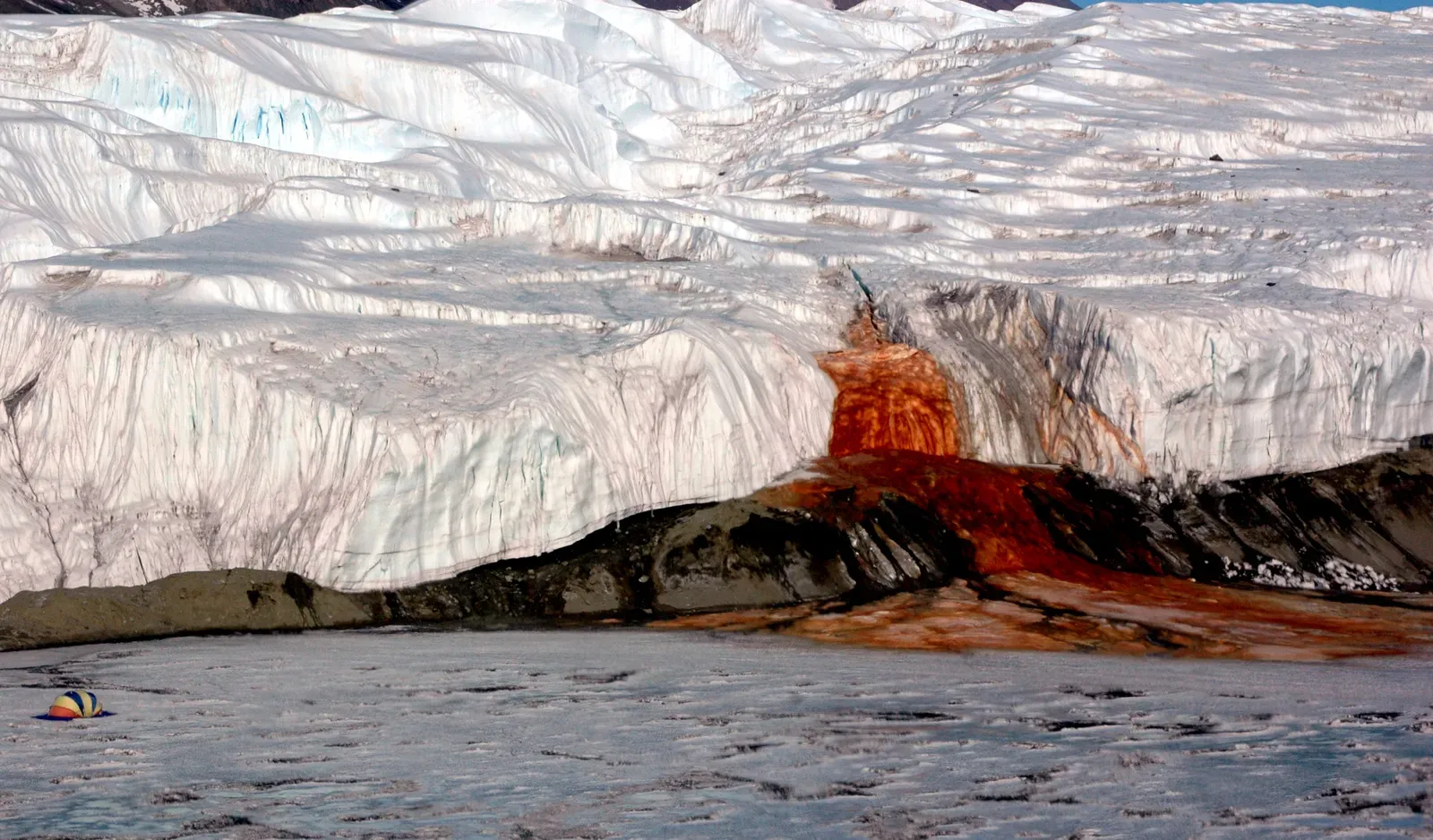
On the edge of Taylor Glacier in Antarctica, a rusty red cascade spills out onto brilliant white ice, looking for all the world like the landscape is bleeding. This feature, known as Blood Falls, once sparked wild speculation about algae or unknown organisms staining the water, and even today it has a deeply unsettling visual impact. Scientists have since traced the color to iron-rich, extremely salty water emerging from an ancient subglacial reservoir and oxidizing when it meets the air, similar to how metal rusts.
What makes Blood Falls truly mind-bending is not just the eerie color, but the extreme ecosystem that appears to live in that buried brine, microbes surviving in darkness, intense salt, and cold that would kill most known life. It hints at the resilience of biology and offers a natural laboratory for thinking about life on icy worlds like Jupiter’s moon Europa or Saturn’s moon Enceladus. When I look at photos of that crimson streak on the ice, I see a reminder that some of Earth’s strangest “hauntings” are really glimpses into deep time and deep biology, where logic still holds, but our everyday intuitions fall apart.
7. The Sailing Stones of Death Valley, USA
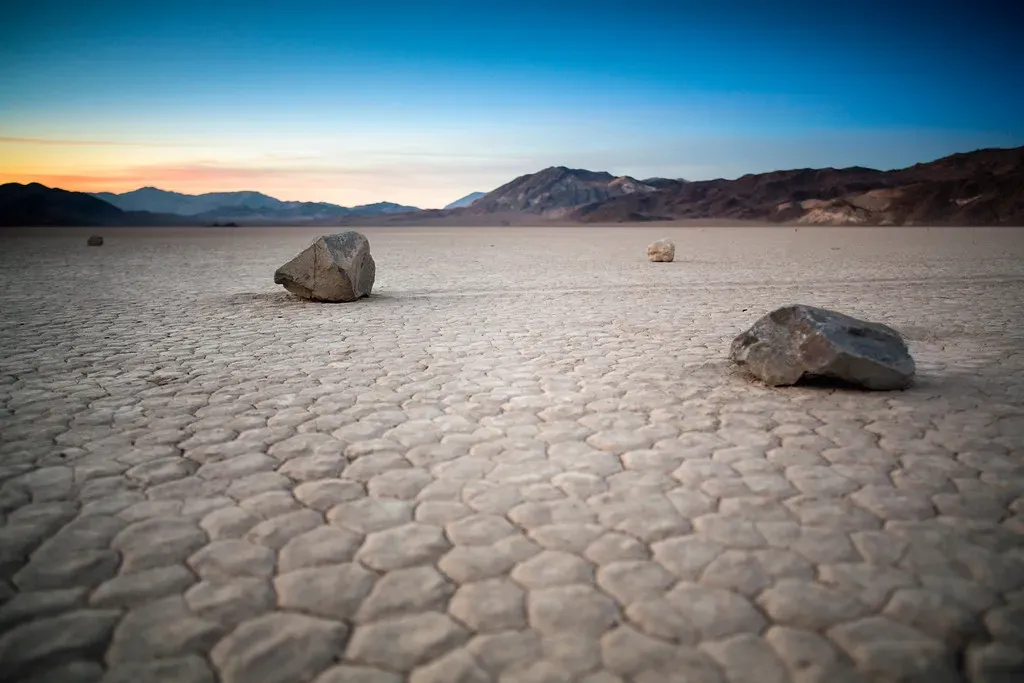
In a remote playa called Racetrack Playa in Death Valley National Park, heavy rocks leave long, winding trails across the flat desert floor, as if they have dragged themselves silently for meters or even tens of meters. For many years, no one had actually seen them move, so people were left with these eerie tracks and a lot of questions. Theories ranged from powerful wind gusts pushing the stones across a thin layer of mud, to pranksters staging an elaborate hoax, to more imaginative paranormal ideas.
Careful experiments and time-lapse cameras eventually captured the process: in rare conditions, a shallow layer of water freezes into thin sheets of ice around the rocks, and when the morning sun melts it and light winds blow, the stones glide slowly, almost imperceptibly, leaving tracks in the soft mud. In other words, the mystery turned out to be a subtle dance between water, temperature, and wind. Still, I love that it took years of watching and just the right weather to unlock this secret. It proves that nature can look outright unnatural until you notice the hidden timing and see that even “moving rocks” are obeying physics, just on a rhythm we are not used to watching.
8. The Door to Hell, Turkmenistan
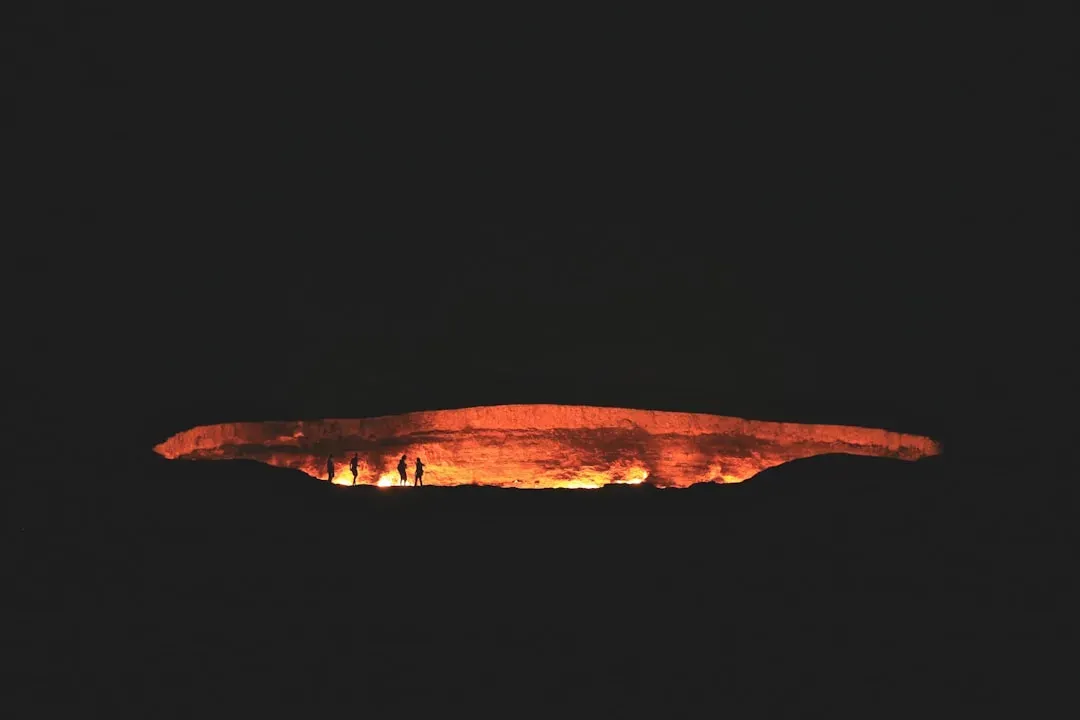
In the Karakum Desert of Turkmenistan, a gigantic crater burns with constant orange flames, like a portal straight into some underworld legend. Locals and visitors call it the Door to Hell, but its origins are very human: decades ago, during gas exploration, the ground collapsed into a natural gas pocket, creating the crater. According to widely shared accounts, geologists then set the gas alight to prevent toxic fumes from spreading, expecting it to burn for a short time.
Instead, the fire has kept going for many years, fed by the underground reserves, turning an industrial mishap into an almost mythic landscape. Standing at the rim at night, people describe feeling an intense, dry heat and hearing a low roar from below, an experience that blurs the line between science field trip and nightmare postcard. To me, the Door to Hell is a blunt metaphor: when we misjudge the forces we are poking in the subsurface, we can end up literally opening a flaming wound in the Earth. It is not supernatural at all, but it absolutely defies our sense of what a “natural” desert should look like.
9. The Silent Zone of Taos Hum, USA
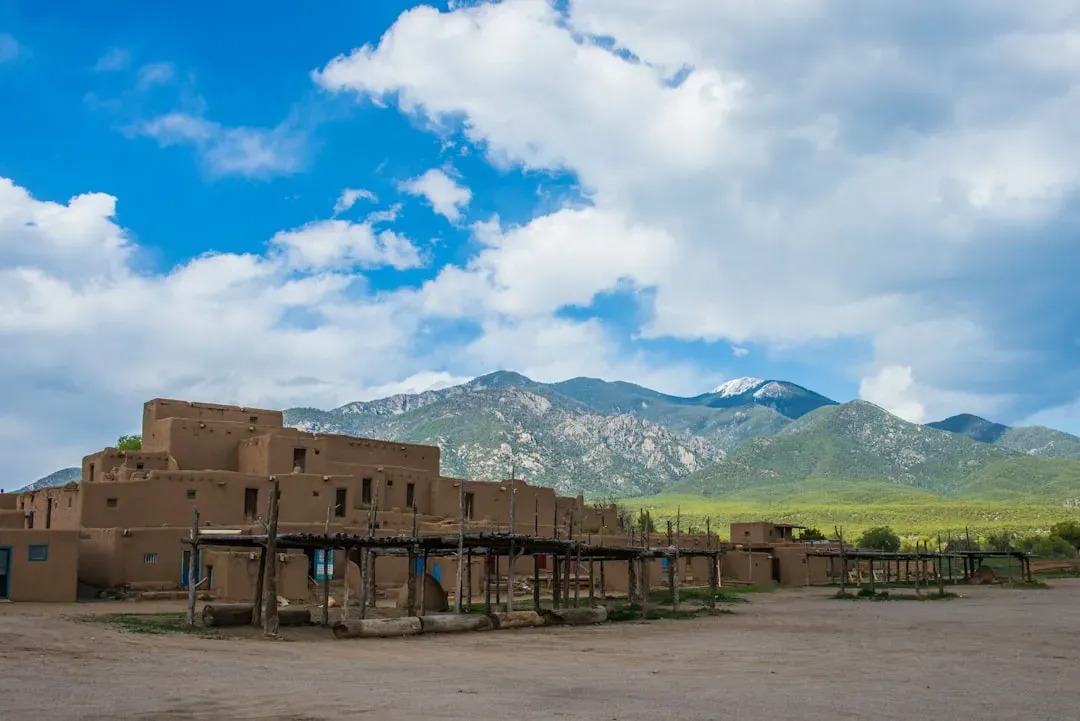
In the small town of Taos, New Mexico, a portion of residents have reported hearing a persistent low-frequency noise, often described as a distant engine idling or a faint rumble that never quite stops. This phenomenon, known as the Taos Hum, has been investigated with sound equipment and surveys, yet no clear single source has been pinned down. What makes it especially strange is that only a minority of people seem to hear it at all, even when standing in the same place at the same time.
Some researchers have suggested that it might be a combination of industrial noise, distant traffic, and the unique topography of the area, all amplified in a way that affects only certain ears or brain patterns. Others see it as a kind of auditory illusion or sensitivity, where the brain locks onto a faint signal and refuses to let go. I find the Taos Hum fascinating because it highlights how much of “reality” is filtered through individual physiology; the world can be literally buzzing for one person and perfectly silent for another, leaving us to ask which version is more real, and whether “mystery” sometimes lives in our nervous systems as much as in the landscape.
10. Lake Natron, Tanzania
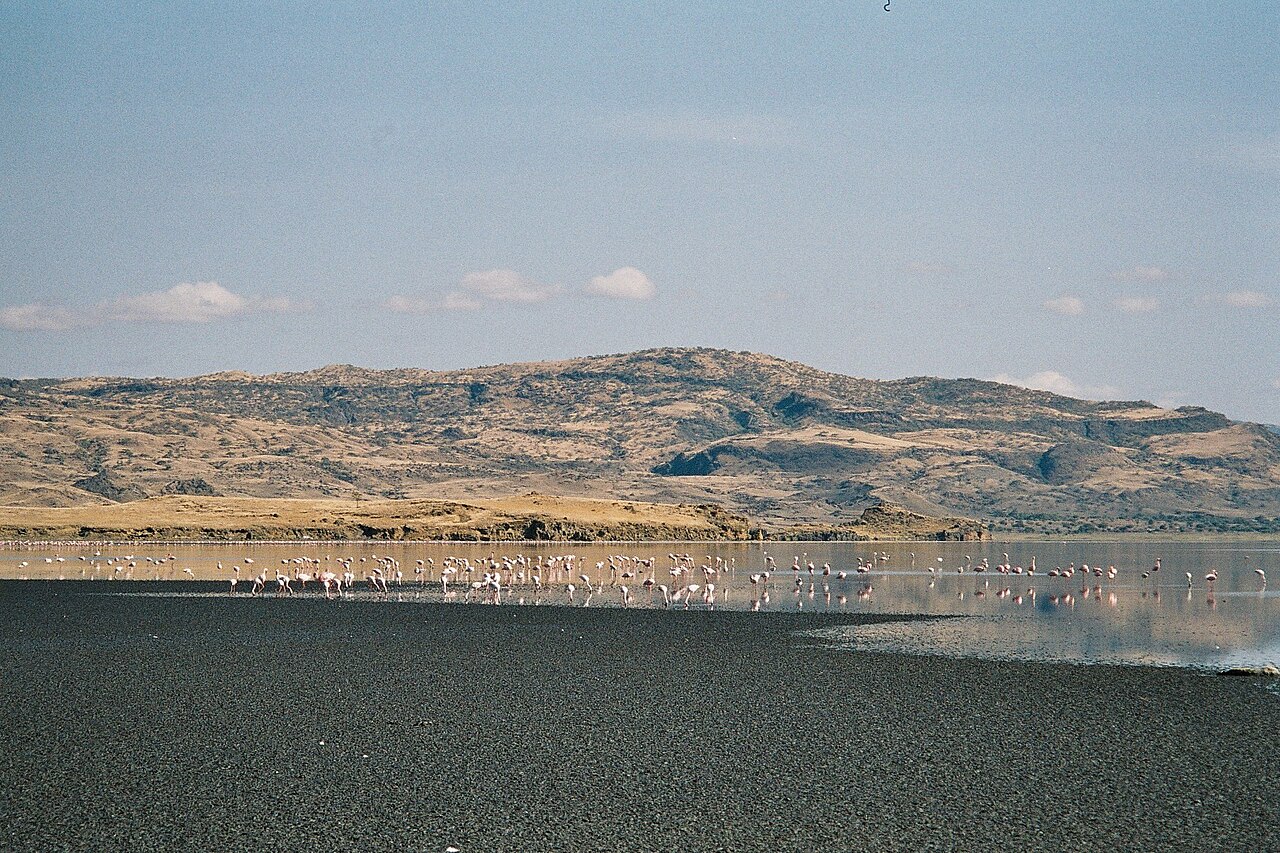
Lake Natron in northern Tanzania looks like something painted for a surreal dream: shallow, shimmering, and often tinted red or pink from microorganisms that thrive in its salty, alkaline waters. Temperatures can soar, and the water’s chemistry is harsh enough to burn unadapted animals, leading to dramatic photographs of birds and bats that appear almost stone-like after contact with the lake’s mineral-rich shoreline. These images have fueled the idea that Lake Natron somehow petrifies creatures, turning them to statues.
The reality is more nuanced: the animals do not instantly turn to stone, but the high levels of sodium carbonate and other minerals can preserve and encrust remains, creating that haunting sculpture-like effect. At the same time, specialized fish and flamingos have adapted to treat this hostile environment as home, turning apparent doom into a safe haven from predators. Lake Natron blows up the simple idea that a place is either deadly or nurturing; it can be both, depending on who you are and how you are built. To me, that duality is exactly what makes it feel like it is bending the rules of logic.
Conclusion: Mystery, Evidence, and Our Hunger for the Unknown
Looking across these ten places, a pattern emerges: the more we study them, the more ordinary their mechanisms often turn out to be, yet the emotional charge they carry does not go away. Moving stones yield to careful physics, bloody waterfalls bow to chemistry and microbiology, and flaming pits in the desert trace back to human decisions gone sideways, not ancient curses. If you only chase the supernatural, you might feel disappointed by these explanations, but I think that response misses something essential.
For me, the real magic lies in how stubbornly reality resists our snap judgments, both skeptical and mystical. Logic is not broken in these places; it is stretched to its edges, forcing us to refine our questions and admit how much we still do not know. In an age where answers seem to live just a search away, there is something grounding, even humbling, about landscapes that keep a few secrets no matter how many sensors we point at them. Maybe the point is not to strip them of mystery, but to let that mystery push us into better science, sharper thinking, and a deeper sense of wonder about the planet we stand on every day. When you look at a map now, do you see a finished world, or a puzzle that is still quietly rewriting itself?