
Almost everyone has heard a story like this: someone skids on black ice, feels the car spin, and in a split second they see childhood summers, their first love, and a dozen tiny memories flicker by. Then it is over. They survive, stunned, and say that their whole life flashed before their eyes. It sounds dramatic, almost cinematic, like something that only belongs in movies.
But here is the twist: science is starting to catch up with that feeling. Researchers have actually recorded the brain at the moment of death, listened in on what the mind does under extreme threat, and explored why time can feel warped and stuffed with memories. The answers are not neat or complete, but they are far more fascinating than you might expect. The real story sits at the intersection of neuroscience, psychology, and the very human fear of ceasing to exist.
Why Time Warps in Moments of Crisis

Have you ever slammed on the brakes and thought the world suddenly moved in slow motion, like someone dragged a slider on reality? That change in your sense of time is one of the key clues behind the “life flashing before your eyes” experience. When the brain detects a possible threat to survival, it launches a huge surge of arousal: stress hormones spike, attention narrows, and every sense goes on high alert as if your entire system shifts into emergency mode.
In that heightened state, your brain is not actually making external time slow down; it is packing more internal events into each passing second. You process more detail, store more snapshots, and lay down a denser memory trace of what is happening. Later, when you look back on a crisis, the event feels like it took longer than it really did. That same distortion can make a short, intense moment feel spacious enough to hold a flood of memories, even if the entire episode lasts only a heartbeat or two.
How the Brain Stores a Lifetime of Moments
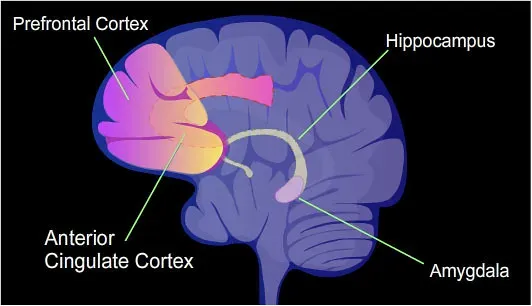
To understand why so many memories might crowd into a single instant, you have to look at how the brain actually stores your life. Memories are not kept in a neat, chronological playlist waiting to be replayed. Instead, they are scattered networks of sights, sounds, emotions, and meanings distributed across many brain regions. The hippocampus acts like a master index, linking those pieces together into coherent episodes that we recognize as specific memories.
Over time, especially for emotionally important experiences, the brain compresses and organizes them: first day of school, a painful breakup, the birth of a child, the smell of your grandmother’s house. These highlights become like bookmarked chapters in a messy but meaningful internal story. When something extreme happens, the brain can rapidly tap into that story structure. It does not need to drag out every day you ever lived; it can jump straight to impactful moments that define who you are.
What Happens in the Brain During Near-Death Events
So what actually goes on in the brain when people are close to dying or believe they are about to die? Some studies on animals and humans suggest a burst of organized brain activity shortly before or just after the heart stops. Instead of a simple fade to black, there can be a brief spike in synchronized neural firing in areas related to memory, vision, and awareness. It is as if, in its final seconds of full power, the brain throws everything it has onto the screen.
On top of that, a flooded chemical environment can shift perception dramatically. Stress hormones, natural opioids, and other neuromodulators surge under extreme threat, altering how you feel pain, fear, and the passage of time. The combination of hyper-arousal, intense emotion, and altered consciousness creates a perfect storm for unusual experiences: tunnels of light, out-of-body sensations, or a rapid cascade of meaningful life events that feels more like a sweeping emotional review than a literal movie reel.
Is It Really Your “Whole Life” – Or Just the Highlights?

When people say their whole life flashed before their eyes, they rarely mean every single Tuesday afternoon and every tedious meeting. What they describe tends to be a fast, emotionally loaded montage: childhood scenes, loved ones, regrets, triumphs, and tiny moments that unexpectedly matter. It is more like a trailer of your life than the full movie. This fits surprisingly well with how the brain prioritizes and retrieves memory.
The mind is built to sift for meaning, not to archive every detail. When pushed to the edge, it may draw on the most relevant, emotionally rich experiences that define your identity and relationships. That is why someone might suddenly recall a long-forgotten kindness from a parent or an unresolved argument with a friend. The brain is not doing a neutral data dump; it is surfacing the moments that feel like the core of who you are and what your life has been about, even if that happens in a strange, compressed, dreamlike way.
The Role of Emotion, Fear, and Meaning-Making

Emotion is the fuel that powers this whole phenomenon. Highly emotional events are more likely to be stored vividly and recalled quickly, especially when similar feelings are triggered again. In a near-death situation, fear, love, regret, gratitude, and awe can crash together at full volume. That emotional overload can act like a search query in your memory systems, pulling up past experiences that carry the same emotional flavor or unresolved feelings.
Humans are also relentless meaning-makers. After a brush with death, people often reinterpret their memory rush as a message, a test, or a final chance to evaluate their life. Even if the raw experience is chaotic brain activity, the story you later tell yourself about it is shaped by your culture, beliefs, and personality. Some will see it as proof of an afterlife, others as a psychological crisis response, and many land somewhere in between, feeling that the experience was both brain-based and deeply spiritual at the same time.
Near-Death Experiences, Culture, and Spiritual Beliefs

The idea of one’s life being reviewed at the threshold of death shows up in many cultures and spiritual traditions. Some describe it as a judgment, others as a compassionate review, and others as a chance to learn from your choices. This shared theme suggests that humans have long intuited a connection between extreme moments and a sudden confrontation with the story of one’s life. When people today report their life flashing before their eyes, they are tapping into an old, cross-cultural narrative with modern language.
At the same time, cultural expectations can shape exactly how the experience feels and how it is later described. Someone raised hearing about tunnels of light and life reviews might be more likely to interpret any rapid memory rush through that lens. Another person might frame it in terms of brain science and stress responses. The core experience may be rooted in universal brain processes, but the meaning people assign to it is filtered by what they have been taught to expect when life hits its edges.
What This Phenomenon Reveals About Consciousness

For me, the most striking thing about is what it hints about consciousness itself. It shows that in a tiny slice of time, the brain can access a huge range of memories and feelings, reorganizing them into something that feels like a single, unified experience. That suggests our sense of self is more flexible and dynamic than we usually notice in everyday life, constantly stitched together from bits of past, present, and imagined future.
It also raises uncomfortable but important questions: if the brain can produce such intense, meaningful experiences at the edge of death, where exactly do we draw the line between biology and whatever we might call the soul? Personally, I think the safest and most honest position is that this phenomenon is rooted in physical brain processes, but that does not make it shallow or unimportant. If anything, it makes our everyday consciousness feel more fragile and miraculous. The fact that your mind can, in a single heartbeat, throw your whole story back at you is a reminder that you are always, quietly, carrying your entire life around inside your head.
Conclusion: A Final Mirror Held Up to Your Life

When you strip away the drama, the science behind life flashing before your eyes points to a simple but powerful idea: under extreme threat, the brain does what it always does, just at maximum volume. It warps time, floods you with emotion, and pulls your most meaningful memories into the spotlight. That might be a side effect of a survival system pushed past its limits, or it might be the closest thing we have to a natural, built-in life review. Either way, it is not random and it is not trivial; it is your brain holding up a mirror to the story you have lived so far.
My own opinion is that we are still far from fully explaining this away with neat diagrams and brain scans, and we should be honest about that uncertainty. But we know enough to say this: if your life ever does flash before your eyes, what you see will be shaped by the choices you are making right now. That alone makes the phenomenon less like a spooky mystery and more like a challenge. If your mind suddenly hit play on your personal highlight reel tomorrow, would you be proud of what shows up, or would you wish you had edited the story while you still had time?