
Few moments are more mysterious than the edges of life, and yet you probably think about them more often than you admit. Maybe it hits you in the middle of the night, or on a plane during turbulence, or when you hear about someone who “saw the light” and came back. You wonder what your own mind would do if you were suddenly right on that edge.
Science can’t follow you fully into that moment, but in the last few decades researchers have gotten closer than ever. Using brain scans, heart monitors, and careful interviews with people who actually survived clinical death, they’ve started to map what your mind might go through. The picture that’s emerging is not simple, not fully understood, and definitely not just the stuff of movies – but it is fascinating, and in some ways unexpectedly reassuring.
What Your Brain May Do In the First Seconds After Your Heart Stops
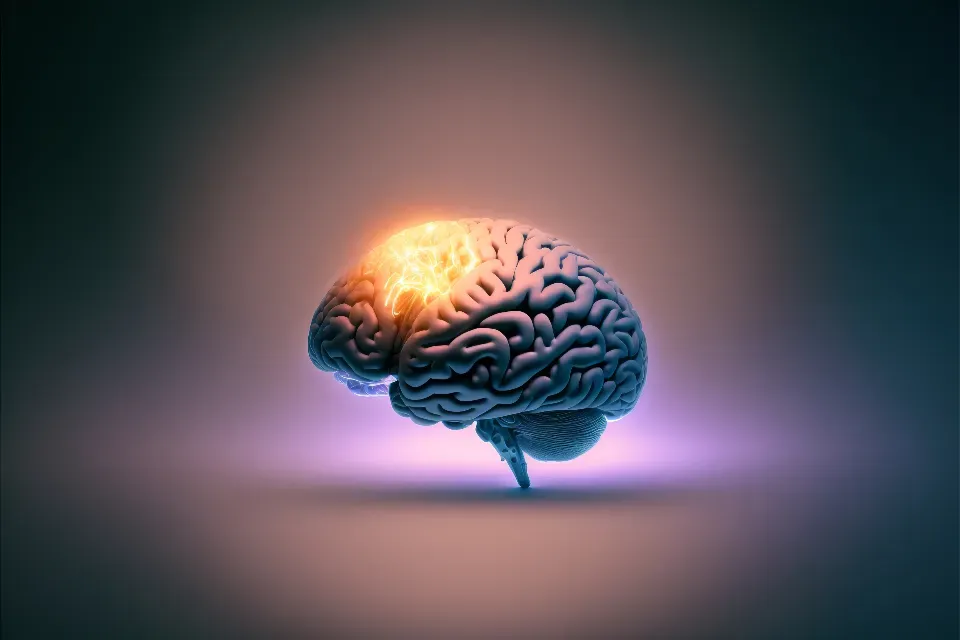
If your heart suddenly stopped right now, your brain wouldn’t simply switch off like a light. For several seconds to a few minutes, it would be running on whatever oxygen and energy are left in your system. In many studies of animals, and in some rare recordings from humans who died while being monitored, brain activity actually spikes just after the heart stops. That means your brain might briefly become more active, not less, as it slips toward shutdown.
Some researchers think this surge is your brain’s last big effort to restore balance and survive; others suspect it might be more like an electrical storm as systems fail in a chaotic cascade. Either way, the idea that you just “fade to black” instantly is probably not accurate. Instead, your mind might move through a short, intense window of altered consciousness, even if from the outside you look completely unresponsive.
Why You Might See Tunnels, Lights, Or Even Your Life Flash Before You

When you hear people talk about near-death experiences, certain themes come up again and again: moving through a tunnel, seeing a bright light, feeling as if your whole life is replaying. You might assume that means everyone is entering some other realm – but these patterns can also be explained in terms of how your brain processes visual and autobiographical information under extreme stress. The tunnel sensation, for example, could be tied to how the visual system breaks down from the outside in, leaving you with a shrinking circle of vision that feels like a passage.
The famous “life review” may be your brain pulling from vast networks of memory all at once, especially if parts of your temporal and parietal lobes are suddenly overstimulated. Instead of giving you a slow highlight reel, your mind could be firing many stored experiences at lightning speed, which you then remember as a sweeping, meaningful review. You experience it as deeply personal and profound, but underneath it all there may be very physical processes driving that rush of images and emotions.
How Time Can Feel Distorted Or Even Irrelevant

One of the strangest things people report near death is that time stops behaving normally. If you were in that situation, seconds might feel like hours, or an entire rich, detailed experience might fit into what doctors later say was only a brief moment of flatlined activity. Your brain’s sense of time depends on well-coordinated activity across many regions; when that coordination is disrupted, your inner clock can fall apart.
Think of those ordinary moments when time already feels weird – like how a scary near-accident on the road seems to unfold in slow motion. Now imagine that effect turned up to the maximum as your brain struggles with a sudden loss of oxygen and blood flow. Instead of your usual step-by-step awareness, you might experience a dense, timeless bubble of consciousness, where it is impossible to say whether something lasted one second or one eternity.
Why You May Feel Calm, Peaceful, Or Detached Instead Of Terrified

You would probably assume that being close to death means feeling pure, overwhelming fear. Surprisingly, many people describe the opposite: a feeling of profound peace, detachment, or even acceptance. One possibility is that, as your brain faces catastrophic stress, it floods your system with chemicals that reduce pain and fear, similar to what happens in serious trauma when people report feeling strangely calm.
Another factor is how your sense of self is constructed. Parts of your brain that normally keep you grounded in your body and identity can start to disconnect, which might make you feel like you are watching things happen from outside yourself. Instead of panic, you might sense a kind of emotional distance, as if your mind is protecting you from the full shock of the situation. It doesn’t mean everyone will feel serene, but it does suggest that raw horror is not the only possible mental state at the edge of life.
Out-of-Body Feelings And Floating Above Your Own Body
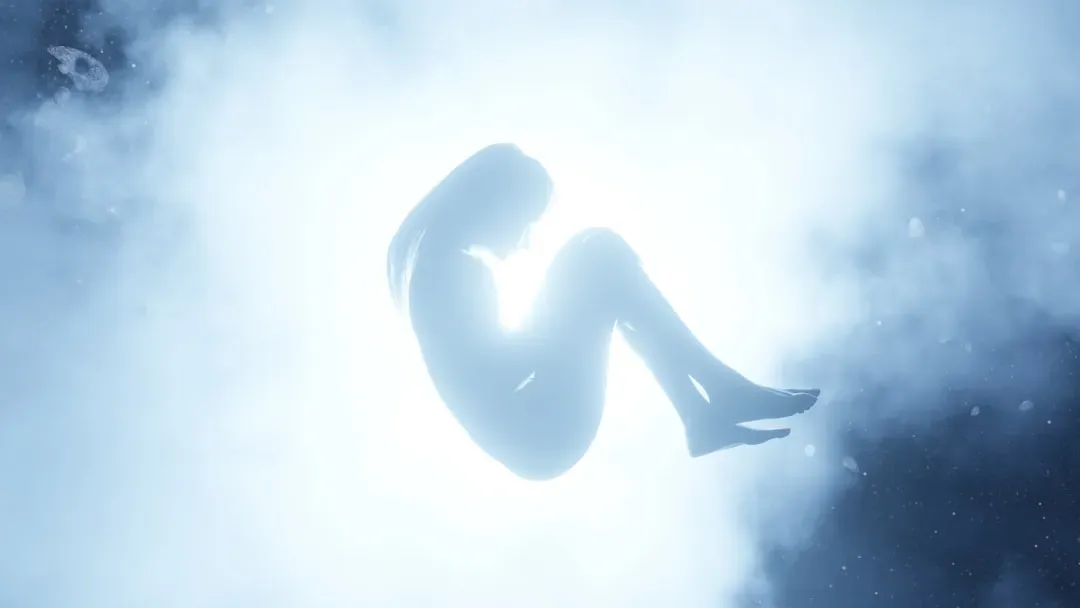
If you’ve ever heard someone say they watched doctors working on their body from above, you are hearing a classic near-death report. You might imagine that if this happened to you, you were somehow leaving your body – but neuroscience offers another angle. There are specific brain regions that knit together vision, touch, balance, and your sense of where your body is in space. When those areas are disrupted in experiments or disease, people can feel like they are floating, shrinking, or slipping out of themselves.
Near death, those same networks can be pushed to their limits by lack of oxygen or sudden shifts in blood flow. Your brain might misinterpret signals from your body and the environment, building a new vantage point that feels like you’re hovering or drifting away. From your perspective, it would feel real, vivid, and emotionally powerful. From a scientific perspective, it may be a dramatic side effect of the very systems that usually keep you anchored in yourself.
Why Memories Of Near-Death Experiences Can Feel More Real Than Real Life
People often say that what they went through near death felt more real than ordinary reality, and if it happened to you, you might feel the same. Scientists who study memory point out that near-death experiences are usually recalled with intense clarity and emotional weight, almost like they are burned into your mind. That fits with what is known about how strong emotion, stress hormones, and certain brain states can make memories unusually durable.
Your brain does not store experiences like a video file; it constantly rewrites and rebuilds them. During a near-death event, your mind is under extreme pressure, your emotions are highly charged, and your sense of meaning is on high alert. That combination can lead to memories that are deeply felt and resistant to fading, even if the original brain state was chaotic or unstable. So when you later insist that what you saw or felt was absolutely real, that conviction itself can be a product of how your brain encodes and protects certain memories.
What Science Still Doesn’t Know (And Why That Actually Matters)

Even with brain scans, case studies, and decades of research, there’s a lot science still can’t tell you about what happens to your mind at the final moment. Researchers can track activity just after the heart stops, but not far beyond that point, so the true boundary between fading brain function and complete silence is still blurry. There is also a huge range in what people report: some feel nothing, some remember fragments, and some describe elaborate journeys full of symbolism and emotion.
For you, that uncertainty can be frustrating, but it also keeps the conversation honest. Instead of pretending there is one neat explanation, science forces you to sit with ambiguity: real evidence of powerful brain events near death, and real limits to how far that evidence can go. It leaves room for personal interpretation, spiritual beliefs, and philosophical questions, without claiming to have the final word. In a way, that mix of knowledge and mystery might be the most human part of the whole topic.
How Thinking About Near Death Can Change How You Live Right Now

As unsettling as all this can sound, understanding what might happen to your mind near death can quietly reshape how you live. When you realize that your last moments might be filled not only with fear, but also with strange clarity, intense memories, or unexpected calm, you may start to think more seriously about what really matters to you. You might feel nudged to clean up old regrets, say what you need to say, or pay more attention to the everyday moments your brain is quietly recording.
I remember sitting with a relative in a hospital years ago, listening to them talk about a brief, vivid experience they had when their heart stopped during surgery. Hearing it firsthand made the whole subject feel less abstract and more personal, like a mirror being held up to my own life. When you let yourself look honestly at the edge of life, you often come back to the middle of it with sharper eyes. You may not get to choose what your mind does at the end – but you can absolutely choose what you feed it with meaning, connection, and presence while you’re still here.
In the end, what science shows you about the mind near death is both humbling and strangely comforting: your brain is capable of profound experiences even as it shuts down, but not everything can be fully measured or explained. You live in that tension between what is known and what might always remain a mystery. Maybe the real question is not just what will happen to your mind when your life ends, but what you will do with your mind before that day comes. What will you choose to notice, remember, and make meaningful while you still can?