You probably think you have a pretty good idea of what a lake looks like: blue water, some trees, maybe a dock. Then you stumble across one of these places and suddenly it feels like you’ve stepped into a movie set, or even another planet. Across the United States, there are lakes so vividly blue, so impossibly clear, or so dramatically framed by mountains and cliffs that your brain needs a minute to accept they’re real. In this guide, you’re going on a visual road trip to a dozen of the most surreal lakes in the country. You’ll see volcanic craters filled with sapphire water, desert canyons flooded into a maze, Caribbean-colored coves tucked into alpine peaks, and glacial basins where the reflections look sharper than the real thing. By the time you’re done, you might be seriously tempted to reorganize your travel plans around these lakes alone.
Crater Lake, Oregon – A Sapphire Bowl in a Collapsed Volcano
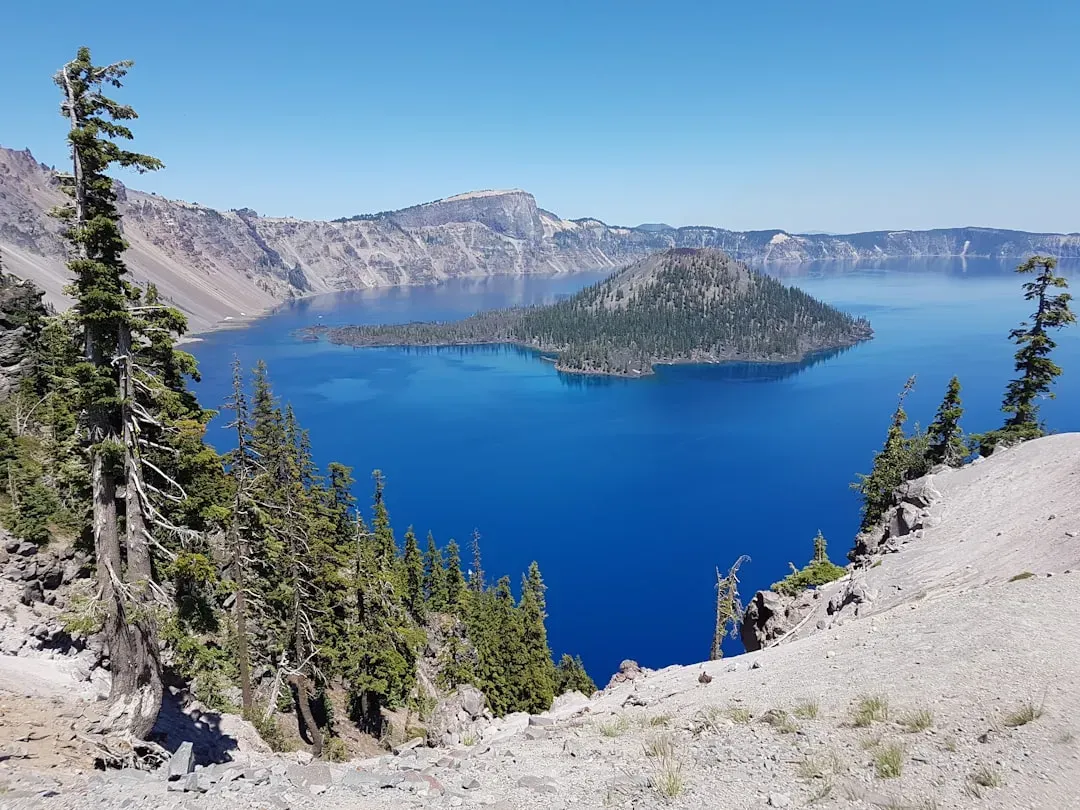
When you first stand on the rim of Crater Lake, it can feel a bit like someone cranked up the saturation on the world without telling you. You’re looking down into the hollowed-out remains of Mount Mazama, a volcano that collapsed thousands of years ago and slowly filled with nothing but rain and snowmelt. Because no rivers flow in or out, the water stays incredibly clear and a deep, almost electric blue that looks unreal in bright sun. The lake is also the deepest in the United States, so that color comes from pure depth as much as purity.
As you drive the rim road in Crater Lake National Park, the view shifts constantly between sheer cliffs, pine forests, and that vast blue bowl below you. Wizard Island, a smaller cinder cone poking up from the water, looks like someone dropped a perfect little volcano into the middle for dramatic effect. On calm days, the surface turns mirror-smooth, doubling the cliffs and sky into a perfectly symmetrical reflection that’s hard to stop staring at. If you want to make it feel even more surreal, visit in late spring, when snow still lines the rim while the water glows summer blue below.
Lake Tahoe, California & Nevada – Crystal Water Framed by the Sierra
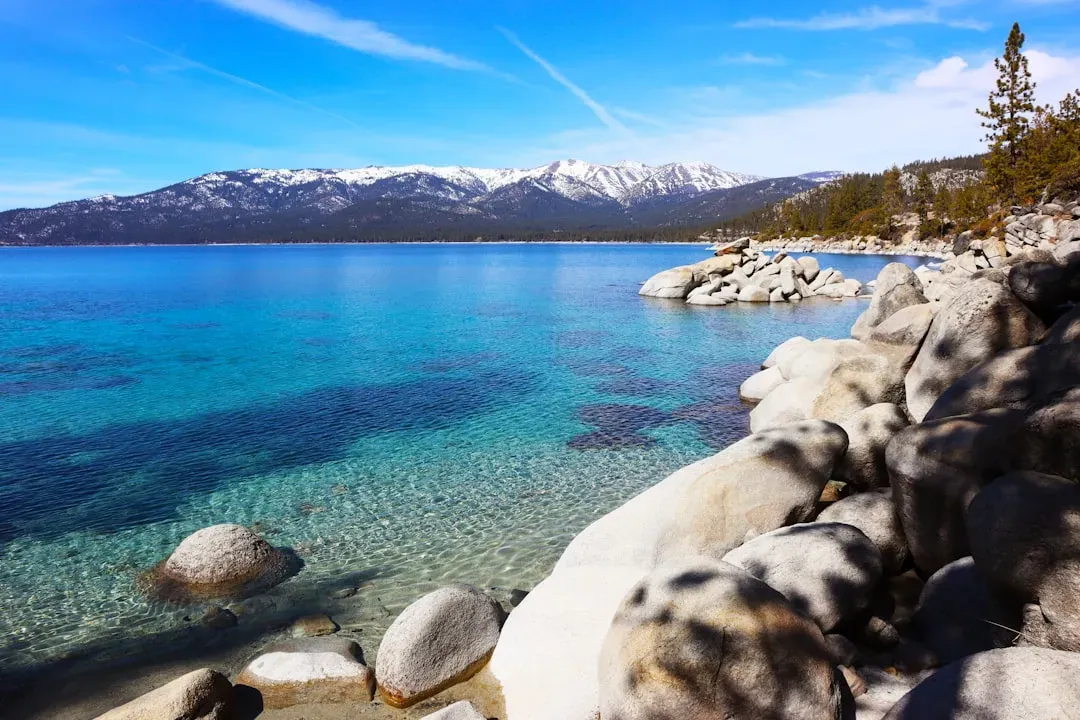
At Lake Tahoe, you get a color that almost does not make sense for such a huge body of water. The lake stretches roughly twenty miles long, yet in coves like Sand Harbor you can still see rocks and boulders on the bottom as if you were peering into a swimming pool. Tahoe is an alpine lake sitting more than a mile above sea level, and the combination of clear, cold water and pale granite creates those famous turquoise shallows that people always assume are tropical. Step a few feet deeper and the water suddenly shifts to a rich, royal blue that hints at Tahoe’s impressive depth.
What really pushes Tahoe into the “unreal” category is how the water and mountains seem to compete for your attention. The Sierra Nevada rises straight from the shoreline, snow still lingering on the peaks while you’re paddling a kayak in a T‑shirt in late June. Around the north and east shores, giant granite boulders rest half-submerged, so you can float above them and feel like you’re hovering over stone sculptures. Even if you’ve seen a thousand photos of Tahoe before you arrive, the scale and clarity together make it feel like you’re seeing a familiar place for the first time.
Diablo Lake, Washington – Glacial Turquoise in the North Cascades
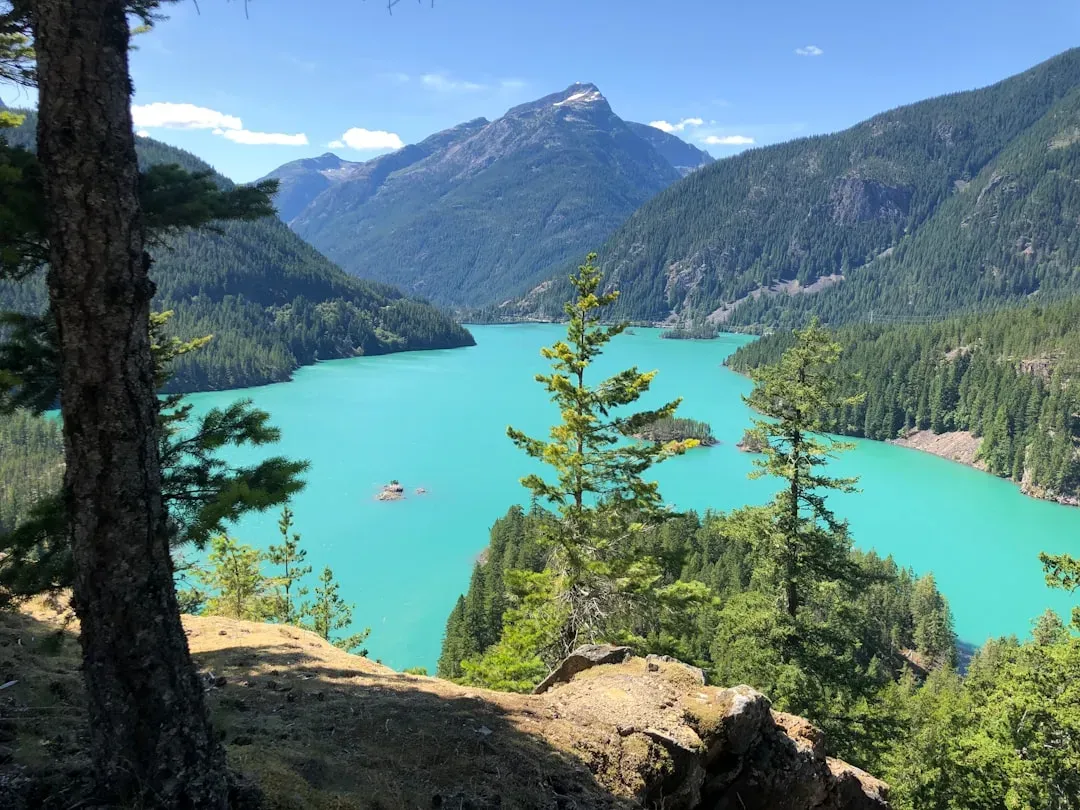
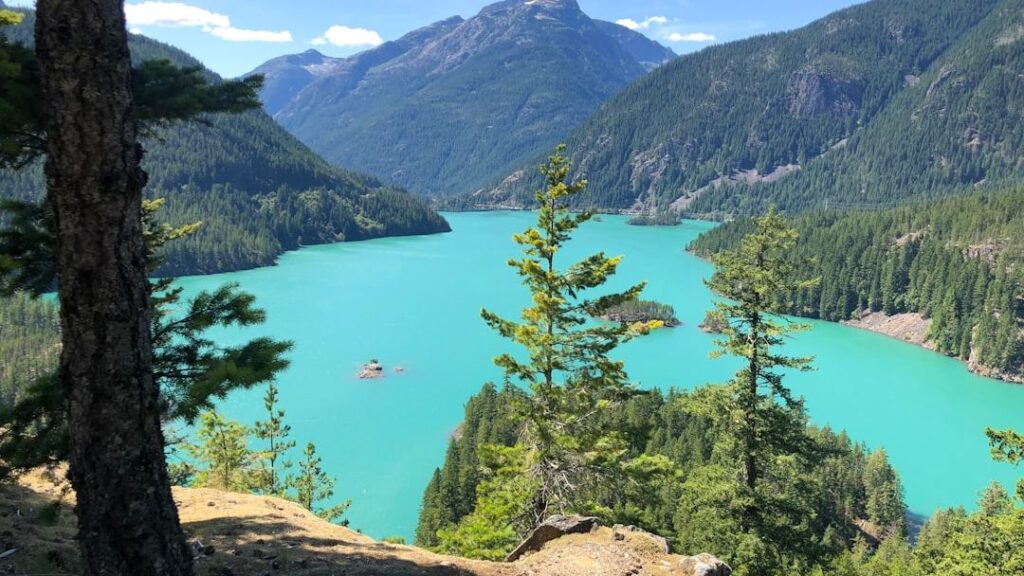
If you’ve ever wondered whether that neon turquoise water you see in travel photos is real or just filters, Diablo Lake in Washington will settle the question. You get that shocking milky-aqua color from glacial flour, the fine rock powder carried down from the North Cascades and suspended in the water. On a sunny day, the lake looks like someone poured liquid gemstone into a deep, forested valley, then lined the whole thing with jagged peaks for good measure. From the roadside overlook alone, you can spend a long time just trying to wrap your head around the color.
When you hike along the Diablo Lake Trail or get closer to the shoreline, you start to notice the contrast even more. Dark evergreens, slate-gray cliffs, and the occasional snow patch make the turquoise water look brighter than it has any right to be. The lake is technically a reservoir, but it feels wild and remote, especially when mist curls around the peaks and the color glows under a cloudy sky. If you want a lake that makes every photo on your phone look like a desktop wallpaper, Diablo should be high on your list.
Lake Powell, Arizona & Utah – A Flooded Canyon Maze
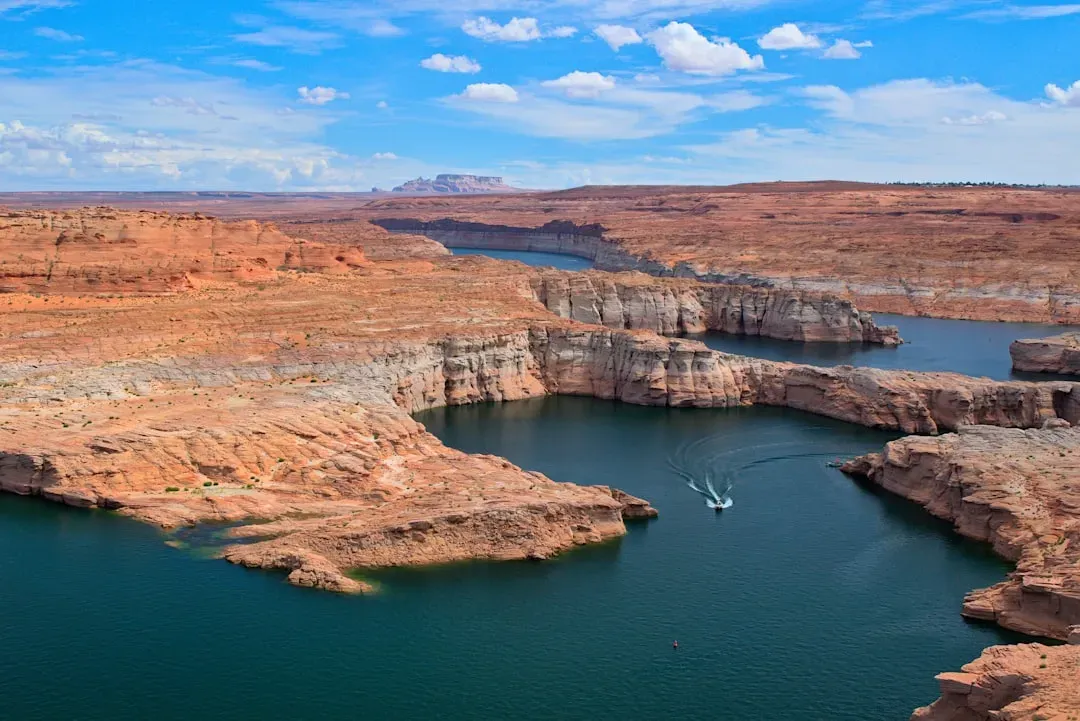
Lake Powell can mess with your sense of geography. You’re in the middle of desert canyon country, surrounded by red rock walls and mesas, and yet you’re gliding over deep blue water that snakes through slot canyons and past towering sandstone cliffs. This massive reservoir on the Colorado River has been in the news a lot because of dropping water levels, and when you visit today you really feel how precious that water is in such a dry, sculpted landscape. Despite the very real environmental concerns and debates, visually, it is hard to deny that Powell looks otherworldly.
Exploring Lake Powell by boat or kayak feels like threading your way through a flooded version of a national park. You slide between curving canyon walls, turn into side arms that dead-end beneath overhangs, and sometimes find beaches made of fine sand where you can pull up and swim. From above, at viewpoints near Page or along the highway, the lake lies like a deep blue ribbon wrapping around buttes and cliffs in impossible shapes. It’s a place where you’re constantly torn between awe at the scenery and an uneasy awareness that you’re floating in the middle of one of the biggest water-management experiments in the West.
Jenny Lake, Wyoming – A Mirror at the Foot of the Tetons
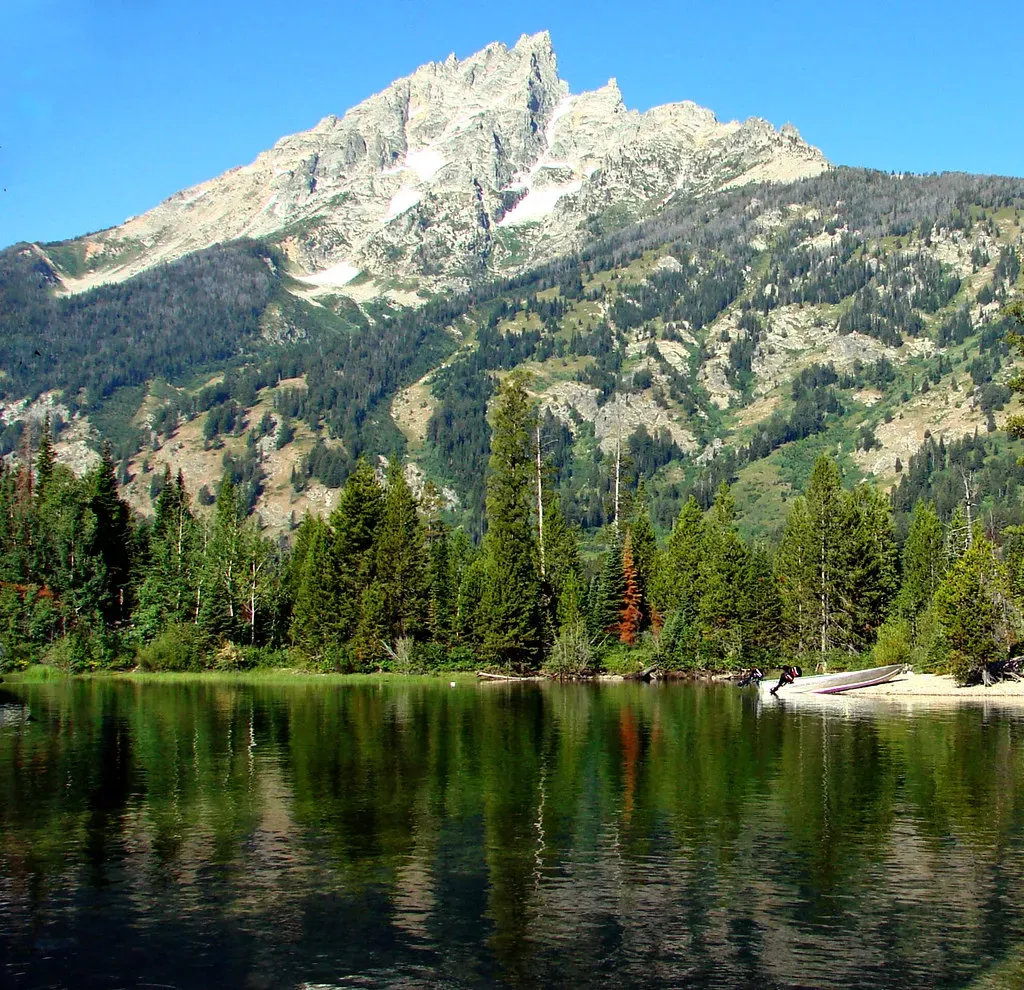
Jenny Lake is the kind of place where you set down your backpack, look up, and instinctively stop talking for a minute. You’re standing right at the base of the Teton Range, and the peaks seem to shoot straight up from the shoreline without any gentle foothills to soften the view. On a still morning, the water turns into a perfect mirror, doubling every jagged ridge and snowfield above so clearly that you almost cannot tell where the real mountains end and the reflection begins. That mirrored surface is what makes the lake feel unreal, like someone laid a sheet of glass at the foot of the range.
When you take the boat shuttle across Jenny Lake or hike the trail along its shore, those reflections follow you around every bend. In some spots, the water is clear enough that you see rounded stones below while the Tetons hover on the surface, giving the whole scene a layered, almost three-dimensional look. Because the lake sits inside Grand Teton National Park, you’re also likely to catch early-morning alpenglow on the peaks or a sudden storm rolling over them while the water stays eerily calm. It is the simplicity of the setting – one lake, one mountain wall – that makes it stick in your memory long after you leave.
Flathead Lake, Montana – Big Sky Reflections on a Giant Inland Sea
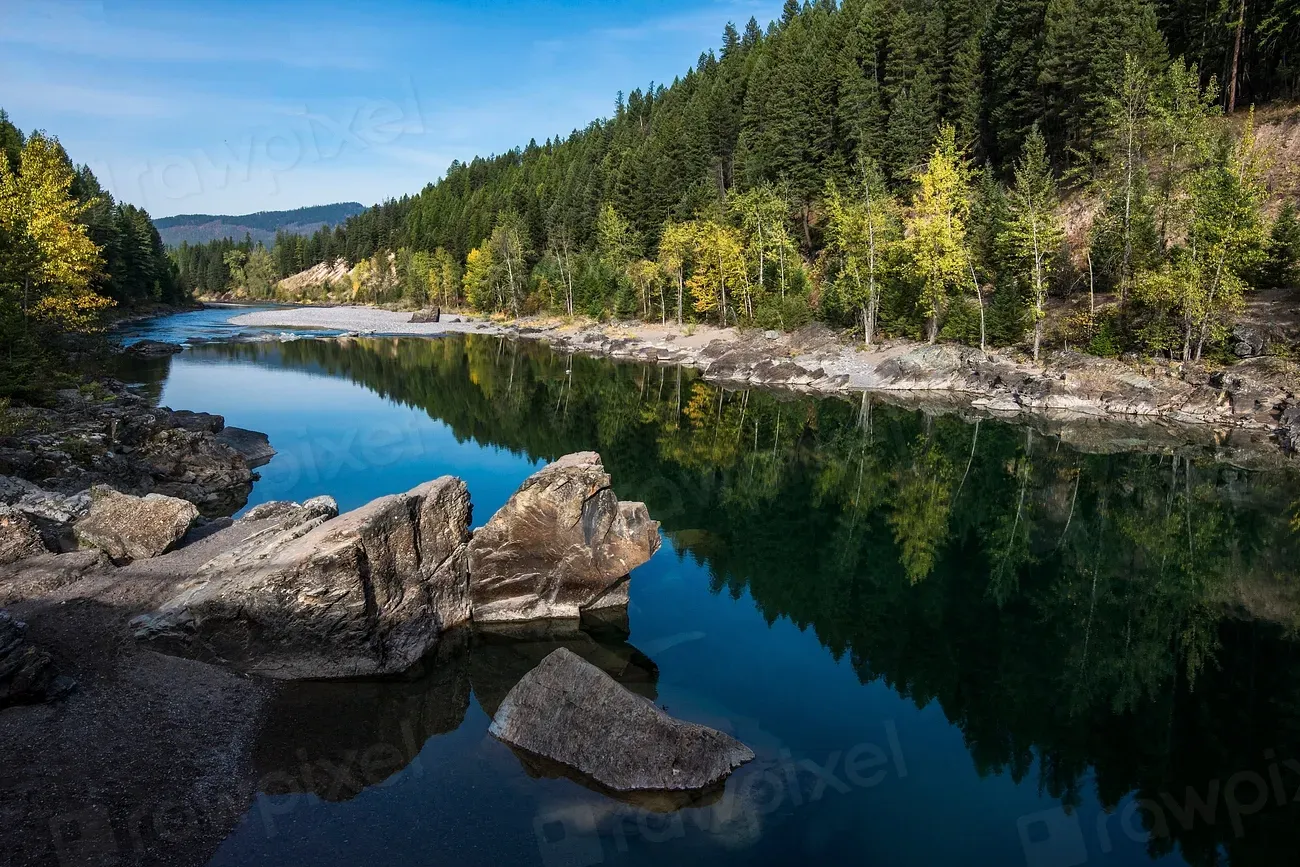
Flathead Lake in Montana feels more like an inland sea than a typical lake, and that size is a big part of its magic. You can stand on the shore and see nothing but water and mountains stretching into the distance, with the far side looking hazy on some days like a distant coastline. The water is famously clear, especially along the eastern shoreline, where you can look down into pale shallows and see cobbles and boulders far below the surface. Combined with the often glassy calm, it gives you incredible reflections of the Mission and Swan Ranges that frame the lake.
What makes Flathead feel almost unreal is how the big-sky Montana atmosphere layers over that clarity. Summer evenings often bring soft pastel light that turns the water into a sheet of lavender and gold, while the snowcapped peaks behind it keep their sharp outlines. When you drive the scenic roads along the west or east shore, you keep catching glimpses of tiny islands, weathered docks, and orchards running right down to the waterline. It is the kind of place where you might go out for a casual paddle and suddenly realize you are floating in one of the most dramatic, open panoramas in the entire country.
Lake Chelan, Washington – A Fjord-Like Ribbon into the Mountains
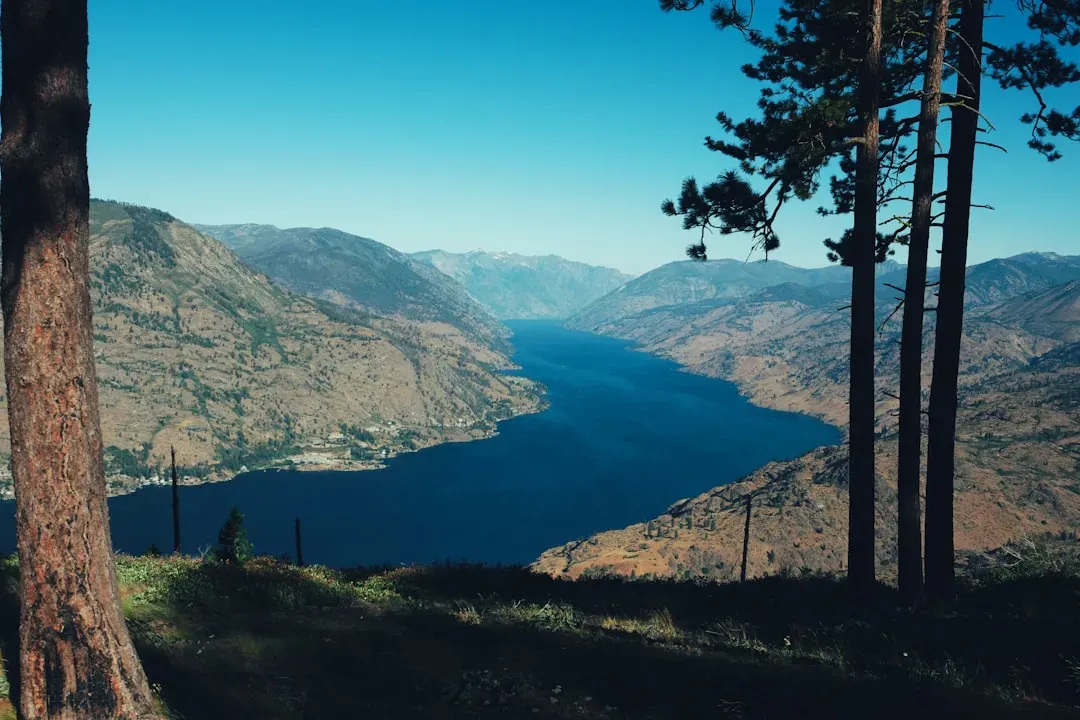
Lake Chelan looks a bit like someone picked up a Norwegian fjord and dropped it in the middle of Washington State. The lake is long and narrow, cutting deep into the Cascades, with steep slopes rising from the water’s edge almost the entire way. It is also one of the deeper lakes in the country, so the water shifts from bright blue in the shallows to a rich, dark tone in the main channel. On clear days, the surface reflects layer upon layer of ridges, giving you that classic mountain-lake look but stretched out over an impressive distance.
As you move away from the busier lower end of the lake, the shoreline becomes wilder and more rugged, and that is when Chelan really starts to feel unreal. The upper reaches can only be accessed by boat, plane, or hiking, and the remoteness adds to the feeling that you are sneaking into a hidden landscape. One moment you are looking at vineyards and orchards near town, and the next you are cruising past rocky slopes and deep forest dropping straight into clear, cold water. It is that contrast – cultivated valley at one end, wild mountain corridor at the other – that makes the lake so fascinating to explore.
Maroon Lake, Colorado – A Postcard Come to Life in the Rockies
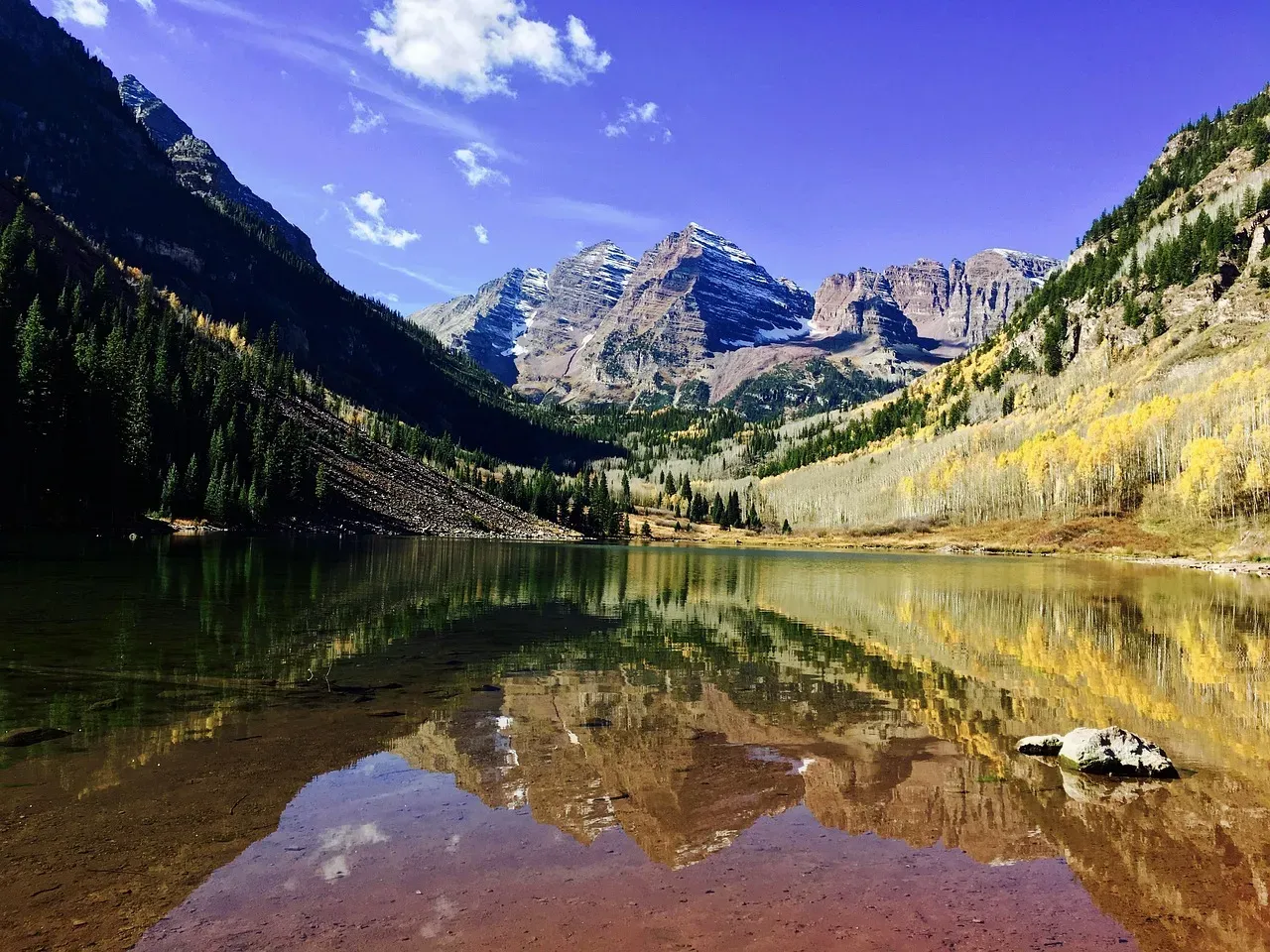
If you have ever seen a classic Colorado postcard with two pyramid-shaped peaks rising above a still lake, you have already “met” Maroon Lake. In person, that scene feels even more unreal because the composition is almost too perfect: the Maroon Bells stand framed at the far end, their striped rock faces reflected in the calm water like a painting. Early in the morning or toward sunset, when the light turns warm and low, those reflections intensify, and you get a near-flawless mirror image that makes you question which way is up in your photos. When fall colors hit, the surrounding aspens explode in yellow, and the whole basin looks staged for a fantasy film.
The lake itself is relatively small and shallow, but that works in your favor as a visitor. You can walk along the shoreline and see both the rocky bottom below your feet and the towering peaks far beyond, all layered in the same view. Because the area is carefully managed with limited vehicle access during busy times, you get a slightly quieter, more contemplative feeling than at some other famous viewpoints. Standing there, you cannot help thinking that if someone described this setup to you – perfect mountains, clear water, glowing trees – you might roll your eyes and say it sounded overdone, right up until you see it with your own eyes.
Torch Lake, Michigan – Caribbean Colors in the Midwest
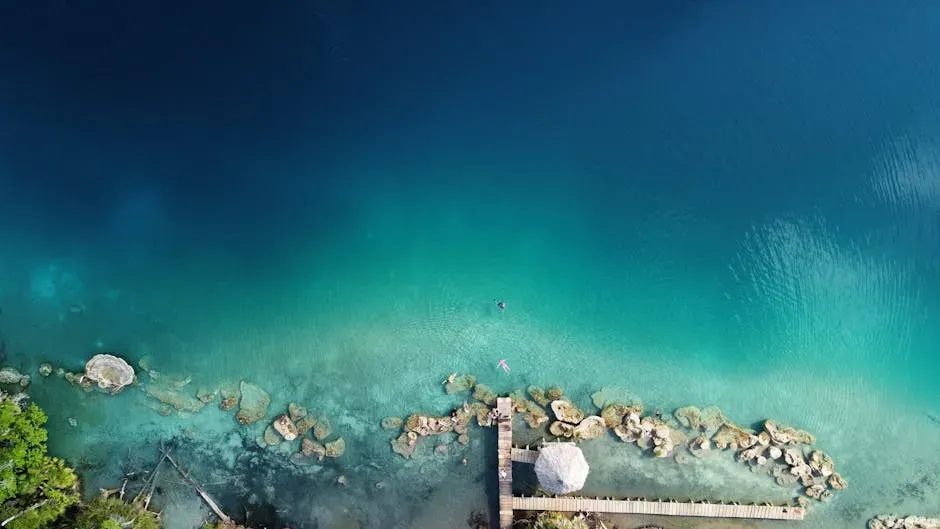
When you pull up photos of Torch Lake, your first instinct might be to double-check the location because it really does look like the Caribbean. This long, narrow lake in northern Michigan is known for its shallow sandbars and almost impossibly clear, teal water. On sunny days, especially over those sandy stretches, the color turns bright turquoise, and boats seem to float on thin air above the bottom. For a lot of visitors, seeing that kind of tropical palette framed by pine trees and Midwest cottages feels like a delightful bit of visual whiplash.
Out in deeper parts of Torch Lake, the water shifts to a deep blue, but even then it retains a clarity that surprises you. Locals and visitors flock to certain sandbar areas in summer, anchoring in knee-deep, crystal water that wraps around their legs like glass. Because the lake was once connected to Lake Michigan as a bay, it carries a kind of coastal feel even though you are firmly inland. If you want to experience a color palette usually reserved for island vacations without leaving the continental United States, this is one of the most surreal places you can pick.
Lake Crescent, Washington – A Deep, Clear Gem on the Olympic Peninsula
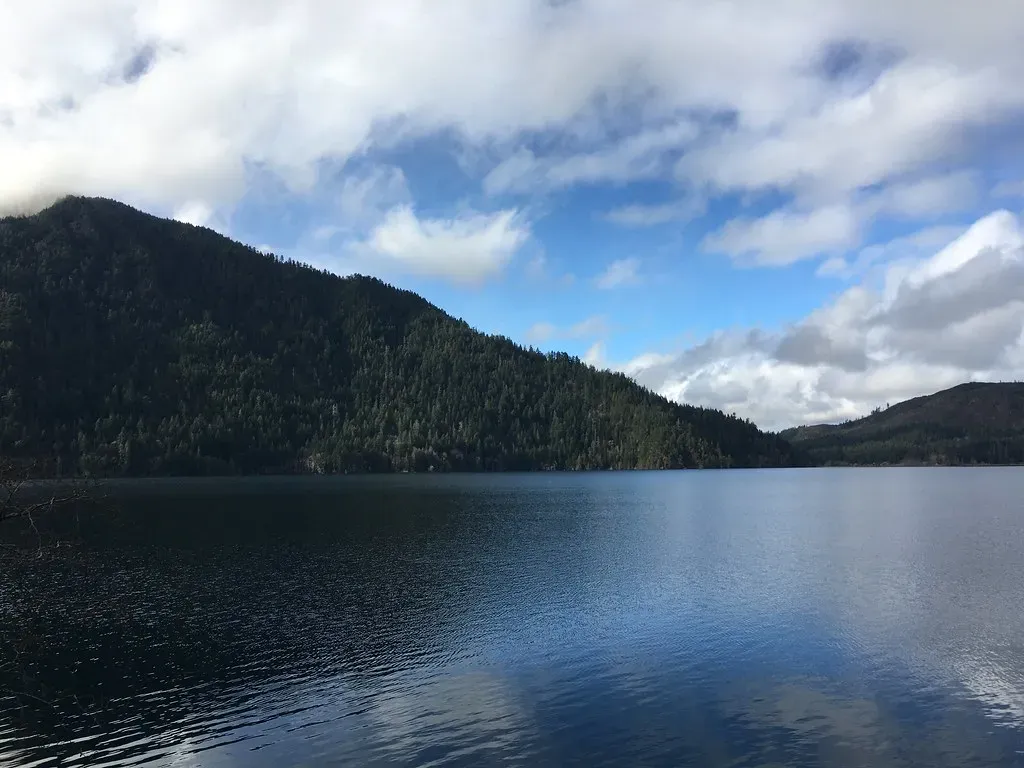
Driving Highway 101 across Washington’s Olympic Peninsula, you suddenly come around a bend and there it is: Lake Crescent, lying long and narrow between green slopes like a piece of polished glass. The lake is exceptionally clear, with visibility that can reach astonishing depths due to its geology and relatively low nutrient levels. People often remark that the blues here feel layered, shifting from aquamarine in the shallows to a dark, inky color at the lake’s astonishing depths. On overcast days, common in this region, the water sometimes looks like a sheet of tinted glass laid under a silver sky.
What makes Lake Crescent feel unreal is the way the forested mountains drop almost straight down into the water. Cedars and firs crowd the shoreline, their reflections sliding across the surface so neatly that it can be hard to see where the trees end. Because large parts of the lake are protected within Olympic National Park, development is limited, and that keeps much of the shoreline feeling raw and wild. When you stand on one of the small docks or stroll a shoreline trail, the combination of sharp clarity below and misty, moody forest above creates a kind of Pacific Northwest dreamscape.
Lake George, New York – Clear Adirondack Waters with Storybook Islands
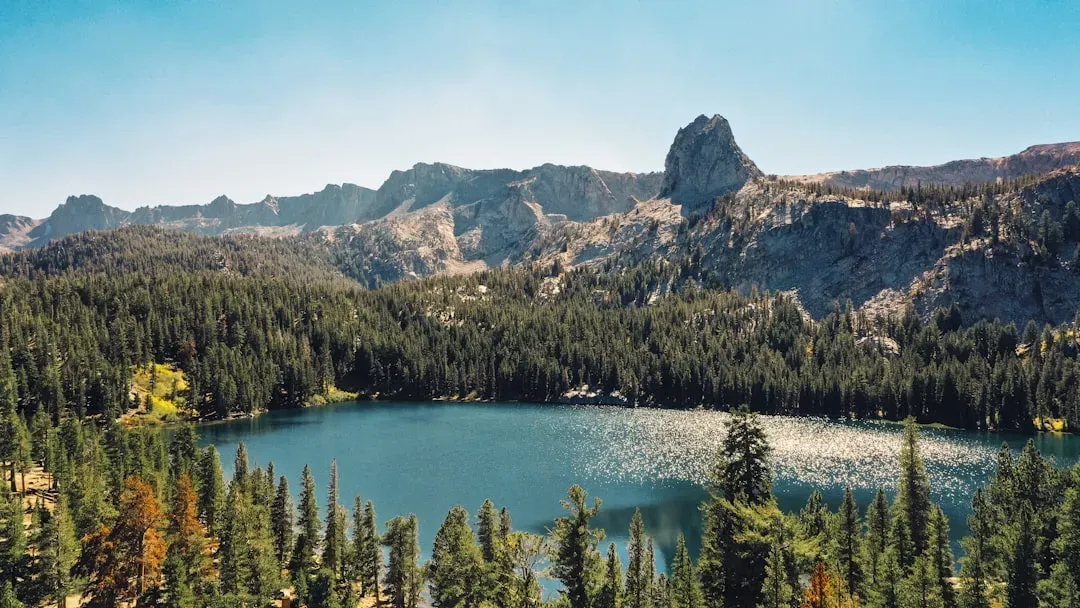
In the Adirondacks of upstate New York, Lake George gives you a very different kind of surreal beauty. Here, the water is renowned for its clarity, especially in quieter, less developed coves where you can see rocks, plants, and fish far below the surface. The lake stretches for more than thirty miles, with mountains rising on both sides and a necklace of tiny islands scattered down the middle. From a boat or kayak, those islands look like little green rafts floating on clean, blue glass, each with its own personality and shoreline.
What makes Lake George especially striking is how varied the scenery feels as you move along its length. In one area, you might be passing sheer rock faces plunging directly into deep water; a little farther on, you are paddling past sandy beaches or quiet bays backed by forested hills. The clear water and dramatic underwater drop-offs can give you that slightly dizzying sensation of looking from shallow to very deep in a single glance. On still evenings, when the wind dies down, the reflections of the Adirondack ridges and islands on the lake make the whole scene look like a layered, painted panorama.
Tenaya Lake, California – A High Country Jewel in Yosemite
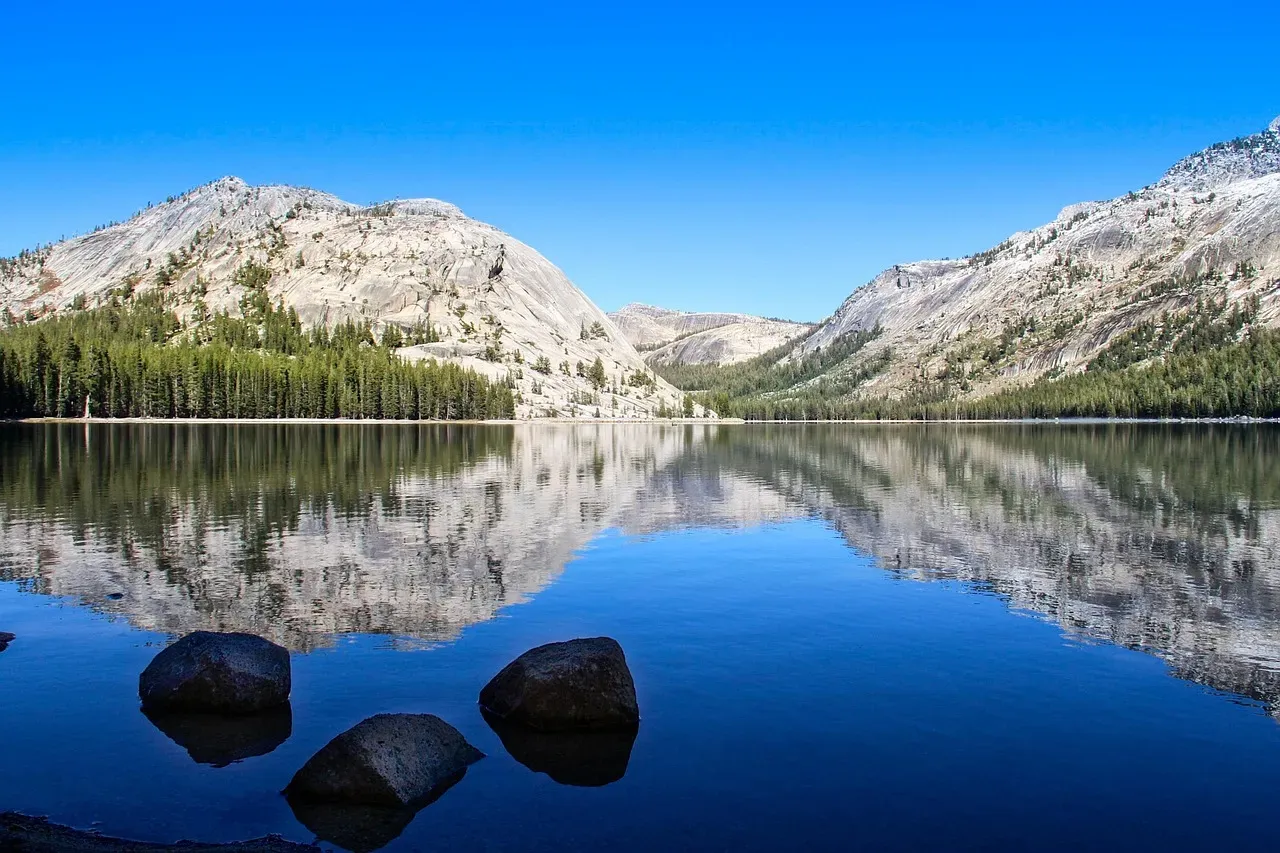
Tenaya Lake sits high in Yosemite’s Tioga Road corridor, and it feels like a quiet little reward for everyone who makes the drive up into the park’s high country. The water is strikingly clear, pressed right up against smooth granite domes and slabs that slope directly into the lake. On sunny days, light bounces off those pale rocks and into the water, turning the shallows a bright, almost topaz color that fades into deeper blue toward the center. You can walk right out from small sandy beaches and watch the rounded boulders under your feet slowly vanish into the deeper, darker middle.
Because Tenaya is surrounded by classic Yosemite granite – the same stuff that forms Half Dome and other famous cliffs – it feels as if the valley’s drama has been shrunk down and wrapped around one perfect lake. The high elevation means cooler temperatures and often fewer crowds than the main valley, so the scene can be strangely calm for such a spectacular place. In late afternoon, when the sun starts to drop behind the domes and the wind sometimes goes still, the lake turns into a reflective plate capturing every ridge and tree above it. If you want to see Yosemite’s monumental rock forms paired with water that looks almost sculpted, this is where you go.
Conclusion: Chasing the Lakes That Do Not Look Real
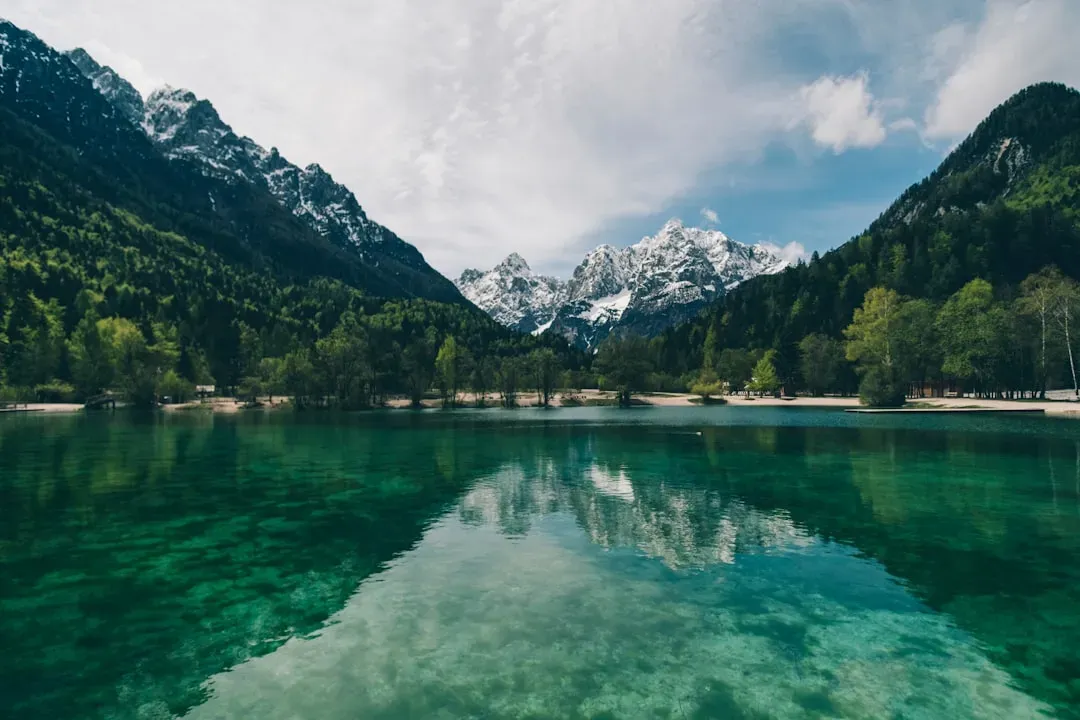
By now, you have wandered – at least in your imagination – from volcanic calderas in Oregon to desert canyons in Arizona, from Caribbean-colored sandbars in Michigan to glacial turquoise in Washington. Each of these lakes bends your expectations in a different way, whether it is through impossible shades of blue, glassy reflections that double entire mountain ranges, or the jarring sight of tropical color schemes dropped into alpine or desert settings. What they all share is that moment when you pause, maybe squint a little, and realize you are seeing something that no screen ever fully captured for you. That feeling of disbelief is exactly what makes them worth the journey.
If you decide to go chase these places in person, you also step into bigger stories: about geology and glaciers, dams and drought, protection and pressure from tourism. You are not just collecting pretty photos; you are seeing how water shapes landscapes and how people choose to live with that water. Maybe you will find your own “most unreal” lake somewhere off this list – a hidden cove on a familiar shoreline, or a quiet morning when an ordinary reservoir suddenly looks like a painting. Which one of these would you be most surprised to see in your own camera roll a year from now?