
If you came here for a story about a sheet-draped spirit drifting through the tunnels beneath Geneva, you are going to be both disappointed and pleasantly surprised. There is no literal phantom roaming the Large Hadron Collider, but there is something far stranger, and in many ways much more unsettling: the realization that the universe itself behaves in ways that feel haunted by invisible influences, delayed effects, and freakishly improbable events. When physicists at CERN talk about “ghosts”, they are really talking about the strange fingerprints of particles and fields we can barely detect, yet which quietly steer the fate of matter, energy, and perhaps reality itself.
Over the past decades, the experiments at CERN have exposed a pattern that sounds almost like a scientific ghost story: missing energy that seems to vanish into nowhere, particles that only appear as brief echoes in a detector, and equations that insist there is more to the universe than what we can see. The “” is the growing suspicion that our current picture of physics is only a thin veneer over something deeper, stranger, and not yet understood. And if you stick with the story, that ghost turns out to be less about superstition and more about the unsettling honesty of data.
The Real Ghost: Missing Pieces in the Standard Model
The Standard Model of particle physics is often described as one of the most successful theories ever created, and that is true in a brutally precise way. It predicts particle masses, interaction strengths, and decay probabilities with such staggering accuracy that it almost feels unfair. Yet for all its success, it also has gaping holes you could drive a galaxy through: it does not explain dark matter, dark energy, gravity, or why the universe contains more matter than antimatter. In other words, the Standard Model is like a beautifully detailed map that suddenly fades into blankness at the edges, right where the most important landmarks ought to be.
At CERN, those missing pieces show up not as dramatic anomalies on a single screen, but as patterns across millions of collisions. Physicists do not see the ghost directly; they infer it from what is not there, from what does not balance out, from events that happen too often or not often enough. It is a bit like walking into a room and realizing someone has been there because the dust has shifted in a suspiciously organized way. The haunting feeling comes from recognizing that the theory we trusted to be a complete description of reality is, in fact, an incomplete chapter.
Ghosts in the Data: When Events Refuse to Behave
One of the most “haunted” experiences a high-energy physicist can have is watching an unexpected bump in the data appear where the math says nothing special should be happening. In collider experiments, researchers smash protons together at ridiculous energies, then sift through a blizzard of particle fragments, looking for small deviations from the Standard Model’s predictions. Every once in a while, they spot a tantalizing excess: slightly more collisions producing a certain pattern than the equations allow. It feels like a whisper from something new lurking underneath the noise.
Most of these apparent ghosts vanish with more data, fading like shadows when you turn up the lights. But the emotional rollercoaster is real: for weeks or months, entire teams live with the possibility that they might have stumbled onto a brand-new particle or force. Imagine thinking you have caught a clear photo of a ghost, only to realize later it was just a trick of the camera lens. This cycle of excitement and disappointment is built into the process, and it is why good physicists are almost aggressively skeptical of their own “hauntings”. The real ghost is not the anomaly itself, but the stubborn, repeating hints that the Standard Model is only part of the story.
Neutrinos: The Original Ghost Particles
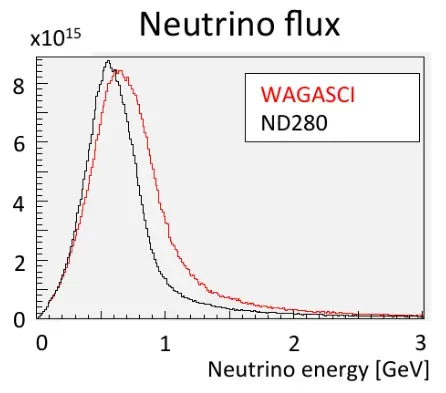
If any particle deserves to be called a ghost, it is the neutrino. These things pass through your body by the trillions every second, almost never interacting with anything at all. When neutrinos were first proposed, they were essentially an act of desperation: a bookkeeping fix to explain missing energy in radioactive decays. For a long time, they were treated as hypothetical phantoms introduced just to make the equations balance, which made many physicists uneasy. Yet experiment after experiment confirmed that they were real, not just mathematical padding.
Today, neutrinos are a key part of the story unfolding at CERN and beyond, because they stubbornly refuse to behave exactly as expected. Their ability to change “flavor” as they travel, and the fact that they have tiny but nonzero masses, already push the Standard Model to its limits. Neutrinos remind researchers that what once looked like a ghostly fudge factor can turn out to be a crucial piece of the deeper puzzle. In a way, they set the tone for modern physics: if you see something that looks like a ghost in the data, do not dismiss it too quickly. It might be the universe tapping you on the shoulder.
Dark Matter: The Universe’s Invisible Houseguest
If neutrinos are tiny ghosts, dark matter is the enormous unseen roommate that pays most of the rent but never appears in the group photos. Astronomers have known for decades that galaxies rotate in a way that cannot be explained by visible matter alone; there has to be additional mass creating extra gravity, holding everything together. The wild part is that this invisible stuff seems to outweigh normal matter by a huge factor, meaning that most of the universe is made of something we have never directly detected. That is a genuinely unsettling idea, much creepier than any horror movie spirit.
CERN’s experiments are deeply entangled in the hunt for dark matter, looking for its fingerprints in high-energy collisions and subtle missing-energy signatures. If a new particle is created that promptly escapes the detectors without leaving a conventional trace, it shows up as an imbalance, like someone stealing a chunk of momentum from the event. Physicists then ask whether that missing piece could be a dark matter candidate. So far, no definitive smoking gun has appeared, and that absence is its own kind of ghost story: every null result narrows the possibilities, making the mystery sharper, not weaker. The thing haunting CERN here is the knowledge that something massive and invisible is shaping the cosmos, and we still do not know what it is.
Quantum Weirdness: Spooky Correlations Without the Supernatural
Long before CERN, quantum mechanics already gave physics a reputation for being haunted. Phenomena like entanglement, where particles separated by huge distances show correlated behavior, can easily sound like telepathy or action at a distance. At CERN, quantum effects are not philosophical curiosities; they are daily tools. Everything from particle interference patterns to the way fields interact in the vacuum rests on the strange logic of quantum theory, which often defies human intuition. It is no wonder that early physicists reached for words like “spooky” when they tried to describe it.
But here is the important twist: none of this implies ghosts in the supernatural sense. Instead, it forces us to admit that our everyday sense of cause, effect, and locality is just not built for the quantum scale. At the energies probed by the Large Hadron Collider, particles can wink into and out of existence in fleeting virtual processes, leaving behind only subtle shifts in measured probabilities. These effects are as real and measurable as a footprint in wet cement, but they work according to rules that feel more like a magic trick than a textbook. The haunting sensation is psychological, not mystical: the universe is telling us that reality is stranger, and more layered, than our instincts can comfortably handle.
The Human Side: How It Feels to Chase a Ghost
From the outside, CERN can look like a cold machine run by perfectly rational people in lab coats, but the emotional side of this work is intense. Many researchers spend entire careers chasing hints that never quite solidify into discoveries. I once worked with a physicist who described the first time they saw a small deviation in a plot as feeling like a jump scare in a movie: a jolt of adrenaline, followed by a long, stressful wait to see if it was real or just statistical noise. That mix of hope and dread is part of the daily life of frontier science, even if it rarely shows up in official press releases.
There is also a quiet vulnerability to admitting that the universe is not yet fully understood, especially after you have invested years in mastering the reigning theory. When results refuse to match expectations, it can feel like the foundations of your intellectual identity are wobbling. At the same time, most physicists I know secretly cherish that wobble. The ghost in the data is what keeps the work alive, what stops it from becoming a mere exercise in filling in decimals. It is the reminder that there is still something wild and unsolved out there, waiting for someone stubborn enough to keep digging.
The Real Haunting: Our Incomplete Picture of Reality
So, did physicists really find ? In the literal sense, of course not. There is no specter pacing the tunnels beneath the Swiss-French border, no curse on the collider, no paranormal entity messing with detectors. But in a deeper sense, yes, they have found something that behaves like a ghost story told with data instead of candles: a persistent, unnerving awareness that our best theories leave too much unexplained. Dark matter, neutrino masses, the puzzling patterns in particle families, the nature of the vacuum itself – all of these are unfinished sentences in the universe’s story.
My opinion is that this “ghost” is the best thing that could have happened to physics. A perfectly complete, neatly wrapped-up theory would be dead science, a closed book. The fact that CERN keeps running into edges, gaps, and unresolved tensions is a sign that the field is still alive and worth arguing about. The haunting is not a problem to be exorcised; it is a challenge to be embraced. In the end, the most honest answer we can give is that is our own ignorance, illuminated by brutally precise machines. And really, is there anything more thrilling than knowing, with evidence in hand, that you do not yet know enough?