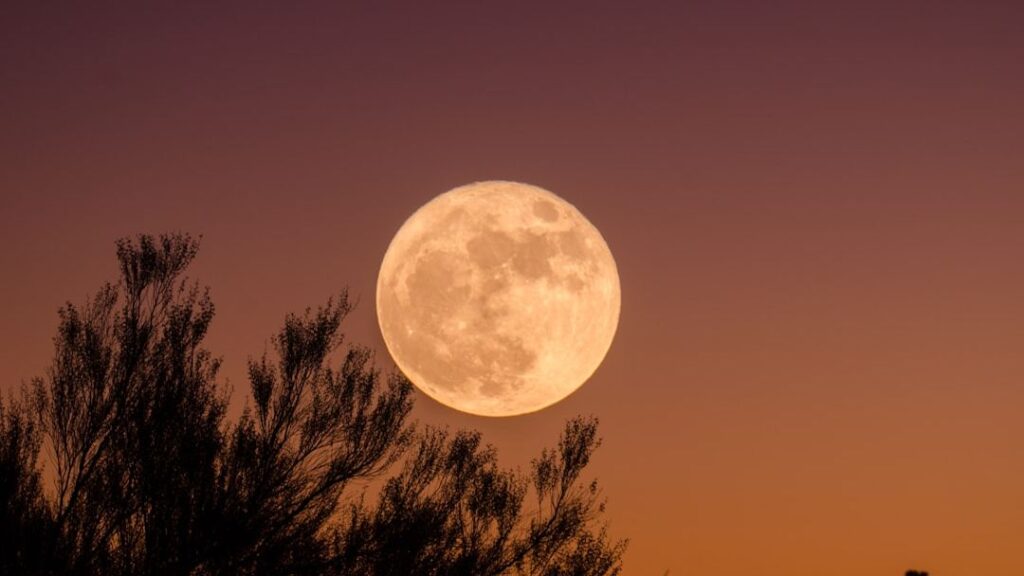

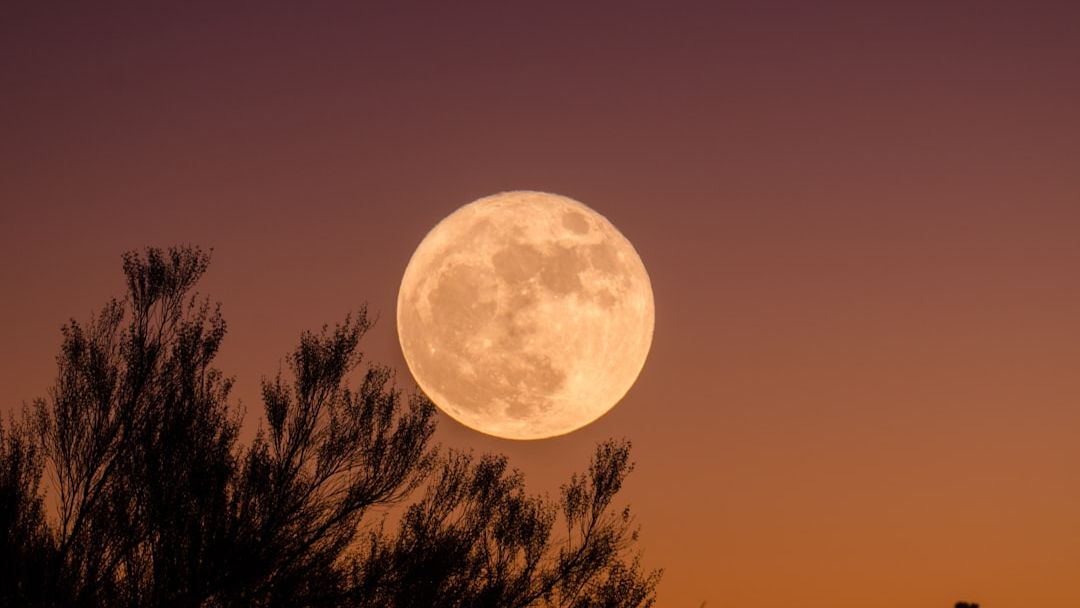
2026 Full Moon calendar: When to see the Full Moon and phases – Image for illustrative purposes only (Image credits: Unsplash)
The Moon completes its familiar cycle every month, reaching full illumination when Earth sits directly between it and the Sun. This alignment turns the entire visible face of the Moon into a bright disk, a sight that has guided calendars and storytelling for centuries. In 2026 the pattern holds, yet several months bring extra interest through a rare second full Moon and a handful of supermoons that appear slightly larger than average.
How a Full Moon Forms
Earth’s orbit around the Sun and the Moon’s orbit around Earth create the repeating phases. When the three bodies line up precisely, sunlight strikes the entire near side of the Moon and reflects back to observers on the ground. The exact moment of fullness lasts only an instant, though the Moon looks nearly full for a night or two on either side.
Because the Moon’s path is slightly tilted, perfect alignments do not happen every month. Most years produce twelve full Moons; 2026 adds a thirteenth because two occur within the same calendar month.
Complete 2026 Schedule
Here are the dates when the Moon reaches full phase, listed in Eastern Time for consistency with major astronomy references. Traditional names accompany each date, reflecting seasonal or cultural associations that vary by region.
- January 3 – Wolf Moon (supermoon)
- February 1 – Snow Moon
- March 3 – Worm Moon
- April 1 – Pink Moon
- May 1 – Flower Moon
- May 31 – Blue Moon
- June 29 – Strawberry Moon
- July 29 – Buck Moon
- August 28 – Sturgeon Moon
- September 26 – Harvest Moon
- October 26 – Hunter’s Moon
- November 24 – Beaver Moon (supermoon)
- December 23 – Cold Moon (supermoon)
Times range from early morning to late evening depending on the month, so observers should check local rise times for the best viewing window shortly after sunset.
Standout Events This Year
May delivers two full Moons, the second of which qualifies as a Blue Moon. That extra appearance stems simply from the calendar’s mismatch with the lunar cycle rather than any change in the Moon itself. The May 31 event also occurs near the Moon’s farthest point from Earth, making it a micromoon that appears slightly smaller.
Three supermoons bookend the year. The January, November, and December events place the Moon closer to Earth at fullness, increasing its apparent size by a modest but noticeable amount. Skywatchers often notice the difference most clearly when the Moon sits low on the horizon.
Lunar eclipses add further drama. A total eclipse is possible in March, while a partial eclipse accompanies the August full Moon. Both events require clear skies and, for the total eclipse, a willingness to stay up through the night in many time zones.
Practical Viewing Advice
Full Moons rise around sunset and set near sunrise, offering the longest window of darkness for observation. Binoculars or a small telescope reveal surface details even when the Moon is dazzlingly bright. Light pollution matters less than usual because the Moon itself provides the illumination, yet darker sites still improve contrast for nearby stars and planets.
Weather remains the biggest variable. Clear nights in winter months often coincide with cold temperatures, while summer full Moons compete with haze or thunderstorms. Planning around the listed dates and checking local forecasts gives the best chance of success.
Mark the dates now and set reminders for the months that matter most to you.